When a bird is coming at you with an open beak or fluffed feathers and pinned eyes, the first thing to do is stop moving toward it. Freeze, give it space, and lower yourself to the bird's level if you can do so safely. Do not pull your hand away fast, do not yell, and [do not stare it down](https://www. avianwelfare.
How to Handle an Aggressive Bird Safely and Humanely
Clara Hayes
20 May 2026
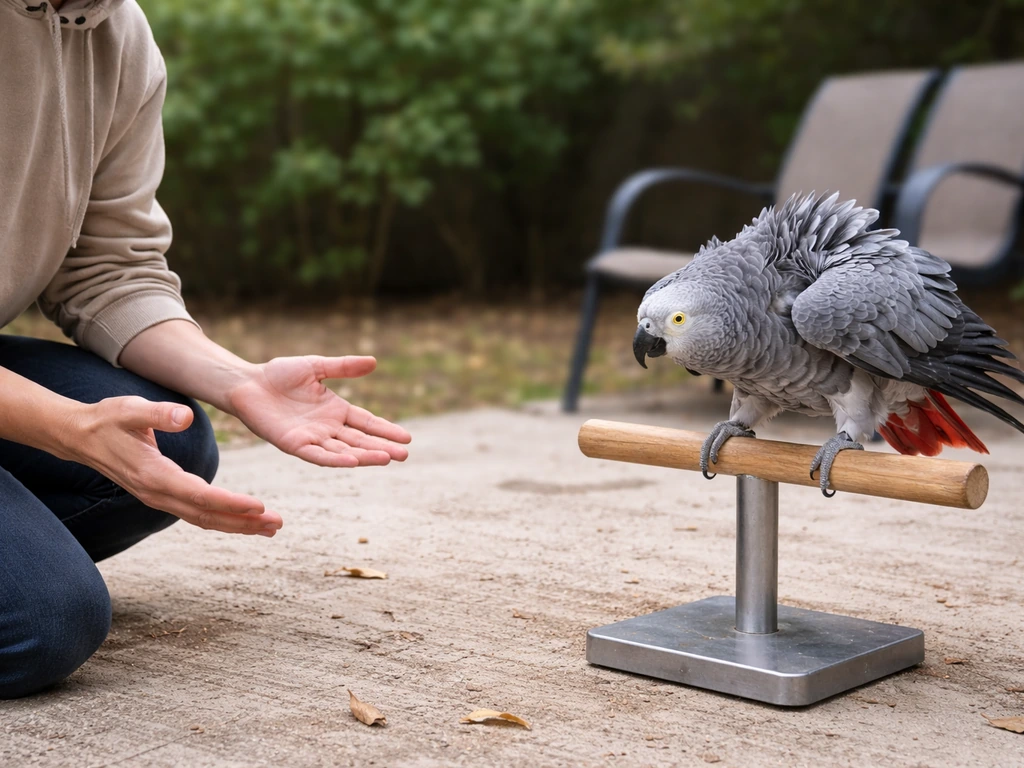
org/shelters/pdf/NBDsheltersminimizestress. pdf). Most bird aggression is communication, not malice, and the fastest way to de-escalate is to remove the pressure the bird is responding to. If you want to know how to beat bird up, the key is to focus on de-escalation and safety instead of trying to fight back de-escalate.
From there, you can figure out why it happened and what to do about it over the next days and weeks.
What to do right now to stay safe
Your immediate priority is to stop the situation from getting worse without reinforcing the aggression. VCA Animal Hospitals also recommends using a “time-out” approach if a bird bites while on your hand: slowly put the bird down and walk away rather than escalating the interaction. Here is what to do in the moment, in order:
- Freeze and go still. Sudden movement triggers a chase or second strike. Staying calm breaks the escalation loop.
- Avert your gaze. Direct eye contact reads as a threat to most birds. Look slightly to the side rather than staring the bird down.
- Slowly increase distance. Back away or, if the bird is on your hand, gently lower your hand toward the nearest perch or cage floor at a slow, steady pace.
- Set the bird down and walk away. If you have just been bitten, place the bird on a perch or back in its cage calmly and leave the room for a few minutes. This is not punishment; it is removing the trigger (you) from the situation.
- Do not grab, shake, or restrain in anger. Forced restraint when a bird is already over threshold almost always makes the aggression worse and can injure the bird.
- For wild birds: stay at least 10 to 15 feet back and do not crouch near a nest or fledgling. Move away steadily and the bird will usually stand down once you are out of its territory zone.
Once the immediate moment has passed, take a breath before you do anything else. Rushing back in because you feel guilty or want to 'fix it' right away is one of the most common mistakes. Give the bird 10 to 20 minutes to settle before attempting any interaction again.
Reading what your bird is actually telling you
Aggression in birds almost always has a reason behind it, and if you can identify the reason, the solution becomes much clearer. The main causes fall into a handful of categories:
- Fear: the bird does not trust the person or the situation yet. Common in new birds, rehomed birds, or birds that have been mishandled.
- Territoriality: the bird is defending its cage, a favorite perch, a toy, or a person it has bonded to. Hormonal birds in breeding season are especially prone to this.
- Seasonal hormones: spring and early summer trigger hormonal surges in most parrot species, cockatiels, and budgies. A bird that was perfectly sweet in winter may become unpredictable in spring.
- Resource guarding: protecting food, a nest box, or a mate (even a mirror or a favored toy can serve as a 'mate').
- Pain or illness: a bird that is suddenly aggressive when it was not before is often hurting. This is a vet flag, not a training problem.
- Overstimulation: too much petting, too many people, too much noise. The bird gives warning signals and when those are missed, it bites.
- Poor handling history: learned aggression from being grabbed, restrained, or punished in the past.
Body language warning signs to know
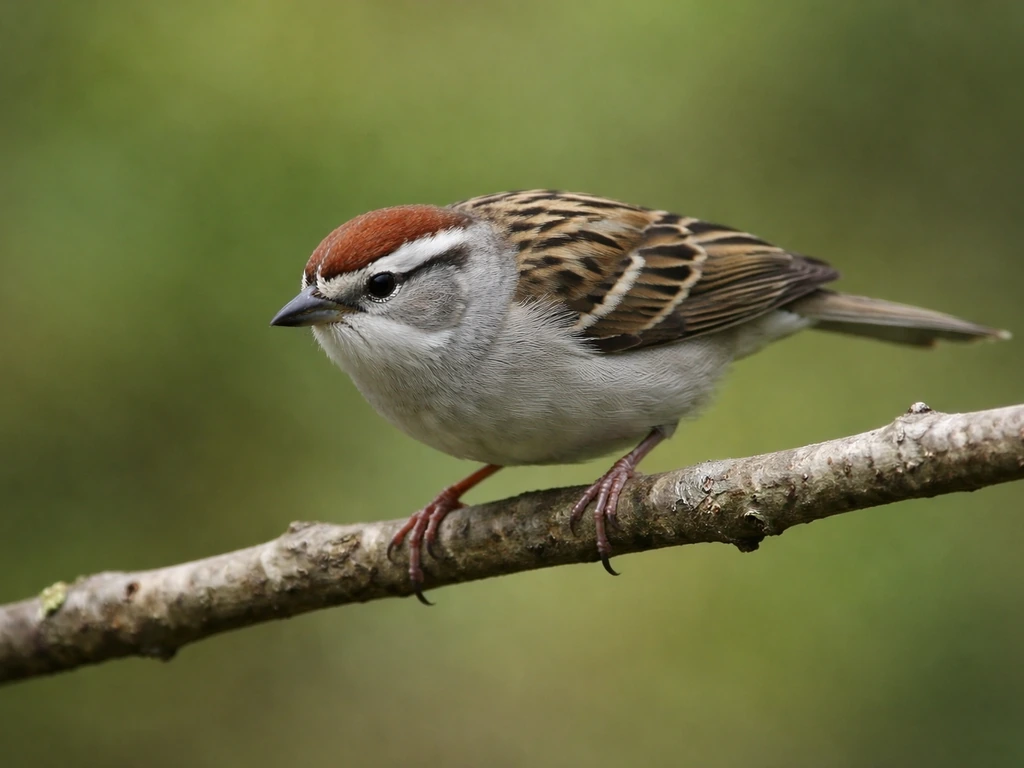
Birds give clear signals before they bite. Learning to read them means you can back off before the situation escalates. Watch for these in order of escalating intensity:
- Feathers slicked tight against the body (early stress signal)
- Pinned (rapidly dilating and constricting) pupils in parrots
- Tail fanning or rapid tail bobbing
- Wings held slightly away from body or raised
- Crouching low on the perch and leaning forward
- Open beak with tongue visible
- Hissing, growling vocalizations, or sharp alarm calls
- Lunging with beak open
When you see the first two or three signals, that is your cue to slow down or back off entirely. Waiting until the bird is lunging means you have already missed several chances to de-escalate. The more you practice catching these early signals, the less often you will get bitten.
De-escalation and safe handling, step by step
Once you understand what is driving the aggression, you can approach the bird in a way that lowers rather than raises the threat level. If you are dealing with a punishing bird, the same de-escalation principles apply: identify the trigger, lower the threat level, and use a step-by-step approach to help the bird feel safer how to deal with punishing bird. The following steps apply whether you are trying to handle a pet bird that is on alert or move a bird off a perch it is guarding.
- Approach from the side, not head-on. Coming straight at a bird is confrontational. Move in at a 45-degree angle and avoid looming over the bird from above.
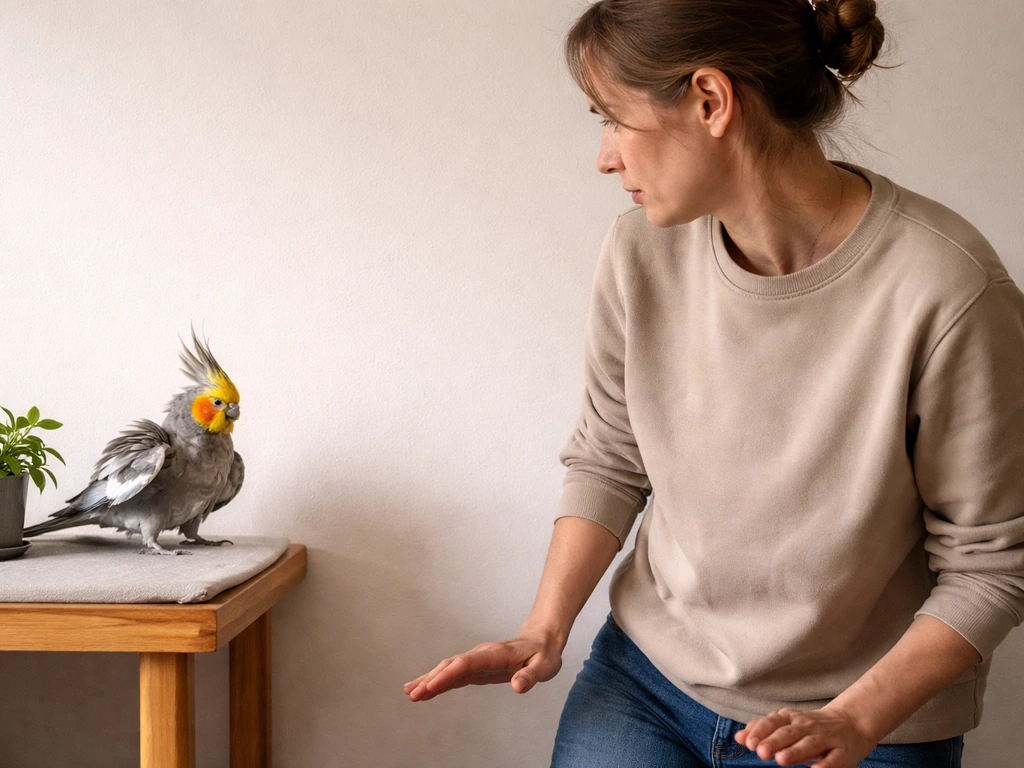
- Get low. Crouch or sit so you are at the bird's eye level or below it. A person standing over a small bird is genuinely threatening to that animal.
- Move slowly and narrate calmly. Talk in a low, even voice so the bird can track your movement. Silence followed by sudden movement is more startling than a steady, quiet approach.
- Offer a perch, not your bare hand first. If the bird is likely to bite, offer a thick dowel perch or a training stick for it to step onto. This keeps your fingers out of reach while you rebuild trust.
- Use the 'step up' cue consistently. Press the perch or your finger gently against the bird's lower chest just above its feet. Most birds will step up reflexively when the pressure point is correct. Do not push from the side or grab the feet.
- If the bird refuses, do not force it. Walk away, wait five minutes, and try again. Forcing a step-up when a bird is over threshold teaches it that aggression works.
- Use a towel only as a last resort for safety. If you must handle an aggressive bird for a vet check or emergency, drape a light towel over it from the side to reduce visual stimulation, then scoop gently. This should not be a regular handling method.
A quick note on restraint: if you ever need to hold a bird more firmly, for example for a nail trim or a medical check, the goal is secure and calm, not tight and panicked. Covering the bird's eyes with your thumb and finger while supporting the body tends to calm birds down faster than holding them face-out where they can see everything. If you are not confident doing this, it is worth reading up on proper bird restraint techniques before you need them in a real situation.
Training your bird to be less aggressive over time
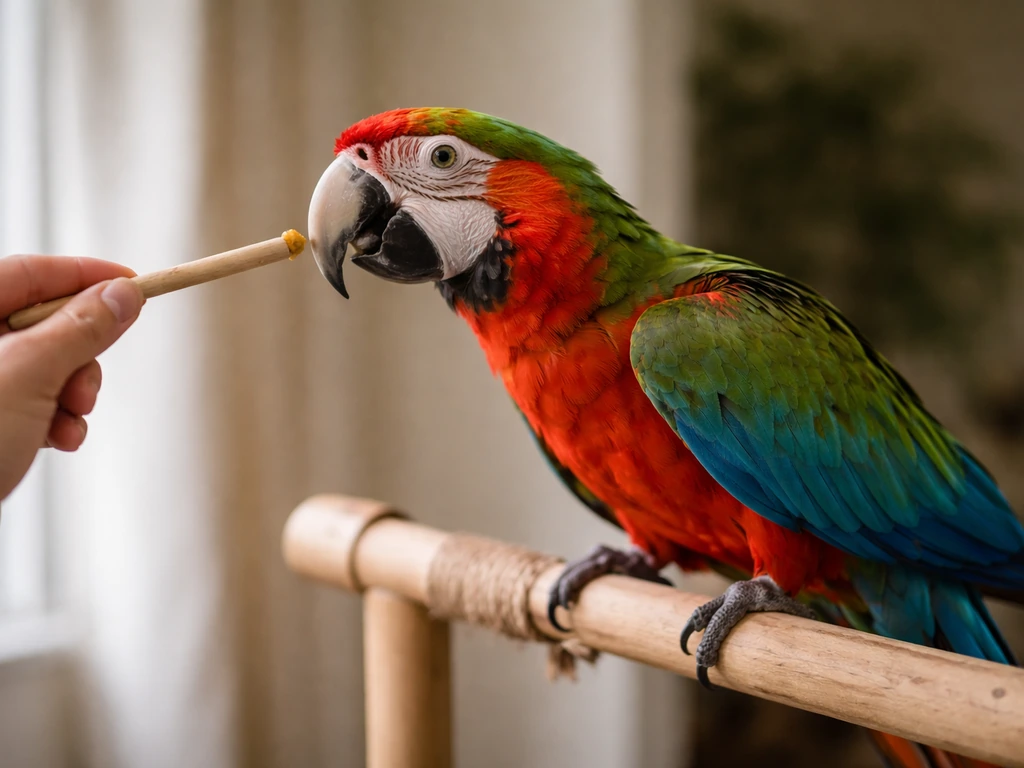
Handling skills get you through the moment, but consistent positive reinforcement training is what actually changes aggressive behavior over weeks and months. The goal is to teach the bird that interacting with you predicts good things, and that backing off rather than biting is a more effective strategy. If you want a direct guide on shaping that behavior over time, see how to teach a bird not to bite as a related training focus. Here is a practical training framework:
- Start with target training. Teach the bird to touch its beak to the tip of a chopstick or training stick for a treat. This gives the bird something to do, keeps its beak occupied, and builds a foundation for all future training. Five-minute sessions twice a day are enough.
- Reward calm behavior, not just compliance. Any time the bird lets you approach without lunging, give a treat or verbal praise. You are reinforcing 'staying calm near humans is profitable.'
- Use 'least reinforcing scenario' (LRS) for biting. When the bird bites, go still, make no eye contact, say nothing, and after a few seconds quietly remove yourself. No yelling, no dramatic reaction. Drama is reinforcing to many birds.
- Teach a 'station' behavior. Train the bird to go to a specific perch on cue. This lets you move it safely without physical handling during high-aggression periods.
- Respect consent. Before picking the bird up, offer your hand and wait for a willing step-up rather than scooping from behind. If it backs away, it is saying no. Honor that and try again later.
- Keep sessions short and end on a win. Always stop before the bird gets frustrated. End with something easy the bird can succeed at so the last experience of the session is positive.
Realistic timeline: with a previously mishandled or fearful bird, expect to spend two to four weeks just doing target training and presence desensitization before you attempt regular handling. A hormonal bird may need the whole breeding season managed with distance-based techniques before returning to baseline. Do not rush it. Pushing too fast resets the clock. For more detail on what consequences actually work without harming your relationship with the bird, the topic of how to discipline a bird is worth exploring alongside this guide.
Species-specific approaches
Aggression looks and feels different depending on the species you are dealing with. What works for a macaw will stress out a finch, and what you should do with a wild bird is almost the opposite of what you do with a tame pet.
Parrots (African Greys, Amazons, macaws, conures, cockatoos)
Large parrots are intelligent enough to test limits intentionally and can bite with enough force to break skin or a fingernail. Their aggression is often hormonal, territorial, or a response to overstimulation from petting on the back or under the wings (which mimics mating behavior). Stick to head and neck scratches only.
Never allow a large parrot to sit on your shoulder during a period of aggression as you cannot see its face and have no warning before a bite to the ear or cheek. During high-hormone periods, manage with target training and station behaviors rather than hand contact. Amazons in particular show a very readable pre-bite posture: feathers fanned, eyes pinned, one foot slightly raised. When you see that, create distance immediately.
Cockatiels
Cockatiels are usually fear-based biters more than territorial ones, though hormonal males can become surprisingly aggressive toward their perceived mate (often a mirror or a favorite human). The bite from a cockatiel hurts but rarely breaks skin. The key body language signal is the crest: flat or slicked back means frightened or aggressive, full upright means relaxed and curious. If the crest is flat and the bird is hissing, back off and give it space. Work on hand-feeding millet through the cage bars before attempting direct handling with a fearful cockatiel. Most cockatiels can be gentled within two to six weeks of consistent, patient work.
Budgies (parakeets)
Budgies bite small but can be persistent, and their aggression usually comes from fear or from being kept in pairs where one bird becomes over-bonded to the other and aggressive toward humans. If you have a pair, separate them for training sessions so the bird focuses on you rather than its flock mate. Work from outside the cage first: let the bird come to the cage bars to investigate your hand. Move slowly, keep your hand palm-down (less threatening than fingers pointing), and use millet to create positive associations. Never chase a budgie around the cage to catch it. This teaches the bird that hands mean danger and can set you back weeks.
Finches and canaries
Finches and canaries are not typically handled birds, and most of their 'aggression' is actually inter-flock aggression toward cage mates during breeding season. If two finches are fighting, the humane response is to separate them, not to intervene with hands. If you must handle a finch (for a health check or banding), do it quickly and with a very light touch. These birds are extremely stress-sensitive: loud noises, prolonged handling, and close proximity to people or other pets can cause life-threatening stress. Keep sessions under two minutes and work in a calm, quiet room. For wild finches at feeders that seem 'aggressive,' they are almost always just competing for food, and adding more feeder ports is the practical solution.
Wild birds in your yard
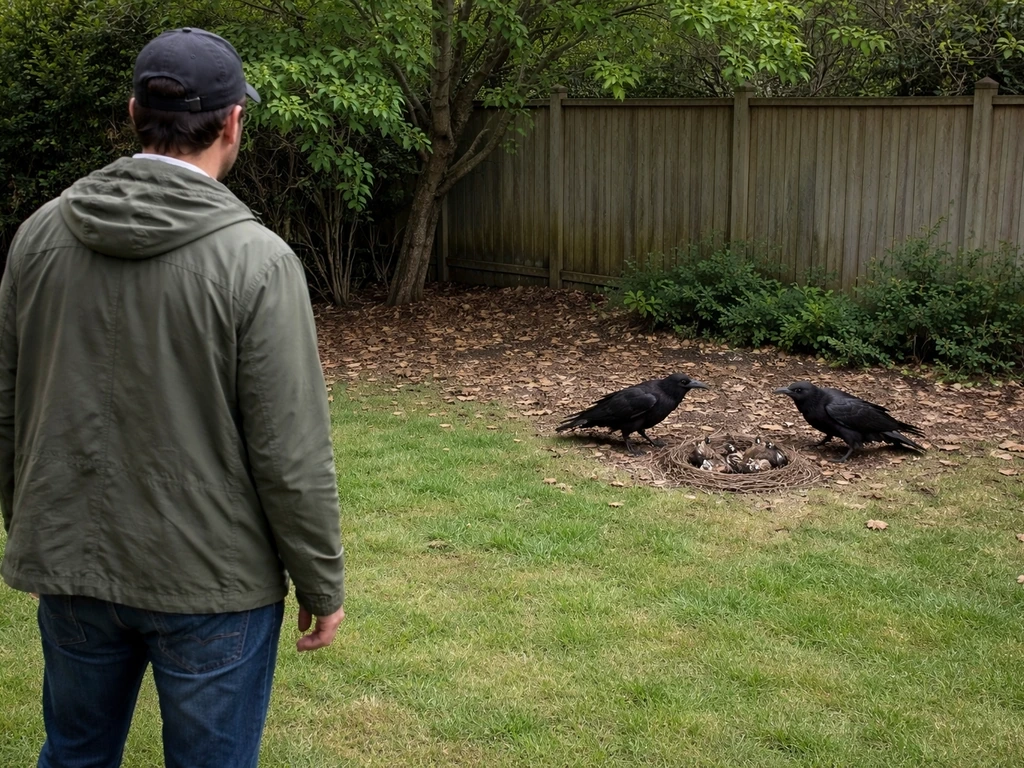
Most wild bird aggression toward humans is nest or territory defense, and it is almost always seasonal. Mockingbirds, red-winged blackbirds, crows, geese, and some raptors are the most common species involved. The practical answer is: do not engage. Reroute your path around a known nest site, wear a hat if a bird is dive-bombing you (they target the highest point), and give it two to three weeks.
Once the nesting cycle is over, the behavior stops. Never approach, chase, or try to pick up a wild bird unless it is clearly injured and you are contacting a licensed wildlife rehabilitator for guidance. If you need help with releasing a bird rather than just reducing aggression safely, see how to release a bird for the step-by-step considerations.
In the US, virtually all wild birds are protected under the Migratory Bird Treaty Act, which means capturing, handling, or relocating them without a federal permit is illegal, even with good intentions.
| Species/Group | Main aggression trigger | Best immediate response | Training timeline |
|---|---|---|---|
| Large parrots | Hormones, overstimulation, territory | Create distance, use training stick | Weeks to months |
| Cockatiels | Fear, hormonal males | Flat crest = back off; hand-feed through bars | 2 to 6 weeks |
| Budgies | Fear, pair bonding | Separate from cage mate for sessions; slow hand approach | 2 to 4 weeks |
| Finches/canaries | Inter-flock rivalry, stress | Separate birds; minimize handling | Not a handling goal |
| Wild birds (yard) | Nest/territory defense | Increase distance, reroute path | 2 to 3 weeks seasonal |
If you get bitten or the bird injures itself
For you
Wash the bite area immediately with soap and water for at least five minutes. Bird bites can introduce bacteria (Pasteurella and others) that cause infection, especially if the skin is broken. Apply antiseptic, then watch the wound over the next 24 to 48 hours. Signs that warrant a doctor visit include spreading redness, warmth, swelling beyond the immediate bite area, pus, red streaking, fever, or swollen lymph nodes. Bites from wild birds carry a slightly higher infection risk than bites from your own pet, so err on the side of caution and get it checked. If you are immunocompromised, always see a doctor after a bite that breaks skin, regardless of how minor it looks.
For the bird
A bird that bites out of aggression is usually fine physically afterward. But if the aggression was accompanied by any of these signs, book an avian vet appointment promptly: sudden onset of aggression in a previously calm bird, feather loss or self-mutilation, labored breathing, changes in droppings, weight loss, or the bird sitting fluffed and lethargic. Pain and illness are common hidden causes of aggression, and a vet check rules out medical reasons before you invest months in a behavioral approach that might not be the right fix. Also, if you attempted to restrain the bird and it escaped or hit a wall, check it carefully for wing and keel injuries and watch it for 24 hours.
When to get professional behavioral help
Consider reaching out to a certified parrot behavior consultant or avian vet if: the bird has bitten someone badly enough to require medical attention more than once, the aggression is escalating despite consistent training, you cannot identify a trigger, or the bird is self-harming. A good behaviorist will observe the bird in its environment and give you a plan specific to that animal, which is far more effective than general advice for a deeply entrenched problem.
How to prevent aggression before it starts
Environment and routine
A predictable routine is one of the most underrated tools for reducing bird aggression. Birds that know when they will be let out, when they will be fed, and when the household goes quiet are far less reactive than birds living in unpredictable environments. Cover the cage at the same time each night, feed at consistent times, and give out-of-cage time at regular intervals. Keep the cage large enough that the bird does not feel trapped. A bird that is always at the bars watching for threats is already stressed before you even open the cage door.
Enrichment
Boredom and under-stimulation are major contributors to chronic aggression, especially in intelligent species like parrots. Rotate foraging toys weekly so there is always something novel. Hide food in paper cups, rolled newspaper, or puzzle feeders rather than always presenting it in a bowl. Give species-appropriate chewing materials (cork, palm wood, soft pine for parrots; cuttlebone and spray millet for small birds). A mentally occupied bird is a calmer bird, and enrichment reduces the intensity of hormonally driven behavior because the bird's attention is being channeled elsewhere.
Consent-based interaction
One of the biggest shifts you can make is to stop handling the bird when it does not want to be handled, full stop. Let the bird initiate or at minimum give a clear willing signal before you reach in. Remove mirrors and other 'mate' objects during breeding season if your bird becomes bonded to them. Avoid petting on the back, rump, or under the wings, because this stimulates breeding behavior and contributes to hormonal aggression. Keep interactions short enough that the bird is always left wanting more, which keeps the relationship positive and reduces the overstimulation bites that happen when sessions go on too long.
Legal and ethical considerations for wild birds
In the United States, the Migratory Bird Treaty Act of 1918 protects nearly all native wild bird species, including their nests and eggs. This means you cannot legally move a nest, trap a bird, or attempt to rehabilitate an injured wild bird without a federal and sometimes state-level permit. If you find an injured or aggressive wild bird that needs intervention, contact your nearest licensed wildlife rehabilitator. Do not attempt to house or tame it yourself. Beyond the legal issue, wild birds held in captivity without expert care suffer significant stress, and that stress can be fatal in smaller species. The humane and legal path is always to call a professional.
Your prevention checklist
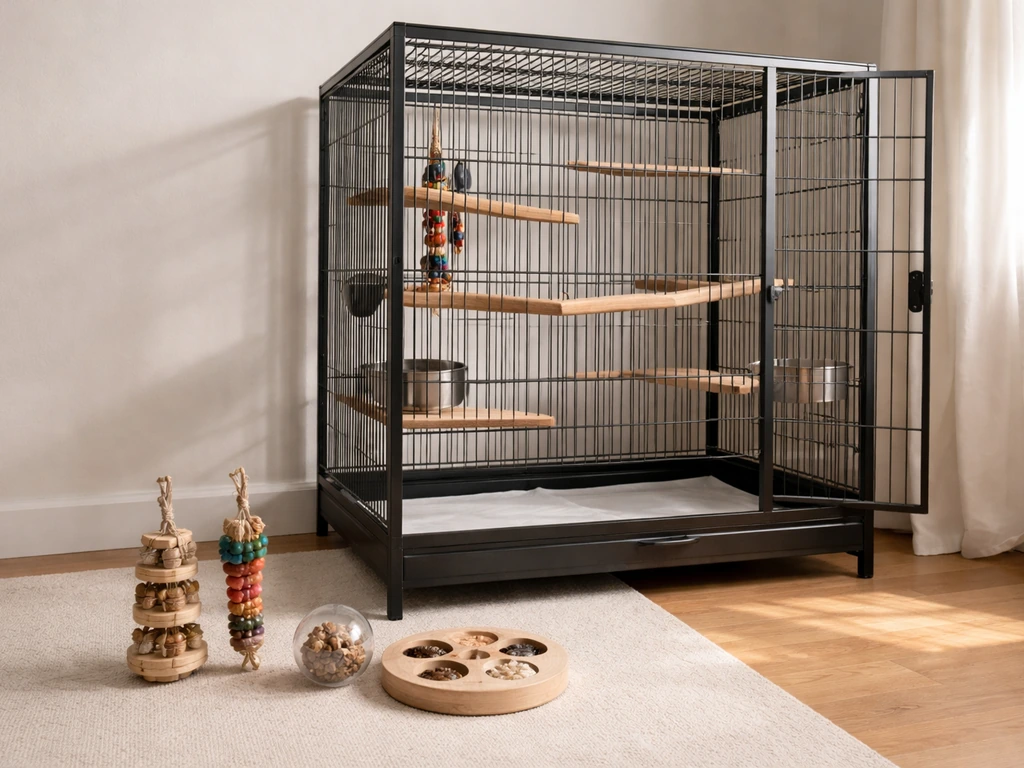
- Cage is large enough for the bird to move freely and spread its wings
- Feeding, out-of-cage time, and sleep schedule are consistent day to day
- Foraging and enrichment toys are rotated at least weekly
- Mirrors and breeding-stimulating objects removed during spring
- Petting is limited to head and neck only
- Sessions are short and always end before the bird shows stress signals
- You are watching body language and backing off at the first warning signs
- Annual avian vet check to rule out pain or illness as hidden triggers
Aggression rarely disappears overnight, but it almost always improves with a consistent, patient approach. Start with safety, work on reading the bird's signals, use training to build trust on the bird's timeline, and adjust the environment to remove the triggers you can control. If something is not working after four to six weeks of consistent effort, that is when you bring in an avian vet or behaviorist rather than pushing harder on your own. Most birds, given the right conditions and enough time, can become genuinely calm and cooperative to handle.
FAQ
How can I tell whether a bird is warning me versus actually trying to bite?
Not necessarily. If the bird is hissing, lunging, or biting repeatedly, treat it as aggression and prioritize distance and safety. However, some birds “test” with a quick nip when they are startled or uncomfortable. If you see an immediate drop in intensity after you stop moving, that points to fear or overstimulation rather than a sustained defensive attack.
What should I do if an aggressive bird is protecting a doorway or a specific spot?
Yes. First, block access to the route it wants to defend, step aside, and avoid approaching head-on. If it is guarding a doorway, cage, nest area, or a specific spot, give it an alternate path you can move through without crossing its boundary. Closing the door and letting it settle elsewhere is often safer than trying to pass around it mid-dive or mid-lunge.
After I freeze and give space, what is the safest first attempt to interact again?
Give it a single, predictable cue to lower pressure: stop movement, face slightly away, and slow your breathing for several seconds. If the bird approaches, do not offer hands or chase it away. Once it pauses and body language softens (less fanning and no pinned, fixed stare), you can try a low-stakes interaction like presenting a favorite treat at a distance, then gradually reduce the distance over days.
How do I handle an aggressive bird during an unavoidable task like a vet visit or nail trim?
Use the “set and hold” mindset. Have a second person assist, keep movements minimal, and prepare supplies so you do not fumble. Avoid sudden changes like turning on bright lights or reaching from above. If the procedure is elective, reschedule when the bird is calmer, and stop if you see escalation cues like repeated lunging or crest/feather changes.
What is the best way to figure out the trigger when I cannot clearly see a cause?
Remove one variable at a time. If aggression spikes around specific people, that suggests scent, body posture, or prior experiences. If it spikes only during certain times, it often matches hormones or routine changes. Keep a simple log (time, trigger, posture signals, what happened right after) for at least one to two weeks so you can identify patterns before changing everything at once.
Does punishing or scolding a biting bird help stop the aggression?
Avoid reinforcing aggression by “correcting” the bird with your reaction. Do not punish biting, do not blow in its face, and do not grab it to stop the behavior in the moment. Instead, change the environment so the bird can succeed, for example increase distance, reduce contact intensity, and use target training or station behaviors to keep the interaction voluntary.
What should I do if an aggressive bird suddenly lands on me or gets too close?
If the bird is on you or very close, protect yourself without escalating. Turn your body sideways, keep your hands close to your torso, and move slowly toward the bird’s exit route or toward a perch transition rather than swatting. If possible, use a barrier like a towel or a closed door to create separation rather than trying to physically push the bird away.
How do I know when to end training or handling so I do not trigger more aggression?
Stop sessions sooner than you think. A practical rule is to end the interaction while the bird is tolerating you, not after it starts warning signals. For many birds, staying too long increases overstimulation and makes the next attempt harder, even if you “try again” the same day.
What should I do medically if I get bitten badly or the bite breaks skin?
Yes. If the bite breaks skin, needs immediate medical attention, or you notice rapidly spreading redness or fever later, get urgent medical care. Also, tetanus and wound cleaning should be handled promptly, especially for deeper punctures from larger parrots or wild birds.
If my bird’s aggression started suddenly, how quickly should I see an avian vet?
In most cases, it should prompt a vet check sooner, especially if the aggression is new, different from usual, or paired with physical changes. Pain, illness, injury, or hormonal shifts can mimic “behavior problems,” so early medical screening can save weeks of training that will not address the real driver.
What should I do if the bird is too aggressive to approach safely, but I still need it moved away?
If you cannot safely create distance, do not try to restrain. For pet birds, use enclosure strategies like returning the bird to its cage with calm barriers, or closing a door so you can regain safe space. For wild birds, do not attempt capture or relocation, contact a licensed wildlife rehabilitator instead, especially if the bird is dive-bombing repeatedly.