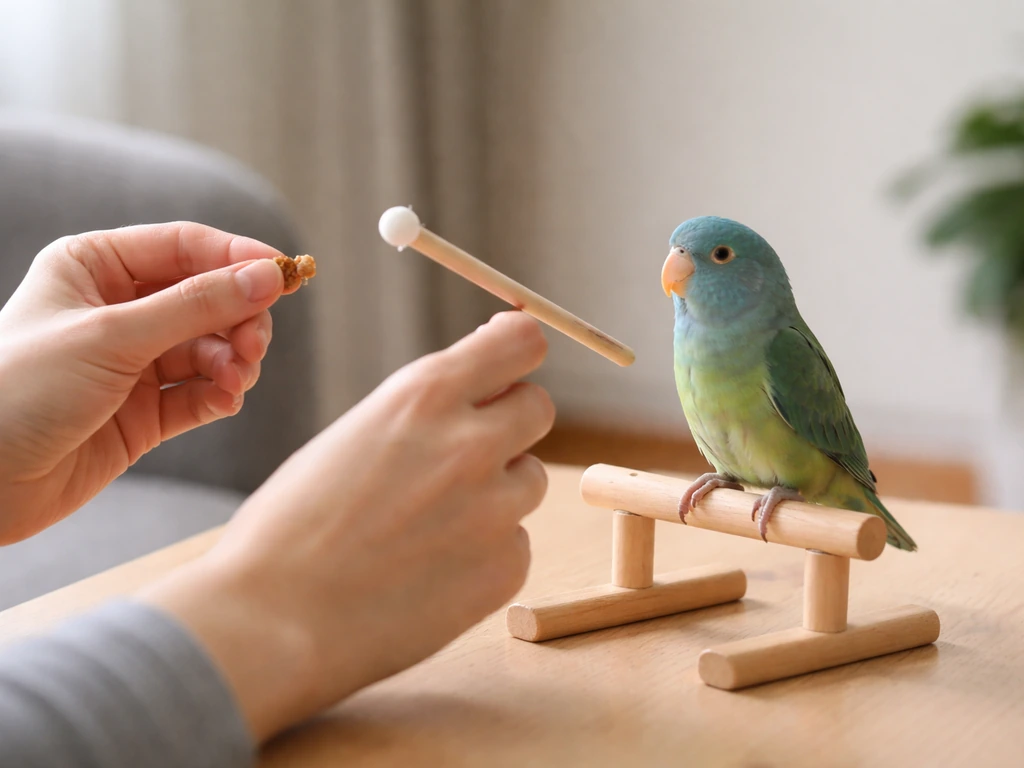
You can't punish a bird into stopping biting, and trying to do so almost always makes things worse. What actually works is a combination of an immediate, calm in-the-moment response and a consistent reward-based training plan that runs over days to weeks. This guide gives you both, along with the species-specific details and troubleshooting steps you need to make real progress starting today.
How to Discipline a Bird for Biting: Humane Training Plan
Clara Hayes
16 Apr 2026
Why birds bite in the first place
Before you can change the behavior, you need to know what's driving it. Birds bite for a handful of specific reasons, and each one calls for a slightly different fix.
- Fear or feeling cornered: This is the most common reason, especially in newly adopted birds or those handled infrequently. A bird that feels trapped will bite as a last resort after subtler signals have been ignored.
- Overstimulation: Even a bird that loves head scratches has a threshold. Too much petting, too much noise, or too much handling crosses it fast, and a bite is how they communicate 'enough.'
- Hormonal surges: During breeding season (roughly spring into summer for most species), hormones can flip a calm bird into an unpredictably bitey one. This is temporary but real.
- Territorial behavior: Many parrots become cage-aggressive during adolescence or breeding season. Reaching into the cage to retrieve the bird is a common trigger.
- Learned behavior: Birds learn fast that biting gets results. If biting you on the hand makes you put them back in their cage (which they wanted), or makes you flinch and pay attention, they'll keep doing it. LafeberVet specifically highlights this: biting can become a reliable strategy for the bird once it's been reinforced even accidentally.
- Pain or illness: A normally gentle bird that suddenly starts biting hard should prompt a vet check. Pain lowers tolerance dramatically, and aggression is a recognized clinical sign of underlying physical problems.
Pay attention to the body language leading up to a bite. The warning signs are usually there if you know what to look for: feathers puffed around the head and shoulders, wings held slightly away from the body, tail fanning, eyes pinning (rapid pupil dilation and constriction in parrots), an open mouth, or aggressive lunging at the perch. If you learn to read these signals and respond before the bite happens, you're already most of the way to solving the problem.
What to do in the exact moment your bird bites
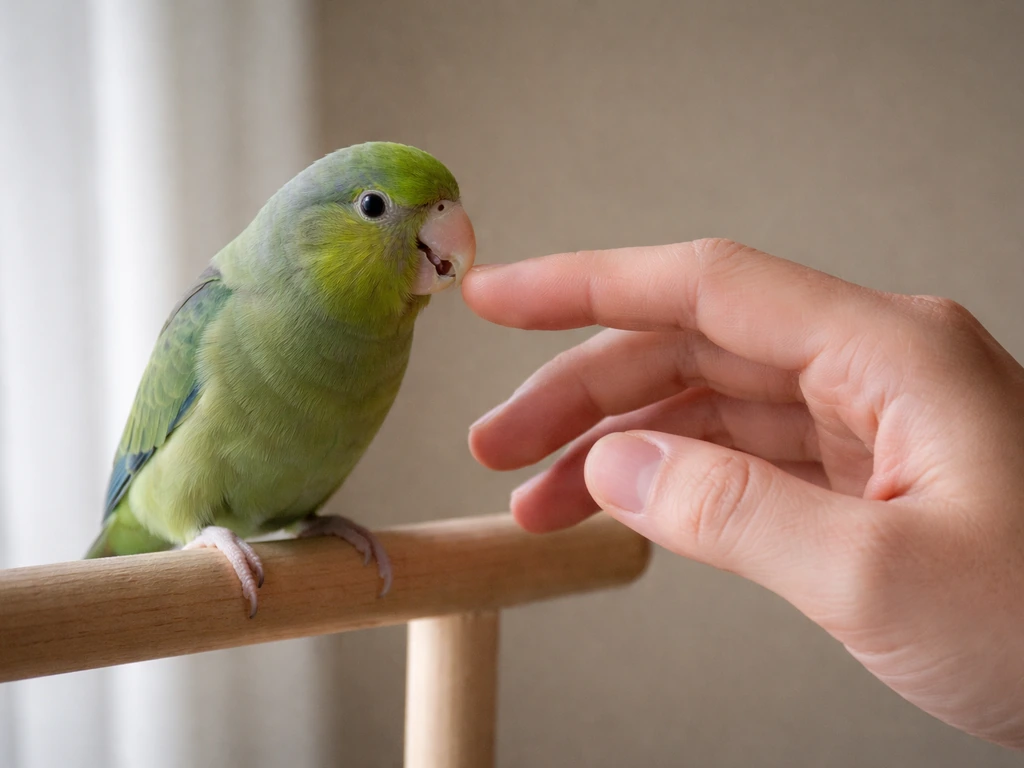
Your response in the first two to three seconds after a bite matters more than almost anything else. The wrong reaction can accidentally teach your bird that biting is a great strategy. PetMD also warns that if you startle the bird, such as when a previously pulled-away hand suddenly moves back, it can teach fear and make biting more likely a previously pulled-away hand can teach fear. Here's what to do instead.
- Don't jerk your hand away sharply. This is counterintuitive, but pulling back fast can actually reinforce the bite by giving the bird a satisfying physical result and it can also cause injury to both of you. Instead, gently push forward very slightly into the bite pressure. This is uncomfortable for the bird without being harmful and it disrupts the biting motion without a dramatic reaction.
- Stay calm and keep your face neutral. No yelping, no raised voice, no staring the bird down. A dramatic reaction is interesting to a bird and interesting equals reinforcing.
- Give a brief, quiet 'no' or just say nothing at all. The point is zero emotional reward from the bite.
- Use the time-out approach. Lafeber describes this as a tool for the handler to collect composure: set the bird down on a neutral perch or back in their cage for about 30 to 60 seconds, turn your back, and give zero attention. Keep it short. Longer than a minute and the bird has no idea what the time-out was about.
- Return and try again with a lower-stakes interaction. If you were asking the bird to step up and they bit, go back to just offering a treat through the cage bars for a few minutes before trying again.
The logic here is simple: the bite produces a boring, unrewarding outcome (brief social isolation, no drama, no result) and then calm cooperation immediately produces something good. Repeated consistently, this is a fair and effective consequence. It's worth reading more about how to deal with punishing bird behavior the right way, because the framing matters a lot for making this work without accidentally causing fear or mistrust.
Reward-based training that actually reduces biting over time
The in-the-moment response stops the immediate problem. The training plan is what creates lasting change. The core principle is differential reinforcement: you're reinforcing every behavior that is not biting, especially calm perching, accepting touch, and stepping up voluntarily, while removing rewards for biting.
Building the training habit
- Keep sessions short: 5 to 10 minutes maximum, two to three times per day. Birds lose focus quickly and short sessions prevent overstimulation (which is itself a bite trigger).
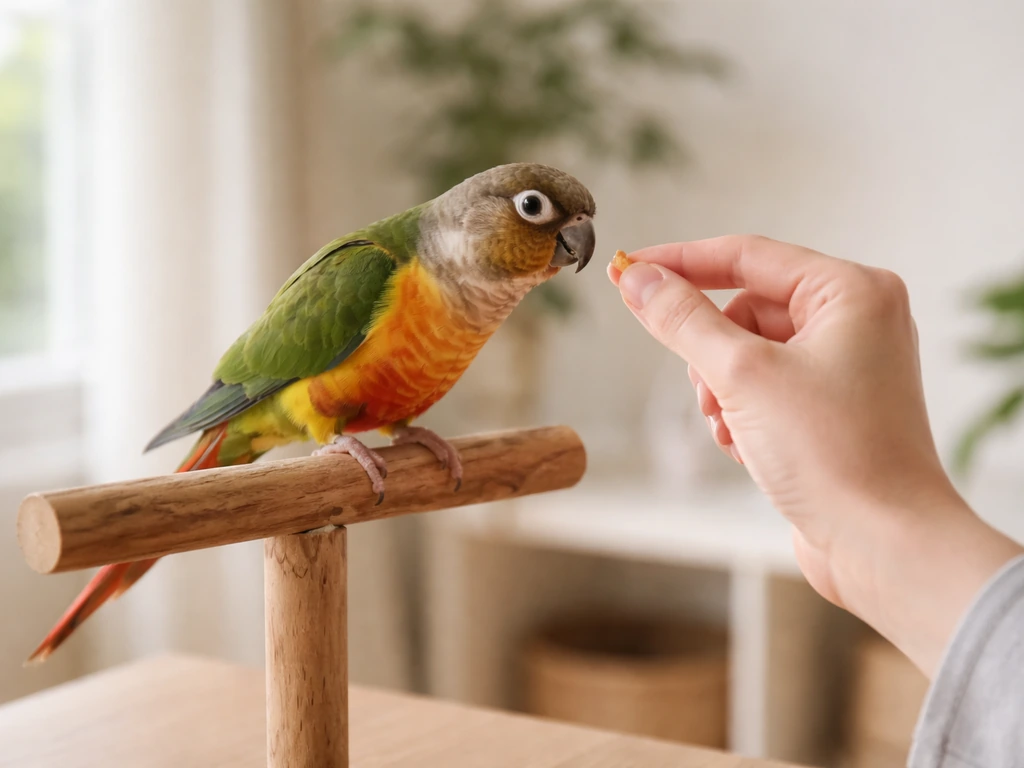
- Pick a high-value food reward your bird actually gets excited about. Millet, a small piece of nut, a bit of fruit, or pellet crumbles all work depending on the species. The bird should only get this treat during training.
- Start well below the bird's tolerance threshold. If they bite when you try to pick them up, don't start there. Start by rewarding them just for letting your hand be near the cage. Build in tiny increments.
- Reward immediately. Treats and verbal praise should land within one to two seconds of the correct behavior or the bird can't connect the reward to what they just did.
- Use a marker cue (a clicker or a consistent short word like 'yes') to bridge the gap between the behavior and the treat. This makes training faster and clearer for the bird.
- Never reward a bite, even accidentally. If you hand over a treat because the bird is demanding it and has just nipped you, you've taught them that nipping gets treats.
The AVSAB is clear on this point: blank" rel="noopener noreferrer">aversive training methods, meaning anything physical or psychologically intimidating, should not be used under any circumstances. Hitting, scruffing, shaking, flicking, or spraying water as a punishment doesn't teach the bird what to do instead and it destroys trust. You're trying to build a relationship where your bird chooses to cooperate because cooperation feels safe and rewarding. A good resource for thinking through this more broadly is the article on how to discipline a bird, which lays out the full framework for humane consequences in bird training.
Teaching an alternative behavior
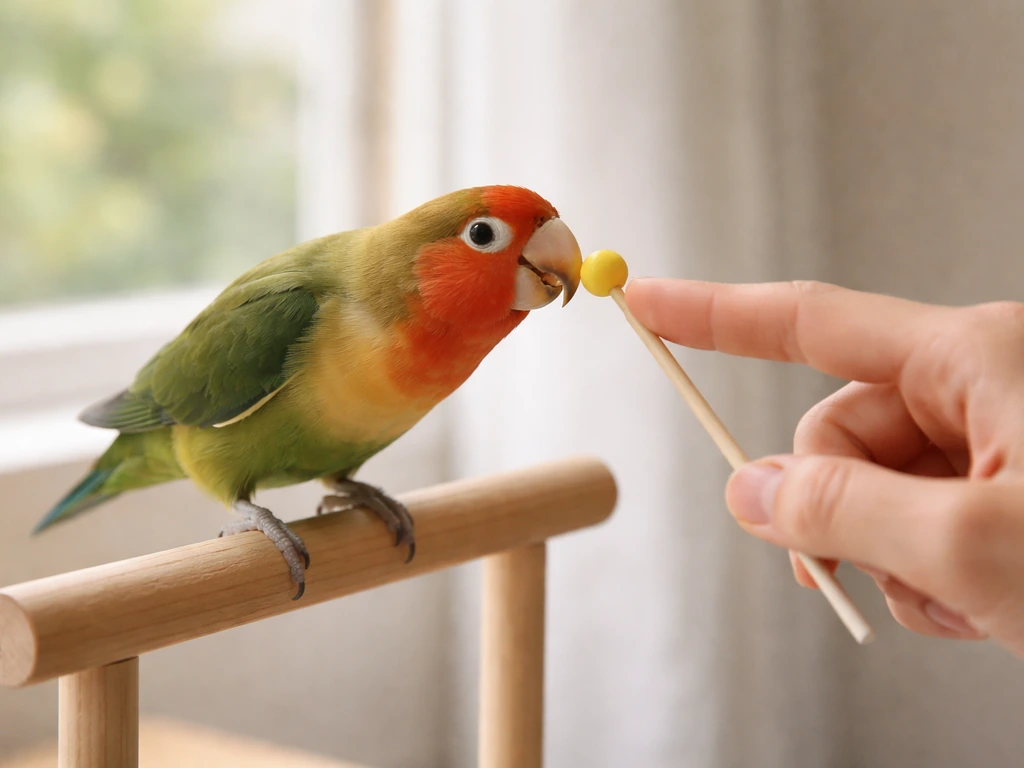
One of the most effective long-term strategies is teaching the bird what to do with their beak instead of biting. Target training (touching a stick or your finger tip on cue) gives the bird a constructive outlet for beak-related behaviors and gives you a way to redirect them the moment you see pre-bite warning signs. A full breakdown of these techniques is available in the guide on how to teach a bird not to bite, which walks through the step-up and target-training progressions in detail.
Species-specific notes: parrots, cockatiels, budgies, and finches
Biting looks different across species and the training approach needs to adapt accordingly. Here's what changes by bird.
| Species | Common bite triggers | Training notes | Typical progress timeline |
|---|---|---|---|
| Large parrots (macaws, cockatoos, amazons, African greys) | Hormonal surges, territorial cage aggression, overstimulation, boredom | High intelligence means fast learning but also fast habit formation. Consistency is critical. Target training and station training work very well. Avoid reaching into cage; use a perch to invite step-up from cage door. | 4 to 8 weeks for significant improvement with daily sessions; some individuals take longer |
| Medium parrots (conures, caiques, lovebirds, pionus) | Overexcitement, jealousy, fear biting in new environments | Conures and caiques tend to bite from overexcitement rather than fear. Keep sessions calm. Short time-outs are effective. Reward calm stillness frequently. | 2 to 6 weeks |
| Cockatiels | Fear, overstimulation around crest/nape, hormonal bluffing in adolescence | Usually not a dangerous bite but can be startling. Focus heavily on reading crest position (flat and slicked back means stressed or aggressive). Gentle step-up practice with millet as reward. Don't force handling. | 2 to 4 weeks with patient, daily handling |
| Budgies | Fear (especially in recently purchased birds), finger positioned incorrectly for step-up | Budgie bites rarely break skin but the bird is still afraid if they're biting. Go very slowly. Spend several sessions just letting the bird approach your hand voluntarily before asking for a step-up. | 1 to 3 weeks for tame birds; newly purchased scared birds can take 4 to 8 weeks |
| Finches and canaries | Handling stress (these are not hands-on birds by nature) | Finches and canaries are not typically trained for handling and biting in these species usually means they're being handled when they shouldn't be. Reserve handling for health checks and use safe restraint techniques rather than training for regular contact. | Not applicable for routine handling; health-check handling tolerance can improve with very gradual desensitization |
A quick note on wild birds: if you're dealing with a wild bird in your yard or a rehabilitation context, biting is a defense behavior and the ethical approach is entirely different. Wild birds should not be trained to accept handling. If a wild bird is biting during necessary health checks or transport, proper restraint is the answer, not behavior modification. There are also legal considerations: handling most wild birds without a permit is regulated in the US under the Migratory Bird Treaty Act. If you need to release a bird that's been temporarily in your care, the guide on how to release a bird covers the process safely and legally.
Prevention: reading body language and setting up better routines
Most bites are preventable once you understand your bird's patterns. The goal is to get to a point where you rarely have to use the in-the-moment protocol because you've stopped the bite before it happens.
Read the warning signals
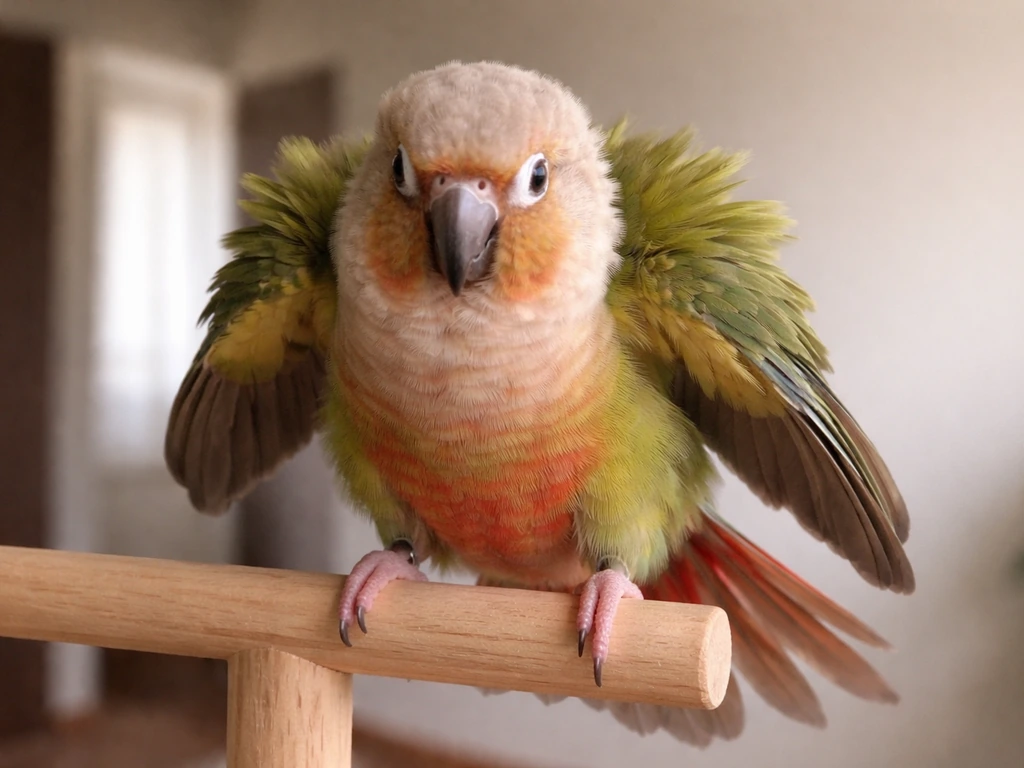
Review this checklist before every handling session and during interactions. If you see two or more of these signs, stop the interaction, give the bird space, and try again later:
- Feathers puffed up around head and shoulders
- Wings held out from the body
- Tail fanning or rapid tail bobbing
- Eye pinning in parrots (pupils rapidly changing size)
- Open beak directed at you
- Lunging toward your hand before you make contact
- Flat, slicked-back crest in cockatiels
- Rapid side-to-side head bobbing in some parrot species
- Turning away from you and moving to the back of the cage
Set up handling routines that reduce triggers
- Handle your bird at consistent times each day. Predictability reduces anxiety.
- Don't approach from above or behind. Come in from the side at the bird's level.
- Avoid handling during clear high-aggression windows: first thing in the morning for some species, and during obvious hormonal periods in spring.
- Keep handling sessions within the bird's demonstrated tolerance window and end on a positive interaction before they've reached the biting threshold.
- Reduce petting to the head and neck only. Full-body stroking can be hormonally stimulating and is a common cause of overstimulation bites.
- Make sure the bird is getting enough sleep (10 to 12 hours of dark, quiet time), a balanced diet, and adequate enrichment. A bored, tired, or nutritionally deficient bird bites more.
If you're working with a bird that's been aggressive for a while and you're not sure how to safely pick them up or manage them during training, the article on how to handle an aggressive bird covers safe positioning and approach techniques in detail. For situations where you do need to restrain the bird for a health check or vet visit, pairing that with training using how to restrain a bird humanely makes the whole process less stressful for both of you.
Troubleshooting: what to do when biting isn't improving
If you've been consistent for two to three weeks and the biting hasn't reduced at all, or has gotten worse, work through this checklist before assuming it's a pure behavior problem.
- Check for consistency gaps. Is everyone in the household using the same response protocol? One person accidentally rewarding biting undoes everyone else's work.
- Check session length and timing. Are you running sessions longer than 10 minutes? Are you handling when the bird is showing pre-bite signals? Scale back further and go slower.
- Check the reward value. Is the treat actually motivating the bird? Try a few options and observe which gets the most excited response.
- Check for environmental stressors. New pets, new people in the home, a moved cage, or a changed schedule can all spike aggression temporarily.
- Check for pain or illness. A sudden increase in biting intensity, especially if paired with changes in droppings, eating, vocalization, or feather condition, needs a vet check before any training intervention. Pain changes everything.
- Check for hormonal timing. If biting spikes in spring and settles down by midsummer, hormones are the primary driver. Adjust expectations and reduce handling intensity during that window.
- Consider whether you've been pushing too fast. Behavior change in birds is measured in weeks, not days. If you moved from 'hand near cage' to 'step up on command' in four days, you probably skipped steps.
Realistic timelines
Here's what most pet owners can realistically expect with daily, consistent training:
- Days 1 to 7: You're learning to read signals and the bird is learning that biting produces boring results. Expect the same frequency of bites but slightly less intensity as the bird tests the new pattern.
- Weeks 2 to 3: Most birds begin showing some reduction in biting attempts if triggers are being managed. Step-up compliance starts improving.
- Weeks 4 to 6: Significant improvement for most cockatiels and budgies. Larger parrots may still be working through this phase.
- Weeks 6 to 12: Larger parrots and birds with long-standing biting habits should be showing clear progress. If not, see the 'When to get professional help' section below.
- Ongoing: Even well-trained birds can have setback bites. One bite after three weeks of success doesn't mean the training failed. Stay consistent with the response protocol and move on.
One thing that helps in this phase is understanding what you're actually communicating to the bird versus what you intend to communicate. The broader article on how to beat bird up at training (meaning getting ahead of the behavior before it escalates) has some useful framing around setting the bird up to succeed rather than managing failure repeatedly.
When to bring in a vet or behavior professional
There are situations where training alone isn't enough and pushing forward without professional support can make things worse or mask a medical problem.
See an avian vet if you notice any of these
- Sudden onset of biting in a previously gentle bird (rule out pain or illness first, always)
- Biting paired with changes in droppings, weight loss, reduced appetite, or changes in vocalization
- Beak or nail overgrowth alongside increased aggression
- Feather plucking combined with new biting behavior (both can signal pain)
- Tail or crest droop, fluffed feathers, or labored breathing alongside aggression
- Biting hard enough to break skin repeatedly, especially in a bird that was not previously doing this
The Association of Avian Veterinarians and LafeberVet both emphasize that aggression and biting can be clinical signs of underlying physical disease. A medical workup before behavior modification is not optional when the above signs are present. Getting an avian vet baseline exam, especially for a newly adopted bird, is also smart preventive practice because some infections stay hidden and surface under stress.
Consider a certified avian behavior consultant if
- Biting has not improved after 8 to 12 weeks of consistent, daily training
- The bird is causing serious injury during handling
- You're unsure how to safely manage the bird between sessions
- The bird has a history of abuse or extreme fear responses
- The aggression is targeted at a specific household member and you haven't been able to identify or change the trigger
The AAV position on avian behavior problems is clear: a qualified veterinarian or avian behavior consultant is the appropriate resource when biting is severe, persistent, or of unknown cause. Look for consultants who use positive reinforcement-based methods aligned with AVSAB's humane training guidelines. Avoid anyone who recommends physical correction, dominance-based approaches, or any kind of aversive technique.
A note on legal and ethical considerations for wild birds
If you're a backyard birder or rehabilitator dealing with a wild bird that's biting during handling, the ethical and legal situation is different from pet bird training. Most wild birds in the US are protected under the Migratory Bird Treaty Act, and handling them without a federal or state permit is illegal. If you're doing permitted rehabilitation work, necessary handling should use proper restraint techniques with safety equipment. Training wild birds to accept handling is not an appropriate goal and attempting it can compromise their ability to survive after release. Keep interactions minimal, focused, and purposeful.
For pet bird owners, the takeaway is straightforward: start with the in-the-moment protocol today, run short reward-based training sessions consistently over the next four to eight weeks, and rule out medical causes if anything doesn't add up. Most biting problems respond well to this approach when applied patiently and consistently. You don't need to punish your bird to change the behavior. You just need to make biting boring and cooperation rewarding, and then repeat that until the bird chooses cooperation every time.
FAQ
If my bird bites, what should I do right after, and what should I avoid doing?
Avoid reacting with attention, talking, or reaching again immediately after the bite. Instead, end the interaction calmly for 5 to 20 seconds, then resume only when the bird is quiet and your hands are steady. If you see the warning signs returning, stop before contact and try later to prevent “near-miss” bites from being inadvertently reinforced by your presence.
Does “boring consequence” mean I have to separate my bird every time they bite?
No. Differential reinforcement works by rewarding calm, not by overwhelming the bird. If you must leave the room to reset, do it slowly and consistently, without slamming doors or chasing. The key is that biting leads to loss of access to the handler’s engagement, while calm leads to predictable, pleasant interaction.
How do I train step-up if my bird bites during stepping up?
If your bird bites during stepping up, you can switch to a structured progression: start with target training to get voluntary approach, then reward for quiet contact with the stick, and only later pair it with your hand for step-up. Also shorten sessions, because long handling windows increase arousal and reduce the bird’s ability to choose the desired behavior.
How can I figure out what triggers my bird’s biting?
Look for patterns by time and context, not just the moments you get bitten. Common triggers include waking up, cage territoriality, head/neck touch, being approached from above, or being grabbed to move perches. Track 3 details (where, what you were doing, and what the bird’s body language was) to identify the highest-risk cue to change first.
What do I do if biting seems to happen even when I try to redirect with target training?
Use training targets and consent-based choices to reduce the frequency of bites, then reinforce the replacement behavior every time. For many birds, “touch the target with the beak” becomes the immediate substitute for beak-first aggression, and calm stepping up or accepting one brief, non-invasive touch becomes the next reward goal.
How long should I train each day, and what if sessions make biting worse?
Start with very short sessions, about 1 to 3 minutes, 1 to 2 times per day, and end while your bird is still successful. Overtraining can increase excitement and make warnings like lunging or eye pinning appear sooner. If bites spike the day after training changes, scale back duration and add more spacing between sessions.
My bird shows warning signs, but I wait too long and they bite. How should I handle this in real time?
Create a “safe distance” routine. If warning signs appear, back away to reduce arousal, then resume only when the bird has relaxed posture (more neutral eyes, less feather puffing, no lunging). Consistency matters, because alternating between letting the bird bite and pulling away only teaches them that the strategy sometimes works.
How do I address biting during nail trims, wing checks, or other necessary procedures?
If bites are happening during specific handling tasks, do task-specific shaping. For example, reward calm standing at the area where nail trims happen, then reward for tolerating proximity to the equipment, then for brief contact, and stop well before the bird escalates. If you cannot reliably keep the bird below threshold, that’s a sign to get hands-on help from a qualified professional.
What should I do if biting increases after starting reward-based training?
If your bird is biting more after you begin the plan, the most common causes are session length that is too long, reinforcement for the wrong behavior (accidentally paying attention after a bite), or a medical issue increasing irritability. Before changing methods, verify the in-the-moment consequence and that rewards follow calm behavior immediately.
When is biting more likely to be medical rather than behavior?
A vet check is especially important if changes are sudden, biting is paired with lethargy, appetite changes, difficulty breathing, abnormal droppings, or signs of pain when touched. Also consider medical causes if the bird’s body language looks “different” from usual, or if aggression is new after you introduced a new diet, supplement, or household change.
Can I use physical correction if my bird’s biting is severe?
Do not. Even if they seem “mild,” dominance or physical correction methods can worsen fear and increase the chance of escalated bites. Instead, use a consent and reinforcement plan (targeting, step-up progression, and calm rewards), and if you need safety for a vet visit, rely on humane restraint techniques rather than punishment.
What’s the safest way to manage biting incidents when I or someone else gets hurt?
For injuries to humans, wash thoroughly and seek medical advice when needed (especially with deeper punctures). After any bite incident, pause training that day, review the trigger and your timing, and treat the bird’s warnings as a threshold issue. If bites are causing harm or you feel unsafe handling the bird, prioritize professional support immediately.
Next Article
How to Teach a Bird Not to Bite Step by Step
Humane step-by-step training to stop pet or backyard birds biting with safety handling, alternatives, timelines, and tro