Disciplining a bird does not mean punishing it. It means teaching it what you want it to do instead of what it is doing now, using clear cues, consistent routines, and rewards that actually motivate your bird. That distinction matters because [punishment-based approaches, things like squirting water, shouting, or forcing the bird back into its cage when it misbehaves, reliably make behavior worse. ](https://www.
How to Discipline a Bird: Humane Training Steps That Work
Clara Hayes
5 Apr 2026
rspca. org. uk/adviceandwelfare/pets/birds/training) The RSPCA explicitly warns that using punishment when training goes wrong can make matters much worse. The BSAVA goes further, noting that aversive methods can cause injuries and lead to long-term fear and aggression.
So when you search for how to discipline a bird, the honest answer is: use positive reinforcement, remove the trigger when you can, redirect the behavior, and be consistent. Everything below shows you exactly how to do that.
Safety, legality, and what humane discipline actually means
Before you start any training, get clear on three things: your safety, your bird's welfare, and whether what you are doing is even legal.
On safety: birds can bite hard, especially larger parrots. If a bird is actively lunging or biting, do not attempt hands-on training without first understanding how to restrain a bird safely. Use a towel or a perch to create distance, protect your hands, and de-escalate before you try anything else.
On legality: if the bird you are dealing with is wild, not a pet, you need to stop and read this carefully. [Under the U. ](https://uscode. house.
gov/view. xhtml? req=%28title%3A16+section%3A703+edition%3Aprelim%29)S. Migratory Bird Treaty Act (16 U.
S. C. §§ 703-712), it is generally unlawful without authorization to pursue, capture, take, kill, or possess any of approximately 1,100 listed migratory bird species, including their parts, nests, and eggs. This applies at any time, by any means.
Eagles have their own separate protection under the Bald and Golden Eagle Protection Act, which allows certain handling only under specific permits. In plain terms: if a wild bird is causing problems in your yard, your legal options are deterrence and habitat management, not capture or hands-on correction. Contact a licensed wildlife rehabilitator if a wild bird needs direct handling.
On humane goals: discipline for a pet bird should never cause pain, use the threat of pain, or rely on fear, distress, or intimidation. That rules out squirting water, hitting, shaking the cage, screaming back, or using restraint as punishment. What it does include is teaching the bird what earns rewards, setting up its environment so problem behavior is less likely, and responding calmly and consistently every single time. The goal is a bird that chooses the behavior you want because that behavior predicts good things.
Figure out why your bird is doing it before you try to fix it
The fastest way to fail at bird training is to jump straight to correction without diagnosing the cause. Biting, screaming, feather destruction, and aggression all look similar from the outside, but they have very different roots, and the fix for a fear-based bite is completely different from the fix for an attention-seeking one.
Check for medical causes first
If a bird suddenly starts biting more, or if its screaming pattern changes, see a vet before you do anything else. PetMD is clear on this: a bird that suddenly bites a lot should receive a complete veterinary examination to rule out pain or illness, and a sudden change in vocalizations also warrants a vet check. Pain makes birds defensive and reactive in ways that look exactly like bad behavior. Treating a training problem that is actually a medical problem will not help and could genuinely hurt the bird.
Read the behavioral clues by species
Once medical causes are ruled out, look at what the bird is telling you with its body. The Avian Welfare Coalition identifies these as key fear and stress signals: repeated pacing or repetitive movement, excessive vocalization, cowering, crouching, or trembling, lunging or thrashing against bars, and attempts to retreat when you approach. If you are seeing any of these, the bird is not being bad. It is scared, overstimulated, or both. Training under these conditions will not work and can create phobic behavior.
Species context matters a lot here. Parrots (including large species like African Greys, Amazon parrots, and macaws) are highly social, emotionally complex, and prone to attention-seeking behavior and hormone-driven aggression during breeding season. Cockatiels are sensitive birds that startle easily and often scream from loneliness or fear rather than defiance. Budgies are small but can bite surprisingly hard when cornered, and their nipping is almost always fear-based, especially in birds that have not been hand-tamed. Finches are rarely handled directly and almost never need hands-on behavioral correction. For finches, environment management and flock dynamics are the main levers you have.
| Species | Common problem behavior | Most likely cause | First step |
|---|---|---|---|
| Large parrots (Amazon, Macaw, Cockatoo) | Biting, lunging, screaming | Overstimulation, hormones, attention-seeking, fear | Vet check, then identify trigger moment |
| African Grey | Biting, feather plucking, phobic reactions | Fear, stress, inadequate enrichment | Rule out medical, reduce environmental stressors |
| Cockatiel | Screaming, hissing, nipping | Loneliness, fear, startling, hormones | Increase predictable interaction time, reduce startling |
| Budgie | Nipping, biting during handling | Fear, not yet tame, cornered feeling | Go back to taming basics, no forced contact |
| Finch | Aggression toward cage-mates | Territorial overcrowding, breeding competition | Cage size, perch placement, flock composition |
Build the foundation: trust and handling before anything else
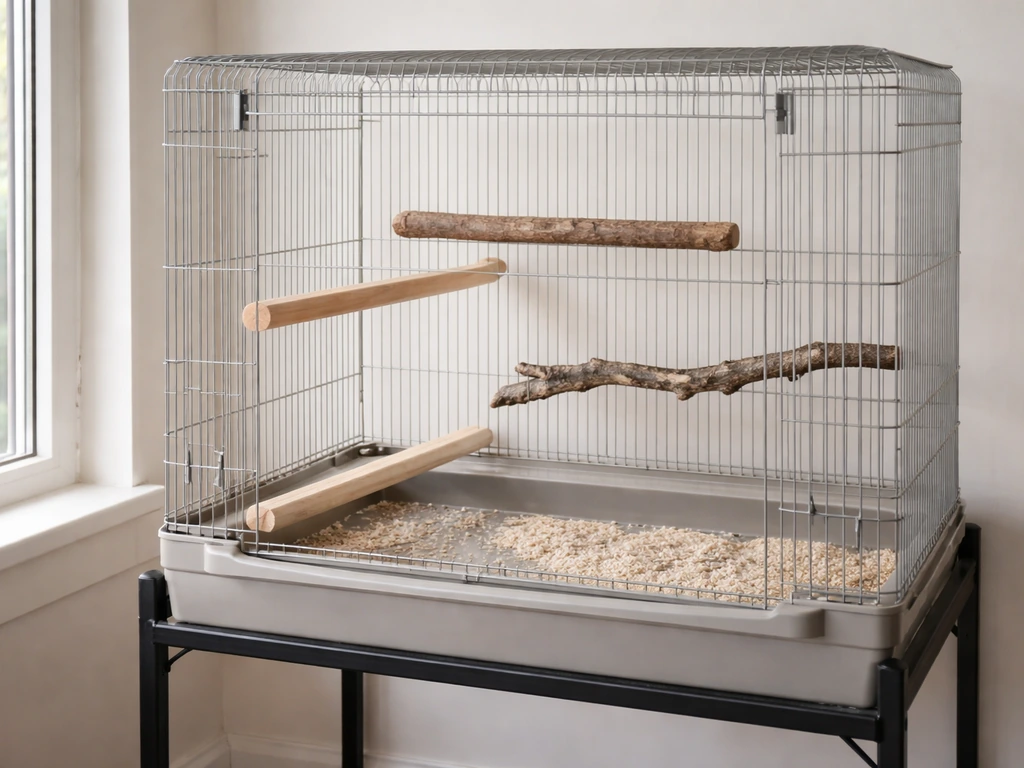
No behavior plan works without a foundation of trust. If your bird does not yet reliably step up, tolerate being near your hand, or accept basic handling, that is where you start, not with trying to stop a specific behavior.
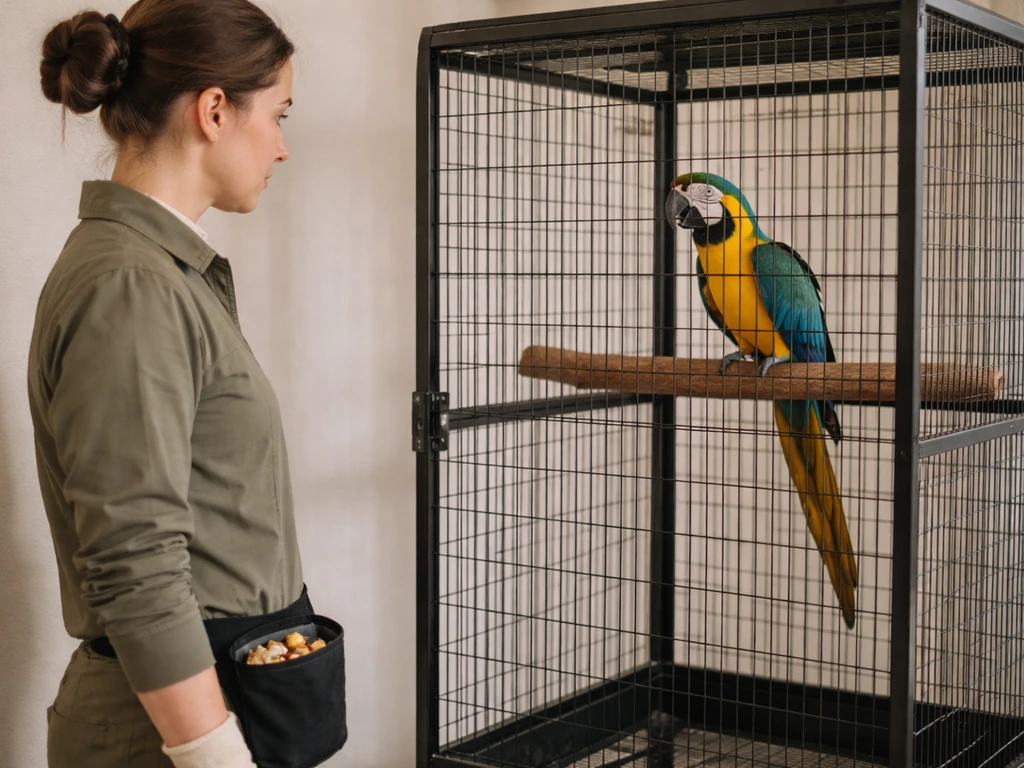
Sit or stand near the cage at a distance that does not make the bird retreat. Do nothing threatening. Offer a small treat through the bars. Do this daily for several days before you even try to open the cage. The goal is to become predictable and non-threatening. When the bird takes treats calmly, open the cage and offer treats near the door. Progress to offering your hand or a perch as a step-up surface, always at the bird's pace.
The RSPCA recommends training birds to accept handling for health checks using this kind of consent-based, goal-directed approach rather than forcing contact. Heavy-handed restraint, like grabbing and holding a bird against its will to "show it who is boss," causes fear and avoidance. It does not build cooperation. If you need to handle a bird that is not yet accepting it willingly, understanding how to handle an aggressive bird safely will help you do so without making things worse.
Keep early training sessions short, ideally two to five minutes, and end every session before the bird shows any sign of stress. Ending on a calm, successful moment builds confidence faster than longer sessions that exhaust or frighten the bird.
Redirecting and rewarding: what discipline actually looks like
Here is the core concept: discipline for birds is not about correcting the wrong behavior after it happens. It is about making the right behavior more rewarding than the wrong one, and setting things up so the wrong behavior is harder to trigger in the first place.
Positive reinforcement means giving the bird something it wants immediately after it does something you want. The World Parrot Trust describes positive reinforcement as the most effective training approach for parrots, and VCA notes that timing is everything: a reward (or a clicker click that predicts a reward) should come as soon as possible after the target behavior. Even a one-second delay makes it much harder for the bird to connect the reward to the action.
Redirection means interrupting an unwanted behavior and immediately giving the bird an acceptable alternative. If a cockatiel is screaming for attention, do not yell back (that is attention, and it rewards the screaming) and do not ignore it while staying in the room (the RSPCA notes that doing nothing while the bird can see you will not stop biting, and the same applies to screaming). Instead, wait for a brief pause in the noise, even two seconds of quiet, then immediately go give attention. You are reinforcing quiet, not screaming.
What not to do: squirting with water, shaking the cage, tapping the beak, shouting, or putting the bird in its cage as punishment. The Gabriel Foundation's behavior training resources explicitly flag water squirting as an aversive punishment, and Fear Free avian training materials note that positive punishment creates more aggressive behavior and stronger fear, while failing to teach the bird what the correct behavior actually is.
Understanding the difference between these approaches is the biggest shift most owners need to make. For a deeper look specifically at correction around biting, how to deal with punishing bird situations breaks down why punishment backfires and what to do instead.
Step-by-step plans for the most common problem behaviors
Biting
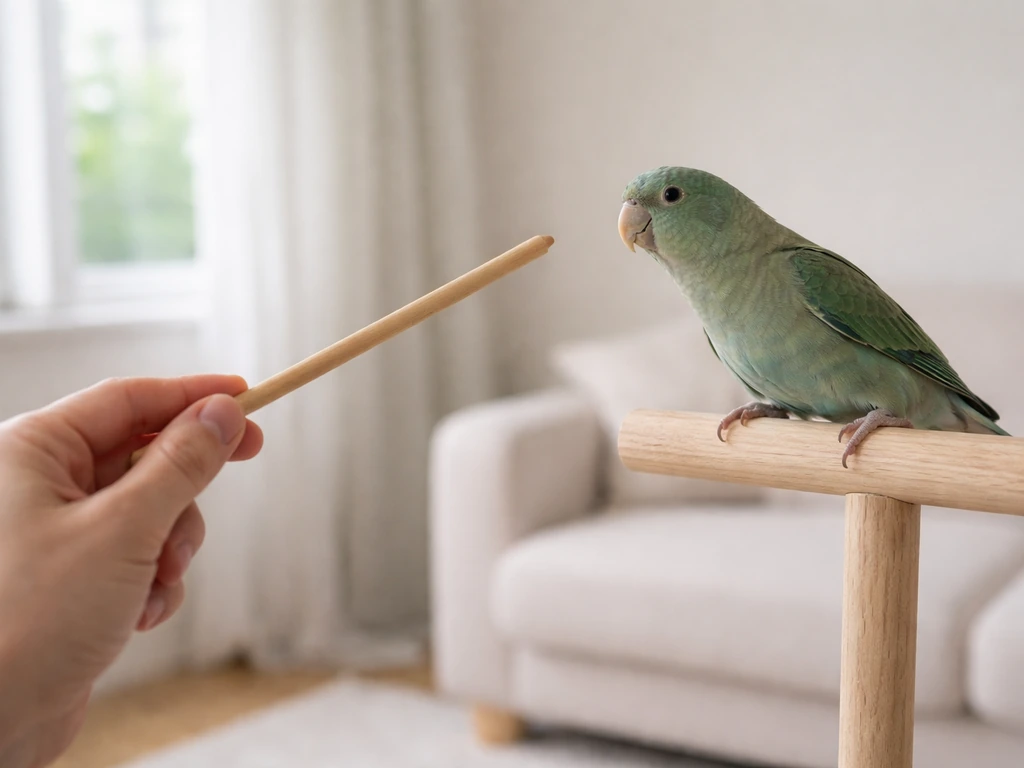
Biting is the behavior most owners call a discipline problem, and it is usually a communication problem. If you are trying to “beat” a bird into behaving, start by using humane, reward-based training instead of force or punishment how to beat bird up. The bird is saying: too close, too fast, too much, or I am scared. Here is how to address it systematically.
- Rule out pain or illness with a vet visit if the biting started suddenly or increased in intensity.
- Identify the exact trigger: is it your hand approaching, a specific person, a certain time of day, when the bird is on its cage (territorial), or during petting in certain spots?
- Stop the approach that triggers the bite before the bird escalates. Watch for pre-bite warning signals: raised feathers, pinning eyes, a shift in posture, or a low growl. Retreat at those signals.
- Practice approach-and-retreat at the bird's comfort threshold. Approach just inside the warning zone, pause, then move away calmly. Repeat until the warning signals stop appearing at that distance.
- Reward any calm response to your approach with a high-value treat. Sunflower seeds, pine nuts, or a small piece of fruit often work well, depending on the bird.
- Never pull your hand away sharply when bitten. That makes the bite more rewarding (the threat worked). Instead, push very slightly toward the bite (this surprises the bird and removes the tension), then calmly remove your hand.
- Work through how to discipline a bird for biting for more detail on managing bite intensity and building a step-by-step desensitization plan.
Screaming
Some vocalization is completely normal and healthy, especially for parrots and cockatiels. Contact calls, morning and evening calls, and flock calling are instinctive. The goal is not silence. The goal is reducing screaming that is disruptive, sustained, or escalating.
- Get a vet check if the screaming is new, sudden, or accompanied by other behavior changes.
- Keep a simple log for three to five days: when does the screaming happen, what was the bird doing before it started, and what happened right after? Look for patterns.
- If screaming reliably gets your attention, your response is reinforcing it. Teach a contact call instead: when the bird makes its normal contact call, respond with your own short vocalization or whistle. This satisfies the flock-calling instinct without rewarding alarm screaming.
- Increase predictable interaction time with a consistent daily schedule. Cockatiels and parrots scream less when they know when attention is coming.
- If the bird screams when you leave the room, practice short departures and returns so the bird learns you always come back.
- Reward quiet with calm attention. If you catch the bird being quiet and calm, walk over and offer a treat or gentle speech.
Flying off or flight panic
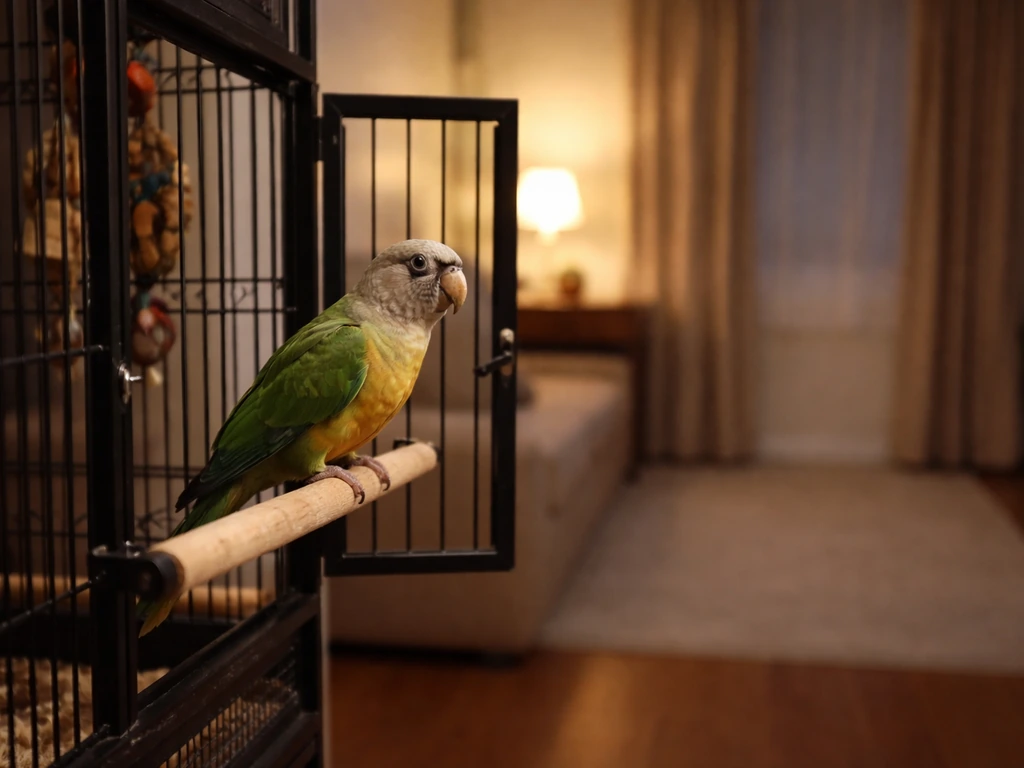
Flight panic happens when a bird startles and cannot land safely, or when it bolts from handling. This is a safety issue as much as a training one. Clipped birds can still panic and injure themselves. Fully flighted birds in an unbird-proofed room can fly into windows or escape. Before working on flight behavior, make the space safe: close windows and doors, cover mirrors, and remove ceiling fans.
- If a bird has flown off and is loose in the room, stay calm. Chasing increases panic. Dim the lights slightly if possible, which often calms the bird and makes it land.
- Crouch low and offer a familiar perch or your hand at the bird's level. Do not reach overhead.
- For a bird that consistently panics during handling, go back to trust-building basics before any step-up training. Trying to handle a panicking bird will not teach it to be calmer.
- If you need to retrieve a bird that has escaped outdoors, knowing how to release a bird safely (and reverse the process for recovery) can help you approach a downed or grounded bird without causing further injury.
- Build recall training using a target stick and high-value treats so the bird learns to fly to you on cue.
Aggression and territorial behavior
Cage-level aggression (lunging at hands near the cage, guarding food, or attacking cage-mates) is often territorial rather than personal. The cage is the bird's territory, and an approach near it triggers a defense response even in otherwise friendly birds.
- Move all training and step-up work away from the cage. Ask the bird to step up onto a neutral perch in an open area of the room.
- Do not reach into the cage to grab a bird that is displaying aggression. Use a perch to offer a step-up option instead.
- For multi-bird aggression, look at space: are there enough perches, food stations, and visual barriers? Overcrowded or under-enriched cages create competition.
- Hormonal aggression, common in spring in parrots and cockatiels, often requires a short-term reduction in petting and stimulation (especially on the back and under the wings), a reduction in daylight hours using a cage cover, and patience. It passes.
- For birds with a history of escalating aggression toward people, how to teach a bird not to bite offers a structured desensitization plan you can work through at home.
Troubleshooting setbacks and building a realistic training timeline
Progress in bird training is rarely linear. A bird that stepped up reliably last week may suddenly refuse this week. That is normal. Use this checklist when things go sideways.
- Did something change in the environment? New furniture, new people, a new pet, construction noise, or a moved cage can all set back trust.
- Is the bird in a hormonal cycle? Spring and fall often bring behavioral regression even in well-trained birds.
- Are sessions too long? Even five minutes can be too much for a scared or young bird. Cut back.
- Is the reward still motivating? Birds get bored with the same treat. Rotate options and find what the bird is most excited about right now.
- Are cues consistent? Everyone in the household must use the same word and the same hand signal for the same behavior. Inconsistency confuses the bird and slows learning.
- Are you training when the bird is tired, overstimulated, or hungry in a way that causes frustration rather than focus? Mid-morning, after the bird has eaten but is still active, often works best.
- Is anyone in the household using punishment when you are not present? One punitive interaction can undo days of positive work.
Realistic timelines: a hand-tame budgie learning a new step-up cue in a calm environment can show reliable results in one to two weeks. A frightened parrot with a history of punitive handling can take months to trust hands again, sometimes longer. A cockatiel working through hormonal aggression may need a full seasonal cycle before behavior stabilizes. Do not compare your bird's timeline to anyone else's. Compare it to where your bird was last week.
Know when to get professional help. If a bird is injuring itself, destroying feathers, showing sustained aggression that is escalating rather than improving, or exhibiting behaviors you cannot safely manage, contact a certified animal behavior consultant. The RSPCA recommends reaching out to both a specialist bird vet and a certified animal behaviourist. The International Association of Animal Behavior Consultants (IAABC) maintains a directory of certified consultants who can provide hands-on guidance for complex cases.
Set up the environment and tools to make training stick
Training does not just happen during formal sessions. The bird's environment either supports the behaviors you want or works against them constantly. Here is what to get right.
Perches, cage setup, and enrichment
Perches should be at varied heights and diameters to keep feet healthy and give the bird choices. A bored bird with one flat perch and nothing to chew is a bird that will invent its own entertainment, often loudly. Provide foraging opportunities by hiding treats in paper, wrapping food in leaves, or using foraging toys. Enrichment reduces screaming, reduces feather destruction, and makes training sessions more effective because the bird is mentally engaged rather than frustrated.
Place the cage at eye level or just below. A cage placed very high can make a bird feel dominant and territorial. A cage placed very low can make a bird feel insecure and defensive. Eye level is the sweet spot for most pet birds.
Target sticks and clickers
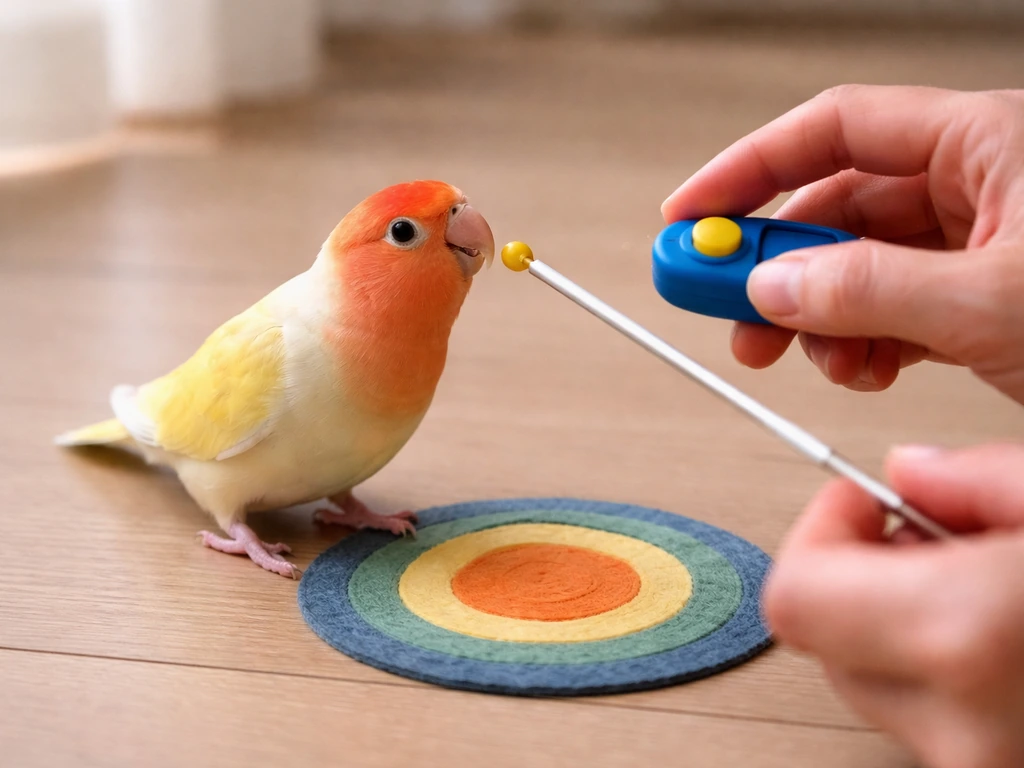
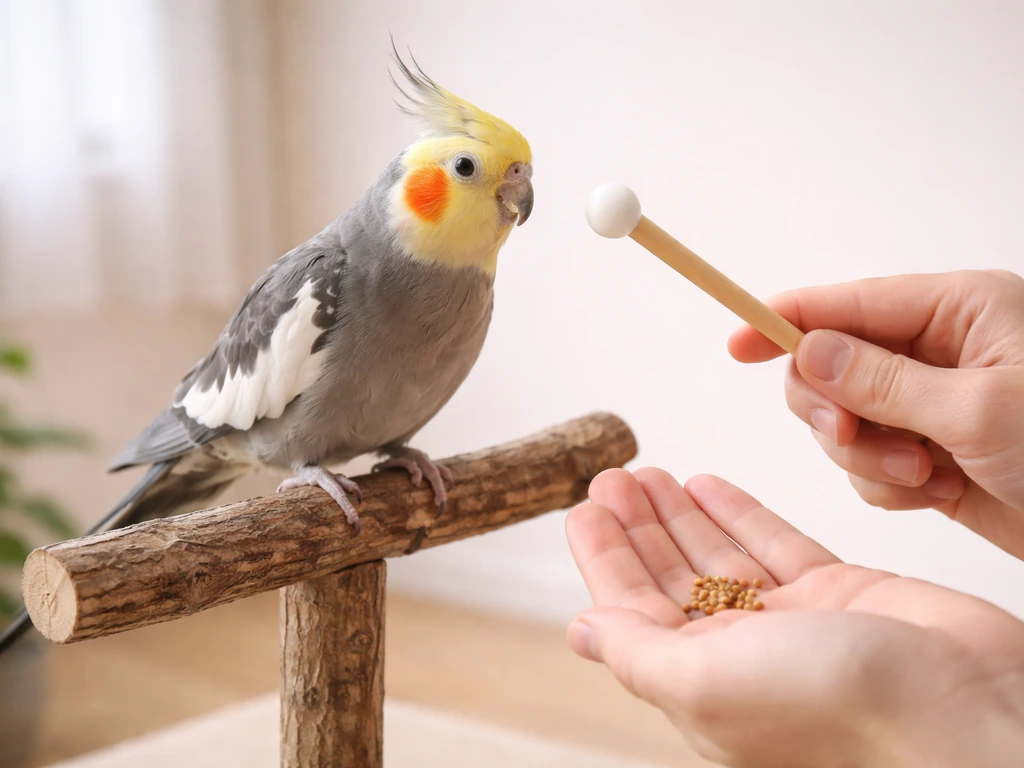
A target stick (any small stick or chopstick works) is one of the most useful tools in bird training. The Gabriel Foundation's training resources describe the method clearly: teach the bird to touch the tip of the stick with its beak for a treat, then move the stick so the bird has to move toward it to touch it. This becomes your way to guide the bird onto perches, onto your hand, into a carrier, or away from a problem area, all without forced contact.
A clicker paired with treats uses the same principle. VCA explains the timing: click the instant the bird touches the target, then deliver the treat immediately after. The click becomes a precise signal that tells the bird exactly what earned the reward. This precision speeds up learning dramatically compared to just handing over treats at random moments.
Routine and consistency
Birds thrive on routine. Feed, interact, train, and cover the cage at roughly the same times every day. Unpredictable schedules increase anxiety, and an anxious bird is a reactive bird. Set a consistent light schedule: most pet parrots and cockatiels do best with ten to twelve hours of darkness for sleep. Chronic sleep deprivation is a genuine cause of irritability and aggression that many owners never consider.
Finally, make sure everyone who interacts with the bird is on the same page. One person using positive reinforcement while another uses punishment will confuse the bird and stall progress. A short family conversation about the rules (no squirting, no shouting, same cues, same rewards) is one of the most effective training tools you have. Consistent, calm, reward-based handling, applied every day across every person in the household, is what actually changes behavior over time.
FAQ
If my bird is already scared, how do I start discipline training without making it worse?
Start by rewarding small, easy approximations of the behavior you want (for example, approach the target, then touch, then step onto a perch). If your bird is already showing fear stress signals, do not “go for the behavior” yet, instead train consent and distance first (treats for calm, then closer gradually).
What if I am not great at timing rewards, does that ruin positive reinforcement?
Use a strict 1-second rule: deliver the treat (or click, then treat) at the instant the desired action happens. If you cannot reliably time it, skip correction attempts that moment, reset the setup, and try again with a simpler target.
What should I do in the moment if my bird attacks or lunges and I need to stop it safely?
Avoid punishment-based responses as “discipline,” but you still may need immediate management for safety. Use temporary barriers, cue-based redirection (target stick or offered perch), and supervised distance until the bird is calm enough to train. Never grab or force interaction as a stand-in for training.
How do I reduce screaming without accidentally rewarding it?
Screaming often improves when the bird gets attention for a quiet moment, not when it screams. Wait for a brief pause (even 1 to 2 seconds), then calmly provide the attention, then slowly increase the quiet requirement over days so you are shaping a longer quiet behavior.
My bird’s behavior changed suddenly, how can I tell if it is training or a health issue?
Do a safety-first “triage”: schedule a vet check if there is sudden change in biting, new aggression, changed vocalizations, or any signs of illness or pain. If medical causes are ruled out, track triggers (time of day, cage approach, handling, breeding season) and adjust routine and environment before changing training methods.
My bird gets stressed before we finish training, how do I stop the session correctly?
You can end the session early, but the key is avoiding a long period where the bird is stressed and still gets chances to rehearse the bad behavior. End on success using distance and a simpler step (like accepting a treat through the bars), then try again later when the bird is calmer.
My bird only behaves during training sessions. How do I generalize good behavior to everyday life?
Progress stalls if the environment keeps triggering the problem. For cage-level issues, manage approach distance, add neutral activities (chewing items, foraging), and teach a “go to target” or “step up” alternative before you let anyone reach near the trigger.
Can I use multiple training tools like a clicker and target stick together, or will that confuse my bird?
Yes, but only if you structure it carefully: avoid using the same cue for multiple things and avoid stacking cues when the bird is already overwhelmed. If you do cue training, pair each new cue with clear success criteria and immediate reward, then fade prompting so the bird can perform independently.
What does consent-based handling look like for birds that refuse step-up or contact?
Give the bird a way to choose: offer two options (perch on the target stick vs. step back to a safe area) and only approach when the bird is moving toward the positive option. If the bird cannot offer consent, do not force handling, use environmental management and professional help until handling is safer.
How do I figure out what triggers my bird’s aggression if it seems random?
Use a log for 7 to 14 days with columns for trigger, body language, what you did, and outcome. Look for patterns like specific hand locations, time of day, hunger, or when lights change, then adjust one variable at a time so you can tell what actually improves behavior.
How should training change during breeding season or when hormones seem to be the cause?
For hormone-related aggression in parrots, reduce arousal triggers (avoid dramatic overstimulation, keep breeding-like conditions minimal, and follow a consistent light-dark schedule). You generally will see gradual improvements across weeks, not instant relief, so focus on safe routines and consent-based handling while working with a vet if aggression escalates.
When is it time to stop DIY training and get professional help?
If the bird injures itself, escalates despite consistent positive training, or you cannot safely manage the situation, that is a stop-and-get-help moment. Ask a specialist avian vet for pain or medical causes, and a certified behavior consultant for a plan tailored to your bird and household safety needs.