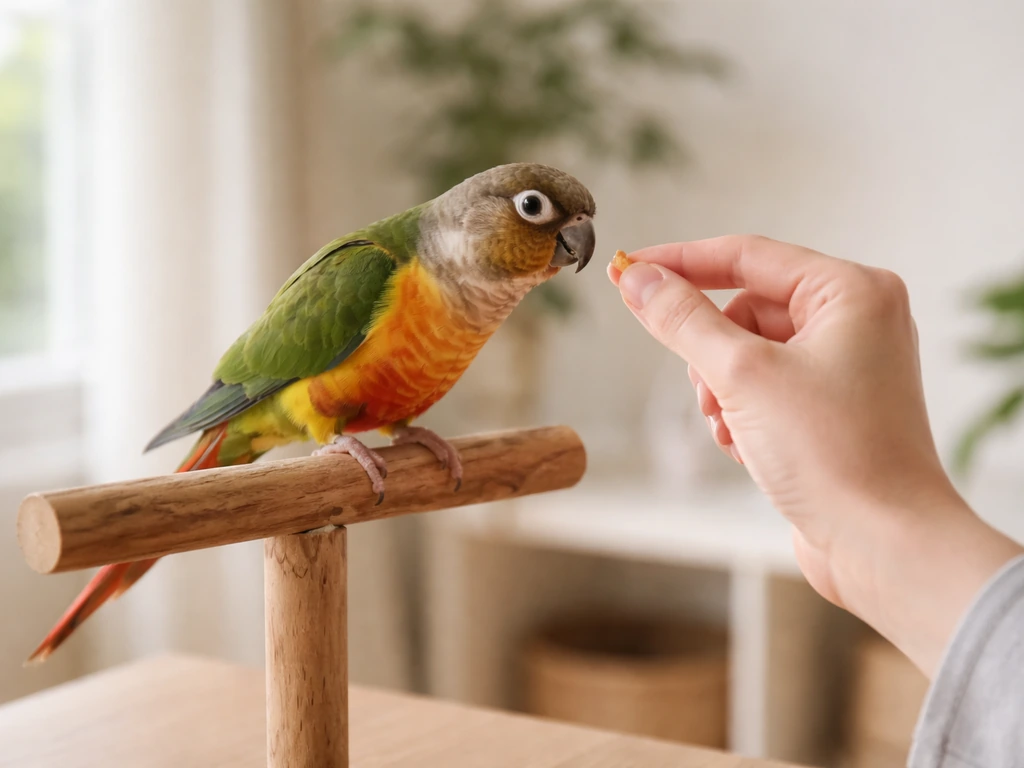
If you have a wild bird in your hands right now, here is the clearest path forward: keep it warm, dark, and quiet in a ventilated box, do not feed or water it yet, and call a licensed wildlife rehabilitator as soon as possible. That single chain of actions covers the vast majority of situations and gives the bird the best shot at survival. The rest of this guide walks you through every decision point after that first move, from assessing whether the bird really needs a rehabber to planning and performing a safe, humane release when the time is right. A big part of that next phase is knowing the difference between normal handling and actions that amount to trying to discipline a bird.
How to Release a Bird Humanely: Step-by-Step Guide
Clara Hayes
26 Apr 2026
Should you release it yourself or hand it to a rehabber?
This is the most important question in the whole process, and most people skip it. The honest answer is that the majority of wild birds you find injured, sick, or grounded need a licensed wildlife rehabilitator, not a DIY release. Under U.S. federal law (50 CFR § 21.76), you are allowed to pick up a sick, injured, or orphaned migratory bird without a permit only for the purpose of immediately transporting it to a permitted rehabilitator or licensed vet. Keeping it at home and deciding when to release it is a different matter entirely, and in most states requires a state wildlife rehabilitation permit on top of a federal one. So before anything else, be honest with yourself about which situation you are actually in.
That said, there are a handful of scenarios where you can and should attempt a release yourself, without involving a rehabber. The clearest one is a healthy fledgling that has simply hopped out of the nest. Another is a bird that flew into a window, stunned itself, and has fully recovered. A third is a bird that was temporarily trapped indoors. In all of these cases, the bird was never truly injured or orphaned, and a quick, careful release is exactly the right call.
Here is a simple way to split the two paths:
| Situation | Right action |
|---|---|
| Healthy fledgling on the ground, parents nearby | Return to nest or leave in a safe spot for parents to tend |
| Nestling (eyes closed, no feathers) on the ground | Return to nest if reachable; call a rehabber if nest is gone |
| Bird flew into window, now alert and gripping | Hold in dark box 30-60 minutes, then attempt release |
| Bird is bleeding, has a broken wing, or can't stand | Box it up, do not feed, call rehabber immediately |
| Bird has been with you more than 24-48 hours | Call a rehabber; imprinting and nutritional issues are real risks |
| Species is a bird of prey, waterfowl, or songbird you can't ID | Call a rehabber; handling rules and permits vary by species |
Quick species and condition check before you do anything
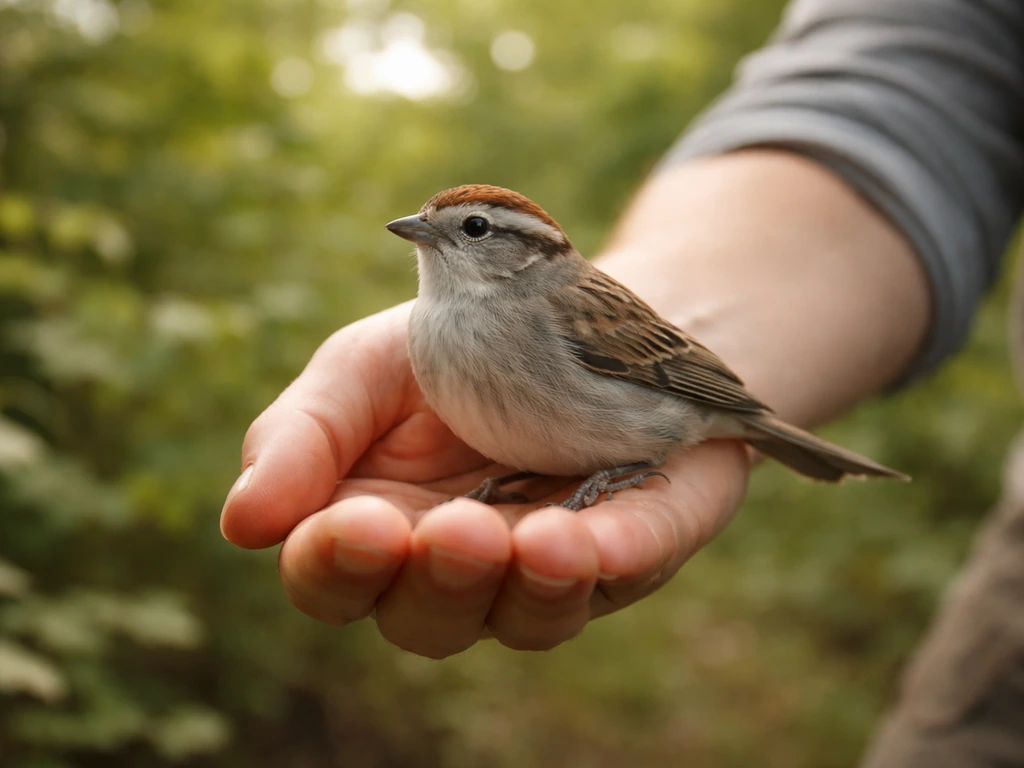
You do not need to be an expert birder to do a basic triage assessment. You just need to look carefully at a few things. Start with the bird's overall size and shape, then its bill. A short, thick bill usually means a seed-eater like a sparrow or finch. A hooked bill means a raptor. A long, pointed bill suggests an insect-eater. Bill shape alone will often tell you which broad group you are dealing with, which matters because birds of prey, waterfowl, and colonial waterbirds have their own handling and legal considerations.
Next, look at the feathers. A bird with no feathers or closed eyes is a nestling and almost certainly needs a rehabber. A bird with fluffy, short feathers, a short tail, and some bare patches is a fledgling, and fledglings being on the ground is completely normal. A fully feathered bird with adult plumage is your best candidate for a same-day release if it checks out physically. Molt patterns can give you a rough age read too: young birds often show a mix of fluffy juvenile feathers and incoming adult plumage, and their flight feathers may be noticeably shorter or more worn.
Then assess the bird's condition with these quick checks:
- Is it gripping your finger or a perch firmly? A weak grip is a red flag.
- Are both eyes open, clear, and tracking movement?
- Is the bird holding its head upright, not drooping or tilting?
- Are both wings held symmetrically against the body?
- Can it stand and bear weight on both legs?
- Is there any visible blood, discharge from eyes/nostrils, or obvious swelling?
- Has it been sitting in the same spot for more than an hour without moving?
If the bird fails any of those checks, it needs professional evaluation before release. Injuries are not always obvious from the outside, and an American Bird Conservancy reminder that is worth taking seriously: a bird that looks 'mostly okay' can have internal injuries, lead poisoning, or a fracture that is not visible without an X-ray. When in doubt, box and call.
Preparing the bird humanely: stress, feeding, flight, and imprinting
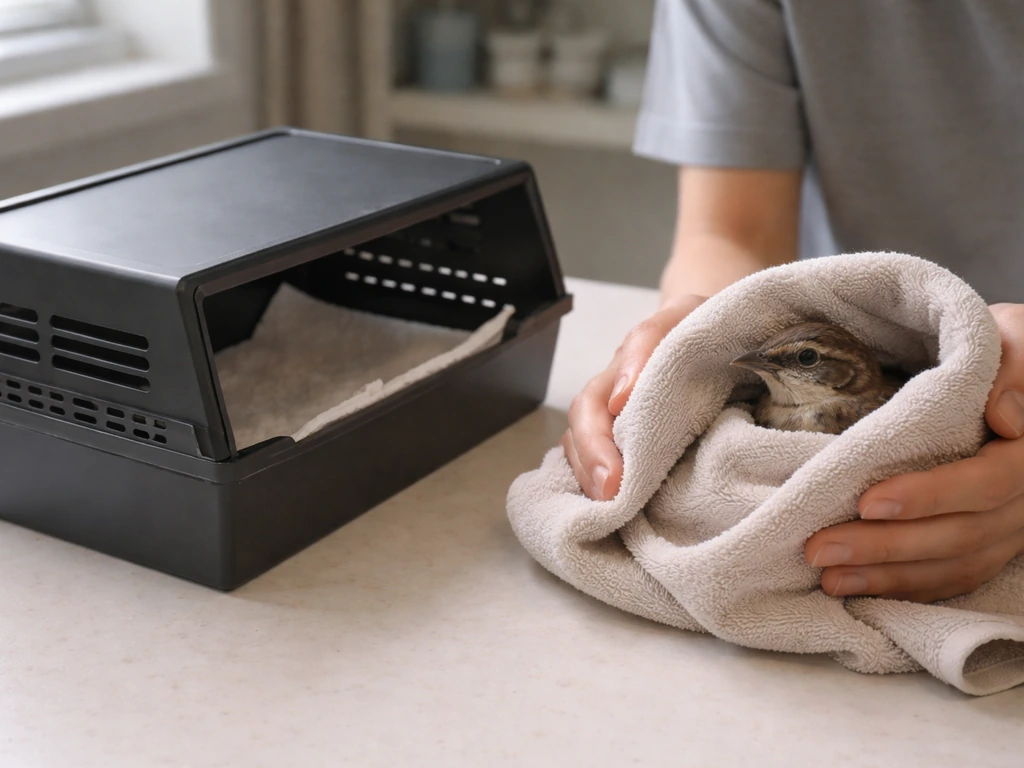
If the bird is cleared for release, your job during the preparation window is simple: do as little as possible. Minimize handling. If you are handling a bird that is nipping or biting, use gentle training approaches like those in our guide on how to teach a bird not to bite. If the bird is aggressive, focus on avoiding escalation and keeping your own safety in mind while you decide whether a licensed rehabilitator should handle it how to handle an aggressive bird. If the bird is biting, also follow our guidance on how to discipline a bird for biting safely how to teach a bird not to bite. Keep the environment calm. Do not feed or water the bird unless you have received specific instructions from a rehabilitator, because the wrong food or an incorrect feeding technique can cause more harm than hunger in the short term. This applies whether the bird has been with you for 30 minutes or a couple of days.
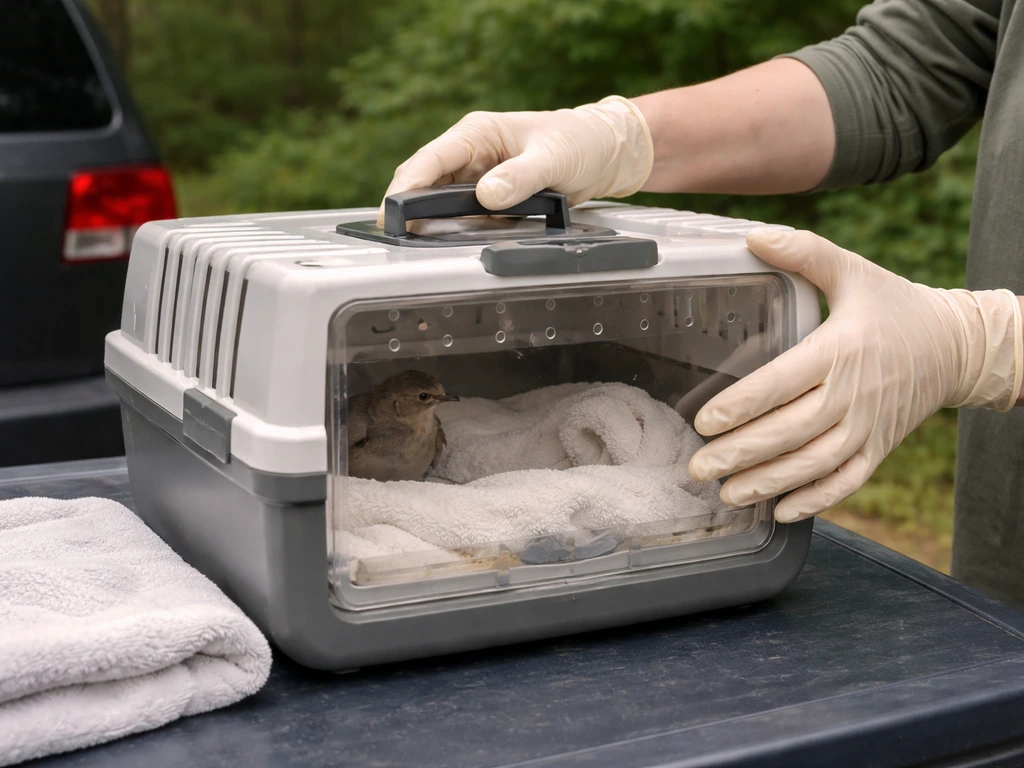
For a stunned window-strike bird, the prep is short. Place it in a small, dark, well-ventilated cardboard box with a paper towel on the bottom for grip. Put the box somewhere warm and quiet, away from pets, children, and loud noises. Check on it every 15 to 20 minutes without opening the box: listen for movement and scrabbling, which is a good sign. Most window-stunned birds recover within 30 to 60 minutes. If it has been more than two hours and the bird is still not active, call a rehabber.
For a bird you have had for longer, imprinting is the critical issue to understand. Imprinting is when a young bird begins to associate humans with safety and food, which permanently reduces its ability to survive in the wild. It happens fastest in nestlings and fledglings and can begin in as little as a day or two of intensive human contact. If a bird has been in your home for more than 48 hours, has been hand-fed, or actively seeks human contact rather than trying to escape, it may already be partially imprinted and will need proper evaluation from a rehabilitator before any release attempt. Releasing a significantly imprinted bird is essentially sentencing it to a slow death.
If you are working with a rehabber and they have cleared the bird for release, they will often have already done a flight readiness check. If you are doing this yourself with a window-stunned bird, the best informal test is to open the box outdoors and step back. A flight-ready bird will launch on its own within seconds. Do not throw or toss a bird to test its flight; that is a stress event and a potential injury risk.
Planning the actual release: location, timing, and risk reduction
Where and when you release a bird matters almost as much as whether it is physically ready. A bird released at the wrong location or the wrong time of day can end up in more danger than before.
Picking the right spot
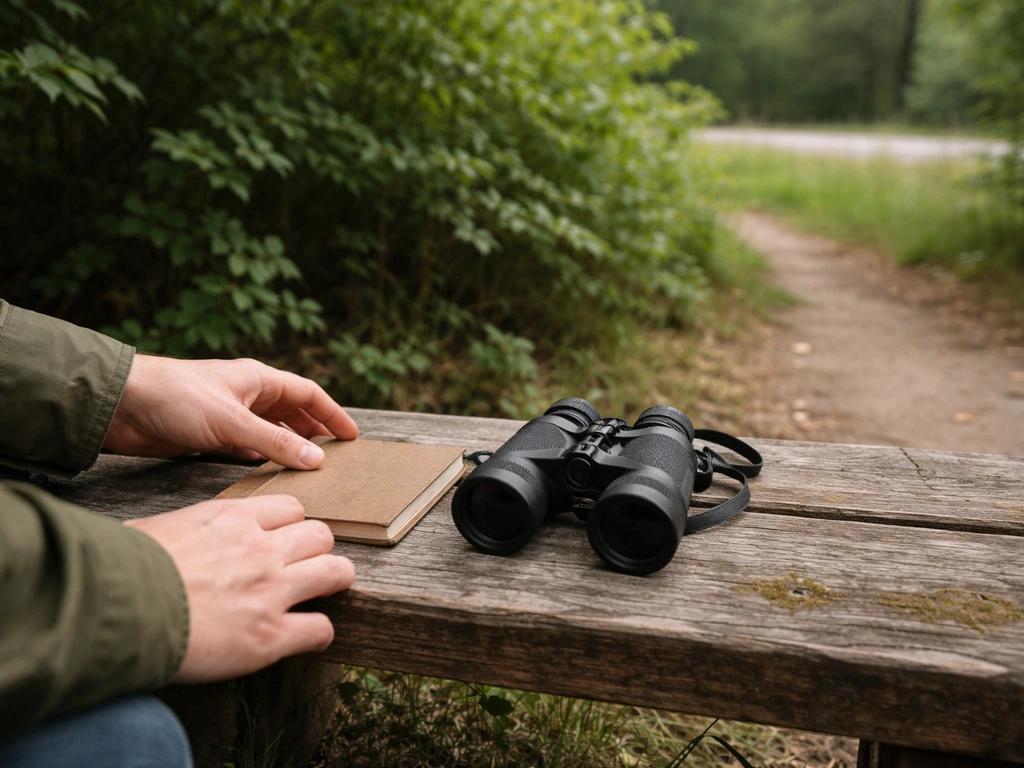
The release site should match the bird's natural habitat. A sparrow or finch belongs near shrubby edges, gardens, or woodland margins with low cover it can dart into immediately. A waterfowl belongs near water. A hawk or owl belongs in open country near a tree line. If you found the bird in a specific location and it was healthy before the incident (a window strike, for example), releasing it in the same area is ideal because it is already in its own territory, which dramatically improves survival odds.
Avoid releasing near busy roads, large open lawns with no cover, or areas with known cat or dog activity. Cats are one of the leading causes of wild bird mortality, and a freshly released bird that needs a moment to get its bearings is extremely vulnerable. If possible, pick a spot with dense shrubs or low vegetation within a few meters where the bird can land and take stock.
Timing the release right
Release songbirds in the morning, ideally within the first two hours after sunrise. This gives the bird the full day to find food, water, and cover before nightfall. Releasing at dusk leaves almost no buffer time and significantly increases predation risk. For raptors, mid-morning is generally preferred. Never release any bird in heavy rain, high winds, or temperatures that are unusually cold for the season. A bird that is marginally flight-ready needs every favorable condition stacked in its favor.
Soft release vs. hard release
Rehabilitators distinguish between two approaches. A hard release is a direct, immediate release with no transition period. It works well for birds that are fully recovered, were never imprinted, and are being released back into their own territory. A soft release involves a transition period where the bird is housed in an outdoor enclosure at or near the release site, allowing it to acclimate to natural sounds, light cycles, weather, and local prey or food sources before the door opens. Soft releases are typically used by licensed rehabilitators for birds that have been in care for weeks or months, and are not something most backyard birders will organize themselves. If your bird has been in care for more than a few weeks, please work with a rehabilitator on the release plan rather than attempting it alone.
How to actually release the bird, step by step
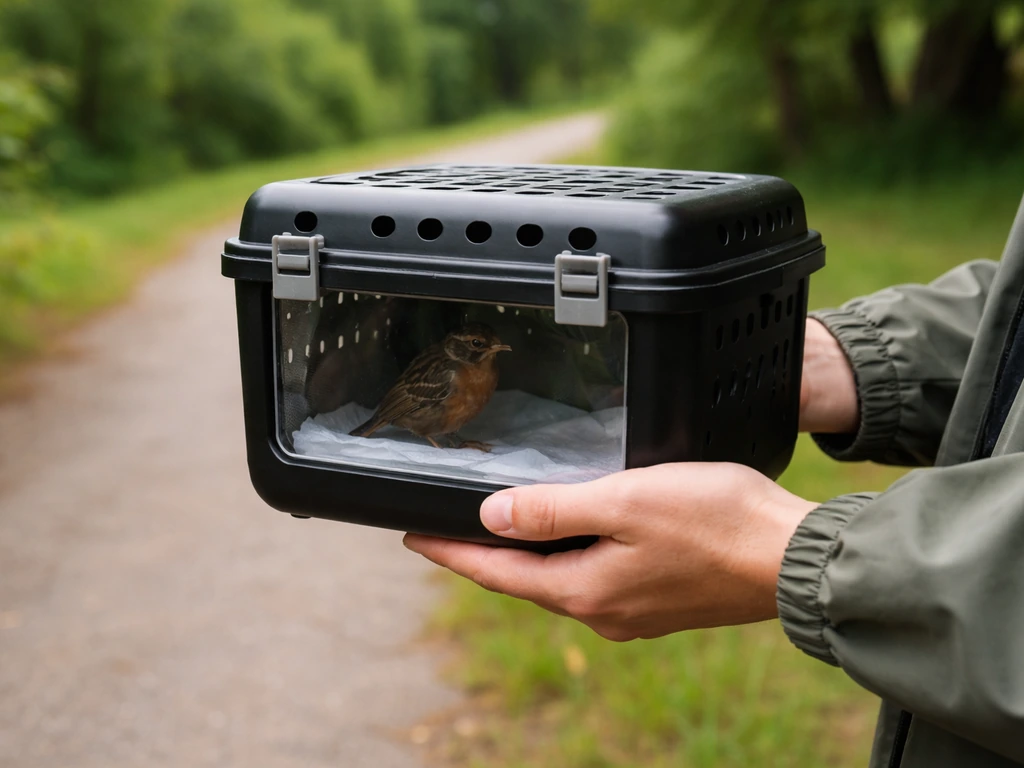
- Pack the bird in a small, dark, ventilated box for transport to the release site. Avoid clear containers: darkness reduces stress. Line the bottom with a paper towel so the bird can grip.
- Drive or walk to the release site calmly. Keep the box level and avoid sudden stops or loud music. Stress during transport can cause a bird to injure itself or go into shock.
- At the site, set the box down on the ground or a low surface. Keep pets, children, and bystanders well back, at least 5 to 10 meters away.
- Open the box flap or lid slowly. Do not reach in. Just open it and step back immediately.
- Give the bird time. Most healthy birds will orient to the new environment within seconds and fly off on their own. This is the ideal outcome and requires nothing from you.
- If the bird does not launch within two to three minutes, you can gently tip the box on its side so the bird can walk out rather than fly straight up. Some birds, especially smaller ones, prefer to hop to cover first.
- If you need to handle the bird to place it on a branch or in low vegetation, use both hands cupped around the body with the wings held gently against the sides. Do not grip the chest tightly: birds breathe using their chest muscles and can suffocate if squeezed. Place the bird on a stable surface and step back.
- Leave the area. Your continued presence is stressful and may actually prevent the bird from moving on.
A note on handling during this step: if you are not used to restraining birds, the guidance on how to restrain a bird safely is worth reading before you attempt transport or the release moment. If you are unsure how to restrain a bird safely, follow the steps in our guide first so you do not stress or injure it during transport restraining birds. Correct hand positioning prevents wing injuries and makes the whole process faster and less traumatic for the bird.
What to do after the release: monitoring, troubleshooting, and red flags
A successful release does not always look clean. Here is what to expect and how to respond to each scenario.
The bird flies off immediately
This is the best outcome. Walk away and resist the urge to follow or check on it. The bird is doing exactly what it should.
The bird hops into cover and stays there
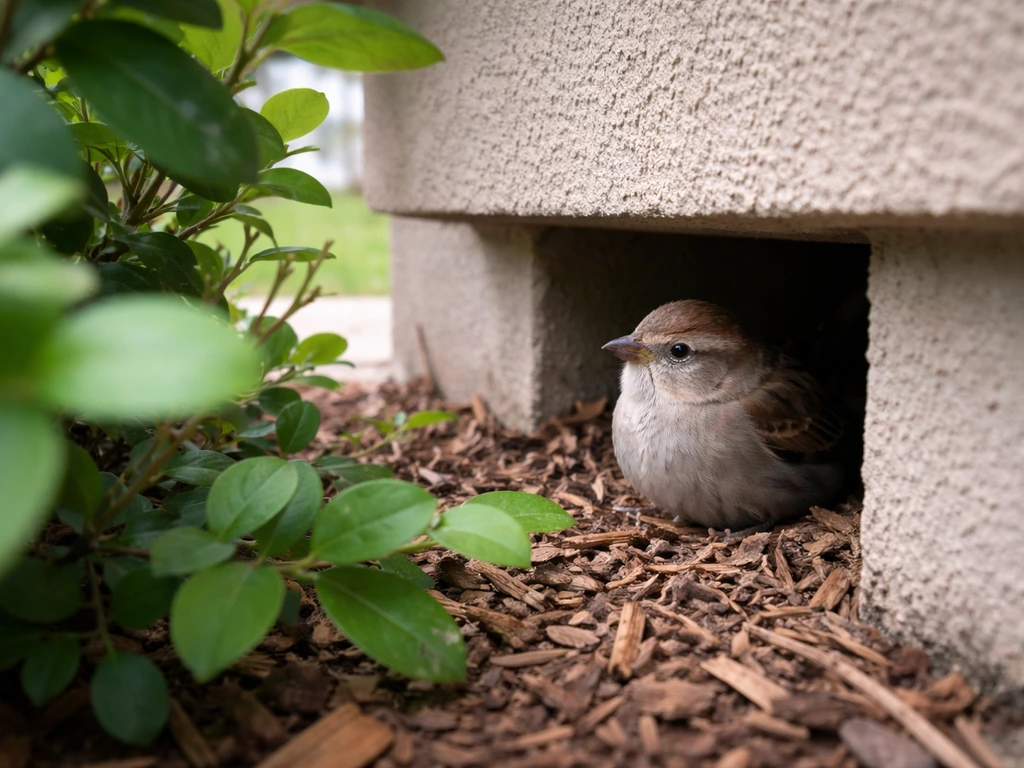
Also a good sign. Many birds, especially fledglings and window-strike survivors, need 10 to 30 minutes in a sheltered spot before flying. Watch from a distance (use binoculars if you have them). If the bird is upright, alert, and looking around, it is probably fine. Check back in an hour. If it has moved on, great. If it is still in the exact same spot and looks hunched or drooping, call a rehabber.
The bird won't fly and keeps sitting in the open
This is a red flag. A bird that sits exposed in the open for more than 20 to 30 minutes is vulnerable and likely still unwell. Gently re-box it and contact a wildlife rehabilitator. If you are tempted to handle it aggressively or try to force a “beat bird up” outcome, pause and instead gently re-box it and contact a wildlife rehabilitator how to beat bird up. Do not attempt a second release on the same day.
The bird comes back to you or follows you
This almost always indicates some degree of imprinting or habituation to humans. A wild, unimprinted bird will not seek out a human voluntarily. If this happens, call a licensed rehabilitator and describe the situation. The bird may need behavioral assessment and possibly a longer conditioning process before it can be safely released, or it may not be releasable at all.
You see a predator approaching after release
If a cat or hawk approaches immediately and the bird cannot fly, you can gently intervene by shooing the predator away and giving the bird a bit more time in a secure spot. Beyond that, you cannot protect a wild bird indefinitely, and trying to do so often causes more harm through repeated stress and handling.
Fledgling troubleshooting
If the bird you released was a fledgling, do not be alarmed if it stays on the ground or in a low bush for the rest of the day. That is normal fledgling behavior. The parents are almost certainly watching from nearby and will resume feeding it. Your job is to keep cats and dogs away from the area for a day or two and trust the parents to handle the rest.
The legal and ethical side you need to check before you act
In the U.S., the Migratory Bird Treaty Act protects the vast majority of wild bird species. Under 50 CFR § 21.76, the only legal way a member of the public can hold a migratory bird without a permit is to transport it directly and immediately to a licensed wildlife rehabilitator or vet. Full stop. Holding it at home for days, attempting to nurse it back to health, or releasing it based on your own assessment is technically outside that exception and can carry legal consequences.
State laws add another layer. Michigan, Washington, and many other states require a state-issued wildlife rehabilitation permit to legally possess native wild birds for rehab purposes, on top of any federal permit required for migratory species. Birds of prey (hawks, owls, eagles) are additionally regulated under the Bald and Golden Eagle Protection Act and other statutes, and even touching one without a permit is a federal violation in most circumstances. If your bird is a raptor, call a raptor rehabilitation center immediately.
There are also ethical considerations that go beyond legality. Releasing a bird that is not genuinely ready, or in the wrong habitat, or at the wrong time of year (migration season adds complexity), is not a kindness. It shifts the risk from a bad outcome in your care to a bad outcome in the wild, which is harder to see but just as real. The most ethical path is almost always to get a professional assessment and follow their release recommendation rather than making that call alone.
To find a licensed wildlife rehabilitator near you, contact your state wildlife agency, call a local animal control office, or search the National Wildlife Rehabilitators Association (NWRA) or the International Wildlife Rehabilitation Council (IWRC) directories. Most rehabbers will at minimum give you a phone consultation within a few hours, even if they cannot take the bird immediately.
One final thing worth saying clearly: the goal here is not to avoid doing anything. It is to do the right thing in the right order. Keeping a bird warm, dark, and quiet while you make a few phone calls is genuinely helpful. If you are trying to figure out how to discipline a bird, start by focusing on gentle handling and safe, humane steps rather than punishment short, calm holding period. Feeding it cat food, putting it in a cage with a mirror and a bell, or waiting three days before calling anyone is not. The bird's best chance is a short, calm holding period followed by professional triage and, when it is truly ready, a carefully planned release into appropriate habitat.
FAQ
What if the bird is making noise, but it seems otherwise normal?
Noise alone does not prove it is ready. If it is fully feathered and alert, you can still do the same triage checks, but if it is calling continuously, panting with its mouth open, has labored breathing, or looks “off” compared to normal behavior, re-box it and contact a wildlife rehabilitator rather than releasing right away.
How soon should I call a rehabber after I find a bird?
If you are unsure it is clearly a healthy fledgling or a fully recovered window-strike, call as soon as possible. Even if you plan to hold it warm and quiet first, the clock matters for hidden injuries, overheating, and worsening stress, especially for small songbirds.
Can I feed a bird briefly if it looks hungry?
Avoid feeding unless the wildlife rehabilitator or vet tells you exactly what and how to feed. Many common foods can be harmful or aspirated, and forcing food can worsen shock or delay recovery. If you already gave food, stop and report what you used when you call.
What if the bird won’t fly after I release it?
If it cannot get airborne within minutes and stays low, droops, or remains exposed, do not attempt multiple “try again” releases. Gently re-box it and contact a licensed rehabilitator, because an incomplete recovery or a subtle injury is common in grounded birds.
Is it okay to place a fledgling back in the nest or release it quickly?
If it is a typical healthy fledgling (partly feathered or adult-like, able to hop and react), the safest default is to return it to a sheltered area near where you found it and keep cats and dogs away. Putting it back in an exact nest can be difficult and can increase abandonment risk if you cannot confirm the parents are still caring for it.
What should I do if I find a baby bird that has fallen from a nest?
Assume it needs professional help. If it has no feathers, is mostly skin and pinfeathers, or looks weak and cold, re-box it and contact a rehabber. In general, the “time of exposure” is less important than getting correct age care, because feeding the wrong formula or hydration method can be dangerous.
How do I keep my holding box from making things worse?
Use a ventilated box that is dark, warm, and stable, and avoid frequent opening. Give the bird grip (like a paper towel) but keep it dry. Do not line the box with loose fibers that can stick to feet, and avoid putting perches inside for very young birds.
Can I use a perch or water dish while I’m waiting to release?
Do not add water dishes or attempt to “test” drinking unless a rehabilitator instructs you. A dish can tip and cause chilling or aspiration, and many birds will not drink normally while stressed. Keep the environment quiet and let professionals guide any hydration steps.
What if the bird is a raptor, waterbird, or “large bird” like a goose?
These groups often require specialized handling and legal permissions. If it is a hawk, owl, eagle, or similarly regulated bird, call a raptor rehabilitation center immediately. For large birds, avoid “DIY” handling for safety reasons, and do not attempt feeding without instructions.
Is it legal to release a bird I found, as long as I don’t keep it for long?
Possession for triage is not the same as release based on your own assessment. For migratory birds, federal rules generally require immediate transport to a permitted rehabilitator or licensed vet, and state rules can add extra permitting. If you are uncertain, call a rehabber and ask whether your specific situation qualifies and where they want you to take it.
What if the bird was injured by a cat or dog?
Treat it as a higher-risk case. Bite wounds and punctures can appear small but become infected quickly, and hidden fractures are common. Re-box it, keep it warm and quiet, and contact a rehabber or vet urgently rather than trying to release on your timetable.
How can I tell if the bird is already imprinted before I attempt any release?
Imprinting signals include seeking people rather than trying to escape, approaching voluntarily, or showing unusual calmness with frequent human contact. If the bird has been in a home for more than about 48 hours, has been hand-fed, or shows strong human-orienting behavior, do not release. Call a rehabilitator for a behavioral assessment and possible longer conditioning plan.
What if I accidentally hit or injure the bird during capture or release?
Stop trying to correct it immediately. Re-box the bird to limit further stress, keep it warm and quiet, and report exactly what happened when you contact a rehabber. If there was any fall, forceful grasping, or apparent wing twist, assume there may be internal or skeletal injury even if it seems alert.
Can I drive the bird to a rehabber in a car seat or open container?
Use a stable, ventilated box and keep it out of direct sun and wind. Avoid open containers where it can injure itself or overheat. Keep noise minimal, secure the box so it does not slide, and check that it is not getting too hot or too cold.
What should I do if the bird is still on the road after a hit-and-run or near traffic?
Do not stand in active traffic. If you can safely move it a short distance to a nearby sheltered area without handling more than necessary, do so, then call for help immediately. If you handle it, do it gently and use the box method, because shock and fractures can make it worse the longer it stays exposed.
Next Article
How to Discipline a Bird for Biting: Humane Training Plan
Humane, step-by-step protocol to stop bird biting fast with safe handling, reward training, and species tips for parrots