You cannot and should not beat a bird. Physical punishment does not work on birds, full stop. Physical punishment does not work on birds, full stop. It breaks trust, causes injury, and almost always makes aggression worse. What you can do today is de-escalate the situation immediately, figure out what is actually driving the biting or lunging, and start a step-by-step plan that gets you and your bird to a calmer, safer place. If you want to know how to discipline a bird for biting, focus on behavior causes and reward calm choices rather than punishment. That applies whether you have a screaming African Grey, a hormonal cockatiel, or a territorial mockingbird dive-bombing your yard. If you have to manage a bird safely during a stressful moment, focus on humane restraint methods rather than punishment how to restrain a bird.
How to Beat Bird Up: Humane Steps to Stop Aggression

De-escalation and safety first
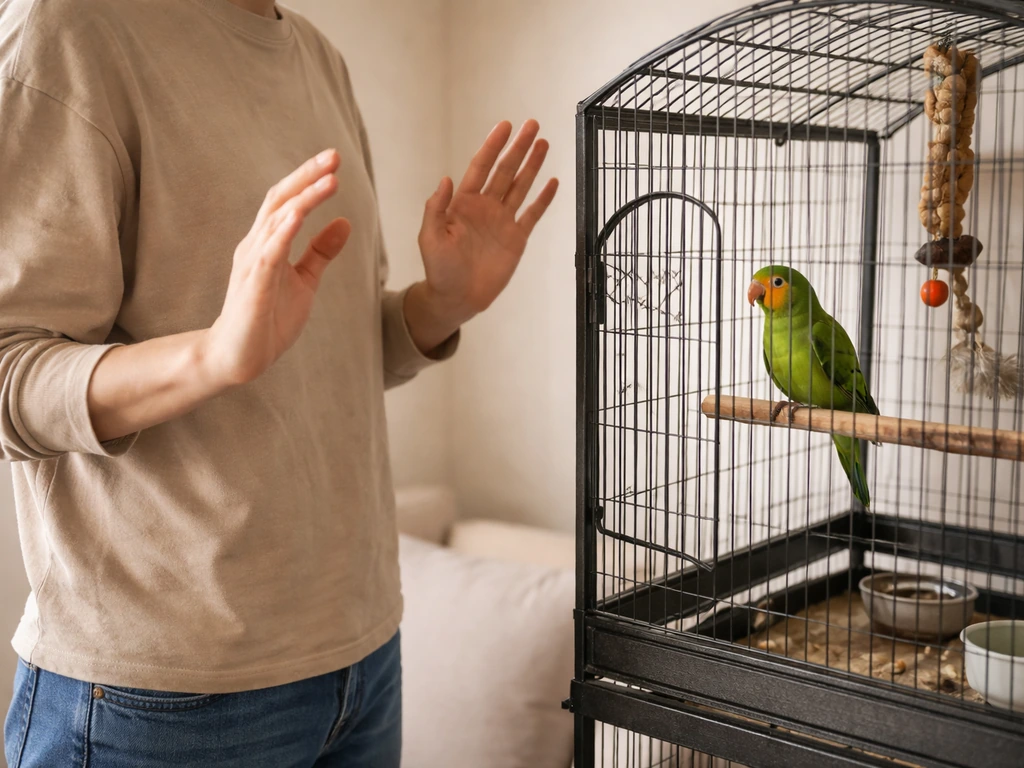
Before anything else, stop the interaction. If the bird is biting, lunging, or attacking, back away calmly and give it space. Sudden movements, yelling, or pulling your hand away fast all teach the bird that your hand is something to fear and fight, which makes the next interaction harder. PetMD is explicit about this: yanking your hand back when bitten is one of the most common mistakes people make, and it reinforces the behavior you are trying to stop.
For pet birds, lower your energy. Speak quietly, move slowly, and give the bird a few minutes alone before trying again. For wild birds in your yard or stuck inside your home, maintain distance and remove as many stressors as you can. Close off rooms, dim lights slightly, and let the bird settle before attempting any containment.
If you absolutely must handle the bird right now (it is injured, trapped, or poses an immediate safety risk), use a towel. A thick towel presented at the bird's level is the industry-standard tool used by avian vets and rehabilitators worldwide. It reduces direct contact stress, gives the bird something to grip or bite that is not your skin, and protects your hands. Critical rule from the RSPCA and AAVAC: never apply pressure to the bird's chest. Birds breathe differently from mammals, and chest compression can be fatal within seconds. Keep your grip firm around the neck and wings, but always let the chest expand freely.
- Stop the interaction the moment aggression escalates. Do not push through it.
- Keep your voice low and your movements slow and predictable.
- Never yell at, hit, flick, or spray a bird as punishment.
- Use a towel for necessary hands-on handling, and match the towel to the bird's size (a thin tea towel for budgies or cockatiels, a larger bath towel for bigger parrots).
- Always keep the bird's chest free so it can breathe during any restraint.
- If the bird shows open-mouth breathing, rapid panting, or overheating signs during handling, release it immediately and wait before trying again.
- Have someone spot you when handling an unfamiliar or very aggressive bird.
Why is the bird acting up? Start here before trying to train anything
Aggression almost always has a cause. Skipping this step and jumping straight to training is what IAABC certified consultants call "throwing spaghetti on the wall" and it does not work. You need to rule out the most likely drivers before you design any behavior plan.
Fear
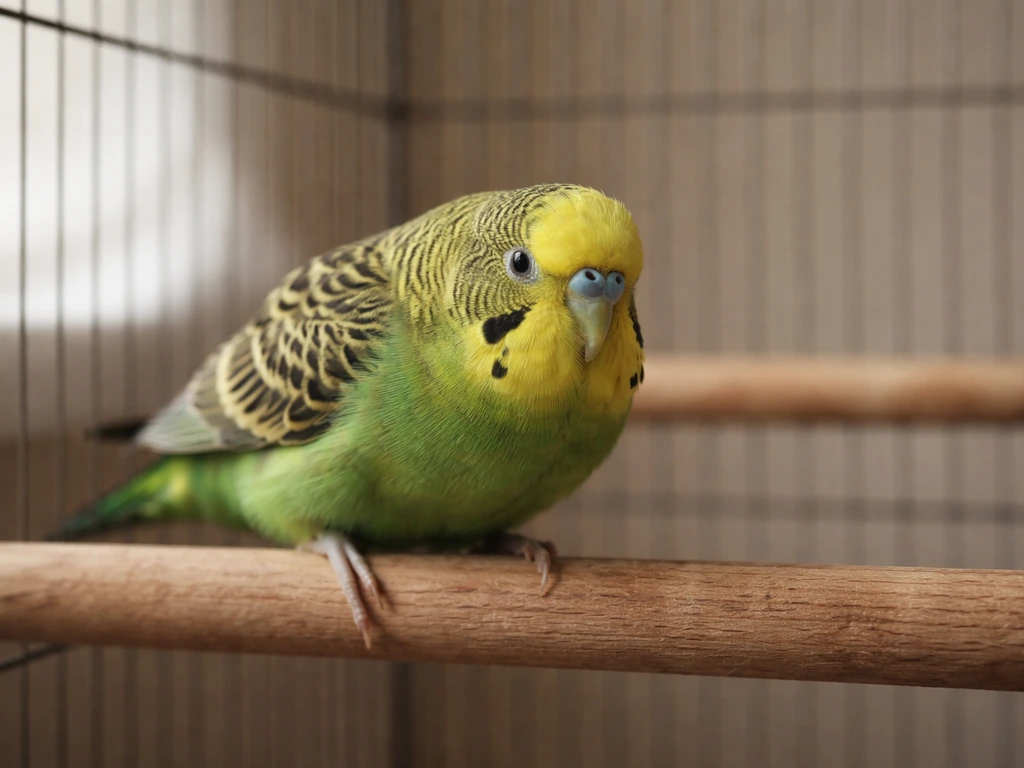
This is the number one cause of biting in pet birds, especially recently acquired birds, birds that have been rehomed, or birds that have had bad handling experiences. A fearful bird is not being mean, it is surviving. Look for body language signals: feathers slicked tight, eyes pinned (rapidly changing pupil size), tail fanned, wings held slightly away from the body. If you see these, the bird is not in a state where training will land. Safety and distance come first.
Pain or illness
A bird in pain bites defensively, and that aggression often comes on suddenly in a bird that was previously calm. Medical causes of aggression include GI infections, respiratory infections, tumors, kidney or liver disease, and reproductive issues. Bacterial diseases are among the most common conditions in pet birds, and some (like psittacosis, caused by Chlamydia psittaci) can also pose a respiratory risk to humans in the household. If your bird has become aggressive suddenly, combined with any of the following, treat it as a vet emergency rather than a behavior problem.
- Sitting on the cage floor (not a perch)
- Tail bobbing or labored breathing
- Fluffed feathers combined with lethargy
- Bloody droppings or straining to defecate
- Visibly swollen abdomen (especially in female birds, which can indicate egg binding)
- Sudden feather plucking alongside aggression
- Discharge from eyes or nares (nostrils)
Hormones
Seasonal hormonal surges make even the sweetest birds temporarily unpredictable. Cockatiels, Amazons, and macaws are especially prone to this. The bird may lunge without clear warning, become possessive of a person or perch, or try to regurgitate food on you (a mating gesture). This kind of aggression typically follows a seasonal pattern, peaks in spring, and is manageable with changes to the environment and routine rather than confrontation.
Environment and overstimulation
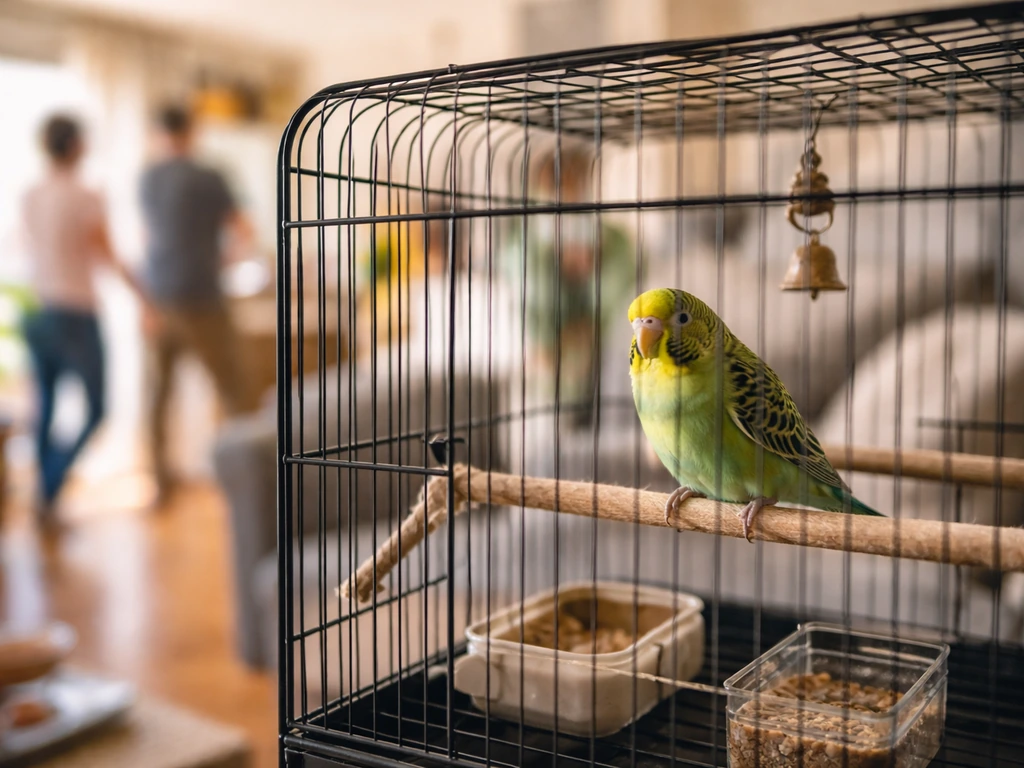
Too much noise, too many people, too long out of the cage, or an unstable daily routine can push a bird over its threshold. Birds thrive on predictability. If interactions happen randomly at different times with different people and different energy levels, the bird cannot settle into trust. Check whether the cage placement is causing stress (near a window with fast movement outside, next to a TV, in a high-traffic hallway). Sometimes moving the cage solves half the problem.
Hunger or resource guarding
A hungry bird is an irritable bird. Check feeding schedules and make sure fresh food and water are available consistently. Some birds guard their food bowl or a favorite toy with genuine intensity. If bites happen consistently near the food bowl or a specific perch, that is territorial resource guarding, and the fix involves changing the setup rather than punishing the bird.
Humane handling, containment, and building trust step by step
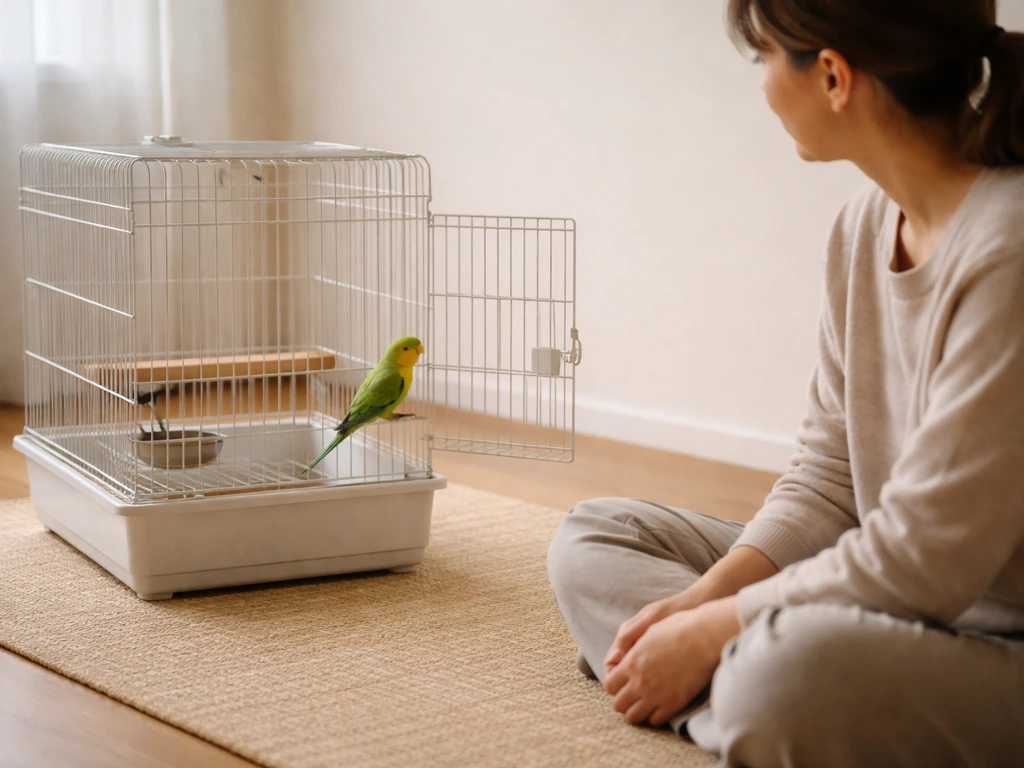
Trust is built in small, consistent steps, and it takes longer than most people expect. A bird that has had bad handling experiences may take weeks or months to accept calm interaction. That is normal, not a failure. The following sequence works for the majority of pet birds, though you will need to adapt the pace based on the individual bird.
- Start outside the cage. Simply sit near the bird's space daily without trying to interact. Read a book, speak quietly, let the bird observe you at its own pace. Do this for several sessions before moving forward.
- Introduce your hand at a distance. Place your hand near the cage bars without reaching in. Reward any calm response with a treat placed near (not touching) your hand. Repeat until the bird shows no stress signals.
- Begin step-up training. Offer your hand or a perch dowel in front of and just below the bird's belly, right where the body meets the legs. This is the anatomically correct position that encourages the bird to step up rather than lunge. Move your hand in slowly and steadily, not in fast or jerky motions.
- Reward immediately. The instant the bird steps up without biting, mark the behavior with a verbal cue ('good') and deliver a high-value treat. Consistency here is critical: early learning benefits from rewarding every correct response.
- Keep sessions short. Five minutes is enough when you are starting out. End on a positive behavior, not a struggle. Repeated short successes build more trust than long exhausting sessions.
- Increase handling gradually. Once step-up is reliable, practice gentle handling: lightly stroke the beak area, then the head, then the back, always watching for stress signals and stopping before the bird hits its limit.
- Use a towel only when needed. For necessary handling that the bird has not yet accepted (nail trims, vet checks), approach from behind and above with the towel draped over the bird, gently securing the wings against the body. Never grip the chest. Release promptly once the task is done.
When transporting a stressed or aggressive bird to the vet, use a secure travel carrier. For small birds, a dark container with ventilation holes covered by a towel helps reduce visual stimulation and calm the bird during the journey. The ASPCA recommends keeping a catch net, heavy towel, and cage cover in your emergency kit so you are not improvising when the situation is already stressful.
Species-specific guidance: what works for your bird
Parrots (African Greys, Amazons, macaws, cockatoos, conures)
Larger parrots are highly intelligent and emotionally complex. Aggression in parrots is almost always communication, and the bird has usually been signaling discomfort for a while before the bite happens. Learn to read your specific bird's warning signs: eye pinning, tail fanning, raised hackle feathers, and a particular body posture before the lunge. If you see those signals, redirect or end the session immediately. Amazons and cockatoos in particular can have strong hormonal seasons; during those periods, scale back handling demands and increase foraging enrichment instead. Counterconditioning (pairing a disliked trigger with a positive outcome, gradually and at the bird's pace) is highly effective for parrots and is well-documented by certified parrot behavior consultants affiliated with organizations like IAABC.
Cockatiels
Cockatiels are generally gentle but can bite hard when frightened or hormonal. Hormonal males in particular may become territorial about their cage and their favorite person. Give hormonal cockatiels less nesting opportunity (remove anything they try to nest in, reduce dark enclosed spaces), shorten petting sessions to the head only (stroking the back and under the wings can stimulate breeding behavior), and maintain a consistent daily schedule. Use a thin tea towel for any necessary restraint rather than a larger heavy towel that can overwhelm a small bird.
Budgies
Budgies bite mostly from fear, especially if they were not hand-raised or socialized early. The good news is that budgies respond quickly to patient, low-pressure desensitization. Sit at cage level (do not loom over the cage), use millet spray as a high-value treat, and extend the step-up training timeline to several weeks rather than days. Budgie bites, while sharp, are rarely injurious, so you can work through initial fear-biting more steadily than with larger birds. Never corner a budgie inside the cage, always let it choose to approach.
Finches and canaries
Finches are generally not handleable birds and do not need to be. They are companion birds meant to be watched and enjoyed, not held. Attempts to handle finches usually cause extreme stress and are counterproductive unless medically necessary. For finch aggression (males fighting in a shared cage), the solution is almost always cage size, territory, or pairing decisions, not training. Add visual barriers, separate incompatible pairs, and ensure the cage is large enough for flight.
Common wild yard birds
Wild birds that dive-bomb or bluff-attack (mockingbirds, red-winged blackbirds, Canada geese near nests) are defending territory or young, and the behavior stops naturally when nesting season ends. The safest approach is avoidance: change your route through the yard temporarily, wear a hat, and do not try to chase or scare the bird off aggressively (it usually escalates the response). If a wild bird is injured in your yard and showing aggression, that aggression is fear and pain. Do not attempt to handle it with bare hands. If you are trying to release a bird that got into your space, follow the safest capture and contact a licensed wildlife rehabilitator when needed how to release a bird. Use a thick towel, approach slowly and from behind, and place it in a ventilated dark box before contacting a licensed wildlife rehabilitator. Do not attempt to keep or rehabilitate a wild bird on your own.
Training plans that reduce biting and attacks
A good training plan has three components: removing the triggers where possible, desensitizing the bird to what cannot be removed, and reinforcing every calm or correct behavior immediately and consistently. Here is how to put that into practice. This guide focuses on exactly how to teach a bird not to bite by addressing the underlying triggers and reinforcing calm behavior instead of reacting with punishment.
Desensitization
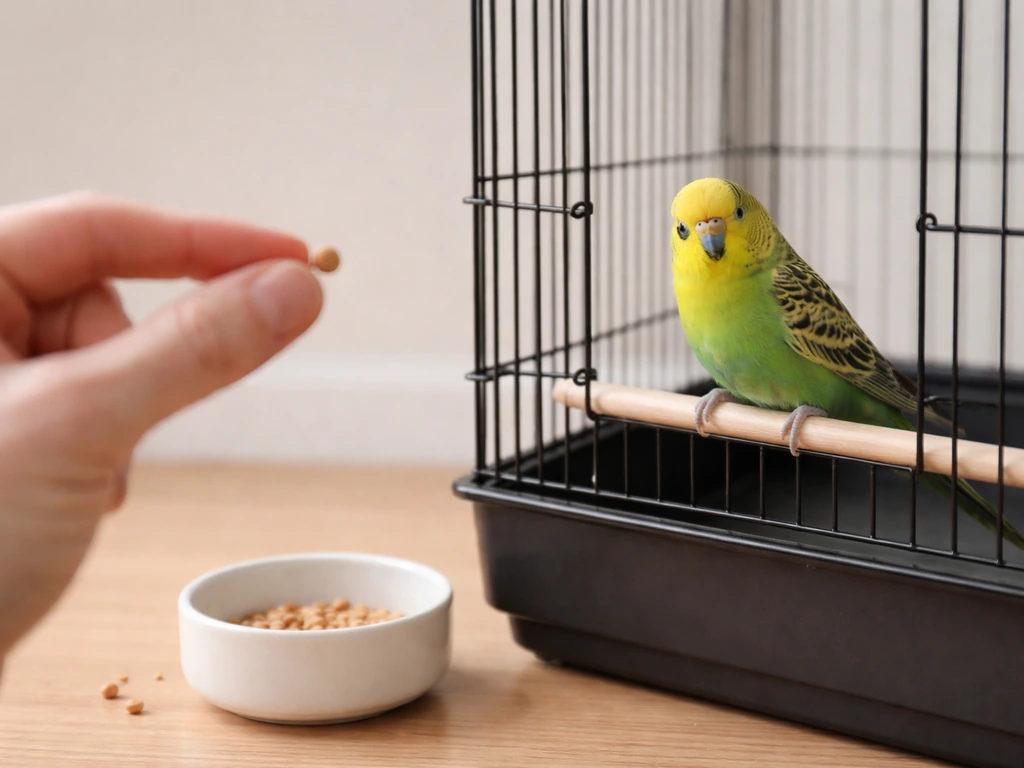
Identify the specific trigger (your hand moving toward the cage, a particular person, a specific object). Then expose the bird to a very mild version of that trigger, far below the level that causes a reaction, and pair it with something the bird loves (a favorite treat or verbal praise). Gradually, over many sessions, bring the trigger closer or make it more intense, always staying below the bird's threshold for a stress response. This is not a quick fix. For an established fear response, expect two to six weeks of consistent daily work before you see reliable improvement.
Positive reinforcement routines
Reward what you want to see more of, every time, especially early in training. The reinforcement rate matters: a high rate of reward during initial learning builds behavior faster than occasional rewards. Keep treats small (a single seed, a tiny piece of fruit) so the bird does not fill up and lose motivation. Use a consistent verbal marker the moment the correct behavior happens, then follow with the treat. Over time, the marker itself becomes reinforcing, which gives you more flexibility.
Common mistakes that make aggression worse
- Punishing biting by yelling, flicking, or any physical correction (this increases fear and often escalates aggression)
- Continuing an interaction after the bird has shown warning signals (teaches the bird that signals do not work and it must escalate to a bite)
- Inconsistent handling from multiple people with different approaches
- Reaching into the cage to retrieve a bird that has retreated there (the cage should always be the bird's safe space)
- Pushing training sessions too long past the bird's comfort zone
- Rewarding screaming or biting by giving attention in response to it
- Making sudden loud noises or fast movements near the bird
- Changing the environment (new cage, new location, new family member) without a gradual adjustment period
Realistic timelines
| Situation | Realistic Timeline for Improvement |
|---|---|
| Fear-based biting in an untamed budgie or cockatiel | 4 to 8 weeks of daily low-pressure sessions |
| Step-up reliability in a previously biting parrot | 2 to 6 weeks with consistent positive reinforcement |
| Hormonal aggression (seasonal) | Weeks to months; often resolves with season; management helps |
| Trust-building with a rescue/rehomed bird | 3 to 12 months depending on the bird's history |
| Counterconditioning a strong fear trigger in a parrot | 6 to 12+ weeks, longer for severe cases |
When to get professional help and urgent red flags
Some situations are beyond what home training can address, and recognizing them early saves the bird and saves you a lot of frustration. If aggression came on suddenly in a previously calm bird, rule out medical causes first, before any training at all. An avian vet can run bloodwork, imaging, and cultures to identify infections, reproductive problems, or internal disease that is driving defensive behavior.
Contact an avian vet immediately if your bird shows any of the medical red flags listed in the section above, especially tail bobbing (respiratory distress), sitting on the cage floor, swollen abdomen, or bloody droppings. Egg binding, for example, is a life-threatening emergency that can look like a behavioral problem. Psittacosis is another concern: birds with respiratory illness can transmit Chlamydia psittaci to people, so keep sick birds away from other household members until the vet has evaluated them.
If aggression is behavioral rather than medical but is not improving after four to six weeks of consistent work, or if bites are frequent, severe, or unpredictable in a large parrot, it is time to bring in a certified parrot behavior consultant. IAABC offers a Certified Parrot Behavior Consultant credential (CPBC), and practitioners with that background are trained specifically in counterconditioning, desensitization, learning theory, and species-specific assessment. This is not a sign of failure; it is the smart move.
- Sudden onset aggression in a previously calm bird: avian vet first
- Any sign of illness alongside aggression (see red flags above): avian vet, same day if possible
- Suspected egg binding: emergency vet visit immediately
- Aggression not improving after 4 to 6 weeks of consistent positive reinforcement work: contact a certified avian behaviorist (IAABC CPBC or similar)
- Wild injured bird on your property: contact a licensed wildlife rehabilitator, not a general vet or animal control unless no rehabber is available
- Large parrot delivering injurious bites unpredictably: professional assessment before you or a family member is seriously hurt
Legal and ethical rules: wild birds versus pet birds
The rules are very different depending on whether you are dealing with a pet bird or a wild one, and getting this wrong can have real legal consequences in the U.S.
Wild birds
Most wild birds in the U.S. are protected under the Migratory Bird Treaty Act (MBTA, 16 U.S.C. § 703). This law makes it unlawful to pursue, hunt, take, capture, kill, or possess migratory birds (or their nests, eggs, or parts) without a federal permit. The protected species list is published by the U.S. Fish and Wildlife Service, and it covers the vast majority of songbirds, raptors, and waterfowl you are likely to encounter.
There is a narrow exception: USFWS guidance confirms that the public does not need a federal permit to humanely remove a trapped wild bird from inside a home, commercial building, or government building if the bird poses a health or safety threat, is attacking people, threatens commercial interests, or risks injuring itself. This covers the practical situation of a bird that has flown into your house. However, this exception does not extend to keeping, treating, or rehabilitating the bird. If the bird is injured, it must go to a licensed wildlife rehabilitator. In most states, a state-level rehabilitation permit is also required alongside the federal permit, so the rehabber you contact will have both.
Pet birds
Captive-bred pet birds (parrots, cockatiels, budgies, finches sold through pet trade) are not covered by MBTA protections in the same way, but they are protected by general animal cruelty laws in every U.S. state. Physical punishment, deliberate harm, and neglect are illegal. Beyond legality, there is the simple ethical reality: a bird that trusts you is a bird that enriches your life. Harming a bird to stop unwanted behavior guarantees you will never get there.
| Situation | Legal rule | What to do |
|---|---|---|
| Wild bird attacking in yard (seasonal nesting) | Protected under MBTA; no capture or harm | Avoid the area temporarily; behavior stops after nesting season |
| Wild bird trapped inside your home | MBTA exception applies; humane removal is permitted | Use a towel, open windows/doors, guide the bird out; do not keep it |
| Injured wild bird on your property | Cannot keep, treat, or rehabilitate without a federal/state permit | Contact a licensed wildlife rehabilitator immediately |
| Pet parrot or cockatiel biting | Animal cruelty laws apply; physical punishment is illegal | Use positive reinforcement training; seek avian vet or behaviorist if needed |
| Pet bird kept in poor conditions causing aggression | Neglect laws may apply depending on severity | Improve housing, diet, enrichment; consult avian vet |
The bottom line on both fronts: humanely handling aggression is not just the kind approach, it is the legal one. Every method on this site, from desensitization and positive reinforcement to towel handling and proper containment, is designed to keep both you and the bird safe while staying fully within those ethical and legal boundaries.
FAQ
What should I do the exact moment a pet bird bites or lunges, so I do not accidentally train the behavior?
End the interaction immediately by backing away and giving space, avoid sudden hand yanks, and do not try to “teach a lesson” during the bite. If you need to pass the bird, use a barrier (towel, perch guard, or closed door) to change the situation, then resume only when the bird is calm and farther from the trigger.
Is it ever okay to discipline a bird if it keeps biting in the same situation?
Instead of punishment, use targeted management plus reinforcement. If bites reliably happen near one person, one object, or the same perch, treat it as a specific trigger and change the setup or your approach, then reinforce calm behavior with frequent, small rewards while staying below the bird’s stress threshold.
How can I tell if aggression is fear versus pain or illness when the bird suddenly changes behavior?
Fear aggression usually looks consistent with a threat display, such as tight slicked feathers, rapid eye-pinning, and body tension that improves with distance. Sudden aggression plus any physical signs, especially tail bobbing, sitting on the cage floor, swollen abdomen, or bloody or abnormal droppings, should be handled as a medical issue first.
What if my bird bites only when I try to put it back in the cage?
That often means the “return” is the trigger. Prepare the environment (reduce chasing, keep light and energy steady), teach a step or target toward the cage area over multiple sessions, and use a consistent cue paired with a reward. If you must return it during a flare, prioritize towel/barrier handling for safety rather than trying to force contact.
Should I remove toys, perches, or nesting areas if hormones are causing biting?
Often, yes, but do it in a targeted way. Reduce or remove items the bird repeatedly tries to nest in, shorten or keep handling brief and consistent, and adjust lighting and daily routine. Avoid abrupt, chaotic changes, because unpredictable changes can increase agitation rather than reduce it.
How do I reduce biting from resource guarding around food or favorite toys?
Do not reach in suddenly while the bird is guarding. Manage access by offering items at times and locations that reduce confrontation, change the setup (different feeding station or perch), and redirect attention with alternative high-value rewards. Work toward calm behavior reinforcement during safe moments, not during active guarding.
My parrot warns before it bites, but I still get caught. What is a practical prevention plan?
Create an “if warning signs, end session” rule. When you see the early signals (eye pinning, tail fanning, raised hackles, specific lunge posture), increase distance immediately, redirect to an approved activity (foraging, target training), and try again later. The key is to prevent the warning from turning into a bite.
How long should I wait before I decide training is not working and I need professional help?
If the bird is medically cleared and you are doing consistent work, many cases take about two to six weeks for improvement. If aggression remains frequent, severe, unpredictable, or not improving after four to six weeks of steady desensitization and reinforcement, consult a certified parrot behavior consultant.
Can I use a towel for restraint if I am trying to pick up my bird for normal care, like nail trims or vet transport?
Yes for safety, but use it for the minimum required handling and without compressing the chest. For routine care, consider training the bird to cooperate with steps or target cues so you rely less on restraint. For nail trims, vet care, or a stressful move, a secure plan and less-stress handling are better than improvising with force.
What are the most dangerous restraint mistakes for birds?
The biggest one is chest pressure, which can be fatal within seconds. Other common mistakes include holding too tightly around the body, restraining in a way that blocks breathing, and trying to “corner” a highly fearful bird. If restraint is needed, use the proper towel technique and consider a professional or vet for hands-on guidance.
Are wild bird attacks in my yard something I should try to scare off manually?
Usually avoid aggressive chasing or direct attempts to scare them away. Many territorial or nest-defense behaviors decrease once you reduce your presence or change your route temporarily. If the bird is injured or poses an immediate safety risk, use distance and contact a licensed wildlife rehabilitator instead of handling with bare hands.
If a wild bird gets into my home, can I release it myself or do I need a permit?
In the U.S., there is a narrow exception to remove a trapped wild bird from inside a building if it poses a health or safety threat or is attacking people, but you should not keep or rehabilitate it. If the bird is injured, you should contact a licensed wildlife rehabilitator, and they can guide next steps that may include required state permits.
What should be in an “aggression emergency kit” so I am not improvising during a stressful moment?
Have a secure travel carrier or dark ventilated container ready, plus a catch net if appropriate, heavy towel(s), and a cage cover for visual calm. Keep these staged before an emergency, so you can respond calmly and reduce the chance of accidental, harmful handling under panic.
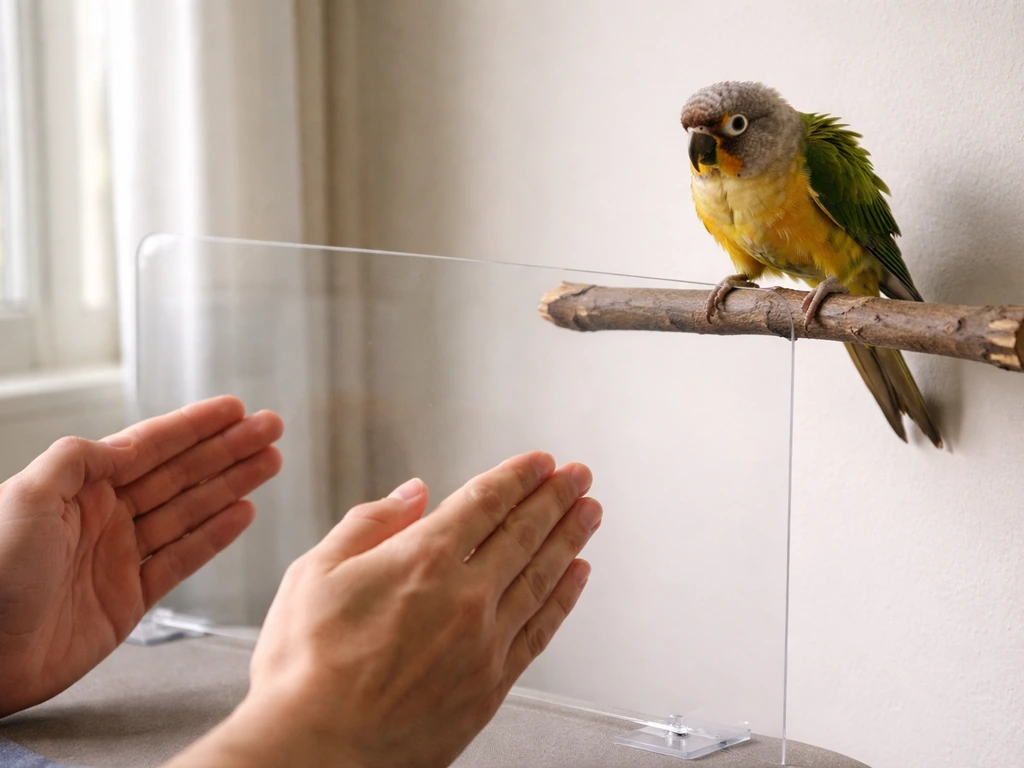
Humane, safety-first steps to stop aggressive, biting bird behavior using body language, training, and de-escalation.
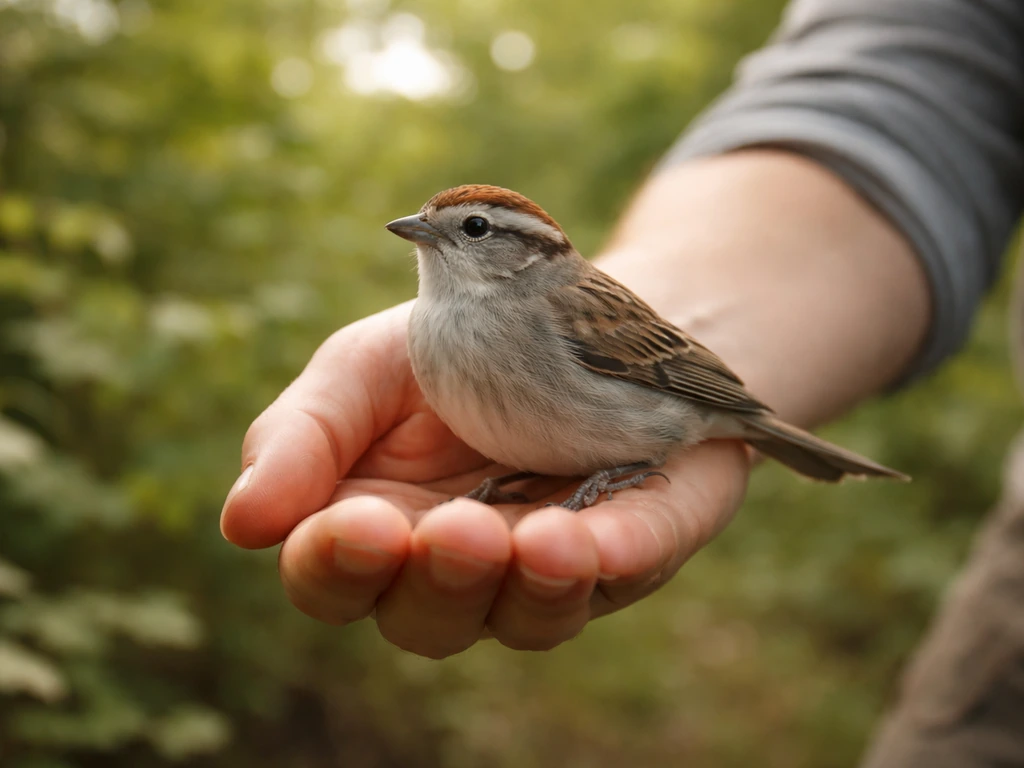
Humane, safe step-by-step guide to release a wild bird: legality, prep, spot choice, release technique, and aftercare.
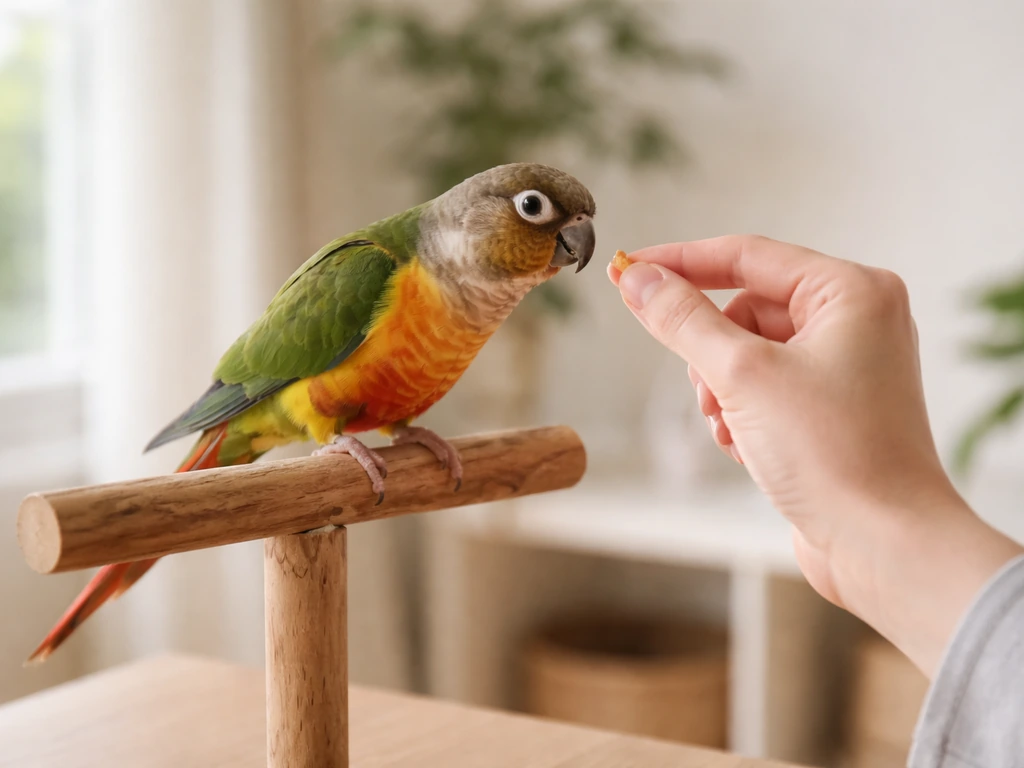
Humane, step-by-step protocol to stop bird biting fast with safe handling, reward training, and species tips for parrots