
Restraining a bird safely comes down to three things: reading the bird's body language, using the right technique for the species and situation, and keeping the whole experience as short and calm as possible. Whether you're dealing with a pet cockatiel that needs a nail trim, a budgie that escaped into a room, or a stunned sparrow you found in the yard, the core principle is the same: empathy and technique beat force every time. If you're relying on muscle, you're already off track.
How to Restrain a Bird Safely and Humanely Step by Step
Clara Hayes
11 Apr 2026
Safety, legality, and when to call a pro first
Before you touch any bird, run through this quick check. It could save you a fine, a nasty injury, or worse, the bird's life.
- Is it a wild bird? In the U.S., nearly all wild bird species are protected under the Migratory Bird Treaty Act (MBTA). You generally cannot legally capture, transport, or possess a wild migratory bird without a federal permit. There is a narrow public exception: if a bird is trapped inside your home and poses a health or safety risk, you can humanely remove it. For anything beyond that, contact a licensed wildlife rehabilitator or your state wildlife agency first.
- Is the bird visibly injured, bleeding, or breathing with its mouth open? Don't attempt a DIY restraint for treatment. Get it to a permitted wildlife rehabilitator or avian vet within hours. Under federal rules (50 CFR § 21.12), even a veterinarian without a migratory bird rehab permit can only stabilize the bird and must transfer it to a federally permitted rehabilitator within 24 hours.
- Is it a large or unfamiliar wild bird (hawk, owl, heron, goose)? These birds can cause serious injuries. Raptors have talons that puncture deep; herons have fast, accurate beaks aimed at eyes. Call a professional. Don't improvise.
- Are you showing signs of being bitten or scratched? Always avoid bringing a biting bird's beak or talons close to your face. Keep your face away from the bird at all times during handling.
- Not sure who to call? Your state wildlife agency, a local Audubon chapter, or a quick search for 'wildlife rehabilitator near me' will connect you with someone licensed and equipped for the situation.
It's also worth knowing that not every rehabilitator accepts every species. A songbird center may not take raptors, and vice versa. When you call, confirm they can take the species you have before you make the drive.
Figure out what you're dealing with before you reach in
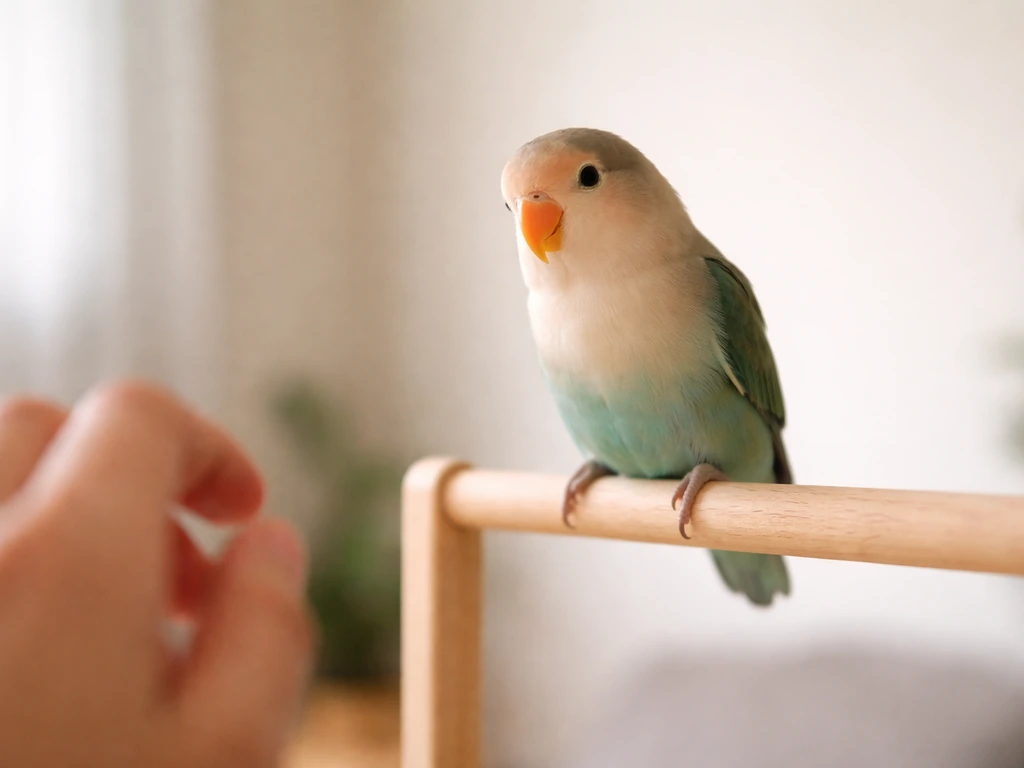
The single most useful thing you can do before any restraint attempt is spend 30 to 60 seconds just watching the bird. Its size, posture, and behavior will tell you which approach to use and how much risk you're taking on.
Size and species
Small birds (budgies, finches, canaries, sparrows, and similar species) are fragile. Their bones are hollow and thin, and squeezing even slightly too hard can cause internal injuries or suffocation. They also stress out extremely fast, and a bird in a panic can go into cardiac arrest in minutes. Use the lightest possible grip and the shortest possible handling time.
Medium birds (cockatiels, conures, pigeons, starlings, robins) have more body mass and a bit more tolerance for brief handling, but they can still bite hard and thrash with enough force to break a wing if panicked. Their temperament varies hugely depending on how socialized they are.
Large birds (parrots like African Greys, Amazons, cockatoos, crows, ducks, chickens, and raptors) require more deliberate technique and, in many wild cases, professional help. A large parrot's beak can exert serious force. A goose or swan can break a finger. A red-tailed hawk's talons are no joke.
Reading body language before you move
Watch for these cues before you reach toward any bird. In parrots and cockatiels, pinned (rapidly contracting and expanding) pupils, also called eye pinning, often signal a heightened or agitated state that raises bite risk. Raised crest feathers on a cockatiel signal high alertness or fear. In smaller birds like budgies, trembling and rapid breathing are signs of extreme anxiety. A bird that is crouched low, frozen, or panting is already at its stress limit. In wild birds, a bird that lets you walk right up to it is almost always sick or severely injured, not tame.
For pet birds: build trust before you ever need to restrain
Ideally, you never need to 'restrain' a well-socialized pet bird at all. A bird that steps up onto your hand on cue, tolerates toweling during training, and stays calm during handling doesn't need to be grabbed. That's the goal. If you're already there, restraint becomes a five-second formality. If you're not there yet, this section is your roadmap.
The AAHA has explicitly noted that manual restraint and forceful handling increase the risk of injury to both the handler and the bird, and can actually harm the bird's emotional and medical outcomes over time. LafeberVet echoes this: using force or overpowering a bird repeatedly creates learned fear and can lead to lasting aggression. Consistent gentle handling builds a bird that cooperates rather than fights.
For a pet bird that's not yet comfortable with handling, start by getting it used to your presence near the cage. Move slowly, talk quietly, and reward calm behavior with treats. Introduce your hand inside the cage without reaching for the bird. Practice the 'step up' command daily using positive reinforcement. A bird that reliably steps up on cue is a bird you can redirect, reposition, and safely pick up when you need to. If biting is part of the picture, reading up on how to teach a bird not to bite before attempting any hands-on work will save you a lot of scratches and set-backs.
How to safely restrain wild birds without hurting them
If you've already confirmed that contacting a rehabilitator first isn't possible (say, it's 2 a.m. and there's a stunned bird on your patio in freezing temperatures), here's how to handle the situation safely until you can get professional guidance.
The goal with a wild bird is never 'taming' or prolonged handling. It's containment with minimal stress so the bird can be assessed and, when appropriate, released or transferred. The USFWS guidance is clear: do not attempt to trap or capture an injured wild bird before contacting a wildlife rehabilitator if at all possible. If you must act immediately, the steps below minimize harm.
- Wear gloves if you have them. Garden gloves work for small birds. Thick leather gloves for anything with talons.
- Approach slowly from the side, not head-on. Minimize sudden movements.
- Dim the environment if possible. Lowering light reduces a bird's panic response.
- Never chase a wild bird. If you cannot capture it without causing it to beat its wings against walls or objects, back off. According to FAO field guidance, it may be better to let the bird escape than to risk additional injury through a panicked capture attempt.
- Keep handling time under two minutes whenever possible, and never cover the bird's nostrils or press on the chest.
Step-by-step restraint methods
The towel wrap (best all-around method)
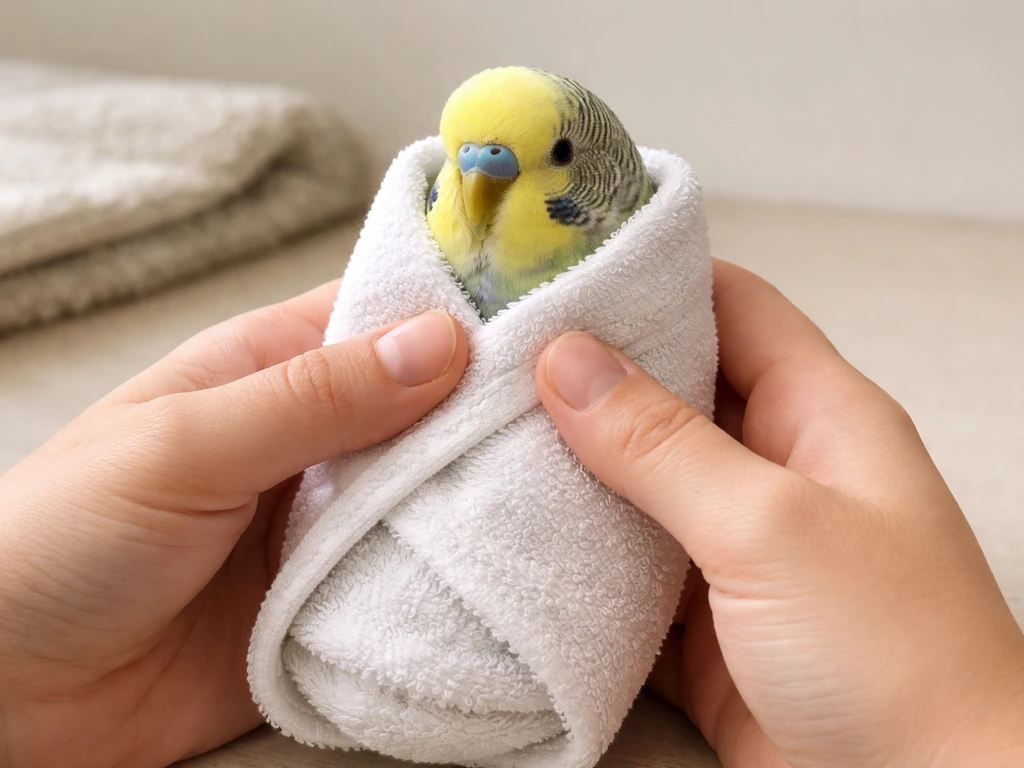
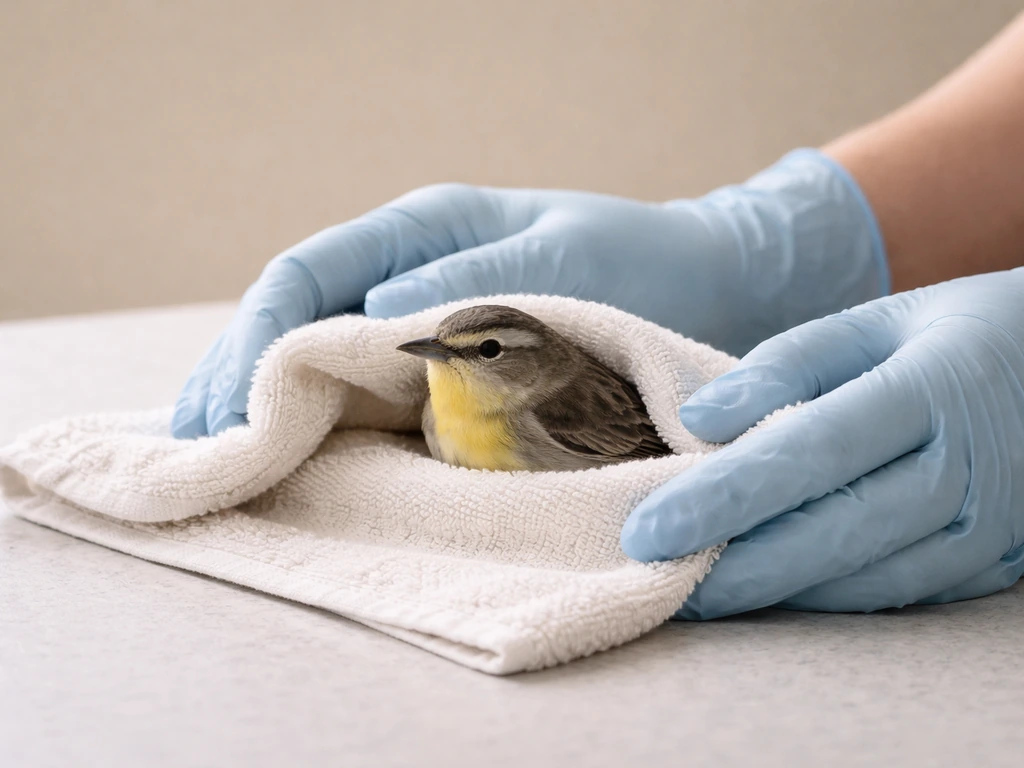
The towel wrap works for most pet birds and many wild birds. Use a thin hand towel for small birds (budgies, cockatiels, small wild birds) and a thicker, larger towel for medium to large birds. Fleece is ideal because it doesn't catch on beaks or claws.
- Warm the towel slightly in your hands if the bird is cold or stunned. A warm towel is calming.
- Hold the towel in both hands, creating a loose curtain or scoop shape. Don't bunch it into a ball.
- Approach from behind or above (not face-first). Gently drape the towel over the bird's back and wings simultaneously.
- As the towel settles over the bird, bring your hands together underneath its body and cup it gently. The towel should cover the wings, preventing flapping, while your fingers support the sternum (breastbone) from below. Never squeeze the chest.
- With your thumb and index finger of one hand, secure the bird's head between your fingers (not squeezing, just positioning) so it cannot turn and bite. The head should be free to breathe but unable to reach your skin.
- Keep the wrap loose enough that the bird's chest can expand fully for breathing. If you can feel the bird's heart pounding rapidly or its breathing quickens, it's too stressed. Set it down, back away, and try again in a few minutes.
- For carrier transfer, have the carrier door open and ready before you pick up the bird. Move directly from the towel wrap into the carrier without pausing or repositioning.
Direct hand hold for tame pet birds
For a tame bird that steps up reliably, direct handling is simpler. Ask the bird to step up onto your hand or finger. Once it's perched, your other hand can gently cup the body from behind: your palm against the bird's back, fingers loosely around the wings to prevent flapping, and your thumb and forefinger lightly positioning the neck so the head is controlled but not squeezed. The bird's feet can grip your fingers or wrap around your hand. Maintain a relaxed, confident posture. If you're tense, the bird will feel it.
Controlling wings and feet for larger birds
Wing control is critical for any bird large enough to generate real force. Birds will instinctively try to beat their wings during restraint, and uncontrolled wing-beating can fracture wing bones, damage flight feathers, and worsen existing injuries. For birds above cockatiel size, you need both hands: one securing the body and folded wings against your torso, and one controlling the head. For birds with powerful feet (like raptors or large parrots), grip the legs at the ankle joint firmly enough that the talons point away from your skin. Hold the legs between your fingers, keeping them parallel and controlled. Never restrain a bird by a single leg.
Using a carrier or improvised box
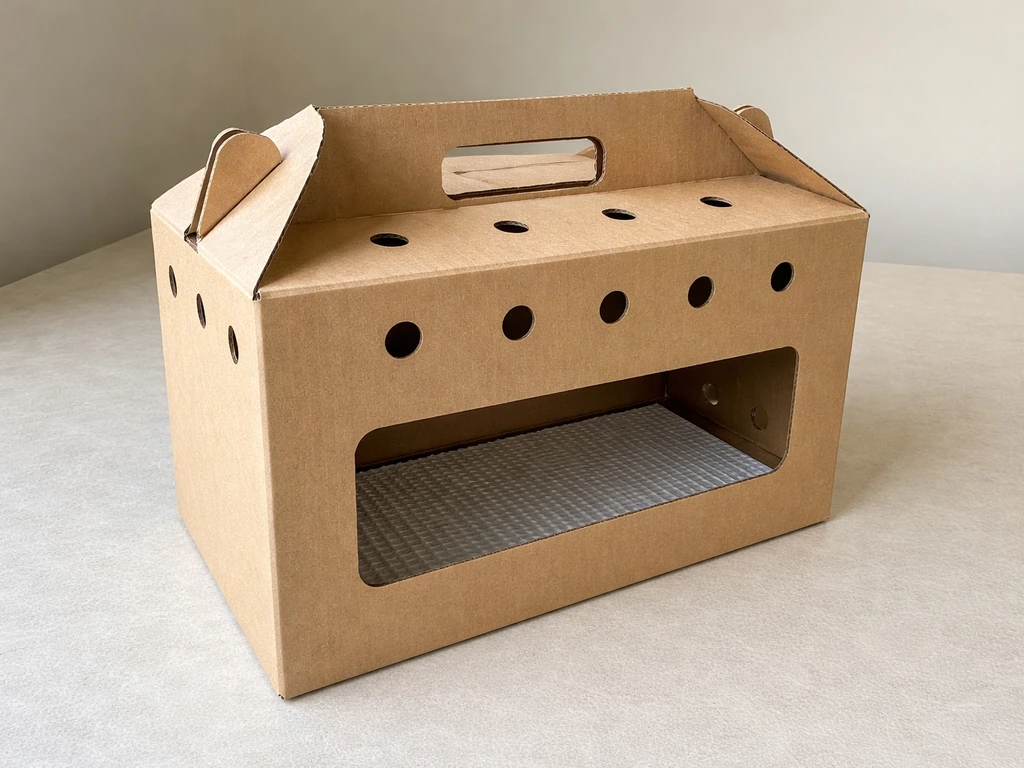
For wild birds especially, a cardboard box with air holes punched in the top is often the safest 'restraint' tool available. Line it with a non-slip surface (a folded towel works). Place the bird inside using the towel-wrap method and close the lid. The enclosed dark space dramatically reduces stress. Do not use a wire bird cage or rabbit cage for a wild bird in distress: the open sides allow the bird to see threats and continue panicking, and wire can catch feathers and cause more injury. For pet birds being transported to a vet, use a hard-sided carrier with towel filling to reduce the bird's ability to bounce around, as described in BSAVA handling guidance.
During and after restraint: what to actually do
While you're holding the bird
- Speak quietly and continuously. Low, calm tones help. Silence can be unsettling to birds.
- Keep your face away from the bird's beak at all times, even if the bird seems calm.
- Minimize handling time. The Merck Veterinary Manual recommends keeping restraint as brief as possible. For a healthy pet bird, a nail trim or quick exam should take under two minutes. For a stressed wild bird, aim for under 90 seconds of direct handling.
- Monitor breathing constantly. The bird's chest should rise and fall visibly. Open-mouth breathing, gasping, or a limp body are signs to stop immediately and seek emergency vet care.
- Do not restrain a bird on its back. This is an extremely stressful and potentially dangerous position for most birds and should only be done by a vet.
- After picking up a pet bird, gently palpate (feel) the crop area on the front of the neck. If it feels full or sloshy, the bird may vomit if stressed further. Handle with extra care.
Checking for injury before release
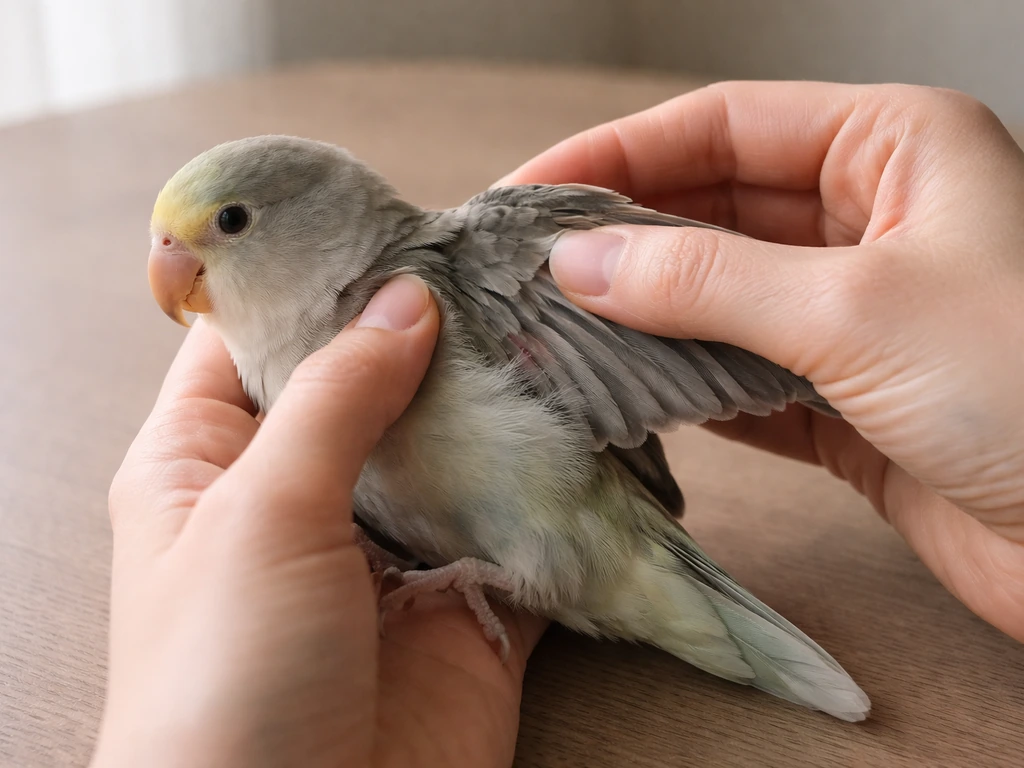
Before releasing or returning a bird to its cage, do a quick visual check. Look for blood, especially from pin feathers (new, still-vascularized feathers). A broken blood feather is a veterinary situation. Check for any limping, drooping wing, or obvious asymmetry in the body. According to the Association of Avian Veterinarians, labored breathing, abnormal respiratory sounds, blood loss, and visible injury are all signs that require a vet visit, not a wait-and-see approach.
Release or return
For pet birds, return the bird to its cage calmly, let it go on its own terms if possible, and give it time to settle before interacting again. Offer water and a favorite treat to help associate the experience with something positive. For wild birds that have been temporarily contained, proper release timing matters legally as well as biologically. Cornell LII explains that 50 CFR § 21.76 requires authorization for releases outside the normal seasonal timeframe blank" rel="noopener noreferrer">releases outside the normal seasonal timeframe require authorization. Federal rules (50 CFR § 21.76) specify that releases outside the normal seasonal timeframe require authorization from the FWS regional migratory bird permit office. If you're ever unsure about how to release a bird you've temporarily held, contact a licensed rehabilitator before you open the box.
Troubleshooting common problems
The bird keeps biting through the towel
Use a thicker towel, or double up. Make sure you're controlling the head correctly: your index finger and thumb should bracket (not squeeze) the neck just below the skull, so the beak can open but cannot reach your skin. If a pet bird is biting consistently during handling, that's a separate training issue worth addressing directly. How to discipline a bird for biting covers that scenario in detail.
The bird is panicking and thrashing
Put it down immediately and give it space. A panicking bird can injure itself seriously in seconds. If it's a wild bird in a box, close the lid and leave it in a quiet, dark, warm room for 20 to 30 minutes before reassessing. Many stunned birds recover on their own with rest. If it's a pet bird that's thrashing, check whether the environment is the problem: unfamiliar sounds, other pets in the room, or bright lights can all trigger panic. Remove the stressor first.
The bird seems aggressive, not scared
Some birds, especially during breeding season or if they've had bad handling experiences, are genuinely aggressive rather than just frightened. Aggression and fear look similar but need different responses. A more detailed breakdown of reading signals and managing an aggressive bird safely is in this guide on how to handle an aggressive bird, which covers redirecting, desensitization, and when the situation requires a behaviorist.
You can't get close enough to the bird to restrain it
For a pet bird loose in a room, lower the lights, close blinds, and wait. Many birds will settle onto a low surface or the floor when the room is dim. Don't chase it. For a wild bird that is mobile enough to evade you, it is probably healthy enough to manage without your help. A bird that can fly away from you doesn't need rescue.
The bird seems okay after restraint but is acting withdrawn
Post-handling stress is real. Give the bird a quiet recovery period of at least an hour with no forced interaction. Monitor for changes in droppings, appetite, or posture over the next 24 hours. Fluffed feathers, closed eyes during the day, or a loss of interest in food are early signs of illness. If these persist beyond a day, get a vet involved. It's also worth reflecting on whether your handling technique is contributing to that stress response. Reviewing principles around how to discipline a bird and interaction boundaries can help you structure handling sessions so the bird sees them as routine rather than threatening.
When restraint isn't the right answer
Sometimes the safest option is to not restrain the bird at all. If the bird is too stressed, too injured, or the situation is too dangerous for you to handle safely without making things worse, step back and call an avian vet or licensed wildlife rehabilitator. That's not giving up, it's good judgment. The RSPCA puts it well: if you have to use force, you're doing it wrong. Restraint done right looks almost effortless because the technique is doing the work, not your grip strength.
Quick comparison: restraint methods at a glance
| Method | Best for | Key advantage | Main risk | Recommended for beginners? |
|---|---|---|---|---|
| Towel wrap | Most pet birds, small to medium wild birds | Controls wings, reduces visual stimulation, protects handler | Over-tightening or covering airways | Yes, with practice |
| Direct hand hold | Tame, step-up-trained pet birds | Least intrusive for a cooperative bird | No wing control if bird panics | Yes, for tame birds only |
| Cardboard box / carrier | Wild birds, injured birds, transport | Minimizes handling entirely; dark space reduces stress | Bird may injure itself if box is too large or open | Yes, strongly recommended |
| Two-person restraint | Large parrots, raptors, large waterfowl | One person controls body/wings, one controls head | Requires coordination; not for beginners | No, seek professional help |
| Gloved hand | Raptors, large wild birds with talons | Protects handler from talon injuries | Gloves reduce tactile feedback; may grip too hard | Only with proper guidance |
The towel wrap is the right starting point for the vast majority of situations most readers will encounter. It's forgiving, versatile, and effective for birds from budgie-sized up to medium parrots and most wild songbirds. For anything larger or more dangerous, get a second person or a professional involved.
One last thing: the goal of all of this is a bird that emerges from the experience with as little trauma as possible. The less stressful you make each restraint session, the easier every future interaction becomes. Birds do carry emotional associations with handling experiences, and repeated forceful handling creates lasting fear and behavioral issues over time. Keep it calm, keep it brief, and when in doubt, call someone who does this every day. That's not a cop-out. That's exactly the right call.
If you're navigating a situation where a bird has been behaving defensively or erratically before you even attempted restraint, it may help to first understand what's driving that behavior. Guidance on how to deal with punishing bird behavior can give you a clearer picture of whether the problem is fear, territory, hormones, or past handling history, and that context will make your next restraint attempt much safer and smoother. Similarly, if you're concerned about behavior that's tipping into something you're not sure how to classify, reviewing what's covered in how to beat bird up defensively as a handler can round out your situational awareness before any hands-on work.
FAQ
What’s the safest way to approach a bird if it won’t let me get close enough to restrain it?
Slow down and reassess before touching, spend another 30 to 60 seconds observing, then use containment options instead of direct handling (a towel wrap for smaller birds or an air-holed box for wild birds). If a pet bird consistently backs away or escalates, postpone restraint and focus on step-up and calm desensitization inside the cage.
Is it ever okay to restrain a bird by holding it down firmly to stop thrashing?
No, firm “pinning” increases injury risk because wing and muscle movement can still injure the bird even while you hold it. Instead, aim for minimal control of flapping (fold wings against the body) and brief handling, then release immediately and let the bird settle in a dark, quiet area.
How long is too long to keep a bird restrained?
If the bird is still actively panicking, treat it as too long. Plan on the shortest handling window possible (seconds, not minutes), have all supplies ready before you touch the bird, and switch to a containment method (box or carrier) if you cannot complete the task quickly.
What should I do if the bird bites during a towel wrap or step-up attempt?
Stop and prevent escalation, avoid squeezing harder, and focus on keeping the head controlled without bracketing too tightly. After the immediate situation is over, address the root cause with a targeted biting plan and handling desensitization, because repeated overpowering tends to make future bites more likely.
Can I use gloves, and do they make restraint safer?
Gloves can reduce skin injury for the handler, but they do not replace proper technique and may reduce your feel for neck and wing control. If you use gloves for bites, still use the correct bracketing on the neck (not squeezing), and keep wing control gentle to prevent fracture risk.
What’s the safest way to restrain a bird that’s already bleeding or has a blood feather?
Treat it as a medical emergency. Apply minimal, gentle containment to stop further injury, then get veterinary or rehabilitator help promptly, because blood from pin feathers can indicate significant trauma and birds can worsen quickly from stress plus blood loss.
How can I tell fear versus injury when a bird is struggling?
Fear usually comes with defensive posture, rapid breathing, trembling, or sudden attempts to escape, while injury often shows limping, drooping wing, obvious asymmetry, persistent abnormal breathing, or visible trauma. If breathing is labored or there are any visible injuries, prioritize professional assessment rather than trying multiple restraint attempts.
If the bird is wild and in shock, should I try to hold it still until it calms down?
For most stunned wild birds, the best “restraint” is containment with minimal stress, use a dark, quiet, warm room and let rest do the work. Limit handling to what is necessary to place it in a proper enclosure, then reassess after 20 to 30 minutes before deciding on next steps.
Is a wire cage or rabbit cage ever acceptable for a wild bird?
It’s usually a bad choice for a distressed wild bird because the bird can see threats through the open sides and continue panicking, and wire can snag feathers or worsen existing injuries. Use a solid, air-ventilated box or a towel-lined hard carrier instead.
How do I transport a pet bird safely after restraint?
Use a hard-sided carrier with towel filling so the bird cannot bounce or overcorrect, keep the carrier dim and quiet, and avoid opening the carrier repeatedly. Let the bird settle in the recovery area, then monitor droppings, appetite, and posture over the next 24 hours.
What should I do if I’m unsure whether a bird is a species a rehabilitator will accept?
Call first and confirm they handle that specific type, for example many centers have limits between songbirds and raptors. If you cannot reach them immediately, contain the bird safely and keep handling minimal while you wait, and do not delay necessary veterinary care for a pet bird.
Are there situations where I should not restrain at all and should call a professional immediately?
Yes, if the bird is too large or dangerous to handle safely (powerful beak, strong talons, or large thrashing), if you cannot control wing and head safely, or if the bird shows serious signs like abnormal breathing or heavy blood loss. Step back and contact an avian vet or licensed wildlife rehabilitator rather than attempting repeated restraints.