The safest way to catch a bird alive is to slow down, reduce the environment, and use the right tool for the situation: a towel or net for a wild bird, and patient target training or a darkened room for a pet bird. Rushing, chasing, or grabbing causes panic injuries and makes the bird harder to catch. Whether you're dealing with a loose cockatiel in your living room or an injured sparrow on the patio, the process is the same at its core: calm the space, contain the bird with minimal contact, and get it secured quickly so you can figure out the next step.
How to Catch a Bird Alive Safely and Humanely
Clara Hayes
25 Apr 2026
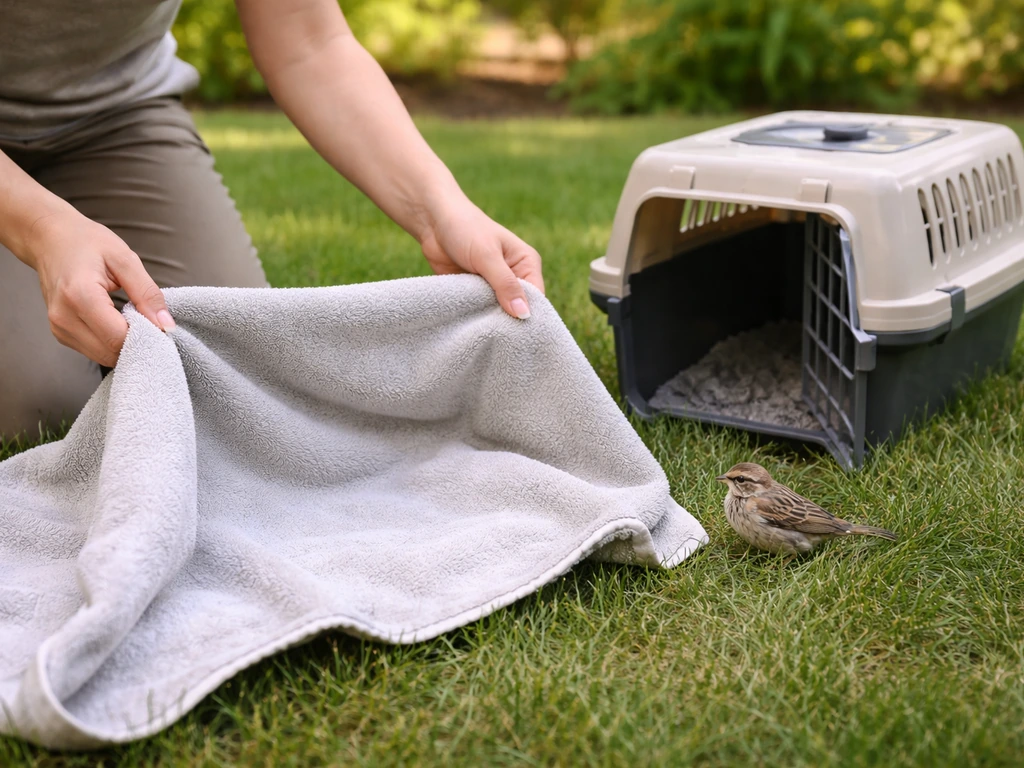
Before you capture: safety, legality, and a quick bird assessment
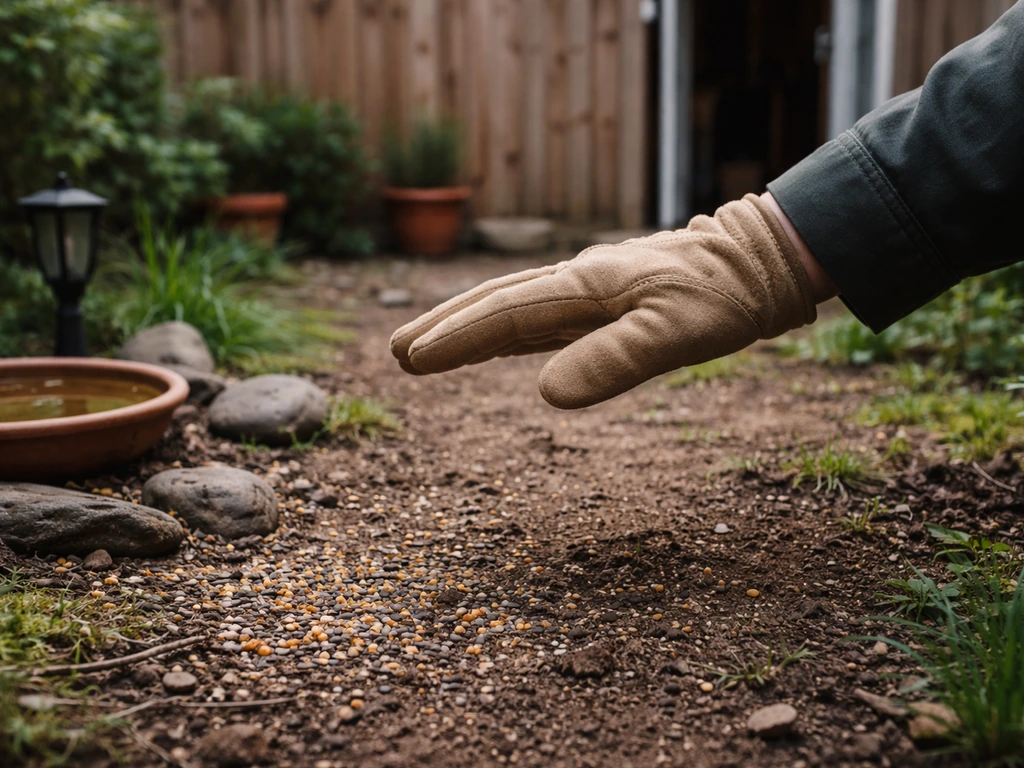
Before you move toward any bird, take 30 seconds to assess the situation. This isn't overthinking it. A quick read of the bird and the environment will tell you which method to use and whether you need professional help instead.
Know the law before you touch a wild bird
In the United States, the Migratory Bird Treaty Act (MBTA) makes it unlawful to take, capture, trap, or possess a migratory bird without prior federal authorization. The law defines 'take' broadly to include pursuing, capturing, and collecting. This covers most common backyard birds: robins, sparrows, finches, warblers, and hundreds of other species. The practical takeaway is that if you find an injured wild bird and need to move it, a brief, necessary rescue action to get it into a box and to a licensed rehabilitator is generally understood as humane intervention, not the kind of commercial capture the MBTA targets. But you should not trap, keep, or breed wild birds without the appropriate federal permits. If you're unsure whether a bird is protected, assume it is and route it to a licensed wildlife rehabilitator as quickly as possible. If you are trying to help an injured wild bird, the humane goal is to contain it safely, which is the same focus as how to catch a bird without killing it.
Protect yourself first
Wild birds can carry avian influenza and other pathogens. The CDC advises avoiding direct contact with a wild bird's secretions and recommends gloves and eye protection when handling birds, especially if the bird is visibly sick or if there's known H5N1 activity in your area. For routine pet bird handling, bare hands are fine. For a wild bird you don't know the health status of, pull on a pair of nitrile gloves before you pick it up. Wash your hands thoroughly afterward regardless.
Read the bird before you approach
A bird sitting still and letting you walk close is not tame. It's usually in shock, seriously injured, or exhausted. Check for obvious injuries: a drooping wing, blood, inability to hop or bear weight, or glassy eyes. A bird that's alert, hopping, and trying to escape is in a very different category from one that's sitting quietly and allows approach. The RSPCA specifically warns against throwing a towel or blanket over a bird that is still flying, because the sudden impact can worsen injuries. If the bird can fly, your capture approach needs to be more controlled, not faster.
- Is the bird a pet (known species, possibly banded) or a wild bird?
- Can it fly? Can it hop or walk? Is a wing drooping?
- Is it in a closed space or open area?
- Are there cats, dogs, or children nearby that need to be removed first?
- Do you have gloves, a towel, and a box ready before you approach?
Humane preparation and setup
The single biggest mistake people make is approaching without any equipment. You'll spook the bird, lose your chance, and then scramble for a towel while the bird is now in a panic. Get your materials together first, then close off escape routes.
What you need
- A lightweight towel or small fleece blanket (avoid terry cloth with looping fibers that can snag toes or claws)
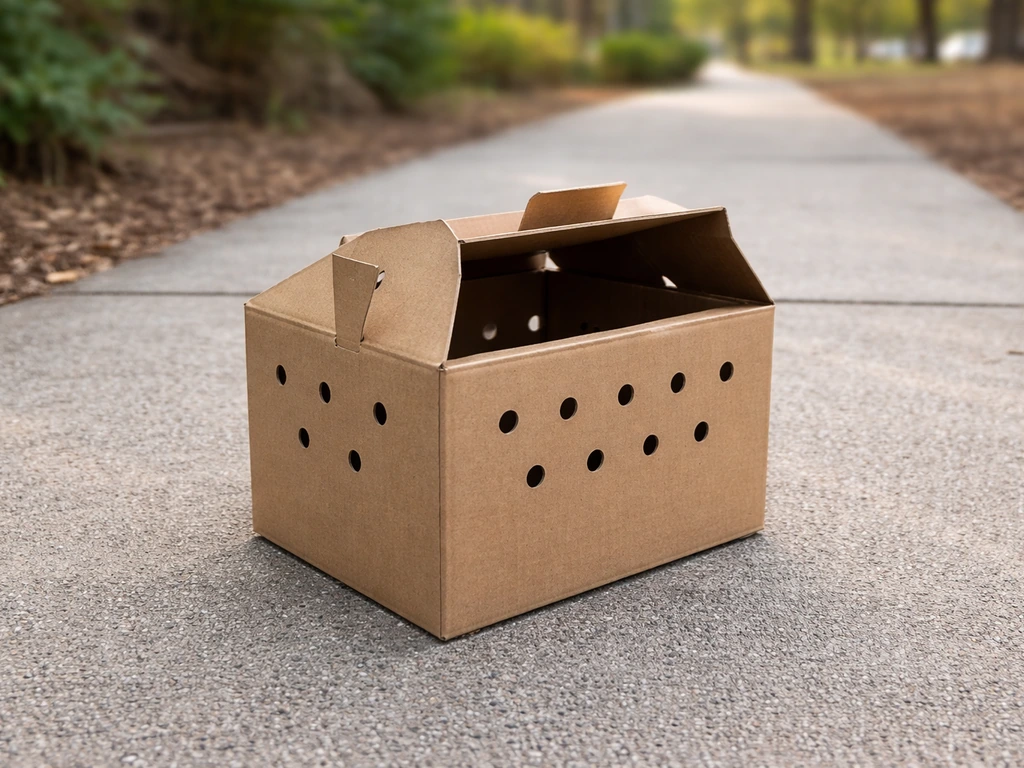
- A cardboard box or pet carrier with a secure lid and air holes punched in the sides
- Nitrile gloves (for wild birds especially)
- A fishing-style landing net or bird net with a soft bag (for birds in open or high spaces)
- Treats or favorite food (for pet birds)
- A pillowcase as a soft backup containment option for small birds
Set up the environment
For an indoor pet bird, close every window, cover mirrors, turn off ceiling fans, and close interior doors to limit the bird to one room. Dim the lights slightly. A calmer, smaller space dramatically increases your success rate. For an outdoor or indoor wild bird, clear the area of other people, pets, and loud noise sources. Reducing the chaos around the bird lowers its stress level and makes it more likely to stay still long enough for you to work. If the bird is in a room, open one window to give it a perceived exit point, then gently guide it toward the light rather than chasing it.
Prepare your containment box before you touch the bird. Punch at least 6 to 8 small air holes in the sides of a cardboard box. Line the bottom with a folded towel for grip and cushioning. Keep the box in the room so you can place the bird directly inside without carrying it across the house. Stress is cumulative, and every extra handling step adds to it.
Catching a loose pet bird vs catching a wild bird: choosing the right method
These are genuinely two different problems, and conflating them leads to the wrong approach. A tame pet bird responds to your voice, recognizes you as safe, and can often be coaxed back. A wild bird has no relationship with you, is running purely on survival instinct, and needs physical containment rather than behavioral coaxing.
| Factor | Loose pet bird | Wild bird |
|---|---|---|
| Primary method | Target training, step-up cue, food lure | Towel, net, or box trap |
| Response to you | May recognize your voice or hand | Sees you as a predator |
| Lighting strategy | Dim lights to reduce flight reflex | Reduce ambient noise and movement |
| Equipment | Favorite treat, familiar perch, towel backup | Towel, net, gloves, ventilated box |
| After capture goal | Return to cage, resume training/taming | Transfer to rehabilitator or release if uninjured |
| Legal consideration | Your property, no permit needed | MBTA applies; minimize handling, route to rehabber |
For a pet bird that's tame and trained, your best first move is always behavioral: use the step-up command, offer a treat, and give the bird a chance to come to you. Only escalate to physical capture if the bird is in danger, panicking, or completely unresponsive to verbal cues. For a wild bird, skip the behavioral approach entirely and go straight to controlled physical containment.
Step-by-step capture techniques that keep the bird alive and uninjured
The towel method (best for most situations)
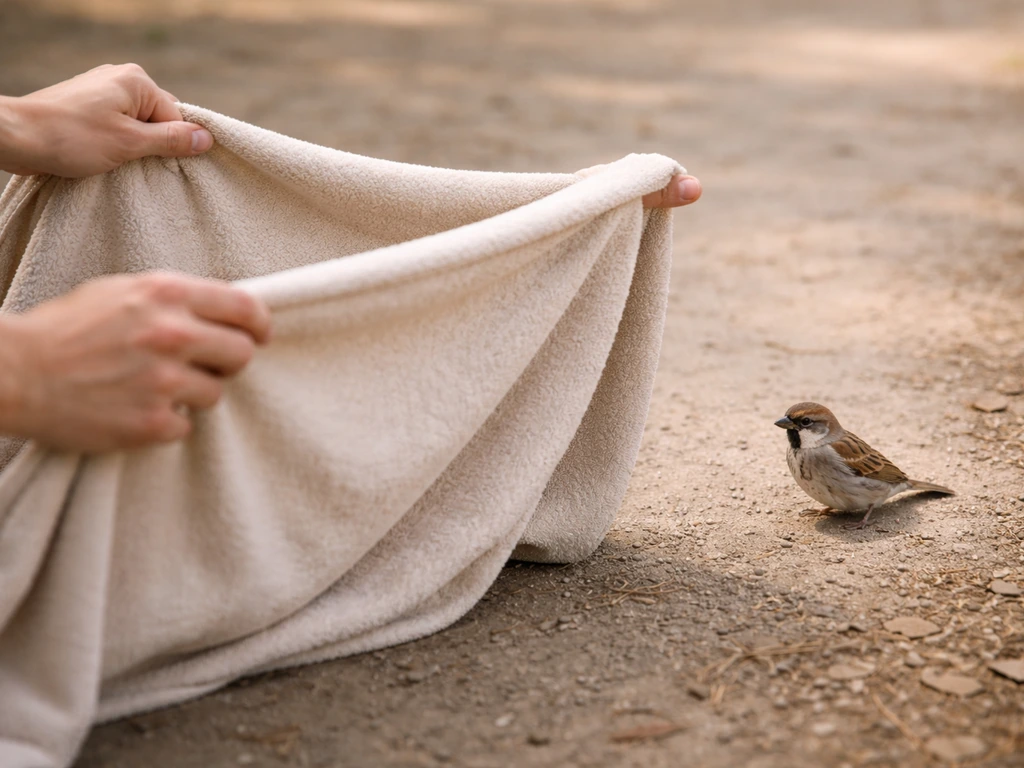
- Hold the towel open in both hands, draped loosely like a soft wall, not balled up. You want coverage, not a throwing weapon.
- Move toward the bird slowly and at an angle, not head-on. Direct eye contact and frontal approach trigger flight.
- When you're within arm's reach, gently place the towel over the bird from above or from the side. Don't throw it or drop it from height.
- Once the towel is over the bird, place both hands on top and feel for the bird's body through the fabric. You're not squeezing. You're locating.
- Cup both hands around the bird's body, keeping the wings held gently against its sides. The hold point is around the body, not the legs, wings, or neck.
- Lift the towel bundle and lower the bird directly into your prepared box, towel and all. The towel can stay in the box as bedding.
- Close and secure the box immediately.
The key hand position: imagine holding a soft ball. Your fingers wrap around the bird's body, your thumbs rest lightly on the back, and the bird's feet hang free below your grip. Never grip the chest tightly. Birds breathe using their chest muscles and can suffocate if the thorax is compressed. This is a common and serious mistake, especially with small birds.
The net method (for birds in open space or trees)
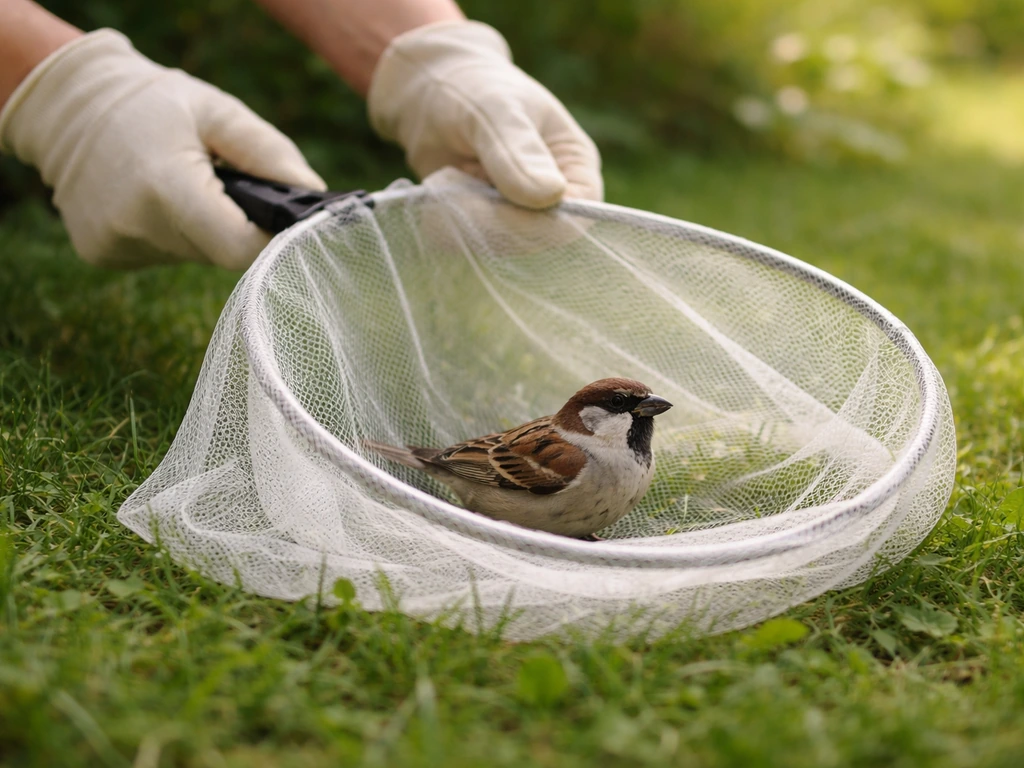
A soft-bag landing net or purpose-made bird net works well for birds that are mobile but not flying strongly. Approach slowly, sweep the net in a smooth arc to intercept the bird's path rather than chasing it down. Once the bird is in the net bag, fold the handle to close the opening and prevent escape. Reach in through the bag fabric to locate and hold the bird using the same body-wrap grip described above. Do not leave a bird in a net unattended for more than a few seconds. Nets are capture tools, not containment tools. Move immediately to a box.
The box or trap method (for a cautious or uninjured wild bird)
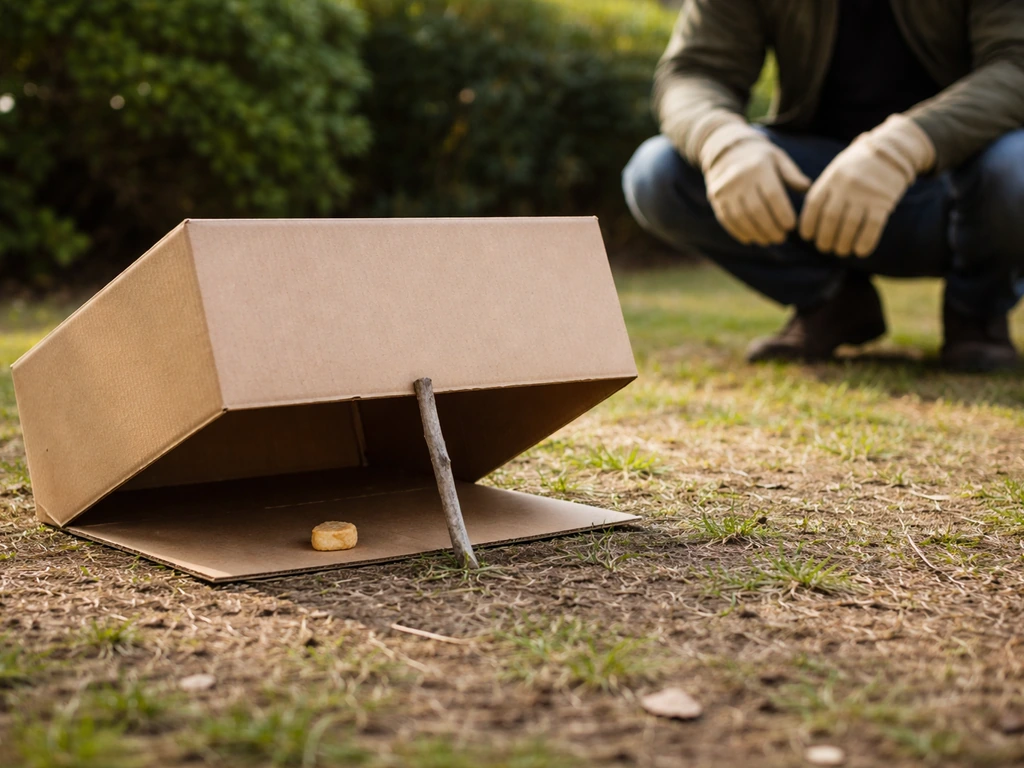
If the bird is alert and mobile but staying in one area, a simple propped-box trap works well. If you do not have a box trap set up, you can still look at how to catch a bird with a bottle as a related alternative to controlled containment. If you need an easy way to <a data-article-id="3A0F5E07-6A18-4602-885A-BFFBF03C7500"><a data-article-id="7F7FE62A-3DC7-460A-BDD3-BC67E287EF8C"><a data-article-id="853ED454-AB27-4A06-9F4D-EFDDDB8DF76A">catch a bird with a box</a></a></a>, this propped-box trap is a reliable option for a cautious or uninjured wild bird. p28s1: If you need a step-by-step guide, see also how to catch a bird in a cage for a related cage-based approach. Prop a cardboard box with a stick and tie a long string to the stick. Place a small amount of birdseed or appropriate food bait under the box. Sit 10 to 15 feet away, hold the string, and wait. When the bird moves under the box to eat, pull the string to drop the box. Then hold the box down while you slide a piece of cardboard under it to form a bottom, and carry the whole assembly to a secure container. This takes patience (often 20 to 45 minutes) but causes very little stress because the bird was never chased.
Catching a tame pet bird in a room
- Close the room off and dim the lights. Darkness suppresses the flight reflex in most pet birds.
- Offer the step-up hand or a favorite perch at chest height and use the bird's name calmly. Give it two full minutes to choose to land on you.
- If the bird doesn't respond, move slowly to reduce it to a corner or lower surface. Don't chase it in flight.
- Once the bird lands on a low surface, offer your hand for step-up again. Most tame birds will comply once they're tired and on a stable surface.
- If the bird is still resisting, use a towel loosely over your hand to reduce bite pressure and gently guide the bird onto your hand or into a carry-cage.
Species-specific tips
Parrots
Parrots are strong, smart, and bite hard. A large macaw or cockatoo can fracture a finger. Grabbing a parrot by its legs or wings causes it to struggle violently and can result in fractures. The correct approach is to use a thick towel to cover the bird, then wrap the towel gently around it so the wings are held against the body. The towel also protects your hands. Once wrapped, hold the bird firmly but not tightly, supporting the body from below. Parrots will often calm noticeably once they can't see and their wings feel secure. If you're dealing with a flock-raised parrot or a bird with little handling history, prioritize a net or box approach over direct towel capture.
Cockatiels
Cockatiels are fast, erratic flyers indoors and will bonk themselves on windows if panicked. Dim the room, move slowly, and use a small towel or light cloth. A tame cockatiel will often calm down and accept a step-up within a few minutes once the room is quiet and familiar. An untamed cockatiel benefits from the towel wrap: come from behind and above, drape the towel gently, and scoop the bird into your cupped hands before it can fully process what happened. Their crest will be flat and they'll hiss when stressed, which is normal. Get them into a box or cage quickly.
Budgies
Budgies are tiny and incredibly fast. The biggest risk is losing sight of them in a large room. Keep the room small. A tame budgie can usually be retrieved with a finger perch and gentle coaxing. For an untamed bird, cup your hands and approach from behind. Because they're so small, use extra care not to compress the chest at all. A small hand towel or even a clean washcloth is enough. Get them into a secure container quickly because budgies can and do squeeze through surprisingly small gaps.
Finches and canaries
Finches are fragile and stress easily. A finch that goes into shock from excessive handling can die within minutes. Minimize contact time above all else. Use a very light cloth or cupped bare hands. The goal is to move the bird into a container as fast as possible with as few handling steps as possible. Do not restrain a finch for longer than necessary. A darkened box calms them almost immediately. Ohio Wildlife Center specifically notes that songbirds escape very quickly, so make sure your container is sealed before you release your grip.
Common wild yard birds (sparrows, robins, doves, pigeons)
These birds have no relationship with humans and will stress heavily if handled. Use the towel method for injured birds on the ground, moving deliberately and quietly. For doves and pigeons, a towel wrap is very effective because they tend to freeze when covered. For sparrows and other small songbirds, cup the hands gently with a light cloth and minimize handling time. Remember that under the MBTA, your goal is to contain the bird safely and get it to a licensed wildlife rehabilitator, not to keep it.
Raptors and large birds
Hawks, owls, herons, and similar large birds with sharp talons or beaks should not be handled by untrained people. The Raptor Trust strongly recommends calling a licensed wildlife rehabilitator for these birds rather than attempting capture yourself. If you must contain an injured raptor temporarily, use a heavy blanket or thick towel, approach from behind, and cover the bird before attempting any contact with your hands. Thick leather gloves are essential. These birds can cause serious puncture wounds even when injured.
After you catch it: secure containment, calming, and safe handling
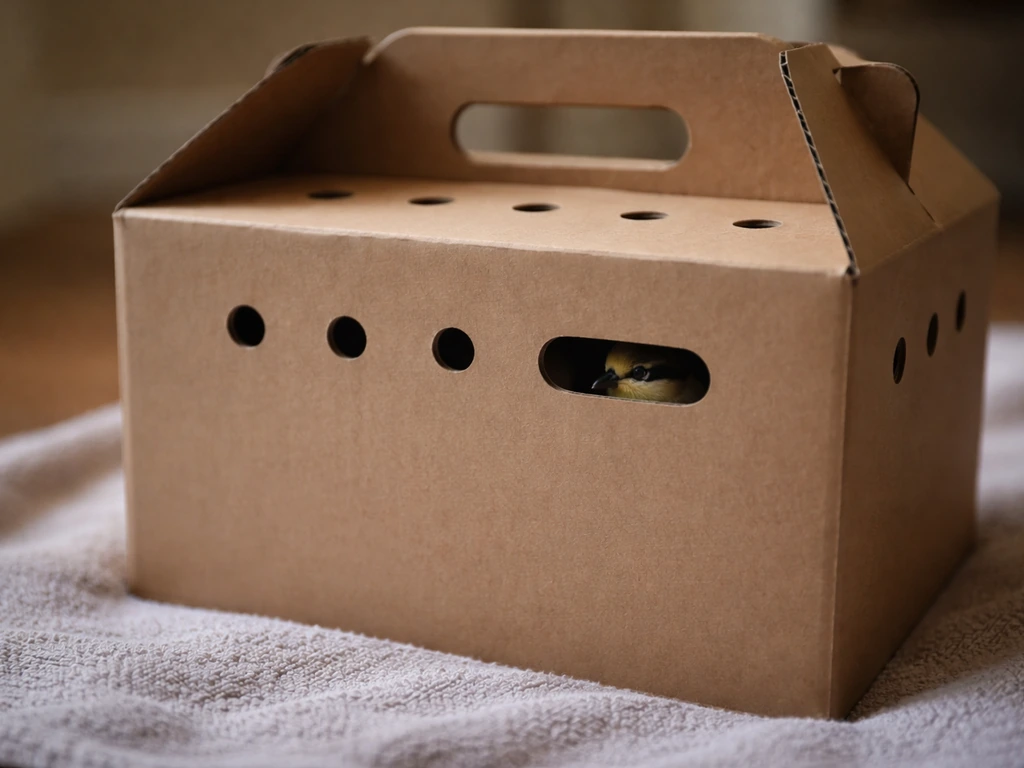
The moment the bird is in the box, your job shifts from capture to containment. Stress is genuinely dangerous for birds. Injured or panicked birds can die from the physiological effects of sustained stress, so everything you do from this point forward should be oriented toward lowering stimulation.
- Close and secure the container immediately. For a cardboard box, fold the top closed and place a weight on it or use tape.
- Move the container to a quiet, warm, dark room away from pets, children, and noise. A temperature around 80 to 85°F is appropriate for injured wild birds in shock.
- Do not open the box repeatedly to check on the bird. Every time you open the box, you reset the stress clock.
- Do not offer food or water immediately unless you're trained in wildlife rehabilitation. Incorrect feeding can cause aspiration or choking in a stressed bird.
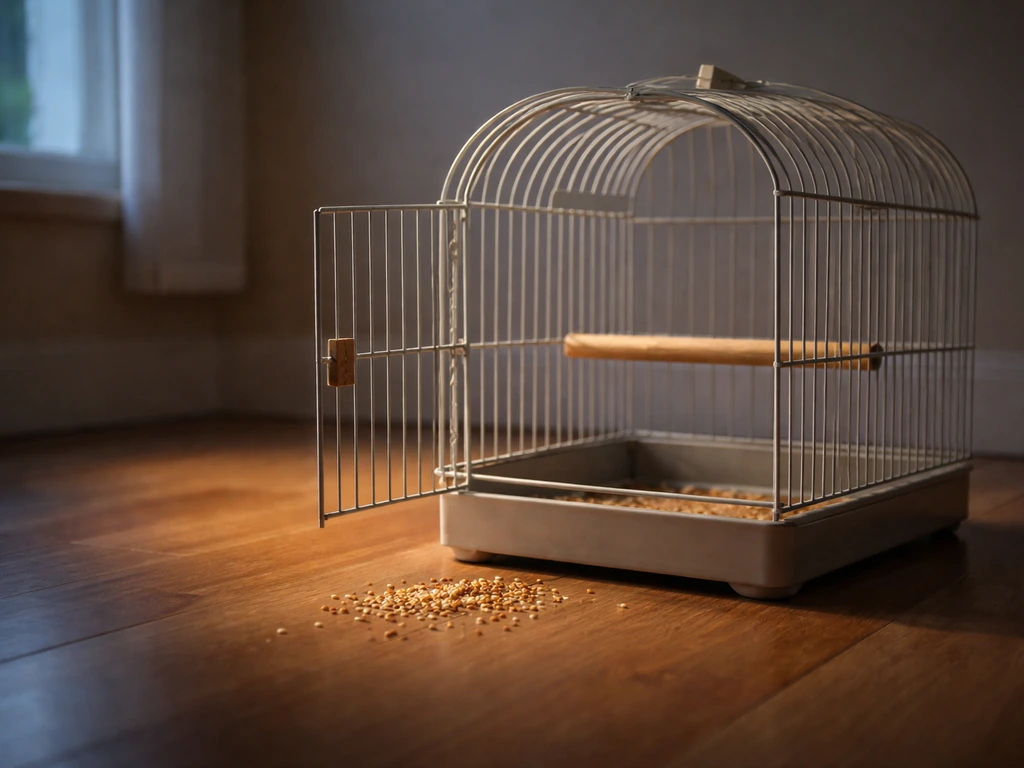
- For a pet bird returning to its cage, place the carry box directly adjacent to the open cage door and let the bird walk in on its own if possible.
If you need to hold a bird briefly outside of a box (for example, to check an injury), use the body-wrap grip: fingers around the body, wings gently held against the sides, feet hanging free. Keep the hold loose enough that you can feel the bird breathing. Hold the bird close to your body, not extended at arm's length, which makes it feel more suspended and insecure. Speak quietly and avoid sudden movements.
For a pet bird that's been loose for a while, once it's back in or near its cage, give it a few hours of quiet and low activity before resuming normal interaction. Don't try to handle or train immediately after a stressful capture. Let the bird eat, drink, and settle. Trust-building after a stressful event can take a few days, but most tame birds return to baseline quickly with consistent, calm routines.
Troubleshooting: what to do when it's not working
The bird keeps flying away before you can get close
Stop moving entirely for two to three minutes. Sit or crouch down to appear smaller. Most birds will land and begin to relax if the perceived threat stops advancing. Then move again, more slowly, using indirect approach angles. If you're outdoors and the bird is in a tree, a box trap with food bait placed at ground level underneath is far more effective than trying to approach directly. A box trap is also a practical way to catch a bird in a tree when it keeps flying away before you can get close.
The bird is biting or striking when you try to hold it
This is normal defensive behavior, not aggression. A towel wrap protects you and removes the visual trigger that's driving the biting. If you're getting bitten through a thin towel, use a thicker one or add a second layer. For parrots specifically, never pull your hand back sharply when bitten. That motion reinforces the biting. Instead, push gently toward the bird to interrupt the bite pressure (the 'push into the bite' technique), then redirect.
The bird got tangled in a net or towel
Stop pulling immediately. Pulling against entanglement tightens the snag and risks fracturing a leg or toe. Work slowly from the point of entanglement outward, unwinding rather than pulling. This is why towel fabric with looping fibers is not ideal, and why nets should always have a smooth-weave soft bag rather than a coarse mesh.
The bird won't take the food lure
A stressed or injured bird often won't eat at all. Don't take a lack of interest in food as a sign the bird is fine. If you're using food to lure a pet bird and it's not responding, the bird is probably too stressed or disoriented to think about food. Try a familiar sound (its name, a whistle it knows) or place familiar objects nearby instead. For wild birds, try species-appropriate bait: millet or sunflower seeds for sparrows and finches, berries or mealworms for robins, cracked corn for doves.
When to stop and call a professional
Not every bird situation is a DIY problem. The DFW Wildlife Hotline recommends contacting a wildlife rehabilitator if an injured bird hasn't shown recovery after two hours of quiet containment. The American Bird Conservancy notes that even birds that appear capable of flight may have serious internal injuries that become fatal without treatment. If you see any of the following, stop handling the bird yourself and call a licensed wildlife rehabilitator or avian vet.
- Obvious bleeding that isn't stopping
- A wing hanging at an abnormal angle or dragging on the ground
- The bird is unresponsive or unconscious
- The bird is a raptor (hawk, owl, eagle) or a large wading bird (heron, egret)
- The bird has been in a cat's mouth (cat bacteria cause fatal infection in birds within hours even without visible wounds)
- The bird is not recovering after two hours of rest in a dark, quiet, warm container
- You suspect the bird is sick rather than injured (lethargic, discharge from eyes or nostrils, unusual feather posture)
To find a licensed wildlife rehabilitator near you, contact the DFW Wildlife Hotline, the National Wildlife Rehabilitators Association (NWRA), or your state's Department of Fish and Wildlife. Most rehabilitators specialize by species type, so describe the bird as best you can when you call. Keep the bird contained and quiet in your box while you make that call. Don't attempt further handling unless the bird is in immediate physical danger from its environment.
For a pet bird with a serious injury (bleeding, fracture, visible eye damage, or labored breathing after capture), call an avian vet rather than a wildlife rehabilitator. An avian vet is your best resource for owned birds of any species. If you're not sure whether your vet has avian experience, ask specifically about birds before you go, since not all general vets are comfortable treating them.
FAQ
How do I know whether I should chase, use a net, or set up a box trap to catch a bird alive?
If the bird is flying strongly (or you cannot approach within a few steps without it repeatedly taking off), prioritize a controlled intercept (soft-bag net) or a prepped box trap rather than running at it. Running often escalates the scramble response and increases collisions, especially around windows and mirrors.
How long is it safe to keep a bird in a net before putting it into a box?
Do not try to “hold it until it calms down” when the bird is in a net or when you are still outside the containment box. Move immediately from the net into your ventilated box, because nets are for capture only and time outside the box raises stress and injury risk.
What personal safety steps should I follow when handling an unknown wild bird?
For a wild bird, the safest default is nitrile gloves plus eye protection, then wash hands thoroughly afterward. If you are already wearing gloves, you still should not touch your face or eat until you have removed the gloves and cleaned up, because contamination can happen during glove adjustments.
After I catch a wild bird alive, should I feed it or give it water right away?
Keep the bird contained in a warm, quiet, low-stimulation spot, and avoid giving water or food unless you know it is safe for that species. During the first assessment, focus on enclosure comfort and identifying whether it needs urgent medical care (bleeding, fracture, labored breathing) rather than immediate feeding.
Can I carry a bird after I capture it, or should it always stay in the box?
Yes, if you need to transfer the bird between containers, limit the number of moves, keep the transfer time short, and do it with the bird held close to your body in the body-wrap grip (feet free, chest not compressed). Never carry an unboxed bird around the home, and keep the receiving box in the same room when possible.
What signs mean the bird is still in danger even if it seems calm after capture?
Birds can look calm while still being in shock, especially if they are sitting with drooped posture or not moving normally. Re-check breathing and movement every minute, and if it is not responding normally or it worsens, call for professional help instead of waiting for it to “wake up.”
Does humane rescue ever conflict with laws about capturing birds alive?
If you suspect a migratory species, the humane rescue still requires restraint from “keeping it as a pet.” In practice, the decision aid is: contain briefly to prevent harm, then transfer to a licensed wildlife rehabilitator as soon as you can. Do not attempt to rehabilitate long-term without authorization.
When should I stop trying to catch and hold the bird and call a professional immediately?
Stop DIY handling sooner when the bird cannot right itself, has visible blood, has a wing droop plus inability to use it, has labored or open-mouth breathing, or appears to have been hit by a window or vehicle. Those are “urgent call now” situations where additional handling can worsen outcomes.
How long should I wait before trying to interact with or train a pet bird after a capture attempt?
Because stress adds up, you should delay training or active interaction until the bird has been stable in its enclosure for a few hours with quiet conditions. For pet birds, also avoid repeating the same capture method the next day if the bird is clearly associating you with panic, switch to more predictable cues (like consistent step-up sessions) later.
What should I do if the bird becomes tangled in string, fishing line, or netting?
If the bird is entangled or caught in something, do not yank it free. Work from the attachment point outward with slow unwinding, and consider cutting only if a professional would do the same for immediate safety. If it is a tight wrap around a leg or toe, stopping to get help is often kinder than risking a fracture.