You can get a bird to come to your hand, but the path looks different depending on whether you're working with a pet parrot in your living room or a chickadee in your backyard. The core principle is the same either way: the bird has to decide it's worth coming to you. Your job is to make that decision easy and safe for them. This guide walks you through every step, from the first day you sit near a bird to the moment it hops onto your palm.
How to Get a Bird to Come to Your Hand Safely
Clara Hayes
7 Apr 2026
Safety and ethics before you start
Before anything else, get the safety basics sorted. Even small birds like budgies can bite hard enough to break skin, and larger parrots can cause a real injury. Wear nothing dangling or shiny on your hands (rings, bracelets) that could startle or snag. Keep long-sleeved clothing handy if you're working with a bird you don't know yet. If you have a pet bird that hasn't been handled before, close windows and doors and cover mirrors before you let it out of the cage. A panicked bird flying into glass is a genuine emergency.
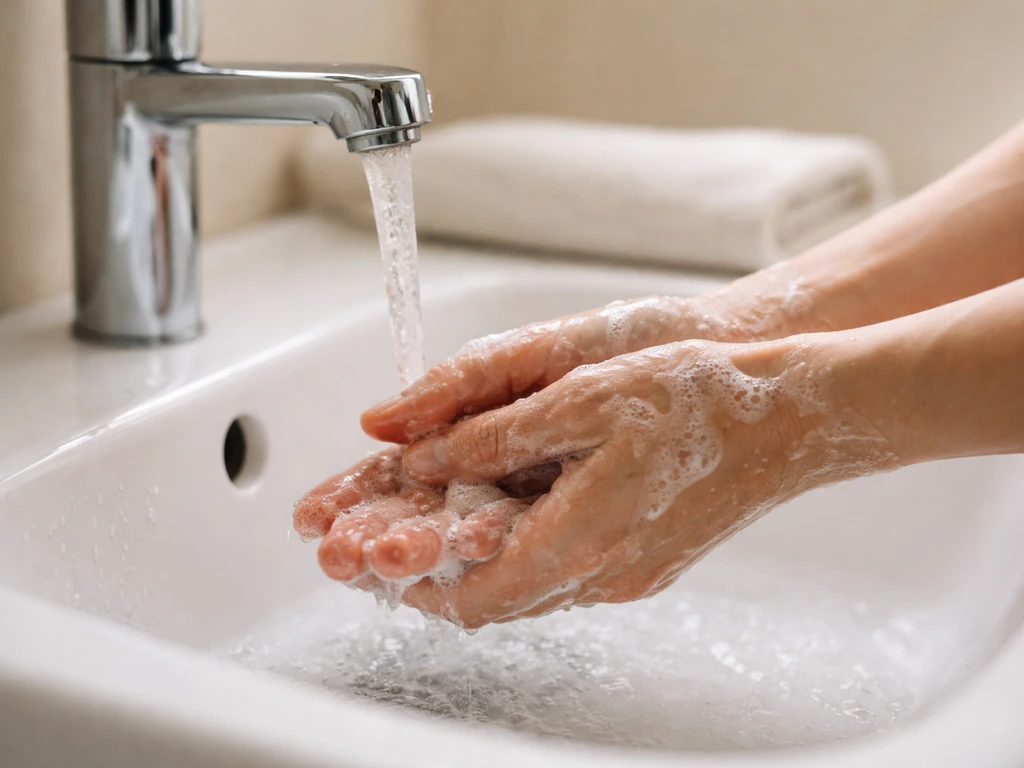
Hygiene matters just as much. Wash your hands with soap and water before and after every session. The CDC is clear that animals can carry harmful germs even when they look perfectly healthy, and birds are no exception. Hand sanitizer with at least 60 percent alcohol works as a backup when soap and water aren't nearby, but soap is better. Never handle food prep in the same space you're cleaning feeders or handling bird equipment.
For wild birds, the ethical line is important to understand upfront. The US Fish and Wildlife Service advises people to observe wildlife from a distance and avoid touching it. Many wild bird species are also protected under federal law, which means capturing or restraining them without a permit is illegal. The goal with wild birds is gentle attraction, not taming or physical control. If you find an injured wild bird, contact a licensed wildlife rehabilitator rather than attempting to handle it yourself.
One more point: never attempt to hand-feed a baby bird unless you're an experienced aviculturist. Aspiration (inhaling food into the airway) can kill a nestling quickly, and the feeding technique is genuinely technical. If you've found an orphaned baby bird, again, a wildlife rehabilitator is the right call.
Bird behavior basics: trust, comfort, and body language
Birds are prey animals. Their first instinct when something large and unpredictable moves toward them is to flee. That instinct doesn't disappear just because you're offering food. What you're doing over the course of hand-taming is teaching a specific bird that you specifically are not a threat. That takes repetition and consistency, not speed.
Learning to read body language is the most practical skill you can build here. A relaxed bird will have slightly fluffed feathers (not slicked down), may bob its head, and will look at you with one eye at a time in a curious, calm way. An uncomfortable or frightened bird shows very different signals: feathers slicked tight against the body, eyes darting toward exits, and a crouching posture as if it's about to spring away.
An aggressive bird fans its tail, holds its wings slightly away from its body, and may do rapid pupil dilation (called eye pinning). These last two states mean stop what you're doing and give the bird more space. Eye pinning alone isn't always aggression, so read it alongside posture and environment.
Stress signs to watch for in pet birds include repetitive pacing, biting cage bars, constant rocking, or hyperactive bouncing. If you see these, the bird is not in a good place to learn. End the session, reduce environmental stressors (loud noise, other pets nearby, unfamiliar people), and try again when the bird is settled. Getting a bird to come to you is fundamentally about reducing perceived threat, not increasing reward pressure.
How to attract the right bird (species-specific setup and bait)
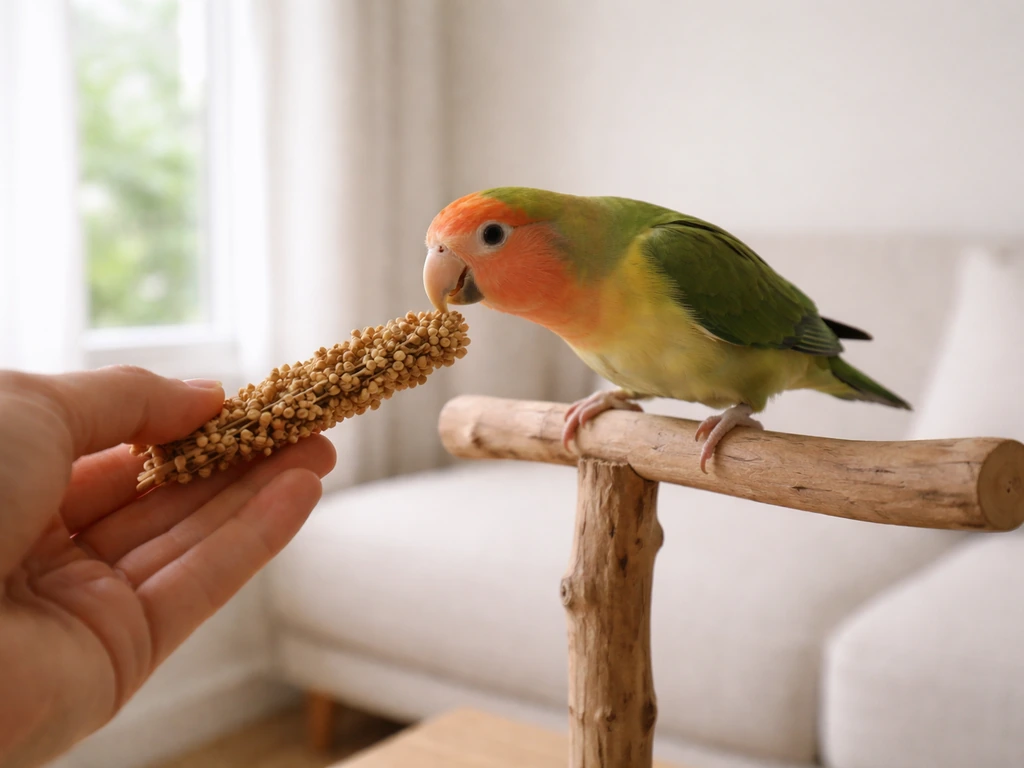
Pet birds: parrots, cockatiels, and budgies
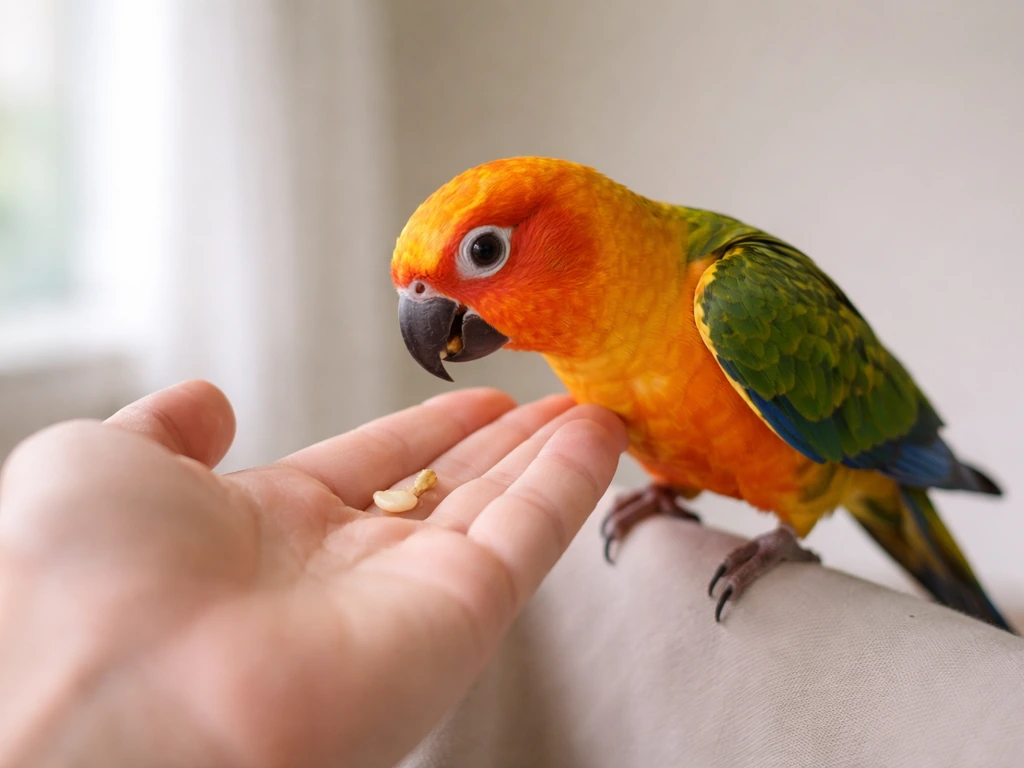
For pet birds, the setup is about making your hand the most interesting and rewarding thing in the room. Find out what your bird gets genuinely excited about: millet spray works brilliantly for cockatiels and budgies, while larger parrots often go wild for small pieces of almond, walnut, or a bit of cooked sweet potato. Use whatever the bird already shows enthusiasm for at feeding time. The treat should be something you only bring out during training sessions, so it stays special.
Sit at the bird's level. Towering over a small bird from a standing position is intimidating. Pull up a chair next to the cage or perch stand and let the bird get used to you at eye level. Do this for a few sessions before you even try offering food from your hand.
Wild backyard birds: finches, chickadees, and sparrows
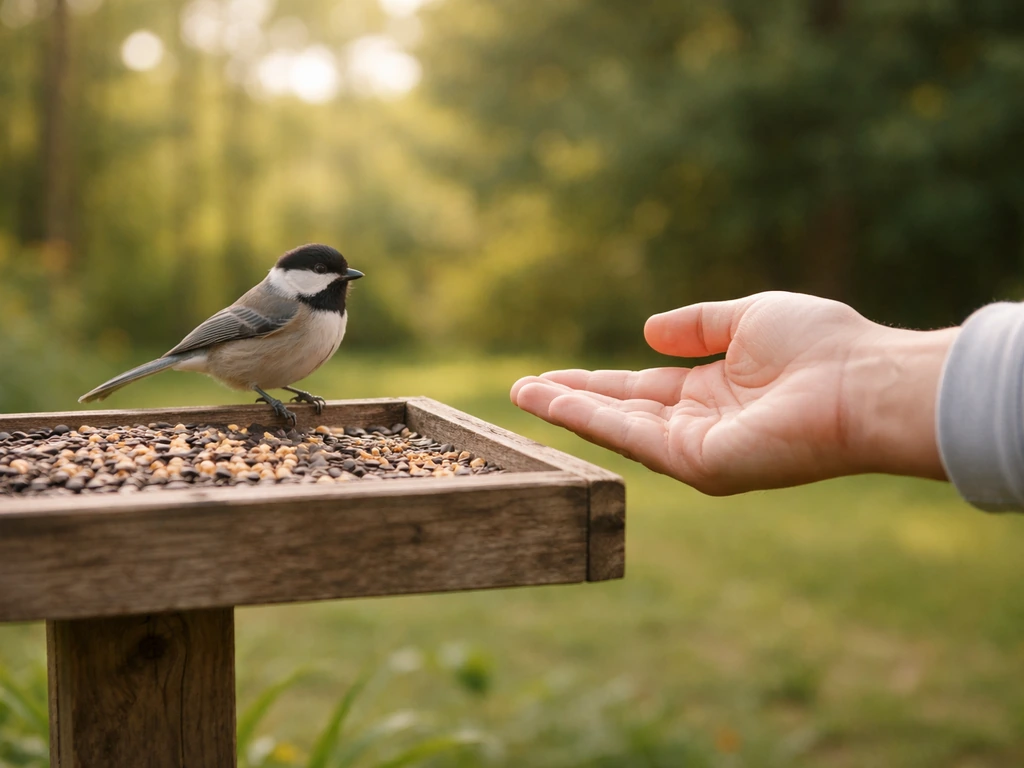
Attracting wild birds to your hand requires a different kind of setup. The goal is to position yourself as a natural extension of a feeding area they already trust. Place a feeder or scattered seed in a consistent spot close to where you can sit quietly, ideally within 6 to 10 feet of a chair or bench. Black oil sunflower seeds attract the widest range of backyard species. For finches specifically, nyjer (thistle) seed is a reliable draw. Chickadees and nuthatches are typically the boldest species and the most likely to eventually land on an outstretched hand.
That said, be aware of the real tradeoffs with communal feeding. Bird feeders can spread diseases including house finch eye disease, salmonellosis, and avian pox when birds crowd together. Clean feeders regularly with a diluted bleach solution, and never clean them in your kitchen sink. If you want to reduce risk further, native plantings that produce natural seeds and berries are a healthier long-term alternative to supplemental feeders, and they still bring birds close. Also worth noting: some wildlife agencies actively discourage habituation of wild birds to humans because it can lead to dependency and problematic behavior. Keep your wild-bird interactions gentle and minimal.
Step-by-step hand-taming routine (day-by-day)
This schedule is written for pet birds, but the pacing principles apply to wild birds too. With wild birds, compress each phase into longer calendar periods since you have less control over the environment.
- Days 1 to 3 (Presence phase): Sit near the cage or perch for 10 to 15 minutes at a time. Don't stare directly at the bird. Read a book, scroll your phone, or do something quiet. The bird is learning that you being nearby doesn't equal danger.
- Days 4 to 6 (Hand-near-cage phase): Place your hand flat against the outside of the cage bars for a few minutes per session. No treats yet. Let the bird investigate at its own pace. If it approaches and sniffs or beaks at your fingers, that's a good sign.
- Days 7 to 10 (Treat-at-cage phase): Hold a small treat between your fingers just inside or pressed against the cage bars. Let the bird come to the treat. Don't push the treat toward the bird. Wait.
- Days 11 to 14 (Hand-inside-cage phase): Open the cage and hold the treat in your open palm just inside the door. Keep your hand low and still. Some birds will hop over within a day; others take a full week. Both are normal.
- Days 15 onward (Step-up progression): Once the bird is regularly taking food from your hand inside the cage, move to the step-up routine described in the next section.
Keep sessions short: 5 to 15 minutes maximum, two or three times a day. Ending on a positive note (bird took a treat, no stress signals) is more valuable than a longer session that ends with the bird retreating. Consistency in timing helps too. Birds respond well to predictable routines.
Training progressions: from feeding near you to step-on/hand contact
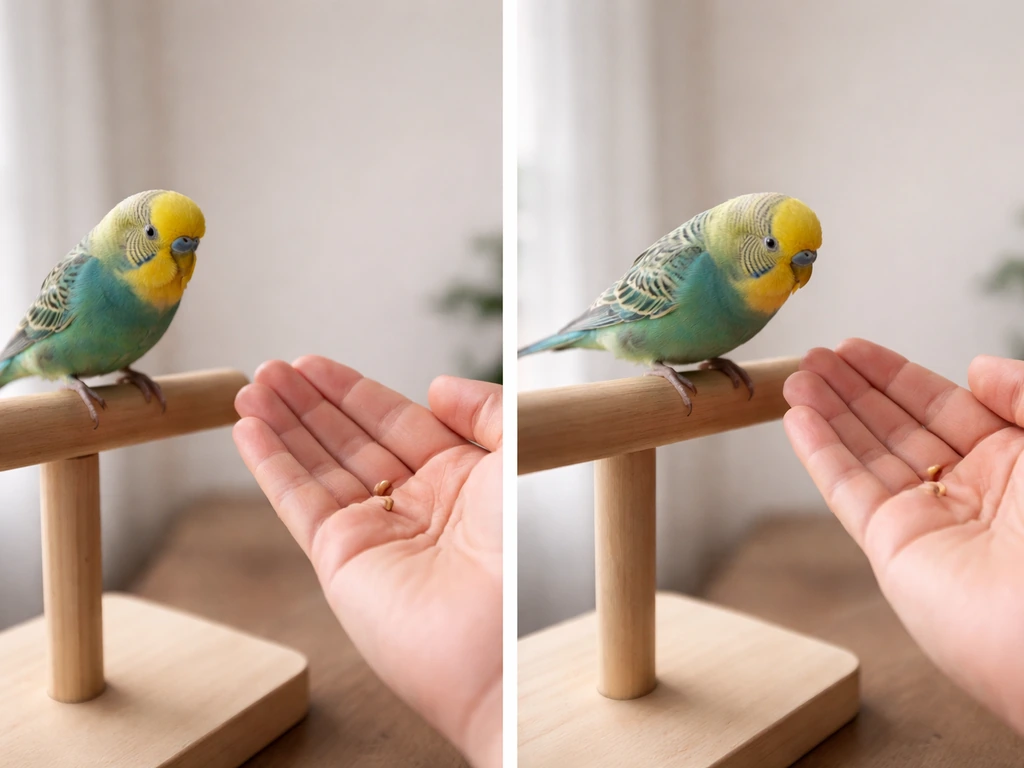
Once your bird is comfortable taking food from an open hand, you're ready to work toward actual hand contact. This is where the two most important behaviors come in: stepping up onto your hand and stepping off on command. According to Lafeber's training guidance, these "up" and "off" cues are the foundation of a handleable pet bird. Everything else builds from them.
To teach step-up, hold a treat in the hand you want the bird to step onto, then position that hand just below the bird's chest at perch height. Say "up" in a calm, consistent tone. The bird will naturally lean forward to reach the treat, which shifts its weight and usually causes it to step onto your hand. Don't scoop or force it. If the bird grabs the treat and backs off, that's fine. Repeat. Most birds make the full step-up connection within a few sessions once they're already comfortable with hand feeding. Training a bird to step on your finger follows exactly this same progression, just targeting the finger rather than the flat palm.
The Gabriel Foundation's training materials make a strong point here: never physically force a bird to step up. Forcing causes bites and, more importantly, it breaks the trust you've been building. If the bird won't step up, go back one stage. More treat-from-hand sessions, less pressure. Stick training (using a short dowel instead of your finger) can also be useful if the bird is still nervous about direct hand contact. The dowel becomes a bridge between perch and hand.
VCA Animal Hospitals points out that birds sometimes use their beak as a kind of "third hand" when stepping up, particularly larger parrots. If your bird grabs your finger lightly before stepping, that's usually exploratory rather than aggressive. Watch the body language. A bird that's stepping up calmly with relaxed feathers is using the beak for balance. A bird with slicked-back feathers and a rigid posture that grabs your finger is about to bite. Those are two very different situations. Getting a bird onto your finger is a skill that gets easier as the bird's confidence grows.
For wild birds, the "training progression" is really just a patience game. Once birds are regularly feeding at a station near you, try sitting with your hand extended and holding seed in your palm instead of placing seed in the feeder. Sit very still. It may take many sessions before a bold chickadee or nuthatch lands. When it does, don't move until it leaves on its own. Getting a bird to land on your hand with wild species can take weeks of patient, consistent effort at the same time and place each day.
Once you've got reliable step-up behavior, you can start working on hand-to-hand transfers and eventually training your bird to sit calmly on your hand for extended periods. Some owners also work toward shoulder perching, which requires its own set of considerations around trust and positioning. Training a bird to stay on your shoulder is a natural next step once hand-sitting is solid.
Species-specific tips at a glance
| Species | Best treat | Typical timeline to hand contact | Key tip |
|---|---|---|---|
| Budgie | Millet spray | 2 to 4 weeks | Approach from below; they find overhead movement very threatening |
| Cockatiel | Millet, small seed | 1 to 3 weeks | Whistling or humming softly helps; they're social and respond to sound cues |
| Parrot (medium/large) | Almond, walnut, sweet potato | 2 to 8 weeks depending on history | Use a consistent verbal cue like 'up' every time; they learn words fast |
| Finch | Nyjer seed, millet | 3 to 6 weeks for hand landing (wild) | Finches are skittish; don't try to rush past feeder-trust stage |
| Chickadee/Nuthatch | Black oil sunflower seed, peanut pieces | 2 to 5 weeks of consistent sessions (wild) | These are the boldest backyard species; best candidates for hand landing |
Troubleshooting: why birds won't come and what to change
If your bird (pet or wild) isn't progressing, run through this checklist before assuming the bird is simply unwilling. Most stalled training has a fixable cause.
- Wrong treat or food: The food you're offering may not be motivating enough. Try different options. A budgie that ignores pellets might go crazy for a small piece of millet. A wild chickadee that ignores mixed seed may land immediately for a peanut piece.
- Moving too fast: If you've skipped a stage or shortened the trust-building phase, back up one step. Spend three extra days at the previous stage before moving on.
- Your body language is alarming the bird: Are you staring directly at it? Looming overhead? Making sudden movements? Birds read these as predator signals. Look slightly away, sit lower, move in slow motion.
- The environment is too stimulating: Loud TV, other pets nearby, unfamiliar people in the room, or outdoor noise can keep a bird in a state of alert that makes training impossible. Find a quieter setting.
- Session timing is off: Birds are usually most active and food-motivated in the morning and again in late afternoon. Midday sessions often get less engagement.
- The bird has a trauma history: Rescue birds and re-homed birds often have past negative experiences with hands. These birds need more time at each stage. Don't compare their pace to a hand-raised bird.
- Seasonal or weather factors (wild birds): During nesting season, breeding behavior, or extreme weather, wild birds prioritize survival needs over curiosity. Pause and resume when conditions normalize.
- The bird is unwell: A sick bird may appear lethargic or stop engaging with training entirely. If your pet bird suddenly loses interest in food or interaction, consult an avian vet.
- Territoriality: Some birds, particularly intact males during breeding season, become aggressive around their cage. Training outside the cage in a neutral space can help break this pattern.
If you're working with a wild bird and it seems actively avoidant rather than just cautious, consider whether your feeder placement is introducing stress (too exposed, too close to a window that reflects, near a busy path). Small adjustments to the physical setup often make a bigger difference than anything you do with your hands. Getting a wild bird to land on you specifically requires getting the feeder location and your sitting position dialed in before anything else.
When to stop: risk signs, wildlife laws, and humane next steps
There are situations where the right call is to stop trying to get a bird to come to your hand, at least for now. Knowing when to back off is just as important as knowing how to proceed.
For pet birds, stop the session immediately if you see sustained aggressive posturing (tail fanning, wings out, feathers slicked, lunging), if the bird has bitten hard enough to break skin, or if the bird is panting or showing signs of extreme stress. A single bad session can set training back by weeks if the bird forms a strong negative association with your hand. Give it a day or two of calm, no-pressure presence before trying again.
For wild birds, the clearest stopping point is habituation that goes too far. If a wild bird is following you around demanding food, approaching strangers aggressively, or no longer shows any wariness around humans, you've crossed into a territory that's not good for the animal. Wildlife agencies including MassWildlife note that habituation to humans can lead to problematic and aggressive behaviors, and it reduces the bird's ability to survive independently. Pull back, reduce feeding frequency, and let the bird return to more natural wariness.
On the legal side: in the United States, most wild birds are protected under the Migratory Bird Treaty Act. Capturing, restraining, keeping, or transporting a wild bird without a federal permit is a federal offense, even if your intent is kind. Attracting birds to a feeder or hand-feeding is generally fine, but physically restraining or keeping a wild bird is not. If you find an injured wild bird, the CDC recommends calling your state wildlife agency or a licensed wildlife rehabilitator for guidance rather than attempting to handle or care for it yourself.
If a pet bird is not progressing despite weeks of patient, consistent effort, consider consulting an avian veterinarian or a certified bird behavior consultant. Some birds have behavioral issues rooted in medical problems (pain, nutritional deficiency, hormonal imbalance) that no amount of training will fix. Getting a vet check before assuming a training problem is always worth doing. You can also explore alternative approaches to getting a bird comfortable with finger contact if the open-palm method isn't working for your particular bird.
Finally, be honest about your own commitment. Hand-taming a bird, especially one with a difficult history, is a real project measured in weeks or months, not days. The birds that end up fully hand-tame and genuinely enjoying human contact got there because someone showed up consistently, read their signals accurately, and never pushed past the bird's comfort threshold. That patience is the actual technique. Everything else is just details.
FAQ
What should I do if my bird looks like it might bite when I offer my hand?
Use “look first, move last” as your rule. If the bird is staring with slicked feathers, crouching, tail fanning, or lunging, do not hold your hand out. Wait until it shows relaxed body language (slightly fluffed, slow blinking, one-eye calm curiosity) and only then offer the treat from a non-threatening position at perch height.
My bird bit me during step-up training. Should I keep trying right away?
Stop and pause training for the rest of the day. After a bite, keep the bird calm and minimize interaction, then restart with the last step it handled comfortably (usually treat-from-hand from a short distance). Do not “push through” with more attempts, since negative hand associations often increase bites in subsequent sessions.
Is it okay to hand-feed wild birds until they start landing on my hand?
Short answer, no. If the bird is wild, bird agencies generally discourage establishing close routines that reduce wariness, and a human-hand feeding pattern can escalate dependency. If you are determined to try, keep it minimal, avoid prolonged hand approaches, and prioritize letting the bird leave on its own without crowding or following.
My pet bird takes the treat but immediately backs off. Is that failure or progress?
Aim for your bird to choose you voluntarily. If it grabs food and backs away, that is still progress, repeat the same stage next session, and reduce your movement. If you repeatedly see retreating after each approach, back up one stage by extending distance or switching to a bridge tool like a perch dowel.
How do I know whether my bird is not learning or just having a bad day with step-up?
Don’t try to speed up. For many birds, the next cue only matters when the bird is comfortable enough to predict the outcome. If the bird knows “up” but won’t do it today, you likely need either a smaller treat, less hand distance, a quieter environment, or another day returning to pure treat-from-hand before asking for the command.
My pet bird gets restless or hyperactive during sessions. Should I continue training?
If it paces, rocks, or bites cage bars, treat that as a sign the current environment is too stimulating or the session is too long. End the session early, remove nearby triggers (other pets, loud TV, unfamiliar people), and resume later when the bird is quieter. Birds often “learn” only during low-stress moments.
What if my bird eats from my hand sometimes but won’t step up onto it?
If your bird won’t approach your hand but is willing to eat from the cage, the missing piece is usually distance and predictability. Move more slowly toward the bird’s comfort zone, sit at eye level, and offer treats only when the bird is calm. Also verify the session is at a time the bird is naturally interested in food, but not overly hungry or stressed.
Can I start training with my finger instead of my palm?
Yes, but do it safely: use a finger only after the flat palm step-up is reliable, and keep your hand lower than the bird’s eye line so it feels less threatened. If the bird tends to grab your finger aggressively, switch back to a dowel bridge and rebuild from calm palm contact before reintroducing direct finger contact.
How do I tell whether training problems are actually medical issues?
If a bird suddenly has different behavior from normal, treat it as a possible health issue before assuming training resistance. Sudden aggression, heavy panting, lethargy, or changes in droppings can indicate pain or illness, so schedule an avian vet visit and pause training until you have guidance.
What’s the most common reason hand-feeding training stalls?
A big “gotcha” is using the wrong treat. If the treat you offer is not motivating for that specific bird, it will not feel worth approaching. Match the treat to what it already targets at feeding time (for example, millet for some small parrots, sunflower or nyjer for many backyard species) and keep training treats exclusive to sessions.
My bird is afraid of direct contact. How can I work around that safely?
Two safe options are to stop touching your bird beyond brief, calm interactions, or use a less direct approach like placing the treat on a nearby perch or using a dowel bridge. Once the bird is comfortable, you can transition back gradually. The goal is to protect trust, not to “fix” fear by increasing contact immediately.
For wild birds that land on my hand, what are the rules to keep it safe for both of us?
If a wild bird is landing on your hand, keep your movement minimal and avoid reaching or grabbing. Don’t trap it, and do not keep repeating contact attempts if it hesitates or fluffs defensively. When it leaves, reset by returning to the feeder station routine rather than escalating to more direct hand time.
Next Articles
How to Get a Bird to Come to You: Humane Steps
Humane steps to teach recall to pet birds and attract wild birds closer using trust, cues, rewards, and fixes
How to Catch a Bird Without Killing It: Humane Steps
Humane, trap-free steps to catch a wild backyard bird safely, minimize stress, contain it calmly, then release or reloca
How to Catch a Bird With a Bottle Safely and Humanely
Humane, safety-first steps to catch a bird with a bottle or cover, plus safer alternatives and what to do after capture.