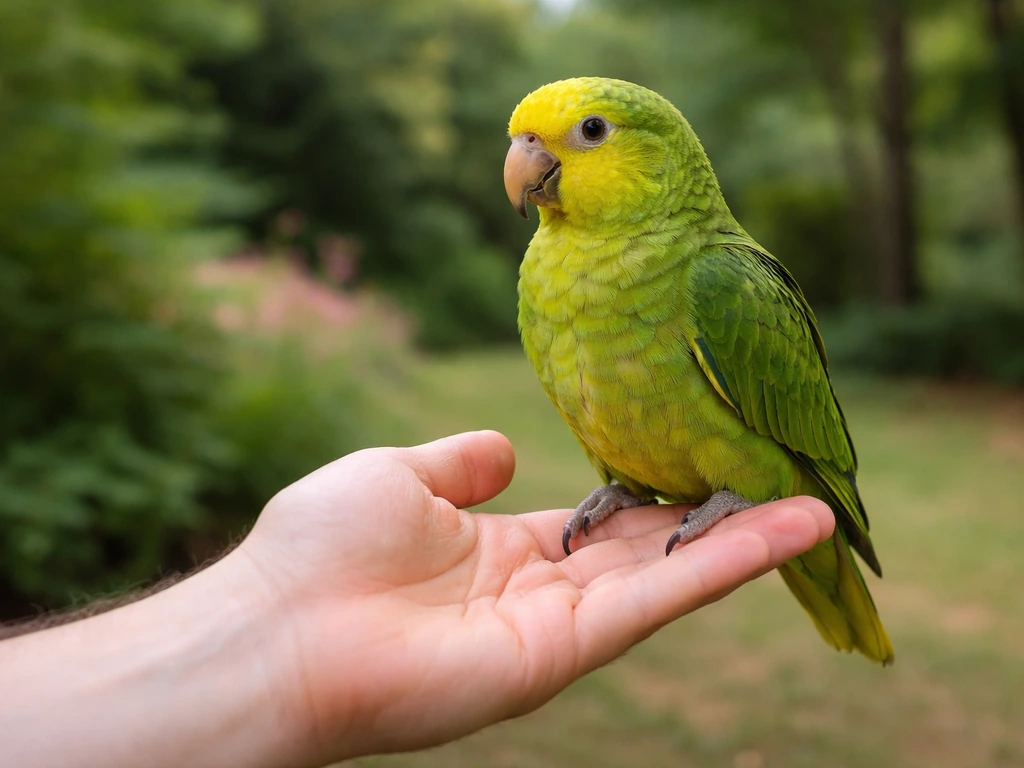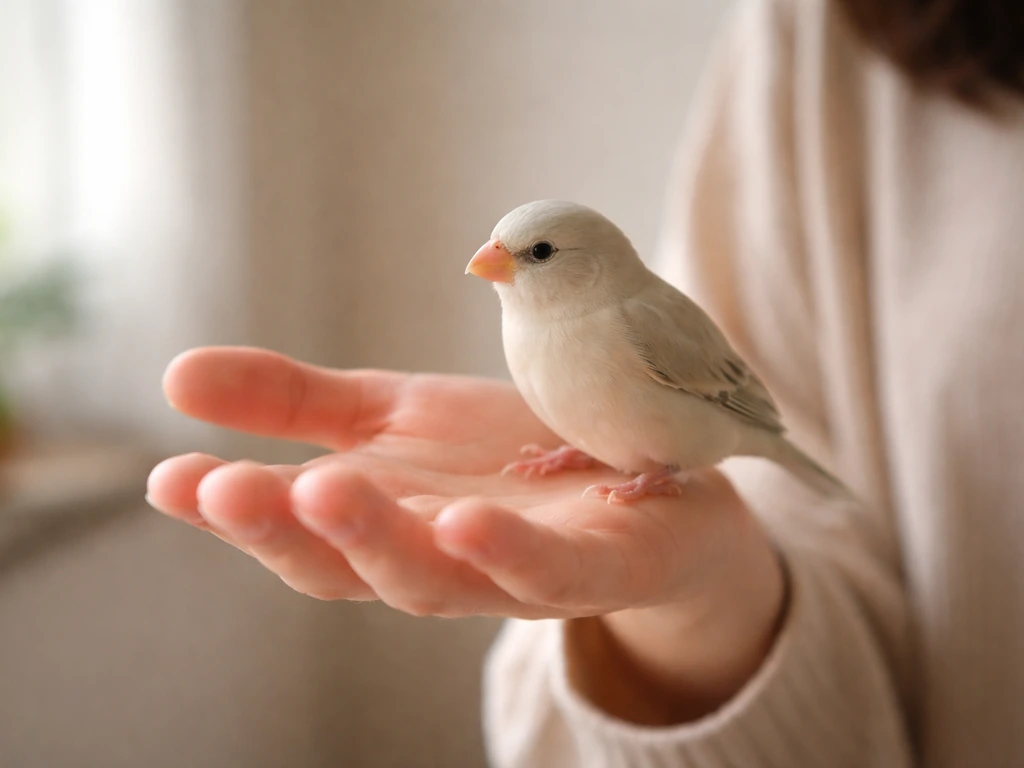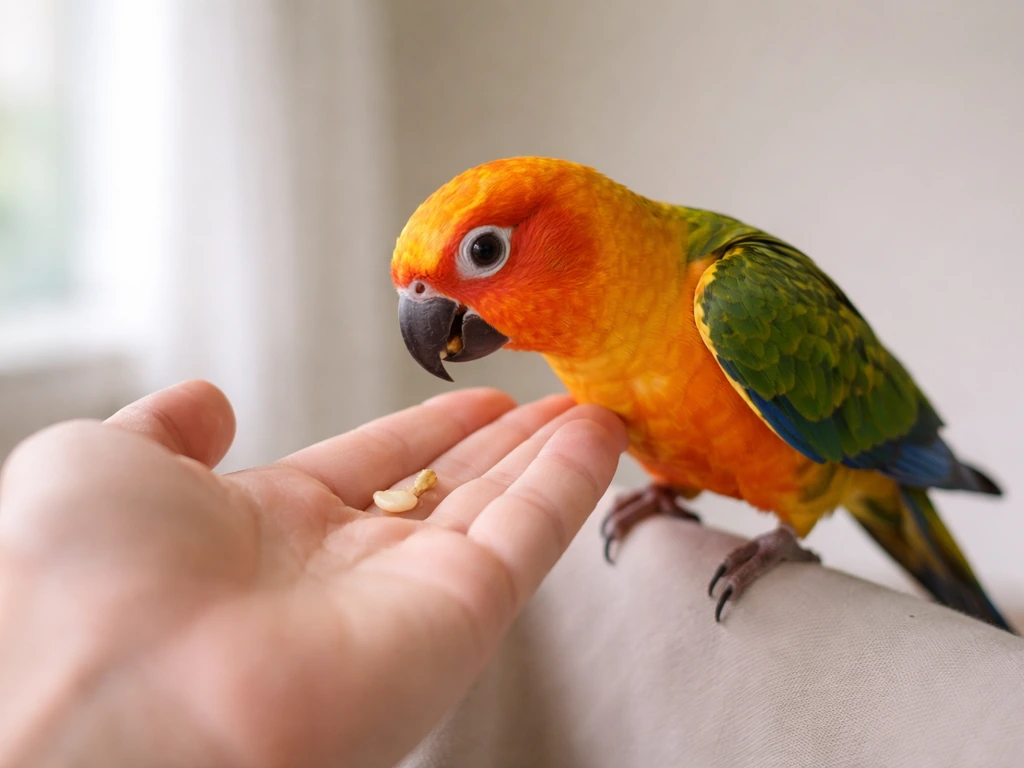
Teaching a bird to step onto your finger is one of the most rewarding things you can do with a pet bird, and it is absolutely learnable by anyone who is patient and consistent. The core technique is called Step Up, and the short version is this: you press your finger gently against the bird's lower chest, say a calm cue word like "Up," and reward the moment it lifts a foot and steps on. That single behavior, practiced in short daily sessions, becomes the foundation for everything else including staying on your finger, moving from perch to perch, and eventually coming to you from across the room. To get that kind of “come to your hand” behavior, keep practicing Step Up and then gradually increase the distance while maintaining the same cue and rewards coming to you from across the room. The sections below walk you through every stage, from picking the right bird and checking for readiness, all the way to a realistic weekly practice plan.
How to Train a Bird to Step on Your Finger Safely
Choosing the right bird and setting expectations
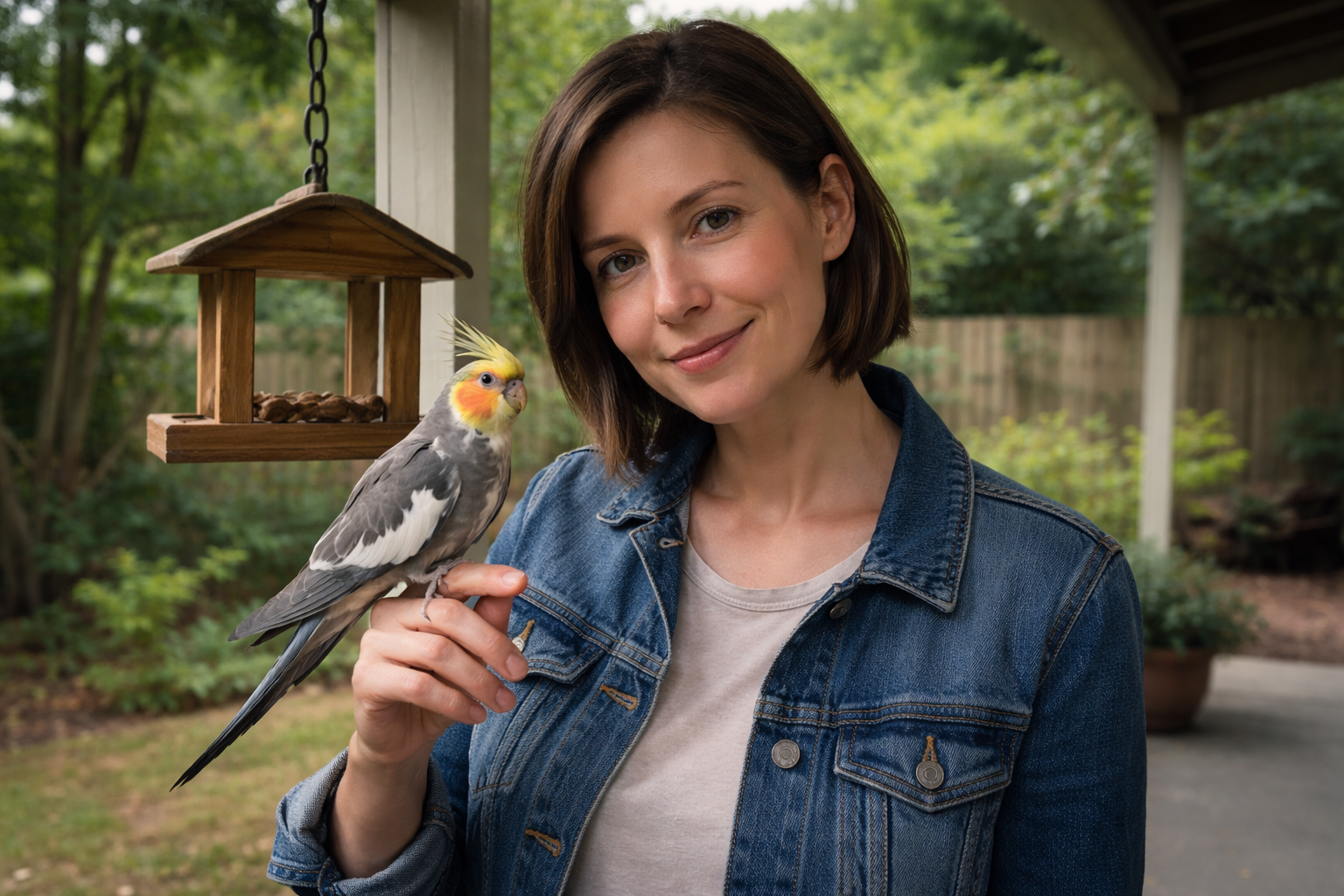
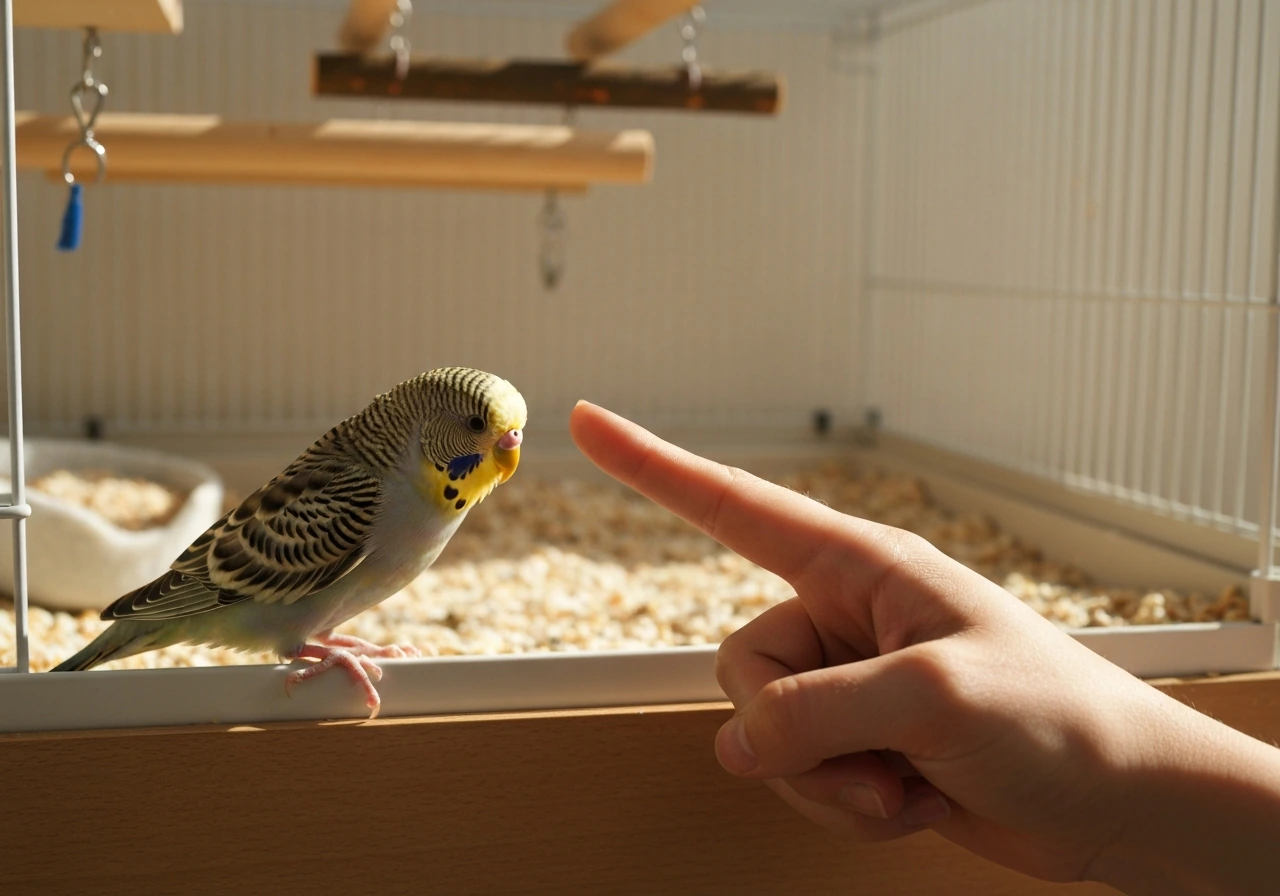
Not every bird is a good candidate for finger training right now, and knowing that ahead of time saves you a lot of frustration. Pet birds like budgies, cockatiels, and parrots are generally the best starting point because they are already accustomed to a human environment. A bird that is newly brought home, recently stressed by a move or illness, or showing obvious fear signals (feathers slicked flat, crouching, rapid breathing, repeated lunging) is not ready to learn yet. Respect that, and focus on the taming foundation first.
Realistic timelines vary a lot by species and individual history. A hand-raised budgie that already trusts you might step up within a day or two of deliberate training. A rehomed cockatiel that was previously mishandled might need two to four weeks of trust-building before it is ready for Step Up work. An adult Amazon parrot with no prior training history could take six to eight weeks. Wild backyard birds are a completely different situation with important legal and ethical limits, which are covered in the species section below. Set your expectations by the individual bird in front of you, not an idealized average.
One practical note on environment: before you start any session, take the bird out of the cage and into a small, quiet room with no mirrors, ceiling fans, or open windows. A bathroom or small bedroom works well. Fewer distractions mean the bird focuses on you, and if it flies off your finger you can retrieve it safely without a chase through the whole house.
Safety first: humane handling and risk checks
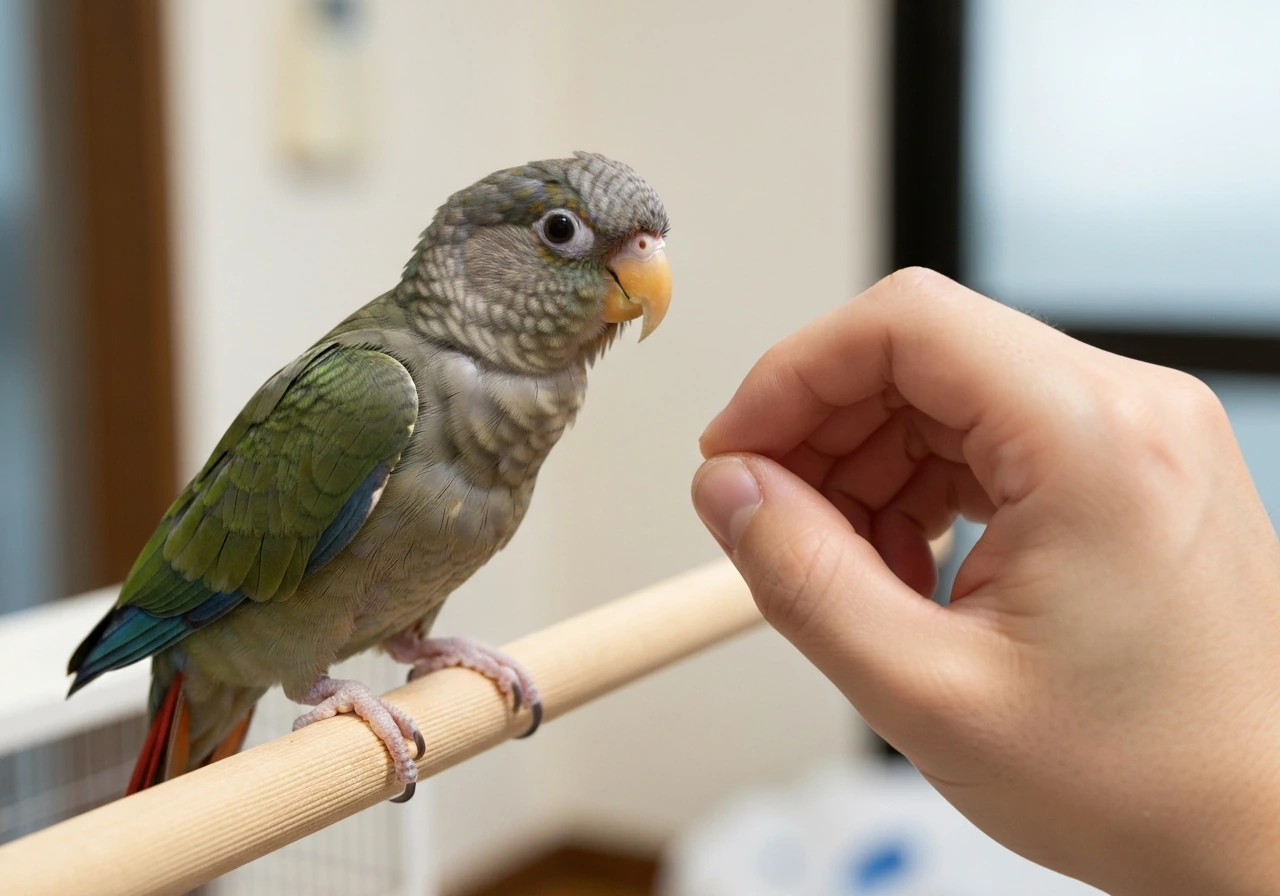
Before you put your finger near any bird, do a quick risk assessment. Check your bird's body language: relaxed feathers, a calm eye, normal posture, and willingness to take food from near your hand are all green lights. Slicked-down feathers, wide eyes, lunging, and hissing are red lights. blank" rel="noopener noreferrer">Never force contact when you see red-light signals, because a scared bird that bites or scratches is not misbehaving, it is communicating clearly.
Bites from larger parrots can be genuinely painful and can break skin. If you are working with a medium to large bird for the first time, a thin glove can reduce the physical sting while you build initial trust, but transition off it quickly because gloves change your hand's appearance and smell and can actually make some birds more wary. The more important protection is reading signals early and withdrawing your hand before the bird escalates to a full bite.
Never grab a bird by the legs or wings. Avian bones are hollow and can fracture under surprisingly little force. If you need to move a bird that refuses to step up, use a short perch or wooden dowel as a training stick rather than forcing a hand grab. Towel restraint is appropriate for veterinary procedures but it is not a training tool, and using it to force handling will set back your trust-building significantly. Step Up training done correctly is actually the humane alternative to repeated toweling, because a bird that volunteers to step onto your hand does not need to be restrained at all.
Building trust and taming foundation before finger training
Think of trust as a bank account. Every gentle, predictable interaction makes a deposit. Every fright, forced grab, or unpleasant surprise is a withdrawal. You need a positive balance before you can start asking the bird to do something new. The good news is that building that balance does not require dramatic gestures, just consistency.
Start by simply being present near the cage at the same times each day. Talk softly. Move slowly. Offer a high-value treat, like a small piece of millet for a budgie, a sunflower seed for a cockatiel, or a thin sliver of almond for a parrot, through the cage bars without asking anything in return. Do this for a few days until the bird reliably approaches the bars when you appear. That approach behavior is your first measurable sign of trust.
The next step is getting the bird comfortable with your hand inside the cage without any stepping-on expectation. Open the door, put your hand in palm-up with a treat resting on it, and let the bird choose to come close. Once your hand inside the cage feels safe, you can move on to the next phase: how to train a bird to sit on your hand using the Step Up cue. Do not chase the bird around the cage with your hand. If it comes and takes the treat, great. If it does not, wait 30 to 60 seconds and then withdraw your hand, try again next session. Most birds will be taking food from an open palm inside the cage within three to seven sessions once they have progressed this far.
Step-by-step cue training to step and stand on your finger
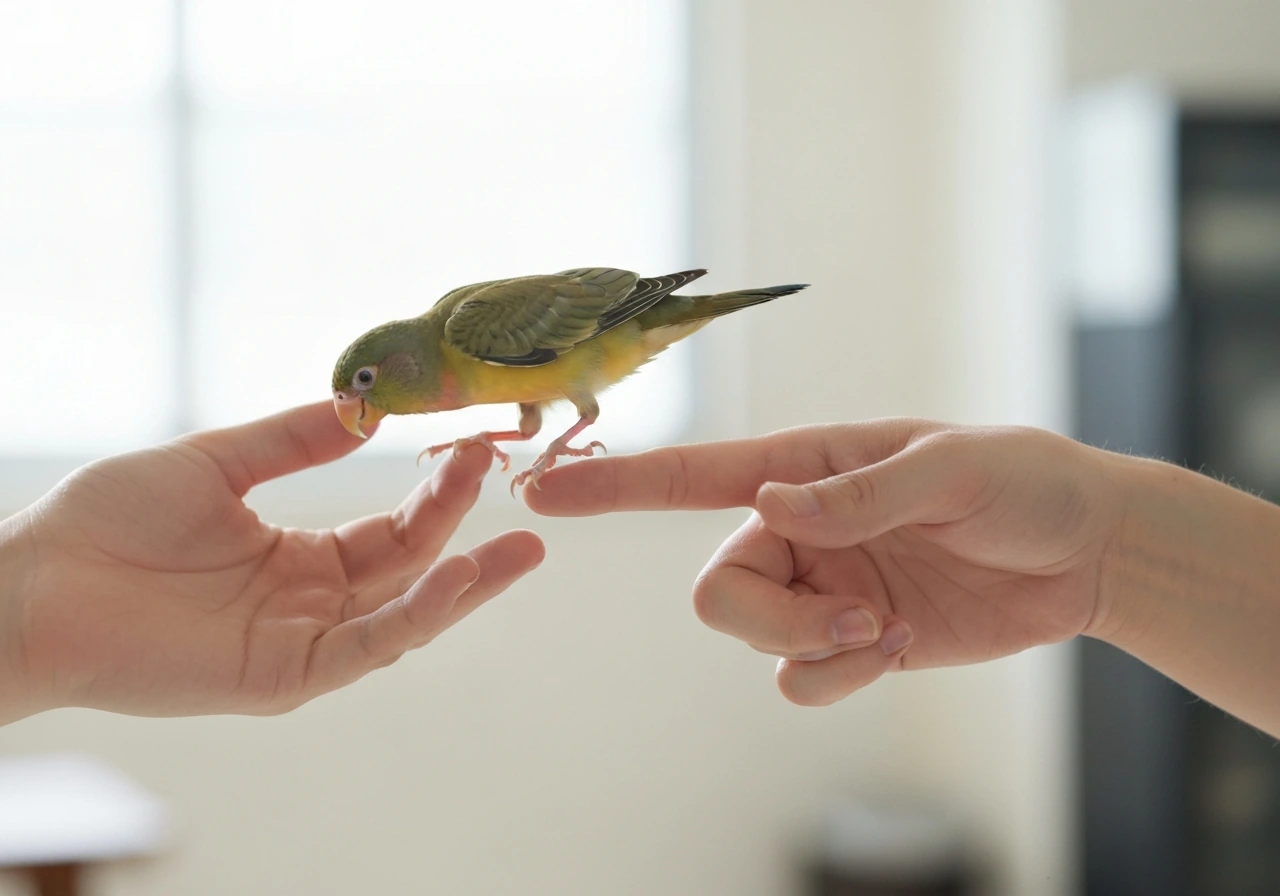
Once the bird is reliably taking food from your open hand, you are ready to introduce the Step Up cue. Here is the full progression, step by step.
- Position yourself at the bird's chest height. Sit down if the bird is on a low perch, or hold the perch at a comfortable height for both of you.
- Hold your index finger (or your whole hand for smaller birds) horizontally, like a perch, and move it slowly toward the bird's lower chest, just above where the legs meet the body.
- Apply very gentle, steady pressure against the chest. This slight pressure shifts the bird's center of balance forward, which triggers the natural instinct to step up to restore balance. Do not poke or jab, just rest your finger there with light contact.
- Say your cue word clearly and calmly, one time. "Up" is the most common choice and works well. Avoid repeating it multiple times in a row, which teaches the bird to wait for the fifth repetition before responding.
- The moment one foot lifts and touches your finger, immediately mark that with a verbal marker like "Yes!" or a clicker click, and deliver a treat. That timing matters enormously. The marker bridges the tiny gap between the behavior and the reward so the bird knows exactly what it earned the treat for.
- After a few successful single-foot lifts, withhold the marker until both feet are on your finger. Then gradually extend the time before you deliver the treat, going from one second to three seconds to ten seconds and beyond. This is how you build "staying" on your finger, by stretching the duration slowly.
- Once the bird steps up reliably inside the cage, practice the same cue outside the cage in your training room. New environments feel different to birds, so expect a small step backward in confidence and just return to the basics.
If your bird is hesitant to step directly from a perch onto your finger, try stick training first. Use a short wooden dowel the same diameter as your finger and run through the same progression above. Most birds generalize from the stick to the finger within a few sessions once they understand the cue and trust the outcome.
Reinforcement, timing, and troubleshooting
Your marker needs to land within about one second of the behavior you want, or the bird will associate the reward with whatever it happened to be doing in that moment, not the step. Practice the mechanics before you train: hold a treat in one hand, a clicker or use a verbal marker, and practice clicking the moment an imaginary bird lifts a foot. It feels awkward at first but becomes automatic quickly.
Use the highest-value treat your bird will work for, something it does not get freely in its regular diet. Millet spray, sunflower seeds, pine nuts, and small pieces of fruit all work depending on the species. Keep treat pieces tiny, about the size of a sunflower seed, so the bird stays motivated and does not fill up after three repetitions. Once a behavior is very reliable, you can start rewarding every second or third correct response rather than every single one, which actually makes the behavior more durable long-term.
Common problems and how to fix them
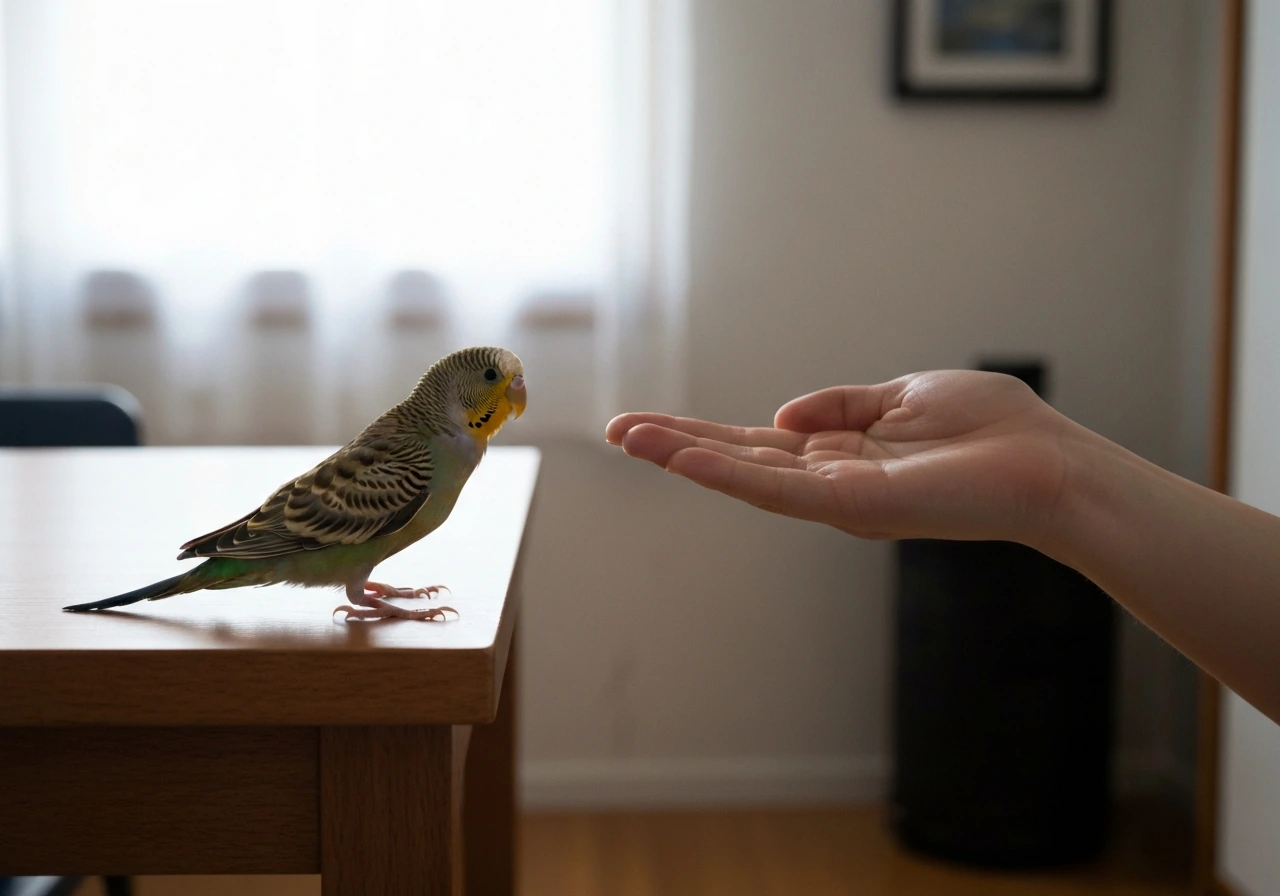
| Problem | Likely cause | Fix |
|---|---|---|
| Bird refuses to approach your finger | Not enough trust built yet, or hand is moving too fast | Go back to treat-from-open-palm stage, slow all movements, lower your body posture |
| Steps up then immediately jumps off | Duration expectation jumped too fast, or bird is overstimulated | Mark and reward the instant both feet land, build duration in 2-second increments |
| Flinches or leans away when finger approaches | Pressure angle is wrong, or past negative handling experience | Approach from the side at a shallower angle, reduce pressure, use stick training first |
| Climbs around on your hand but will not step deliberately | Bird is exploring but has not learned the cue yet | Reset to a perch, re-present finger at chest height with cue, reward only deliberate steps |
| Bites when finger approaches chest | Fear or territorial response, possibly cage-bound behavior | Train outside the cage, try the neutral room, and temporarily use a dowel/stick instead of your finger |
| Overstimulation: biting, screaming, unable to settle | Session is too long or too many repetitions in a row | End all sessions at 3 to 5 minutes maximum, stop before the bird shows any stress signal |
Species-specific tips for parrots, cockatiels, and budgies versus finches and wild birds
Parrots (medium and large species)
Medium and large parrots like African greys, Amazons, conures, and cockatoos are smart enough to learn Step Up quickly but also smart enough to test boundaries and develop opinions about when they feel like complying. Consistency is everything here. Practice Step Up at least once every single day, not just when you want the bird to do something, so it does not start to associate the cue with being put away or taken away from fun. Use a firm, pleasant voice for the cue, not a pleading tone. Pleading reads as uncertainty to a parrot and often produces non-compliance. If a parrot is cage-territorial and biting when you put your hand in, do all initial finger training outside the cage.
Cockatiels
Cockatiels are generally enthusiastic Step Up learners, especially if they were hand-raised. Their main challenge is spookiness: a sudden noise, a shadow overhead, or a fast hand movement can send them into a brief panic. Work in a quiet room, keep your movements slow and predictable, and if the bird flushes off your hand, wait calmly for it to land and then resume rather than chasing it. Most cockatiels progress from no-touch to reliable Step Up within one to two weeks of daily five-minute sessions.
Budgies
Budgies are small enough that your whole hand is a perch, and you will use your index finger for Step Up but position your other fingers loosely underneath as a safety net. Because budgies are prey animals with a very strong flight reflex, the taming phase tends to take longer than the actual Step Up training. Spend extra time on the trust-building phase, specifically the hand-inside-cage-with-treat step, and many budgies will almost teach themselves Step Up once they are comfortable on your hand.
Finches and other small non-contact species
Finches like zebra finches and society finches are not naturally inclined toward human contact the way parrots are. They can become comfortable enough to perch on a finger placed inside the cage if you have spent weeks habituating them to your presence, but this takes longer and requires more patience than with hookbills. Use an extremely still, horizontal finger positioned low inside the cage near a favorite perch and let the finch choose to land. Reward with calm behavior (staying still) rather than treats, since most finches do not hand-feed as readily. Managing expectations here is important: a finger-perching finch is a significant achievement, not a given.
Wild backyard birds
This is where the ethics and legal picture change significantly. In most countries, including the United States and the United Kingdom, wild birds are protected by law and cannot be held or restrained without appropriate licensing. Attracting a wild bird to land on your finger voluntarily through patient habituation at a feeder station is legal and possible with species like chickadees or robins that are naturally curious and bold, but deliberately training, restraining, or capturing wild birds is not. If you are a licensed wildlife rehabilitator, different rules apply and your organization will have handling protocols you should follow.
For backyard birders who want a wild bird to land on their finger, the ethical approach is to set up a consistent feeding station, sit very still nearby over many weeks, and gradually move your hand closer to the feed source. Hold a small amount of seed in your palm and remain motionless. Some species, especially black-capped chickadees, tufted titmice, and European robins, will eventually land on an outstretched hand. For pet birds, the same kind of patience and step-by-step cue training is how you get a bird to land on your hand reliably help a wild bird land on your hand. For wild birds, patience and a consistent feeding setup are what make voluntary landing on your hand more likely wild birds to land on your hand. This is entirely bird-initiated and voluntary, which is what makes it both ethical and legal. Be aware that encouraging wild birds to depend heavily on supplemental feeding can create welfare risks including nutritional imbalances, increased disease transmission at feeders, and dependency if you stop feeding, so keep this supplemental and seasonal rather than the bird's primary food source.
A practical practice plan with realistic timelines
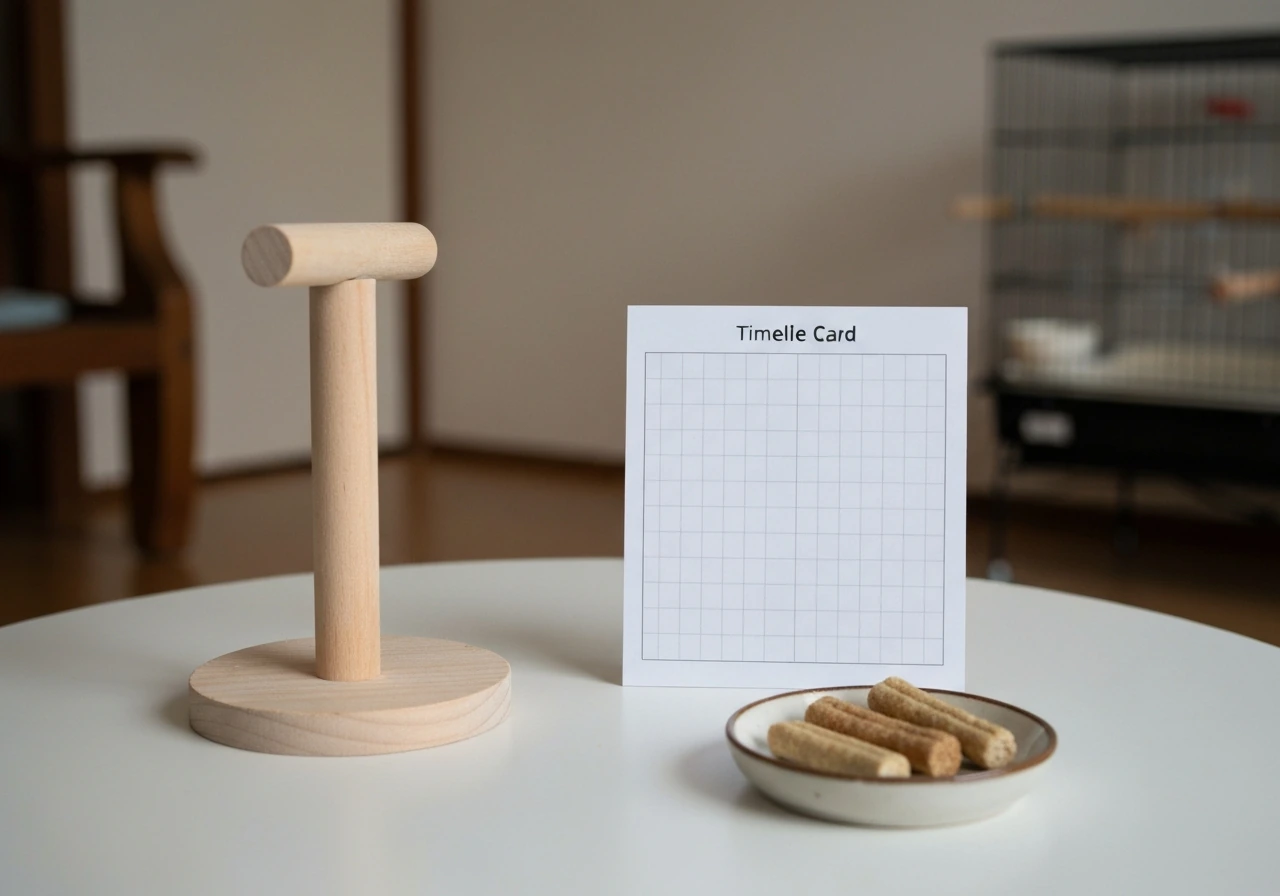
Here is a week-by-week framework for a typical pet bird that is new to handling. If you want to expand beyond Step Up, see how to get a bird to come to you as your next progression. Adjust based on what you observe. If your bird is ahead, move faster. If it is lagging, stay at the current stage longer. There is no penalty for going slowly.
| Week | Daily focus | Success marker |
|---|---|---|
| Week 1 | Presence at cage, soft talking, treats through cage bars | Bird approaches cage bars when you appear and takes treats without retreating |
| Week 2 | Hand inside cage, palm up with treat, no stepping expectation | Bird takes food from open palm inside cage without flinching |
| Week 3 | Introduce finger at lower chest, light pressure, cue word, mark and treat any foot lift | Bird lifts at least one foot onto finger consistently across 3 or more sessions |
| Week 4 | Require both feet on finger before marking, extend duration to 5 to 10 seconds | Bird steps fully onto finger and waits for the marker before hopping off |
| Week 5 and beyond | Practice in new locations, increase duration to 30 or more seconds, introduce ladder stepping (finger to finger) | Bird responds to cue reliably in at least two different locations or settings |
Keep sessions to three to five minutes maximum, once or twice a day. More than that and most birds hit a point of diminishing returns where they stop responding or start showing stress. Ending each session on a successful repetition, even an easy one, means the bird's last memory of training is positive. Over time you will find that your bird starts to show anticipation, moving toward you when you approach the cage, which is the clearest signal that the training relationship is working.
Once Step Up is solid, the natural next progression is working on your bird coming to you across a room, landing confidently on your hand from a distance, and eventually staying perched on your shoulder for longer stretches. Once Step Up is solid, the natural next progression is working on your bird coming to you across a room, landing confidently on your hand from a distance, and eventually staying perched on your shoulder for longer stretches how to train a bird to stay on your shoulder. Each of those builds directly on the trust and cue responsiveness you establish in these early finger-training sessions, so the work you put in now pays forward into every future interaction you have with your bird.
FAQ
What should I do if my bird steps on my finger, but then immediately steps off or flaps away?
Treat it as a cue-training issue, not a failure. Keep your finger steady and reward only the initial step, then pause the session for 20 to 30 seconds before trying again. If the bird jumps off as soon as it touches down, shorten the training so it is from the highest-confidence height and gradually increase difficulty later.
How do I know when my bird is ready to start Step Up from a perch?
A simple readiness sign is that the bird will take food from near your hand while staying calm and upright (no lunging, hissing, or slick feathers). If it only approaches from far away or startles whenever your hand moves, continue hand-in-cage trust work until the bird can eat without fear.
Can I train Step Up without using treats?
You can eventually transition to reduced rewards, but for early learning you usually need a high-value food to create a fast learning loop. If you skip treats entirely from day one, many birds will not connect the cue to a safe outcome, and you will likely need more time restarting the trust foundation.
My marker timing feels off. How does that affect training, and what’s the fix?
If the marker is late, the bird may learn that the reward follows whatever it was doing a moment earlier, like turning its head or shifting weight. The fix is to practice the exact “lift and step” moment with an imaginary bird before sessions, and keep sessions very short so the behavior is fresh and easy to mark.
How hard should I press my finger against the lower chest?
Use the lightest contact that causes the bird to notice and lift a foot. If the bird leans away, flinches, pins feathers flat, or escalates to lunging, you are applying too much pressure or too much intensity. Reduce contact, use the same cue, and reward the smallest acceptable step progress.
What if my bird only steps on my finger when it is hungry or when I use a particular treat?
That usually means the treat is not just reinforcing behavior, it is controlling it. Choose one high-value option for training, keep portions tiny, and once Step Up is reliable, gradually reward every second or third correct response rather than always, so the bird learns the cue matters even when it is not starving.
Should I use a clicker or a verbal cue marker, and can I mix both?
You can use either, the key is consistency. If you use a clicker, do not also say different words at random, pick one marker method and pair it with Step Up from the start. When switching, keep the new marker paired with the same outcomes for multiple sessions so the bird does not get confused.
What’s the safest way to retrieve my bird if it flies away during Step Up practice?
Use a small, quiet room with a door you can close, fewer escape routes, and remove hazards like ceiling fans or open windows before you start. Avoid chasing, instead wait calmly so the bird can re-settle, then resume from a perch height the bird already accepts.
Is it okay to train in the bird’s cage to save time?
Yes for early trust, but for some cage-territorial parrots it can backfire because the bird associates your hand with threat. If your bird bites when you enter the cage, do initial finger training outside the cage using a perch or dowel, then move into the cage only after calm hand acceptance.
What should I do if my bird bites my finger during Step Up attempts?
Stop immediately and do not try again in that same moment. Back up to the previous step that produced calm behavior, like food from the open palm, and rebuild trust before attempting Step Up again. Also, review triggers like sudden hand movement or overstaying session length, both of which increase bite likelihood.
How can I tell the difference between normal stepping behavior and stress signals?
Normal stepping usually includes relaxed posture, eyes that track calmly, and quiet body language right up to the moment the bird places a foot. Stress signals include slicked-down feathers, repeated lunging, rapid breathing, tail flicking with agitation, hissing, and sudden freezing followed by a jump away. When you see red signals, end the attempt and reset to trust-building.
Do I need different training expectations for budgies, finches, or parrots?
Yes. Budgies often need longer trust work because prey instincts cause fast flight reflexes, so spend extra time on hand-inside-cage acceptance. Parrots may test boundaries and benefit from daily consistency and non-pleading delivery of cues. Finches may take weeks to tolerate a finger, and many respond better to rewarding calm stillness rather than heavy treat use.
How do I progress from Step Up to “come to my hand across the room” without losing the cue?
Keep the same cue word and reward timing while gradually increasing only one variable at a time, usually distance. Start by stepping to a shorter distance than you think, reward the moment the bird steps up, then increase distance in small increments. If the bird stops performing, you advanced too quickly and need to return to the last successful distance.
Can I allow my bird to learn Step Up from different family members?
You can, but introduce new people slowly. Each person should use the same cue, the same marker, and ideally the same approach style, then wait for the bird to accept proximity before attempting hand contact. Otherwise the bird may learn inconsistent cues or associate one person’s movements with threat.
Are there welfare reasons to limit session length or frequency?
Yes. Most birds reach diminishing returns after a few minutes, and longer sessions increase fatigue and stress, which can lead to bites or refusal. Stick to short sessions and end on a successful, easy repetition so the last experience is positive and the next session starts with better anticipation.