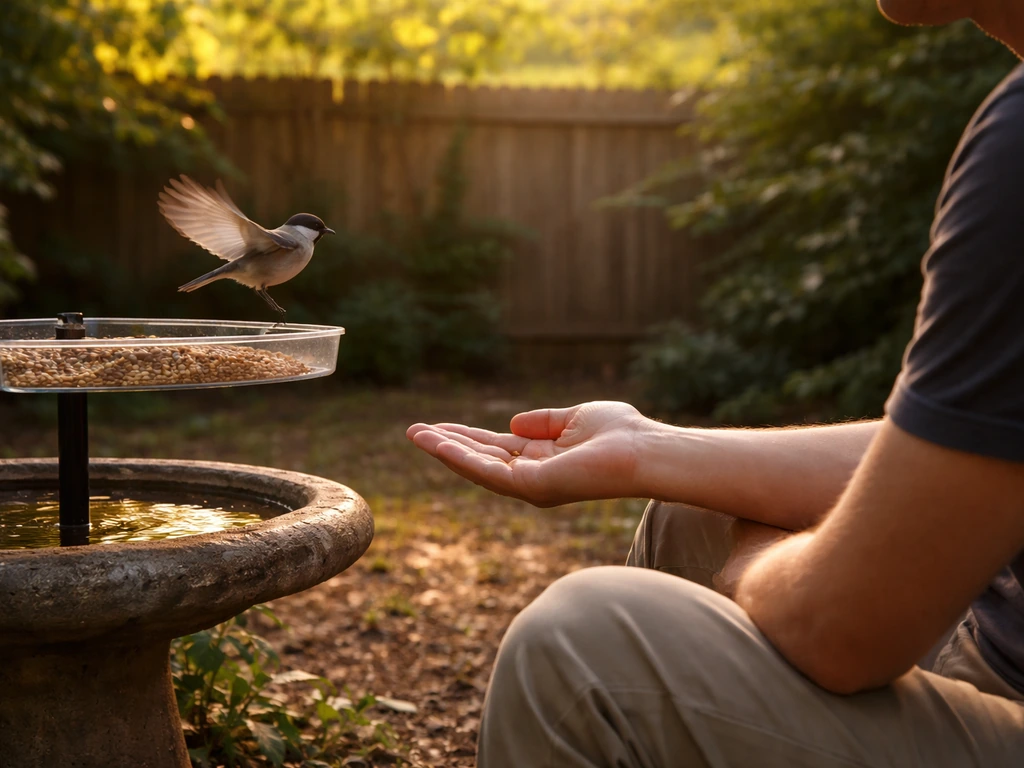
Getting a wild bird to voluntarily land on you is possible, but it takes weeks of consistent, patient work rather than a single lucky afternoon. The honest path is this: set up a reliable food and water source, park yourself nearby at the same time every day, move as little as possible, and let the bird decide when it's comfortable enough to close the gap. Most people who succeed with backyard songbirds get their first hand-land within three to six weeks of daily effort. Some birds never get there, and that's okay too.
How to Get a Wild Bird to Land on You Humanely
Clara Hayes
4 May 2026
Why wild birds won't land on you (yet)
Every wild bird runs a constant risk calculation. Human recreation and higher intensity of human presence are associated with shorter flight initiation distances in common forest bird species, with birds in forests closer to cities fleeing at shorter distances. Researchers call the distance at which a bird flees from an approaching human the 'flight initiation distance' (FID), and it's essentially the bird's personal safety buffer. When you reduce the perceived threat you pose, that buffer shrinks. Birds in residential areas that have been around humans for generations actually have measurably shorter FIDs than birds in undisturbed wild habitats, which is why backyard birds are your best candidates for this kind of trust-building.
The direction and nature of your approach matters a lot. A direct, head-on walk toward a bird reads as predatory behavior. A slow, angled, sideways approach with no eye contact is far less threatening. Even the number of people present and whether you're making eye contact with the bird changes how fast it will flee. So the first thing to understand is that your body is the problem you're solving, not the bird's personality.
Habituation is the scientific principle behind this whole process. When birds repeatedly experience humans in non-threatening, predictable situations, their fear response genuinely decreases over time. That's not the bird getting tamed, it's the bird learning through experience that you're not a threat. Your job is to give it enough calm, consistent data to update its risk assessment.
Build the right yard setup first
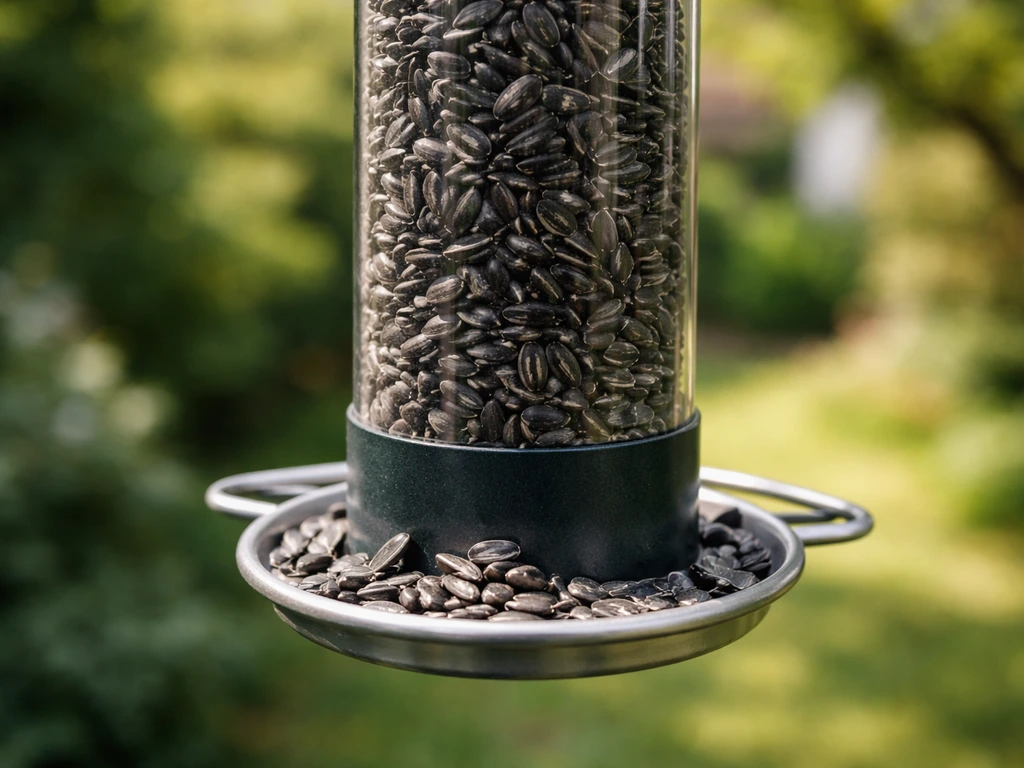
Before you even think about sitting outside quietly, spend a few days getting your yard into shape. Birds need a reliable reason to be in your yard and a sense of safety when they're there. Feeders, water, cover, and smart placement all feed into this.
Food and feeders
Black-oil sunflower seed is the single best starting point because it attracts the widest variety of common backyard species. Tube feeders work well for perching songbirds like finches, chickadees, and nuthatches. If you also want to attract ground-feeders like juncos, mourning doves, and white-throated sparrows, scatter some seed on a low tray or platform feeder near ground level. Adding mealworms on a flat tray targets bluebirds and robins. Suet cakes in a cage feeder pull in woodpeckers and Carolina wrens. More food variety means more species visiting, which gives you more candidates for trust-building.
Clean your feeders every two weeks at minimum using a diluted bleach solution or a dishwasher cycle hot enough to sanitize. In warm, humid weather or if you notice sick birds, clean them more often. Always let feeders dry completely before refilling. This isn't just hygiene housekeeping: a clean, full, predictable feeder is what makes birds return reliably, which is the foundation for everything that follows.
Water
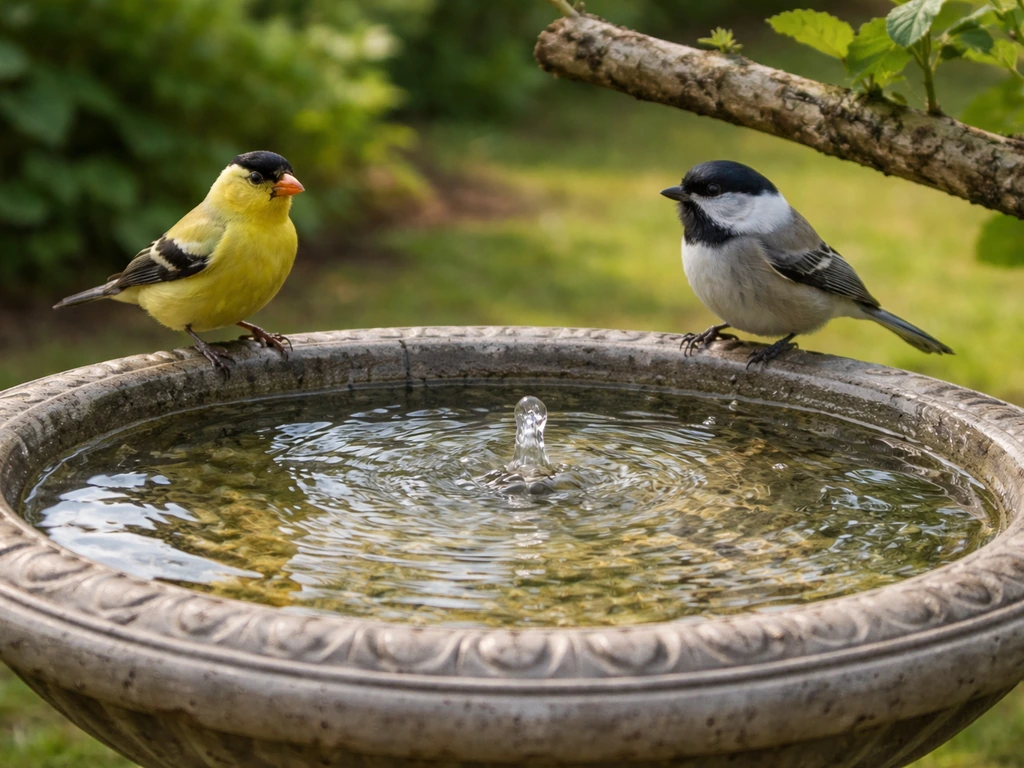
A birdbath with 1.5 to 2 inches of water is the sweet spot for most songbirds. Change the water daily or every other day to prevent algae and bacterial growth. Moving water, like a small dripper or wiggler attachment, is dramatically more attractive to birds than still water because they can hear it from a distance. Place the bath in partial shade if possible to slow algae growth, and position it within a few feet of shrubs or cover so birds feel safe approaching it.
Cover and perching spots
Birds will not linger in open, exposed spaces if they feel vulnerable. Stack a loose brush pile of branches and logs near your feeding area to give them an escape route and resting spot. Native shrubs near your feeder serve the same purpose. This cover reduces the bird's perceived exposure risk, which means it will stay calmer and longer in your general area. You also want a few natural perches, like a bare branch or a wooden dowel rod mounted at different heights, where birds can land and survey the area before coming down to the feeder.
Feeder placement relative to your sitting spot
Position your feeder about 10 to 15 feet from wherever you plan to sit. That's inside most birds' comfortable zone once they're habituated to your yard, but far enough that you're not looming over their food source. Over time, you'll move closer in small increments. Keep feeders away from glass windows or use window decals to prevent collision risk, especially as you're encouraging more birds to spend time in a concentrated area.
Body language rules that actually reduce fear
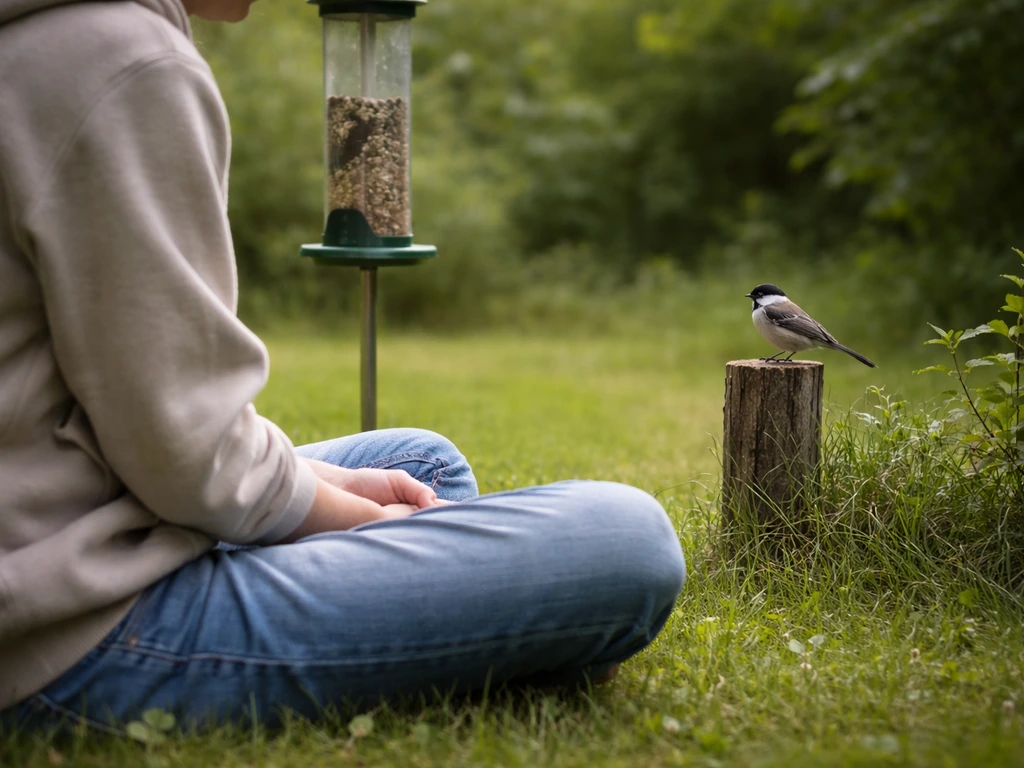
How you carry yourself in your yard matters as much as any feeder setup. These aren't vague tips: they're specific behaviors that directly change how a bird reads your threat level.
- Sit rather than stand. A seated human is smaller, less imposing, and much less likely to be read as a predator. Use a low camp chair or sit on a step.
- Approach at an angle, never head-on. Moving directly toward a bird triggers flight. Angled or sideways movement is far less threatening.
- Avoid direct eye contact. Looking straight at a bird activates its alarm response. Keep your gaze slightly downward or to the side.
- Move in slow, smooth arcs. Sudden jerky movements are what trigger the escape reflex. Even turning your head quickly can flush a bird that was tolerating your presence.
- Keep your voice low and steady if you speak. Silence is fine too. What you're avoiding is any sharp, sudden sound.
- Wear neutral or earthy clothing. Bright colors and high-contrast patterns are more startling than muted greens, browns, or grays.
- Avoid strong scents. Perfume, sunscreen, or smoke can be alarming to birds at close range.
- Keep your hands visible and resting calmly in your lap or on your knees, not hidden behind your back or raised.
The goal is to make yourself as visually and behaviorally boring as possible. You want the bird to file you under 'large, non-threatening object' rather than 'potential predator.'
The progression plan: from distant visits to landing near you
This is where training principles used for pet birds become genuinely useful for wild birds. The core idea is the same: build trust in small, consistent increments using predictable routines and reliable rewards. You're not forcing anything; you're creating conditions where the bird chooses to get closer. If you want the next step from trust-building to a bird actually perching on your finger, follow the same gradual, low-pressure progression described here. With enough routine, a steady approach, and positive reinforcement from consistent feeding, you can extend this trust-building into teaching a bird to stay on your shoulder.
- Phase 1 (Days 1-5): Set up your feeders and water and let birds discover and use them without any human presence near the feeder. Check the feeder from a window. You want a steady stream of visitors before you introduce yourself as part of the environment.
- Phase 2 (Days 6-10): Start sitting outside at the same time each day (morning is best, as birds are most active) about 15-20 feet from the feeder. Sit quietly for 20-30 minutes. Don't try to get closer yet. You're just teaching birds that a sitting human equals no danger and food is still available.
- Phase 3 (Days 11-20): Move your chair 2-3 feet closer to the feeder every two to three days, but only if birds are still visiting normally while you're present. If they stop coming or flush every time, move back and slow down. Never advance until birds are feeding comfortably at your current position.
- Phase 4 (Days 21-35): Once you're sitting about 3-5 feet from the feeder and birds are visiting normally, place a small amount of seed or mealworms on your knee or open palm. Rest your hand on your knee, palm up, and stay still. Keep the main feeder full so birds aren't forced to use your hand; they need to choose it.
- Phase 5 (Day 35 onward): Some birds will begin investigating your hand. The first few times, they'll likely approach and retreat. Don't move. Don't look directly at them. The moment a bird lands on your hand, stay absolutely still until it decides to leave. Any movement ends the visit immediately.
Consistency matters more than duration. Thirty minutes every morning at the same time is far more effective than occasional two-hour sessions. Birds learn routines quickly, and they will start anticipating your presence as part of their morning feeding schedule.
What to expect by species and situation
Not all birds are equally approachable, and your expectations should match what's actually realistic for the species in your yard.
| Bird type | Approachability | Realistic timeline | Best food lure | Notes |
|---|---|---|---|---|
| Black-capped or Carolina chickadee | Very high | 2-4 weeks | Black-oil sunflower seed, mealworms | Among the easiest species to hand-feed; curious and bold by nature |
| Tufted titmouse | High | 3-5 weeks | Sunflower seed, peanut pieces | Bold once habituated; often follows chickadees to hand feeders |
| White-breasted nuthatch | Moderate-high | 3-6 weeks | Sunflower seed, suet bits | Cautious but can become very tame with patience |
| House sparrow / House finch | Moderate | 4-8 weeks | Millet, sunflower seed | Flock-dependent; individuals vary significantly in boldness |
| Dark-eyed junco | Low-moderate | 6-10 weeks or more | White millet (ground level) | Ground-feeders; tend to stay lower and flush more easily |
| American robin | Low | Variable; often won't hand-feed | Mealworms on a tray | Will get close for mealworms but rarely lands on people |
| Mourning dove | Low | Rarely hand-feeds | Millet, sunflower | Calm ground feeders but not inclined toward direct human contact |
| Raptors (hawks, owls) | Very low / do not attempt | Not applicable | Do not attempt to lure | Territorial, protected; approaching nests is dangerous and potentially illegal |
| Hummingbirds | Moderate (feeders only) | 2-4 weeks at feeder | 1:4 sugar-water nectar | Will hover very close to you at a feeder but rarely land on people |
Chickadees are genuinely the gold-standard starting species for hand-feeding in North America. If you have them in your yard, focus your effort on them first. They're naturally inquisitive, they're small enough to feel safe on a human hand, and they have a documented history of becoming remarkably bold with patient feeders. Once one chickadee hand-feeds, others in the flock often follow.
For hummingbirds specifically, the Smithsonian National Zoo and USFWS both confirm a 1:4 ratio of plain white sugar to water (no red dye, no honey, no artificial sweetener). Hold a feeder in your hand while sitting still and hummingbirds will often hover inches from your face, but they rarely land on people the way perching songbirds do.
If birds already visit your yard regularly, you have a significant head start. Resident birds that have been using your feeders for months or years are already partway through the habituation process. Your main job is to introduce yourself as a consistent, non-threatening fixture in that environment rather than starting from scratch. If you want them to come closer, keep that same routine going and let the bird learn your presence at its own pace introduce yourself as a consistent, non-threatening fixture.
Troubleshooting: why birds keep avoiding you
If you're a few weeks in and not making progress, run through this list before giving up.
- You're advancing too fast: If birds flush when you sit down, you're still too close. Go back to the previous distance and stay there longer before trying again.
- Your timing is inconsistent: Missing several days resets a lot of your progress. Birds habituate to routines; a gap breaks the pattern.
- The feeder is empty or dirty: Birds will abandon a feeder that's been empty or has gone bad. Check it daily and clean it on schedule.
- You have cats or dogs nearby: Any nearby predator completely undoes your trust-building. Keep pets inside during your sitting sessions.
- You're moving during visits: Even turning your head too quickly will flush a bird that was getting comfortable. Practice being still.
- Your yard doesn't have enough cover: If birds feel too exposed near your feeder, they won't linger. Add a brush pile or shrub nearby.
- It's the wrong season: During breeding season (roughly spring through early summer), birds are territorial and more stressed. They may also be eating natural food rather than feeder food and visit less. Fall and winter are actually the best seasons for hand-feeding work because birds are hungriest and less distracted.
- You're using the wrong food: If chickadees or titmice aren't visiting at all, check that you're offering black-oil sunflower seed or mealworms. Cheap mixed seed with milo and fillers often just sits uneaten.
- Visitation has dropped seasonally: This is normal. When natural food sources are abundant in late summer, feeder visits often drop. It's not about you; wait it out.
- You're making eye contact: Direct eye contact is a threat signal. Keep your gaze averted when birds are close.
Safety, legality, and what you should never do
This section matters. Wild birds are protected under the Migratory Bird Treaty Act in the U.S., which makes harassing, capturing, or harming them illegal. Even well-intentioned actions can cross legal and ethical lines, so be clear on the boundaries.
What to avoid
- Never chase or corner a bird to force contact. This is harassment and causes real physiological stress to the animal.
- Don't try to pick up or restrain a wild bird unless it's clearly injured and you're contacting a licensed wildlife rehabilitator. Handling wild birds is stressful for them and potentially harmful to you.
- Don't approach active nests. Many species, including some songbirds and especially raptors, will attack humans near nests. USFWS lists nesting season risk running roughly January through August for many species.
- Don't feed bread, crackers, or processed human food. These have no nutritional value and can cause harm over time.
- Don't use red dye in hummingbird nectar. Plain white sugar and water is all that's needed.
- Don't force your hand toward a bird or try to 'trap' it on your finger. The landing has to be the bird's choice entirely.
- Don't let children rush toward birds or make sudden movements to 'help' the process along.
- Don't clean feeders in your kitchen sink. Do it outside or in a utility sink to avoid contaminating food-prep surfaces with bird waste and bacteria.
Disease risk and hygiene
The CDC and USFWS both note that backyard feeders carry some disease risk, primarily salmonella, which can spread between birds and to people through contact with feeders and droppings. The mitigation is straightforward: wash your hands thoroughly with soap and water every time you touch a feeder, birdbath, or anything a bird has been near. Don't touch your face during feeder maintenance. The risk of avian influenza transmission from feeder songbirds to humans is considered very low by USFWS, as common feeder species are not the typical carriers, but standard hygiene still applies. If you notice multiple dead or sick birds near your feeder, stop feeding temporarily and contact your state wildlife agency.
Protecting the bird's welfare
Even positive habituation has limits. A bird that becomes extremely tame and dependent on a single human feeder can be vulnerable if that feeder is removed or the person moves away. Keep the main feeder stocked independently of your hand-feeding sessions so birds always have a reliable food source that doesn't require interacting with a human. And if a bird seems stressed by your presence at any point, back off. The goal is a bird that genuinely chooses to approach you, not one that's been conditioned into tolerating discomfort.
Your first-week checklist and realistic timelines
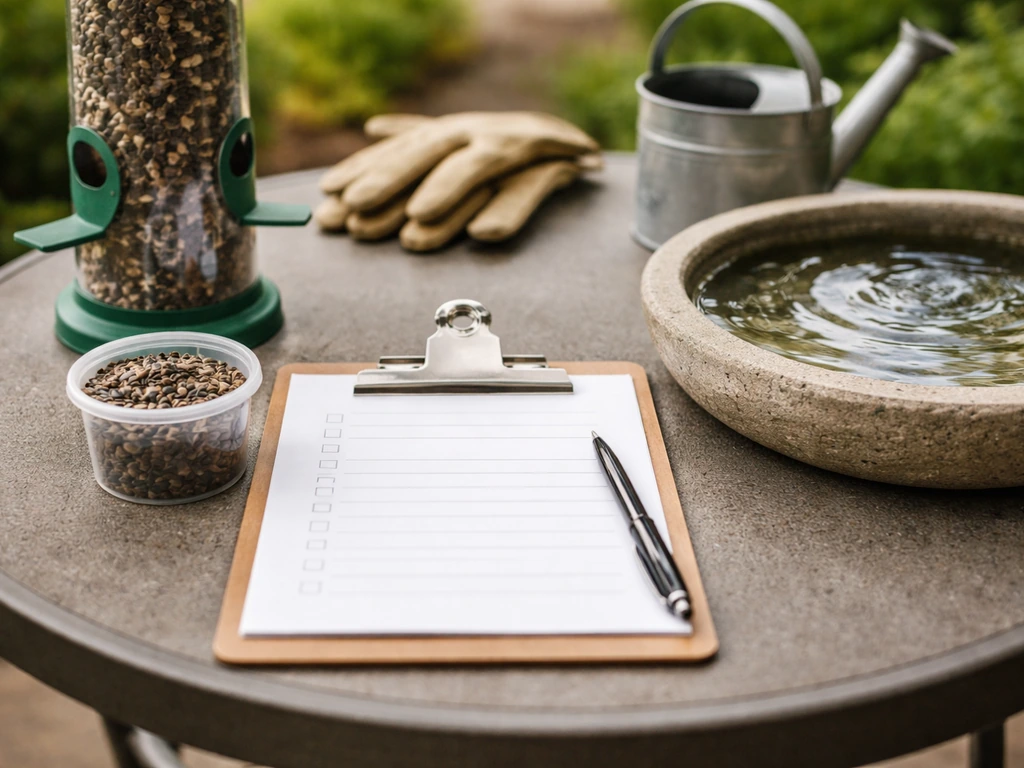
Here's a simple first-week plan you can start today. This covers the setup phase before you even introduce yourself to the birds.
| Day | Task | Goal |
|---|---|---|
| Day 1 | Set up feeder with black-oil sunflower seed; place birdbath with 1.5-2 inches of fresh water | Establish the food and water source |
| Day 1-2 | Add a loose brush pile or dense shrub cover within 6 feet of the feeder | Give birds a safe escape route and resting spot |
| Day 2-3 | Add a bare branch or wooden perch near the feeder for birds to land and survey | Create a natural landing spot close to food |
| Day 3 | Start observing from a window; note which species visit and at what times of day | Identify your best candidate species and peak activity window |
| Day 5 | Move a chair outside 15-20 feet from the feeder; sit for 20-30 minutes during peak activity; do not approach or interact | Begin introducing your presence as non-threatening |
| Day 6-7 | Repeat daily sitting session at the same time; note whether birds are visiting while you're present or only when you go inside | Measure your starting FID and track habituation progress |
After the first week, you have a realistic baseline. If birds are visiting while you're present by Day 7, you're ahead of schedule. If they only feed when you go inside, you need another week at the same distance before moving closer.
Here are honest timelines for the full progression, assuming daily effort with a chickadee-friendly yard in a residential area:
| Milestone | Realistic timeline |
|---|---|
| Birds visiting feeder while you sit 15 feet away | 1-2 weeks |
| Birds visiting feeder while you sit 5 feet away | 2-4 weeks |
| Bird landing within arm's reach on a nearby perch | 3-5 weeks |
| Bird investigating (approaching and retreating from) your open hand | 4-6 weeks |
| First actual hand-landing | 5-8 weeks for chickadees; longer for most other species |
| Consistent, reliable hand-feeding | 8-12 weeks |
These timelines are for motivated, consistent effort with cooperative species. If you're working with less bold birds like finches or sparrows, add several weeks to each stage. If your yard is in a suburban or semi-urban area with birds that already have some exposure to humans, you may move faster. The single most important variable is showing up every day at the same time, which is why this works much better when you treat it like a daily habit rather than a weekend experiment.
Getting a wild bird to land on you is one of those experiences that's genuinely hard to describe until it happens. The weight of a chickadee on your fingertip, the quick assessment it makes before grabbing a seed and flying off, is worth the weeks of patient, quiet work it takes. Once the bird is comfortable approaching, you can build toward the specific goal of training a bird to sit on your hand train a bird to sit on your hand. And once one bird does it, you'll find the others in the flock start watching and following suit faster than you'd expect.
FAQ
What should I do if birds visit my feeders but never come close enough to land near me?
If the bird is already approaching your yard but never gets within a few feet of you, extend the “same-distance routine” (about 10 to 15 feet) by another 1 to 2 weeks before you try to move closer. Also stop making direct eye contact, and angle your body sideways instead of turning your head toward the bird when it arrives.
How do I know my presence is stressing the bird, and what’s the correct adjustment?
Any time you see repeated hard staring, sudden vertical lunging, frequent mid-air repositioning away from you, or long pauses where the bird stops feeding when you appear, treat it as a sign of too much pressure. Back off to the far end of your sitting distance for several sessions (no closer movement), then resume only when birds resume normal feeding quickly after you sit down.
Can I rearrange my feeders or move while the habituation process is happening?
You can, but it often slows progress if you move the setup while the bird is still learning your routine. If you must change something, do it in small steps and keep the seating time, body orientation, and feeder distance consistent. Move only one element at a time (for example, swap the feeder type but keep the location and your schedule the same) so the bird can update its safety calculation.
Is it better to stay out longer or keep sessions shorter for getting a bird to land on you?
If you want to increase chances of perching close to you, use short, predictable “rewards windows.” Sit quietly for 10 to 20 minutes at the same time each day, let birds feed normally, then leave before they show signs of stress. Avoid prolonged hovering around the feeder outside your routine, because the bird starts linking you with increased risk.
Why would a bird lose interest after it was previously coming close?
Most birds won’t land on a human if there’s a higher, immediate hazard nearby. Check for predators and deterrents like cats, hawks or neighborhood falcons, or reflective surfaces that can confuse birds (shiny patio furniture, moving wind chimes near the approach path). Temporarily remove or block the strongest triggers and give the birds several days to re-stabilize.
What if the species in my yard is not a chickadee or other known hand-feeding bird?
Some species are simply less likely to land on people. Finches and sparrows often prefer hopping nearby rather than landing on fingers, and they may take longer even with excellent setup. If your goal is specifically “landing on me,” prioritize bold candidates like chickadees or nuthatches first, then broaden once your routine is established.
Does hand position or posture matter before a bird might land on me?
Yes, but use a low, non-threatening posture. Sit or crouch so your body is lower than the feeder line, keep your hands still and relaxed, and avoid sudden hand movements. If you want to attempt finger proximity later, wait until the bird is confidently taking seed with you seated nearby, then progress from offering seed on the ground or at the edge of your lap before any direct hand offering.
When is the best time of day and weather to work on getting a bird to land on you?
For backyard perching birds, warm daytime hours usually work best because they are active and actively foraging. However, the bigger factor is predictability: choose a consistent daily time window and stick to it for weeks. If weather is extremely hot or rainy, skip or shorten sessions, then resume the usual schedule as conditions normalize.
How should my approach change if I’m trying to attract hummingbirds instead of perching songbirds?
Food variety helps, but keep sugar-water for hummingbirds separate from seed stations and never substitute honey or colored dye. For hummingbirds, the expectation is usually hovering near you rather than landing on your skin, so focus on steady stillness and safe feeder placement rather than trying to force perching behavior.
What should I do if I notice sick birds around my feeders or birdbath?
If you get a sick or dead bird near the feeders, stop feeding temporarily, clean and sanitize all stations thoroughly, and contact your state wildlife agency as advised. Resume only after you no longer see new illness indicators, and increase hygiene frequency (more frequent cleaning in warm weather) before trying to continue any close human habituation.
How do I avoid accidentally creating dependence on my presence or my hand-feeding?
If the bird becomes calm with you but you notice dependency on your hand presence (it waits for you instead of feeding independently), reduce direct interaction time. Keep the main feeder operating without you, and only do the “you present” sessions on a schedule that matches normal foraging patterns. The bird should return to feeding whether you are there or not.