Getting a bird to come to you is absolutely possible, but the approach is completely different depending on whether you're working with a pet bird or trying to attract a wild bird in your yard. For a pet bird, you're teaching a trained behavior called recall, where the bird learns to fly or walk toward you on cue. For a wild bird, you're creating the right environment and building a slow, patient trust relationship so the bird chooses to approach on its own. Both are rewarding, both take time, and neither requires force or stress. Here's exactly how to do each one.
How to Get a Bird to Come to You: Humane Steps
Clara Hayes
4 Apr 2026
What 'come to you' actually means (and why your goal matters)
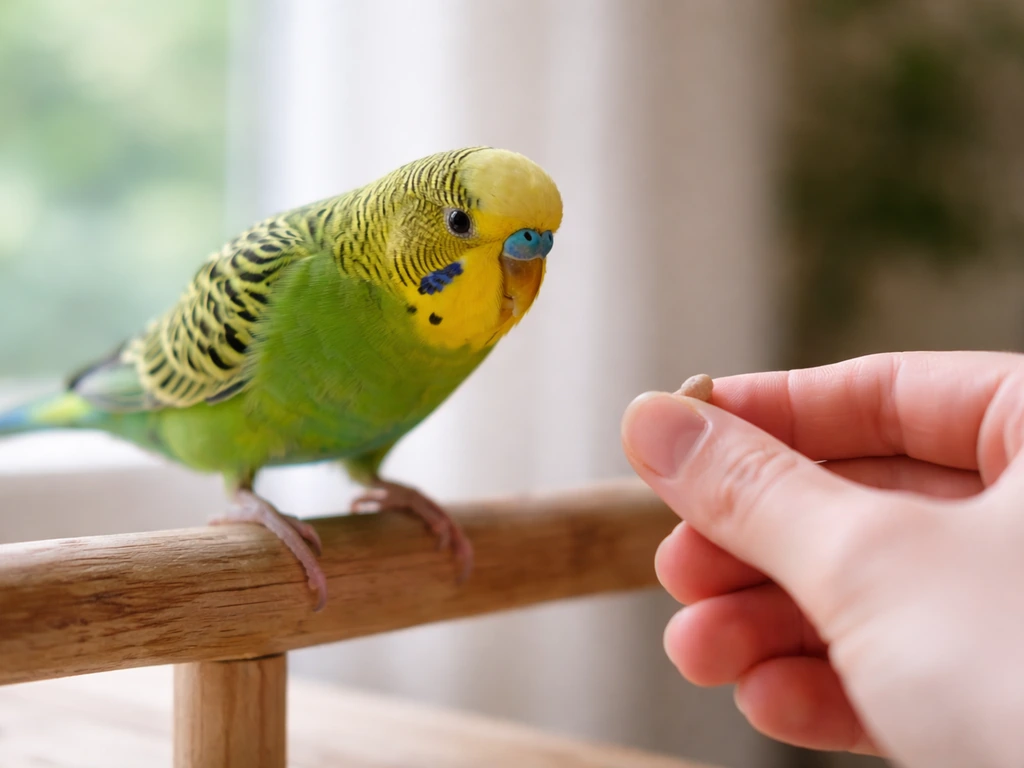
Before you start, it helps to be clear about what you're actually training or encouraging. For a pet bird, 'come to you' is a recall behavior: you give a cue (a word, a whistle, a hand signal), and the bird moves toward you to earn a reward. The behavior is under your cue, not forced. As one avian training resource puts it, real control in training means the behavior is under a cue, not coercion. The moment you start pressuring a bird, you're no longer training recall, you're creating avoidance.
For a wild bird, 'come to you' means something different. You can't train a wild bird the way you train a pet. Instead, you're making yourself and your yard into a safe, reliable resource, so wild birds voluntarily choose to get closer over time. The end goal isn't a trained recall, it's a bird that has learned you aren't a threat. That distinction matters a lot for setting realistic expectations and avoiding mistakes that can backfire.
What actually motivates birds to approach
Birds are motivated by three things above almost everything else: food, safety, and predictability. Food is the most powerful short-term motivator, especially high-value treats. For pet birds, that usually means a small piece of their favorite fruit, a seed, a nut, or whatever makes them visibly excited. The key word is 'small': you want the bird hungry enough to care, not so full that a treat is meaningless. Many trainers work just before a regular meal, when motivation is naturally higher.
Safety is the second motivator, and it's the one most beginners underestimate. A bird will never consistently come toward something it perceives as threatening, no matter how good the treat is. Fear and food rewards work against each other. If your bird is showing any signs of stress, including rounder-than-normal eyes, feathers held tight against the body, leaning away, or open-mouth threats, the session needs to stop. Building trust first isn't optional, it's the entire foundation. Positive reinforcement training, where the bird chooses to participate, has been shown in research with macaws to reliably produce cooperative behavior without coercion. That same principle applies to every species on your counter or in your yard.
Predictability matters more than most people realize. Birds learn faster when training happens at consistent times, in the same location, with the same cue. Inconsistency doesn't just slow learning, it can actively confuse the bird or erode trust you've already built.
Step-by-step recall training for a pet bird
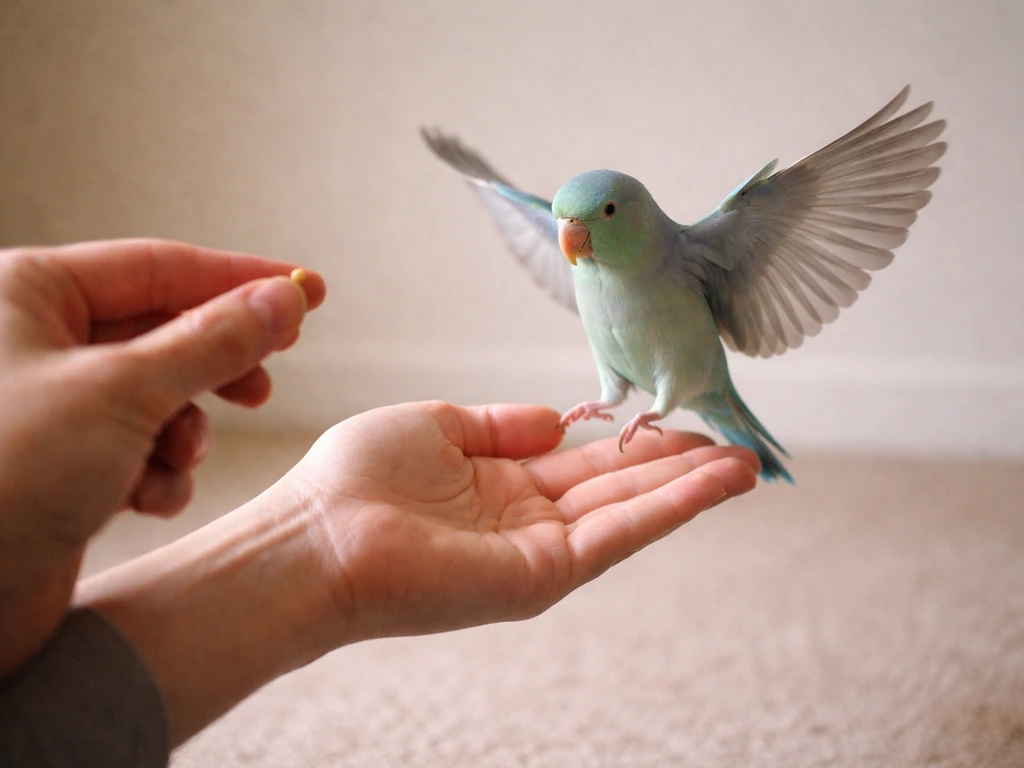
The following routine works well for most companion birds, from budgies to large parrots. Sessions should be short: around 10 minutes, twice a day. Research on macaw training used exactly that schedule across 8 weeks and produced reliable trained behaviors including stationing and stepping onto a perch. You don't need months of daily marathon sessions, you need consistency.
- Start with target training. A target is just a small stick or the end of a chopstick. Hold it near the bird, and the moment the bird touches it with its beak, immediately reward with a small treat and verbal praise. Repeat 5 to 10 times per session until the bird is confidently touching the target.
- Once target-touching is reliable, begin using the target to guide movement. Hold it just a few inches away and wait for the bird to move toward it. Reward every touch. At this stage, the bird just needs to see your hand and the target to understand what's being asked.
- Gradually increase the distance, in very small increments. Move the target 6 inches away, then a foot, then across a short perch. The rule is: don't increase distance until the bird is succeeding reliably at the current distance.
- Add your recall cue. Say a short word (many people use 'come' or the bird's name) or use a distinct whistle right before you present the target. The cue predicts the target, which predicts the treat. Over time, the cue alone becomes enough to trigger the approach.
- Once the bird is flying or walking to touch the target from several feet away, you can fade the target slowly and reward the bird for flying directly to your arm or hand instead. This is the point where the full recall behavior is built.
- Practice in different rooms and gradually increase distance as the bird becomes reliable. Keep rewarding consistently, even once the behavior is well-established.
If you want to take this further and work specifically on hand and finger targeting, the detailed process for getting a bird to come to your hand follows the same logic but focuses on teaching the bird to treat your hand as the landing destination rather than a separate target stick.
When your bird is fearful, avoidant, or just not cooperating
Fear is the most common reason a bird won't come to you, and it's also the most commonly mishandled problem. If your bird backs away, fluffs up defensively, or bites when you approach, pushing harder will make things worse. What's happening is that the bird's emotional response to you (or your hand, or the training context) is negative, and no amount of treat waving will fix that until the emotional response changes.
The two main tools for this are systematic desensitization and counterconditioning. Desensitization means exposing the bird to whatever it fears at a low enough intensity that it doesn't react, and very gradually increasing that intensity over many sessions. Counterconditioning means pairing the feared thing with something the bird genuinely loves, so the emotional association shifts from 'scary' to 'good things happen here.' In practice, you usually use both together: stay below the bird's fear threshold while consistently pairing your presence with rewards.
For a bird that won't approach at any distance, start by simply sitting near the cage and not interacting at all. Let the bird get used to your presence. Drop treats into the cage without reaching in. Over multiple sessions, move slightly closer. Only ask for approach behavior once the bird is showing relaxed body language around you. This can take days or weeks depending on the bird's history.
One underrated issue is object permanence, especially with younger or less experienced birds. Some birds won't approach if they can't clearly see your face or arm from where they are. Early in training, position yourself so the bird has a clear, unobstructed view of you before you give any cue. Remove that support gradually as the bird builds confidence.
Distance is another common sticking point. If the bird comes to you reliably from 2 feet but not 6 feet, you've simply jumped criteria too fast. Go back to the distance where the bird succeeds and rebuild from there in smaller steps. Patience here pays off later with a much more reliable recall.
If you're working specifically on getting a reluctant bird comfortable stepping up, how to train a bird to step on your finger covers the step-up behavior in detail, which is often a useful intermediate goal on the way to full recall.
Attracting wild birds to approach safely in your yard
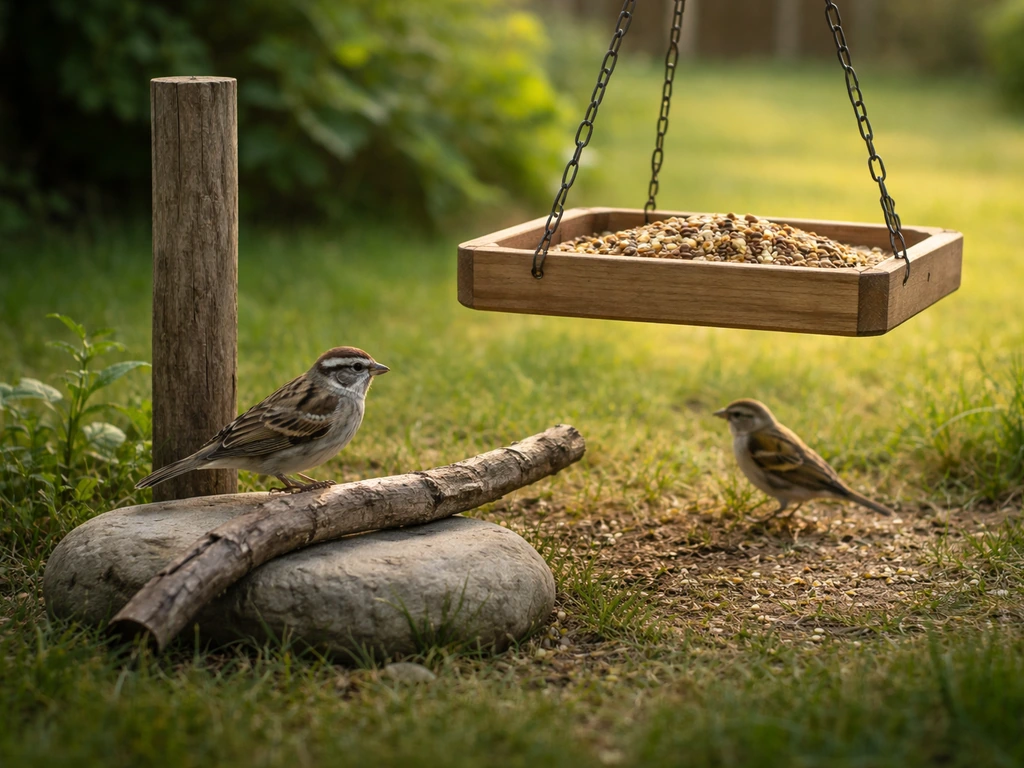
Wild birds approaching you in your yard is a different goal, and it requires a different strategy. You're not training behavior, you're building a long-term habitat relationship. The short version: make your yard genuinely safe and resource-rich, be consistently present without being threatening, and give birds time to decide you're not dangerous.
Feeders are the obvious starting point for many people, but they come with real considerations. Both USDA APHIS and wildlife agencies recommend against supplemental feeding of wildlife in many contexts, noting it can attract predators, concentrate disease risk, and create dependency. If you do use feeders, clean them thoroughly at least once a week, and use a diluted bleach solution (9 parts water to 1 part bleach) for disinfection. The California Department of Fish and Wildlife strongly advises against having bird feeders or baths when you also have backyard chickens or other captive birds nearby, due to avian influenza transmission risk.
A better long-term strategy, and one recommended by wildlife agencies, is to attract birds through habitat rather than food handouts. Native plants provide natural food sources like berries and insects, birdbaths offer fresh water, and nest boxes give shelter. These elements draw birds consistently and sustainably without the disease and dependency risks that come with supplemental feeding. This approach is more likely to result in birds becoming comfortable in your yard over time, which is the real foundation for any wild bird approaching closer to you.
To get wild birds closer to you personally, the key is calm, consistent presence. Sit in the same spot in your yard regularly. Move slowly. Don't make sudden sounds or movements. Over weeks, birds that frequent your yard will habituate to you as a non-threatening fixture in their environment. Some species, like chickadees, are more likely to approach closely than others. If you want to understand what that slow trust-building process looks like up close, how to get a wild bird to land on you covers the patient, step-by-step process for the most curious and bold wild species.
Species-specific tips and realistic timelines
Not every bird learns at the same pace or responds to the same approach. Here's what to expect across the most common species.
Parrots (African Greys, Amazon parrots, macaws, cockatoos, conures)
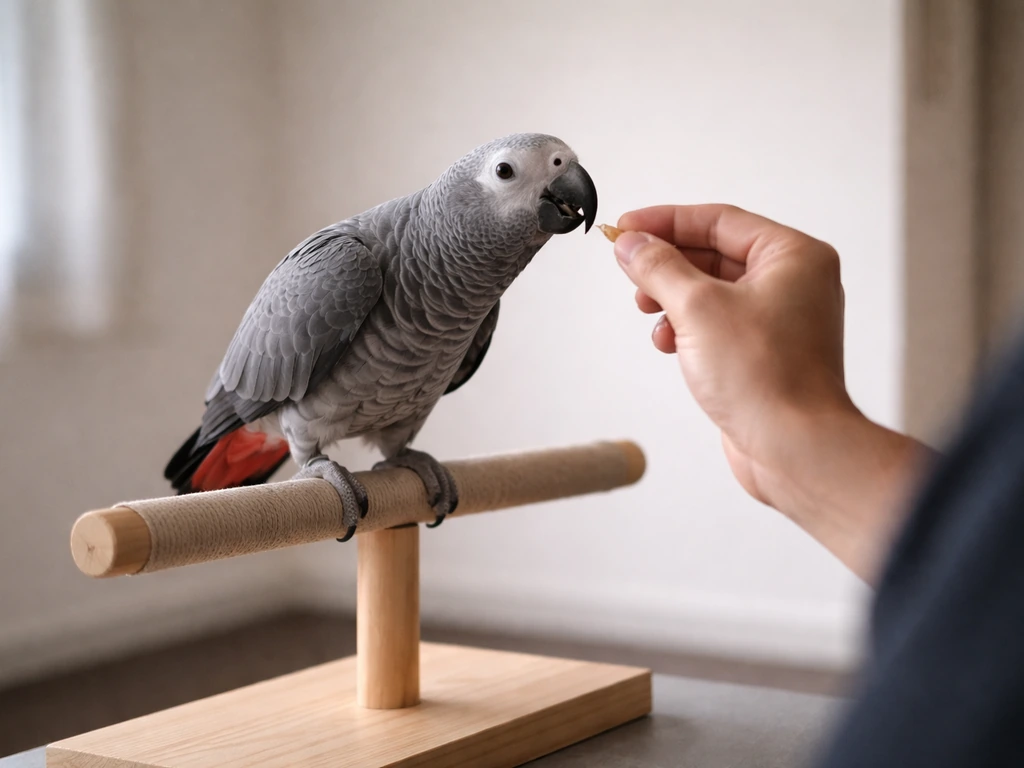
Parrots are intelligent and can learn recall surprisingly quickly once they understand the game, but they're also sensitive to inconsistency and can form strong negative associations if a session goes badly. Expect 2 to 4 weeks of consistent daily sessions before a reliable indoor recall is established in a tame, socialized parrot. A fearful or under-socialized parrot may take 2 to 3 months of desensitization work before you even begin recall training. Large parrots like macaws often need a clear, predictable cue and high-value rewards like nuts. Keep sessions to 10 minutes. Flight recall across a room is realistic for most tame parrots within 6 to 8 weeks of structured training.
Cockatiels
Cockatiels are generally willing and social birds that respond well to gentle, positive training. A hand-raised cockatiel may learn to come to your hand within a few days of consistent sessions. A bird that was not hand-raised or is coming from a fearful background may need 3 to 6 weeks of calm, low-pressure desensitization before recall training begins. Millet spray is a near-universal high-value reward for cockatiels. The hand-targeting approach works very well with this species.
Budgies (budgerigars/parakeets)
Budgies can be trained to come to you, but they're small and fast, and their body language is easy to miss. Watch for a puffed-up posture or rapid breathing as early stress signals. Tame budgies often learn step-up and short-distance recall within 1 to 3 weeks. Untamed budgies may take 4 to 8 weeks just to become comfortable with hand presence. Millet, small seed pieces, and spray millet work well as rewards. Keep sessions very short, 5 to 7 minutes is enough for budgies.
Finches and canaries
Finches and canaries are generally not hand-trainable in the same way as parrots or budgies, and most don't enjoy physical contact. Expecting a zebra finch to fly to your hand on recall is unrealistic for the vast majority of birds. The more appropriate goal with finches is habituation, getting them comfortable enough with your presence that they don't panic when you're near. This takes consistent, calm presence near the cage over weeks. Finches can become relaxed and curious around familiar humans, but they're not going to land on your finger the way a cockatiel might.
Common wild yard birds
Species like black-capped chickadees, titmice, and nuthatches are the most likely candidates for approaching you closely in a yard setting. These species are bold and curious, especially during winter when food is scarce. With consistent, calm presence and a reliable food source like sunflower seeds in your open palm, chickadees in particular can sometimes be coaxed to land on a hand within a few weeks. Sparrows, jays, and robins are more cautious and may never approach that closely, but will habituate to human presence over a season if you're a regular, non-threatening fixture. Expect 4 to 12 weeks of patient, consistent presence before even the boldest wild bird will approach within a few feet.
| Species | Trainability for Recall | Realistic Timeline | Best Reward |
|---|---|---|---|
| Parrots (tame) | High | 2 to 6 weeks for indoor recall | Nuts, favored fruit |
| Cockatiels (tame) | High | Days to 3 weeks | Millet spray |
| Budgies (tame) | Moderate | 1 to 3 weeks | Millet, small seeds |
| Finches/canaries | Low (habituation only) | Weeks to months | Proximity/presence |
| Wild yard birds (bold species) | Low (voluntary approach only) | 4 to 12 weeks | Seeds, habitat, calm presence |
Safety, handling do's and don'ts, and legal/ethical lines
Before any handling session, take 30 seconds to actually look at your bird. Check for normal posture, normal breathing, and alert eyes. A bird that is fluffed, sleeping more than usual, or showing labored breathing should not be in a training session. These are early warning signs that something may be medically wrong, and the Association of Avian Veterinarians specifically flags labored breathing and abnormal fluffing as signs a bird needs to be seen by an avian vet. Training a sick bird causes unnecessary stress and can mask worsening symptoms. If you're unsure, skip the session and consult an avian veterinarian. The CDC recommends identifying a local avian vet proactively, before you have an emergency.
When training is going well, it's tempting to push further than the bird is ready for. Resist that. Signs of stress in birds include eyes becoming rounder and more tense, feathers held rigidly, quick body turns away from you, or open-mouth threat postures. If you see any of these, the session is over. Continuing past those signals doesn't toughen a bird up, it teaches the bird that coming to you leads to uncomfortable experiences, which is the opposite of what you're building.
For shoulder training specifically, which is a natural next step once recall is reliable, there are additional handling considerations around safe positioning and preventing biting near the face. How to train a bird to stay on your shoulder covers those nuances in full.
For wild birds, the legal and ethical lines are important and non-negotiable. In the United States, most wild birds are protected under the Migratory Bird Treaty Act. You cannot trap, possess, or attempt to handle wild birds without proper permits. If you encounter a sick or injured wild bird, do not attempt to trap or handle it yourself. Contact a licensed wildlife rehabilitator first. The U.S. Fish and Wildlife Service specifically warns that sick or injured wildlife can go into shock when handled by untrained people, and that unnecessary stress can worsen their condition or be fatal. If you see a die-off of birds in your yard or neighborhood, report it to your state wildlife management agency immediately so it can be tested for avian influenza and other diseases.
The ethical side of wild bird attraction comes down to this: your goal should be encouraging wild birds to stay wild. Supplemental feeding that creates dependency or disease concentration is not a harmless hobby. Use habitat-based approaches where possible, manage feeders and baths carefully if you use them, and never try to tame or keep a wild bird. Appreciating them from a respectful distance is a better outcome for the bird and for you.
Where to go from here
If you're working with a pet bird, start today with a 10-minute target training session using a small treat and a chopstick. That single step unlocks everything else. Once your bird is touching the target reliably, you have the foundation for recall, step-up, and eventually landing on command. The progression from getting a bird to land on your hand to flying across the room on a verbal cue takes weeks, not months, when you keep sessions short and rewards consistent.
If you want to work specifically on the hand and finger contact part of the equation, getting a bird on your finger is the next natural step after basic recall, and it focuses on building comfort with that specific type of physical contact. From there, training a bird to sit on your hand covers duration and calm stationing, which is the final piece of the puzzle for reliable, relaxed handling.
For wild birds, pick one consistent spot in your yard, sit there quietly for 20 minutes today, and just watch. Note which species show up and how far away they stay. That baseline observation is your starting point. From there, you build habitat, reduce threats, and add your calm presence gradually. There's no shortcut, but the payoff of a chickadee landing within arm's reach of its own choice is genuinely worth the patience.
FAQ
Can I use the same “come to you” training for both pet birds and wild birds?
Yes, but only for pet birds. For wild birds, you should not “teach” a recall cue the way you would with a companion parrot, because the bird is choosing you based on trust, not a learned command. If you try to lure a wild bird repeatedly at close range, you often slow habituation because you add pressure and unpredictability.
What should I do if my bird still won’t come after I offer treats?
Shorten the session and raise the value of the reward, because it usually means the bird is not motivated or is above its stress threshold. A practical check is body language, if the eyes tense or the bird leans away, stop and go back to a shorter distance or a calmer setup (for pet birds) or back to passive presence (for wild birds).
How do I prevent my bird from getting “stuck” at the same distance?
Avoid calling the bird when you cannot control the environment. For pet birds, practice recall in a distraction-light room, then gradually add only one new variable at a time (more space, then mild distractions, then different times of day). For wild birds, change nothing about the “safe spot” setup while you build distance over weeks, sudden changes can erase trust you already earned.
Should I make my pet bird hungry before trying recall?
Use hunger strategically, not deprivation. A good rule is train just before a usual meal so the bird is interested but not frantic, and stop if the bird seems stressed or overly demanding. If you overdo hunger, you may condition the bird to approach only when panicked, which often worsens avoidance later.
My bird backs away or bites, does that mean I should try harder?
Do not correct, chase, or physically guide the bird toward you as a “faster” route to success. When a bird is avoiding you, force typically creates avoidance learning, the bird gets less curious and more defensive. Instead, reduce criteria, pair your presence with rewards, and only progress once the bird approaches with relaxed body language.
Why does my bird respond sometimes but ignore me other times?
If your bird comes during some sessions but not others, the problem is usually inconsistency in cue and context. Make the cue identical (same word or signal), practice in the same location, and keep the reward delivery predictable. Also check your timing, rewarding immediately after the bird takes the “toward you” step is more effective than waiting.
How can I avoid accidentally training my bird to associate “come” with stress?
Yes, but transition carefully. If your “come” cue is combined with sudden reaching, leaning over, or loud voice changes, the bird can learn the cue means pressure. Keep your body movement neutral, present the cue, then stay still while waiting for the bird to choose the approach, that reduces unwanted associations.
What’s the best way to progress from short-distance approach to “closer to me”?
For pet birds, the bird should start by approaching to a very easy distance or to a target near the cage, then you raise the criteria gradually. For wild birds, the equivalent is letting them choose the closer distance over time, you can’t force proximity without making the yard feel threatening. If you jump from 2 feet to 6 feet too quickly, regress to the last reliable point and rebuild in smaller steps.
Can I change treats or cues to keep training interesting?
Yes, but consistency matters. Use the same cue every time, then only change one element at a time when you add complexity (different room, then different cue distance). If you vary cues, reward types, or timing, the bird may stop responding because it cannot predict what “come” will mean.
How do I tell if the problem is fear versus not enough motivation?
For pet birds, many “reluctant to come” issues are really fear plus a missed comfort baseline. If your bird freezes, fluffs defensively, or shows open-mouth threats, treat it as an emotional problem, not a motivation problem. The fix is usually systematic desensitization and counterconditioning, reduce exposure and pair your presence with something the bird values before you ask for approach.
Should I track sessions, and what should I note?
Yes, and it can help you avoid false progress. Use a simple tracking note: cue used, approximate distance, body language at the moment of approach, and reward given. If approach happens only when the environment is quiet, you know you must first stabilize predictability before expanding distance or speed.
How do target training and recall relate when I want the bird to come to my hand?
Many birds will not “come” reliably on the first try because the cue needs meaning. If you are working toward hand contact, you can set the bird up by first training a target or station behavior, then use that foundation to shape “toward you” as the bird learns the landing destination. This reduces the chance you’ll confuse approach with random movement.
What health signs mean I should stop training immediately and call a vet?
If you notice labored breathing, abnormal extended sleepiness, or tight fluffed posture that looks unlike normal resting, skip training and contact an avian veterinarian. Training while sick can mask worsening symptoms and increase stress, which may make breathing or energy issues harder to assess later.
Is it okay to rely on feeders to get wild birds to come closer?
For wild birds, avoid feeding decisions that could create dependency or concentrate illness risk. If you use feeders or baths, hygiene and placement are critical, and consider switching to habitat-based attractants (native plants, natural water, shelter) so birds are drawn in without handouts that can increase disease or predator pressure.
What should I do on the day-to-day routine to encourage wild birds without scaring them?
If you want a wild bird to approach more closely, maximize calm consistency rather than interaction intensity. Sit in the same spot, minimize movement and sudden sounds, and only add resources that already fit the bird’s natural behavior (water, shelter, native food). If you start chasing or trying to “call in” birds repeatedly, you often reduce approach distance even if you offer food.