A happy cockatiel is not complicated to achieve, but it does require consistency across several areas: the right environment, a predictable routine, enough social time, proper food, and enrichment that keeps their clever little minds busy. If you get those things right, the reward is a bird that whistles at you, fluffs up contentedly on your shoulder, and greets you when you walk in the room. This guide covers every piece of that puzzle with steps you can start on today.
How to Make a Cockatiel Bird Happy: Start Here Today
Clara Hayes
2 Apr 2026
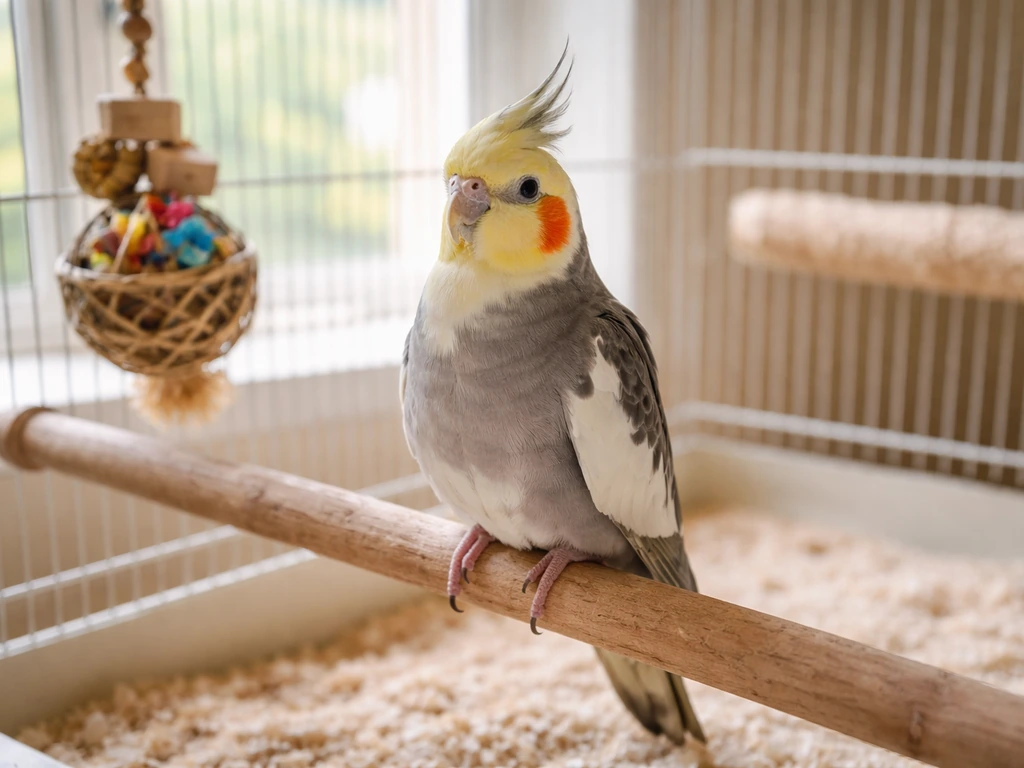
What a happy cockatiel actually looks like
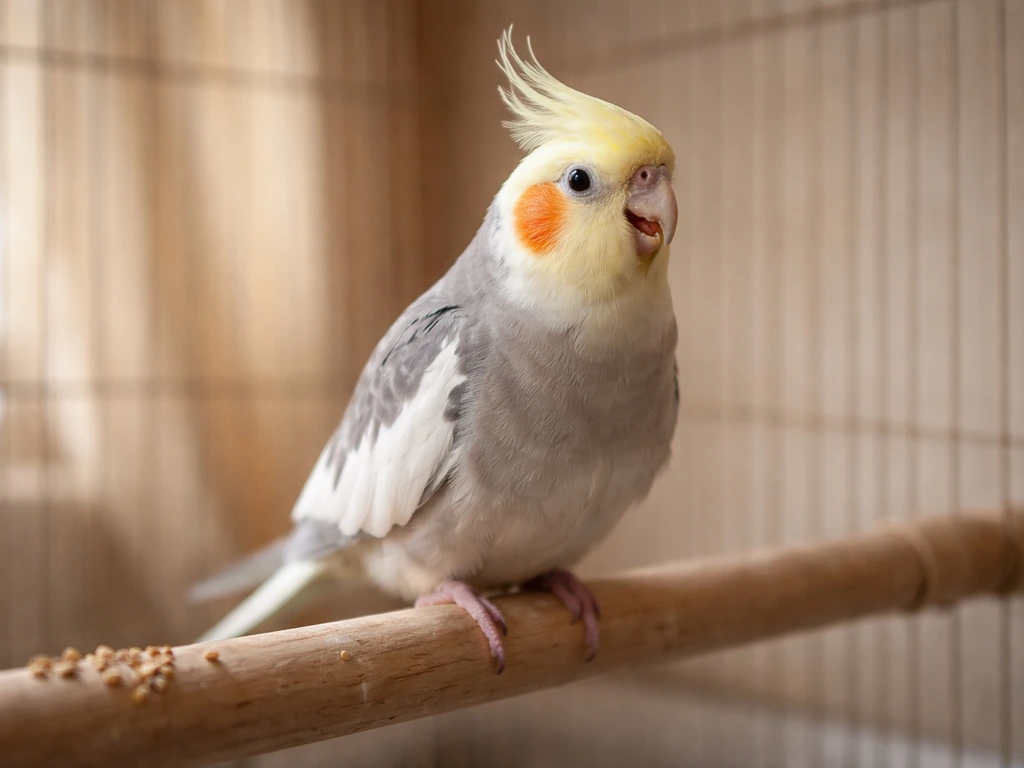
Before you change anything, it helps to know what you're aiming for. A content cockatiel has a very readable body language once you know what to look for. The crest is the clearest signal: held loosely upright (not flat against the head, not bolt upright in alarm) signals calm confidence. A happy bird will grind its beak lightly, especially after eating or just before sleep. It holds feathers slightly puffed in a relaxed way, not the tight, hunched puff of a cold or sick bird.
Other positive signs include singing, mimicking sounds, chattering softly, actively foraging at the food dish, engaging with toys, asking to come out by moving to the cage door, and preening itself or a trusted person. Eye-pinning (pupils dilating and contracting rapidly) can mean excitement or high arousal, positive or negative, so read it in context. If your bird regularly does most of these things, you're already on the right track.
Signs that something is off include a crest that is constantly flattened (fear or aggression), feathers puffed up for long periods, excessive screaming, repetitive bar-biting or pacing, sitting at the bottom of the cage, or being unusually quiet and withdrawn. Those are the signals this guide helps you address.
Quick wins you can do today: safety, routine, and comfort
Start with the physical setup because it affects everything downstream. The cage minimum you should be working with is 20 x 20 x 24 inches, and bar spacing should not exceed half an inch. Anything wider and a cockatiel can get its head stuck. Bigger is always better, especially if your bird spends long stretches inside, so if you can go larger, do it.
Cage placement matters enormously. Put the cage in a room where the family spends time, at roughly eye level or slightly below. Avoid the kitchen (cooking fumes and non-stick cookware off-gassing can kill birds quickly), drafty windows, and direct air conditioning vents. Birds have highly sensitive respiratory systems, and fumes from overheated PTFE (Teflon) nonstick cookware can cause rapid, life-threatening respiratory distress. One side of the cage against a wall gives the bird a sense of security without isolating it completely.
Routine is one of the fastest mood boosters you can give a cockatiel. They are flock animals wired to synchronize with a predictable schedule. Feed at the same times, uncover the cage at the same time in the morning, and dim or cover the cage at night. Cockatiels need 10 to 12 hours of sleep, and covering the cage at night helps block light and regulate their melatonin so they actually get restful sleep rather than disturbed dozing. A dark, quieter space at the same hour every night makes a real difference within days.
- Cage: minimum 20 x 20 x 24 inches, bar spacing no wider than 0.5 inch
- Location: main living area, away from kitchen fumes, drafts, and direct sun
- Sleep: 10 to 12 hours per night, cage covered in a dark, quiet spot
- Morning routine: uncover and greet the bird at a consistent time each day
- Remove any non-stick (PTFE/Teflon) cookware from the kitchen if the bird is nearby
- Check the room for hazards before out-of-cage time: ceiling fans off, windows and doors closed, other pets secured
Enrichment and mental stimulation: toys, foraging, and free time
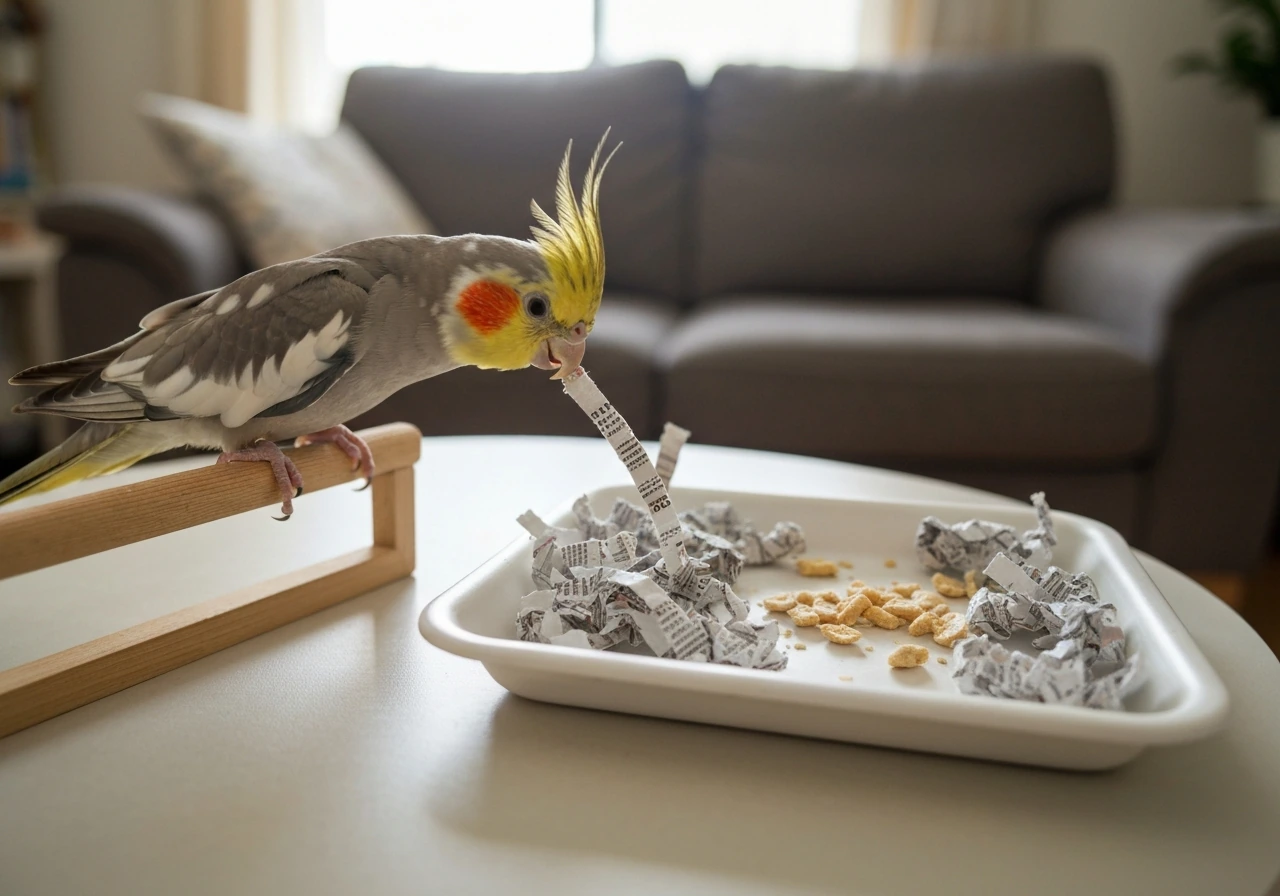
Cockatiels are intelligent enough to get genuinely bored, and boredom shows up as screaming, bar-biting, feather problems, or apathy. The fix is environmental enrichment that keeps them busy even when you're not home.
Toys and foraging
Cockatiels love to shred. Paper, palm fronds, cork bark, soft wood blocks, and seagrass all satisfy this drive in a safe way. Rotate toys every week or two so the cage feels novel. You don't need expensive toys: a rolled-up piece of plain paper tied to the cage bars can entertain a cockatiel for an hour. Foraging toys, where the bird has to work to find a treat, are especially good for mental stimulation. Hide small pieces of millet or a pellet inside a folded piece of paper or a small cup covered with a paper lid and watch them problem-solve.
Avoid toys with zinc or lead hardware (cheap key rings and clips are common culprits), very small parts that can be swallowed, and loops or strings long enough to catch a toe or neck. When in doubt, choose toys specifically marketed for cockatiels or small parrots.
Out-of-cage time
Daily out-of-cage time is not optional for a social species like the cockatiel. Aim for at least one to two hours per day outside the cage in a bird-proofed space. This is when you do most of your bonding, training, and play. Playing with your cockatiel during this time, rather than just letting it sit on top of the cage, is what builds genuine engagement and trust over weeks.
Bathing
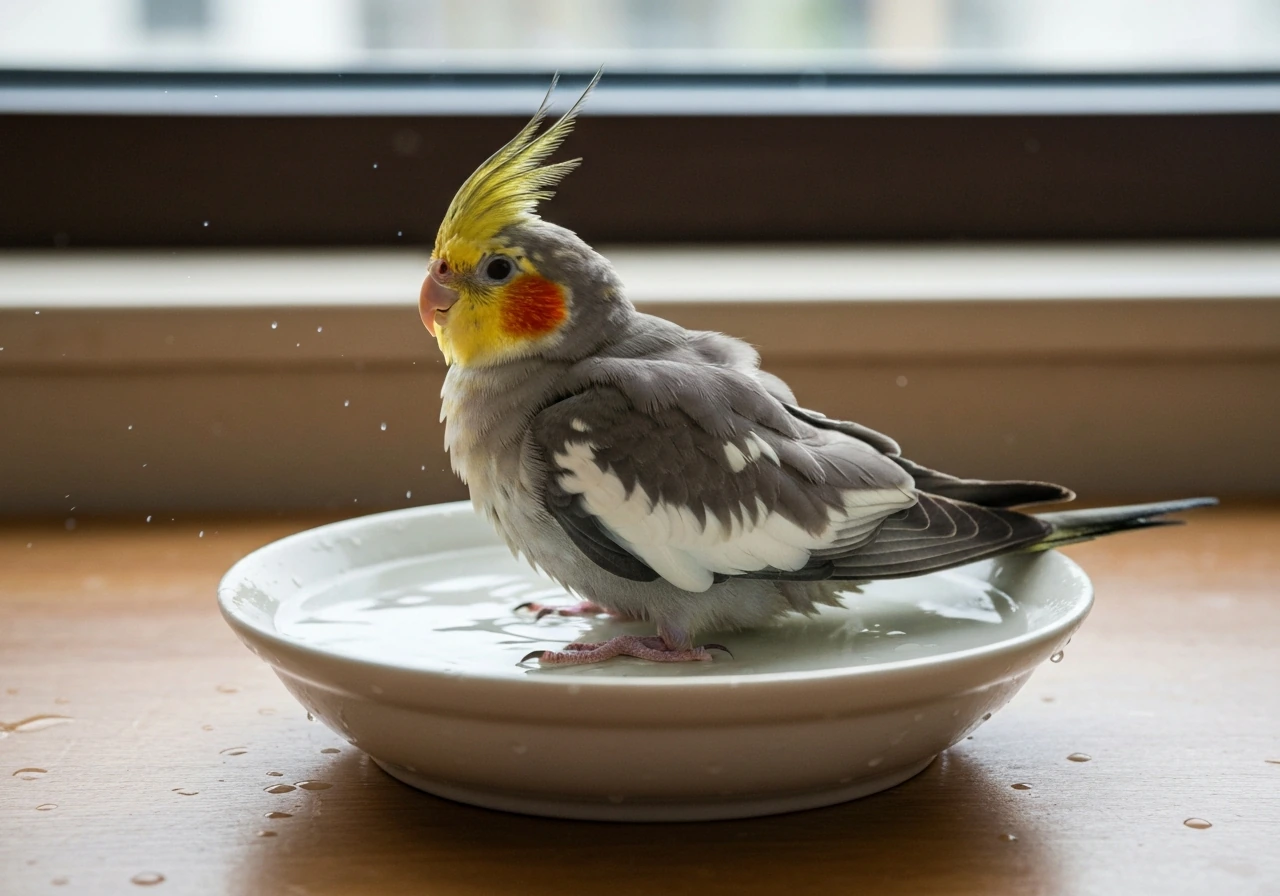
Bathing keeps feathers in good condition and most cockatiels genuinely enjoy it once they're used to it. Offer a bath at least once or twice a week. A shallow dish of lukewarm water, or a gentle mist spray from above (never a cold jet), both work well. If your bird is nervous about baths, introduce the spray bottle slowly at a distance over several sessions before moving closer. Never force it.
Bonding and trust: building a real relationship step by step
A cockatiel that trusts you is a happy cockatiel. Trust is built through repeated, low-pressure positive interactions, not through forcing contact or overwhelming the bird with attention it hasn't asked for. If you want to breed cockatiels responsibly, you should plan ahead for mating readiness and a safe nesting setup step by step. If you have a new or hand-shy bird, start by simply sitting near the cage, talking softly, and reading or working in the same room. Let the bird get used to your presence before you try to interact directly.
Making your cockatiel friendly is a gradual process that follows a clear progression: presence, then hand proximity, then hand entry into the cage, then stepping up onto your finger. Move to the next step only when the bird is calm at the current one. Rushing this progression is the most common mistake new owners make and it sets back trust by weeks.
Spend focused one-on-one time daily. Talk to your bird, whistle back when it whistles, and make eye contact without staring (staring is a predator behavior to most birds). Gentle head scratches behind the crest feathers, once the bird solicits them, are one of the strongest bonding activities you can offer. Let the bird initiate physical contact; never grab or restrain.
Handling without scaring: approach, step-up, and positive reinforcement
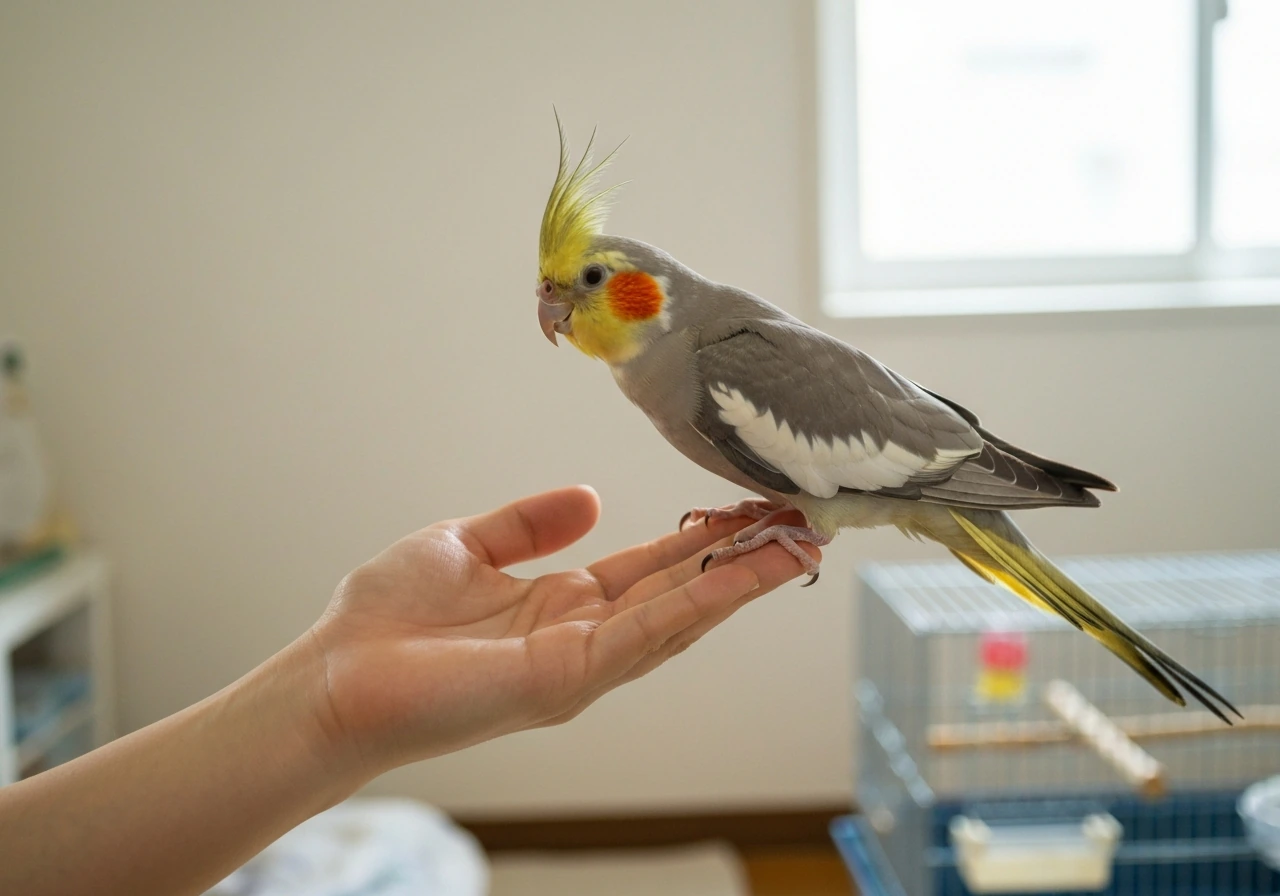
How you physically interact with your cockatiel determines whether it sees you as safe or threatening. The goal is to make every handling session something the bird chooses, as much as possible, which means reading its body language before and during contact.
The step-up cue
Approach the cage calmly and slowly, from the front. Move your hand in at an angle from below, not straight at the bird's face. Press your index finger gently against the bird's lower chest, just above the feet, and say 'step up' in a calm, consistent tone. Many cockatiels step onto a finger naturally when their balance is gently disrupted this way. Reward immediately with praise and a small treat (a tiny pinch of millet is perfect). Repeat this a few times each session, always stopping before the bird gets tired or stressed.
Clicker training for precise communication
A clicker is one of the most effective tools for building trust and teaching behaviors. The click sound precisely marks the exact moment the bird does something right, and because it's always followed by a treat, the bird quickly learns that the click means a reward is coming. Start by clicking and immediately offering a treat, without asking for any behavior, until the bird visibly reacts to the click sound. Then use it to mark the moment the bird steps up, takes a treat from your hand, or touches a target stick. Short sessions of two to five minutes, two or three times a day, build skills faster than one long session. Taming your cockatiel goes much faster once clicker training clicks for both of you.
Never use punishment. Spraying a bird with water as a correction, yelling, or tapping the cage creates fear, not compliance, and fear is the enemy of a happy bird. If the bird bites during handling, stay calm, set it down gently, and end the session. Biting is communication, and the bird is telling you it's overwhelmed.
Nutrition basics that directly affect your bird's mood
Diet has a bigger effect on behavior and mood than most owners realize. A bird living on a pure seed diet is often nutritionally deficient in vitamin A and calcium, which can cause lethargy, feather problems, and irritability well before it causes obvious illness. Seeds are not inherently bad, but they can't be the whole diet.
The most practical framework is to make pellets the foundation of the diet, at around 40 to 50 percent of total food intake, with a seed mix making up 30 to 40 percent. Fresh vegetables should account for 10 to 15 percent of the diet, and fresh fruit around 5 to 10 percent. Total fresh food (vegetables and fruit combined) should stay under 20 to 25 percent of the daily diet. If your bird is on a good quality pellet-based diet, you generally don't need to add vitamin or mineral supplements to the water or food.
| Food type | Approximate daily share | Examples |
|---|---|---|
| Pellets | 40–50% | Small parrot pellets (Harrison's, Zupreem Natural, Roudybush) |
| Seed mix | 30–40% | Canary/cockatiel blend, low in sunflower seeds |
| Vegetables | 10–15% | Leafy greens, carrot, broccoli, cooked sweet potato |
| Fresh fruit | 5–10% | Apple (no seeds), mango, papaya, berries |
| Treats/foraging | Minimal | Millet spray, nutriberry, small nut pieces |
Always provide fresh, clean water daily. Change it at least once a day, more often in warm weather. For fresh foods, remove anything uneaten after a few hours to prevent bacterial growth.
A few foods are genuinely dangerous and need to be off the menu entirely: avocado, chocolate, caffeine (coffee, tea, energy drinks), onion, garlic, and apple seeds. Chocolate and caffeine contain compounds (theobromine and caffeine) that are toxic to birds even in small amounts. When in doubt about a new food, check before offering it.
Troubleshooting stress and knowing when it's a vet issue
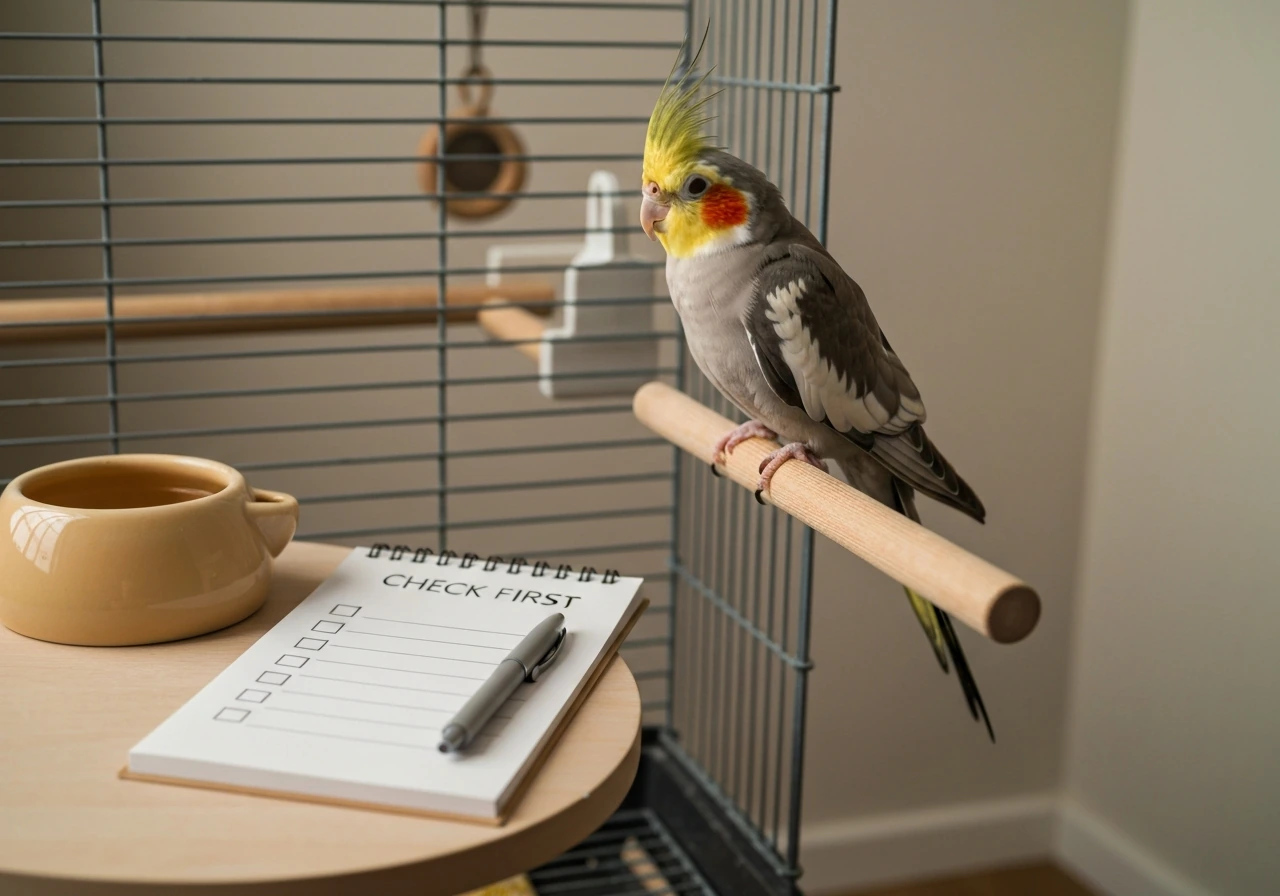
Cockatiels are wired to hide illness, an instinct left over from being prey animals in the wild. By the time a bird looks visibly sick, it has often been unwell for some time. This means you need to know your individual bird's normal behavior well enough to notice subtle early changes. Cats can train their instincts to chase, so keep bird safety in mind when your cat is around cat around birds. Once you’ve noted what your cat does around your cockatiel, follow a step-by-step approach for introducing a bird to a cat safely.
Common signs of stress or unhappiness (and what to try first)
| Sign | Likely cause | What to try |
|---|---|---|
| Excessive screaming | Boredom, loneliness, seeking attention | More out-of-cage time, enrichment rotation, schedule consistency |
| Repetitive bar-biting or pacing | Boredom, cage too small, high stress | More foraging toys, larger cage, increase interaction |
| Biting during handling | Fear, overstimulation, pain | Slow down handling approach, check for injury |
| Feather destruction or plucking | Boredom, nutritional deficiency, skin irritation, stress | Diet review, vet exam to rule out skin/infection issues |
| Excessive sleeping or apathy | Illness, nutritional deficiency, depression from isolation | Vet check if lasting more than 24–48 hours |
| Loss of appetite | Stress from change, illness | Monitor closely; vet if lasting more than 24 hours |
| Loose or discolored droppings | Dietary change, stress, illness | Monitor; vet if persisting more than 1–2 days |
| Crest constantly flattened | Chronic fear or anxiety | Review cage placement, social pressure, handling approach |
Go to the vet immediately for these signs
Some signs are emergencies. Do not wait and watch if you see any of the following: open-mouth breathing, labored or noisy breathing, tail bobbing up and down with each breath (a sign of respiratory effort), extreme weakness or inability to perch, discharge from the eyes or nostrils, or a bird sitting on the cage floor with feathers tightly puffed and eyes closed. These are not 'maybe' situations. Birds can decline very quickly, and same-day avian vet care is appropriate for any of these signs.
Even for non-emergency concerns, find an avian-experienced vet before you need one urgently. Not every small animal vet has experience with birds, and an avian vet will be able to spot nutrition-related problems, early signs of infection, and hormonal issues (very common in cockatiels) that a general vet might miss. Annual wellness checkups are a good habit once your bird is settled and healthy.
Where to start right now
If you've read this far and you're not sure where to begin, here's a practical first-day checklist. You don't have to do everything at once. Pick the area that's most obviously lacking for your bird and fix that first, then build from there.
- Check the cage size and bar spacing. Upgrade if it's below 20 x 20 x 24 inches or bar spacing exceeds 0.5 inch.
- Set a consistent daily schedule: same wake-up time, same feed time, same bedtime with the cage covered for 10 to 12 hours.
- Add at least one foraging or shredding toy to the cage today.
- Review the diet: if your bird is on seeds only, start introducing a small amount of pellets alongside the seed mix and offer one fresh vegetable.
- Remove or don't use non-stick cookware in the kitchen; note any other toxic foods in the house.
- Plan for one to two hours of supervised out-of-cage time daily, with ceiling fans off and other pets secured.
- Start a two-minute daily hand-training session using the step-up cue and a small millet treat.
- Book an avian vet for a wellness check if your bird hasn't seen one in the past year.
Cockatiels are remarkably responsive birds. Most owners who make these changes consistently report visible improvement in their bird's mood and engagement within one to two weeks. The relationship you build over months of patient, positive interaction is genuinely one of the most rewarding things about keeping these birds, and it all starts with the basics covered here.
FAQ
How can I tell if my cockatiel is excited or stressed when I see eye-pinning?
Eye-pinning alone can be either positive or negative. Use context: if the bird is also singing, moving toward you, and body posture is relaxed, it is more likely excitement. If eye-pinning comes with flattened crest, hard staring, frantic pacing, or sudden withdrawal, treat it as stress and pause all handling until the bird calms.
My cockatiel screams when I’m near the cage. Is that always a sign something is wrong?
Not always. Some cockatiels scream to request attention or to get let out. The key is pattern and response: if screaming increases when you approach but stops when you wait quietly, the bird is probably overstimulated or demanding. If it consistently quiets after you follow a predictable cue (like sitting near the cage, then offering a calm out-of-cage session), you can shape the routine rather than trying to “fix” the bird immediately.
What’s a safe way to introduce a new toy if my cockatiel is cautious?
Start with a visible but low-pressure approach. Place the toy in the cage without asking for interaction, keep sessions short, and watch for relaxed body language. If your bird ignores it, leave it for a few days, then move it slightly closer to favorite perches. Avoid removing the toy quickly, as frequent take-downs can teach the bird that the toy equals uncertainty.
My cockatiel bites when I try to step up. Should I stop clicker training?
No, but you should reduce intensity. Rebuild from a safer goal, like rewarding quiet calm at the cage door, then rewarding the bird for approaching your finger area without contact pressure. Step up attempts should happen only when the bird’s body language is neutral to relaxed. Clicker work can reinforce safety, but keep sessions very short and end before the bird gets overwhelmed.
How do I make sure my daily out-of-cage time is safe without restricting my bird too much?
Choose one bird-proofed room and use the same boundaries every day so your cockatiel learns what’s allowed. Remove hazards like ceiling fans, exposed cords, open toilets, and any fumes from cleaning products. Keep windows secured, and use the cage as the “home base” so your bird can retreat if stressed.
Do I really need to cover the cage at night, or is darker room placement enough?
Cage covering helps when the room has variable lighting, early morning glare, or household activity during sleep hours. If your home is consistently dark and quiet, you may not need to cover, but you still must protect the bird from drafts and heat swings. Use enough coverage to block stray light, while still ensuring good ventilation.
What should I do if my cockatiel fluffs up but also seems alert?
A relaxed, slightly puffed posture can be normal, especially after eating or while settling for sleep. Look for signs that it is not illness: crest should be loosely held (not flattened for fear), breathing should be easy, and activity should be otherwise normal. If the puffing is persistent, accompanied by withdrawal, loss of appetite, or repetitive sitting on the cage floor, treat it as a possible health issue and contact an avian vet.
Can I use millet as a treat, and how much is too much for happiness and training?
Millet can be effective because it motivates quick learning, but it should be used in small portions. A common approach is “tiny pinch” amounts during training and avoiding millet as the main daily food. If you notice feather issues or weight changes, reduce treats and reassess whether pellets and vegetables are meeting the diet balance.
My cockatiel won’t eat vegetables. What’s the fastest realistic way to improve acceptance?
Try consistency and small serving strategies. Offer bite-sized pieces daily in the same location, and pair vegetables with a preferred feeding time (when the bird is already active and calm). Warm vegetables slightly (not hot) to improve aroma, and consider safe “mixing” methods like putting a tiny amount of vegetable next to a favorite food rather than only offering it alone.
How often should I change water and remove fresh food if my home is warm?
In warm weather, change drinking water at least once daily, and more often if it gets warm quickly or looks dirty. Fresh foods should be removed after a few hours, especially in heat, to prevent bacterial growth. If you notice any sour smell or slime, clean the dish promptly and adjust your timing.
When should I contact an avian vet if my cockatiel seems off but not in immediate danger?
Contact an avian-experienced vet as soon as you notice a trend, not just a single event. Examples include reduced foraging, quieter-than-usual singing, progressive weight or posture change, or repeated breathing noises that resolve briefly. Cockatiels hide illness, so it’s safer to investigate early rather than waiting for a dramatic decline.