You can play with a cockatiel at almost any stage of your relationship with it, but how you play changes dramatically depending on whether your bird trusts hands yet. A bird that scrambles to the back of the cage when you reach in needs a different approach than one that trots over to investigate your sleeve. This guide walks you through the whole sequence: reading your bird's mood accurately, setting up a safe space, building trust through touch conditioning, then moving into the real fun stuff like foraging games, training games, and freeform out-of-cage play. If you are also asking how to breed cockatiel bird, start by ensuring your pair is healthy, well bonded, and ready for proper nesting conditions.
How to Play With a Cockatiel Bird Safely and Kindly
Clara Hayes
22 Apr 2026
Understanding cockatiel temperament and trust signals
Cockatiels are sociable but sensitive. They want company and mental engagement, but they also have a strong flight instinct and a low tolerance for being surprised or cornered. Before you try to interact physically, you need to be able to read what your bird is telling you, because the same crest that looks "excited" in one context is screaming "back off" in another.
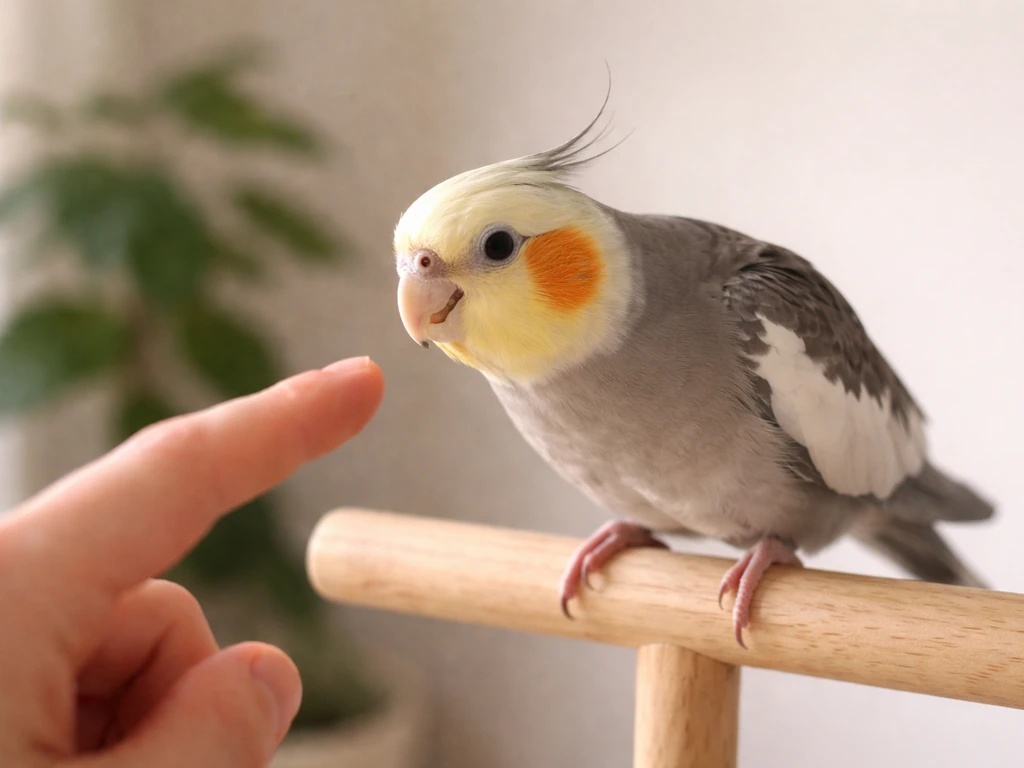
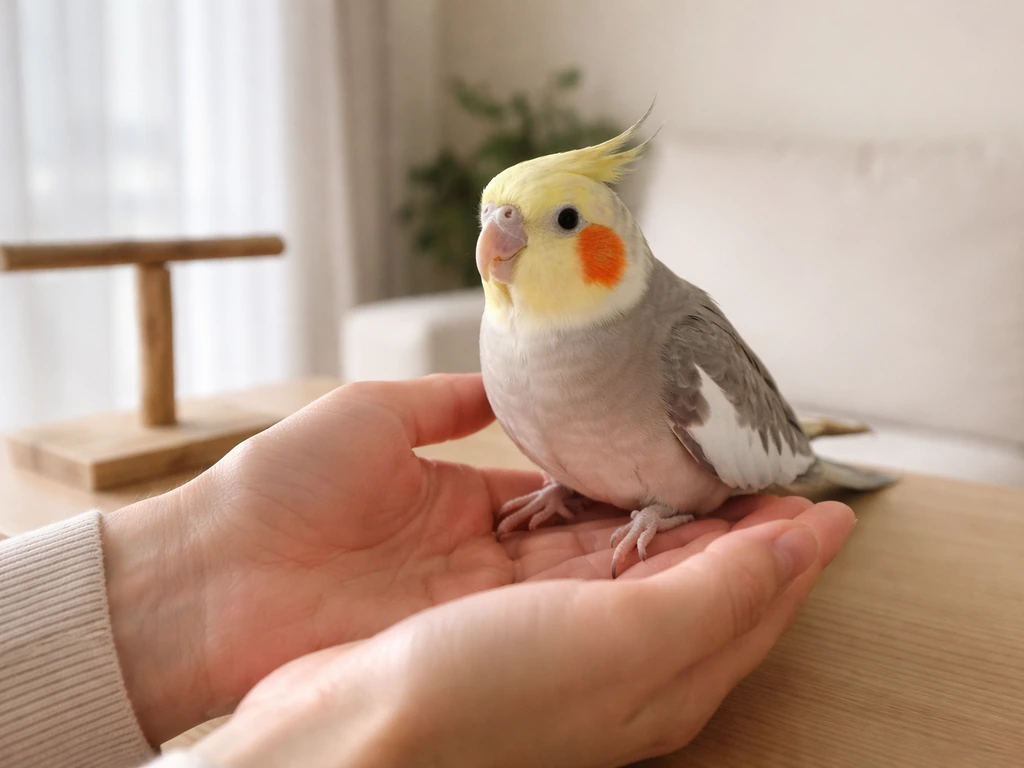
The crest is your fastest readout. A crest held softly upright with relaxed body feathers and normal active curiosity means the bird is comfortable and open to interaction. A crest fanned dramatically straight up usually signals surprise or high excitement, which is not the same as readiness to play. A crest slicked flat against the head, combined with narrowed eyes, puffed cheeks, a tucked body, or repeated hissing, is a clear defensive signal. Stop what you are doing when you see that combination.
Beyond the crest, read the whole bird. Relaxed feathers slightly fluffed, a loose posture, soft grinding of the beak, or gentle preening are all signs of a calm, trusting bird. Tail fanning, wings held slightly away from the body, lunging toward your hand, or quick side-to-side head bobbing paired with hissing are escalation signs. Any of those means the session ends now, without punishment and without drama. You just calmly step back and try again later.
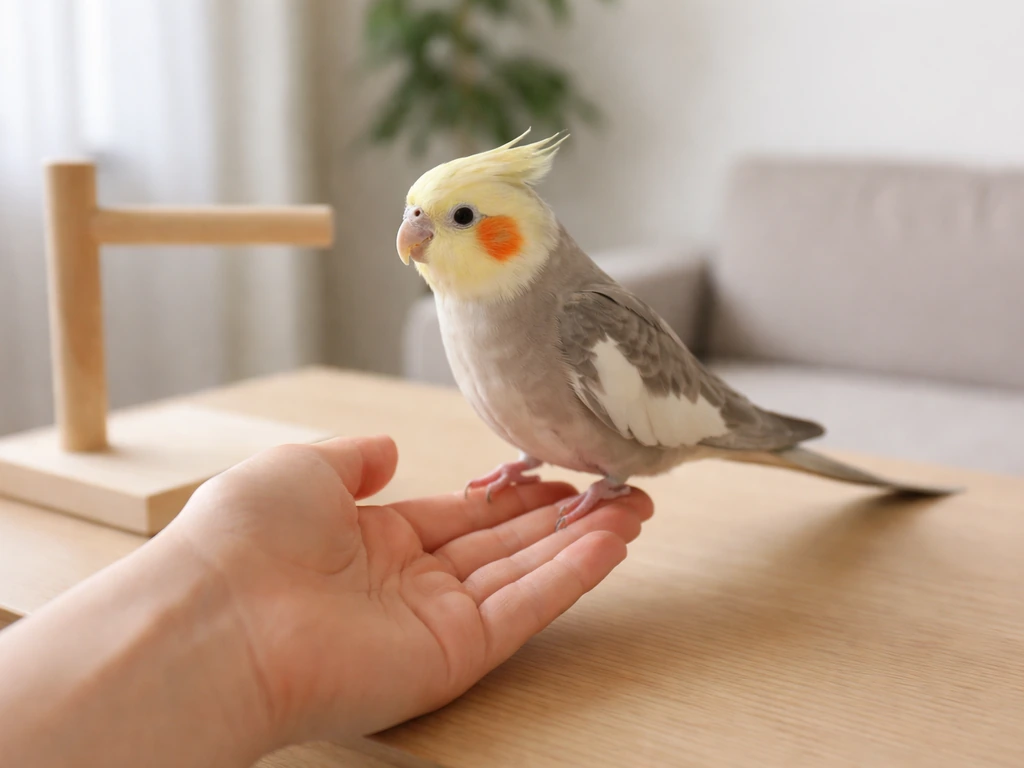
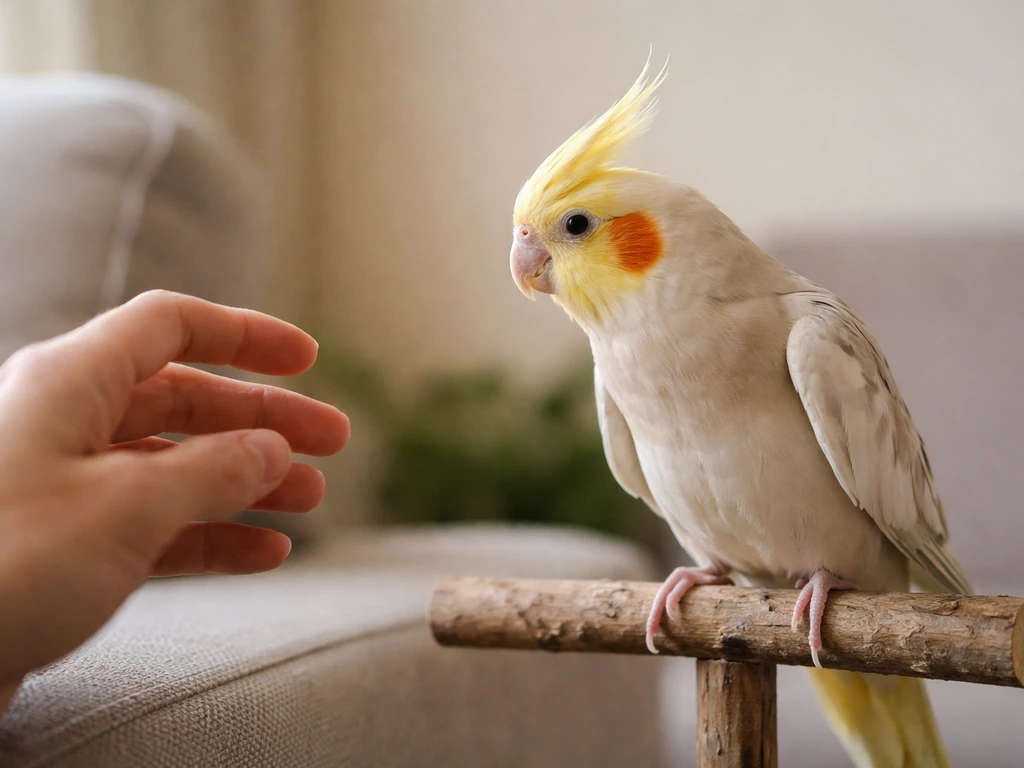
Trust signals to watch for as your relationship builds: the bird voluntarily moves toward you rather than away, allows you to approach the cage without retreating, and shows relaxed body language during your presence without being pressed against the far side. These are the green lights that tell you it is safe to move to the next step.
Setting up a safe, play-friendly environment
Before any play session, the room needs to be prepared. Cockatiels are unusually vulnerable to airborne toxins. Overheated nonstick cookware releases fumes that can cause rapid, life-threatening respiratory failure in birds, so never allow out-of-cage time in or near the kitchen while cooking. The same goes for aerosol sprays, scented candles, air fresheners, and cleaning products, which can burn a bird's mouth and airways even at concentrations that seem mild to you.
- Choose one bird-proofed room and use it consistently for out-of-cage play
- Close windows, block ceiling fan blades, and cover mirrors to prevent collisions
- Remove or secure any toxic houseplants (avocado, oleander, and philodendron are common hazards)
- Put other pets out of the room and close the door before opening the cage
- Turn off the kitchen and open a window for fresh air before any out-of-cage session
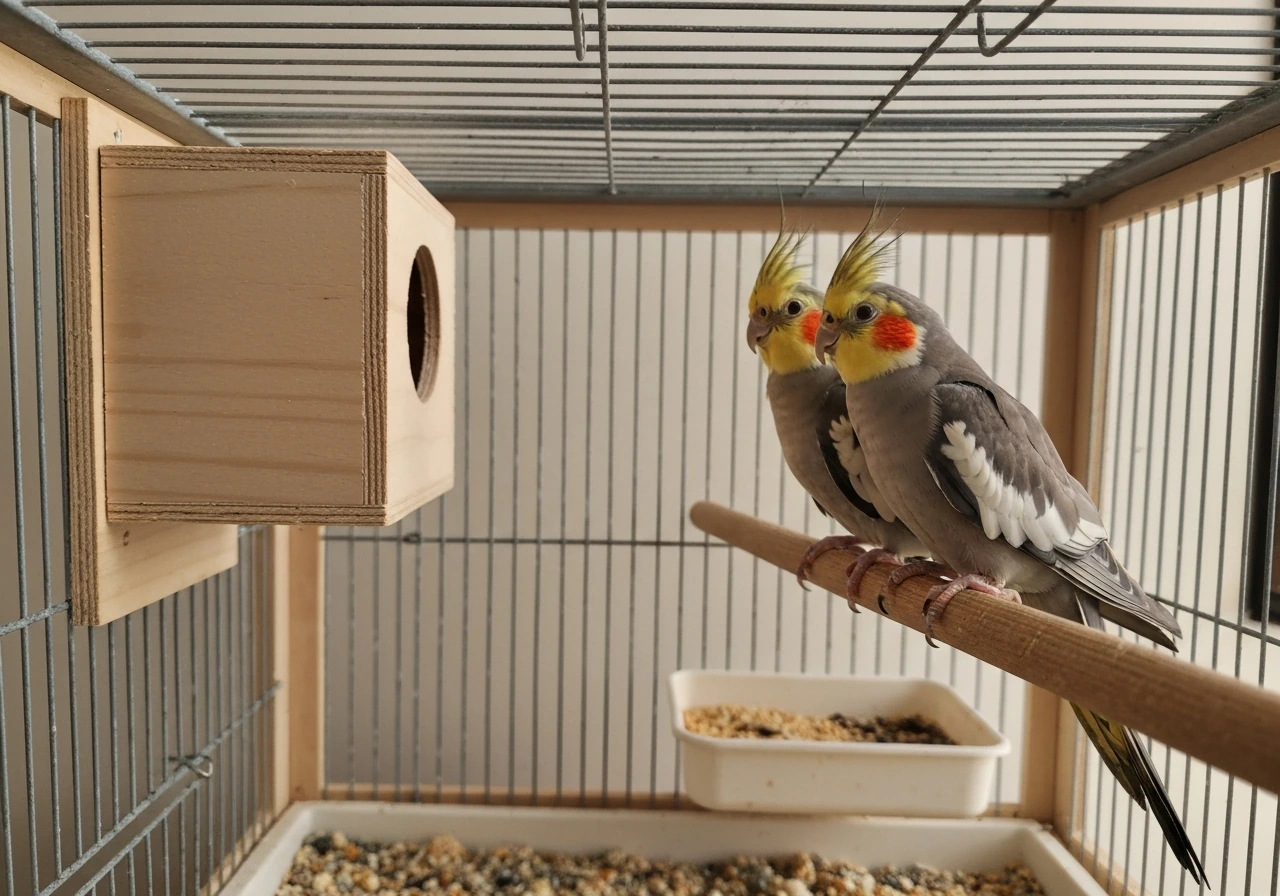
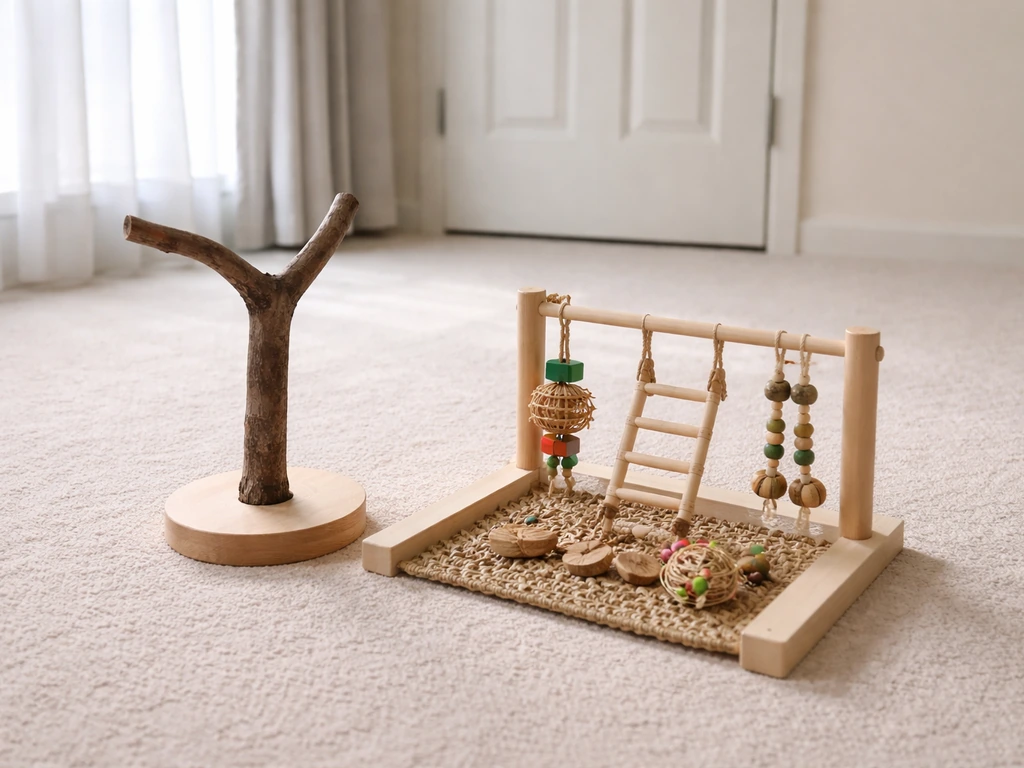
Inside the cage, perch variety matters more than most owners realize. Cockatiels benefit from different diameters and textures (natural wood branches of varying thickness work well) so their feet stay healthy and they stay engaged. A play gym or tabletop perch stand outside the cage gives your bird a neutral territory that feels less like being grabbed from its home. Set it up near the cage so the transition feels natural rather than alarming.
For toys, size and material matter a lot. Toys should be sized for cockatiels specifically, not for large parrots where a part could trap a toe or beak. Vegetable-tanned leather strips and rope made from 100% cotton or sisal are among the safer material choices, but rope toys come with a caveat: if your bird is a dedicated chewer that snips off strand pieces, rope can become a hazard even if it started as a safe product. Check toys daily and remove anything fraying, cracked, or with small detachable pieces.
Hand taming basics and getting comfortable with contact
If your bird is hand-shy or has never been tamed, do not skip this stage and jump to play. All the interactive games in the world mean nothing if your bird panics every time your hand enters the picture. The goal here is to build an association between your hand (or you in general) and good things, using a gradual, low-pressure approach. If you want a full roadmap, focus on building trust step by step, then move into play, training, and consistent out-of-cage practice.
- Start by simply sitting near the cage for 10 to 15 minutes daily, talking softly, and not reaching in. Let the bird get used to your presence without any pressure.
- Once the bird stays calm and moves toward the cage front when you sit nearby, start offering a small treat (millet spray works well) through the cage bars. Keep your hand very still.
- When the bird readily takes treats through the bars, open the door and offer a treat from your fingertips just inside the opening, without pushing your hand further in.
- Gradually move your hand a little deeper into the cage over multiple sessions, always letting the bird come to you rather than moving toward the bird.
- When the bird is comfortable eating from your open hand inside the cage, place your finger just below its chest and gently push forward. This is the step-up prompt. If it steps on, reward immediately with a treat and calm praise.
- Practice step-up inside the cage before ever asking for it at the open door or outside the cage.
Keep sessions short, ideally 5 to 10 minutes at a time, especially early on. A bird that stays calm for a short session and ends on a positive note learns faster than one pushed past its threshold for 30 minutes. If at any point the bird hisses, lunges, or slicks its crest flat, end the session immediately without scolding. Punishment (even just a sharp voice or sudden movement) increases fear and aggression over time, and can cause a bird to generalize that fear to your presence overall.
One practical tip: avoid jerking your hand away when the bird nips or bluffs. A sudden retreat teaches the bird that nipping works to remove the scary thing (your hand), which reinforces the behavior. Instead, keep your hand still for a moment, then calmly end the session. If biting is frequent or escalating, it is worth consulting an avian vet to rule out pain or illness as a cause before assuming it is purely behavioral.
Interactive play activities inside and outside the cage
Inside the cage
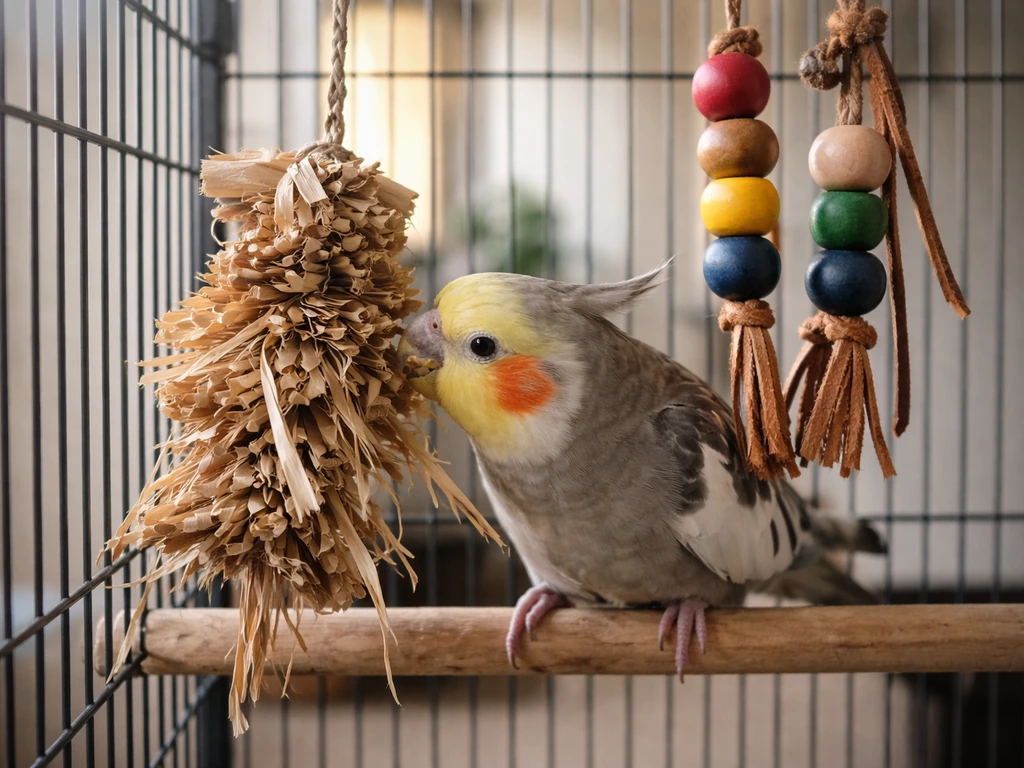
Cage play is underrated. Your cockatiel spends most of its time there, and a well-enriched cage means it is mentally active even when you are not directly interacting. Rotate toys every one to two weeks so the environment stays novel. Introduce new objects outside the cage first if your bird is the cautious type, so it can inspect them without feeling cornered.
- Hanging toys with bells, wooden beads, or leather strips for batting and chewing
- Shreddable items like palm frond strips, corn husks, or coconut fiber bundles
- Small foot toys placed on the cage floor or on a flat perch (small wooden blocks or cork pieces work well)
- A small mirror if your bird lives alone, though monitor for obsessive behavior
- Swing perches, which most cockatiels genuinely enjoy and will choose voluntarily
Outside the cage
Out-of-cage time is where the real bonding happens. If your situation involves a cat, you can also learn how to get a cat to drop a bird safely in the moment. If your home includes a cat, keep supervised, gradual introductions and prioritize the bird's safety from the start. Once your bird steps up reliably and is comfortable on your hand, you can start extending how far from the cage it goes.
Let the bird explore at its own pace. Most cockatiels will investigate your clothing, hair, and hands with their beaks, which is normal social behavior, not aggression. A gentle exploratory nibble is very different from a bite, and it usually means the bird is comfortable with you.
Simple games you can play during out-of-cage time include peek-a-boo (covering your face with your hand and revealing it while saying a consistent word), gentle tug with a soft toy, and target touching where the bird follows a stick or your finger tip to different locations. You can also just let the bird ride on your shoulder while you do quiet activities, which satisfies its social instinct without requiring active engagement from either of you.
Foraging, enrichment, and training as play
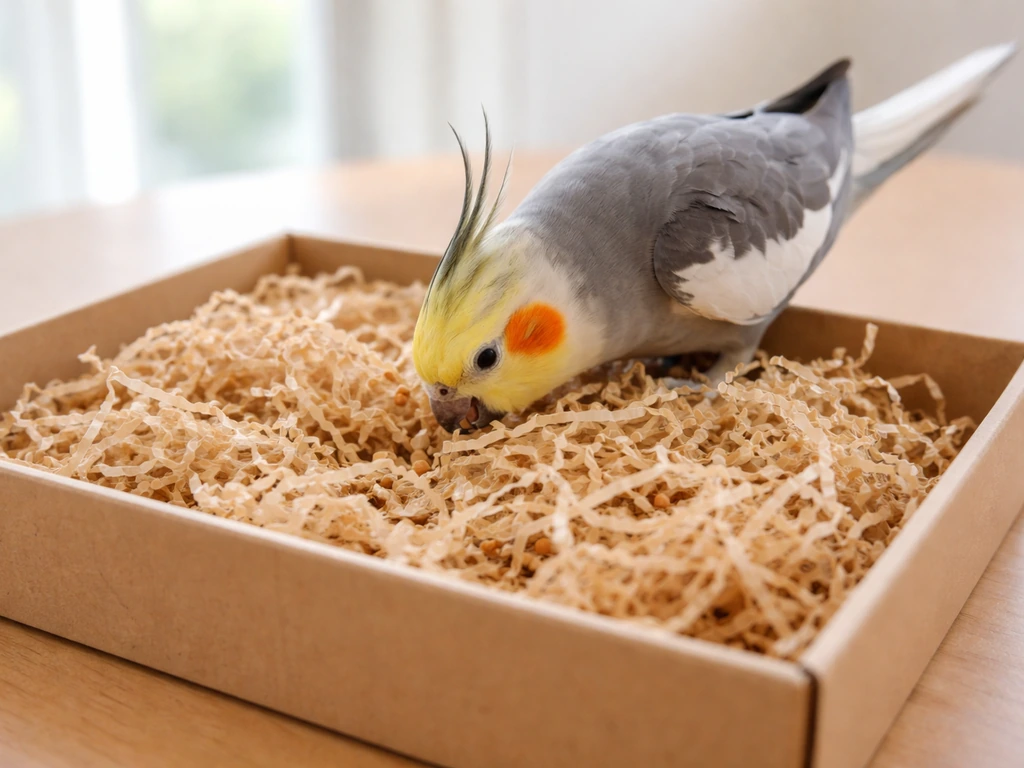
In the wild, cockatiels spend a significant part of every day foraging. When a pet bird gets all its food from the same bowl at the same time, that foraging drive has nowhere to go, and it often surfaces as feather destructive behavior, excessive screaming, or restlessness. Turning mealtimes into enrichment is one of the highest-value things you can do for a cockatiel's mental health.
DIY foraging toys are easy and free. Roll a small amount of seed or a few pellets inside a strip of plain newspaper and twist the ends closed. Stuff a cardboard toilet paper tube with foraging material and fold both ends, then let the bird shred and tear into it. Wedge a piece of millet or a small food-stuffed toy between the cage bars so the bird has to work to extract it. You can also scatter seed in different areas of the cage floor or on a foraging tray instead of always using a bowl.
A few safety notes on foraging enrichment: use only plain, unbleached, unprinted paper or cardboard. Avoid materials with ink, glue, staples, or plastic coatings. Keep pieces large enough that they cannot be swallowed whole, and supervise the first time you introduce any new format to make sure your bird is interacting with it safely. If you notice your bird ingesting large pieces rather than shredding them, switch to a format with larger chunks or contact your avian vet for guidance.
Training games and cues that count as play
Training is not separate from play for a cockatiel. A 5-minute positive reinforcement session is genuinely enriching and builds the same kind of confidence as any toy-based game. The key is keeping it positive, keeping it short, and reading your bird's enthusiasm. A bird that is actively engaged, offering behaviors, and accepting treats readily is having fun. A bird that turns away, puffs up, or stops taking treats needs a break.
Step up
Step up is the foundation cue. You worked toward it in the taming stage, so now the goal is to make it fluent and reliable. Practice it in different locations (cage perch, play gym, your knee) so the bird learns the cue generalizes beyond one spot. Always reward with a treat and verbal praise immediately when the bird steps on. Once it is reliable, you can use step up as a fun game in itself by asking for a few repetitions in a row, treating each one, which many cockatiels actually seem to enjoy once they understand the routine.
Target training
Target training teaches your bird to touch its beak to the end of a stick (a chopstick or a commercial target stick both work). Hold the target near the bird and the moment it touches it, reward immediately. Once the bird reliably touches the target, you can use it to guide it to different perches, into a carrier, or through simple obstacle courses on a play gym. Target training is one of the cleanest ways to give a cockatiel a "job" without any physical coercion.
Recall-style return games
A recall game is not about commanding your bird to come back. It is about making returning to you the most rewarding option available. Start from short distances on the play gym: hold the target or a treat at a spot close to you, and reward the moment the bird moves toward you and reaches you. Gradually increase the distance. Always make arriving at you worth it. Never call the bird to you for something it dislikes (like going back in the cage or nail trimming), or you will poison the recall cue quickly.
Turn around and other simple tricks
Once your bird understands target training, teaching a turn-around is straightforward: move the target in a circle around the bird's body, reward as it follows. You can also shape wave behavior by rewarding any lift of the foot while facing you, then building it up. These tricks matter less for what they accomplish and more for what they do for the relationship. A bird that has learned a few cues is more confident, more tolerant of novelty, and easier to manage in stressful situations like vet visits.
Reading body language, avoiding common mistakes, and troubleshooting
The most common mistake people make is pushing through warning signals because the bird "seemed fine a minute ago." Cockatiels can go from calm to overwhelmed quickly, especially during out-of-cage play when there are more stimuli to process. The earlier you catch the signs and take a break, the fewer setbacks you will have. Watch for the body language signals described earlier, and treat any of them as a clear stop sign.
| Problem | Likely Cause | What to Do |
|---|---|---|
| Bird bites when you reach in | Hand is still aversive, trust not yet established | Go back to treat-through-bars stage; do not force contact |
| Bird was playful, now refuses interaction | Overstimulation, tiredness, or illness | Shorten sessions; check for other symptoms; rest the bird |
| Bird ignores toys completely | Novelty fear, wrong toy type, wrong placement | Introduce toys outside cage first; try different materials |
| Bird screams excessively during play | Over-excitement or attention-seeking reinforcement | Wait for quiet before engaging; avoid rewarding screaming with attention |
| Bird steps up then bites after a few seconds | Handling session too long; overstimulation threshold reached | Shorten handling duration; watch for early warning signs |
| Sudden aggression with no obvious trigger | Hormonal changes, pain, or illness | Consult an avian vet before continuing training |
| Progress seems to reverse after a good week | Fright event, change in environment, or illness | Return to an earlier step; keep sessions extra short and positive |
Avoid these specific habits that slow or reverse progress: forcing the bird to step up by scooping it from below without its consent, waking the bird for play when it is resting or preening, bringing loud or unpredictable strangers into the play session without gradual introduction, and rotating toys so aggressively that nothing is ever familiar. Consistency in your approach is as important as the approach itself.
If biting is frequent, sudden, or seems to escalate no matter what you try, have the bird examined by an avian vet. Pain and underlying health issues are common causes of aggression that get mislabeled as behavioral problems. Treating the behavior without addressing the underlying cause will not work and is unfair to the bird.
Realistic timeframes, progress markers, and what to do next
There is no single timeline that applies to every cockatiel. A hand-raised bird from a good breeder may be stepping up and playing within a week of coming home. A previously neglected bird or a wild-caught adult may take months of patient daily work before it accepts a hand near its cage without flinching. Neither timeline is wrong. Progress is measured against your individual bird's starting point, not against someone else's.
| Stage | What it looks like | Approximate timeframe |
|---|---|---|
| Presence tolerance | Bird stays at cage front, eats normally when you are nearby | Days to 2 weeks |
| Hand near cage | Bird does not retreat when your hand approaches the cage exterior | 1 to 3 weeks |
| Treat from hand | Bird takes treats from your fingers reliably | 2 to 6 weeks |
| Step up inside cage | Bird steps onto finger inside the cage without hesitation | 4 to 10 weeks |
| Step up outside cage | Bird steps up at the open door and on the play gym | 6 to 14 weeks |
| Active play engagement | Bird approaches you, plays with toys near you, explores your hands voluntarily | 8 to 20 weeks |
| Trained cues and recall game | Bird responds to step up and target consistently; returns voluntarily | 12 to 24+ weeks |
Progress markers that tell you things are going well: the bird chooses to come toward you rather than always waiting for you to initiate, it shows relaxed body language during sessions rather than watchful tension, it starts vocalizing softly (contact calls or singing) while you are nearby, and it explores toys or new environments without prolonged freezing or escape attempts.
Once you have solid step-up behavior, a working target cue, and a bird that plays actively during out-of-cage time, your natural next steps are building on the taming foundation to work on friendliness with new people, or if you are interested, exploring what is involved in keeping your cockatiel mentally healthy long term through ongoing enrichment and routine. If you focus on how to make your cockatiel bird happy, this kind of daily enrichment and consistent routine is what usually makes the biggest difference keeping your cockatiel mentally healthy long term through ongoing enrichment and routine. If you are learning how to make your cockatiel bird friendly, keep these same principles of trust, short sessions, and enrichment in mind as you progress how to make cockatiel bird friendly. A cockatiel that is well-played with and mentally engaged is dramatically easier to live with, less likely to develop problem behaviors, and more resilient when life is disrupted by travel, illness, or change.
Keep daily sessions consistent, even short ones of 5 to 10 minutes, rather than long sporadic ones. The relationship you build through regular, positive interaction is the single biggest factor in how playful and confident your cockatiel becomes. Stay patient, stay observant, and let the bird tell you when it is ready for the next step.
FAQ
How can I tell the difference between a playful nip and an aggression bite?
Playful nips are usually light, exploratory, and followed by relaxed body language (loose posture, normal or softly upright crest). Aggression bites tend to be sudden, forceful, and accompanied by escalation signs like crest slicking, repeated hissing, or a lunging posture. If the bird clamps down or targets the same area repeatedly, treat it as a bite and pause the session.
My cockatiel won’t step up, but it seems friendly. What should I do?
Some cockatiels like you but resist being physically lifted. Work on step up using a favorite perch height and a familiar routine, reward immediately, and keep your approach slow and predictable. If the bird panics at your hand, focus first on target touching and let the bird choose to move onto the perch instead of trying to scoop from below.
Is it okay to let my cockatiel play on the floor?
Yes, but only in a controlled area with no hazards, no ceiling fans, and no access to cords, cleaning chemicals, or other pets. Start with brief supervised sessions, place a familiar perch or play stand nearby, and avoid letting the bird run to hidden corners where it feels cornered.
Can I use my voice or music while playing, or will it stress my bird?
Use consistent, calm cues, because many cockatiels associate a stable routine with safety. Avoid sudden loud noises, yelling, or chaotic household audio during early sessions. If the bird startles, fans its crest, or becomes watchful, lower the sound and continue once it settles.
How should I handle it if my cockatiel freezes or tries to escape during play?
Freezing or escape attempts are not “bad behavior,” they are a stress signal. End the session calmly, offer a neutral option (like stepping onto the play gym or returning to the cage), and resume later with shorter, easier steps such as gentle target touching or cage-side foraging.
What are safe treats to use during play and training?
Use small high-value bites that you can deliver quickly and frequently, keep portions tiny to avoid weight gain, and pick treats your bird reliably accepts. Many owners use millet or other favorite foods, but introduce any new treat gradually and remove it if the bird shows digestive upset. Never use sweets, salty snack foods, or anything that is not bird-safe.
How often should I rotate toys, and how do I avoid overwhelming my cockatiel?
Rotating every one to two weeks is a good target, but add new items gradually. For cautious birds, introduce new toys outside the cage first, let the bird inspect at its own pace, then offer it in a neutral perch area. If your bird gets defensive or stops engaging, revert to the previous toy set for a few sessions.
Are rope toys always safe for cockatiels?
Rope made from natural fibers can be safer than many plastics or coated materials, but rope becomes risky for dedicated chewers that can snip off strands. Check daily for fraying, and remove immediately if pieces loosen. If your bird chews aggressively, switch to cardboard, plain wood, or sized chew blocks instead.
My cockatiel screams when I start play. Should I stop immediately?
Often, yes. Screaming can mean excitement or it can be stress, the deciding factor is what the rest of the body language says. If the crest is fanned hard, the bird looks tense, or you see escalation like hissing and lunging, stop and reset the environment. If the bird is relaxed and making soft contact calls, you can try again more gently and keep sessions shorter.
How can I make recall games safer and not reinforce bad habits like hiding?
Never call the bird to you for something undesirable, and avoid chasing if it chooses not to come. Instead, make returning the best option by rewarding quickly at short distances, then gradually increase distance only when it is consistently moving toward you. If the bird is hiding, reduce the challenge, use target cues, and allow it to approach from where it feels safe.
When should I consider an avian vet for biting or sudden behavior changes?
Seek an exam if biting escalates, becomes frequent after a period of calm, or shows signs like weight loss, reduced appetite, fluffed posture most of the day, or difficulty perching. Pain and illness can drive aggression, so a check is especially important before you assume it is purely behavioral training.