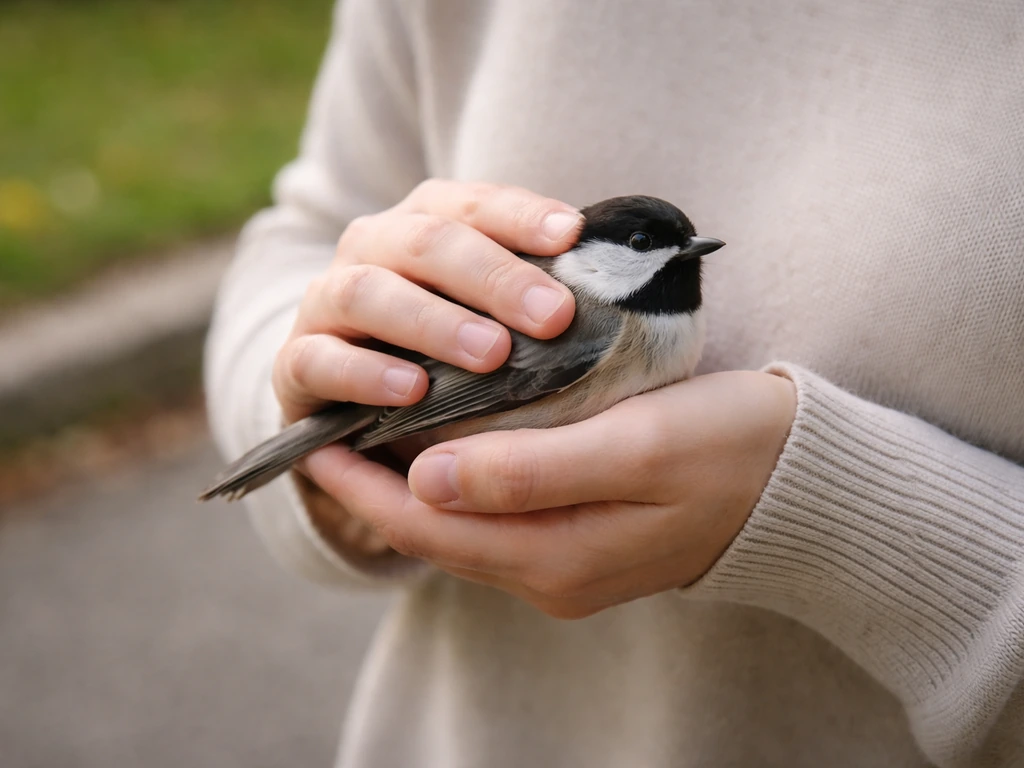
The safest way to catch a bird with a towel is to drape or gently toss the towel over the bird to cover it completely, then cup both hands around the bird through the fabric, hold the wings against its body, and lift it smoothly. Never squeeze the chest. That single rule, keeping pressure off the sternum so the bird can breathe, is the difference between a safe capture and a fatal one. Everything else in this guide builds around that core principle.
How to Grab a Bird With a Towel: Humane Steps
Clara Hayes
18 May 2026
Humane, safety-first principles before you touch the bird
Towel capture is a tool of last resort, not a first move. Before you reach for a towel, run through these principles. They apply whether you're dealing with a pet parrot who needs a nail trim or a stunned sparrow on your back porch.
- Never compress the chest. Birds breathe by expanding their ribcage, and even moderate squeezing can suffocate them within seconds. The towel wraps the wings, not the body.
- Minimize restraint time. Every second a bird is held against its will is physiological stress. Have your container ready before you start, so capture-to-containment takes under a minute.
- Move slowly and speak quietly. Sudden movement and loud noise spike a bird's heart rate. A calm voice and slow, deliberate approach reduce fear dramatically.
- Keep the head covered. Covering the bird's eyes with part of the towel reduces visual stimulation and calms many birds almost immediately.
- Wash your hands before and after. This protects the bird from your skin oils and protects you from zoonotic bacteria.
- Know when to stop. If a bird is flailing, screaming, or showing signs of severe distress (open-mouth breathing, going limp), release it immediately and reassess your approach.
The goal is always the least handling necessary to accomplish whatever safety purpose you have, whether that's a vet visit, an emergency rescue, or moving a bird out of danger. More time in your hands equals more stress, and stress alone can kill small birds.
When towel catching actually makes sense (and when to skip it)
Towel catching is appropriate in a fairly specific set of situations. Knowing the boundaries keeps you from making a bad situation worse.
Good situations for towel capture
- A pet bird that won't step up and needs to be moved for a vet visit, cage cleaning, or emergency
- A pet bird that bites hard enough that bare-hand capture risks injury to you or the bird
- A wild bird that is grounded, clearly unable to fly, and needs to be moved into a box for transport to a rehabilitator
- A stunned bird (for example, after a window strike) that is sitting still and needs containment
- An oiled or otherwise compromised bird that cannot escape and needs gentle wrapping for warmth and transport
When NOT to use a towel
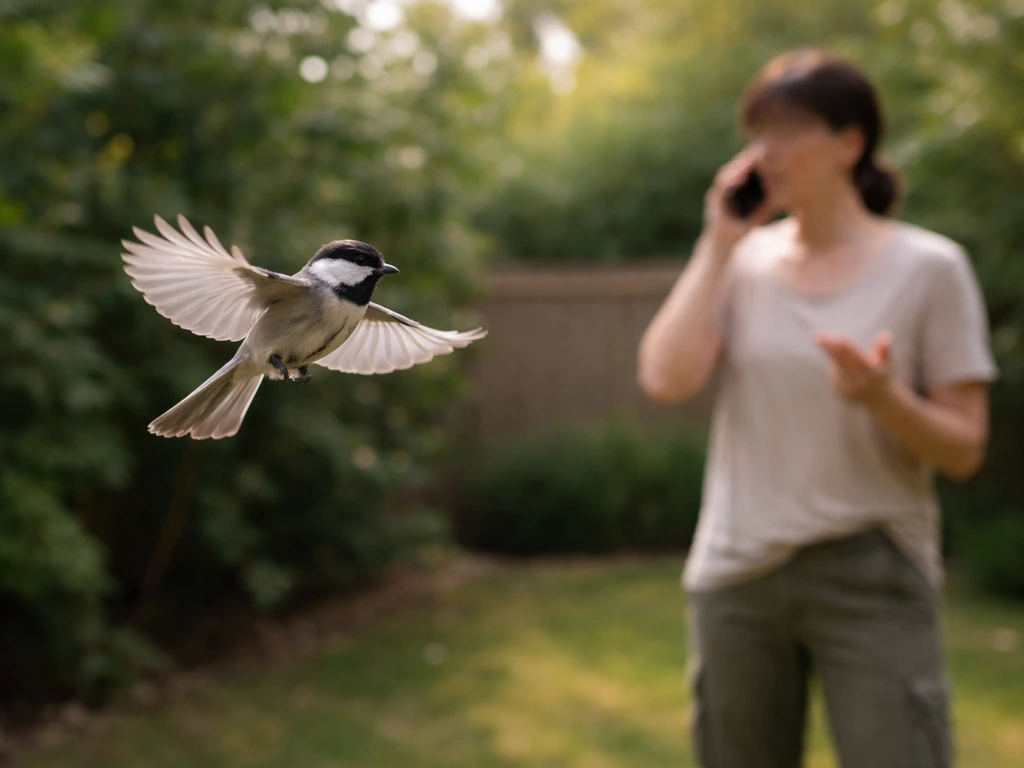
- A wild bird that is still actively flying. Chasing a flying bird and throwing a towel over it can worsen injuries and cause severe additional trauma. Do not do this.
- Any situation where you suspect a broken wing or leg and the bird is mobile enough to struggle violently. Let a licensed wildlife rehabilitator handle it.
- When the bird is showing signs of serious respiratory distress (panting, open-mouth breathing for more than a few minutes). Restraint adds stress that can be fatal.
- When you simply want to handle a pet bird for fun or socialization. Towel capture erodes trust. Training a step-up or using positive reinforcement is always preferable for routine handling.
If the bird can fly, your first call should be to a licensed wildlife rehabilitator, not a towel. If you need to pick up a bird and it can fly, treat it as an emergency and contact a licensed wildlife rehabilitator first can you pick up a bird. The USFWS and organizations like All About Birds maintain directories to find one near you. For birds that are grounded and can't escape, towel capture done correctly is genuinely humane and often the kindest option available. If you need the steps in a safer, more targeted way, see this guide on how to grab a bird.
Step 1: Prepare the space, choose your towel, and get set up right
Good preparation is what separates a clean 30-second capture from a 20-minute panic. Do all of this before you approach the bird.
Choose the right towel size
Towel size matters more than most people realize. Too small and you can't wrap the wings securely. Too large and you lose control of where the pressure is going. Here's a practical sizing guide:
| Bird size / species examples | Towel to use |
|---|---|
| Small birds: budgies, finches, small wild songbirds | Thin tea towel or face cloth (flannel) |
| Medium birds: cockatiels, conures, pigeons, African grey parrots | Standard hand towel |
| Large birds: cockatoos, Amazon parrots, large wild birds like gulls or crows | Full bath towel |
| Extra-large birds: macaws, large waterfowl, raptors (professionals only) | Large bath towel or light blanket |
Prepare the space
- Close all windows, doors, and ceiling fans in the room. A panicking bird that gets loose is much harder to catch and can injure itself.
- Remove other pets. Dogs, cats, and even other birds add stress and danger.
- Have your containment ready. A cardboard box with air holes punched in the lid, or a transport carrier with a towel lining the bottom, should be sitting open and accessible right next to where you'll be working.
- Dim the lights slightly if possible. Lower light reduces visual stimulation and tends to slow birds down.
- Put the towel somewhere you can grab it in one motion. You don't want to be fumbling while the bird is watching you.
Approach the bird
Walk toward the bird in a slow arc rather than a straight beeline. A straight-line approach mimics predator behavior and triggers flight responses. If your bird is biting, use the same slow, non-threatening approach and control the head safely so the bite risk stays low a straight-line approach mimics predator behavior and triggers flight responses. Keep your body low and your movements fluid. Talk in a low, calm voice the entire time, something like 'good bird, it's okay, we're alright.' It sounds silly, but it genuinely works. Position yourself so the bird is between you and a wall or corner, limiting its escape routes without trapping it in a way that makes it panic. For pet birds you know well, saying their name softly can help. If you are dealing specifically with Nettie's bird, you can tailor the same towel-first, pressure-minimizing approach to their size and behavior.
Position the towel before you move
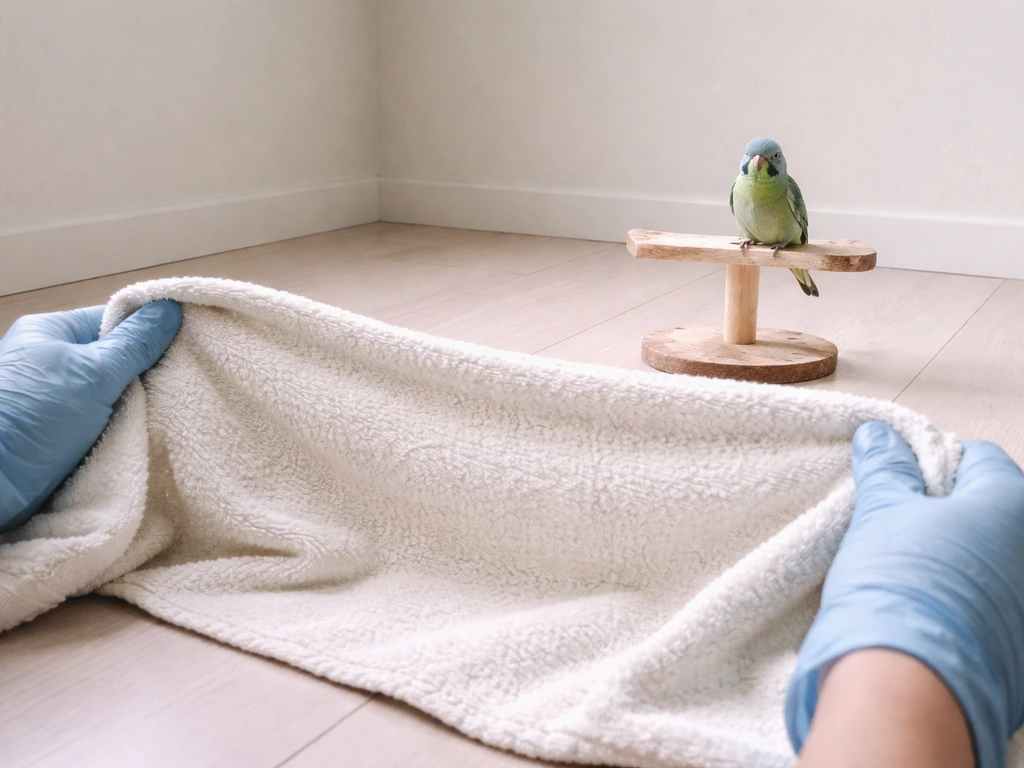
Hold the towel open in both hands in front of you, spread wide enough to cover the bird fully. Do not ball it up or hold it in one hand behind your back. The bird should see the towel coming in a controlled, predictable way, not as a sudden lunge. For birds on a flat surface, keep the towel low and horizontal. For birds on a perch, hold the towel slightly above the bird's level so you can drop it down over the back.
Step 2: The towel grab technique (with size and species adaptations)
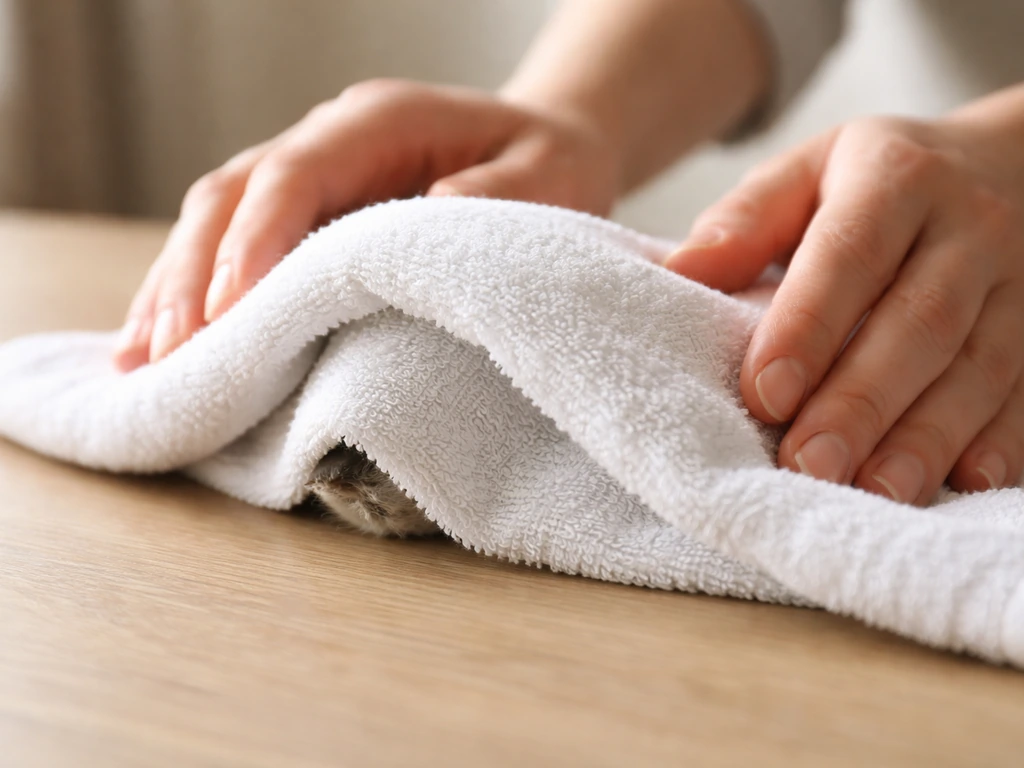
Here is the actual capture sequence. Go through it in your head once before you move.
- In one smooth, confident motion, place or drop the towel over the bird so it covers the entire body and head. Hesitation is worse than speed here. A slow, tentative drop gives the bird time to dodge. Commit to the move.
- The moment the towel lands, cup both hands over the bird through the fabric. Your palms are pressing gently inward on the sides of the bird's body, just below the wings. You are NOT squeezing the chest or stomach.
- Feel for the wings through the towel and make sure they are folded against the body. You want the bird in its natural resting wing position, not spread out or twisted.
- Lift the bird in the towel with both hands, keeping it level. Support the feet from underneath if the bird is larger than a cockatiel.
- Keep the head covered. Leave the part of the towel over the face as-is. Darkness and the muffled environment help calm the bird quickly.
- Move directly to the prepared container. Lower the bird in, towel and all, then gently withdraw your hands while keeping the towel in place for a moment. Close the lid or door.
Adaptations by species and size
Small birds like budgies, finches, and small wild songbirds need the lightest possible touch. Use just enough fabric to feel where the bird is, and use fingertips rather than full hand pressure. The entire bird fits in one cupped hand for most of these species. The biggest risk with small birds is accidental squeezing, so focus entirely on keeping your grip loose.
Cockatiels and similar medium birds often struggle more than you'd expect. They're fast and can twist quickly. After the towel lands, use your dominant hand to secure the head area through the fabric (a gentle C-shape with thumb and forefinger on either side of the neck, not compressing the throat) while the other hand controls the body. This prevents bites and helps you keep orientation.
Large parrots like African greys, Amazons, and cockatoos have powerful beaks and strong feet. Use a full hand towel or bath towel. The head-securing technique is especially important here because a large parrot bite can break skin. Once wrapped, one hand holds the neck/head area through the towel and the other supports the body from below. Keep your forearm parallel to the ground so the bird has a stable surface to rest its feet on inside the towel.
Macaws require a bath towel and ideally two people: one to control the head and one to secure the body and feet. If you're alone with a large macaw and genuinely need to towel catch it, prioritize the head first. A macaw beak can cause serious injury if the bird gets its head free while you're adjusting your grip.
Wild birds on the ground, including pigeons, sparrows, or starlings, often go very still once covered. This is not death, it's a stress response called tonic immobility. Use it to your advantage: once the towel is over the bird, slow down and work calmly. The stillness usually lasts long enough to get the bird safely into a box.
Troubleshooting: when the first attempt doesn't work
- Bird dodged the towel: Stop, step back, give the bird 5 minutes to settle, then try again. Don't immediately re-attempt, as a panicking bird gets harder to catch each time.
- Bird is flapping hard under the towel: You may have missed the wing position. Re-adjust your hands through the fabric to feel for the folded wings before lifting.
- You can feel the bird but can't tell which end is which: Gently feel for the feet (they're knobby and point downward) and orient from there.
- Bird is screaming and thrashing continuously: Release, step away, and reassess. Repeated failed attempts cause serious stress. If you're dealing with a pet bird, consider whether the capture is truly necessary right now.
- Small bird went completely limp: This is most likely tonic immobility, not injury. Keep it covered, move slowly, and get it into a container. Reassess once it's contained and quiet.
After the grab: calming the bird and getting it contained
The moment the bird is in your hands is not the end of the stressful part, it's the middle of it. What you do in the next 60 seconds matters a lot.
Immediate calming
blank" rel="noopener noreferrer">Keep the head covered and hold the bird against your body at a slight angle, not fully upright and not upside down. A roughly 30-degree tilt with the head slightly higher than the tail is comfortable and doesn't compromise breathing. Speak quietly and continuously. Your heartbeat through your chest can actually be calming for some birds. Give it 15 to 20 seconds of stillness before you start moving toward the container.
Placing the bird in a container
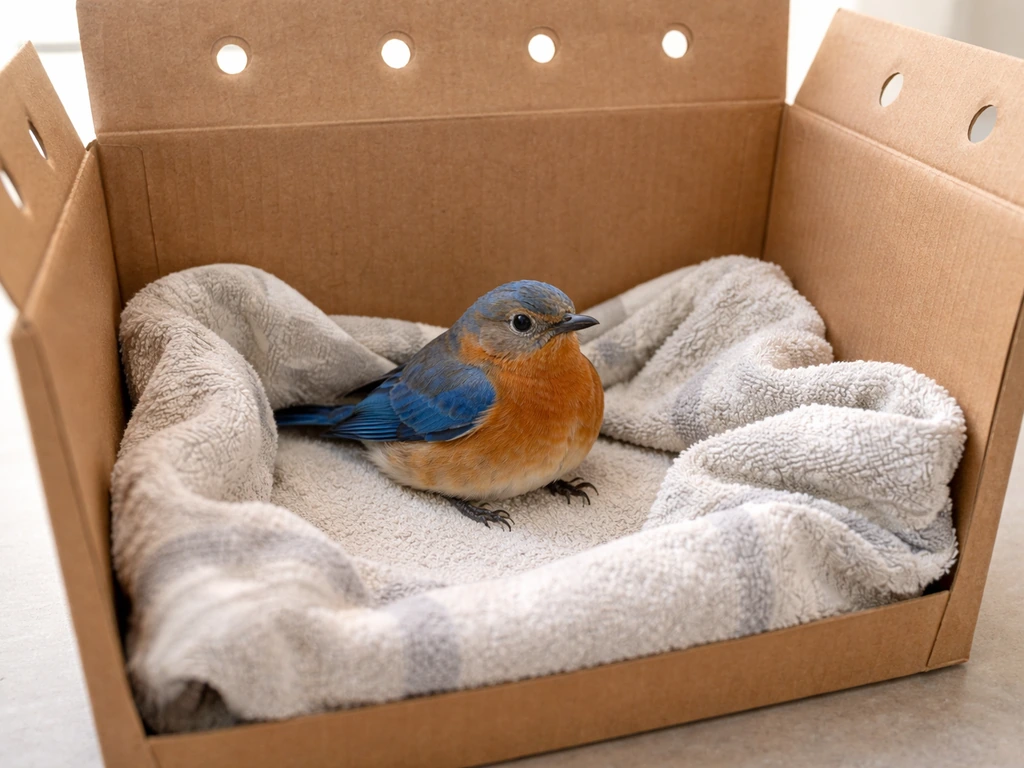
Lower the bird into the prepared box or carrier, still wrapped in the towel. Once it's on the floor of the container, gently loosen the towel from around the body without fully removing it from the space. Let the bird stand up under the towel if it wants to. Then slowly withdraw the towel. Close the container before fully removing the towel, or the bird may try to flee the moment it sees daylight.
Containment and transport basics
- Line the box with a non-slip surface: a folded towel works perfectly.
- For injured wild birds, place a sealed hot water bottle wrapped in a cloth under one side of the box floor for warmth, but leave the other side uncovered so the bird can move away from the heat if needed.
- Keep the container in a warm, quiet, dark place. No radio, no TV, no other pets nearby.
- Do not offer food or water unless you're certain about the species and have been given specific guidance. Incorrect feeding can cause serious harm.
- For pet birds going to a vet: use a secure travel carrier with a perch. The dark box approach is for short-term stabilization of wild birds.
- Keep handling to an absolute minimum from this point on. Check on the bird visually but don't open the container repeatedly.
Signs the bird is stabilizing
A bird that is calming down will stop flapping, pull its feathers slightly (a mild fluff), and stop calling out. It may close its eyes briefly. This is a good sign. A bird that continues to pant with an open beak, sits with its head drooping, or shows labored breathing needs professional help as soon as possible.
Legal and ethical considerations, plus alternatives to towel catching
Wild birds and the law
In the United States, the Migratory Bird Treaty Act makes it illegal to pursue, hunt, take, capture, kill, or possess most wild bird species without a federal permit. This covers the vast majority of birds you're likely to encounter in your yard, from sparrows and robins to hawks and herons. The act applies regardless of your intentions. The practical exception is brief, immediate handling for the sole purpose of transporting an injured bird to a licensed wildlife rehabilitator. Even under that exception, you should not hold the bird longer than necessary and should not attempt treatment yourself. Similar protections exist in Canada, the UK, Australia, and New Zealand.
USFWS directs the public to find a licensed wildlife rehabilitator rather than self-treating wild birds. If you find an injured wild bird, the right sequence is: contain it safely (towel and box, as described above), then immediately contact a rehabilitator or your state wildlife agency. A directory can help you locate local support, which is a big part of how to pick up a small bird safely. The USFWS, All About Birds, and the National Wildlife Rehabilitators Association all maintain searchable directories.
Ethical considerations for pet birds
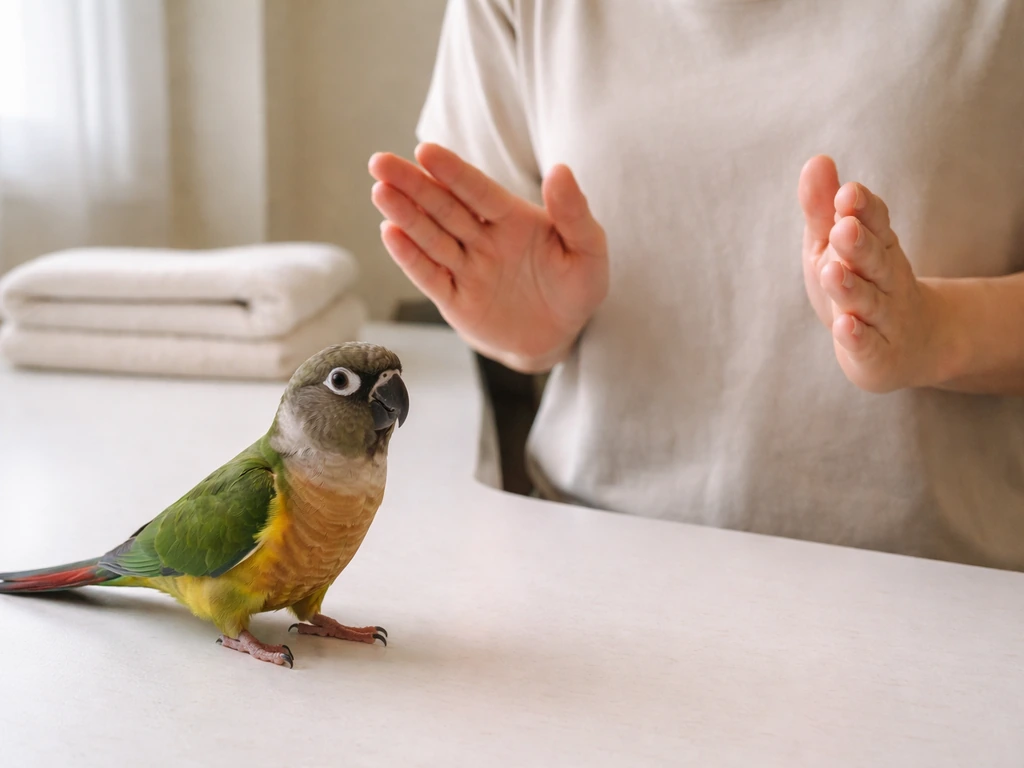
Towel capture of pet birds is not harmful when done correctly, but it does affect trust. Birds remember stressful events and may become more hand-shy afterward. If you towel catch your bird regularly for routine handling, that's a signal to invest in step-up training and positive reinforcement instead. Parrots, cockatiels, and even budgies can learn to step onto a hand reliably with patient, consistent training, making towel capture something you only need in genuine emergencies.
Alternatives to consider first
- Step-up training: For pet birds, training a reliable step-up command with positive reinforcement eliminates most scenarios where towel capture would be needed.
- Darkening the room: Turning off the lights often causes birds to stay still, making bare-hand capture possible without a towel.
- Waiting and letting the bird come to you: For pet birds loose in the house, placing their favorite food near the cage and waiting is often more effective and less stressful than any active capture method.
- Corral rather than grab: For mobile birds on the ground (both pet and wild), using a large box or laundry basket lowered slowly over the bird is often gentler than a towel toss and requires no hand-to-bird contact at all.
- Professional help: For injured wild birds that are still mobile, a licensed wildlife rehabilitator has the training, legal authority, and equipment to capture them without the additional trauma that amateur towel-chasing causes.
The towel technique covered in this guide is a genuinely useful skill, and knowing how to do it correctly makes you better equipped to help birds in real emergencies. But the best outcome is always one where the bird ends up safe, minimally stressed, and either back in appropriate hands (for wild birds) or calmly returned to its normal environment (for pets). Keep the towel ready, keep your movements slow, and let the situation guide how much you actually need to use it.
FAQ
Should I cover the bird first or grab its body immediately?
Yes, for a towel grab to work safely the bird must be fully and gently covered before you cup and lift. If the towel touches only part of the body, the bird often scrambles and can get hurt during re-covering. Aim to drape or toss so the wings are brought in against the body and the chest is not compressed.
How do I know I’m not squeezing too hard during the towel hold?
Avoid it. A towel should never become tight enough to restrict breathing or to create visible bulges around the chest and sternum. If you see the bird puff and clamp down, or if breathing looks labored, you are likely applying too much fabric pressure, so stop and seek professional help, especially for wild birds.
What should I do if the bird slips out of the towel before I can lift it?
If the towel capture is failing, stop trying to “chase and re-toss” repeatedly. Repeated attempts increase panic and hand risk. Instead, slow down, back up a step or two to reduce predator-like pressure, and prepare a carrier so the next attempt has a clear, immediate container destination.
Can I use any towel, and does cleanliness matter?
Use a clean, dry towel with no strong odor or residue (no detergent scent, no oils, no sprays). For pets, a towel you already associate with calm handling is less stressful. For wild birds, use the same basic approach but prioritize hygiene and keep your contact time minimal.
Is it okay to ball the towel up to make it easier to grab?
No. Balling the towel makes it harder to keep pressure off the sternum and increases pinching points around the neck and wing joints. Keep it spread so it drapes smoothly, then cup through the fabric to stabilize the bird.
How should towel position change when the bird is on a branch versus the floor?
For birds on perches, you can reduce panic by positioning the bird between you and a corner, then holding the towel slightly above the bird so it can see it coming and you can drop it down over the back in one controlled motion. For birds on the ground, keep the towel low and horizontal to prevent sudden upward lurching.
What if the bird is still able to fly away but I need to move it quickly?
If you are dealing with a bird that can fly, treat towel capture as an exception and prioritize contacting a licensed wildlife rehabilitator. If you must contain briefly for immediate transport safety, do it for the shortest time needed to get it into a box, and avoid attempts to treat injuries yourself.
Do I need a special carrier ready before I attempt the towel grab?
Prepare a ventilated carrier or box first, ideally with padding at the bottom and a secure lid. The towel should be the capture tool, not the container. Once the bird is down, loosen the towel just enough to allow standing, then close the container promptly so it does not bolt as light changes.
What signs tell me the bird is too stressed or injured to keep handling?
If the bird continues to pant, keeps an open-beak breathing posture, droops its head, or shows labored breathing after you get it contained, that is not “just stress.” Contact a professional wildlife rehabber or an avian vet immediately, and keep the bird in a dark, quiet place while you wait.
Is there a best body angle to hold the bird once it’s in the towel?
Holding the bird against your body at a slight angle helps stability, but avoid upside-down positions and avoid fully upright holds that can increase strain. A small tilt with the head slightly higher than the tail is typically more comfortable and does not compromise breathing when done gently.
Can I open the container while I’m still loosening the towel?
Don’t. Even if a bird is calm in a towel, leaving it exposed or leaving the container open invites sudden flight attempts and can lead to injury from impacts. Keep the container closed once the bird is inside, and withdraw the towel only while the bird remains contained.
How should I respond after a towel capture to avoid making my pet bird more afraid?
Afterward, minimize additional grabbing and let the bird rest in the usual enclosure or a safe box environment. For pets that were hand-shy, use short, positive reinforcement sessions to rebuild trust (reward calm behavior, not towel contact), and save towel capture for true emergencies only.
If I towel-catch my pet often, what should I change long-term?
For routine situations, use step-up or target training rather than repeatedly relying on towel capture. Towel catching becomes more likely to fail when the bird anticipates it, so having an established consent-based handling routine reduces the need for towel use later.
What if I’m not sure whether the bird is legally a protected species in my area?
No. Many wild birds are protected by law, and the permitted “exception” is brief emergency containment for transport to a licensed rehabilitator. If you’re not sure whether you qualify for the exception, stop treating it as a DIY rescue and contact your state wildlife agency or a rehabilitator for next steps.
Next Article
How to Pick Up a Bird Without Hurting It Safely
Humane step-by-step guide to pick up birds safely, with grip tips, what not to do, and calm alternatives.