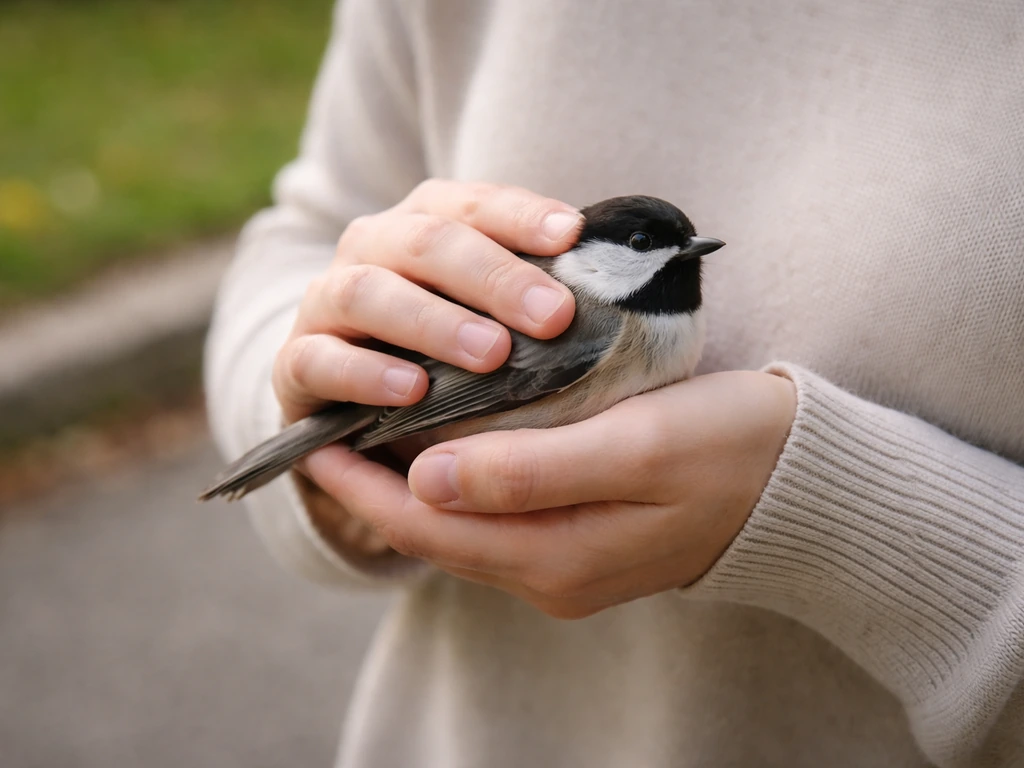
To pick up a bird without hurting it, cup both hands loosely around its body with your fingers gently pinning the wings against its sides, never squeezing the chest. The single most important rule is this: birds breathe by expanding their ribcage outward, so any pressure around the chest can suffocate them within seconds. Keep your grip firm enough to prevent struggling, but loose enough that you can feel the ribcage move with each breath.
How to Pick Up a Bird Without Hurting It Safely
Clara Hayes
15 May 2026
Whether you're dealing with a pet cockatiel that's landed somewhere awkward, a budgie that needs a vet check, or a wild bird you found on the ground, the core principles are the same: stay calm, move slowly, support the body, and protect the chest. The steps below cover every scenario, including when picking up is actually the wrong move.
Before you touch: assess the bird and the situation
Take thirty seconds to look before you reach. A bird that is standing upright, alert, and watching you warily is in a very different situation from one that is slumped, panting, or unable to move. That thirty-second assessment can completely change what you should do next.
Signs the bird is in serious trouble
- Fast, visible panting or labored breathing lasting more than two hours (RSPCA flags extended panting as a strong sign of serious illness)
- Open wounds, bleeding, or a visibly broken or drooping wing or leg
- Head tilting to one side, circling, or loss of balance
- Cat bites or puncture wounds anywhere on the body (these cause deep internal damage that isn't visible)
- Maggots, large bubbles under the skin, or obvious deformity
- Swellings, crusty growths on the face, legs, or feet
- Complete inability to stand or hold its head up
If you see any of these, you're not just picking up a bird. You're dealing with a medical situation. Wild birds are wired to hide pain when people are nearby, so if a wild bird is letting you walk right up to it, that alone is a red flag. Don't assume it's fine because it looks 'mostly okay.'
When to call for help instead of handling
For wild birds in the US, contact a licensed wildlife rehabilitator before handling if the bird has bleeding, an obvious broken bone, or open wounds. The US Fish and Wildlife Service is clear on this: self-rehabilitation without a permit is illegal for most migratory species, and attempting home treatment usually makes things worse.
Find your nearest rehabilitator through your state wildlife agency or the National Wildlife Rehabilitators Association. In the UK, contact the RSPCA wildlife line. If the bird looks stunned rather than injured, such as after a window strike, the RSPCA advises watching quietly from a distance for up to two hours before intervening. Many birds recover on their own.
If you are unsure whether you should proceed, revisit can you pick up a bird versus calling for help first so you don't make a minor issue worse.
For pet birds, call your avian vet if the bird is showing any of the signs above, has stopped eating, or seems unusually weak. A sick bird that is hard to catch may be sicker than you think. Don't chase it around the room to catch it first.
Set up the space before you approach
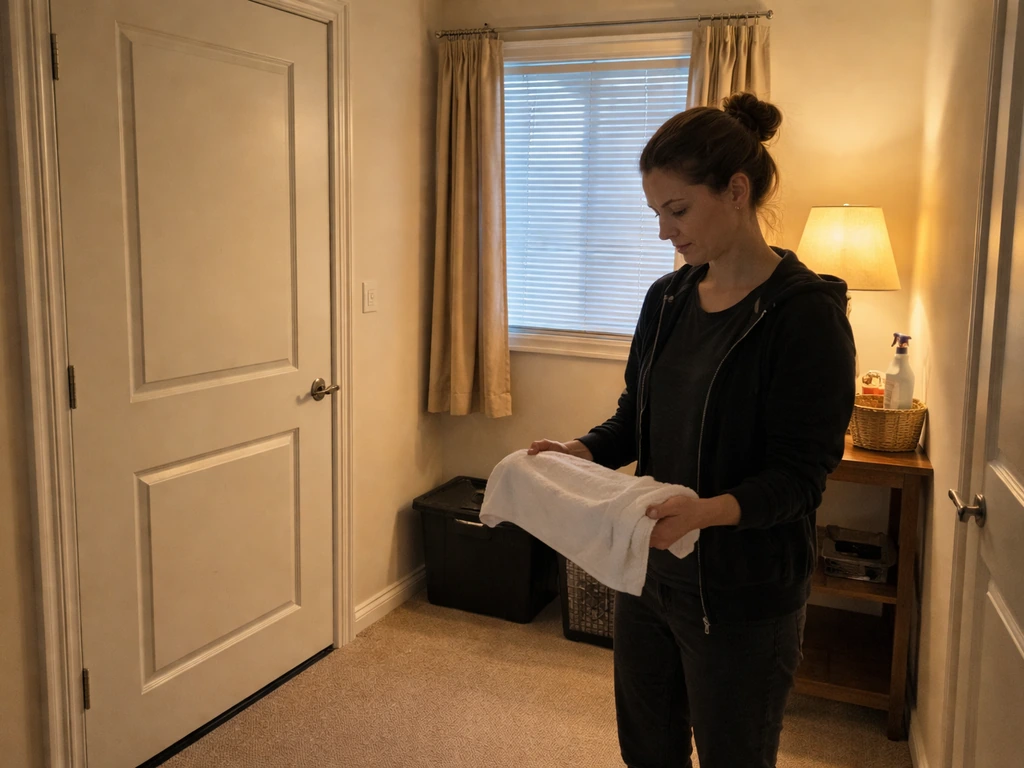
Good handling starts before your hands get anywhere near the bird. Setting up the environment correctly makes the whole process safer and calmer for both of you.
- Close all windows, doors, ceiling fans, and any gaps the bird could escape through or injure itself on
- Dim the lights slightly — bright overhead lighting increases stress and makes birds more reactive
- Remove other pets from the room entirely
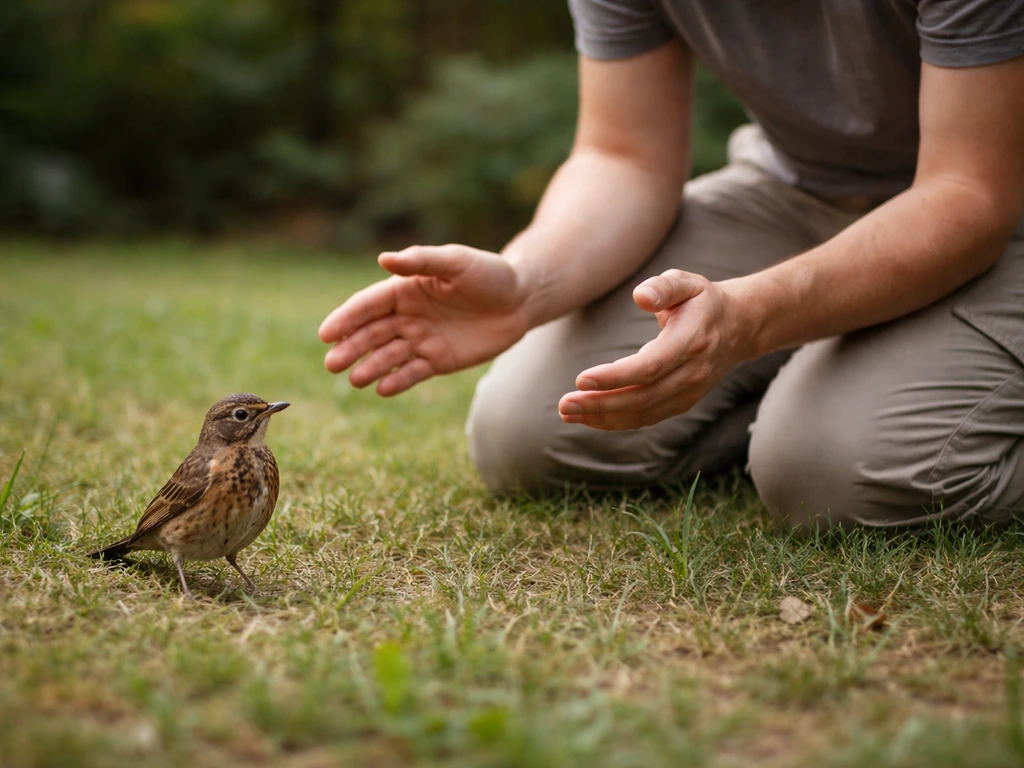
- Lower yourself to the bird's level by kneeling or sitting rather than looming from above
- Move slowly and avoid sudden arm movements or loud sounds
- Have your transport box, towel, or perch ready before you start — fumbling for equipment while holding a bird is how accidents happen
- If you're using a towel, have it already open in your hands so you don't have to shake it out near the bird
Approach from the side rather than head-on. Coming straight at a bird from above mimics a predator diving. A slow, angled approach at eye level is far less threatening. Talk quietly and continuously in a low, calm tone, not to communicate information, but because your voice signals your emotional state.
How to pick up a bird without hurting it: step by step
These steps work for most pet birds and for injured wild birds small enough to hold in two hands. For larger birds like raptors or large parrots, read the species section below before attempting this.
- Position yourself: Kneel or sit so you're at the bird's level. If the bird is on the ground, crouch beside it. If it's on a perch or table, position yourself so your dominant hand can come in from the side.
- Cup, don't grab: Bring both hands in from opposite sides simultaneously, cupping them loosely around the bird's body. This is a cup, not a clamp. Your palms press gently against the wings to stop flapping, not to crush the body.
- Pin the wings: Your fingers should lightly wrap around the bird so the wings are held against its sides. Think of it as giving a gentle, full-body hug rather than squeezing a tube of toothpaste.
- Support from below: Make sure at least one hand is supporting the bird's weight from underneath. A bird dangling in mid-air with no foot support will panic and thrash far harder.
- Check your chest pressure: You should be able to feel the bird's ribcage rising and falling with each breath. If you cannot feel movement, loosen your grip immediately.
- Move smoothly and decisively: Once you have a secure hold, move the bird to where it needs to go in one smooth motion. Hesitating mid-air while adjusting your grip gives the bird more opportunity to struggle free.
- Release or transfer: Lower the bird onto the perch, into the box, or onto your finger before letting go — don't drop or toss it.
If the bird thrashes hard, resist the instinct to squeeze tighter. Instead, hold steady, stay calm, and wait for a pause in the struggling before repositioning. Most birds settle within 15 to 30 seconds if your grip is already safe and you're not reacting to the thrashing with panic.
Using a towel for pickup
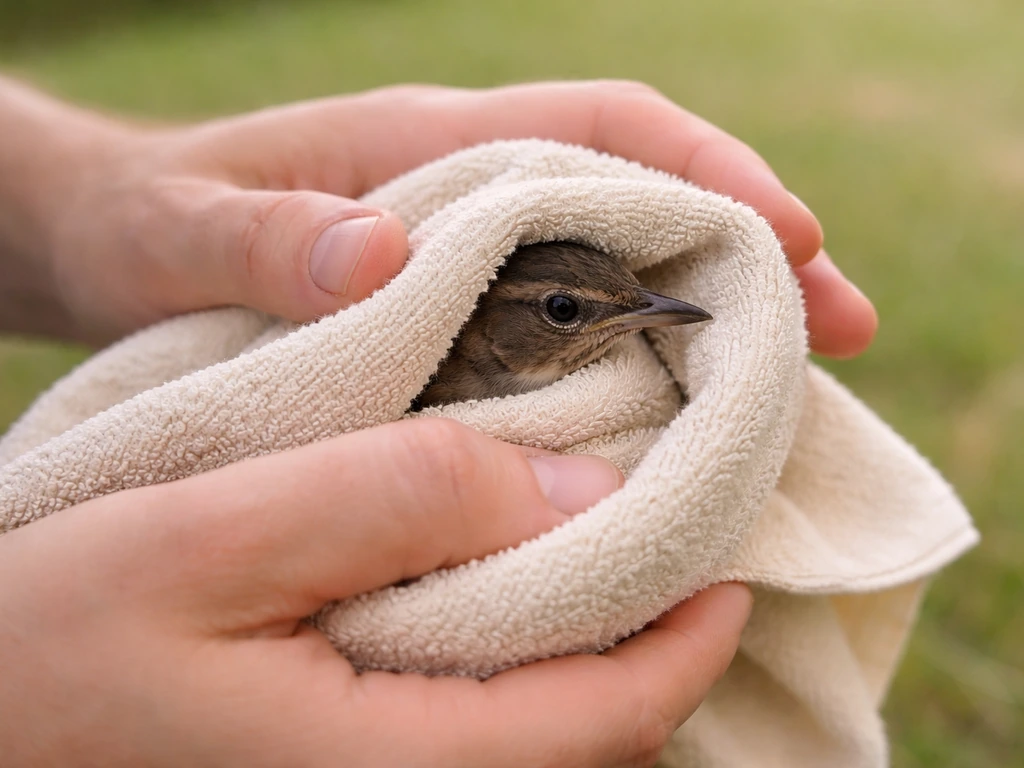
A towel is useful when a bird is likely to bite, is unfamiliar with handling, or is a wild bird. If the bird is biting, use a towel or other barrier to reduce direct contact and stay safer while you handle it correctly bird that is likely to bite. The towel reduces direct contact with your skin (which triggers less biting response in some birds) and gives you more control.
Match the towel size to the bird: a thin tea towel or flannel for small birds like budgies and cockatiels, a hand towel for medium birds like African greys or cockatoos, and a large bath towel for macaws or large raptors. Drape the towel over the bird first, then use the same cupping technique through the fabric.
Make sure the bird's head and face are not smothered, the towel goes over the back and wings, and the bird's beak should be clear of the fabric.
Species-specific pickup techniques
The same basic cup-and-support technique applies to all birds, but the size, temperament, and anatomy of different species change how you apply it in practice.
| Species | Grip style | Key caution | Towel needed? |
|---|---|---|---|
| Budgie | One hand, two or three fingers loosely around the body, thumb under the chest | Extremely small — even gentle pressure can injure; use minimal contact | Optional, but helpful for untamed birds |
| Cockatiel | Two-handed cup, or confident one-handed wrap with fingers supporting from below | Watch the crest — a fully raised crest signals high stress; pause and reassess | Useful for new or stressed birds |
| Small parrot (conure, lovebird) | Two-handed cup with wing control; gloves optional for biters | Beaks are strong for their size; protect fingers but don't over-restrict | Often helpful |
| Large parrot (African grey, cockatoo, macaw) | Full two-handed wrap, towel almost always recommended | Bites can break skin and bone; never handle an agitated large parrot bare-handed without training | Strongly recommended |
| Finch / canary | Extremely light one-hand cup — barely more than a loose enclosure | These birds are the most fragile; a firm grip can be fatal. Hold for the shortest time possible | Rarely needed; can increase panic |
| Wild songbird (stunned/injured) | Two-handed cup from above, wings pinned gently, place immediately into box | Do not hold longer than needed; get it into a quiet dark container fast | Recommended for unfamiliar birds |
Picking up small birds like finches and canaries
Finches and canaries are among the most delicate birds you will ever handle. Their bones are tiny and their stress response is intense. Use one hand, curling your fingers into the loosest possible cup around the body. Your grip should feel almost inadequate, that's about right. Support the chest from below with two fingers and keep the pickup as brief as you possibly can. If you need to handle a finch regularly, building trust through target training and perch training first will save both of you a lot of stress.
Picking up larger parrots
A cockatoo or macaw that doesn't want to be held can cause serious injury. If the bird is agitated, body language will tell you clearly: raised feathers, a wide stance, pinned eyes, and a lunging posture all mean 'do not pick me up right now.' Step back, let the bird calm down, and try a perch or towel approach instead. When you do pick up a large parrot, a hand towel or bath towel gives you control without bare-skin contact. Hold the upper body firmly enough to prevent wing extension, support the feet, and move smoothly.
What not to do: common mistakes that cause real harm
Most bird injuries during handling are caused by a small set of very predictable mistakes. Knowing these in advance is half the battle.
- Squeezing the chest or abdomen: Birds have no diaphragm and rely entirely on outward ribcage movement to breathe. Even a few seconds of chest compression can cause suffocation.
- Grabbing by the wings or legs alone: This is one of the fastest ways to cause fractures. Grabbing a parrot by the leg or wing while it panics can result in multiple breaks from a single struggle.
- Chasing the bird around the room: Chasing exhausts and terrifies the bird, increases injury risk from collisions, and makes it harder to catch. Set up the space so the bird runs out of safe places to go, then approach calmly.
- Grabbing too fast or from above: A fast grab from overhead mimics a predator strike and triggers violent escape behavior. Slow and deliberate wins every time.
- Holding for longer than necessary: The longer you hold a bird, especially a wild or stressed one, the higher the cortisol load. Get the job done and release as soon as it's safe.
- Putting pressure on the neck or obstructing the windpipe: Any restraint around the throat area can block the airway. Keep your grip on the body, not the neck.
- Using a towel incorrectly: A towel draped over a bird's face blocks vision and breathing. Always keep the head clear.
- Handling when you're unsure the bird is stable: If a bird looks injured or very sick, handling it without a plan can make things much worse. Assess first.
Alternatives to picking up: let the bird come to you
Picking up a bird by force is always a last resort. For alternatives and lower-stress options, see how to let the bird come to you instead of grabbing it. In most pet bird situations, you can get the bird where it needs to go without any direct grab at all. These methods are lower stress for the bird and much safer.
The step-up cue
For trained pet birds, a practiced step-up cue means you extend your finger or hand just below the bird's chest level and say 'step up.' The bird steps onto your hand voluntarily. This is by far the best way to move a pet bird and is worth investing time to teach. Even a budgie or cockatiel that doesn't know the cue yet can often be guided onto a finger by gently pressing the finger against the lower chest just above the feet, which triggers a natural stepping reflex.
Perch, cage door, and target training
If your bird is somewhere awkward, try bringing a familiar perch to it rather than grabbing the bird and moving it to the perch. Many birds will step onto a known perch willingly. If grabbing a bird is proving difficult, start with a let-the-bird-come-to-you approach like the step-up cue instead. Similarly, opening the cage door and placing a treat just inside can coax a loose bird back in without any physical handling at all. Target training, where the bird touches its beak to a stick and follows it, is one of the most practical skills you can teach a pet bird and makes nearly every handling situation easier.
Using a transport box for wild birds
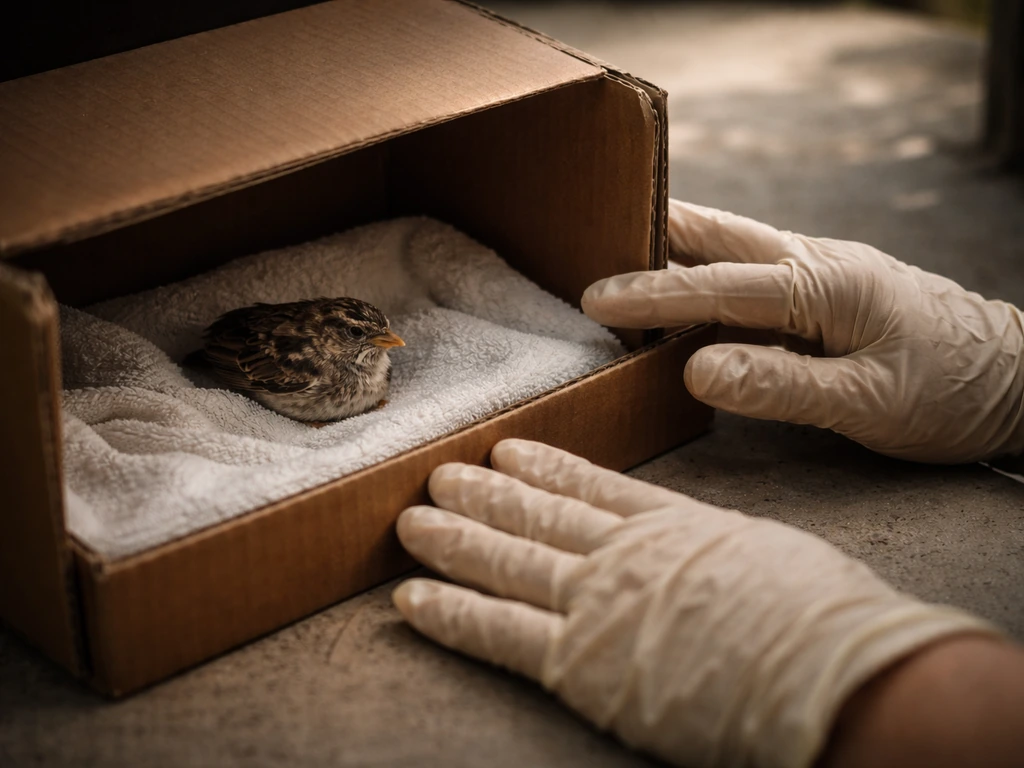
For an injured wild bird that you need to contain safely, prepare a cardboard box with air holes punched in the sides, lined with a soft towel, before you approach. Place the open box near the bird and, if possible, guide the bird into it using slow hand movements rather than picking it up directly. Once the bird is inside, close the lid immediately. A dark, enclosed, quiet space calms most birds quickly and reduces the risk of further injury during transport.
The towel-and-drop method for small wild birds
If a wild bird needs to be moved but is still mobile, drape a light cloth gently over it to reduce visual stimulation, scoop it up with both hands through the cloth, lower it into the prepared box, and let go of the cloth inside the box so it stays as a lining. This avoids any prolonged bare-hand contact and gets the bird contained quickly.
After the pickup: what to do next
Immediately after handling
Once the bird is where it needs to be, back off and give it space. Reduce noise, dim the light if possible, and resist the urge to keep checking on it every two minutes. A bird that has just been handled needs quiet. For pet birds being returned to their cage, offer a familiar treat and let them settle without further interaction for at least thirty minutes.
Check for injuries
Once the bird is calm and contained, do a basic visual check. Look for any new bleeding, swelling, or signs of distress like open-mouth breathing or an inability to perch. If you notice bleeding, Greenwood Wildlife Rehabilitation Center recommends contacting a wildlife rehabilitator based on what you observe. For wild birds, check for the red-flag signs listed at the top of this article. If you see anything concerning, your next call is to an avian vet or wildlife rehabilitator, not a wait-and-see approach.
Interim care for injured wild birds
If you're waiting to reach a rehabilitator, keep the bird in a well-ventilated box on a soft lining (an old towel works well), in a warm, dark, quiet room. Do not offer food or water unless a rehabilitator specifically tells you to, the wrong diet or forced feeding can cause serious harm. Do not handle it again until you hand it over. Contact your nearest wildlife rehabilitator or, in the US, your state wildlife agency. In the UK, call the RSPCA wildlife line. Many states make it illegal to keep a wild bird without a permit, so getting it to a licensed rehabilitator quickly is both the ethical and the legal choice.
Building toward easier handling in the future
If you have a pet bird that is difficult to pick up, that's a training and trust issue that can genuinely be fixed over time. Start with short, positive interactions near the cage without any handling at all. Progress to offering treats from your hand. Then introduce the step-up cue with food reward.
Regular, brief handling sessions (even thirty seconds at a time) that always end on a calm note build tolerance for restraint gradually. The RSPCA recommends specific restraint training for pet birds so they can cope with handling for vet checks without extreme stress. That training is worth every minute you put into it, both for routine care and for emergencies.
If you are also searching for how to poke nettie's bird, follow the same principle of using restraint and training methods carefully rather than rough handling so you avoid stressing the bird.
The goal isn't a bird that tolerates being grabbed. It's a bird that is calm enough when handled that you can check it over, move it safely, or get it to a vet without either of you getting hurt in the process. That kind of trust takes time but it's entirely achievable with patience and consistent, gentle practice.
FAQ
What should I do if the bird’s wings are stuck out or it’s trying to fly away while I’m picking it up?
Keep the chest unpressed and prevent uncontrolled wing extension by supporting the upper body and holding the wings gently against the sides (not pinned tight). Move slowly, pause if it thrashes, and only reposition when it relaxes. If it stays highly flighty or panicked, switch to a lower-stress option like a perch step-up or containment in a lined box rather than continuing repeated grabs.
Is it safe to lift a bird by the legs or tail to avoid squeezing the chest?
No. Even when the chest is not compressed, lifting by legs or tail can injure joints, cause fractures, or dislocate feathers and skin, especially in small birds. If you cannot safely cup the body, choose a barrier approach (towel/box) or get help from an avian vet or wildlife rehabilitator.
How can I tell the difference between “stunned” and “injured,” and does it change whether I should pick it up?
Stunned birds often look quiet, sit low, and may recover after a short period, while injured birds commonly show visible bleeding, obvious deformity, open-mouth or persistent breathing trouble, or inability to perch or stand normally. If the bird is wild and looks stunned after an event like a window strike, the safer default is to observe quietly from a distance first, then seek help if it does not improve promptly or if you notice red-flag signs.
Can I put a bird in a box first instead of picking it up by hand?
Yes, and for many situations it is the preferred first step. A ventilated box lined with a soft towel can let you guide the bird in with slow movements, then close the lid quickly. This reduces handling time and prevents repeated grabs, which matters for both stress and injury risk.
What if I need to move a pet bird from one room but it keeps bolting and I’m tempted to chase it?
Avoid chasing, because fatigue and panic can make gripping more dangerous and less effective. Use environmental routing instead, like opening the cage door, placing a familiar perch in the target area, and using treats or a trained step-up cue. If the bird is too distressed to approach, wait and try again more calmly rather than escalating.
How long is too long to keep my hands on the bird once I’ve picked it up?
Minimize total handling time. If you already have a safe grip, aim to complete the task in seconds and then return it to a calm, dark, quiet space or back to its cage per the situation. If it requires multiple attempts to hold securely, stop and switch strategies, because repeated handling is a major stress trigger.
What should I do if the bird bites or scratches me during pickup?
Reduce exposure by using a towel or barrier and keep your grip controlled through the fabric, especially for species that are likely to bite. Do not yank or jerk away, since sudden movement can worsen injury risk for the bird and you. If you are injured, wash the wound promptly and consider medical advice, since bites and scratches can become infected quickly.
Should I offer food or water immediately after picking up a wild bird?
Generally no, unless a wildlife rehabilitator instructs you to. Wrong diet or forced feeding can worsen injuries, and many birds need medical assessment before anything is offered. Keep the bird in a warm, quiet, well-ventilated container while you contact the appropriate professional.
Is there a safe way to pick up a very small bird like a finch or canary if one hand isn’t enough?
Small birds should be handled briefly and with very gentle support. If using two hands is not necessary, a single-hand loose cup is often safer for comfort and speed. When extra support is needed, only support from below with minimal pressure, and avoid wrapping tightly around the chest.
When should I stop trying to pick up the bird and call for help right away?
Stop immediately if you see bleeding, a suspected broken bone or deformity, open wounds, labored or open-mouth breathing, or signs of serious distress (including inability to perch or severe weakness). For pet birds, also stop and call an avian vet if appetite has stopped or weakness is unusual. Continuing to attempt pickup can turn a survivable issue into a fatal one.