If a bird is biting you right now, the single most important thing to do is stay calm and stop moving. Jerking your hand away, yelling, or grabbing harder are the three things that almost always make it worse. Here is exactly what to do next, how to read what the bird is telling you, and how to build a real handling routine so this stops happening.
How to Pick Up a Bird That Bites Safely and Humanely
Clara Hayes
20 Apr 2026
Immediate safety steps and when to stop
The moment you feel a bite, freeze. Do not pull away sharply. A bird biting down harder is usually a direct response to the prey instinct triggered by sudden movement. Instead, gently push your hand slightly toward the bird rather than away. This feels counterintuitive but it causes the bird to release rather than clamp harder. Then slowly and calmly withdraw your hand and give the bird space.
After you disengage, check yourself. Small bites from budgies and finches rarely break skin. Larger parrots, cockatoos, and macaws can cause real puncture wounds. Clean any skin break immediately with soap and water for at least 20 seconds. For minor animal bite or claw wounds that break the skin, Mayo Clinic recommends washing the wound with soap and water wash the wound with soap and water. If you are handling a wild bird, also wash your hands and forearms thoroughly even if no skin was broken, since wild birds can carry bacteria and, depending on your location, there are disease-transmission risks that OSHA flags specifically around minimizing unprotected contact.
Know when to stop entirely. If the bird is escalating, if you are bleeding, or if the bird appears injured, sick, or extremely panicked, put it back in its cage or a safe container and walk away. Forcing the interaction at that point will set your trust-building back significantly. A five-minute break is not a failure; it is the right call.
- Stop and freeze the moment you feel a bite
- Push gently toward the bird rather than pulling away
- Withdraw slowly and calmly after the bird releases
- Clean any puncture or skin break with soap and water immediately
- Walk away and give the bird a rest period if biting escalates
- Never yell, tap the beak, or shake your hand as a correction
Read the bite triggers: body language and root causes
Birds almost never bite without warning. By the time you feel teeth or beak, you have already missed several signals. Learning to read those signals is the single biggest thing you can do to prevent bites, because it lets you stop the interaction before the bird feels forced to escalate.
Warning signs to watch before you reach in
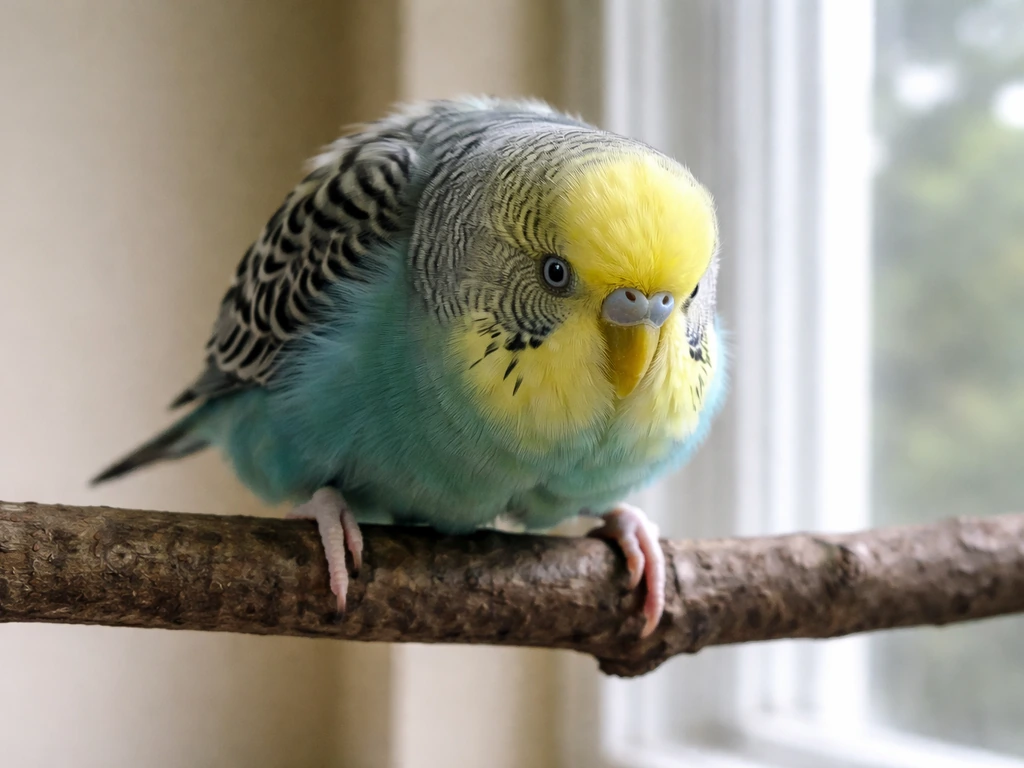
- Pinned (rapidly dilating and constricting) pupils: a strong indicator of high arousal or agitation
- Fluffed feathers with a tense body: not relaxed fluffing but tight, pulled-in feathers
- Crest raised fully and rigidly (cockatiels, cockatoos): different from a curious raised crest, which is softer
- Lowered head with beak pointed toward you: a direct warning posture
- Growling, hissing, or rapid clicking
- Leaning away, backing up, or gripping the perch tighter
- Lunging motions even without making contact
If you see any two of these at once, do not proceed with the pickup. Retreat and try again later. Avian behavior specialists consistently emphasize retreating at the earliest signs of irritation rather than pushing through, because pushing through teaches the bird that biting is the only signal you respond to.
Why the bird is biting in the first place
Fear is the most common reason, especially in birds that are new to a home or have not been handled consistently. Pain and illness are second: a bird that is sick, injured, or has an internal problem will often bite a hand near the sore area as a defensive reflex. If a normally calm bird suddenly starts biting, a vet check is warranted before any training begins.
Hormonal surges during breeding season drive territorial aggression in many parrot species, and this type of biting tends to be more intense and less predictable. Poor past handling, including being grabbed, chased, or restrained forcefully, creates a learned defensive response that can take weeks to undo. In some cases, the bird has simply learned that biting works: it bites, the hand disappears, and the unwanted interaction stops. That is a pattern you can change with consistent training.
Humane pickup methods by bird type
How you approach the pickup depends heavily on the species, size, and temperament of the bird. What works for a budgie will not work for a large Amazon, and trying to pick up a wild bird at all is usually the wrong move. If you are trying to do something like poke Nettie's bird, start with the safety steps and use a force-free approach instead of provoking bites how to poke nettie's bird. Here is a breakdown by type.
Pet parrots (budgies, cockatiels, conures, Amazons, African greys, macaws)
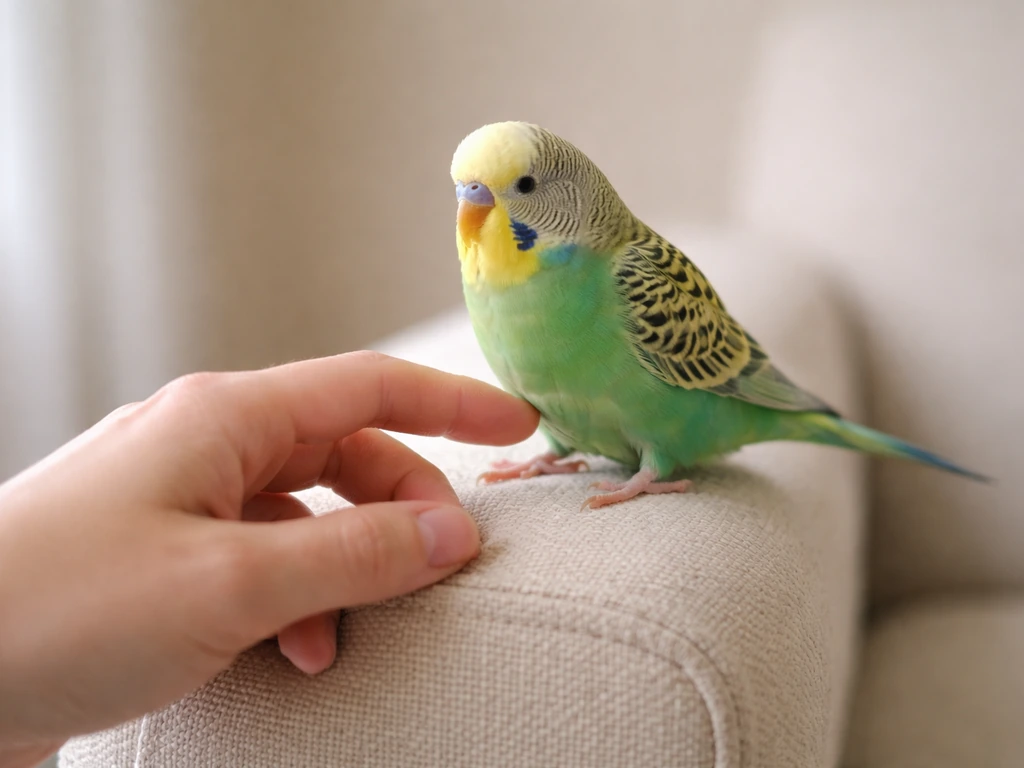
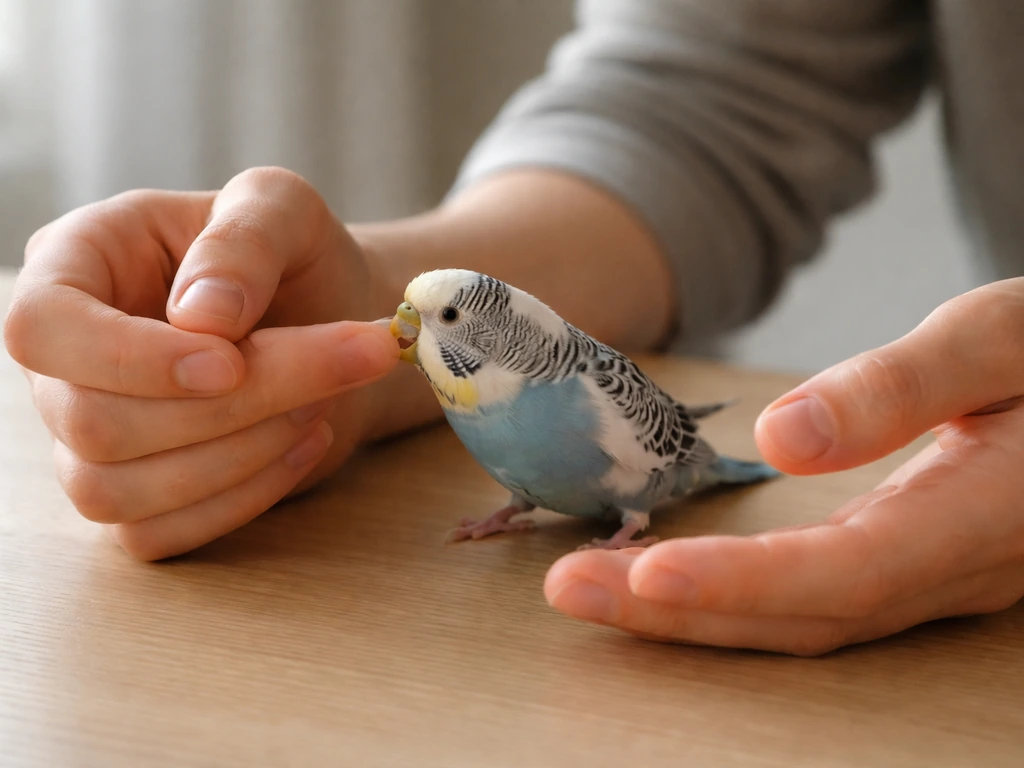
For a bird that is reluctant but not in crisis, use the step-up approach. Position your hand confidently and without hesitation at the bird's lower belly, just where the body meets the legs. Press your index finger or the flat of your hand gently into that spot. Do not hover or creep slowly, as uncertainty reads as predatory to birds. If the bird steps up, mark the moment with a calm 'good' or a clicker and immediately offer a treat. If the bird bites instead of stepping up, that tells you the bird either does not understand the cue yet or is not in a state to cooperate. Back off and train rather than force.
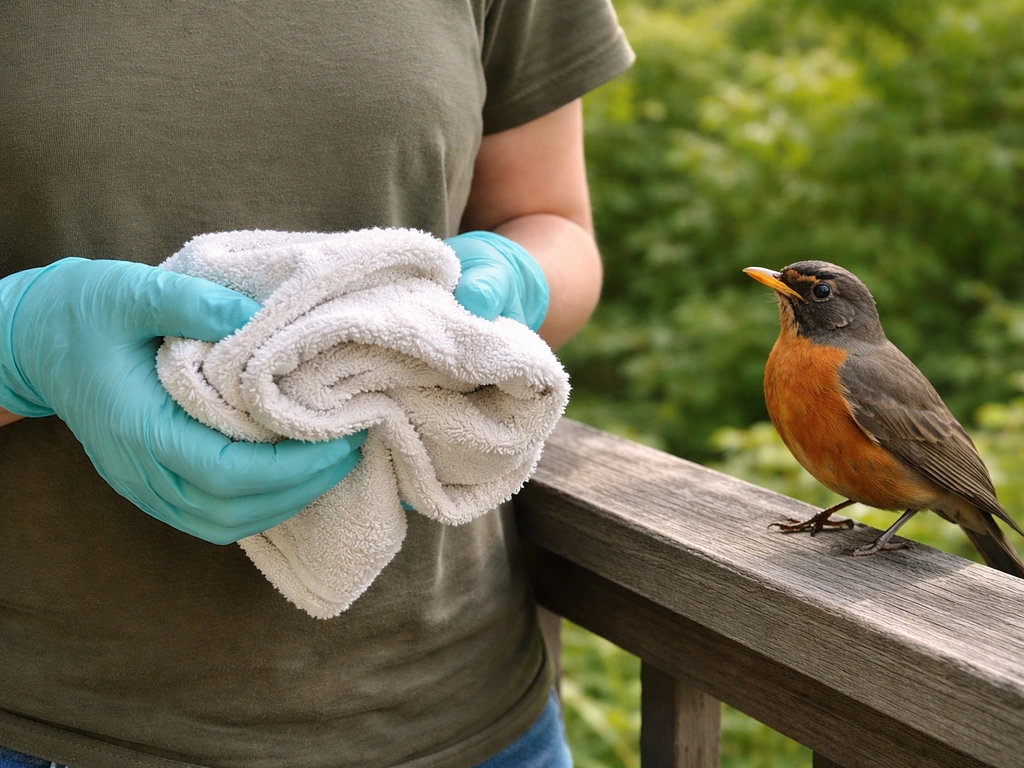
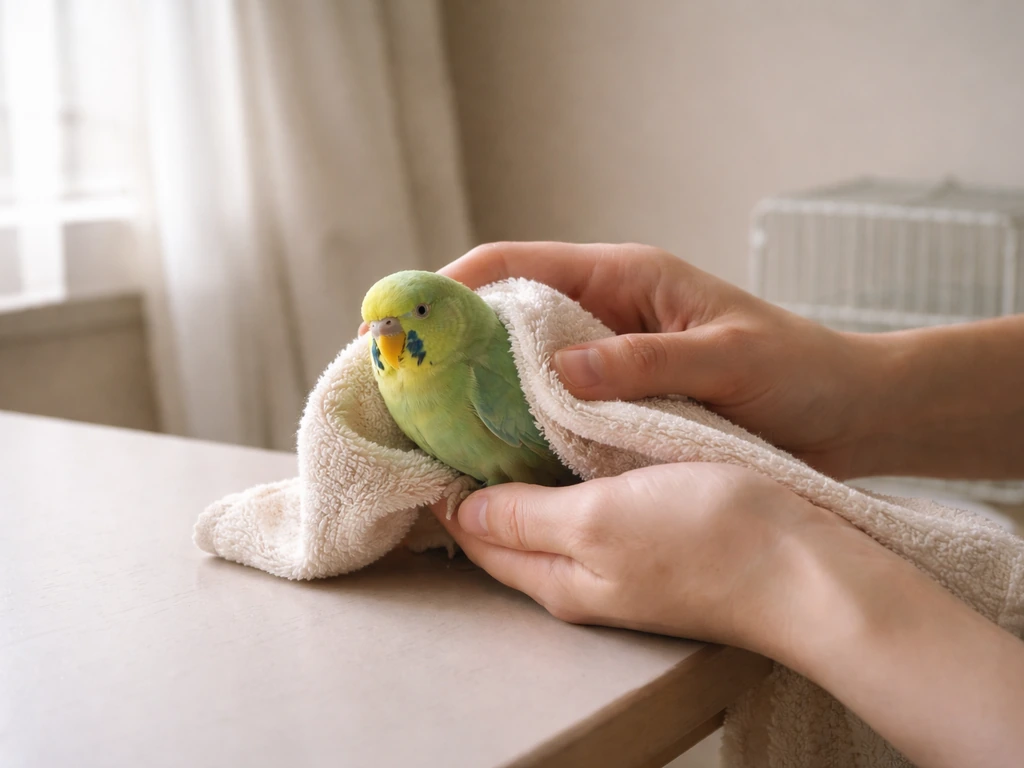
For a bird that is actively biting and cannot be stepped up safely, use a towel approach rather than bare hands. If you are wondering how to grab a bird with a towel, the towel approach above is the safest way to do it when step-up is not possible. Bring the towel up and drape it gently over the bird from above, then use the folds to create a loose, secure wrap around the body.
The towel reduces beak access to your fingers and also dampens visual stress triggers. Critically, never compress the bird's chest or sternum: birds breathe by expanding their chest wall, and squeezing it even mildly can interfere with breathing. Keep your grip around the neck and shoulder area, light but secure, with the beak pointed away from your hands.
If you are getting bitten through the towel, adjust your thumb and forefinger position up along the neck and under the jawline rather than yanking the whole hand back.
Small pet birds (finches, canaries, small doves)
Finches and canaries are rarely hand-tame and biting from them is minor, but the bigger risk is stress-related. These birds can go into shock from prolonged handling. If you need to catch one, dim the room lights slightly first, since dim conditions calm flight responses. Cup your hand gently over the bird rather than grabbing, then close your fingers loosely around the body.
The same chest-compression warning applies: the bird should be secure but able to breathe. Complete what you need to do quickly and return the bird to its cage. For general guidance on handling these smaller species with minimal distress, the same principles covered in articles on how to pick up a small bird apply here. For small birds like finches, canaries, and small doves, the same gentle handling principles apply when learning how to pick up a small bird.
Wild backyard birds: usually, do not pick them up
The honest answer for most wild bird situations is: do not pick the bird up. A wild bird that lets you approach and catch it is almost certainly injured or severely ill, and your handling adds stress on top of an already compromised system. Fledglings on the ground are a common source of confusion. If the bird has feathers and is hopping around, it is almost certainly a fledgling doing exactly what fledglings do.
The parents are nearby. Leave it alone or, if it is in immediate danger from a cat or road, move it to a nearby low branch or shrub and step back. If you find what appears to be a true nestling (pink, no feathers, eyes closed) that has fallen, you can place it back in the nest if you can reach it. The myth that parent birds abandon young after human contact is not true.
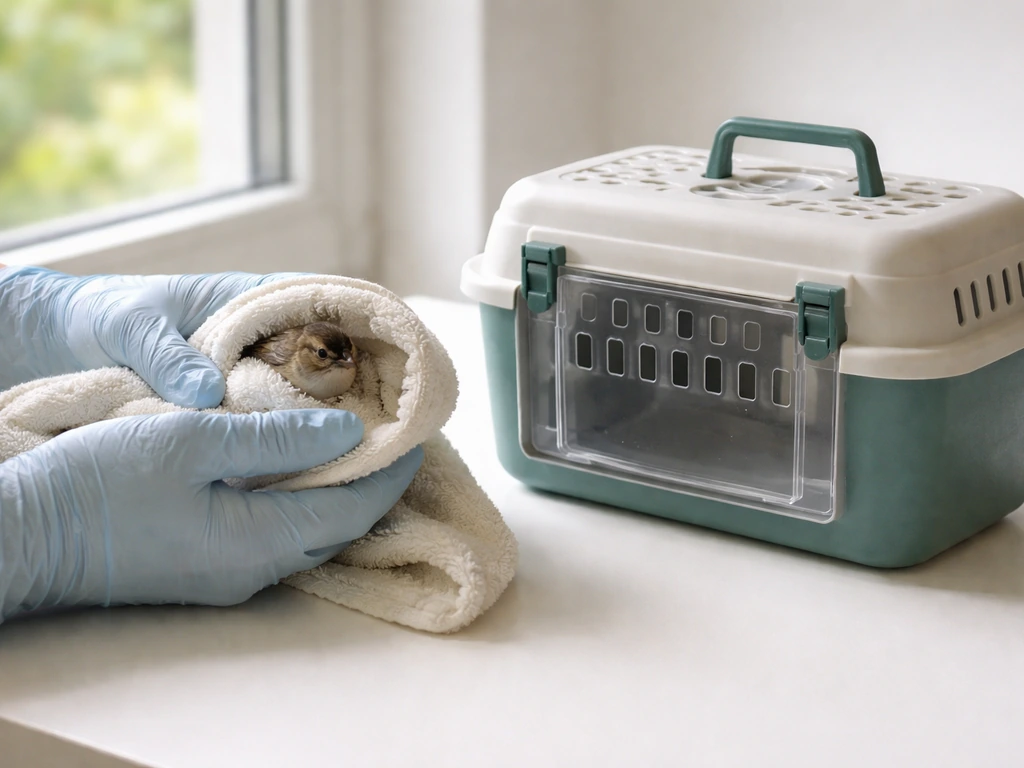
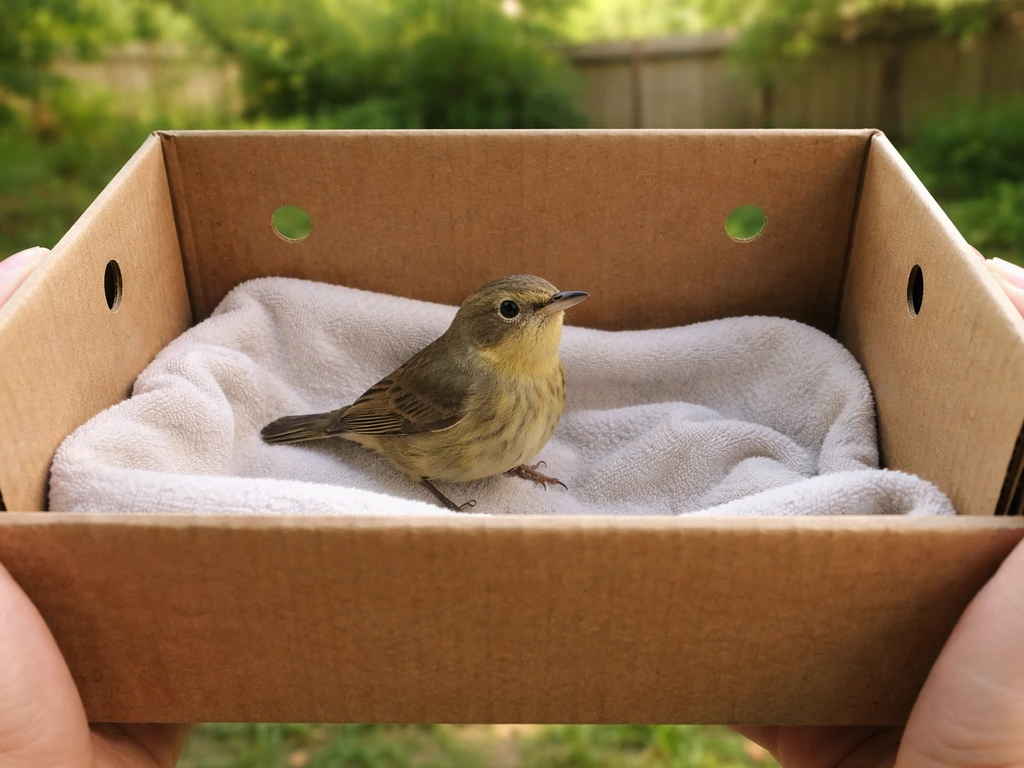
If the bird is clearly injured, cannot fly, and is in immediate danger, containment is sometimes necessary while you arrange for a licensed rehabilitator. Use gloves if you have them, or a folded towel. Scoop rather than grab. Place the bird in a cardboard box with air holes, no food or water unless directed by a rehabilitator, and keep it in a quiet, warm, dark space. Contact a licensed wildlife rehabilitator before doing anything else. It is legal in most U.S. states to transport a native wild bird directly to a licensed rehabilitator, but possessing one yourself beyond that immediate transport window is not legal under the Migratory Bird Treaty Act.
Training plan to reduce biting over time
If you have a pet bird that bites regularly, this is solvable. It takes consistency and patience, but most birds show measurable improvement within two to four weeks of structured daily sessions. Here is a plan that works.
Week 1: approach and retreat, no forced contact
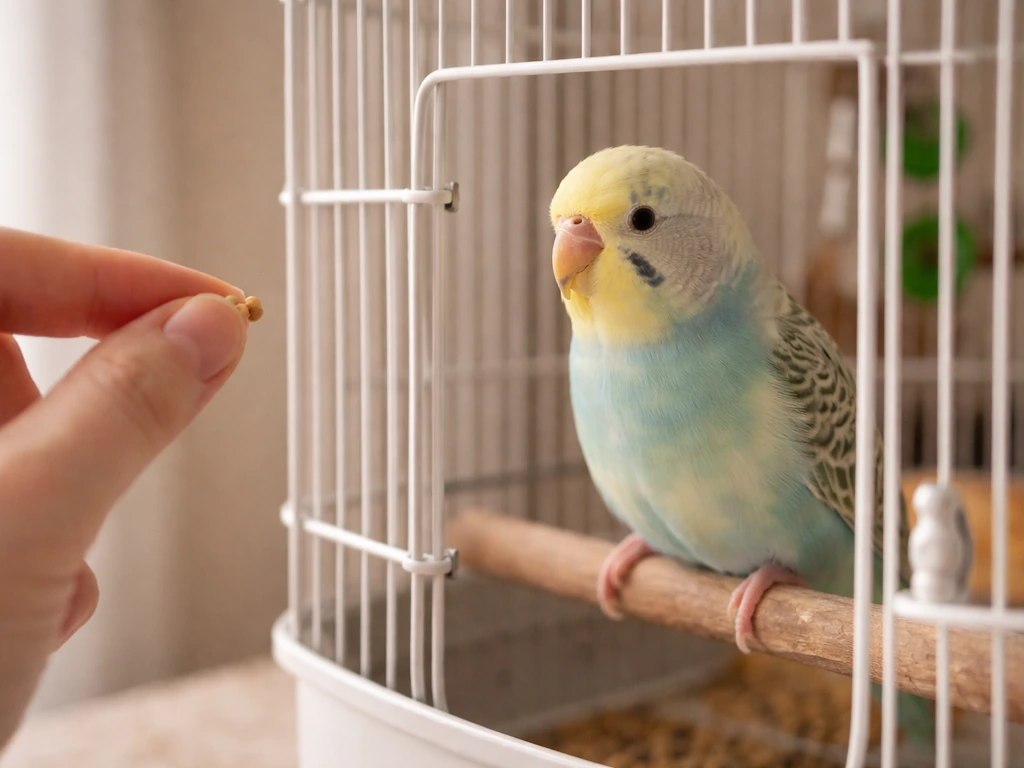
The goal of the first week is to teach the bird that your approach predicts good things, not stress. Sit near the cage without reaching in. Offer a high-value treat (a small piece of fruit, a seed the bird loves) through the bars or at arm's length. When the bird takes the treat, that is a success. Walk away after. Repeat several times per day in short two to three minute sessions. You are not trying to handle the bird yet. You are rebuilding its association with your presence.
Week 2: target training
Target training means teaching the bird to touch a specific object (a chopstick, a wooden dowel, or a commercial target stick) with its beak on cue. This gives the bird a job to do when you approach and redirects beak activity away from biting. Hold the target a few inches from the bird's beak. The moment it touches the target, click or say 'yes' and offer a treat. Work up to moving the target in different directions so the bird follows it. This is the foundation of the voluntary step-up behavior you are building toward.
Weeks 3 and 4: voluntary step-up
Once the bird is comfortable with your presence and engaged with target training, introduce the step-up hand position. Present your hand at the lower belly, say 'step up' in a calm, even tone, and wait. Do not push or chase. If the bird steps up even partially, mark and reward immediately.
Timing matters here: the reward needs to arrive within two seconds of the behavior or the bird cannot connect them. If the bird bites instead, say nothing, slowly withdraw, wait 30 seconds, and try again. Never shout or tap the beak in response to a bite. PetMD veterinary guidance is clear on this: reacting loudly is the worst thing you can do because it either reinforces the behavior as attention-getting or increases fear.
Once you get reliable step-ups in the cage, proof the behavior in new locations. A behavior the bird will only perform in one spot is not yet solid. Practice in different rooms, with different people present, and at different times of day. Each new environment is its own training challenge, but birds generalize faster than most people expect once the foundation is built.
Measurable progress markers
- Week 1: Bird accepts treats from your hand without backing away or biting
- Week 2: Bird reliably touches target stick on cue, 8 out of 10 attempts
- Week 3: Bird steps up voluntarily at least 50% of the time when asked
- Week 4: Bird steps up reliably in at least two different locations
- Ongoing: Biting frequency drops measurably; warning signals appear less often during handling
Tools and handling setup
Having the right setup before you need it matters. Practicing towel restraint in a non-emergency context, when neither you nor the bird is stressed, makes a real emergency far more manageable. Think of it like a fire drill: you want the mechanics to be familiar before anything is on the line.
Towels
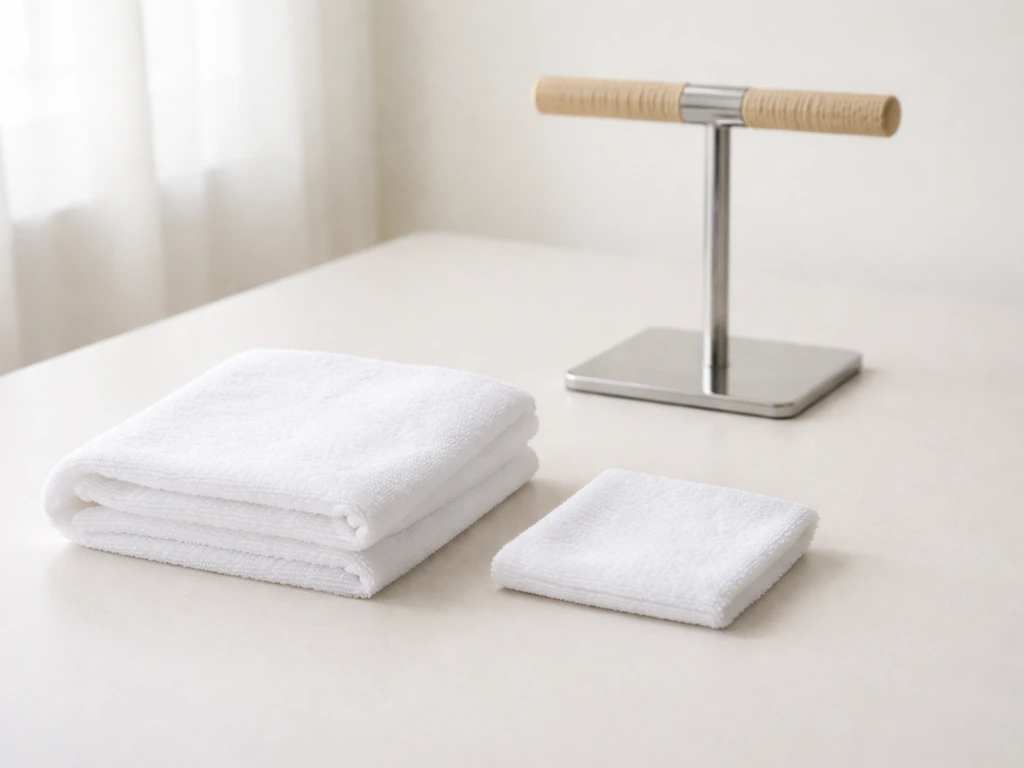
Use a medium-weight cotton hand towel or washcloth sized to the bird. Too large and it is unwieldy; too small and you lose control. Avoid terrycloth with loose loops that toenails can catch on. Practice draping the towel over your hand, bringing it from above and behind the bird, and securing the wrap in a calm environment with treats ready. The bird should come to associate the towel with a treat, not a threat. Introduce it at a distance first, let the bird sniff and investigate, then gradually bring it closer over several sessions before you ever use it for actual restraint.
Training perches and holding stations
A T-stand or tabletop training perch outside the cage gives you a neutral space to work with the bird. Birds tend to be less territorial off their home cage, which means handling attempts on a training perch often go more smoothly than attempts inside the cage. Use the perch as a consistent location for step-up practice and target training so the bird builds a strong positive association with it.
Protecting yourself
- Thin leather or puncture-resistant gloves for large parrots or emergency restraint only; avoid heavy gloves for training since they reduce dexterity and feel threatening to the bird
- Long sleeves when handling large parrots to protect forearms
- Safety glasses if working with larger species prone to striking at the face
- Keep a second towel nearby during any emergency restraint as a backup
- Clear the area of obstacles, open doors, and other pets before any handling session
Troubleshooting escalation and when to get professional help
If biting gets worse rather than better after two to three weeks of consistent, calm work, do not push harder. Escalation is a sign that something in the approach needs to change, or that there is an underlying issue (illness, pain, hormonal state) that training alone cannot fix.
Signs that it is time to call an avian vet
- Sudden onset of biting in a previously calm bird with no change in handling
- Biting accompanied by other signs like fluffed feathers all day, changes in droppings, loss of appetite, or labored breathing
- Biting that draws blood repeatedly and is getting more severe
- You suspect pain or injury is driving the defensive behavior
An avian vet can do much of an initial assessment from a distance before any handling takes place, which minimizes stress for a bird that is already reactive. The CDC also recommends routine avian vet visits even for healthy birds, specifically because illness-driven behavioral changes like biting are easier to address when you have a baseline. If the vet rules out a medical cause and the biting is behavioral, the next referral is to a certified parrot behavior consultant.
Certified behavior help
Look for consultants with credentials from recognized bodies such as the International Association of Animal Behavior Consultants (IAABC) or those affiliated with Avian Behavior International. A good behavior consultant will use force-free, positive reinforcement-based methods and should be able to give you a written plan with specific goals and timelines. Be cautious of any approach that involves dominance-based methods, punishing bites physically, or prolonged forced restraint as a training tool. These approaches typically increase fear and aggression rather than reducing them.
Minimal-contact care as a bridge
If biting is severe and trust-building is at square one, it is completely appropriate to use minimal-contact management while you work on training. This means doing necessary tasks (cage cleaning, health observation, feeding) in ways that do not require picking up the bird at all. Observe health from outside the cage. Use cage design (removable trays, side-opening doors) to clean without disturbing the bird directly. Offer enrichment and foraging activities inside the cage to keep the bird mentally engaged without requiring direct handling.
Humane alternatives for common needs and legal notes
Most situations that feel like they require picking up a biting bird can be handled in ways that avoid the bite entirely, at least while training is underway. Here is how to approach the most common scenarios.
| Situation | Humane alternative | Notes |
|---|---|---|
| Vet visit | Use a carrier the bird enters voluntarily; train the bird to go in with target stick and treats before the appointment | Avian vets can assess much of the bird's condition visually before needing to handle it |
| Cage cleaning | Move bird to a training perch or travel cage using step-up; clean while the bird is occupied elsewhere | Avoid reaching into the cage around a territorial bird; redesign cage access if needed |
| Moving the bird to a new room | Target train the bird to follow the stick; use the training perch as a portable transport station | Chasing or grabbing to move the bird undoes trust-building work |
| Emergency restraint | Towel drape from above, secure around neck and shoulders, never compress chest | Practice this in calm sessions before you ever need it in an emergency |
| Wild bird in danger | Contain in cardboard box with towel; call a licensed rehabilitator immediately | Transporting to a rehabilitator is legal; possessing the bird yourself is not |
Legal and ethical notes for wild birds
In the United States, nearly all native wild birds are protected under the Migratory Bird Treaty Act. It is illegal to keep, possess, or rehabilitate a wild bird without a state and federal permit. The one legal exception is transporting an injured bird directly to a licensed wildlife rehabilitator. If you find an injured wild bird, your job is containment and transport only, not treatment or long-term care. Contact your state wildlife agency or a local rehabilitator network to find the nearest permitted center. For birds like raptors (hawks, owls, eagles), do not attempt to handle them without guidance from a licensed rescuer: their talons cause serious injury and they require specialized handling techniques.
For backyard birds that are not injured, the ethical and legal answer is to leave them alone. A bird sitting on the ground is not automatically in trouble. A fledgling hopping in your yard is almost certainly fine. Your best contribution in those situations is to keep cats indoors, reduce window collision risks, and maintain a safe yard habitat.
Picking up a healthy wild bird, even with good intentions, causes real stress and can disrupt the parent-offspring bond. If you are dealing with a bird bite or stress, you may need to rethink how you can pick up a bird and use safer alternatives first can you pick up a bird. When in doubt, observe from a distance for an hour before deciding any intervention is needed.
FAQ
What should I do if a bird clamps onto my finger and I’m already bleeding or worried about infection?
Use PPE and a barrier: wear a thick sleeve or bite glove if you have one, and prioritize a towel or enclosure approach instead of bare-hand grabbing. If the bird is already latched, freeze, then use the “push slightly toward” release technique and withdraw slowly once it loosens. Afterward, assume larger parrots can break skin, so clean any punctures immediately with soap and water for at least 20 seconds and watch for worsening redness, swelling, or numbness over the next 24 to 48 hours.
How do I respond if the bird bites during step-up practice, especially if it seems to get worse each time?
Do not use punishment behaviors like blowing in the bird’s face, tapping the beak, or shouting. If it bites during training, stay quiet, withdraw, and wait about 30 seconds before trying again. If bites happen repeatedly in the same session, pause training and switch to lower-pressure steps (treat through the bars, then target first) because escalation usually means the bird needs a reset, not a harder correction.
How long should I try to pick up or handle a biting bird before I stop for the day?
Plan your handling time so you can keep interactions short and avoid “lingering” that increases arousal. For pet birds, use very brief sessions (2 to 3 minutes) and end on a success, like a target touch or a calm step-up attempt, before the bird hits its threshold. For emergencies, do the minimum necessary task first (for example, reposition for a health check) and return to the cage immediately.
What are safer alternatives to picking up a pet bird that keeps biting, besides towel restraint?
If you cannot safely use step-up, shift to management that avoids direct pickup: use removable trays for cleaning, side-opening doors to do access tasks, and observation from outside the cage. If you must temporarily contain the bird, practice towel restraint only when calm and use a quick scoop-and-box workflow for wild birds until a rehabilitator takes over.
The bird bites in the same location every time. Does that change what I should do?
If the bird is consistently biting near the same spot, treat it as a possible pain or illness cue and get an avian vet check before continuing training. Also consider hormonal context in parrots, if biting ramps up around breeding season, and adjust the plan by reducing arousal, increasing foraging, and delaying handling until the vet rules out medical causes.
How can I tell the difference between “it’s warning me” versus “I can try again safely”?
Stop pickup attempts if you see escalation signs happening together, such as intense fluffed posture plus lunging, or a combination of tight body tension and repeated snapping. When in doubt, step back and restart later at the “treat without reaching” stage, because pushing through teaches the bite as the only reliable way the bird can end the interaction.
If I want to learn towel restraint, what’s the biggest technique mistake to avoid?
When practicing towel skills, use the bird’s full body support without chest compression, because birds breathe by expanding the chest wall. A towel that is wrapped too tightly around the sternum can interfere with breathing and will also increase panic, making future emergencies harder. Practice with treats ready so the towel becomes a predictable, non-threatening routine.
If it’s a wild bird and it’s biting, can I still pick it up to help it?
For wild birds, assume that biting likely means injury or severe distress, and do not initiate a pickup unless you have a direct plan to transport it to a permitted wildlife rehabilitator. Keep containment simple (cardboard box with air holes, quiet warm dark space) and avoid giving food or water unless the rehabilitator directs it. For raptors, do not attempt any handling without professional guidance.
What should I do if training is not working and the biting is getting worse after a couple of weeks?
Often, the best next step is to target before you attempt any handling. If step-up keeps failing, return to target training where the bird can succeed by touching a target, then gradually reintroduce the step-up cue. If bites are getting worse after 2 to 3 weeks of calm, consistent work, switch strategies by getting an avian vet assessment and, if medical is ruled out, consult a certified behavior professional.
Next Articles
How to Pick Up a Bird Safely: Wild and Pet Steps
Step-by-step safe bird pickup for wild or pet birds, with humane handling, do donts, and next steps.
How to Grab a Bird Safely: Humane Steps for Pets and Wild Birds
Humane, step-by-step guide for safely grabbing pet and wild birds, with species tips, aftercare, and rescue rules.
How to Catch a Bird Without Killing It: Humane Steps
Humane, trap-free steps to catch a wild backyard bird safely, minimize stress, contain it calmly, then release or reloca