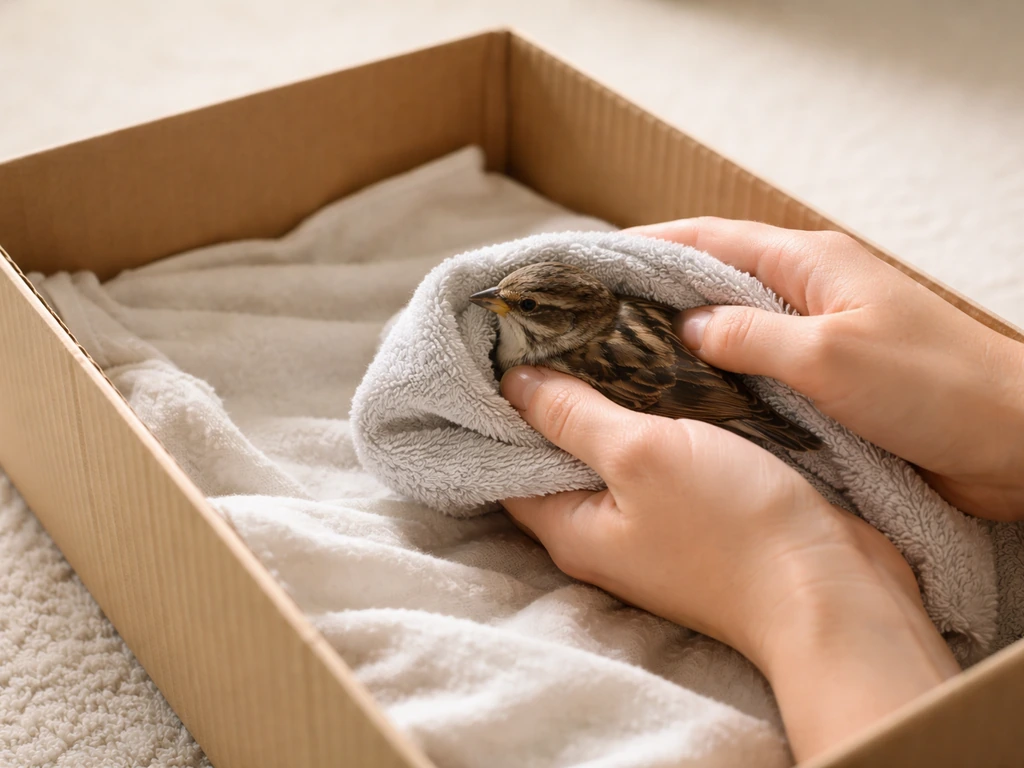
Cup your dominant hand loosely around the bird's body, supporting its chest and feet, with your thumb and index finger gently resting on either side of its wings to keep them folded. That's the core motion. Whether you're scooping up a lost budgie, retrieving a finch that escaped its cage, or helping a stunned sparrow in the yard, the goal is the same: firm enough to prevent thrashing, gentle enough to avoid injury, and calm enough to keep the bird's stress short-lived.
How to Pick Up a Small Bird Safely Step by Step
Clara Hayes
11 May 2026
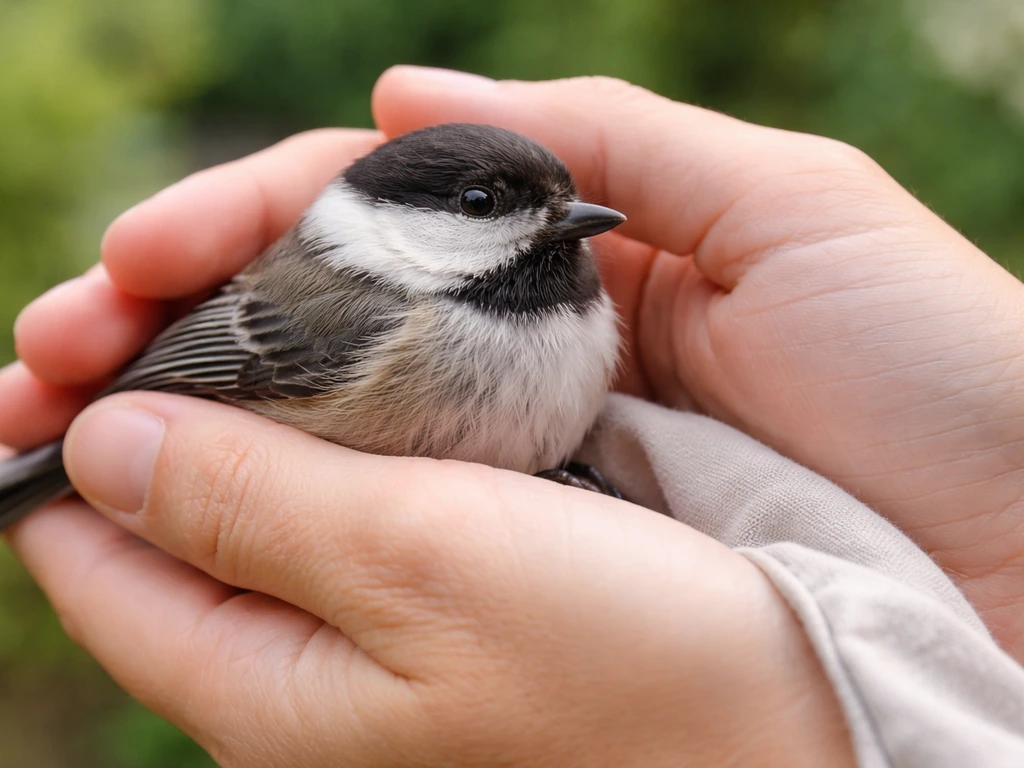
Quick safety prep and when not to pick up
Before you touch any bird, spend 60 seconds on these checks. They take almost no time and can save you from a serious mistake.
For wild birds, ask yourself whether the bird actually needs your help. The U.S. Fish and Wildlife Service is clear on this: the best thing is often to leave a wild animal alone. A fledgling hopping on the ground with full feathers is almost certainly fine and doesn't need rescuing. Step back and watch from a distance for 15 to 20 minutes before doing anything. If you see a parent nearby, it's almost certainly being cared for. The situations that do warrant picking up include visible bleeding, a clearly broken or drooping limb, shivering, an unresponsive bird lying on its side, or a confirmed dead parent.
Also check for signs of illness before touching. The RSPCA flags panting or labored breathing lasting more than two hours, inability to hold the head upright, loss of balance, or a twisted neck as red flags. If you see any of these, do not pick the bird up with bare hands until you've checked current avian influenza guidance in your area. The CDC advises avoiding unprotected contact with sick or dead wild birds. After handling wild birds, CDC also recommends always washing your hands with soap and water The CDC advises avoiding unprotected contact with sick or dead wild birds.. Gloves and a cloth barrier are the minimum if you must handle a bird showing these signs.
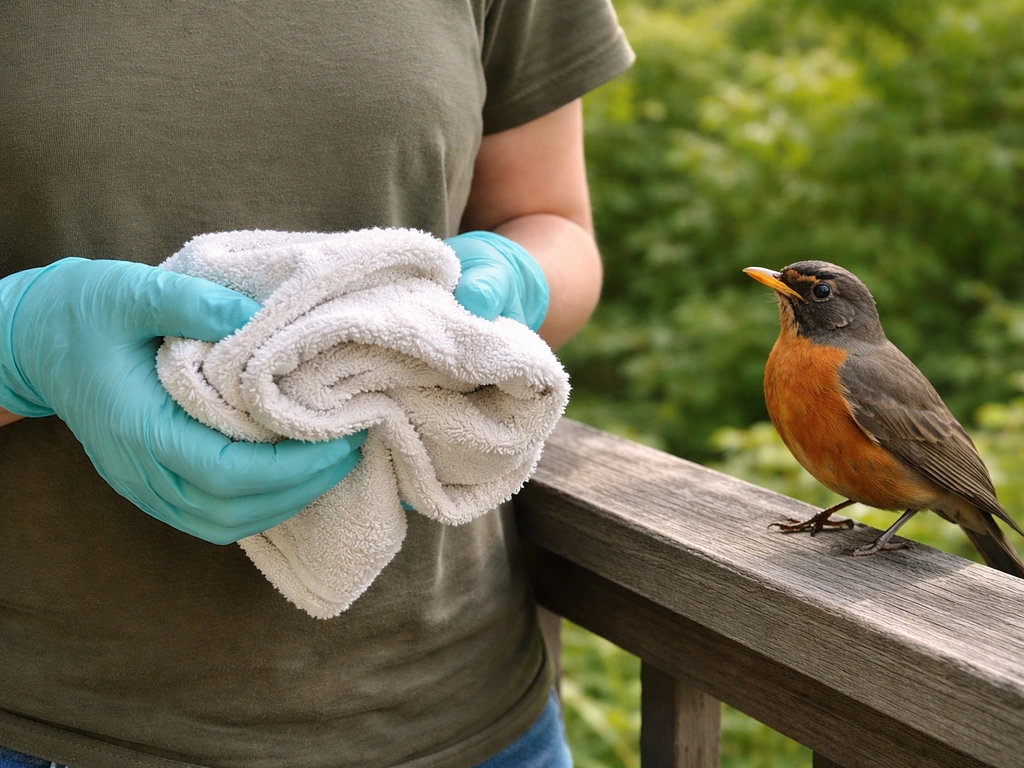
- Wear thin latex or nitrile gloves if handling a sick or injured wild bird
- Wash your hands thoroughly before and after any bird contact
- Remove other pets from the room or area before you approach
- Close windows and doors if the bird is inside (stops escape and drafts)
- Have a small box, cloth bag, or travel cage ready before you approach the bird
- Do NOT spray the bird with water, throw a blanket over it aggressively, or chase it
For pet birds, the safety prep is simpler: clear the room of ceiling fans, open toilets, and hot stovetops. Make sure escape routes are blocked. Have a towel or perch ready as a landing zone.
How to approach a small bird without spooking it
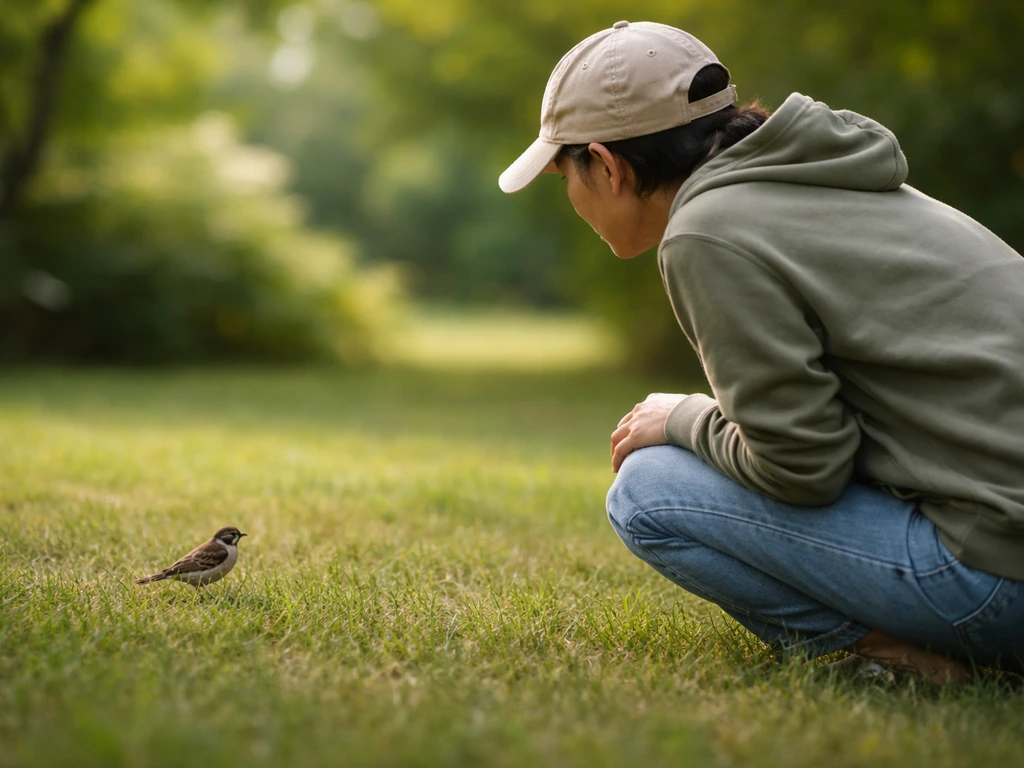
Slow and low is the rule. Birds have a wide field of vision and they are wired to flee from anything that moves quickly toward them from above. Coming in fast or from a standing height triggers their flight response almost every time.
Crouch or kneel to get below the bird's eye level. Approach from the side, not head-on. Move in a smooth, unhurried arc rather than a straight line. Keep your arms close to your body until you're within reach. Avoid direct eye contact with wild birds; birds read a direct stare as a predator threat. With tame pet birds, soft eye contact and a quiet voice actually help because they associate both with you.
Talk throughout the approach in a low, even tone. It doesn't matter what you say. The steady sound signals that nothing is about to lunge. Give the bird at least 10 to 15 seconds to register your presence at each step before moving closer. If the bird starts moving away, stop and wait. Patience here saves you from a chase that stresses both of you and increases the bird's injury risk.
For pet birds that are skittish or semi-tame, try offering a finger or a short perch first rather than reaching straight for the body. Many budgies and cockatiels that won't let you grab them will step up willingly onto a finger if you press it gently against their lower chest and wait. That step-up behavior sidesteps the need for a forced pickup entirely.
Handling techniques by bird type
Small birds are not all the same, and the way you hold them should reflect their size, temperament, and whether they're tame. Here's how to adjust for the most common situations.
Budgies and small parakeets
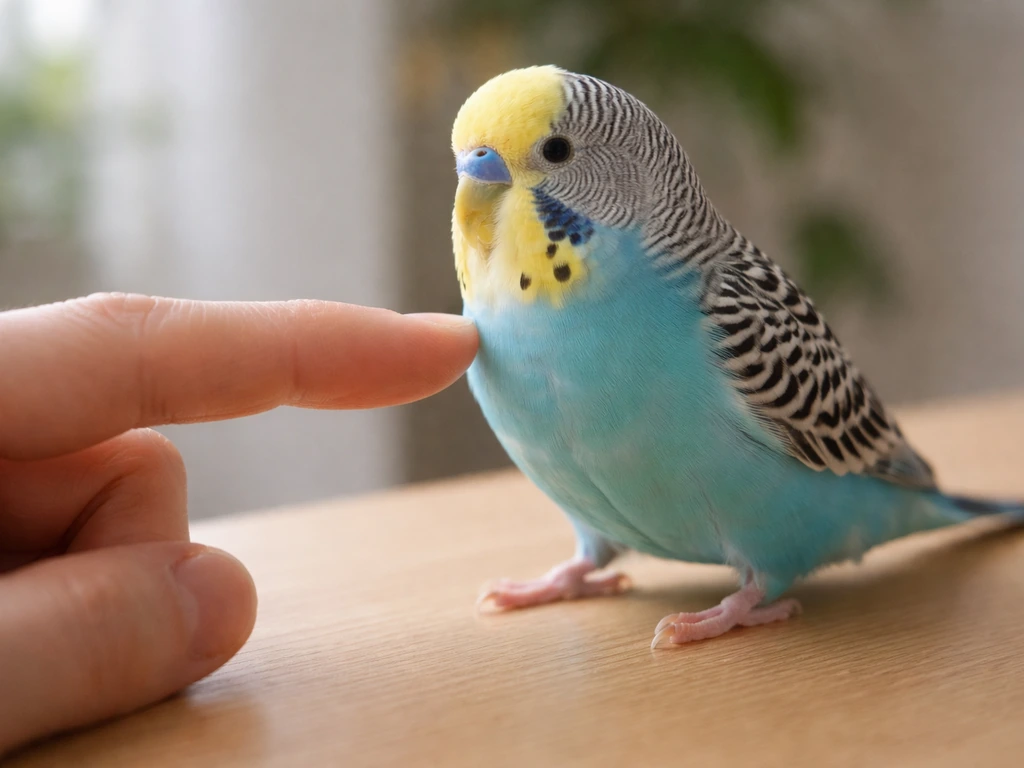
Budgies are small enough (25 to 35 grams) that one hand is all you need. For a tame bird, use the step-up method: press your index finger gently to the lower chest just above the feet. Most tame budgies step right on. For an untame or escaped budgie, you'll need a soft towel or a light cloth.
Drape it loosely over the bird, then wrap your hand around the bird through the cloth so the towel acts as a thin barrier. This prevents bites, absorbs some of the grip, and keeps the bird slightly calmer because it can't see as much. If you’re trying to guide Nettie’s bird with a similar calm approach, follow the specific steps for how to poke nettie's bird rather than improvising the grip.
Finches and canaries
Finches are extremely fragile and stress intensely. A zebra finch weighs about 12 to 16 grams, and they can go into shock quickly if handled too long. Avoid picking up a finch unless it's absolutely necessary. If you must, use a very light cloth or a small net (an aquarium net works well) to corral the bird into a corner, then cup it very gently with both hands, keeping the grip loose. Your thumbs should just rest along both sides to prevent wing extension, not squeeze. Minimize contact time. Ten to fifteen seconds of handling is enough for most situations. Get the bird into its cage or a small box immediately.
Cockatiels
Cockatiels (around 75 to 125 grams) are more robust than finches and most have more handling experience. Tame cockatiels can be picked up bare-handed with the standard cup grip: one hand around the body, fingers gently crossing over the back, thumb along one side, and the bird's feet resting on your lower fingers. For an untame or frightened cockatiel, a thin cotton towel reduces biting and makes the bird feel more secure. Cockatiels will hiss and raise their crest when stressed. Give them a moment between steps and don't rush the grab.
Small parrots (lovebirds, parrotlets, conures)
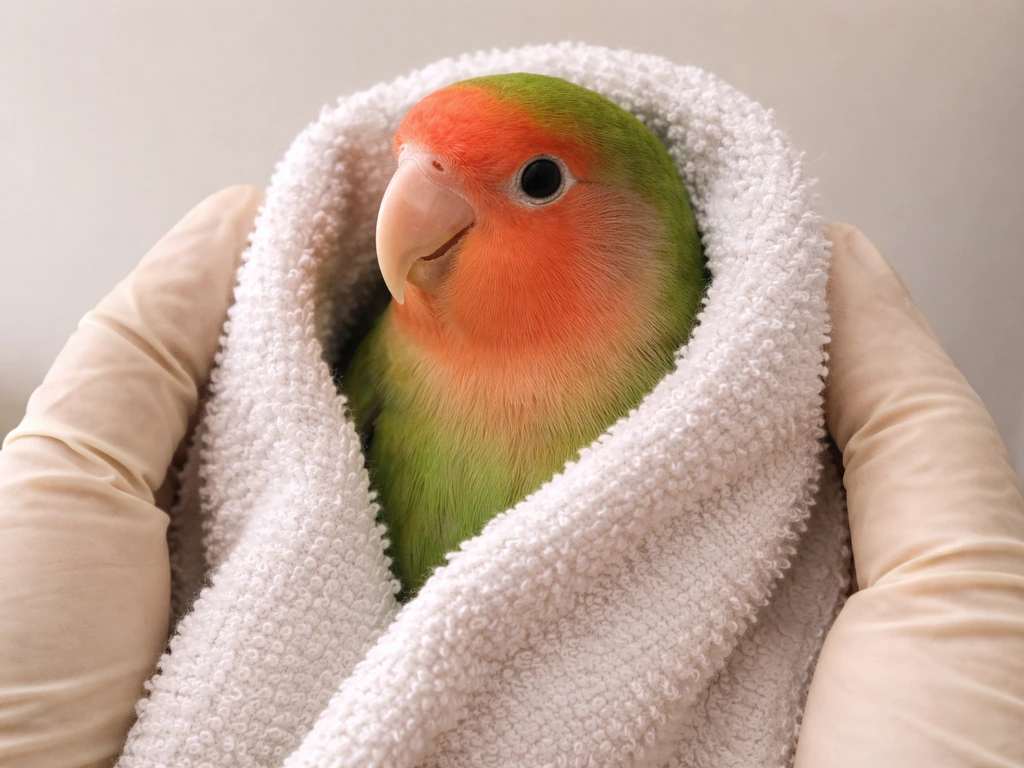
These birds bite hard relative to their size, and they move fast. A towel is recommended for any bird you're not fully familiar with. Approach from the side, drape the towel, and wrap without squeezing. Hold the bird upright, never on its back, and keep the grip around the body rather than the neck. If a bird is on your hand and you need to restrain it further, bring your other hand over the top to control the wings gently.
Wild small birds (sparrows, wrens, robins, starlings)
Use gloves or a cloth barrier. Wild birds don't associate hands with safety the way pet birds do, and they'll struggle more intensely. The cup-and-cover method works well: place a light cloth over the bird, then gently cup both hands around it through the cloth. Keep fingers relaxed and the grip just firm enough to prevent escape. Transfer directly to a ventilated cardboard box with a towel lining. Don't hold a wild bird for more than a minute if you can avoid it.
How to pick up and support the bird, step by step
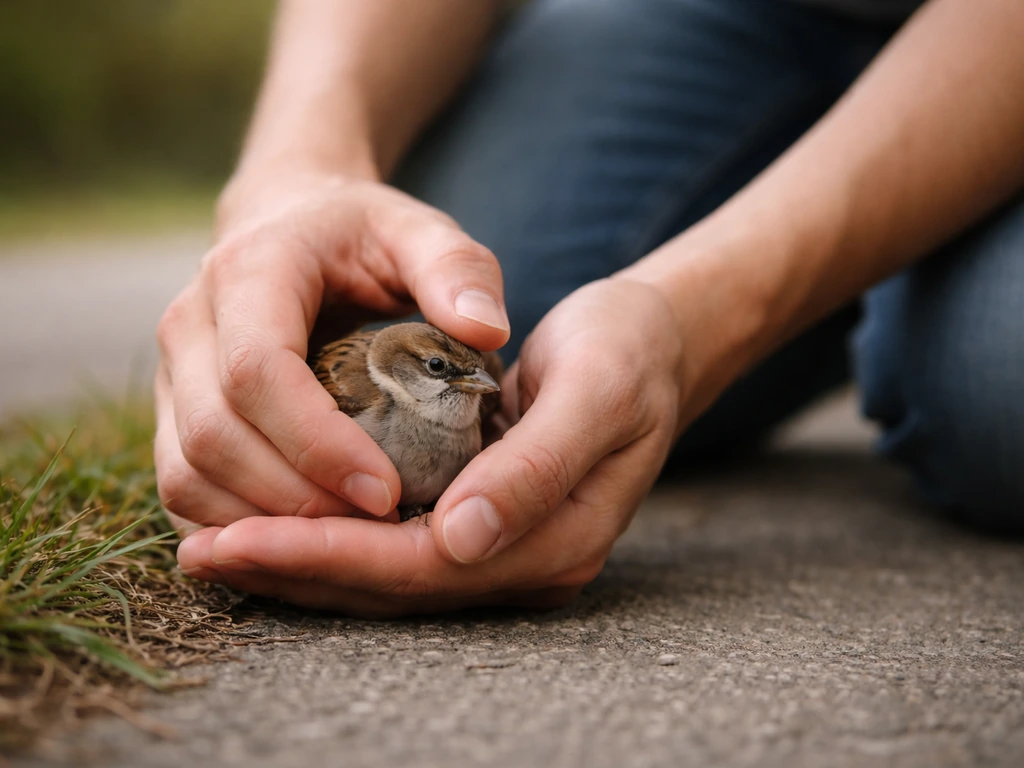
Once you've assessed the bird and approached correctly, here's the actual pickup sequence. Using gentle, controlled pressure is the key to how to pick up a bird without hurting it. If you're wondering how to grab a bird safely, follow this pickup sequence step by step before you make any contact. This works for most small pet birds and tame wild birds. For untame or injured birds, use the towel variation noted in parentheses.
- Position yourself: crouch or sit to be at the bird's level. Keep your body calm and your movements deliberate.
- Extend one hand slowly, palm up, fingers together. Move toward the bird's side, not its face.
- (Towel method): If using a towel, hold it loosely in both hands and gently lower it over the bird from above and slightly behind, covering its back and wings first.
- Place your index finger or the edge of your hand against the bird's lower chest, just above its feet. Many birds step up reflexively.
- If the bird doesn't step up, cup your hand around its body from the side. Your palm covers the back, your fingers wrap loosely around the front, and the bird's feet rest on your lower two fingers.
- Bring your thumb and index finger to rest lightly against opposite sides of the bird's wings, not squeezing, just resting to prevent wing extension.
- Lift slowly and smoothly. Keep the bird level, not tilted.
- Hold the bird close to your body (near your chest or stomach). This reduces the drop distance if the bird shifts and helps it feel more secure.
- Avoid holding the bird upside down or on its back. This is extremely stressful and compresses the air sacs needed for breathing.
- Transfer to a perch, cage, or box as quickly as the situation allows.
Bare hand vs. towel: which to use
| Situation | Bare hand | Towel or cloth |
|---|---|---|
| Tame pet bird that step-ups reliably | Best option | Not needed |
| Semi-tame or nervous pet bird | Possible, but higher bite/escape risk | Recommended |
| Untame pet bird or escaped bird | Not recommended | Best option |
| Wild bird (any species) | Only with gloves | Strongly recommended |
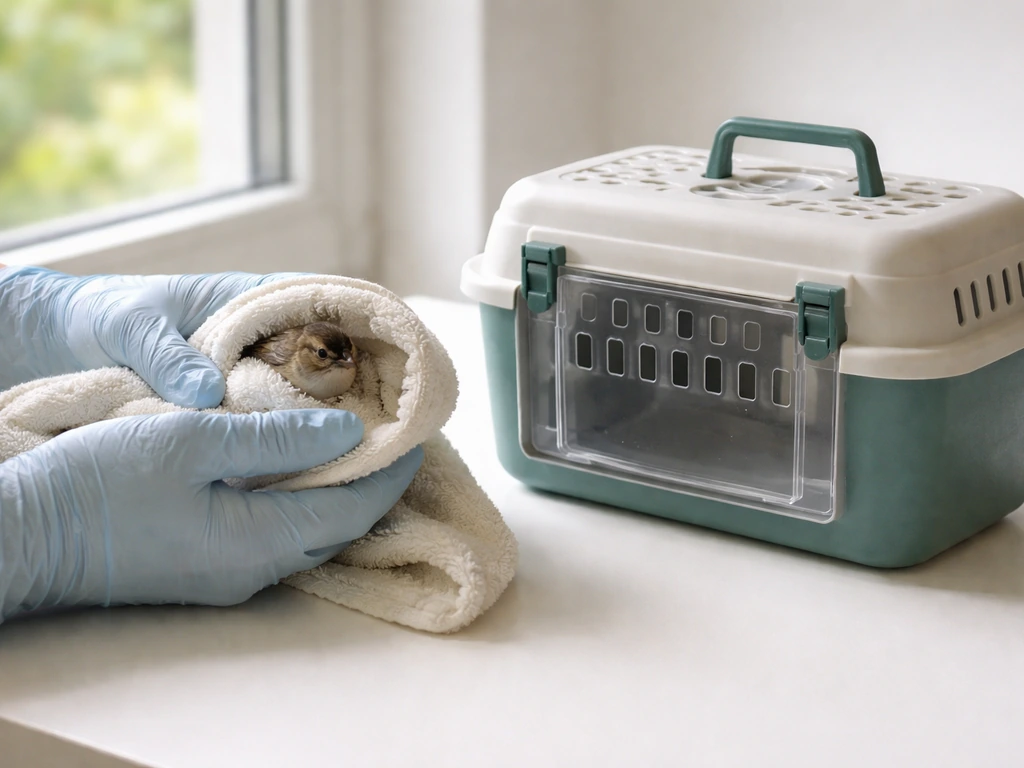
| Injured or sick bird | Not recommended | Required, with gloves if possible |
| Very small bird (finch, canary) | Possible with light touch | Preferred to reduce grip pressure |
Aftercare: settling, holding duration, and safe transfer
The pickup is just the beginning. What you do in the next 5 to 30 minutes determines how stressed the bird ends up and how quickly it recovers.
For pet birds, place the bird on a familiar perch or back into its cage as soon as the situation allows. Avoid fussing over it immediately afterward. Let it sit quietly and self-regulate. Watch for rapid breathing (more than 40 to 60 breaths per minute), fluffed feathers, or hunching on the perch floor, which signal continued high stress. Most pet birds settle within 10 to 20 minutes in a calm, familiar environment.
For wild birds, place the bird in a small ventilated cardboard box lined with a light towel. A shoebox is a perfect size for a sparrow or wren. Put the box in a quiet, warm room away from pets and children. If the bird is cold or shivering, place the box on one side of a heating pad set to low, so the bird can move toward or away from the heat. A safe temperature range is roughly 75 to 85°F (24 to 29°C). Do not give the bird food or water unless instructed by a rehabilitator as forcing it can cause aspiration.
Keep handling to an absolute minimum once the bird is contained. Every time you open the box to check, you're adding stress. Set a timer and wait at least 30 minutes before looking in. If the bird is sitting upright and alert, that's a very good sign.
For transfers between containers, bring the new container to the bird rather than carrying the bird across a room. Open both the holding box and the destination cage at the same time and allow the bird to move between them if possible rather than physically moving it again.
Troubleshooting common problems
The bird bites
Don't pull your hand away sharply. This startles the bird further and can cause injury to both of you. Instead, stay still and wait for the bite to release, or very gently push toward the bite (counterintuitive but effective). Use a towel next time. If the bird is biting, focus on the cup grip pressure and use a towel or barrier to make handling safer Use a towel next time.. For ongoing biting in a pet bird, this is a training and trust issue rather than a handling technique issue, and a separate process of taming is the real solution.
The bird slips or escapes mid-pickup
Stop, reset, and start the approach over. Chasing makes things worse every time. Close off escape routes before the next attempt. If the bird is a pet in a room, dim the lights slightly before approaching again. This reduces the bird's reaction speed and makes it easier to cup without a struggle.
The bird is panicking
Cover the bird's eyes lightly with the towel or your fingers. Birds calm significantly when they can't see the threat. Reduce sound in the room. Slow your own breathing and movements. A bird that's thrashing hard in your hands is at real risk of injury, so containment in a box is safer than continued holding if you can't calm it within 30 seconds.
You're worried about wing or leg injury
If a wing is drooping unevenly compared to the other, or a leg is hanging at an odd angle, handle the bird as little as possible and get it into a dark, contained box immediately. Don't try to splint or manipulate the limb. Minimize movement during transport. An avian vet or wildlife rehabilitator needs to assess this, and extra handling will make the injury worse.
The bird won't approach or keeps fleeing
For wild birds, use a net or wait until nightfall when birds naturally become less active and easier to approach. For pet birds, don't force it. Return the next day with treats and a patient step-up training session. Forcing capture repeatedly creates a fearful bird that will always be harder to handle.
Overheating or cold stress
Panting with an open beak, wings held away from the body, and lethargy all suggest overheating. Move the bird to a cooler, ventilated space immediately and stop any supplemental heat. Cold stress shows as shivering, tight feather posture, and reluctance to move. Use the low-heat heating pad method described above and contact a rehabilitator for further guidance.
What to do next
Returning the bird to the right place
If the bird is a pet that escaped, the priority is getting it back into a familiar cage as quickly as possible. Place the cage near where the bird landed with the door open and food visible if the bird won't step up. For wild birds that are stunned but recovering, return them to the exact spot where you found them after 30 to 60 minutes in a quiet box. Place the bird on a branch or elevated surface rather than on the ground to reduce predator exposure. If it flies off, great. If it stays grounded and seems unable to fly, it needs professional help.
Taming and comfort steps for pet birds
One difficult handling experience doesn't ruin your relationship with a pet bird, but it does set you back. Give the bird one to two days of quiet normalcy before resuming handling attempts. Then go back to basics: hand-feeding small treats through the cage bars, talking during feeding, and short voluntary step-up sessions of under two minutes. Building trust after a stressful pickup is a gradual process, but birds are resilient and most bounce back within a week if you don't repeat the forced interaction.
When to call an avian vet
Call an avian vet if a pet bird shows any of the following after handling or an incident: labored breathing that doesn't resolve within 30 minutes, blood from the beak, nostrils, or feather shafts, inability to stand or grip a perch, a visibly deformed limb, or prolonged lethargy past a few hours. Avian vets are specialists and not every general vet can treat birds well. Look for an ABVP-certified avian specialist if possible.
When to contact a wildlife rehabilitator
For wild birds, a licensed wildlife rehabilitator is the right contact for any bird that is injured, clearly sick, or a featherless/closed-eye nestling that has fallen from a nest. Mass Audubon and similar organizations recommend contacting a licensed rehabilitator before attempting more than minimal stabilization. In the U.S., handling most wild birds without a permit is restricted under the Migratory Bird Treaty Act, which means your role is to stabilize and transfer, not to rehabilitate at home. The National Wildlife Rehabilitators Association (NWRA) maintains a directory of licensed rehabilitators by state. In the UK, the RSPCA helpline can advise and coordinate collection for injured wild birds.
The hardest part of picking up a small bird is not the physical technique. It's slowing down enough to assess the situation before acting and resisting the urge to keep handling once the bird is contained. Get the preparation right, use the cup grip with appropriate pressure, get the bird into a quiet, safe space quickly, and then step back. That's the whole approach, and it works whether you're dealing with an escaped budgie or a stunned sparrow on your patio.
FAQ
How can I tell the difference between a “fledgling” that needs space and a bird that truly needs me to pick it up?
Watch from a distance for 15 to 20 minutes. If the bird is fully feathered and can sit upright, move around, and show normal alertness, it’s usually fine without handling. If it appears unable to stand, is repeatedly falling over, has visible injuries like blood, or looks unresponsive when approached calmly, that’s when a pickup and professional help are more appropriate.
Is it ever okay to pick up a wild bird just to move it away from danger?
Only for very short, minimal stabilization when there’s immediate risk, such as a bird in traffic or being attacked by a pet, and only if it’s in an eligible situation like suspected injury. In all other cases, the safer choice is to block the danger with your presence or guide the bird with a barrier from a distance rather than grabbing it.
What should I do if the bird starts panicking and thrashing as soon as I try to cup it?
Stop advancing, stay low and still, and give it time to settle rather than continuing to chase. If you cannot calm it within about 30 seconds or it risks injuring itself, switch to containment (a ventilated box with a towel lining) instead of prolonged hand holding.
Do I need to wear gloves every time I handle a small bird?
For pet birds, gloves are usually not required if the bird is healthy and you can handle gently. For wild birds or birds showing illness signs (labored breathing, twisted neck, etc.), use gloves or at least a cloth barrier to reduce contact risk, especially since you may not know local avian influenza status.
How do I transport a bird without making wing or leg injuries worse?
Keep the bird upright and supported through the chest area, avoid manipulating drooping limbs or trying to straighten angles, and minimize movement. Prepare the destination container ahead of time, bring the container to the bird, and keep the handling time short (about 10 to 15 seconds before transfer when you can safely do so).
Should I give a found wild bird water or food while waiting for help?
In general, don’t offer food or water unless a rehabilitator tells you to. Forcing it can lead to aspiration, especially if the bird is cold, injured, or stressed. Focus on warmth, quiet, and containment, then contact a licensed rehabilitator for direction.
What temperature is “safe” for a cold or shivering bird during recovery?
Use low heat so the bird can move away if it gets too warm, roughly 75 to 85°F (24 to 29°C). Place the box so one side is warmed rather than heating the whole container evenly, and stop supplemental heat if the bird shows signs of overheating such as open-beak panting or wings held away from the body.
If a pet bird escapes, should I try to pick it up quickly or use training instead?
The priority is getting it back into the familiar cage as fast as possible with low stress. Put the cage near where the bird landed, keep the door open, and offer food, then use step-up opportunities if the bird will approach voluntarily. Avoid repeated forced grabs, because each attempt increases fear and makes future capture harder.
My bird bit me. How do I prevent a “bite-and-reach” pattern next time?
After a bite, reset the approach, don’t pull away abruptly, and use a towel or cloth barrier for handling until the bird is calmer. If the behavior continues, treat it as a trust or training issue rather than a technique problem, returning to short voluntary step-up sessions and quiet handling routines.
When should I call an avian vet versus waiting it out after handling?
Call promptly if symptoms appear and don’t quickly resolve, such as labored breathing that persists beyond about 30 minutes, bleeding from the beak or feather shafts, inability to stand or grip, a visibly deformed limb, or prolonged lethargy that lasts more than a few hours. Waiting is reasonable only if the bird’s breathing and posture return to normal quickly.
Can I pick up a closed-eye nestling or featherless baby bird?
Avoid handling these at home. Closed-eye nestlings, featherless nestlings, and fallen nestlings generally require a licensed wildlife rehabilitator for proper care, and handling can cause additional stress or injury. Stabilize minimally and arrange pickup or advice through the appropriate local service.
What should I do immediately after the pickup is done, to reduce stress and improve recovery?
Put the bird into its quiet, prepared container or back onto a familiar perch promptly. Avoid immediate fussing, limit how often you open the container, and give it time to self-regulate (often 10 to 20 minutes for pet birds). If you need to check, use a timer and wait at least about 30 minutes between openings.