Grabbing a bird safely comes down to one thing: matching your approach to what the bird is and why you need to handle it. The method you use for a tame cockatiel is completely different from what you'd do with an injured sparrow in your yard. Get that distinction right first, and everything else falls into place.
How to Grab a Bird Safely: Humane Steps for Pets and Wild Birds
Clara Hayes
7 Apr 2026
First: figure out what you're dealing with
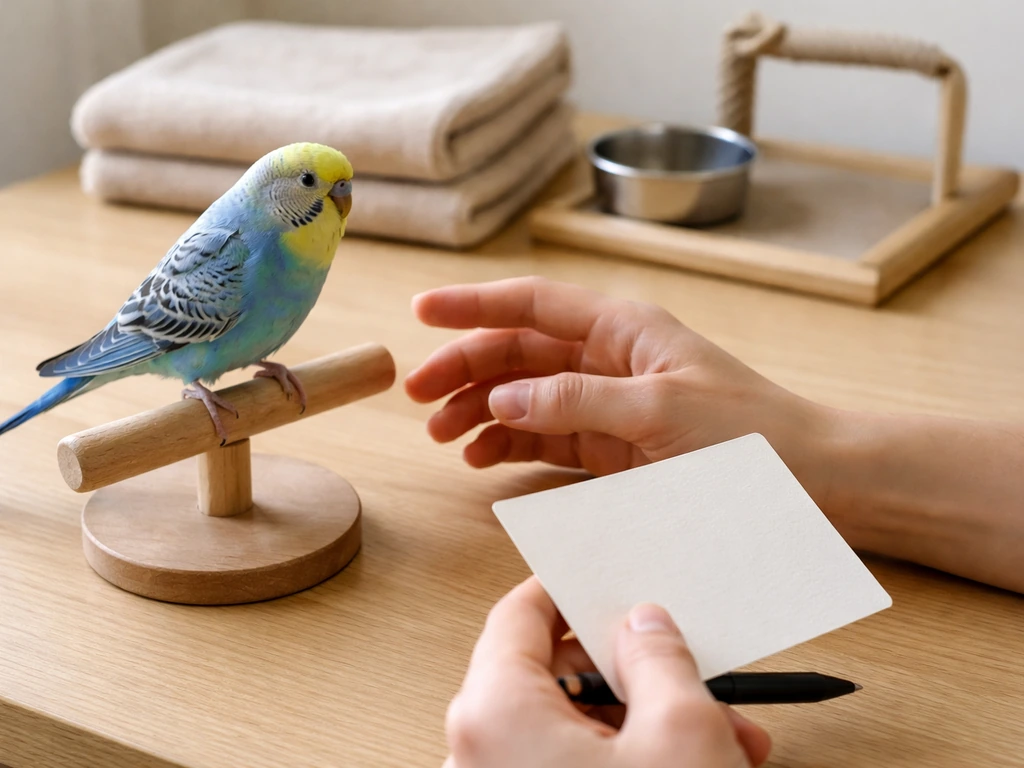
Before you take a single step toward the bird, spend 30 seconds identifying it and clarifying your goal. This shapes every decision that follows.
- Pet bird (parrot, cockatiel, budgie, finch): Is this a trust-building session, a routine health check, or are you retrieving an escaped bird that's spooked and flighted?
- Wild bird in your yard: Is it injured, acting dazed, or trapped somewhere it can't get out of? Or is it a fledgling on the ground that may not actually need your help?
- Rescue situation: Did it fly into a window, get caught by a cat, or is it clearly bleeding or unable to stand?
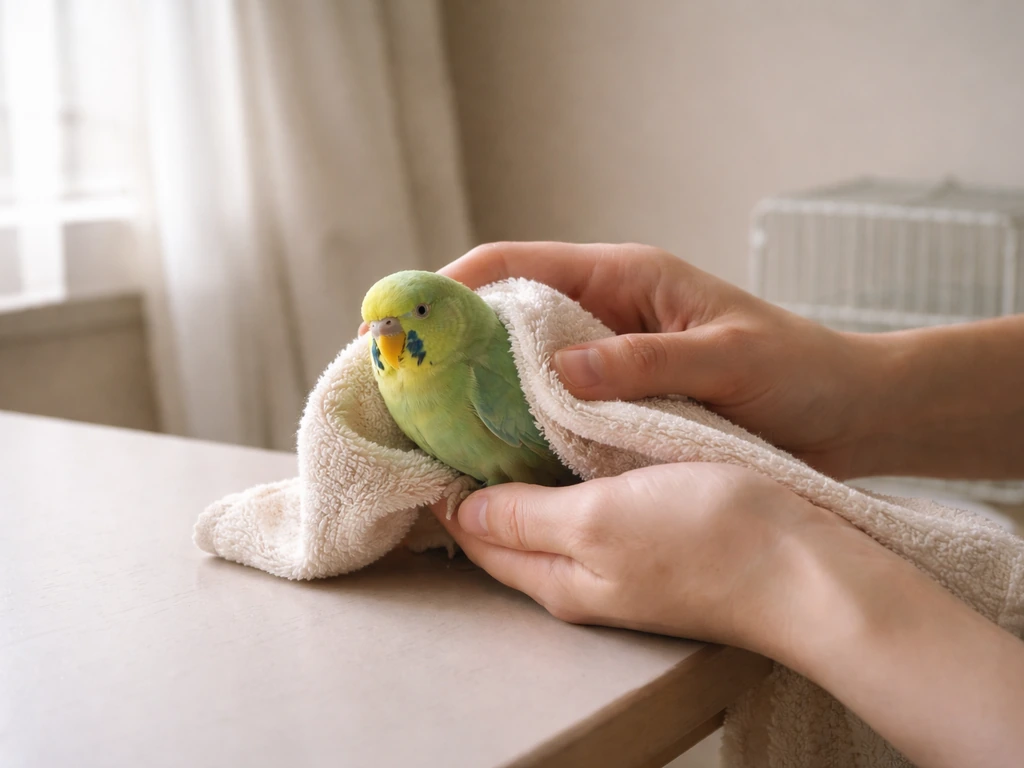
For fledglings specifically, check the feather coverage. A nestling has few or no feathers and can't stand on its own. A fledgling is fully feathered, can hop around, and is almost certainly being watched by its parents nearby. Fledglings on the ground usually don't need rescuing at all. If it looks like a tiny feathered bird hopping around under a bush, leave it alone and keep cats and dogs indoors. If it's a naked pink nestling that has fallen from a nest, try to replace it before touching anything else. Knowing which category you're in prevents a lot of well-meaning but harmful intervention.
Safety rules before you touch anything
Bites and scratches from birds are no joke, and the disease risk from wild birds is real. In 2024 and into 2025, H5N1 avian influenza made handling wild birds a genuine health consideration. CDC and OSHA both recommend disposable or rubber gloves when handling birds, and thorough handwashing afterward with soap and water for at least 15 seconds. After you remove gloves, wash your hands again before touching your face, eating, or drinking. If you're handling a wild bird that's visibly sick or dead, that's when full PPE (gloves, eye protection, and a mask) becomes genuinely important, not just precautionary.
For pet birds, gloves aren't always ideal because they reduce your sensitivity and can make a nervous bird more startled. But if your bird bites hard, thin leather gloves let you feel what you're doing while protecting your skin. Handling a bird that bites is its own skill set, and it's worth understanding before you attempt any grab with an aggressive bird.
- Keep other pets and children out of the room before you start.
- Close all windows and doors if you're working with a flighted bird.
- Have your carrier or containment box ready and open before you approach.
- Wash hands before and after every handling session.
- Never squeeze around the bird's chest — birds breathe with their whole body and restraint around the torso can suffocate them very quickly.
How to approach without triggering a panic
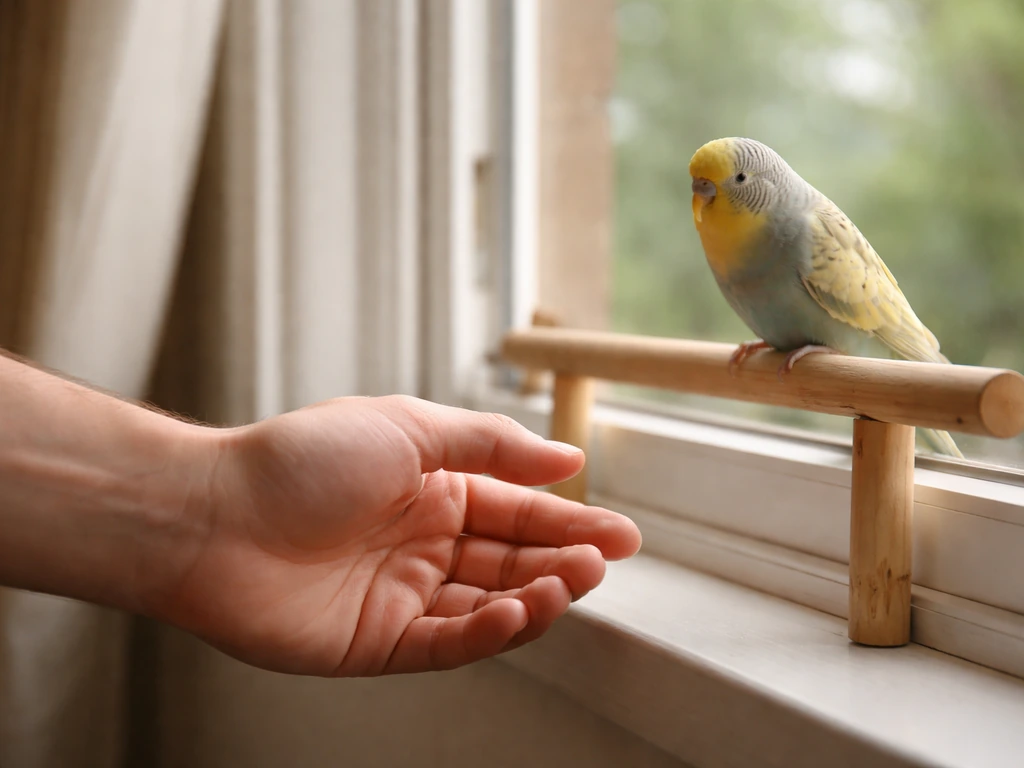
The way you move toward a bird matters as much as what you do when you get there. Birds read body language constantly. Slow, low, and sideways is the universal 'I'm not a threat' posture. Avoid direct eye contact at first, especially with wild birds and untamed parrots. Approach from slightly to the side rather than head-on, crouch down to their level, and move in a smooth arc rather than a straight line toward them. A hand coming straight at a bird's face reads as a strike.
Set the environment up before you start. Dim the lights slightly if you're working with a very flighty or aggressive bird indoors. Darkening a room genuinely reduces movement in fractious birds and makes the initial approach easier. Remove mirrors, other cage birds, and anything that could distract or alarm the bird. For wild birds, work in a small, enclosed space if possible. If the bird is in a large open yard, it will simply fly away every time you get close. Corner it gently into a smaller area, like behind a bush or into a corner of a fence, before attempting to pick it up.
Step-by-step: getting a bird into your hand or a carrier
The step-up method (for tame or semi-tame pet birds)
- Approach calmly with your hand held low, below the bird's feet. Don't reach over or above them.
- Present the side of your index finger or your flat hand at perch height, right against their lower belly/chest.
- Say 'step up' in a calm, consistent tone if they know the cue.
- Wait. Let the bird make the move. Gently nudge against their chest if they hesitate.
- Once they step on, keep your hand level and move slowly. Don't jerk or change height quickly.
The towel method (for resistant birds, wild birds, or medical handling)
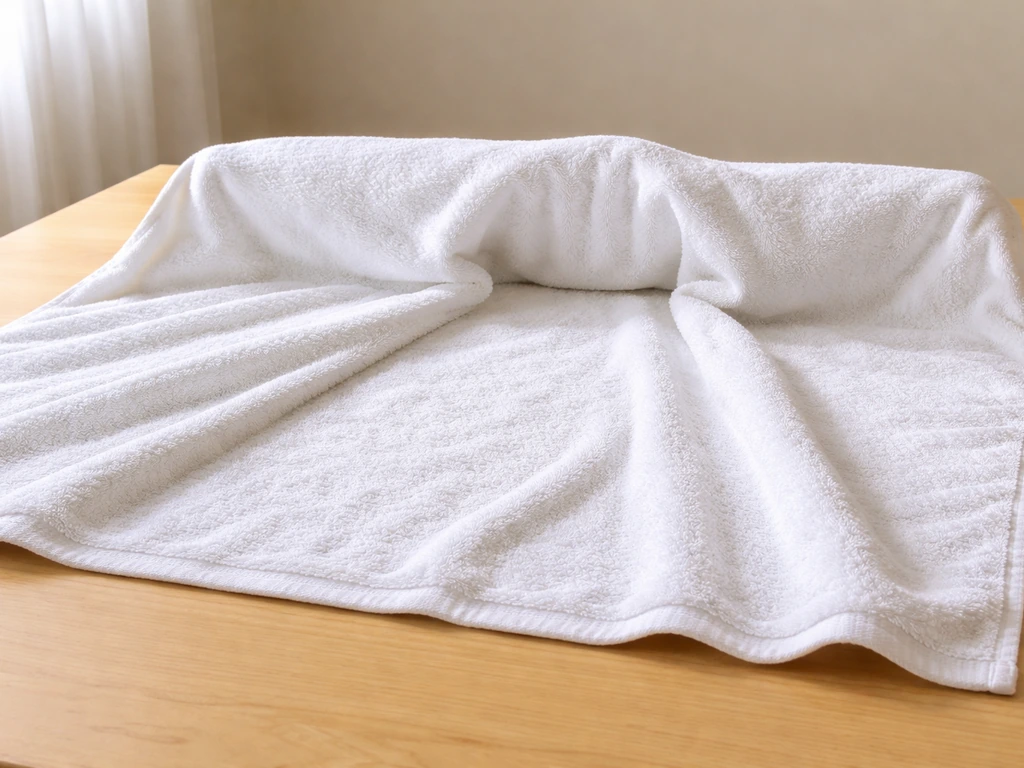
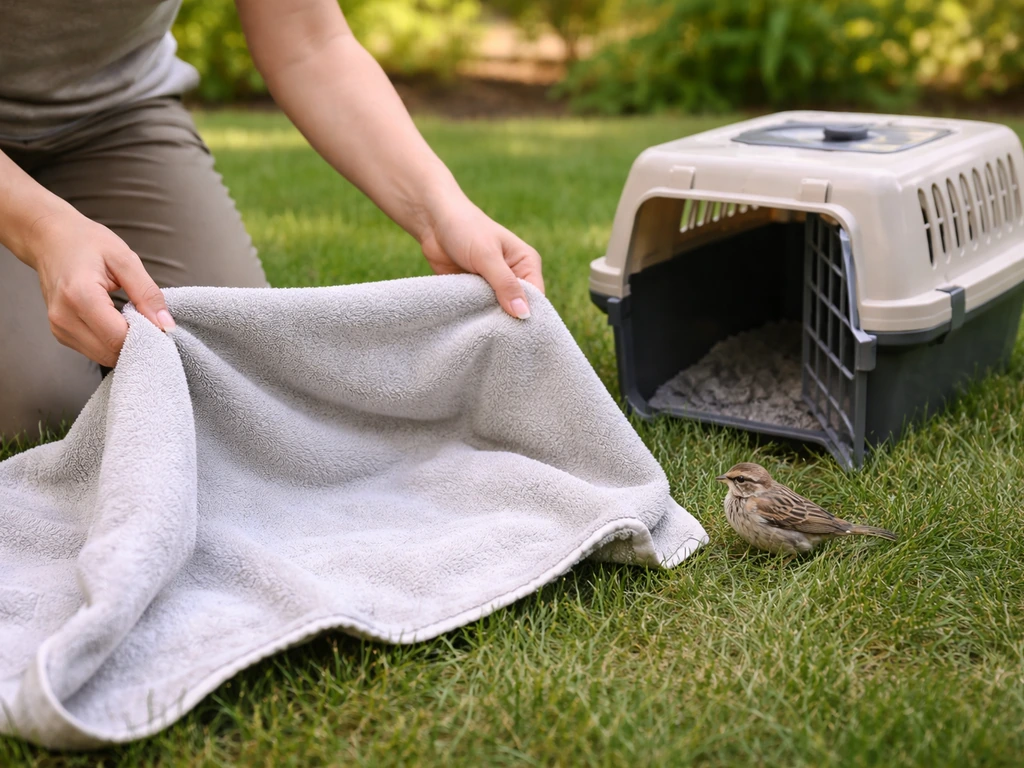
- Choose the right size towel: a dish towel for small birds like finches and budgies, a bath towel for larger parrots or wild birds.
- Hold the towel open in front of you, not bunched up. Let the bird see it briefly before you move.
- Gently drop or drape the towel over the bird from above and slightly behind, covering the wings first.
- Wrap the towel around the bird in a loose 'taco' fold, securing the wings against the body without squeezing the chest.
- Keep the head accessible — never cover a bird's face in a way that blocks airflow.
- Move quickly but smoothly from this point. The bird will stop struggling sooner if you're calm and confident.
- Transfer into a carrier or box as fast as possible and release the towel once secure.
The towel method is well established for wild bird rescue and for veterinary restraint of parrots. If you want to go deeper on the technique, there's a detailed breakdown of how to grab a bird with a towel that covers size variations and common mistakes.
Luring into a carrier
For pet birds that won't step up but are food motivated, this is often the gentlest option. Place the open carrier on a flat surface with a favourite treat just inside the door. Leave it and step back. Many birds will walk in on their own within a few minutes. For parrots that are target trained, you can use a target stick to guide them in. Present the stick from slightly below and in front of the bird, cue the touch, then move the stick incrementally into the carrier as they follow it. This works especially well for cooperative transport on cue.
Species-specific tactics
Parrots (large and medium species)
Parrots are smart, strong, and have powerful beaks. Never grab a parrot by the legs or wings. That reflex almost always causes the bird to struggle violently, and fractures are a real risk. The towel method with the 'taco' wrap is the standard for birds that aren't cooperating. If your parrot is comfortable with handling, the step-up cue is always preferable. For birds that are trained to a target stick, target training is one of the best long-term investments you can make. Teach the bird to touch the stick with its beak on cue, and you can guide it anywhere with zero stress.
Cockatiels
Cockatiels are generally more willing to step up once tame, but an untamed or startled cockatiel will fly in panicked circles until exhausted. Close off the room before attempting anything. A small, dimly lit space helps enormously. Once the bird lands and is still, approach slowly at their level with your flat hand. Most cockatiels will step up when approached from below. If you're trying to pick up a small bird like a cockatiel without prior taming, the dish towel method is your safest option.
Budgies
Budgies are fast and agile, and an untamed budgie will avoid your hand reliably for a long time. The most reliable approach is patience and luring. A millet spray held near your hand, offered consistently over several sessions, will get most budgies eating from your hand within a week or two. For a one-time grab of an untamed bird (say, for a vet visit), darken the room, let the bird land somewhere stable, and use a small dish towel with a quick, confident drape. Hesitation makes it worse. Whether you can pick up a bird safely often depends on exactly this kind of species temperament, and budgies need a gentler touch than people expect.
Finches
Finches are not typically hand-tamed and should not be handled routinely. They are high-stress birds and the risk of handling-induced shock is real. If you must catch a finch (for a health check or vet visit), work in a small enclosed space or a cage, use a very small soft cloth or piece of fabric, and be extremely gentle. Keep the grip loose enough that you can feel movement but secure enough that they can't fly. Limit the time in your hand to the absolute minimum. A finch that goes still and limp in your hand is not calm, it may be in shock.
Common wild birds (sparrows, starlings, pigeons, etc.)
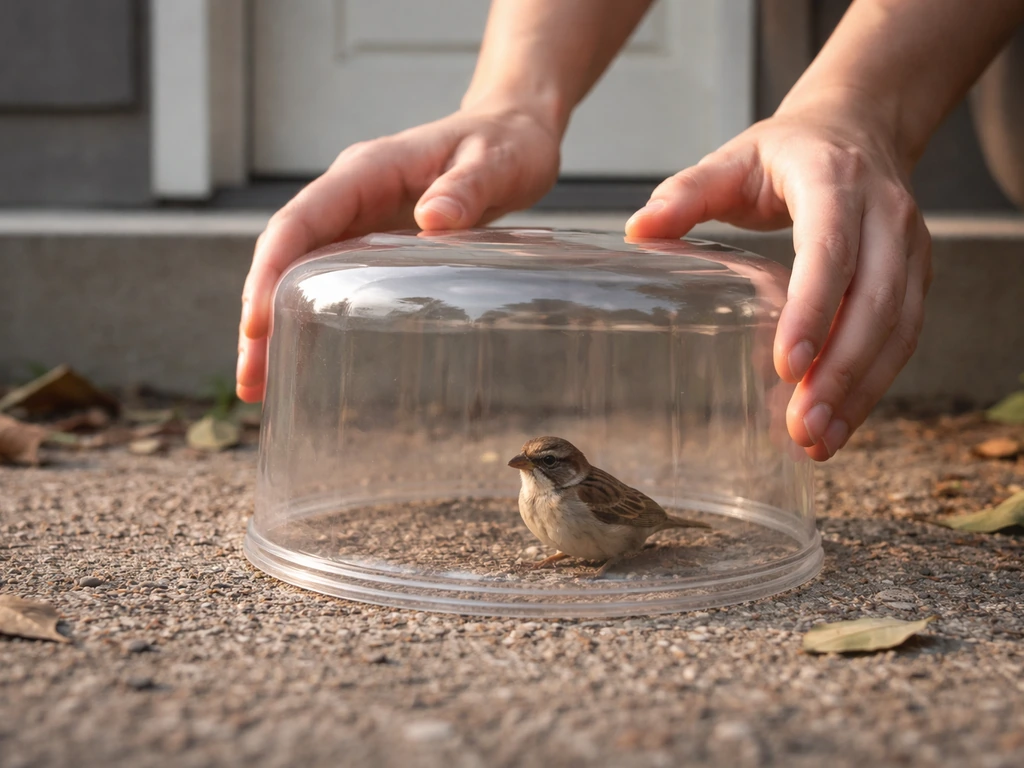
Most wild songbirds in your yard can escape very quickly once startled, so if you need to catch one for rescue purposes, you have a short window before it hides or exhausts itself trying to escape. Approach slowly and quietly while the bird is still or dazed. Use a bath towel or dish towel (depending on size), drop it gently over the bird, wrap loosely, and place into a ventilated box right away. Keep pets away. Keep the box in a dark, quiet room. Do not offer food or water unless a licensed wildlife rehabilitator advises it. Most injured birds need professional medical care.
Handling and aftercare once you have the bird
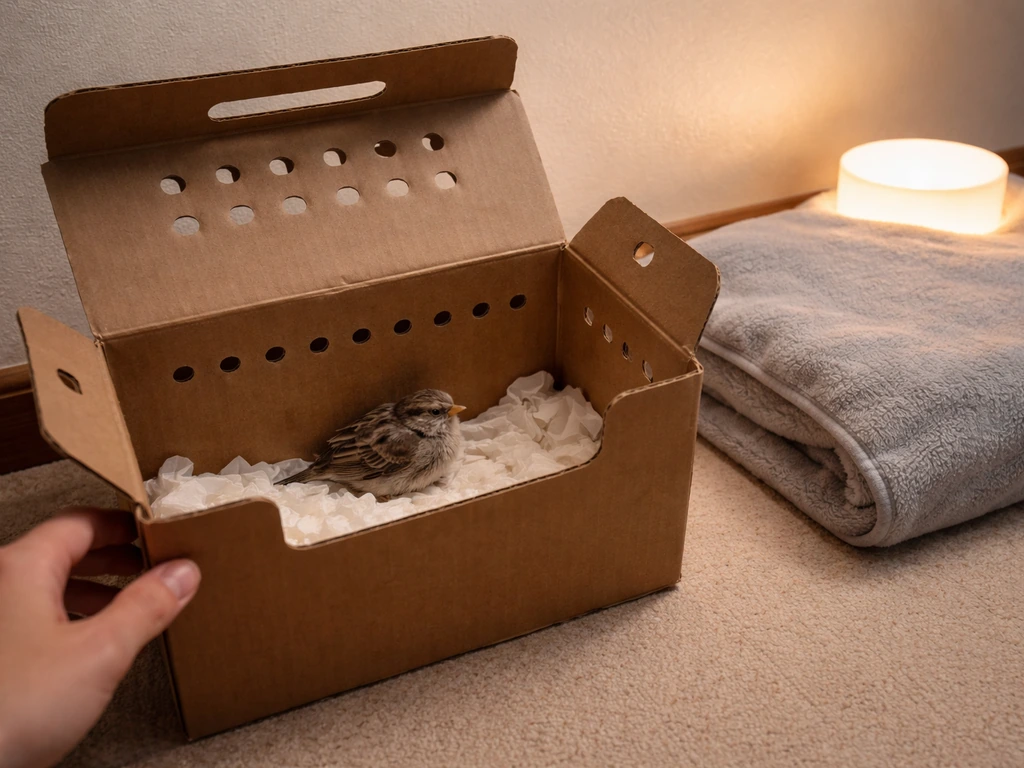
Once the bird is in your hands, your job is to move quickly and calmly toward your next step. For picking up a bird without hurting it, the key is supporting the body without compressing the chest. Cup the bird in both hands with fingers loosely around the wings and your palms providing a cradle. The feet should be able to grip something if possible. Don't hold a bird upside down or on its back.
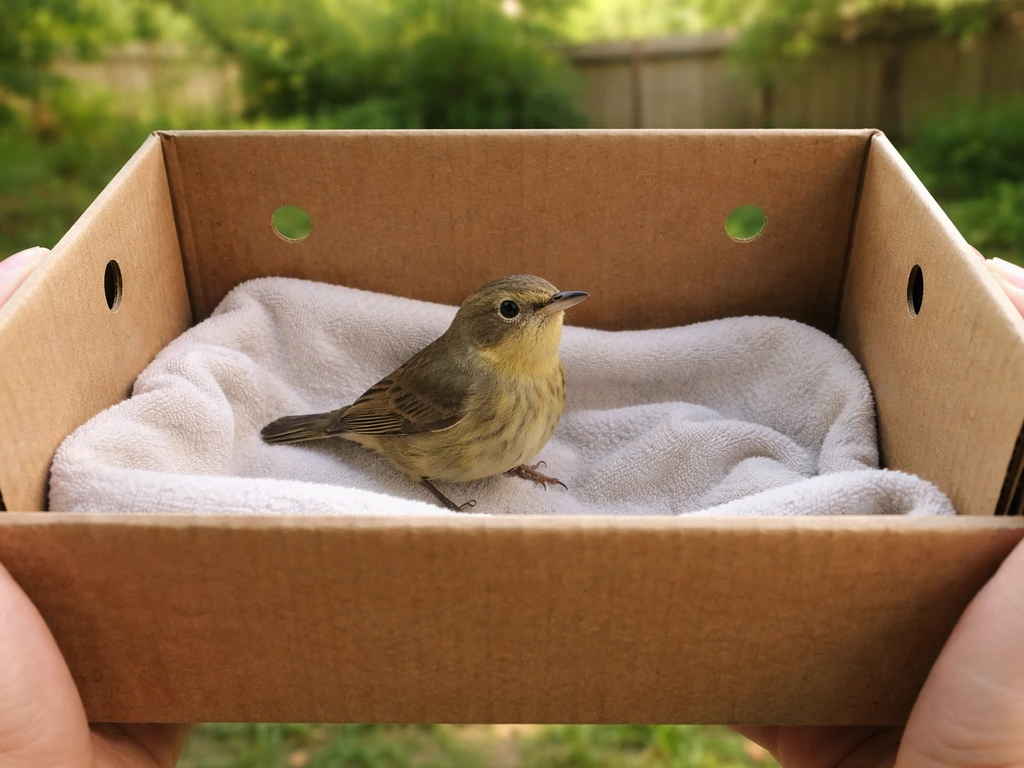
For wild injured birds, transfer into a ventilated cardboard box as soon as you can. Line the box with a soft cloth or paper towels. If the bird is cold or in shock, you can place a hot-water bottle wrapped in a towel inside or next to the box, but always give the bird enough space to move away from the heat source if it wants to. Keep the box in a dark, quiet room away from other pets. Do not feed or give water. One hour of calm dark rest can stabilize a stunned bird significantly before transport.
For pet birds, return them to their familiar environment as quickly as the situation allows. Offer a favourite treat once they're settled and behaving normally. If a pet bird was handled with a towel or under duress, give them a few hours of quiet undisturbed time before interacting again. If you noticed any unusual symptoms during handling (laboured breathing, drooping wing, bleeding), contact a vet.
When the bird won't let you near it
This happens. Here's how to troubleshoot the most common sticking points.
| Problem | What's probably happening | What to try |
|---|---|---|
| Bird keeps flying away every time you approach | Too much open space or your approach angle is too direct | Close off the room, dim the lights, approach lower and slower from the side |
| Bird is hiding behind furniture and won't come out | Hiding is a fear response, not stubbornness | Stop chasing. Leave a treat trail toward an open carrier and step away for 10-15 minutes |
| Bird is escalating aggression (lunging, biting, screaming) | Stress is too high for a voluntary approach right now | Back off completely, give 15-30 minutes of quiet, then try again with a towel rather than a bare hand |
| Bird flies to hand but won't let you close fingers around it | Bird is willing but not trained to a full grip | Use the carrier lure method instead of a hand grab; let the bird enter the carrier voluntarily |
| Wild bird runs but can't fly | Grounded bird may be injured but is still mobile | Herd gently into a corner using a large towel spread wide, then drop the towel over the bird |
| Bird went completely still and isn't moving | Possible shock or injury, not calm cooperation | Handle minimally, keep warm and dark, contact a wildlife rehabilitator immediately |
One important time note: if you're dealing with a wild bird that needs capture and it keeps evading you, don't spend more than 30 minutes on active pursuit. Prolonged chasing exhausts and injures birds. If you can't contain it in that window, step back, secure the area as best you can to prevent further harm, and call a professional.
For pet birds that consistently resist handling, the answer isn't more grabbing. It's going back to trust-building fundamentals. The full process of picking up a bird successfully starts well before you raise your hand, and it includes building a positive association with your presence over time.
Legal and ethical lines you need to know
In the US, almost all wild native birds are protected under federal law. The Migratory Bird Treaty Act covers the vast majority of songbirds, waterfowl, raptors, and shorebirds you're likely to encounter. This means that possessing, capturing, or holding a wild bird without a federal or state permit is technically illegal, even if your intentions are good. Legally, the right move when you find an injured wild bird is to provide minimal immediate containment, keep the bird safe and dark and quiet, and then transfer it to a licensed wildlife rehabilitator as quickly as possible. You are not supposed to keep it, attempt to treat it yourself, or release it after extended home care without a permit.
Wildlife rehabilitation permits are issued at the state level and require training. Indiana, for example, explicitly requires a valid permit to take in sick, injured, or orphaned wild animals, with the mandate that they be returned to the wild. Most states have similar rules. This isn't bureaucratic red tape; it exists because well-meaning people regularly cause additional harm through improper nutrition, incorrect handling, and delayed professional care.
Raptors (hawks, owls, eagles) are an entirely different category. Do not attempt to capture a bird of prey on your own. They are covered by additional protections, the injury risk to you is serious (talons cause deep puncture wounds), and the handling requirements are genuinely specialized. If you find an injured raptor, call a wildlife rehabilitator or your local wildlife authority immediately and follow their instructions.
When in doubt about any wild bird situation, the safest default is: take a photo to document the bird's condition, secure the immediate area to prevent further harm, place the bird in a dark ventilated box if it's clearly injured and not moving well, and call your nearest licensed wildlife rehabilitator. Most areas have hotlines and organizations that can walk you through exactly what to do in real time. That's always the better option than extended DIY handling. Some bird handling situations are genuinely too specialized for a first-time rescuer without guidance.
For pet birds, the legal landscape is different, but the ethical principle is the same: if a bird is sick, injured, or showing symptoms you can't explain, a vet visit is not optional. An avian vet can assess injuries you can't see and catch infections early. Regular handling practice done gently and positively prevents the desperate-grab situation from arising in the first place.
FAQ
What should I do first if I see a bird on the ground and I'm not sure if it needs help?
Do a quick two-step check from a short distance (about 6 to 10 feet). First, confirm whether it is fully feathered and can stand or hop, if yes, usually parents are nearby and it may not need rescue. Second, look for clear injury signs like uncontrolled bleeding, inability to perch, or obvious distress. If you are unsure, keep pets away, watch quietly for a short time, and document with a photo before you attempt any contact.
How do I tell the difference between a fledgling that should be left alone and a nestling I should intervene for?
Use the feather and posture cues together. Nestlings are typically naked or mostly pink skin with minimal feathers and cannot hold an upright posture, while fledglings are fully feathered, have stronger balance, and often hop or flutter. Another clue is location, if it is in the immediate area of a nest and still looks alert enough to move, it is often a fledgling being protected.
Is it ever okay to move a “healthy” wild bird just to get it out of danger?
Yes, but only with minimal handling. If the bird is in immediate risk (for example, in the roadway) you can gently guide it toward safety without holding it for long, then stop. Avoid chasing, compressing the chest, or prolonged confinement. If you end up needing a box and extended handling, shift to a wildlife rehabilitator approach instead.
I need to catch a wild bird for rescue, but it keeps getting away. What is a safe limit?
Set a hard time boundary, stop active pursuit after about 30 minutes as chasing can injure and exhaust the bird. If it keeps evading, secure the area so it cannot be harmed further, reduce stress by keeping bystanders and pets back, and call a licensed wildlife rehabilitator for real-time instructions.
How can I reduce the chance I get bitten or scratched when handling a pet bird?
Position yourself lower than the bird when possible and offer your hand slowly from the side, this helps prevent a sudden defensive lunging. Use protection when necessary, if bites are strong, thin leather gloves can protect your skin while still letting you feel movement. Also plan a quick end state, have a towel or carrier ready so you do not hesitate once the bird is within reach.
Should I use gloves for all bird handling?
Not automatically. For wild birds, gloves and later thorough handwashing are important for disease risk and bite resistance. For pet birds, gloves can reduce sensitivity and may startle or increase panic, so consider gloves mainly for birds that bite hard, otherwise use a calm, low-stress approach and appropriate support.
My pet bird panics and won’t step up. What should I do instead of trying to grab it repeatedly?
Switch to trust-building and cue-based capture. If you have a treat-motivated bird, use a carrier with a favorite treat and let the bird enter voluntarily. For long-term control, target training is often the best investment, because you can guide the bird with a cue rather than forcing a catch that escalates fear.
What is the safest way to pick up a small bird like a cockatiel if it is not tame yet?
Close off the room so it cannot sprint into corners, then use a small dish towel method for a quick, confident capture. Approach only after it has landed and is still, crouch to its level, and avoid moving your hand straight at its face. Keep the towel wrap controlled enough to prevent thrashing without compressing the chest.
How should I hold a bird once I have it, so I don’t injure it?
Support the body as a cradle and avoid pressure on the chest, keep fingers loosely around the wings and palms providing the main support. Do not hold the bird upside down or on its back. If the feet can grip something stable, that can reduce struggling compared with holding it with no footing.
What should I do if a wild bird is cold, in shock, or seems overheated?
For cold or shock, you can place a hot-water bottle wrapped in a towel near the box, not directly touching the bird, and allow space to move away from the heat. For both cold and hot conditions, keep the bird in a dark, quiet, ventilated container. Do not offer food or water unless a licensed rehabilitator tells you to.
Can I give water or food to an injured wild bird at home?
In most cases, no. Keep the bird dark, ventilated, and calm, and transfer it to a wildlife rehabilitator as soon as possible. Feeding or watering without guidance can be harmful, especially if the bird is dehydrated, aspirating, or the species has specific diet needs.
What should I do if I find a raptor or it is clearly a bird of prey?
Do not attempt capture or handling yourself. Raptors are high-risk due to talons and also require specialized knowledge and permissions. Immediately contact your local wildlife rehabilitator or authority and follow their instructions for securing the area and keeping people away.
What if I’m bitten or scratched by a bird during handling?
Clean the wound right away with soap and water, and seek medical advice if the injury breaks the skin, looks severe, or you have any symptoms like increasing redness, swelling, fever, or reduced function. For wild bird contact, also be extra cautious about timing and hygiene, and consider contacting a healthcare professional for risk assessment.
Is it legal to keep an injured wild bird temporarily until I can find help?
Usually not beyond minimal containment, because many wild native birds are protected and capture or possession can be illegal without the proper permit. The safer path is minimal containment for safety, then transfer quickly to a licensed wildlife rehabilitator. If you want to confirm local requirements, the nearest rehabilitator hotline can guide you immediately.