
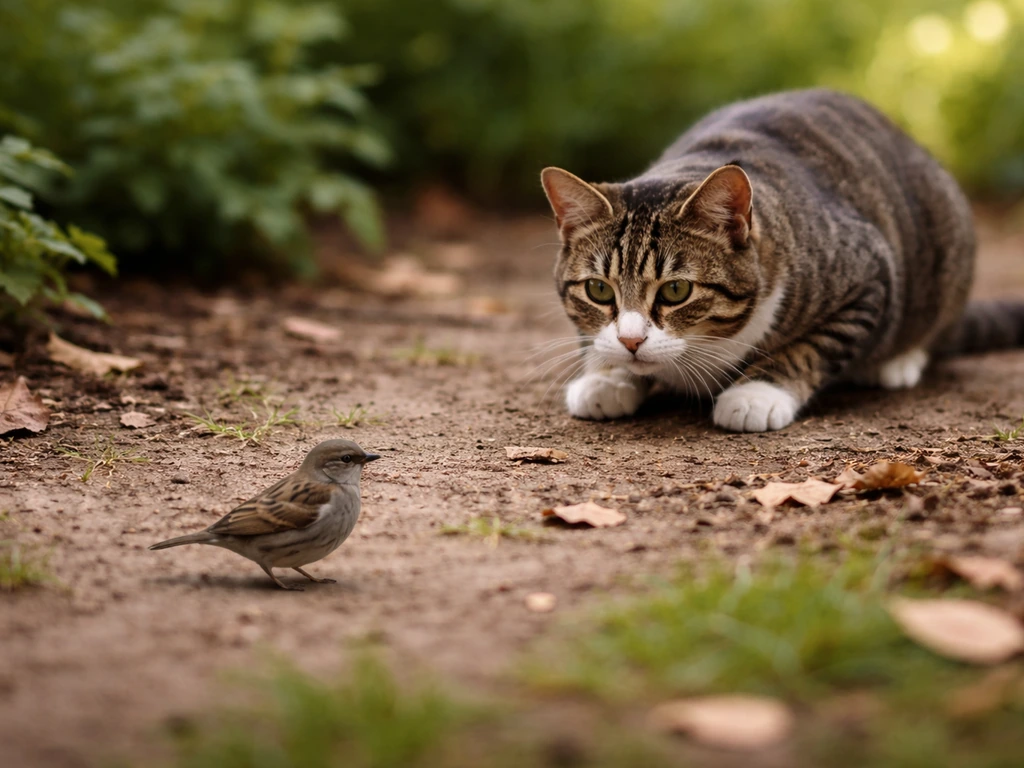
Cats catch birds through a precise, instinct-driven sequence: stalk, pounce, grab, and kill. They crouch low, move in slow deliberate bursts, freeze when the bird looks up, and launch a final explosive pounce from a short distance, usually under 10 feet. The grab happens fast, often targeting the neck or back. Understanding exactly how that sequence unfolds is the first step to breaking it, because every phase of the hunt has a weak point you can exploit with the right barrier, deterrent, or management change.
How Does a Cat Catch a Bird and How to Prevent It
Clara Hayes
18 May 2026
How a cat hunts birds, step by step
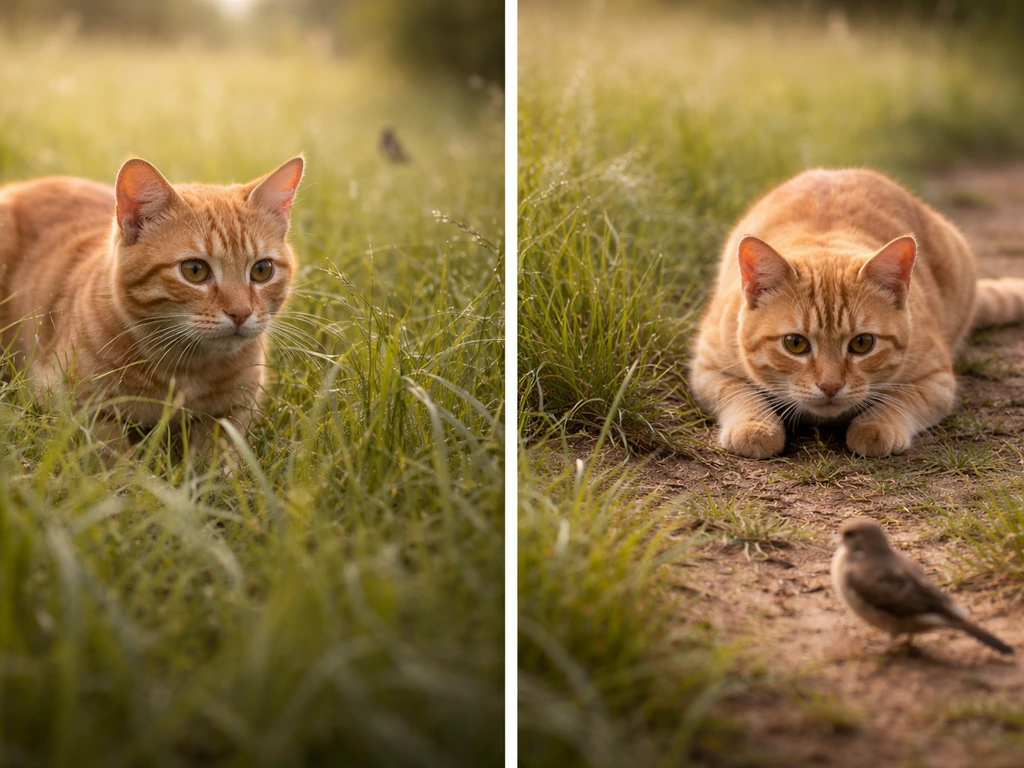
The ASPCA describes the feline predatory sequence as stalk, pounce, kill, and remove. In practice, that plays out in stages you can actually watch for, which matters a lot if you're trying to protect a pet bird in the house or keep wild birds safe in your yard.
- Detect: The cat spots or hears the bird, often triggered by movement, wing flutter, or chirping. Ears swivel forward, pupils dilate, and the tail starts a slow, low twitch.
- Orient and stalk: The cat drops into a low crouch and begins moving in slow, controlled steps, keeping its body flat to the ground. It uses cover, furniture, shrubs, or walls to break up its silhouette.
- Freeze: When the bird looks toward the cat, the cat stops completely and waits, sometimes for several minutes. This freeze-and-go pattern is what makes cats so effective, the bird often resumes foraging before the cat is close enough to strike.
- Rush and pounce: From within a few feet, the cat launches a rapid sprint and leaps, using front paws to pin or grab the bird before it can get airborne. The leap can cover surprising distance.
- Grab and bite: Once the bird is in the paws, the cat delivers a bite, typically to the back of the neck or the spine. The bite is fast and precise.
- Remove: Cats often carry prey away from the site, either to eat it, cache it, or (in the case of domestic cats) bring it back to a familiar space.
Cats also use ambush as a variation on this sequence, positioning themselves near a feeder, low perch, or cage and waiting rather than actively stalking. Ambush attacks are faster and harder for birds to detect in advance. Both approaches rely on the bird being distracted or on the ground long enough for the cat to close the distance.
Why some birds are much easier to catch than others
Not every bird is equally at risk. Research using wildlife rehabilitation center data consistently shows that birds rescued from cat attacks in urban settings are overwhelmingly species that forage on or near the ground. Birds that spend most of their time in the open at ground level give cats a longer window and more consistent target than birds that perch high or flush quickly.
Trait-based models confirm that small body size, ground-foraging habits, and slow flight response all increase a bird's vulnerability to cat predation. For backyard birders, that means species like sparrows, towhees, doves, and robins are at higher risk than, say, a jay or a starling that flushes fast and high.
For pet birds, the vulnerability factors are different but just as real. A cockatiel, budgie, or finch in a cage is not safe simply because it is caged, if the cage is accessible to a cat, the stress alone from a cat crouching nearby is harmful. Out-of-cage time for any small pet bird around a cat is a genuine predation risk, even if the cat has never successfully attacked before. If you want practical guidance on this kind of risk, review how to catch cockatiel bird behavior so you can prevent opportunities instead of learning from harm out-of-cage time. The predatory impulse is always present; opportunity is what changes.
Environment matters too. Dense vegetation, low feeders, and cover near birdbaths all give cats better ambush positions. Open, elevated feeding stations reduce cat success rates significantly.
Immediate risk assessment: what to check right now
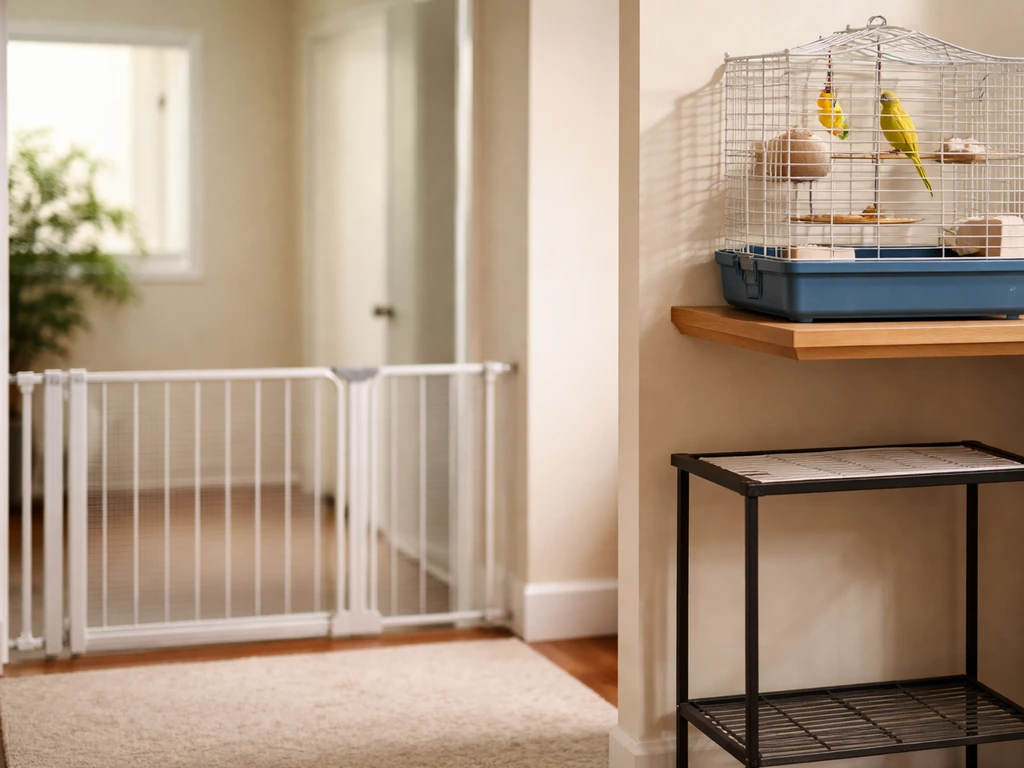
Before you set up any deterrent or barrier, do a quick walk-through of your space using the cat's perspective, not yours. You're looking for three things: access points, ambush positions, and escape failures (places where a bird can't get away fast enough).
Indoors: pet bird households
- Is the bird's cage in a room the cat can freely enter? If yes, that needs to change today.
- Is the cage at floor level or low enough for the cat to reach through the bars? Bar spacing should be too narrow for a paw to enter.
- Is there a stable, locked cage latch? Cats have been documented learning to manipulate simple cage closures.
- Does your bird have out-of-cage time? If the cat is anywhere in the home during free-fly or perch time, the risk is high.
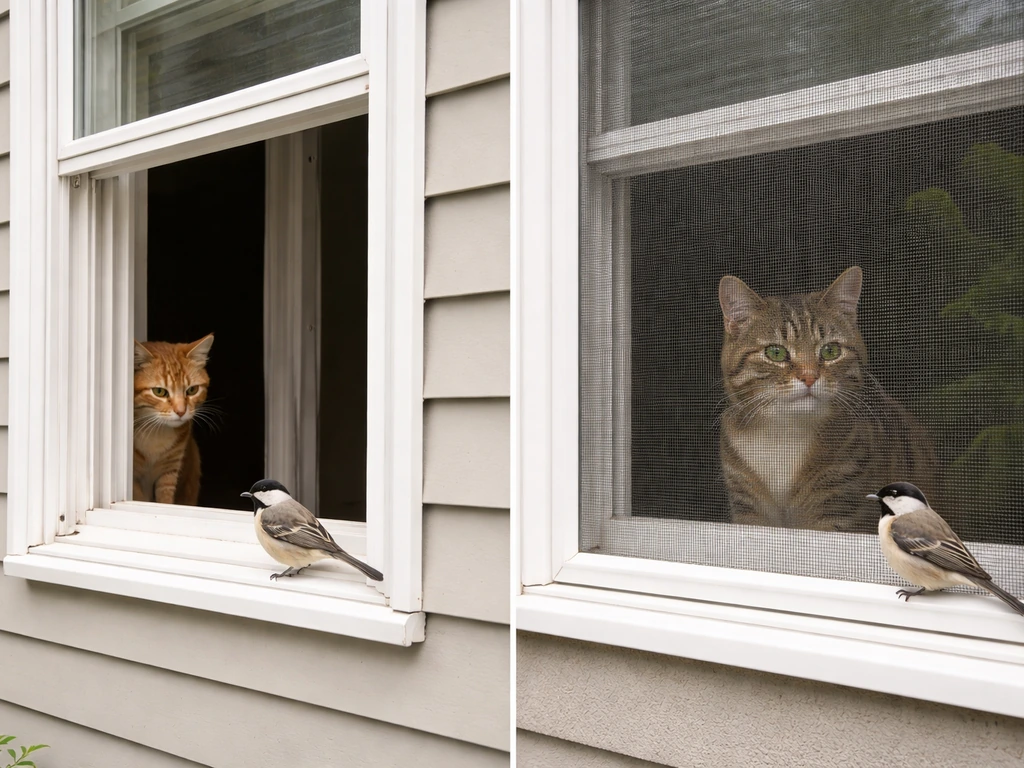
- Are there window screens the cat could launch off of to reach a bird on a perch near a window? Preventive Vet recommends screwing screen frames directly into the window opening to prevent this.
Outdoors: yard and wild bird setups
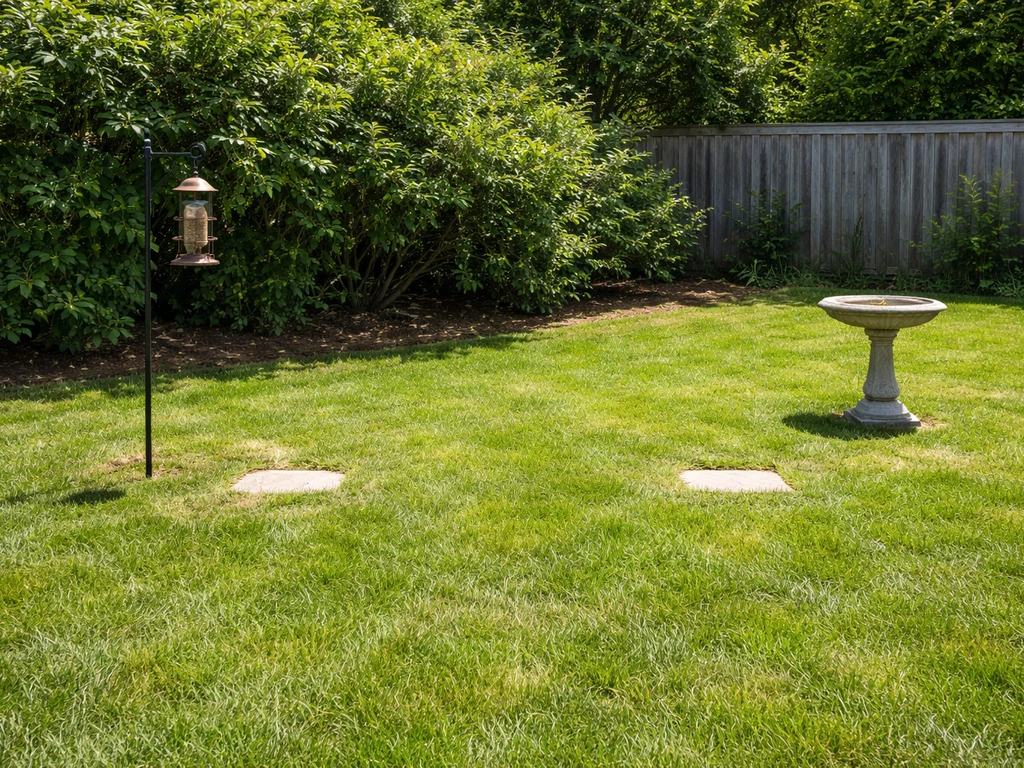
- How far are your feeders and birdbaths from shrubs, fences, or other cover a cat could use? The Humane Society recommends at least 10 to 12 feet of open space between cover and feeders.
- Are feeders low enough for a cat to leap to, or is there a climbable structure nearby?
- Are there gaps under fences or gates where outdoor or neighborhood cats enter regularly?
- Do you have a catio or enclosed aviary? Check the netting and framing for gaps larger than 1 inch.
Humane prevention strategies that work today
The most effective approach is layered: no single solution stops all predation, but combining two or three of the following strategies together reduces risk dramatically.
Keep cats indoors or in a confined outdoor space
The American Bird Conservancy's Cats Indoors program is clear: the only fully reliable way to eliminate cat predation on wild birds is to keep cats inside. The National Wildlife Federation agrees. That said, 'indoors only' doesn't have to mean boring for the cat. Supervised outdoor time via a catio (enclosed outdoor run), a cat harness and leash, or a cat backpack gives the cat environmental enrichment without giving it access to birds. If you choose to leash train your bird, keep sessions short and supervised, and use a secure, bird-safe harness size for your species a cat harness and leash. If you also plan to use a bird harness on your cockatiel, make sure the setup is secure and only used when the cat is fully separated cat harness and leash. If you are training your bird for harness time, start with short, calm practice sessions so the bird can learn the gear safely a cat harness and leash. A well-built catio with solid netting is also the right setup if you keep outdoor pet birds like chickens, doves, or aviary finches.
Collar-mounted deterrents for outdoor cats
For cats that do go outside, collar-mounted devices are among the most well-studied interventions. If you are specifically trying to keep outdoor cats from hunting birds, collar-mounted deterrents are one adjacent option to consider alongside placement and supervised access. Bell collars have been shown in UK studies to reduce predation rates of birds and mammals by around 50% when worn consistently. blank" rel="noopener noreferrer">CatBib pounce protectors (a brightly colored bib worn on the collar) have also shown meaningful reductions in vertebrate catches in Murdoch University research. The key word in both cases is consistently: owners who kept the devices on their cats long-term saw continued results, while those who stopped using them saw predation return. These devices work by disrupting the final pounce phase of the hunt, either through noise warning or physical interference.
Feeder and birdbath placement outdoors
Place feeders and birdbaths in open areas at least 10 to 12 feet from any shrubs, fences, overhanging branches, or structures that cats can use for cover or launching. Use pole-mounted feeders with a baffle (a smooth, wide dome on the pole) to prevent climbing. Elevated pedestal birdbaths are safer than ground-level ones. Remove brush piles and dense low plantings near feeding stations if they give neighborhood cats a place to hide.
Window and screen safety
Windows are a double hazard: a bird outside can trigger a cat to leap at the screen from inside, and birds flying near the house can collide with glass. For the cat-screen problem, Preventive Vet recommends screwing the screen frame directly into the window frame so it can't be pushed out (while maintaining safe emergency exit options). For bird collision reduction on the outside, All About Birds recommends applying window screening or netting on the exterior, held at least 2 to 3 inches away from the glass and taut enough to bounce birds off before impact.
Indoor pet bird: cage placement and separation
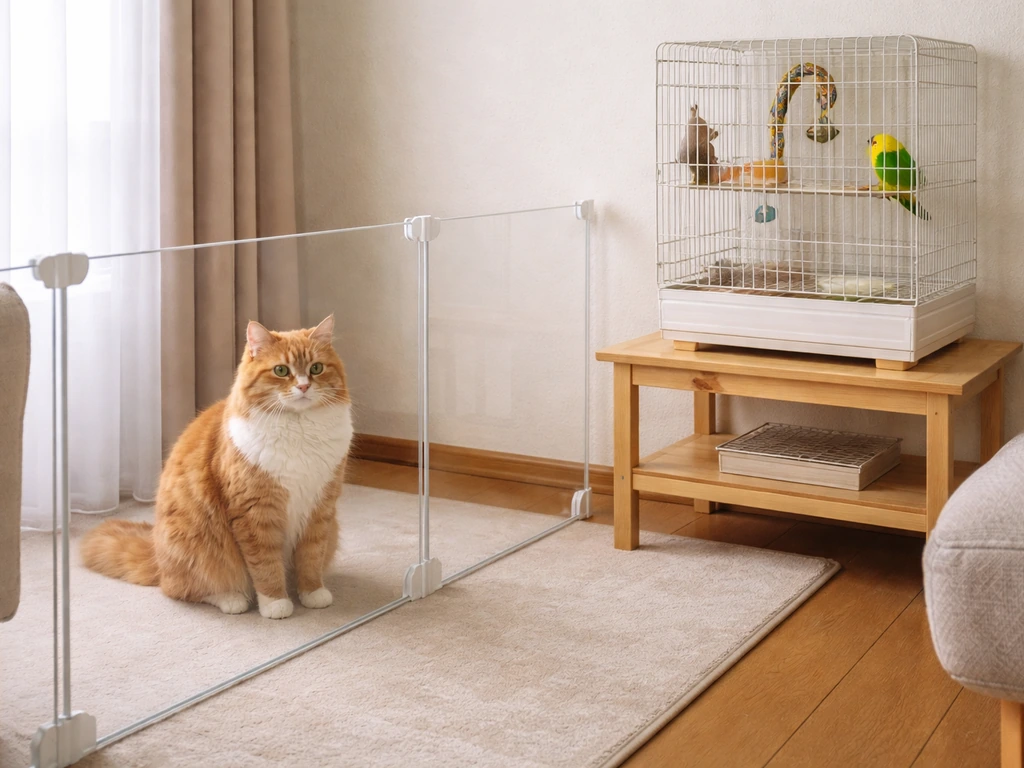
Purdue Veterinary Medicine's caged bird husbandry guidelines are direct: birds should be supervised when outside the cage, and cats and other pets should be kept away during that time. The CDC adds that cage placement and location selection are part of keeping pet birds safe. In practice, this means the bird's room should be a cat-free zone with a door that latches securely. During out-of-cage time, the cat should be in a completely separate area of the home, not just 'in another room with the door cracked.'
Training and behavior management for cats around birds
Here's the honest truth: you cannot train a cat out of its predatory instinct, and trying to punish the behavior will make things worse, not better. Cornell's veterinary behavior guidance, ASPCA, and Merck Veterinary Manual all agree that punishment, including physical punishment, startling, or spraying with water, is not effective for managing predatory behavior and can actually trigger pain-induced or fear-based aggression, making the cat more reactive, not less.
What you can do is use positive reinforcement and environmental management to redirect the behavior and reduce its intensity over time. Research published in a peer-reviewed journal found that providing a high-meat-content diet and adding short daily object play sessions were associated with meaningful reductions in the number of animals cats caught and brought home. The protein-rich diet appears to satisfy some of the 'hunting drive' metabolically, and play that mimics the stalk-pounce sequence burns off predatory energy in a safe direction.
- Use a wand toy or feather lure for 10 to 15 minutes of active play twice daily, especially before the times your cat tends to go near bird spaces.
- Feed a high-protein, meat-based diet rather than a heavily grain-based one.
- Reward calm behavior around the bird's room (sitting quietly, lying down) with a treat, but never force proximity.
- Never let the cat 'practice' stalking the bird, even through glass or a cage. Repeated exposure without consequence reinforces the predatory pattern.
- If the cat is obsessively fixated on the bird to the point that normal management isn't working, consult a veterinary behaviorist. This is not a training failure; some cats need professional behavior support.
Species-specific bird safety: pet birds and backyard species
Pet birds: cockatiels, budgies, finches, and parrots
Small pet birds like cockatiels, budgies, and finches are among the most vulnerable species in a cat-sharing household because they are small, fast-moving, and have flight patterns (erratic, low, and short) that closely match a cat's prey image. If you want to keep a cockatiel thriving, you can also follow bird care basics like proper diet, temperature, and safe enrichment cockatiels. Larger parrots are less immediately at risk from a physical capture standpoint, but even a brief cat encounter can cause fatal stress or injury from the cat's bacteria alone. Cat saliva contains Pasteurella multocida, which is rapidly lethal to birds even from a minor scratch.
For cockatiels and budgies especially, out-of-cage time should happen only in a fully cat-excluded room. A secure door latch and a habit of checking where the cat is before opening the cage are non-negotiable. If you're working on taming a new cockatiel or handling a bird that isn't yet comfortable with you, a cat appearing suddenly in the room can set back weeks of trust-building in seconds. After you have their safety handled, you can focus on training techniques, like short daily practice sessions, to teach a cockatiel to talk taming a new cockatiel.
Wild birds in backyards and aviaries
Ground-foraging species (sparrows, juncos, doves, towhees, and robins) are highest priority for protection in a yard. This aligns with Nature Communications’ synthesis of cat predation research showing that free-ranging domestic cats measurably affect U.S. wildlife populations, with predation risk focused on vulnerable ground-foraging birds Ground-foraging species (sparrows, juncos, doves, towhees, and robins) are highest priority for protection in a yard.. Native sparrows and doves in particular tend to feed low and flush slowly, which makes them ideal ambush targets. If you run a backyard feeding station, ground-feeding trays are worth replacing with elevated tube or tray feeders where possible.
For enclosed outdoor aviaries, construction standards matter. Use hardware cloth (welded wire mesh) with openings no larger than 1 inch, not chicken wire, which can be torn or bent open. Make sure the aviary roof is fully enclosed and that there are no gaps at corners or door frames. A double-door entry (an airlock-style porch before the main aviary) prevents accidental escapes when entering and keeps cats from rushing in.
| Bird type | Primary risk factor | Key protection step |
|---|---|---|
| Budgie / parakeet | Small size, low erratic flight, out-of-cage time | Cat-free room during free flight; secure cage latch |
| Cockatiel | Ground movement when out of cage, trusting nature | Full room separation; no supervised access with cat present |
| Finch (canary, zebra, etc.) | Fast movement triggers pounce reflex; small target | Cage bars too narrow for paw entry; cat-free zone always |
| Large parrot (conure, African grey, etc.) | Cat scratch bacteria risk; stress injury | Room separation; even brief contact is a medical emergency |
| Ground-foraging wild birds (sparrows, doves, robins) | Forage at cat level; slow to flush | Feeders 10–12 ft from cover; baffle on feeder pole |
| Perching wild birds (jays, starlings) | Faster flush; less vulnerable but still at risk near feeders | Elevated feeders; clear sight lines around feeding area |
When things aren't working: troubleshooting and realistic timelines
Behavior change in cats is slow, and predation is one of the hardest drives to redirect because it is deeply hardwired. Set your expectations around weeks and months, not days. The enrichment and diet changes described above can show measurable results (fewer hunting attempts, less fixation) within 4 to 6 weeks of consistent application, but you will likely never reach zero predatory interest. The goal is risk reduction, not elimination of the instinct.
Troubleshooting checklist
- Cat is still fixating on the bird's cage even through a closed door: The cat can smell and hear the bird through the door. Try placing the cage in a more interior room, add white noise near the door, and increase the cat's daily play sessions.
- Collar bell or CatBib keeps being removed by cat or owner: Adherence is everything. Set a reminder to check and refit the collar weekly. If the cat is distressed by the device, consult your vet about fit and alternatives.
- Neighborhood cats are getting into the yard despite deterrents: Motion-activated sprinklers (humane, no chemicals) placed around feeders are effective for deterring visiting cats. Check fence gaps and seal them with wire mesh at ground level.
- Bird is showing stress signs after a cat encounter (fluffed feathers, not eating, labored breathing): This is a veterinary emergency even if no physical contact occurred. Birds can die from acute stress. Call an avian vet immediately.
- Cat had physical contact with a bird, even briefly: Even a small scratch from a cat requires immediate avian veterinary care for the bird due to Pasteurella bacteria. Do not wait to see if the bird 'seems fine.'
- Outdoor feeder bird population has dropped noticeably: Check for neighborhood cats, add baffles, relocate feeders farther from cover, and consider temporarily removing feeders for 1 to 2 weeks to break a cat's patrol pattern before reintroducing them in a safer location.
Your immediate next steps
- Walk through your home or yard today using the risk assessment checklist above. Identify the single highest-risk point (most likely an accessible cage, a low feeder near cover, or an unsecured screen).
- Fix that one point today, even if imperfectly. Move the cage to a cat-free room, relocate the feeder, or prop a barrier in front of the screen.
- If you have an outdoor cat, order or buy a bell collar or CatBib this week and fit it as directed.
- Start twice-daily wand play sessions with your cat, focused especially in the time window before the cat typically approaches bird spaces.
- If you have a pet bird, establish a firm rule: cat is secured before the cage is ever opened, every time, no exceptions.
- If your cat's predatory fixation is extreme or your bird has had any physical contact with the cat, contact a veterinary behaviorist (for the cat) or an avian vet (for the bird) right away.
- For wild bird yard setups, plan feeder relocation and pole baffles as a weekend project this week, and check your yard for cat entry points that can be sealed.
Managing a cat around birds is genuinely a long game, and it requires layered, consistent effort rather than one fix. But every layer you add, physical separation, collar deterrents, enrichment, placement changes, meaningfully reduces the odds of a successful hunt. You don't need a perfect solution today; you need the most critical gap closed today, and the rest built up over the coming weeks.
FAQ
If my cat has never caught a bird, is it still dangerous?
A cat can pounce even without long stalking time, especially if the bird is already on the ground or distracted. If you notice a freeze and low crouch, treat it like the start of the sequence (stalk), even if it looks like the cat is just “watching,” because the final leap can happen in a second once the cat commits.
Do I only need to worry when my cat actually seems interested in birds?
Yes, because the key issue is opportunity, not past success. Birds can panic and move erratically when a cat is near, and that motion can trigger the pounce phase even if the cat has never practiced a full kill. Keep small pet birds in a fully cat-excluded area during every out-of-cage window, not just when the cat seems calm.
At what exact moment is a bird most likely to be seized?
Cats often target the neck or back because it is an efficient way to restrain and quickly end movement. That is why “prevent the grab” matters, not just “stop the pounce.” Practical options include physical barriers like covered enclosures, and for outdoor cats, consistently used collar deterrents that interfere with the final closing distance.
Do bell collars work if I only put them on during the day?
Bell collars can help only if they are worn consistently, not when the collar comes on only during supervised trips. Also, bells may not prevent all hunting, particularly if a cat uses dense cover to get close before making noise. Combine collar devices with placement changes (open feeding areas) and barriers for the highest reliability.
If my feeders are high, will my cat still be able to reach birds?
Not necessarily. Many birds appear to be “high up” but can still be at risk if they spend time on lower ledges, railings, or feeder edges that cats can reach from a shrub line or fence. Do the walk-through from the cat’s eye level and include the worst-case path, such as climbing on furniture or using a stacked object.
Can cats get better at hunting birds over time?
Yes, and the risk increases when cats can repeatedly rehearse short hunts. If you allow even brief, unsupervised bird access, the cat learns that “bird in range” equals payoff, and predation attempts can intensify over time. Make every access opportunity deliberate, short, and supervised or fully excluded.
What is a common mistake with barriers or cages that still puts birds at risk?
If a bird hits a cat-safe barrier, the bird must still be able to escape. A common mistake is using a barrier that blocks access to the bird but leaves the bird trapped in a corner, behind a small opening, or with no flight route. When you set up enclosures, confirm the bird has a clear path to the farthest, highest, or most open area.
How do I prevent both cat-screen attacks and bird window collisions?
For window-protection, the goal is to prevent both (1) the bird reaching the glass and (2) the cat attacking through or around the screen. Secure the screen so it cannot be pushed out from the inside, and consider exterior netting that is taut and spaced properly from the glass to reduce collision injuries.
What should I do first, deterrents or changing my yard layout?
Don’t rely on deterrents alone if your space has cover. Cats use shrubs, fences, overhanging branches, and birdbath edges as ambush points, so a deterrent that reduces hunting behavior by 30 to 50% can still leave enough risk for ground-feeding species. Reduce cover and increase distance first, then add deterrents as a backup layer.
How can I handle out-of-cage bird time when I also have other animals?
For multi-pet homes, the safest approach is strict separation during bird out-of-cage time, even if you think the cat “won’t go near.” Some cats show predation interest later in the session, after the bird becomes comfortable and moves around more. Use a latching door, confirm where the cat is before opening the cage, and keep the cat in a completely separate room.
Is it ever okay to punish a cat after it tries to catch a bird?
Using punishment, like yelling, spraying, or physical correction, can backfire by increasing fear or arousal. If the cat learns that bird time leads to distress, it may become more unpredictable and reactive. Instead, focus on preventing access and redirecting with safe play and routine, so the cat’s energy goes into hunting-like play that you control.
Is a caged bird automatically safe from a cat?
If your bird is in a cage within cat reach, the risk is not only predation but stress and injury from sudden movement. A cat crouching near the cage can cause chronic stress, and a fast paw or bite attempt can happen before you can react. Put the bird in a room that is cat-excluded or choose an enclosure location the cat cannot access at floor level or via climbable routes.
What is the safest way to introduce a cat and a small parrot or finch in the same home?
Start by preventing the “grab” opportunities: make the bird’s environment cat-free, and if you leash or carry the cat-excluded enrichment is not possible, skip unsupervised outdoor time entirely. In the home, prioritize consistent short routines (bird training time with the cat absent) so trust-building is not repeatedly interrupted by sudden cat presence.