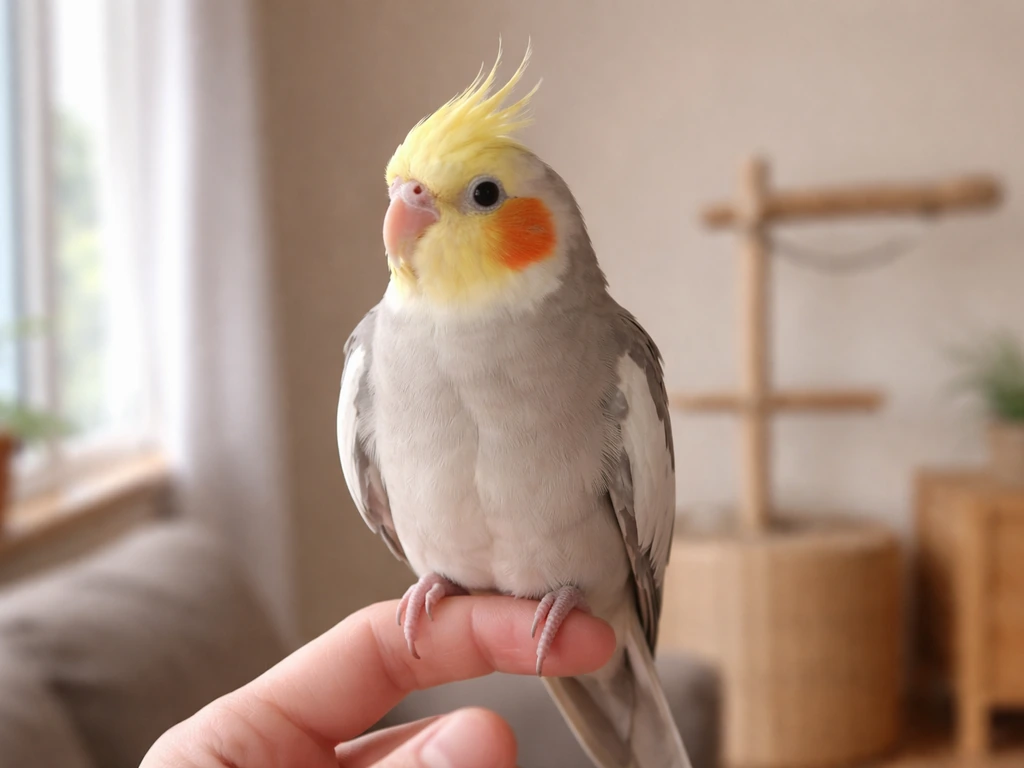
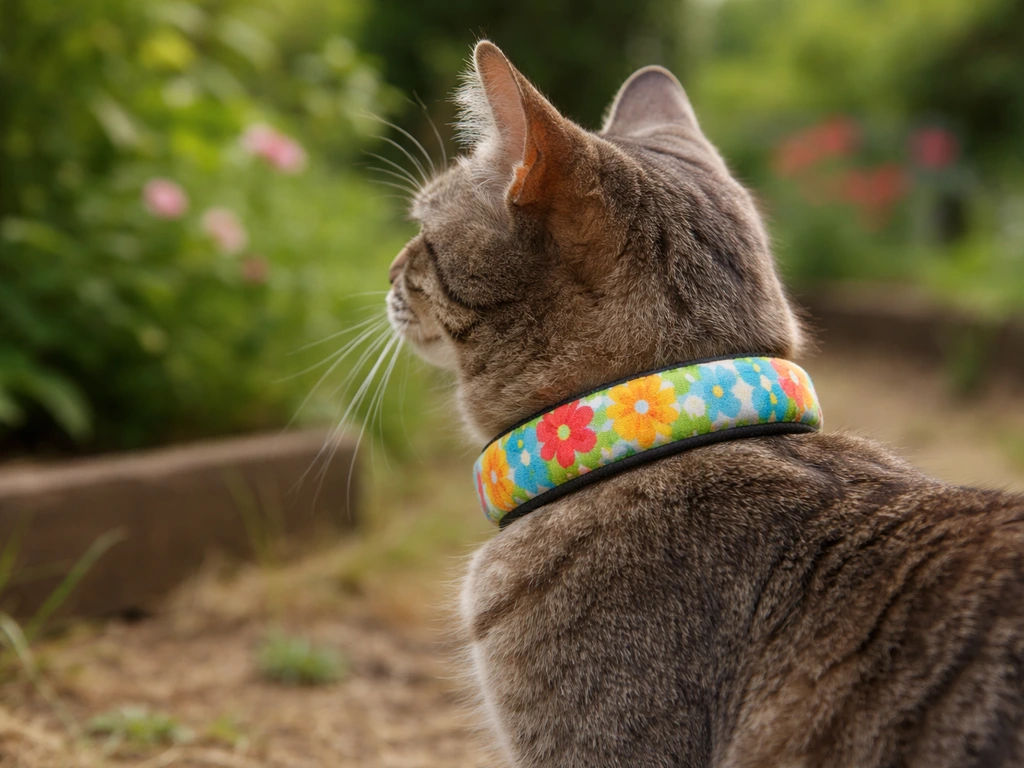
The safest bird-protective cat collar is a brightly colored breakaway collar paired with a Birdsbesafe collar cover, a patented cotton fabric tube that makes your cat highly visible to birds before they get close enough to be caught. Studies show this combination reduces bird captures by around 87%. But a collar alone is not always the right answer, and putting one on incorrectly can seriously injure your cat. This guide walks you through choosing the right approach, fitting it safely, getting both animals adjusted to the new routine, and knowing when to skip the collar entirely and use a different solution.
How to Make a Bird-Safe Cat Collar: Safe Fit Steps

Clara Hayes
4 May 2026
Why cats and birds can be unsafe together (and when to skip the collar)
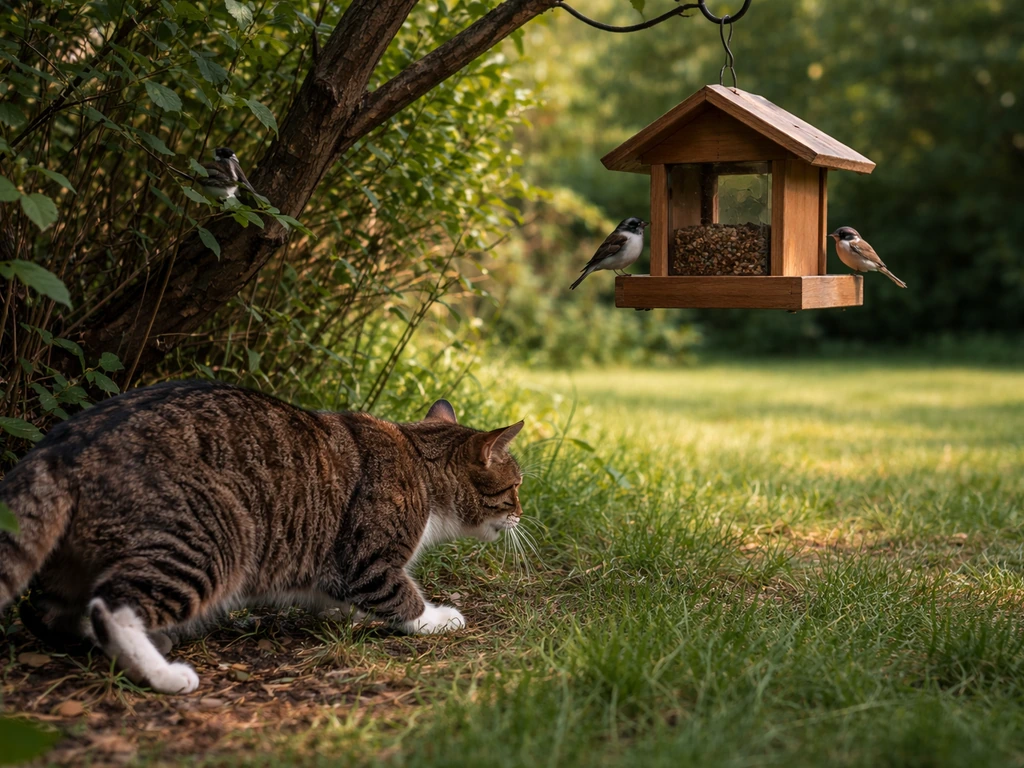
Cats are instinctive hunters, and even a well-fed, affectionate indoor cat will stalk and strike at birds given the opportunity. This is relevant whether you have a pet parrot, a cockatiel, or a budgie free-flying inside, or whether you're a backyard birder trying to protect the finches and sparrows at your feeders. The threat is real: a single pounce can be fatal even if the cat means it as play.
A collar addresses only one piece of that problem, bird visibility. It doesn't slow a cat down, and it won't protect a bird that is already within striking range. Before you invest any time in collar solutions, ask yourself honestly whether a collar is even appropriate for your situation.
Skip the collar-only approach and move straight to separation or supervised-only interaction if any of these apply:
- Your cat and bird share the same room unsupervised. No collar prevents a strike that happens in a second.
- Your pet bird is a small species (budgie, finch, cockatiel) that a cat can injure through a cage bar or grab before it can react to the collar's color.
- Your cat has already caught or injured a bird. Previous success makes predatory behavior much harder to interrupt.
- The cat has a neck or skin condition, or a history of collar injuries or entanglement.
- You have a kitten under 6 months old whose neck is still growing rapidly — fit changes fast.
- Your bird is injured, molting, or stressed, making it slower and less able to escape even with advance warning.
There are also legal and ethical dimensions worth knowing. In many regions, including parts of the US, Canada, and Australia, free-roaming cats that kill wildlife can create liability issues for owners, and some local ordinances require cats to be kept indoors or on a leash. A collar is not a substitute for meeting those obligations, it's a risk-reduction tool that works best alongside responsible cat management.
Choosing the right bird-safe protection approach
The honest reality is that a collar is most effective for outdoor or indoor-outdoor cats who encounter wild birds in a yard or garden setting. For pet bird owners, physical separation is the foundation and the collar is at most a secondary backup. Here's how to think through which approach fits your situation.
| Situation | Best primary approach | Collar useful? |
|---|---|---|
| Backyard birder with outdoor/indoor-outdoor cat | Breakaway collar + Birdsbesafe cover | Yes — this is the core use case |
| Pet parrot or cockatiel free-flighting in shared home | Separate rooms, supervised interaction only | Collar is a secondary backup, not primary protection |
| Pet budgies or finches in cage | Cage placement out of reach, secure cage locks | Collar may help but cage security matters more |
| Cat that has already caught a bird | Full separation + behavior management | Collar alone is not enough |
| Multi-cat home with indoor birds | Room separation with closed doors | Collar adds minimal protection in close-quarters setting |
For backyard wild birds, the Birdsbesafe collar cover approach has the strongest evidence behind it. Birds rely heavily on color vision, and a bright collar cover, especially in neon yellow, orange, or rainbow patterns, gives birds time to detect and escape before the cat gets close enough to strike. Think of it as giving birds the visual warning they'd normally get from a predator that isn't camouflaged by a typical cat's coloring.
What to buy vs DIY: collar options and materials to avoid
This is where a lot of people go wrong. The impulse to sew a bright fabric tube onto a collar or wrap a bandana around a standard collar is understandable, but DIY collar modifications carry serious safety risks. Here's what actually works and what to avoid.
What to buy
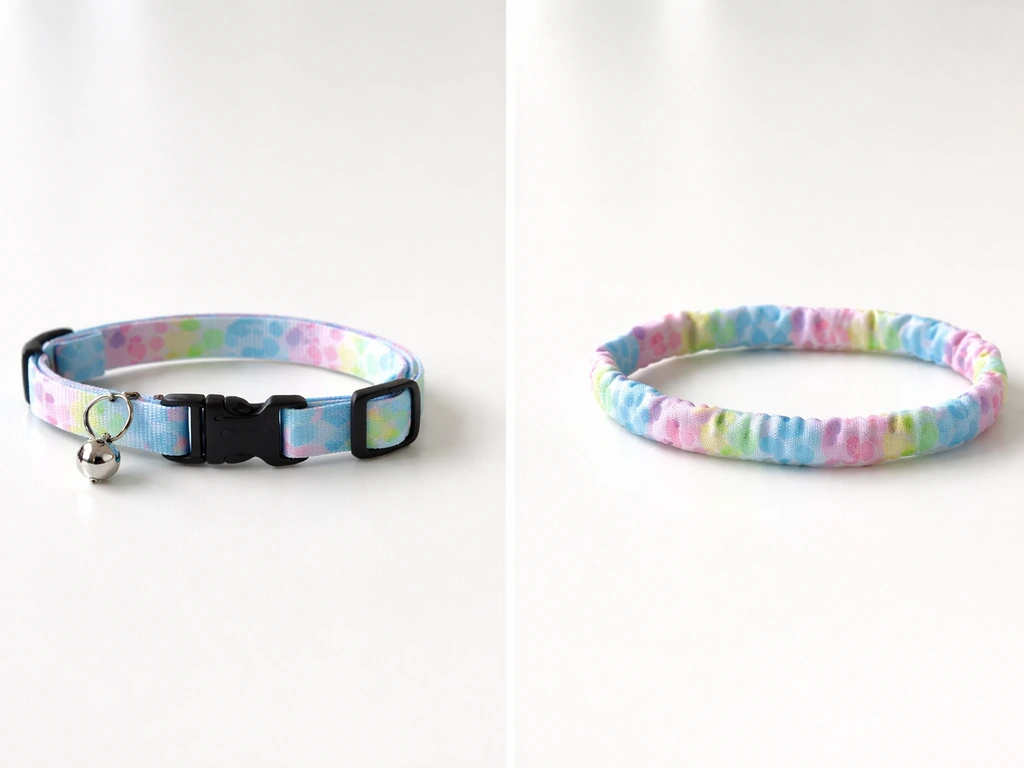
- Birdsbesafe collar cover: A cotton fabric tube that slides over an existing quick-release collar. This is the product with published research behind it. It comes in multiple bright patterns. Sold separately — you pair it with your own breakaway collar.
- Birdsbesafe Full Stretch Breakaway Cat Collar: An all-in-one option with a stretch-and-breakaway mechanism built in, plus a bell. Good if you want a single product.
- Any RSPCA-endorsed or vet-recommended quick-release (breakaway) collar as the base layer: brands like Rogz Urbancat include a safety-release mechanism and are stocked by major animal welfare retailers.
What to avoid
- Elastic-only collars with no breakaway mechanism: These can stretch enough for a cat to get a leg caught, leading to painful and sometimes serious wounds.
- Fixed buckle collars with no quick-release: If the collar snags on a branch, fence wire, or cage bar, the cat cannot pull free. RSPCA SA has documented real injuries and vet visits from exactly this scenario.
- DIY fabric attachments glued or sewn onto a fixed collar: These can add bulk that snags, and if the collar itself isn't breakaway, the added material makes the problem worse.
- Flea collars used as the base: Many flea collars are made of stiff materials without a safety release, and the chemicals can irritate skin under a tight fit.
- Anything with long dangling attachments, loose loops, or decorative elements that a bird's beak or foot could hook onto.
If you want to go DIY, the one acceptable version is making a fabric tube cover, similar in concept to the Birdsbesafe design, and threading it onto a commercially purchased, properly fitting breakaway collar. Use lightweight breathable cotton, cut it so both ends are open, and make sure the tube cannot bunch up tightly around the neck. That said, the commercial version is inexpensive enough that buying it is the safer and simpler choice.
Step-by-step: fitting the collar and preventing entanglement
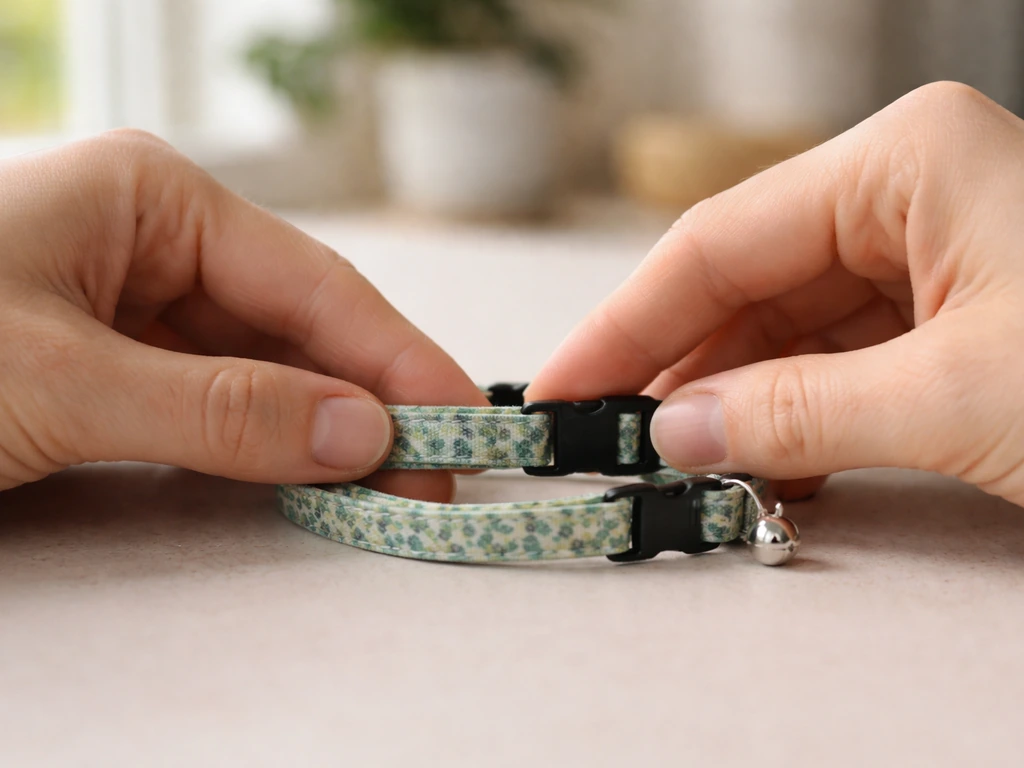
Getting the fit right is not optional. A collar that is too loose can slip over the cat's head or allow a leg to get caught inside it. A collar that is too tight restricts movement, causes skin irritation, and in severe cases can damage the trachea. The standard used by BC SPCA, RSPCA UK, and Cats Protection is the blank" rel="noopener noreferrer">two-finger rule: you should be able to slide two fingers (not one, not three) flat under the collar against the neck. blank" rel="noopener noreferrer">If you can't get two fingers in, it's too tight. If there's room for more than two fingers plus noticeable slack, it's too loose.
- Choose a breakaway collar sized for your cat's current neck measurement. Measure with a soft tape measure and add roughly 1–2 cm to get your starting adjustment point.
- If using a Birdsbesafe cover, thread the fabric tube onto the collar before buckling it. The tube should sit centered on the collar, not bunched to one side.
- Buckle the collar around your cat's neck, then do the two-finger check: insert your index and middle fingers flat between the collar and the skin. They should slide in snugly but not uncomfortably.
- Check that the breakaway buckle is seated correctly and that it clicks open under moderate pressure. Give it a firm tug to test — it should release. If it doesn't release easily, the collar may be faulty or the buckle may have debris in it.
- Check that any tags (ID, license) are attached to a small D-ring and sit flat against the neck. Avoid large, jangling tags or any tag with an open loop that could hook on cage bars, feeders, or wire.
- Watch the cat move, eat, drink, groom, and jump. The collar should not shift to one side, slide up toward the chin, or create any bunching under the chin during head-down feeding.
- Check the fit again after 24 hours, especially on kittens. Neck measurements can change with weight fluctuation and as the cat relaxes into wearing the collar.
- Recheck fit weekly for the first month, then monthly after that. Replace immediately if the collar shows fraying, if the buckle mechanism feels stiff or no longer releases cleanly, or if the fabric cover fades significantly (a faded cover loses its visual-warning effectiveness).
One specific entanglement risk to watch for: some cats hook a front leg through the collar during grooming. If you notice your cat doing this, the collar is too loose. Tighten it one notch and recheck the two-finger fit. A collar that passes the two-finger test should not allow a leg-through scenario.
Getting your cat and bird used to the new setup
Neither the cat nor the bird will automatically be comfortable with new collar equipment or changed routines, and rushing this process creates stress and increases the risk of accidents. Build in at least two to four weeks of gradual adjustment.
Acclimating the cat to the collar
- Days 1–3: Put the collar on for 15–20 minutes at a time while you're present and the cat is calm and distracted with food or play. Remove it before bedtime.
- Days 4–7: Extend wearing sessions to an hour. Watch for excessive scratching at the collar, skin redness under the fabric, or changes in eating and drinking. These are signs the fit or material needs adjustment.
- Week 2: Let the cat wear the collar all day during waking hours. Only remove it if the cat goes into a space where snagging hazards exist that you can't manage.
- Week 3 onward: The cat should be wearing the collar continuously during outdoor or shared-space time. Check the breakaway function weekly.
Supervised exposure between cat and bird (for pet bird owners)
If you have a pet bird, a parrot, cockatiel, or budgie, and you're trying to manage a shared living space, the collar is only one layer. If you're also wondering how to train cockatiel bird to talk, focus on consistent routines, short sessions, and rewarding any clear attempts at sounds.
If you’re specifically wondering how to grow a healthy cockatiel bird, start with the right diet and a safe, stress-free environment from day one how to grow cockatiel bird. If you are also looking for how to put a bird harness on a cockatiel for supervised outings, fit and acclimate the harness gradually and ensure it never restricts breathing or movement. You still need a desensitization protocol for introducing the cat to the bird's presence without allowing predatory rehearsal.
Start with the cat on the opposite side of a closed door while the bird free-flies or is handled. Let them hear and smell each other. Over several weeks, progress to visual contact only through a baby gate or a secure cage, always with you directly supervising. Never allow the cat to be within striking distance of the bird without physical barriers, regardless of whether the collar is on.
To learn how to pet a cockatiel bird safely, use calm, gentle handling and avoid sudden movements that can trigger stress. If you want the bird-safe angle, focus on prevention and supervised handling rather than trying to catch your cockatiel how to catch cockatiel bird.
Birds give clear stress signals that tell you when the setup is too much too fast: feather-sleeking against the body, repeated alarm calls, refusing to eat, or freezing in place rather than moving normally around their enclosure. If you see these signs, increase the distance between the animals and slow the progression. Building trust and calm coexistence between a predator and prey species takes patience, realistic timelines are measured in months, not days.
Managing backyard wild bird encounters
For backyard birders, acclimation is more about training the cat to respond to containment boundaries than about direct animal-to-animal introductions. Pair the collar with consistent management: bring the cat in during peak bird feeding times (typically early morning and late afternoon), use feeders placed at height where the cat can't ambush from below, and consider a catio or enclosed outdoor run if your cat is primarily a yard cat. The collar cover gives birds advance warning, it doesn't prevent the cat from trying.
Safety checks, monitoring, and troubleshooting
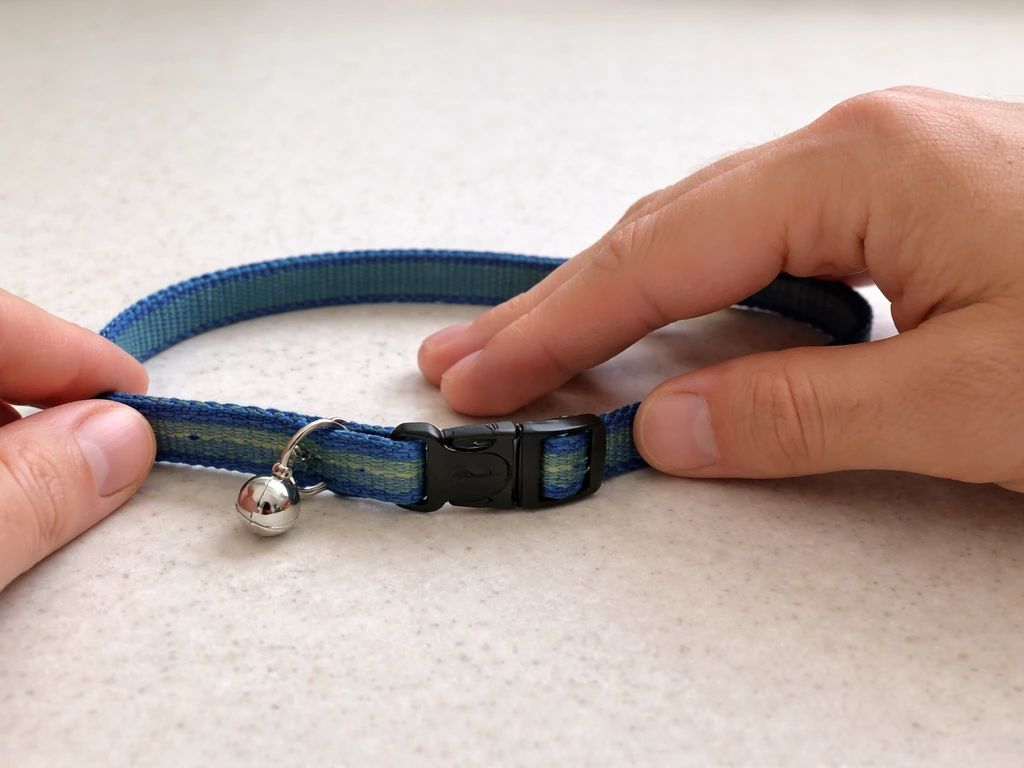
Run through this checklist at your weekly collar check and any time something seems off.
| Problem | Likely cause | Fix |
|---|---|---|
| Collar too tight — can't fit two fingers | Initial fit too snug, or cat has gained weight | Loosen one adjustment notch, recheck two-finger rule |
| Collar too loose — three or more fingers fit, or collar slides toward chin | Fit set too large, or cat has lost weight | Tighten one notch; if collar has no more adjustment, size down |
| Cat refuses the collar — sits frozen, scratches constantly | Collar is new and unfamiliar | Return to short wearing sessions with positive reinforcement (treats, play); extend slowly |
| ID tag snagging on cage bars or feeder wire | Tag is too large or has open loop hardware | Switch to a flat, engraved tag on a fully closed ring; remove dangling charms |
| Collar shifting to one side | Fabric cover is bunched or unevenly threaded | Re-thread the cover so it sits centered; trim if significantly too long for your cat's neck |
| Breakaway buckle opens too easily during normal movement | Buckle is faulty or collar is too light for the buckle tension | Replace with a new collar; test the new buckle — it should need a deliberate tug, not just brush contact, to release |
| Cat still stalking birds despite collar | Collar gives birds a warning advantage, not a guaranteed deterrent | Add a bell to the collar; increase containment during peak bird activity; reassess whether outdoor access is appropriate |
| Skin irritation or hair loss under collar | Collar too tight, material allergy, or collar not being removed for cleaning | Loosen fit, check for rough edges on fabric, clean collar weekly, consult a vet if irritation persists |
| Bird showing stress signs when cat is nearby | Too much proximity too fast | Increase physical separation; return to earlier step in desensitization protocol |
One failure point that catches people off guard: the collar cover fades. A Birdsbesafe cover that started as bright neon orange will lose its vivid color after months of sun exposure and washing. Replace it when the color looks significantly muted, a faded cover provides much less visual warning to birds.
When the collar isn't working or isn't the right tool
If you've fitted the collar correctly, acclimated your cat to it, and you're still seeing predation attempts or successful bird catches, the collar has reached the limit of what it can do. If you want to understand the behavior side too, see how does a cat catch a bird for what triggers stalking and strike attempts. Here are your concrete next steps.
- Add a bell: A bell attached to the breakaway collar gives birds an auditory warning on top of the visual one. Research suggests bells reduce bird catches meaningfully when combined with a bright collar cover.
- Restrict outdoor access during high-risk times: Cats hunt most actively at dawn and dusk. Keeping the cat indoors during these windows — typically the first two hours after sunrise and the last two hours before sunset — significantly reduces bird encounters.
- Install a catio or enclosed outdoor run: This gives your cat outdoor stimulation without unrestricted access to birds. It's the most reliable physical solution for outdoor cats in yards with active bird feeders.
- Relocate bird feeders and baths: Place feeders at least 1.5–2 meters off the ground and in open areas where cats cannot use shrubs or structures for ambush cover. Birds need clear sightlines to spot approaching predators.
- Consider a containment system: PetSafe-style in-ground fence systems can define outdoor boundaries and are worth exploring for cats that cover large territories — just note that the receiver collar used in those systems has its own fit and usage requirements and is separate from the bird-safety collar.
- For pet birds: Commit to full physical separation. If your cat has demonstrated strong predatory interest in your parrot, cockatiel, or other pet bird, the only reliably safe option is separate living spaces with closed doors between them during any unsupervised time.
- Consult a veterinary behaviorist: If the cat's predatory behavior is extreme, disruptive, or causing ongoing stress to other animals in the home, a professional can help with behavior modification protocols tailored to your specific animals.
It's also worth noting that collars and harnesses are related tools but solve different problems. A harness used for supervised outdoor time (keeping the cat under direct physical control) is a different piece of equipment from a bird-safety collar. If you're interested in that kind of managed outdoor access, the principles of harness fitting and leash training for cats follow a similar gradual acclimation process to what's described here. Leash training for cats can help you control their movement around birds. If you want to train your bird to wear a harness, the key is slow, step-by-step conditioning with positive reinforcement so the bird stays comfortable.
The bottom line is that a bird-safe cat collar, fitted correctly and paired with the right management routines, genuinely reduces risk, but it's one tool in a larger approach. The cats that do the least damage to birds are the ones whose owners combine a good collar with thoughtful containment, feeder placement, and honest assessment of when the situation calls for more than a collar can provide.
FAQ
Can I use a regular collar with a bright bandana to make it bird-safe?
Bandanas and loose fabric wraps are risky because they can shift, bunch, or loosen enough for a leg to slip through. If you want DIY, use a lightweight breathable tube cover that stays open at both ends and cannot bunch tightly, and put it over a properly fitting commercially made breakaway collar. In most cases, the purpose-built collar cover is the safer option because it is designed to keep the fabric stable and visible.
What should I do if the two-finger rule fits at first, but the collar loosens later?
Recheck the fit weekly and any time your cat’s weight changes, fur changes, or the collar has been tugged. If you can fit noticeably more than two fingers with slack, tighten to the next notch and confirm the collar cannot be pulled over the head. Also inspect for wear, stretched breakaway hardware, or fraying near the neck where the collar may loosen over time.
How quickly should I expect my cat to tolerate wearing the collar cover?
Plan on 2 to 4 weeks of gradual adjustment, especially if your cat is sensitive to new textures or neck items. Start with short periods while supervised, remove it when your cat is calm, and avoid “test runs” that let the cat rehearse stalking behavior. If your cat keeps trying to paw at the collar nonstop, hides, or shows skin redness, stop and reassess the fit and management approach.
Is a breakaway collar actually enough to prevent injury if my cat gets stuck?
Breakaway designs reduce the risk of strangulation, but they do not prevent other harms like skin rubbing, irritation from friction, or a leg-through scenario when the collar is too loose. Treat breakaway as a safety backup, not permission to fit loosely. If your cat hooks a leg through during grooming, tighten one notch and recheck the two-finger rule immediately.
How do I know if the collar cover is still giving birds enough warning?
Use visual checks in normal daylight. If the cover becomes significantly muted from sun or washing, replace it, because faded fabric reduces the “early detection” effect. Avoid relying on how it looks to you indoors, because birds view light and contrast differently outdoors.
Should I keep the collar on indoors only pets around a window where birds land?
If your cat can access windows or screens where birds come near enough to trigger stalking, a collar cover can still help, but it is not a substitute for preventing access to the birds. If your cat is actively watching and pouncing at the glass, prioritize barriers like window screens or reducing direct access to the area rather than assuming the collar alone will stop the behavior.
What if my cat catches a bird while wearing the collar cover, does that mean it’s unsafe?
It means the setup has reached its limit in your specific environment. Stop relying on the collar as the only control, even if it reduces risk. Increase physical management, change feeder placement so birds are farther from any ambush route, and use stronger separation or supervised-only interaction until you can prevent predatory access altogether.
How should I manage the cat during bird feeding times if I’m using a collar cover?
Keep the cat indoors during peak bird activity times and schedule cat access only when birds are contained or at a safe distance. Place feeders at height so the cat cannot ambush from below, and consider an outdoor enclosed run or catio if your cat is primarily an outdoor yard cat. The collar cover provides visibility, it does not stop pursuit when a cat has a clear strike path.
Can I combine the collar cover with training or bird-harness setups for better safety?
Yes, but treat it as layered risk reduction. Use the collar cover for visibility, but never allow the cat within striking distance of the bird, even briefly, unless there is a physical barrier or secure enclosure. If you also use harnesses for supervised outings or train birds for harness wear, proceed with slow desensitization so stress does not spike for the bird, and maintain direct supervision at all times.
Next Article
How to Pet a Cockatiel Bird Safely Step by Step
Step by step, trust building tips to pet a cockatiel safely, with body language, training cues, and bite-proof troublesh