You can train a cockatiel to mimic talk-like sounds and simple words by building trust first, then using short daily sessions of clear, consistent repetition paired with immediate rewards. Most cockatiels pick up whistles and simple phrases like "hello" or their own name within a few weeks of regular practice. Males tend to be more vocal and pick up speech faster than females, but both can learn. The process is less about tricks and more about creating the right conditions: a calm bird, a consistent routine, and well-timed positive reinforcement every single session.
How to Train a Cockatiel Bird to Talk: Step-by-Step Guide
Clara Hayes
12 May 2026
What to actually expect from a talking cockatiel
Cockatiels are not African Grey parrots. Their voices are softer and chirpier, and they are naturally wired for whistling. Most cockatiels will nail a whistle or a song long before they attempt a recognizable word, and honestly, many owners find whistling just as rewarding. That said, a motivated, well-socialized cockatiel, especially a male, can absolutely learn short phrases. "Pretty bird," "whatcha doing," and their own name are common first wins. Do not expect full sentences or a large vocabulary, but do expect real, repeated vocalizations that you will clearly recognize.
One important thing to know: if you spend a lot of time teaching whistles before you try words, your bird may stick to whistling because it comes easier. Whistling is within their natural vocal behavior and they master it quickly. If talking is your goal, prioritize word repetition first and hold back on enthusiastically rewarding whistle performances until you have a few word-like sounds locked in.
Cockatiels learn new vocalizations throughout their lives, so an adult bird is not a lost cause. That said, younger birds, especially around 8 to 10 weeks old, are in a prime window for picking up new sounds. If you have a young bird, starting early gives you a real advantage. If your bird is older and already bonded to you, that trust foundation actually helps a lot, so do not be discouraged.
Before any talking practice: taming, trust, and the right setup
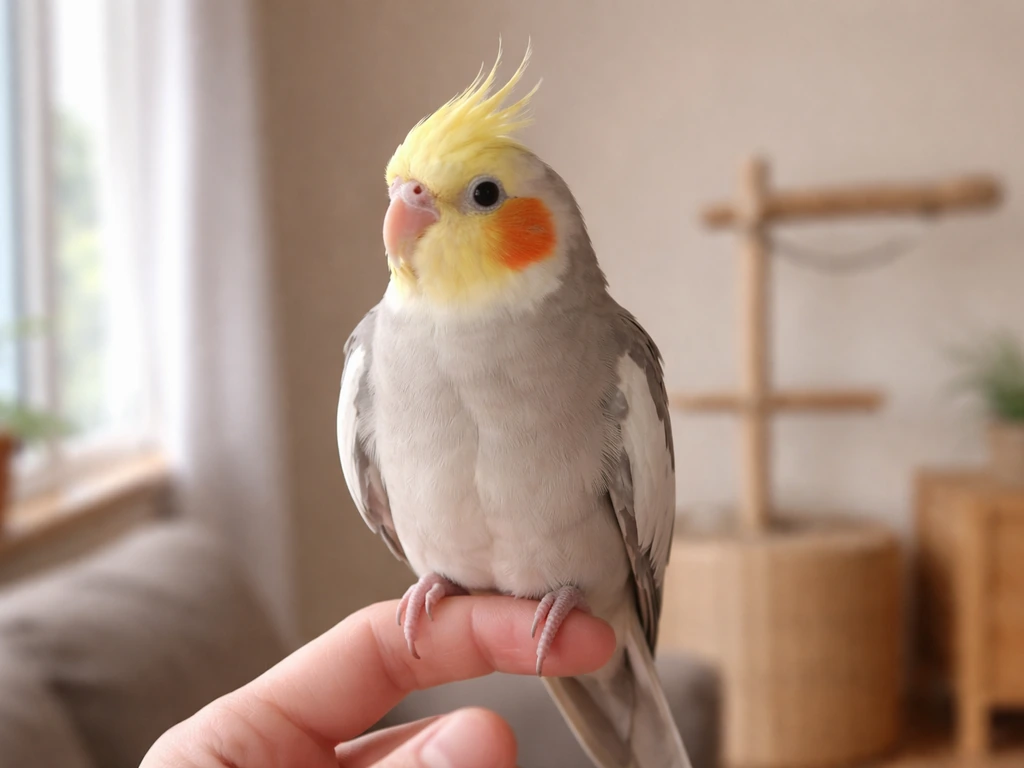
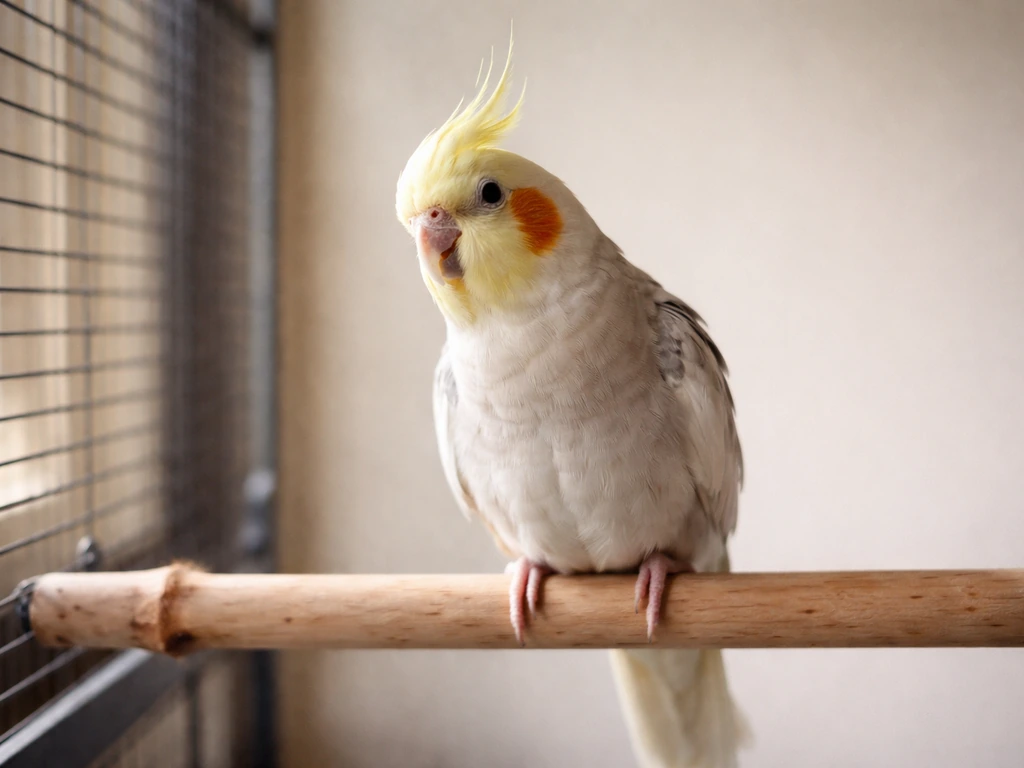
A stressed or fearful bird will not learn to talk. Once your cockatiel is calm and responsive, you can apply the same positive reinforcement approach to learn how to catch cockatiel bird vocalizations. Period. If your cockatiel is still biting, fluffing up defensively, or bolting to the far corner of the cage when you approach, talking training needs to wait. Get taming and basic handling sorted out first. This means your bird should step up reliably onto your hand, sit calmly near you, and show relaxed body language like a slightly fanned crest rather than a flat, pinned-back one. If you want to safely take your bird outdoors, you will also need to know how to put a leash on a bird properly before attempting any harness time step up reliably onto your hand. A flat crest with a rigid, tense body is a sign of stress or fear. A soft, slightly raised crest and loose feathers mean your bird is comfortable.
The physical setup matters too. Run sessions in a quiet room with minimal background noise. Turn off the TV, put other pets out of the room, and pick a time of day when the house is calm. Early morning or early evening often works well because cockatiels tend to be most vocal and alert at those times. Keep the cage or perch at roughly your eye level so your bird does not feel dominated or threatened. A comfortable, familiar environment makes every training session more productive.
If your bird is newly adopted, freshly clipped, recovering from illness, or showing any signs of stress like loss of appetite, open-mouthed breathing at rest, tail bobbing, or fluffed feathers with lethargy, stop training and address those issues first. Some of those signs, especially labored breathing, tail pumping at rest, and nasal discharge, warrant a call to an avian vet right away. A healthy, settled bird is the only bird ready to learn.
Pick your target phrases and build a daily routine
Start with one or two short phrases, ideally one to three syllables. Your cockatiel's name is perfect. "Hello," "step up," "pretty bird," or "good bird" all work well because they have clear, distinct consonant sounds. PetMD recommends using a starter word or phrase that is short, about one to two syllables, and pairing it with positive interactions like treats or verbal praise to encourage mimicry blank" rel="noopener noreferrer">clear, distinct consonant sounds. Avoid starting with long sentences or phrases that run together. Once you have your target phrase, commit to it for at least two to four weeks before adding anything new. Jumping between phrases too soon confuses the bird and slows progress.
Build a training schedule you can actually stick to. Two to three short sessions per day works better than one long one. Each session should be five to ten minutes maximum. Cockatiels have short attention spans, and sessions that drag on become stressful rather than fun. Consistency across days matters more than session length, so daily practice at roughly the same times is more valuable than an hour-long session once a week.
The step-by-step training process
Step 1: Introduce the sound in the right moment
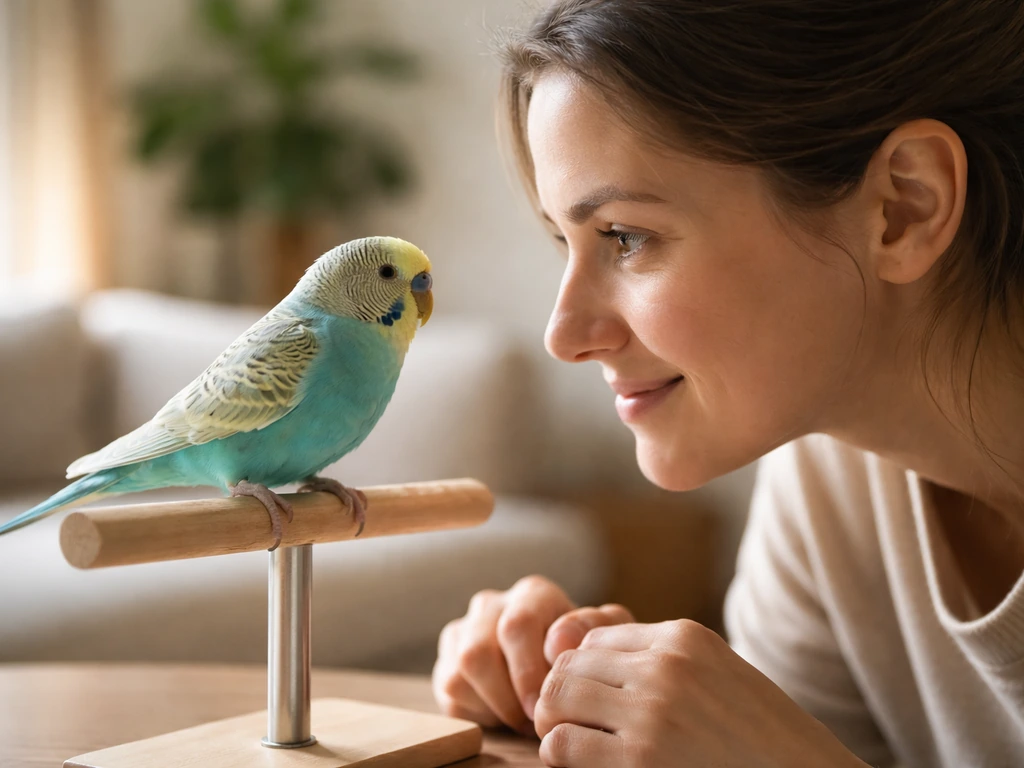
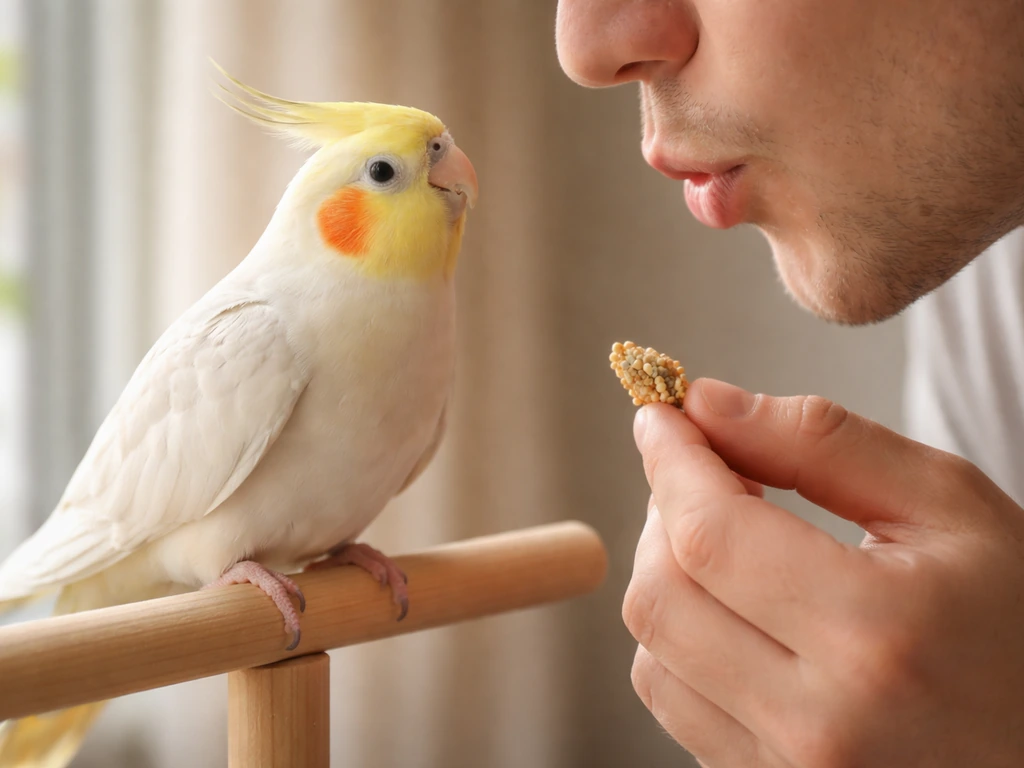
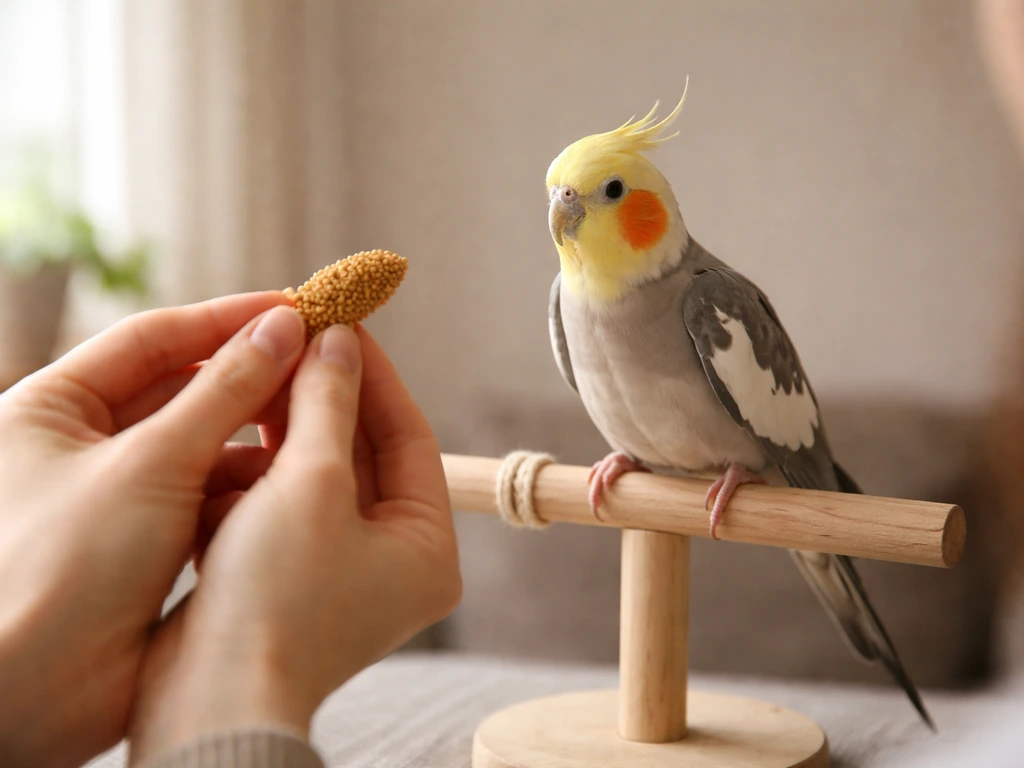
Sit close to your bird, ideally with it perched on your hand or on a T-bar perch at your level. Make eye contact, lean in slightly so your face is about 12 to 18 inches from the bird, and say your chosen phrase clearly and calmly. Use a warm, engaging tone. Say it once or twice, then pause and watch. You are looking for any vocalization response, even a soft chirp or a partial attempt at the sound. At the very start, any vocalization right after you speak counts as a great approximation.
Step 2: Reward immediately
The moment your bird makes a sound in response, reward it within one second. This timing is critical. A clicker paired with a small treat works extremely well here because the click marks the exact moment the right behavior happened, and then the treat follows. If you do not use a clicker, deliver a tiny, preferred treat, such as a millet sprig, a sunflower seed, or a small piece of soft fruit, immediately along with enthusiastic verbal praise. The reward needs to be something your bird genuinely loves, not just its regular food. Save special treats for training only so they stay motivating.
Step 3: Repeat, then gradually raise the bar
In early sessions, reward any vocalization attempt. As the sessions progress over days and weeks, gradually shift what you reward. Start requiring a sound that is a closer approximation to the target phrase before giving the treat. This is called shaping: you reward progressively better attempts rather than just any sound. Do not move the goalposts too fast. If your bird suddenly stops vocalizing because the bar jumped too high, drop back to rewarding easier approximations for a session or two and build back up.
Step 4: Use recorded audio as a supplement, not a replacement
Some owners play recordings of the target phrase on loop in the background. This can help reinforce the sound, but personal, live interaction with you is far more effective than a recording alone. Use recordings as a secondary tool, maybe playing a phrase a few times before a session starts, but do not rely on them as your main training method. Your bird learns partly because it is socially motivated to communicate with you specifically.
Getting rewards, timing, and reinforcement right
Positive reinforcement is the only approach worth using with cockatiels. Physical correction, shouting, or spraying the bird with water are counterproductive and damage the trust you worked hard to build. The goal is to make your bird feel that vocalizing with you is the most rewarding activity in its day.
Watch out for accidentally reinforcing the wrong sounds. If your bird makes a squawk or screams and you immediately rush over and start talking to it, you have just rewarded that noise. Ignore unwanted vocalizations as calmly as you can, and redirect your attention back to the bird only when it is quiet or making sounds you want to encourage. This takes patience, especially in the early weeks, but it makes a real difference in what sounds your bird decides to repeat.
Also pay attention to context. Cockatiels often learn to associate words with specific situations. If you say "hello" every time you walk into the room and make it a positive, exciting moment, your bird may start saying "hello" when it hears you approaching. That contextual pairing is one of the most powerful ways they learn to use sounds meaningfully rather than randomly.
| Training Element | Best Practice | Common Mistake |
|---|---|---|
| Reward timing | Within 1 second of the correct sound | Rewarding 5+ seconds later, confusing the bird |
| Session length | 5 to 10 minutes, 2 to 3 times per day | One long 30-minute session that exhausts the bird |
| Phrase selection | 1 to 3 syllable words or phrases, one at a time | Teaching 5+ phrases simultaneously |
| Reinforcer quality | High-value special treat saved for training | Using regular daily food the bird is bored with |
| Your interaction | Face-to-face, calm, engaging voice | Playing recordings with no personal interaction |
| Whistling vs. words | Prioritize words before rewarding whistles heavily | Enthusiastically rewarding whistles first, delaying word learning |
When things stall: troubleshooting common problems
The bird seems uninterested or unmotivated
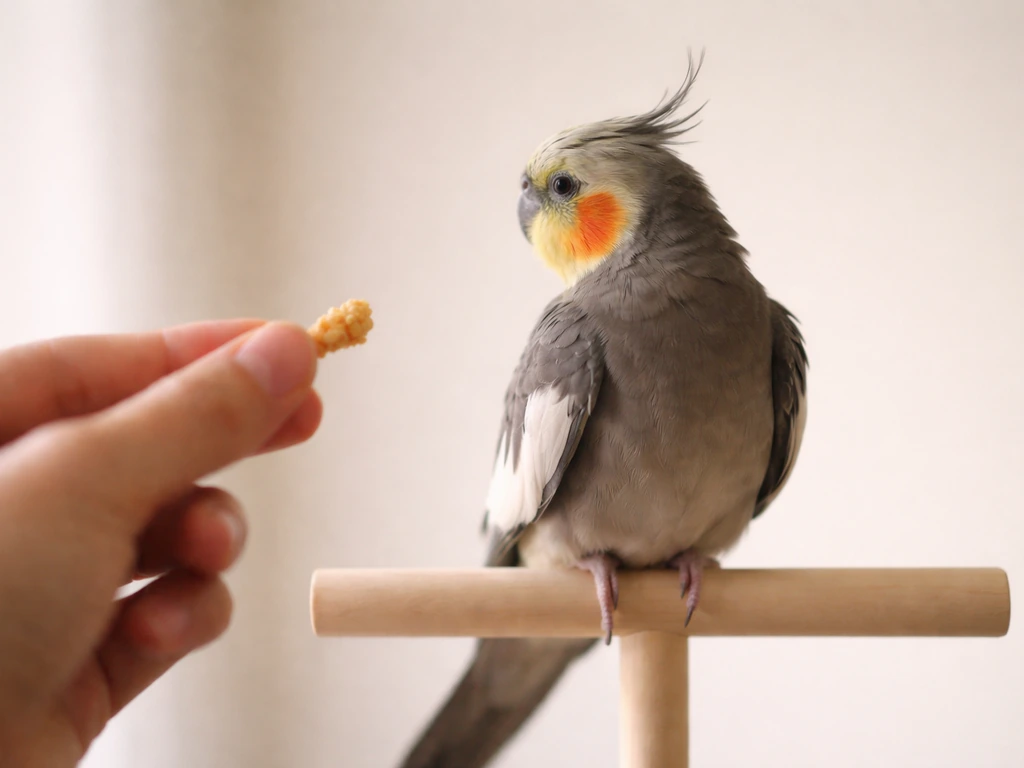
First, check the treat. If your bird is turning its head away or not engaging, the reward might not be motivating enough. Try a different treat, maybe a tiny bit of scrambled egg, a piece of apple, or a sunflower seed if your bird does not get them regularly. Also check timing: are you delivering the reward fast enough? Slow reward timing is the most common reason early training stalls. Finally, try shorter sessions at different times of day. Some birds are more alert and vocal in the morning, others in the late afternoon.
The bird is still fearful or biting
Go back to taming basics. Do not try to push through fear to get to talking training. A bird that bites may be in pain or discomfort, and sudden behavior changes like increased biting or aggression can be a sign of a health issue. If taming has regressed without an obvious cause, a vet check is worth doing. Biting that comes with pinned-back crest, hissing, and rigid posture means the bird is at its stress limit. Respect that and back off for the session.
Molting or health issues
Cockatiels going through a heavy molt can be cranky, itchy, and less interested in training. This is normal. Ease up on expectations during molt and keep sessions shorter and lower pressure. If your bird is showing signs beyond typical molt grumpiness, such as fluffed feathers combined with lethargy, appetite loss, open-mouthed breathing, tail bobbing at rest, or nasal discharge, stop training and contact an avian vet. Illness suppresses learning and behavior, and pushing a sick bird to train is both ineffective and unkind.
Inconsistent progress or regression
Progress with cockatiels is rarely a straight line. Your bird might seem to nail a phrase one week and then appear to forget it the next. This is normal. Keep sessions consistent, keep the environment low-stress, and do not introduce new phrases too quickly. Regression often happens after a change in environment, a new pet in the house, or a disruption in routine. Identify what changed, stabilize the environment, and drop back to rewarding easier approximations for a week or two until confidence returns.
Background noise and distractions
If you are training with the TV on, other birds calling, or people moving through the room, your bird's attention is split. Find a quiet space and treat each session like a focused one-on-one conversation. Even ten minutes of real, distraction-free engagement beats an hour of training next to a noisy kitchen.
What a realistic training timeline looks like
Every cockatiel is different, but here is a general picture of what to expect if you are training consistently and correctly.
| Timeframe | Typical Progress |
|---|---|
| Week 1 to 2 | Bird is comfortable with your presence during sessions; may vocalize in response to you without matching the target sound yet |
| Week 3 to 4 | First rough approximations of the target phrase begin to appear; bird shows clear interest in interacting during sessions |
| Week 5 to 8 | Target phrase becomes more recognizable; bird may begin to use it in context (e.g., when you enter the room) |
| Week 9 to 12 | First phrase is fairly reliable; you can begin introducing a second target phrase |
| 3 to 6 months | Small vocabulary of two to four phrases; bird uses sounds contextually and with some consistency |
| 6 months and beyond | Gradual expansion possible; regular reinforcement prevents regression of earlier sounds |
Young birds around 8 to 10 weeks old may move through early stages faster. Adult birds may take longer to produce the first clear approximation but can still make solid progress once trust is established. Do not use this timeline to judge your bird harshly. Use it to check whether your training approach is working and adjust if you are stuck at the same stage for more than a month with no movement.
Keeping what they learned and expanding from there
Once your bird has a phrase reliably, do not stop reinforcing it. Occasional treat rewards for that sound, even after it is well-established, keep it strong. If you completely stop rewarding a learned phrase and never practice it, it can fade over weeks or months. Think of maintenance as a quick daily check-in: you say the phrase, the bird responds, you give a small reward and move on.
When adding new phrases, introduce one at a time and only once the first is solid. Use the same shaping approach: start by rewarding any approximation, then gradually require closer matches. Some birds build a vocabulary of four to six recognizable phrases over a year of consistent work. Others peak at one or two. Both outcomes are completely normal and worth celebrating.
You can also use contextual repetition outside formal sessions to reinforce learning. Greeting your bird with "good morning" every day, saying "step up" every time you ask it to step onto your hand, or narrating simple actions in a consistent way all help the bird build associations between sounds and situations. This is low-effort maintenance that pays off over time.
A few ethical and safety notes
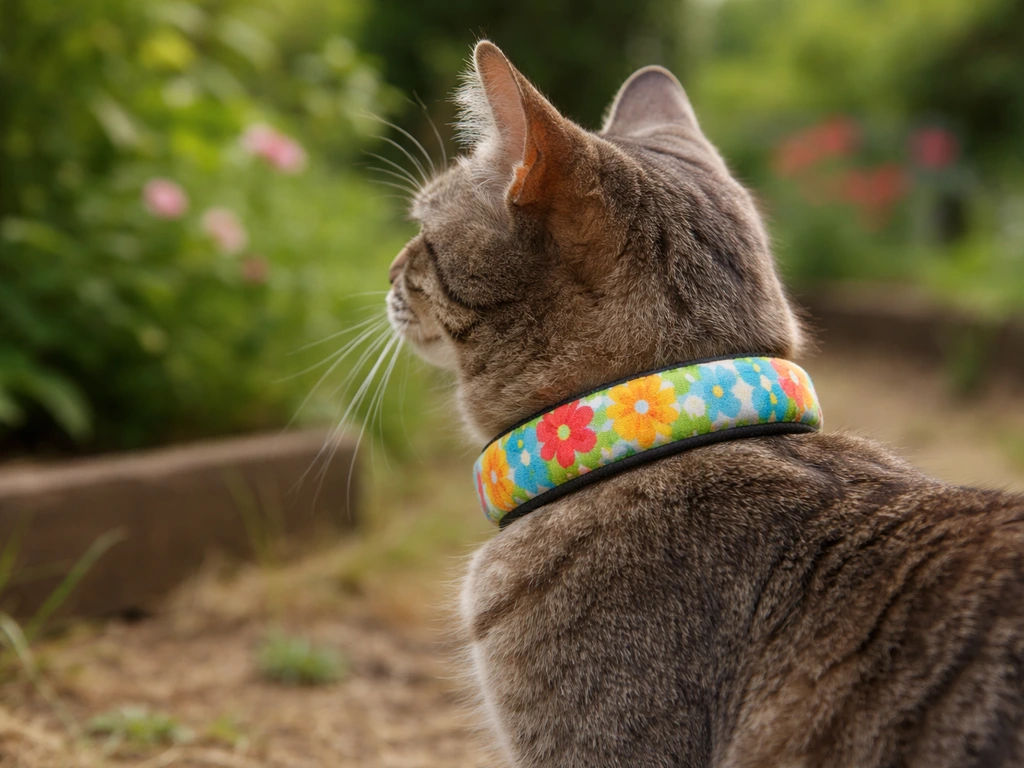
All of the techniques here are based on positive reinforcement and humane handling. Never use punishment, physical force, or startling tactics to try to get a vocalization. These approaches damage trust, can cause injury, and simply do not work for teaching complex behaviors like speech. If someone suggests tapping, spraying, or isolating a bird as a training method, skip that advice. If you are also thinking about safety gear for your bird, see how to make a bird safe cat collar so you can keep your pet cockatiel secure around cats.
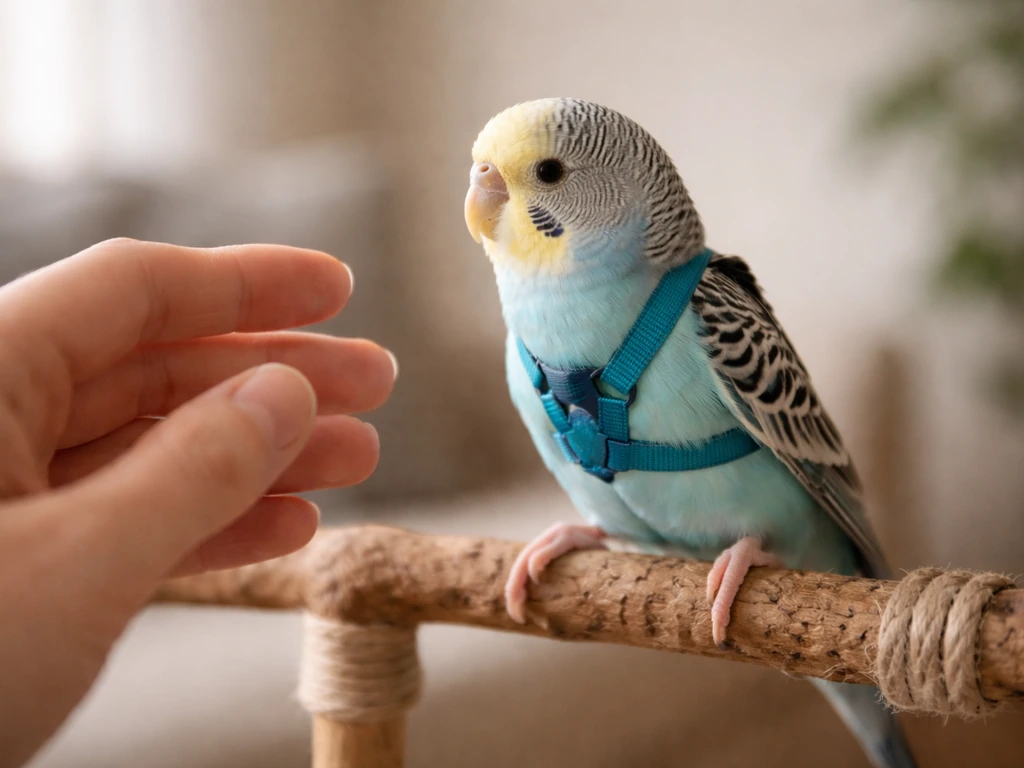
If you are also working on other handling skills with your bird, like wearing a harness or coming when called, keep those training goals separate from talking practice at first. Mixing too many new things at once in a session can overwhelm a bird that is still building confidence. Get comfortable with petting and handling your cockatiel calmly before layering in vocal training, and build each skill on a solid foundation of trust. If you want to learn how to pet a cockatiel bird safely, build confidence with gentle handling before you begin any training. If you also want to try a cockatiel harness, focus first on calm handling and only introduce the harness once your bird is comfortable stepping up and being touched how to put a bird harness on a cockatiel.
Finally, a note on wild birds: the talking training methods described here apply to captive, pet cockatiels only. Wild birds should never be captured or kept for training purposes. If you encounter wild birds in your yard, enjoy them from a respectful distance and focus any handling or training energy on your own pet birds. If you’re curious about predatory behavior in the wild, a helpful starting point is understanding how does a cat catch a bird.
FAQ
Can a cockatiel learn to talk without whistles, or will it always whistle first?
Yes, but it helps to be deliberate. If you want specific words, keep your training phrase consistent and reward only the closest approximation to that phrase. For many cockatiels, “talking” starts as name or a simple command, and the bird may choose to whistle instead, so you may need to temporarily reduce rewards for performance-y whistling until a word-like sound appears.
My cockatiel does not seem to learn any words, what should I troubleshoot first?
Use a quick checklist: your session timing (reward within about 1 second), your treat value (bird takes it readily during training), your environment (quiet, minimal movement), and your phrase length (1 to 3 syllables). If all of those are solid and you still see no vocal response for 2 to 4 weeks, lower expectations and go back to rewarding any attempt, then rebuild shaping toward the target phrase.
How long should I expect it to take before I hear a clear word?
Some delays are normal. A common reason “progress” looks slow is that the bird is responding only when you are not staring directly at it, or it is testing sounds at the cage but not forming recognizable words. Record a short audio clip during calm moments and watch for consistent sound attempts. Also avoid adding new phrases until the first one is reliable.
Should I teach a word in a specific context, or just repeat it randomly?
Most cockatiels learn faster when the phrase is paired with a predictable cue, like “hello” during your routine greeting or the same sound before you offer step-up. If you say the same phrase at random times, the bird may vocalize more generally rather than in the exact situation you want.
What should I do if my bird starts squawking or screaming right when I start saying the target phrase?
If you hear unwanted sounds, the fix is to stop giving immediate attention and rewards for that exact noise. Give your bird a short pause in quiet, then resume with the target phrase when it is calm. If the bird repeats the unwanted sound mainly when you approach, use the phrase only after the bird is settled, and keep your approach behavior consistent.
My cockatiel loves the rewards, but I worry about overfeeding, how can I balance treats?
Yes, but differentiate “treats the bird loves” from “high-fat treats.” Keep training treats small and use a special, limited portion only during training so motivation stays high. If your bird gains weight or refuses normal food when treats are offered frequently, scale back treat frequency and switch to tiny, measured favorites.
Do I need to keep training after my cockatiel starts saying a word, or can I stop?
Maintenance matters. If your bird learned a word, practice it briefly every day, even after success. The goal is short reinforcement, not long training, so you keep the word accessible without increasing stress.
Why would my cockatiel stop saying a phrase after it was working well?
If the bird suddenly “forgets,” first check for changes: new household sounds, a new pet, a schedule shift, molting, illness, or a change in who interacts with the bird. Then reduce difficulty for a week or two by rewarding easier approximations, and keep sessions short and low-pressure while you stabilize the routine.
How close should I be to my cockatiel during talking practice, and what body language means I’m too intense?
Leaning in too close, forcing eye contact, or holding the bird in a stressed posture can slow learning or create fear. Aim for your face at a comfortable distance, let the bird choose to approach within a calm interaction, and watch for a soft crest and relaxed body language before starting vocal practice.
Can I continue talking training if my bird is molting or seems under the weather?
If your bird is clipped recently, in recovery, or showing breathing or lethargy concerns, talking practice often becomes ineffective. Prioritize health and calm first, then restart with easier targets and shaping. For any signs of labored breathing or nasal discharge, stop training and involve an avian vet rather than trying to push vocal practice.
When should I add a second phrase, and how do I prevent confusing my cockatiel?
Try this decision rule: start with one phrase and keep it steady for 2 to 4 weeks until you can get consistent approximations. If you add a second phrase early, many cockatiels split attention. When you do add a new phrase, do it one at a time and keep the old phrase in the background only as a quick warm-up with a small reward when the bird responds.