Holding a bird correctly comes down to two things: keeping the bird calm and keeping it physically secure without squeezing. Whether you have a pet parrot who already steps up on cue or a stunned sparrow you just found in the yard, the principles are the same. Support the body, minimize pressure on the chest, read the body language, and move slowly. If you are trying to pick up a bird that seems tense or unsure, use gentle, low-pressure handling techniques so it stays calm. This guide walks you through every step, from checking the bird before you touch it all the way to building a relaxed handling routine over weeks.
How to Hold a Bird Safely: Step-by-Step Guide
Clara Hayes
3 Apr 2026
Safety first before you pick up the bird
Before your hand gets anywhere near a bird, take thirty seconds to assess the situation. For a pet bird, look for warning signs that something is wrong. Fluffed feathers that don't smooth out, labored or open-mouth breathing, tail bobbing with every breath, or a bird that's sitting on the cage floor rather than a perch are all signals to call your avian vet rather than proceed with handling. Continuing to handle a bird that's showing those signs adds stress to an already struggling animal.
For wild birds, the bar is even higher. The CDC advises against touching wild birds entirely, and if you find a sick or dead bird in your yard, the recommended step is to call your state wildlife agency or a licensed wildlife rehabilitator rather than picking it up yourself. If you do need to contain an injured wild bird while waiting for help, wear gloves or use a thick towel as a barrier to limit disease and parasite transfer. If close contact with a sick or dead bird is unavoidable, the CDC recommends appropriate personal protective equipment including gloves and, in higher-risk situations, a mask.
One more safety note: bird bites break skin more often than people expect. If a bird bites you and the skin is broken, wash the wound thoroughly with soap and water right away. Medical guidance recommends seeking attention within 24 hours for any bite that breaks the skin, and if you do see a doctor, let them know the bite came from a bird specifically. That detail matters for appropriate treatment.
How to hold a bird in your hands (the basic humane hold)
The goal of a good hold is to give the bird a stable platform without restricting its breathing. Birds breathe with their whole chest and keel, so any pressure across the sternum can be dangerous. Here is the basic method for a tame or semi-tame pet bird.
- Approach slowly and from the side, not from above. Coming from above mimics a predator's strike angle and triggers a panic response in almost every bird species.
- Offer your index finger or the flat of your hand at the level of the bird's feet, just below the lower leg. The bird should step onto your finger or palm voluntarily if it's comfortable with handling.
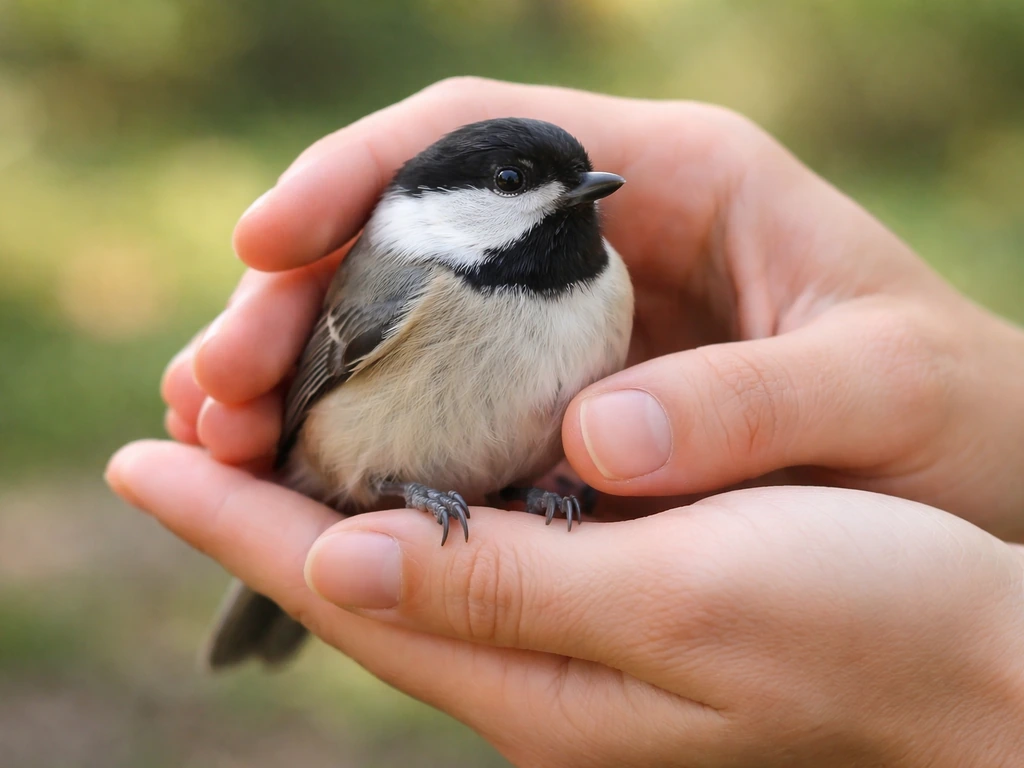
- Once the bird is perched on your hand, bring your other hand up gently to cup around the body if you need more control. Your thumb and forefinger should rest lightly on either side of the bird's neck, with the rest of your fingers curled loosely around the wings and body.
- Keep the bird's back against your palm and let the feet grip your fingers. This 'cupped hand' position stabilizes the bird without compressing the chest.
- Hold your hands close to your body rather than extending your arms. A bird that wriggles has a much shorter fall distance if it's held near your torso.
- Speak softly and stay still. The biggest trigger for flapping is sudden movement from the handler.
One thing worth knowing upfront: skip the gloves for pet birds. It sounds counterintuitive, but gloves reduce your ability to feel how much pressure you're applying, which increases the risk of squeezing too hard or losing your grip. You also lose the ability to accurately gauge the bird's stress through subtle muscle tension and movement. Bare hands give you much better feedback. If you want a deeper look at how to handle a bird beyond just the basic hold, including positioning for veterinary checks and wing inspections, that's a useful next read.
The towel hold for more resistant birds
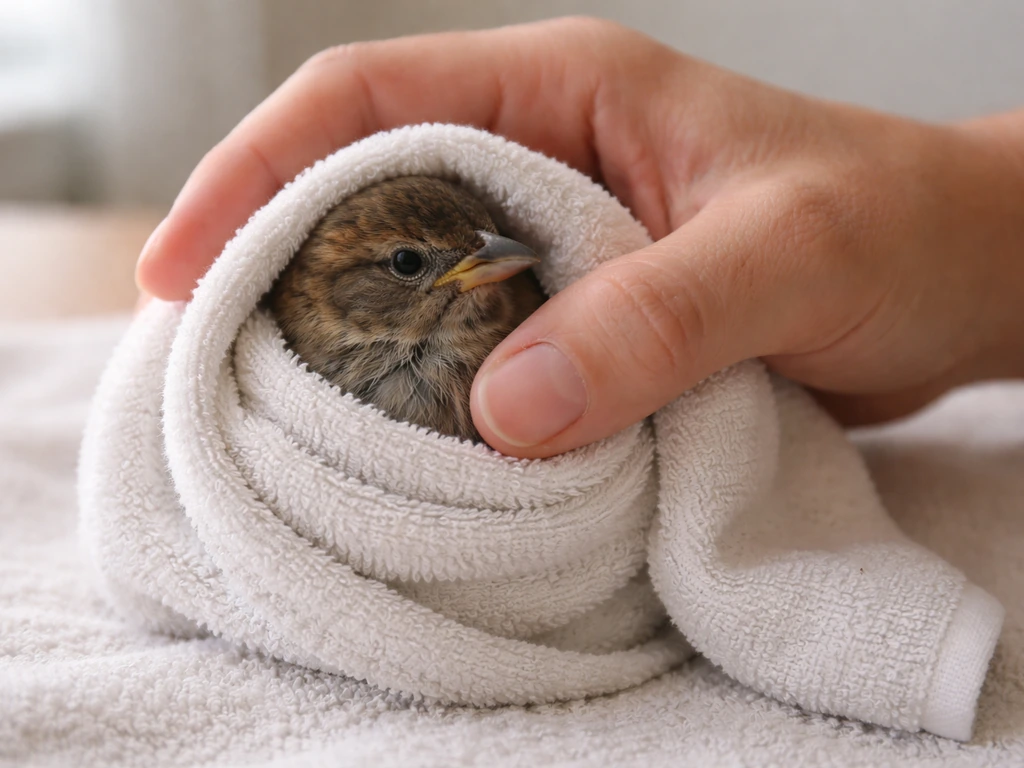
For birds that aren't yet comfortable being touched, or in emergency first-aid situations, a light towel is your best tool. Drape the towel over the bird from above, covering most of the body and the head. Birds that can't see tend to calm down significantly. Tuck the towel gently under the neck so the head is supported, then wrap the sides around the wings so they're held against the body. This is a short-term restraint method for urgent care, not an everyday handling approach, but it's genuinely useful when a bird needs to be examined or medicated and isn't cooperating.
Species-specific holding tips
The basic principles apply across the board, but the size and temperament of the bird change how you apply them. Here's what to adjust for the most common pet species.
Parrots (African Greys, Amazons, conures, macaws)
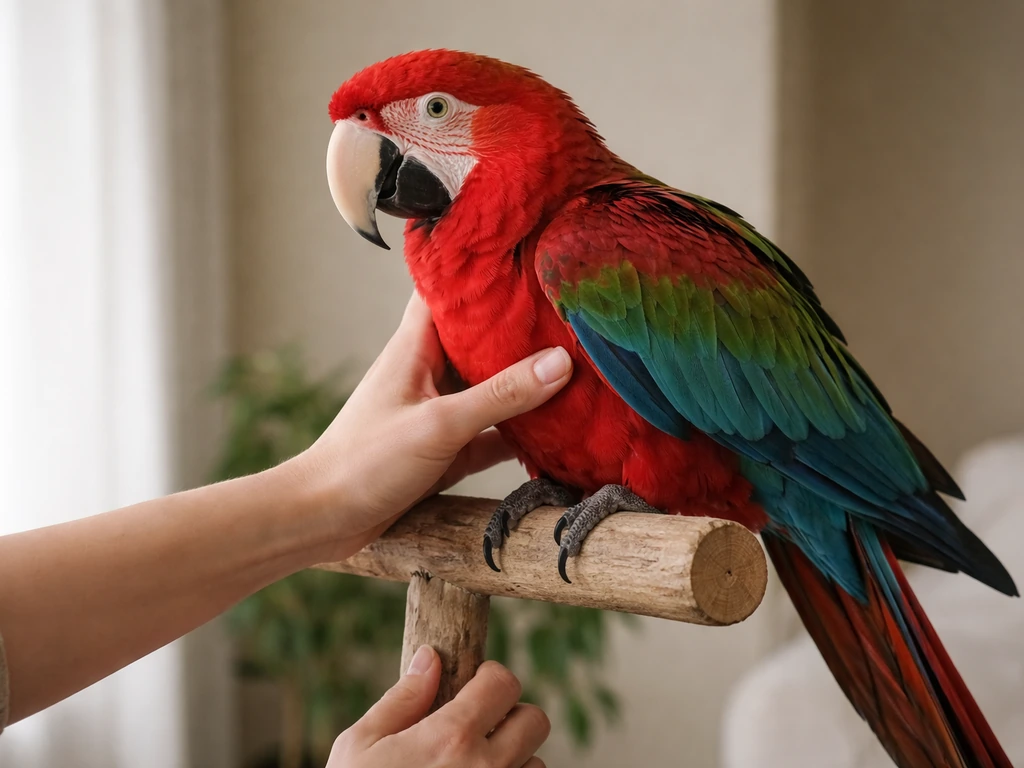
Larger parrots are strong and have a powerful beak, so reading their body language before reaching for them is non-negotiable. Aggression warning signs include feathers puffed around the head and shoulders, wings held slightly away from the body, tail fanned, eyes pinning rapidly, and an open beak with a forward lean. If you see any combination of those, back off and try again later. When a parrot is relaxed, the feathers sit smoothly, the crest (if applicable) is neutral, and the bird may lean toward you. Offer your hand from the front at foot level and ask for a step-up with a consistent verbal cue. Many parrot owners use a treat held just behind the hand to encourage forward movement, which makes the step-up feel voluntary rather than forced.
Cockatiels
Cockatiels communicate a lot through their crest. A crest pressed flat against the head typically means the bird is fearful or defensively aroused. A worried cockatiel may also freeze, lean away, slick its feathers tight against its body, and hold itself stiffly. If you see those cues, the bird isn't ready to be picked up. Wait for a relaxed, slightly raised crest and a soft, round body posture before attempting to handle. The step-up finger approach works well for cockatiels. Use one finger for smaller birds rather than your whole hand, and bring the other hand in as a gentle enclosure only if the bird is comfortable with it.
Budgies (budgerigars)
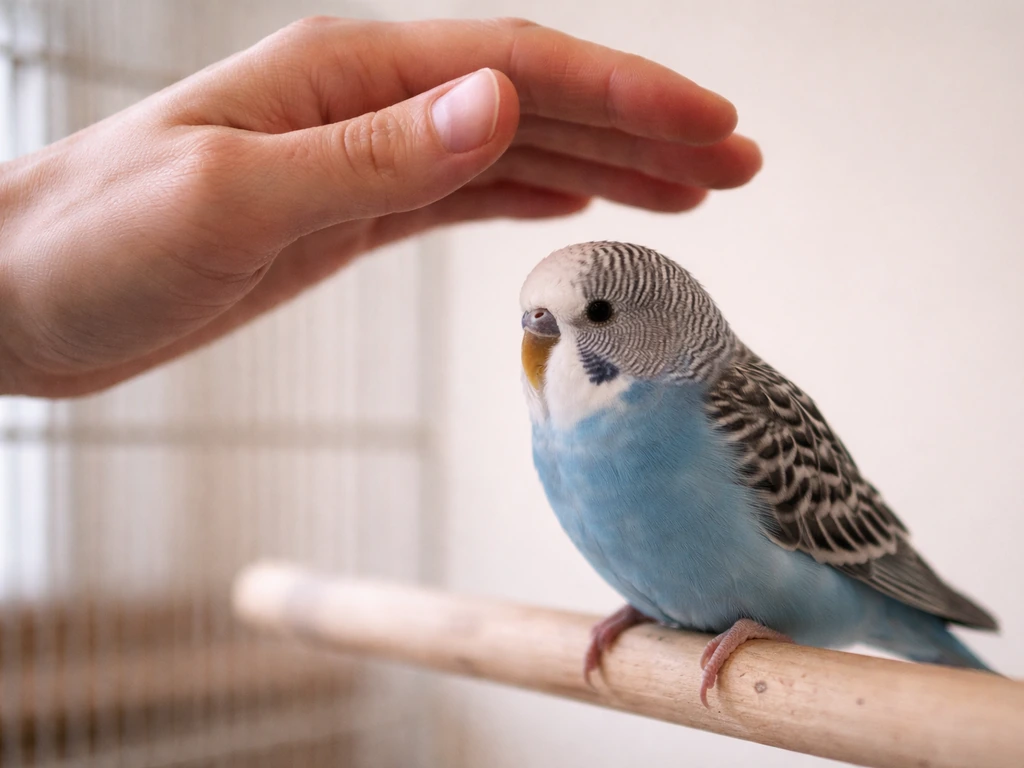
Budgies are quick and will bolt across the cage if they feel cornered, so patience pays off here. Start by spending time with your hand simply resting inside the cage, not reaching for the bird, until the bird lands on or investigates your hand voluntarily. When you do attempt a hold, use two fingers as a perch rather than one, since a budgie's small feet feel more stable on a wider surface. The cupped-hand hold works for budgies, but keep the pressure extremely light. You should barely feel the bird's weight pressing against your fingers. For more guidance on how to hold a small bird like a budgie or a finch without injuring it, the technique differences from larger species are worth reviewing.
Finches and canaries
Finches and canaries are typically not hand-tamed to the same degree as parrots or cockatiels, and many owners never need to hold them outside of veterinary care. When you do need to hold a finch, the method is a loose, cupped two-hand hold with the bird's back resting in your palm, wings lightly held against the body, and head just visible between your thumb and forefinger. These birds are delicate, so the lightest pressure you can manage while still keeping the bird secure is the right amount. Finches are also fast, so work in a small, closed room to prevent an escape turning into a chase.
| Species | Perch size | Body hold | Key warning sign |
|---|---|---|---|
| Large parrot | Full hand/forearm | Cupped hand, both hands for control | Pinning eyes, fanned tail, lunging |
| Cockatiel | One or two fingers | Gentle cupped hand | Flat crest, stiff frozen posture |
| Budgie | Two fingers | Very light cupped hand | Rapid fluttering, panting |
| Finch/canary | Two fingers, closed cupped hands | Minimal pressure, both hands cupped | Open-mouth breathing, limpness |
Holding wild backyard birds safely
The honest answer here is: in most cases, you shouldn't. The CDC, state wildlife agencies, and wildlife rescue organizations all recommend against touching wild birds except when absolutely necessary, and even then only as a temporary containment measure while you get professional help on the line. Wild birds are protected under federal and state laws in most countries, and handling them without proper authorization can create legal issues on top of welfare ones.
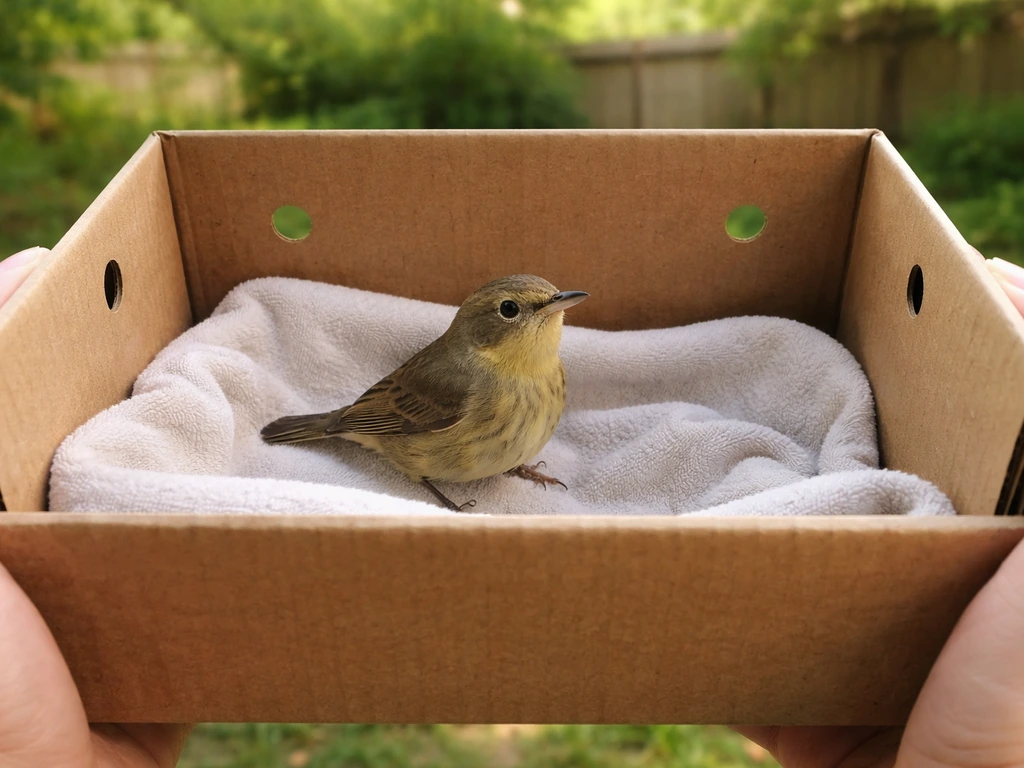
That said, situations do arise where a bird has flown into a window, been caught by a cat, or is clearly injured and in immediate distress. The guidance from how to hold a wild bird safely goes into detail on the specific containment steps, but the short version is: use a thick towel or gloves, limit handling to the minimum needed to place the bird in a ventilated box, keep the environment dark and quiet, and call a licensed wildlife rehabilitator right away. Do not attempt to feed it, keep it long-term, or handle it more than necessary.
Wild bird do's and don'ts
- Do use a towel or gloves as a barrier between your skin and the bird
- Do place the bird in a dark, ventilated box and contact a rehabilitator immediately
- Do call your state wildlife agency if you find a sick or dead bird in your yard
- Don't assume a fledgling on the ground needs rescuing. Many young birds spend days on the ground as part of normal development
- Don't handle a wild bird more than necessary. Stress alone can be fatal to an injured bird
- Don't attempt to keep, feed, or care for a wild bird yourself without professional guidance
- Don't skip PPE if the bird appears sick. Avian influenza and other diseases are genuine risks
If you do need to move a wild bird safely from one point to another, the principles covered in how to carry a bird apply here too. Keep the bird close to your body to minimize movement, cover the eyes to reduce panic, and move deliberately rather than quickly.
Troubleshooting: when the bird resists, bites, or flutters
Resistance is normal, especially with birds that haven't been handled much. The key is to distinguish between a bird that is simply uncertain and needs more time versus a bird that is genuinely distressed or unwell. Here's a practical checklist to work through.
If the bird flaps and won't settle
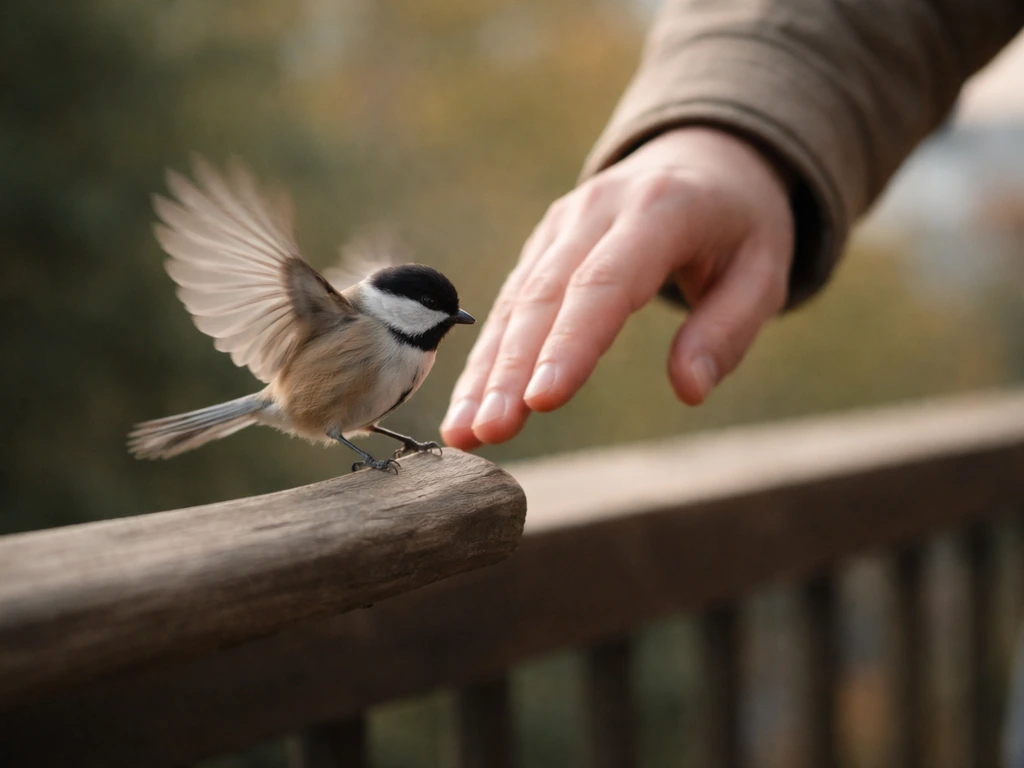
- Lower your hand and let the bird stabilize on a perch. Forcing a grip on a flapping bird increases injury risk for both of you
- Check that you're not coming from above. Approach from the side or below foot level
- Reduce environmental distractions: turn off the TV, ask others to leave the room, dim bright overhead lights
- Try a shorter session. Even 20 seconds of calm contact is a win and builds on the next session
- Make sure the room temperature is reasonable. A bird that is panting and holding wings away from its body may be overheated, not just stressed. Overheating is a medical situation, not a training problem
If the bird bites
- Do not pull away sharply. A quick withdrawal often triggers a stronger bite reflex. Instead, push gently toward the beak for a split second, which usually causes the bird to release
- Identify what triggered the bite. Was there an aggression warning sign you missed? Was the bird startled by something behind you?
- End the session calmly, without punishment. Yelling or pulling back dramatically teaches the bird that biting works
- If the bite breaks skin, wash immediately with soap and water and monitor for infection. Seek medical attention within 24 hours if the skin is broken
When to stop and call a vet
Stop handling and contact your avian vet if the bird shows fluffed feathers that don't resolve after a few minutes of rest, labored or open-mouth breathing, tail bobbing with every breath, repeated falling or difficulty balancing, or a major and sudden drop in activity. These can be signs of illness or injury that make handling inappropriate. How to hold a bird without scaring it covers the calming techniques in more depth, but no amount of technique substitutes for a vet check when a bird isn't well.
Building trust so holding gets easier over time
The best handling sessions are the ones where the bird comes to you rather than being caught. That's a realistic goal for most pet birds, but it takes consistent, low-pressure work over days and weeks. The approach that works best is positive reinforcement paired with systematic desensitization: you gradually expose the bird to your hand at whatever pace the bird can handle, reward any movement toward you, and never push hard enough to trigger a strong fear response.
Start by simply sitting near the cage with your hand resting on the outside. No reaching in, no pressure. Once the bird is relaxed with your presence, open the cage door and rest your hand just inside without moving it. From there, introduce a treat held in your fingers. The RSPCA's handling guidance emphasizes offering a preferred food alongside your outstretched hand, because it shifts the emotional association from threat to reward. Rewarding even small movements toward your hand, like leaning forward or shifting weight onto the leg closest to you, accelerates the process more than waiting for a full step-up.
Clicker training is worth considering once the bird is taking treats from your hand reliably. The clicker marks the exact moment of correct behavior, which makes it much easier for the bird to understand what you're rewarding. One critical note from trainers who work with companion birds: chasing, repeated forced restraint, and handling pressure without positive associations all increase fear and make future training harder. Short, successful sessions build momentum. Long, stressful ones set you back.
A realistic timeline: a young, hand-raised bird from a good breeder may step up confidently within a day or two. A rescue bird with a history of poor handling may take several weeks of daily short sessions before it's comfortable with basic contact. An older wild-caught bird may never become fully hand-tame, and that's okay. The goal is a bird that is not afraid of you, even if it doesn't love being held.
Keep sessions short (5 to 10 minutes maximum for new birds), always end on a positive interaction, and track your progress so you can see improvement even when it feels slow. Progress tends to be non-linear: two steps forward, one step back is completely normal, especially after a stressful event like a vet visit or a move. Consistency matters far more than any single session.
FAQ
How can I tell if I’m holding a bird securely without restricting its breathing?
Use the “read the keel and breathing” test. If the bird’s chest still expands smoothly and the bird’s body does not tense or slip, your hold is likely secure enough. If you notice the keel area rising slowly or the bird is trying to twist away repeatedly, loosen your grip and reposition to better support the full body rather than pinning one spot (common with partial under-chin supports).
What should I do if the bird starts twisting or trying to escape during a hold?
Switch to a stabilization hold, not a stronger grip. For pet birds, keep one hand supporting the body and use the other mainly for gentle guidance, then pause until the bird calms enough to stop struggling. If the bird keeps climbing, twisting, or vocalizing in bursts, stop handling for the moment and resume when it can be approached without triggering panic.
Is it ever safe to hold a bird’s wings to prevent flapping?
Avoid “pinning” the wings. Even for short-term towel restraint, wings should be held lightly against the body to reduce flapping, not pressed flat or stretched. If a bird can still move its feet and shift its body weight a little, you usually have the right level of control.
Can I still practice step-up if my bird seems nervous or unsure?
If the bird shows a clear fear or illness pattern, you should not try to force step-up. Instead, move to an exam-ready, minimal-stress approach: offer a familiar perch location, give a short pause for calm, or use a towel only for urgent needs. For wild birds, prioritize temporary containment and professional help rather than prolonged attempts to “manage” behavior yourself.
How often should I hold my pet bird to avoid making it more afraid?
Yes, but do it sparingly. For pet birds, aim to contact the bird when it is already calm, choose one consistent hold, and keep sessions very short. Do not increase handling frequency right after a stressful event (like a vet visit), because that often teaches the bird that handling predicts something bad.
How do I end a handling session so the bird trusts me more next time?
Use a specific “release cue” and end-of-session routine. Many birds do better when you let them step off as soon as they show calm body posture, then immediately offer a treat or preferred food right at the perch. Ending on release reduces rebound fear and makes future holds less stressful.
What are the most common mistakes people make when holding larger parrots?
For larger parrots, don’t reach from above. Approach from the front at foot level, and keep your hands close to the bird’s “decision space” so it feels it can step voluntarily. Also, avoid sudden hand movements toward the head, because that commonly triggers the aggressive forward-lean posture.
What’s the safest way to respond if a bird bites while I’m holding it?
If your bird bites, don’t immediately pull your hand away if the bird has a firm grip on skin. Instead, gently slow the movement and support the bird’s body so it is not dragged. Afterward, wash the wound right away as recommended and seek care for any skin-breaking bite within 24 hours, telling the clinician it was a bird bite specifically.
How do I prevent a finch or canary from escaping during a hold?
Limit handling time and reduce visual stimuli. In a room, close doors and windows, keep lighting steady, and avoid rapid movements, because finches and canaries can startle and sprint. If escape risk is high, use a small ventilated carrier or enclosure plan before you attempt the hold.
If I find an injured wild bird, should I try to feed it before help arrives?
Avoid feeding or “trying to calm” a wild bird by offering food. For injury or distress, the priority is minimal handling, temporary containment (ventilated box), keep the environment dark and quiet, and contact a licensed wildlife rehabilitator immediately. Feeding the wrong diet or at the wrong time can worsen outcomes.
When using a towel, how do I make sure I’m not compressing the bird’s chest?
Start with pressure you can immediately reduce, not pressure you later regret. If a towel is used, drape and support the head gently, tuck under the neck for stability, then secure the sides around the wings only enough to limit flapping. You should be able to slide your fingers under the hold area to confirm you are not compressing the chest.
How should my grip change if I’m moving the bird to a carrier versus doing a quick health check?
Plan your grip based on the next step. If you are moving the bird, keep it close to your body to reduce movement and panic, cover the eyes to lower stimulation, and avoid long holds in unstable positions. For any medical or inspection task, you can reduce stress by grouping actions into one short attempt rather than repeated separate handling moments.
Next Articles
How to Catch a Bird Without Killing It: Humane Steps
Humane, trap-free steps to catch a wild backyard bird safely, minimize stress, contain it calmly, then release or reloca
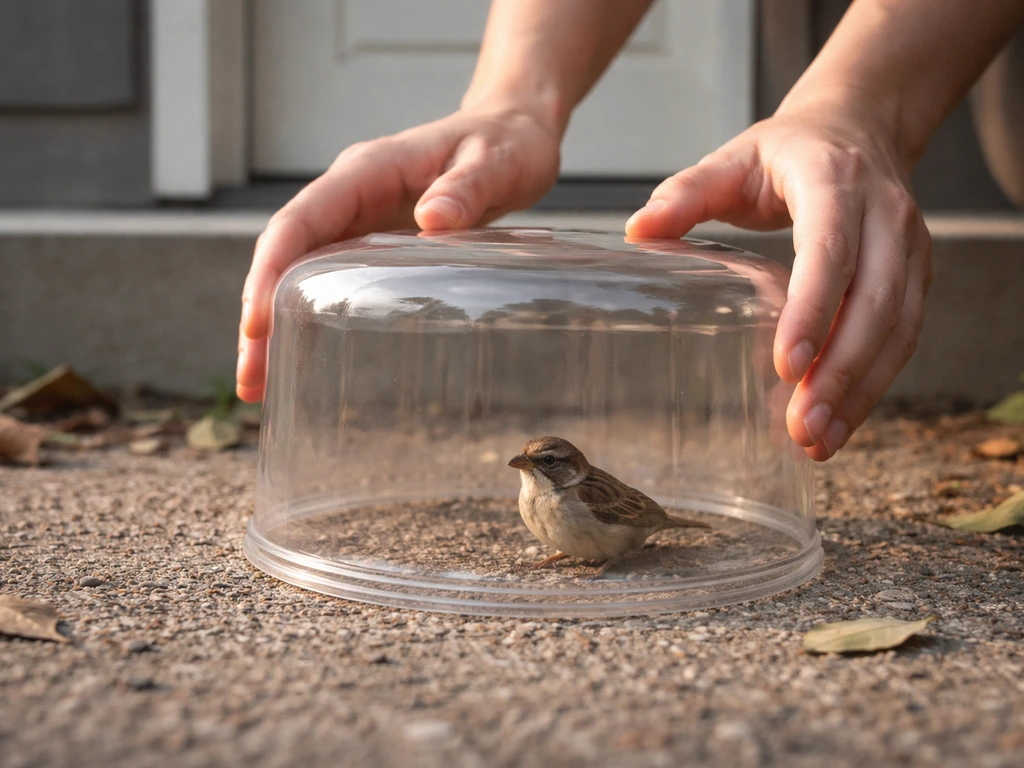
How to Catch a Bird With a Bottle Safely and Humanely
Humane, safety-first steps to catch a bird with a bottle or cover, plus safer alternatives and what to do after capture.
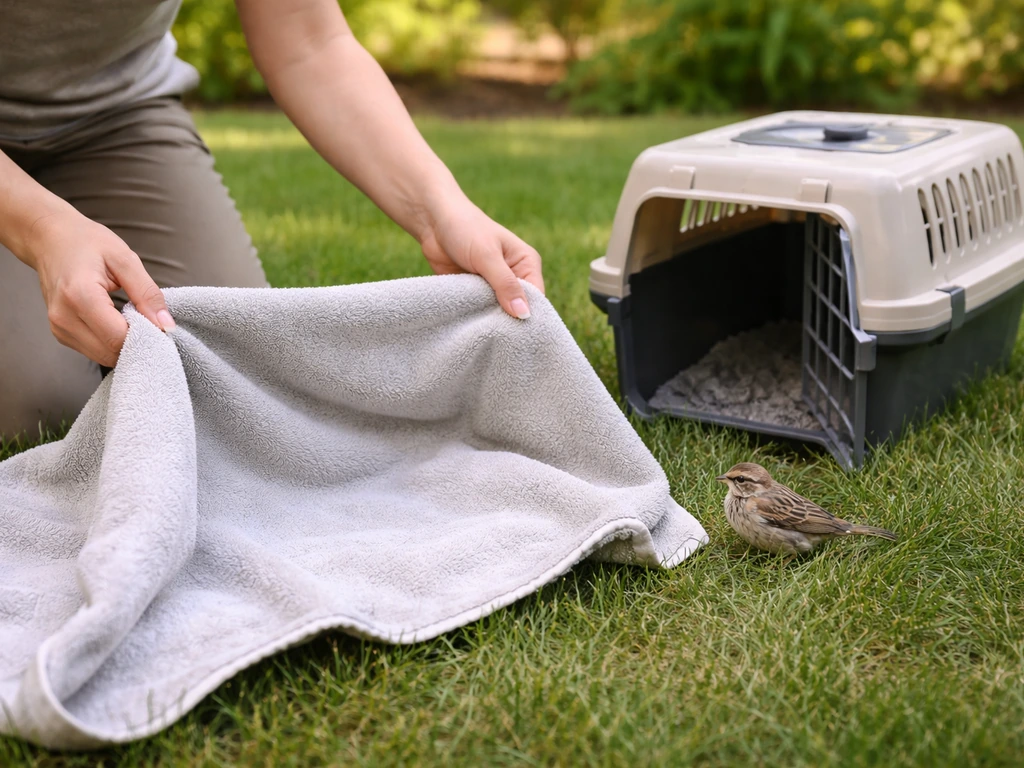
How to Catch a Bird Alive Safely and Humanely
Humane, safety-first steps to catch a live bird for backyard or pet rescue, with stress-free handling and next actions