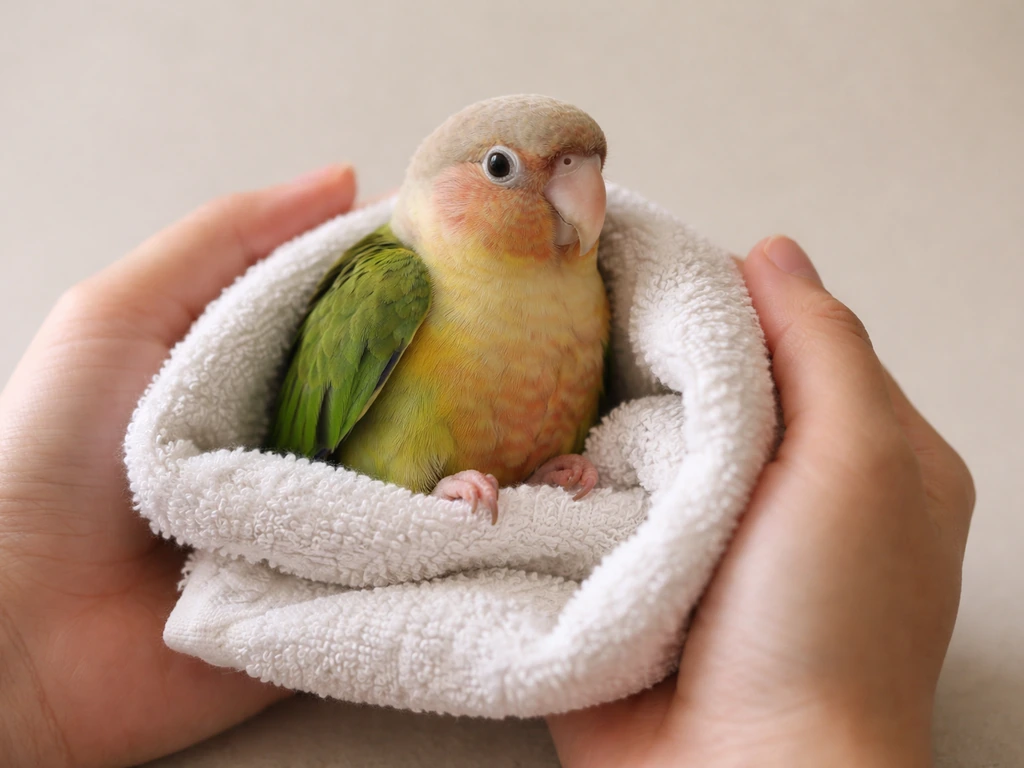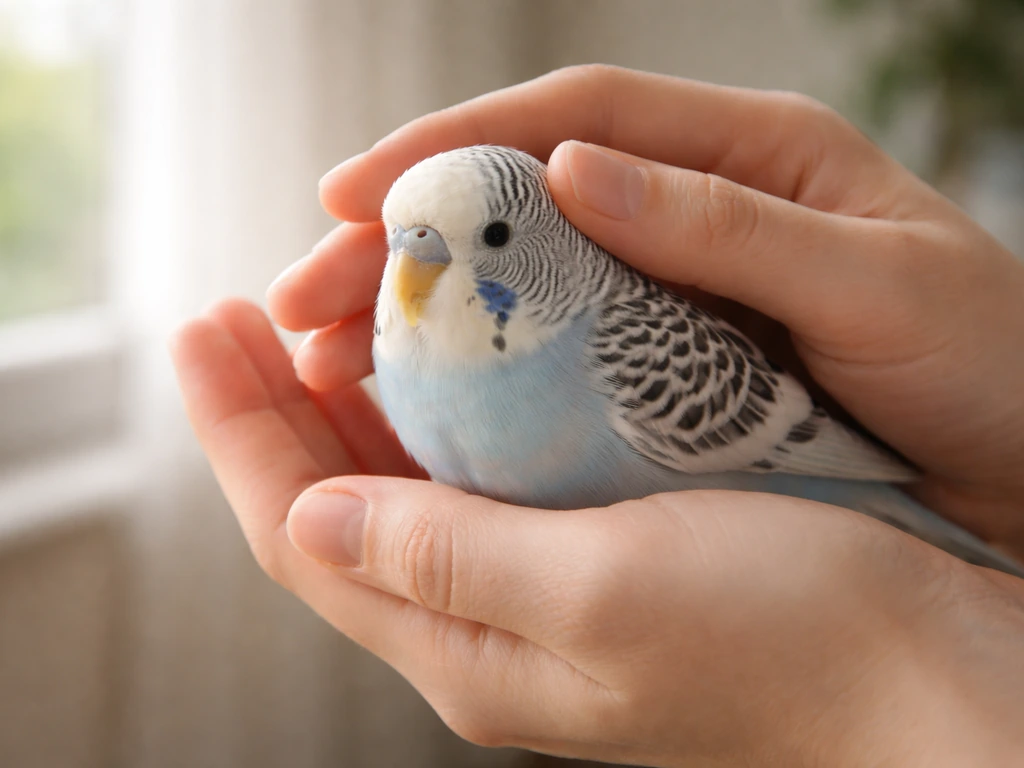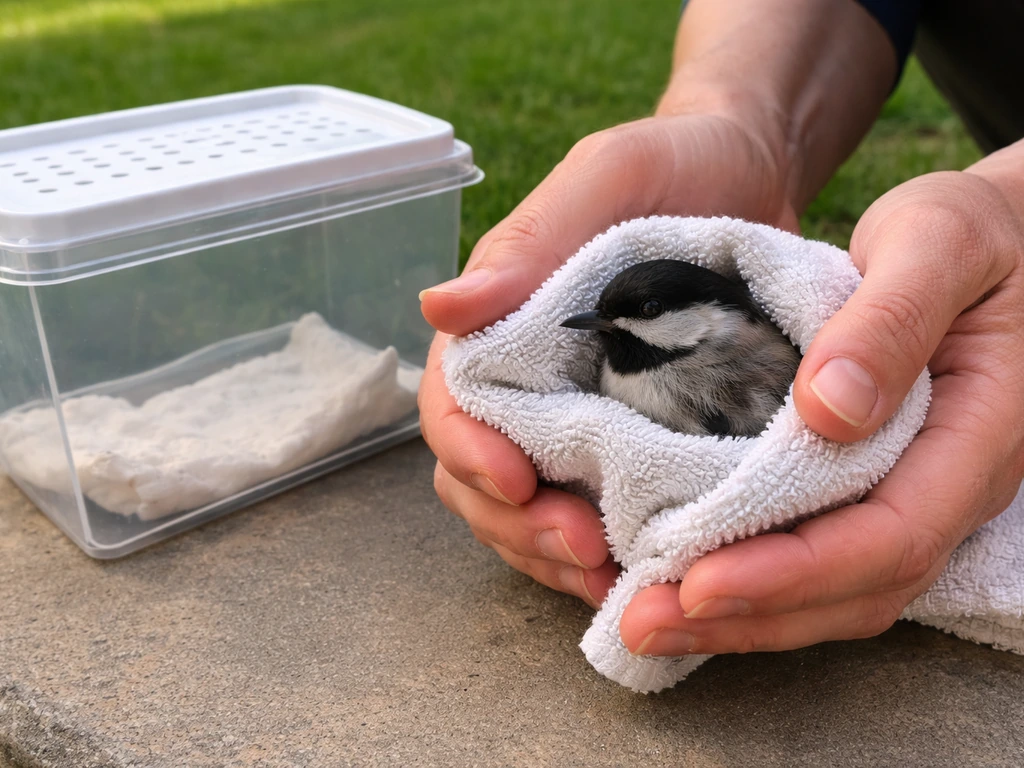
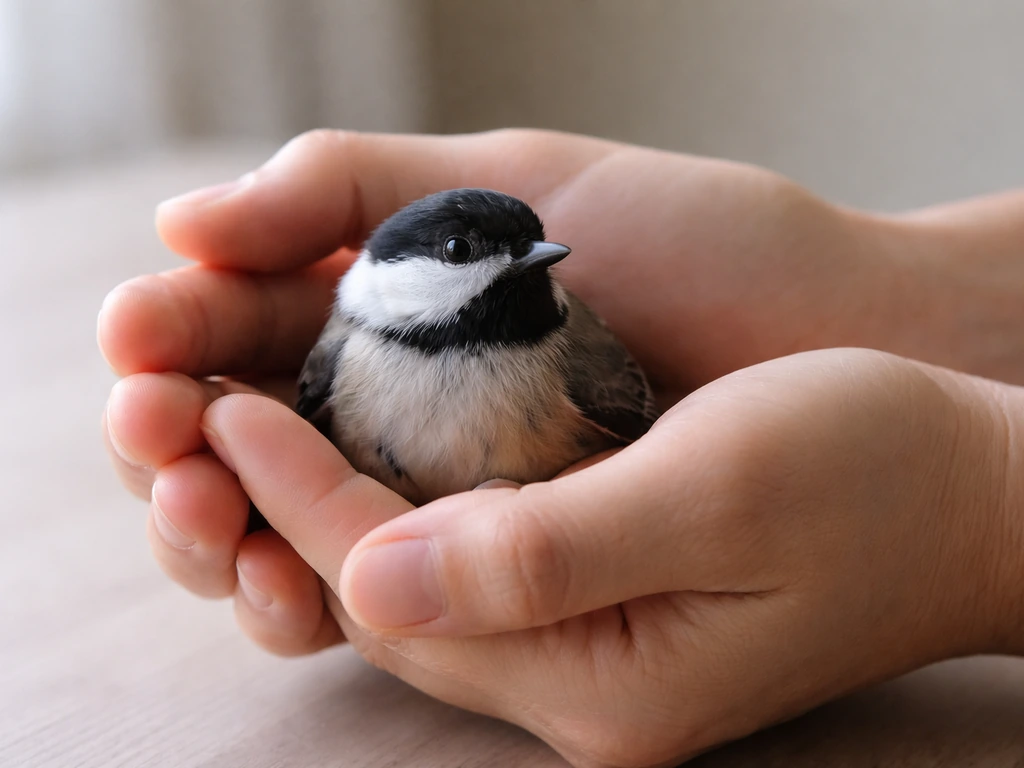
To hold a small bird safely, cup it gently in one or both hands with your fingers loosely encircling its body, supporting its keel (breastbone) and feet without squeezing its chest. Your grip should feel like a loose cage, not a fist. The bird needs room to breathe, and the number one mistake people make is gripping too tight out of fear the bird will escape. Keep sessions short (30 to 60 seconds for nervous birds), stay calm, and put the bird down the moment it shows real stress signs.
How to Hold a Small Bird Safely and Humanely Today
Clara Hayes
29 Apr 2026
Before you touch: safety, stress signals, and when to call a pro
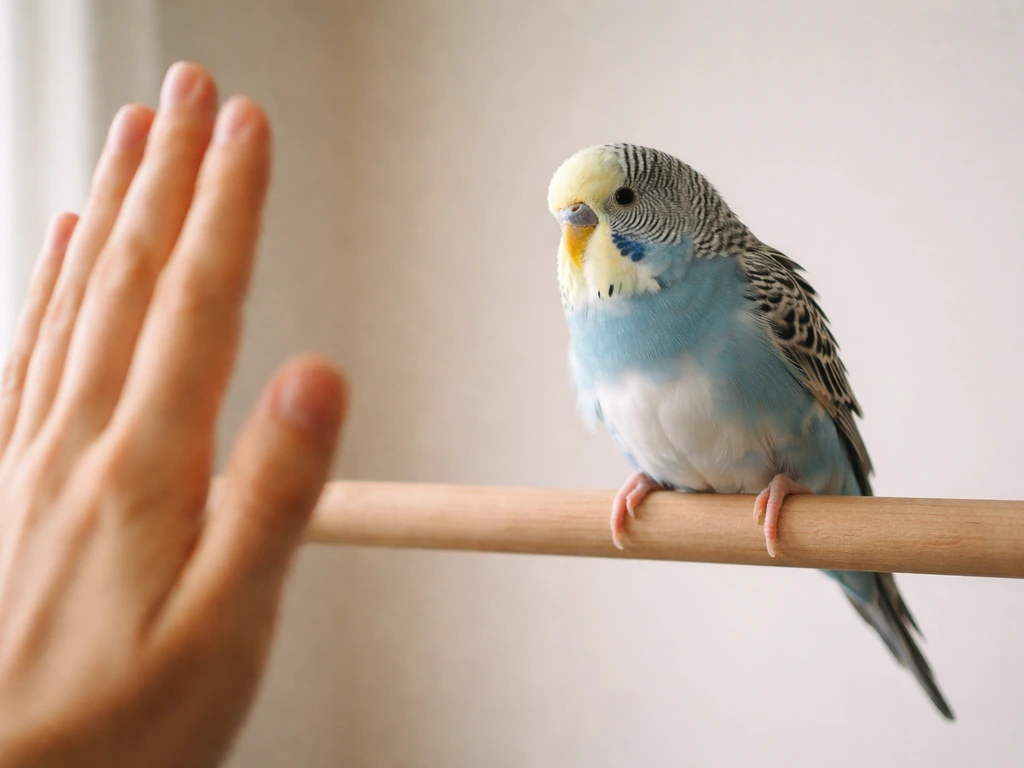
Before your hand goes anywhere near a bird, spend 30 seconds just watching it. This is not optional. A bird that looks quiet might be quiet because it is exhausted or sick, not because it is calm. Handling a severely stressed or injured bird without checking first can push it over the edge. A WSAVA congress document also describes using a towel to position a bird against the cage side for capture and emphasizes monitoring stress indicators, including respiratory rate, body temperature, and attitude monitoring stress indicators such as respiratory rate, body temperature, and attitude.
Look for these red flags before and during any handling attempt:
- Open-mouth breathing at rest: this is a serious respiratory warning sign and means stop, do not handle, call an avian vet
- Tail bobbing (rhythmic pumping of the tail with each breath): another sign of respiratory distress that warrants prompt veterinary care
- Drooping wings or inability to hold the head up
- Bleeding from a feather shaft (blood feather) or any visible wound
- Labored breathing, shivering, or eyes that keep closing
- Complete unresponsiveness or inability to grip your finger
If you see any of those signs, skip the handling tutorial for now. Keep the bird warm and quiet in a small, dark box or carrier and get it to an avian vet or wildlife rehabilitator as quickly as possible. Blood loss is especially dangerous in small birds because they have very limited blood volume, and overheating or prolonged restraint during a health crisis can be fatal.
On the hygiene side: always wash your hands before and after handling any bird. Bird bites and scratches can transmit germs even when the wound looks minor. If you are handling a bird that might be sick, wear gloves and consider an N95 mask, especially around droppings or discharge. This applies to both pet birds and wild birds.
For wild birds specifically, you also need to know the legal picture. In the United States, most wild birds are protected under the Migratory Bird Treaty Act (MBTA). Briefly picking up an injured bird to move it to safety or transport it to a licensed wildlife rehabilitator is generally considered acceptable, but keeping it, attempting to rehabilitate it yourself, or repeatedly handling it without a permit is not. Licensed wildlife rehabilitators hold federal permits that authorize them to take in, treat, and temporarily possess migratory birds. If you find an injured wild bird, your job is to contain it safely and get it to someone who holds that permit, not to treat it at home.
Approach and readiness: calm environment, setup, and timing
The way you approach a bird matters as much as the hold itself. Birds are prey animals and they read your body language, your speed, and the noise level of the room before you even get close. A rushed approach in a loud, bright room will spike a bird's stress before your hand ever touches it. If you follow these steps, you can learn how to hold a bird without scaring it and reduce stress for both of you.
Set yourself up for success with these steps before you attempt a hold:
- Lower the lights slightly if possible. A dimmer room is calming, not because birds are blind in low light, but because it reduces their visual alertness and slows their flight response.
- Close windows, doors, and ceiling fans. An escaped bird in an open room can injure itself badly.
- Remove other pets from the space. A dog or cat in the room, even a calm one, reads as a predator to a small bird.
- Quiet the room. Turn off loud music or TV. Speak in a low, even tone.
- Wash and dry your hands. Cold wet hands startle birds and bare hands can transfer scent.
- Have your destination ready before you pick the bird up. If you are doing a cage transfer, have the cage door open. If you are taking the bird to a vet, have the carrier lined and nearby. The goal is to minimize how long you are holding the bird.
Timing matters too. Avoid handling birds first thing in the morning when they are active and hungry, or late at night when they are settling. Mid-morning or mid-afternoon, after they have eaten and are naturally calmer, is usually the best window. Never handle a bird right after it has been startled or chased.
How to hold safely: body support, wing and leg control, and grip method
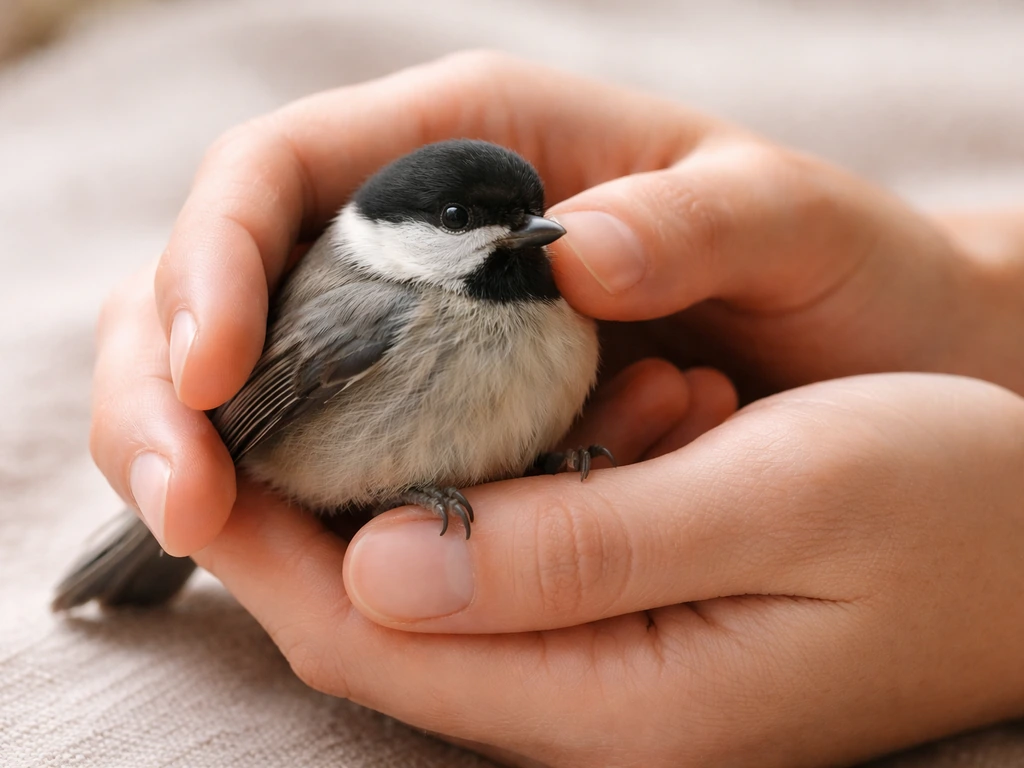
The core principle of safe bird holding is chest freedom. Birds breathe by expanding their chest, so any grip that compresses the keel (the ridge down the center of their chest) can suffocate them. You are not squeezing the bird into submission. You are creating a secure, gentle cradle that prevents wing flapping and keeps feet supported.
The basic one-hand cup grip (for very small birds: finches, budgies)
Place your dominant hand over the bird's back with your palm facing down. Wrap your fingers loosely around the body so the bird's head pokes out between your index finger and middle finger (or between your thumb and index finger for tiny birds). The bird's feet can dangle or rest on your ring finger. Your grip should be firm enough that the bird cannot wriggle free, but you should be able to feel its chest moving with each breath. If you cannot feel movement, loosen your grip.
The two-hand cradle (for cockatiels, small parrots, and larger birds)
Cup both hands together with the bird's belly resting in your palms and its feet supported. Use your thumbs to gently fold the wings against the bird's body, one thumb on each side. This prevents flapping without compressing the chest. The bird's head should be free and pointing away from you or to one side. For any bird that might bite, you can angle the head slightly away so it cannot reach your fingers easily.
What to avoid
- Never grip around the chest or squeeze the keel: this restricts breathing and can cause suffocation within seconds
- Do not grab a wing individually or pull it outward: wing bones are very fragile and can fracture if the bird flails while you have a wing isolated
- Avoid holding the bird on its back (dorsal restraint) for more than a few seconds: it is disorienting and stressful
- Do not hold a small bird by the legs alone: leg bones snap easily and the bird will panic
- Never hold a bird too long: even a calm hold becomes stressful after a few minutes for an untrained bird
- Do not try to hold a bird that is actively thrashing: pause, use a towel (see the tools section below), and try again
As a general rule, aim for holds of 30 to 90 seconds for birds that are not yet comfortable being handled. For vet checks or necessary procedures, a trained handler or vet tech will use a towel and work quickly. A Reddit discussion about towel restraint for budgies similarly emphasizes keeping handling sessions short and getting the bird safely unstressed as quickly as possible towel and work quickly. The faster you can complete whatever you need to do and return the bird to its cage or perch, the better.
Species-specific handling basics
Technique scales with size, temperament, and how hand-tame the bird already is. Here is a quick breakdown of the four species most people are handling:
| Species | Typical temperament | Best grip | Key watch-out |
|---|---|---|---|
| Budgie (parakeet) | Curious but quick to panic if untamed | One-hand cup, head between index and middle finger | Very fast escape artist; dim the room first |
| Finch (zebra, society, canary) | Extremely flighty; rarely tame to touch | One-hand cup only when necessary; towel for capture | Tiny and fragile; even brief holds are high-stress; minimize handling |
| Cockatiel | Often calmer if hand-raised; can bite hard | Two-hand cradle or perch-step training preferred | Crest position tells you a lot: flat crest = fearful, keep it brief |
| Small parrot (lovebird, conure, caique) | Bold, can bite; often nippy when scared | Two-hand cradle with head angled away from fingers; towel for resistant birds | Can deliver a surprising bite; watch for lunging before you grab |
Budgies
Budgies are fast and light (around 30 to 40 grams), and an untamed budgie will go from perched to full panic in under a second. If your budgie is not yet step-up trained, dim the room before you attempt to catch it. Approach from the side rather than from above (overhead = predator), and wrap your hand over its back in one smooth motion. Once held, budgies typically settle within 20 to 30 seconds if the grip is secure and calm. Do not hover or hesitate; a slow, uncertain approach makes things worse.
Finches
Finches (zebra finches, society finches, canaries) are almost never hand-tame, and handling them is genuinely high-stakes because of how small and fragile they are. A zebra finch weighs about 12 to 16 grams. Holding one too firmly for even 10 seconds can cause real harm. For finches, use a small soft towel to catch and contain, work as quickly as possible, and return them immediately. Unless you have a medical reason to hold a finch, leave them in their cage. Stress from handling can cause a finch to stop eating for the rest of the day.
Cockatiels
A hand-raised cockatiel that is used to being handled is one of the easier birds to hold: they will often step up onto your finger or walk onto your hand voluntarily. An untamed or frightened cockatiel is a different story. Watch the crest: a fully flattened crest means the bird is scared or aggressive. A neutral or slightly raised crest means it is alert but not panicking. Never force a hold on a cockatiel with a flat crest if you can avoid it. Instead, work on step-up training (covered more in the trust-building section below) and use a towel if you must handle an uncooperative bird for a health check.
Small parrots (lovebirds, conures, caiques)
Small parrots are strong for their size and can bite hard enough to break skin. Even a tame lovebird can get nippy when scared. Use the two-hand cradle method, keep the head pointed away from your fingers, and move deliberately. If the bird is biting or thrashing, stop and use a towel rather than fighting it bare-handed. Towel-restrained birds are safer for both you and the bird.
Handling wild yard birds: humane capture vs leaving them be
Most of the time, the right answer with a wild bird in your yard is to leave it alone. A bird sitting on the ground is not automatically injured. Fledglings (young birds that have left the nest but cannot yet fly well) spend several days on or near the ground while their parents continue to feed them. If you see a feathered young bird hopping around your yard with no visible injuries, watch from a distance for 30 to 60 minutes before doing anything. The parents are likely nearby.
Call a licensed wildlife rehabilitator or your local wildlife agency if:
- The bird is featherless or has its eyes closed (a nestling that has fallen out, not a fledgling)
- There is visible bleeding, a drooping wing, or an obvious leg injury
- The bird is shivering, has labored breathing, or cannot hold its head up
- You know a parent is dead nearby
- The bird struck a window and cannot keep its eyes open or hold its head upright after 30 minutes
- A cat or dog has touched the bird, even if there are no visible wounds (puncture wounds from cat claws introduce bacteria that require antibiotics)
If you do need to pick up a wild bird to move it to safety or transport it to a rehabilitator, use a light towel or cloth. Drape it gently over the bird, scoop it up with both hands through the towel, and place it in a small cardboard box with air holes. Keep the box in a warm, quiet, dark place and do not offer food or water unless a rehabilitator tells you to. Wild birds have specific dietary needs and many well-meaning people accidentally drown small birds by offering water incorrectly. Get it to a professional as fast as you can. Remember: under the MBTA, your role is safe containment and handoff, not treatment.
Tools and techniques for difficult birds
The towel method
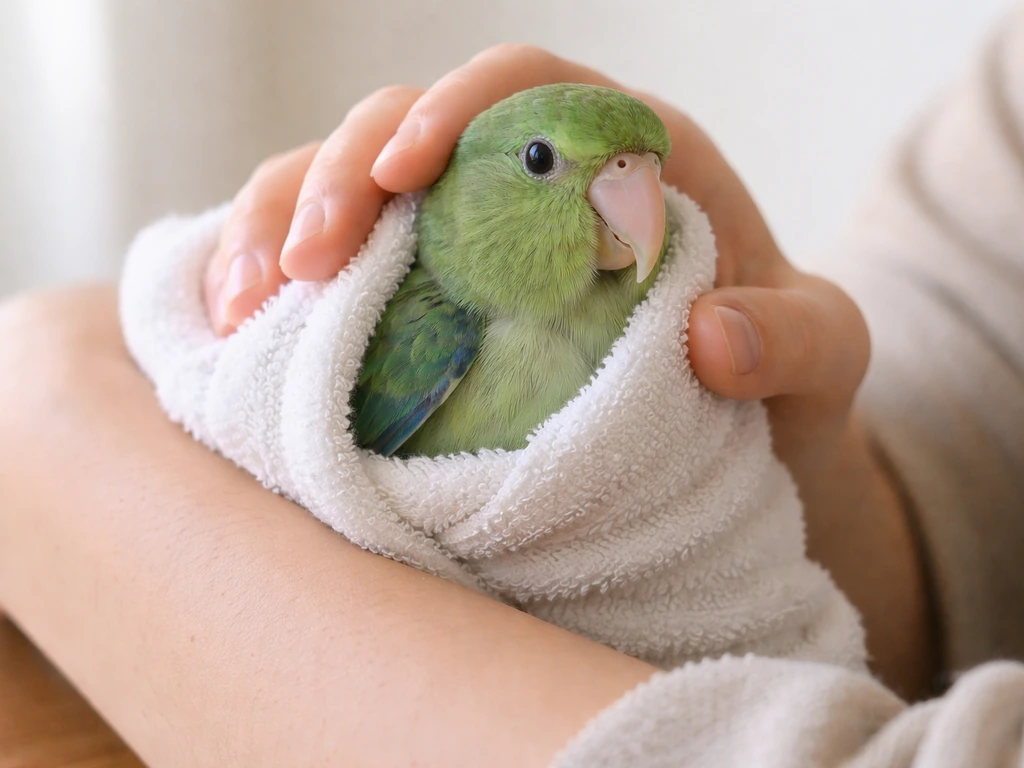
A small, soft hand towel is the most useful tool you can have for handling a bird that does not want to be held. It serves several purposes: it reduces bite risk, it keeps wings tucked without you having to apply pressure with your fingers directly on the chest, and it gives the bird something to grip and focus on other than escaping.
Use a lightweight cloth (not terry cloth that can catch toenails) and drape it over the bird's back. Scoop up from underneath with both hands, letting the towel fold around the wings naturally. The head should remain uncovered and visible. Do not wrap the towel around the chest tightly.
This technique is widely used by avian vets and shelter handlers for good reason: it works, and it reduces injury risk significantly.
Small containers and boxes
Sometimes the safest hold is no hold at all. For cage transfers, vet visits, or moving a frightened bird short distances, a small container (a travel carrier, a shoebox with air holes, or even a paper bag with the top folded down) is less stressful than being in someone's hands. Covering the carrier with a light cloth to block visual stimulation helps birds calm down faster during transport. Get the bird into the container as quickly and smoothly as possible and cover it immediately.
Gloves: when to use them and when not to
Gloves are appropriate in a few specific situations: handling a bird that is actively biting and causing injury, handling a sick wild bird where you want a barrier against potential disease transmission, or handling raptors or larger birds (not covered here, but worth mentioning). For small pet birds like budgies and finches, gloves are usually counterproductive. They reduce your sensitivity and make it much easier to accidentally squeeze too hard. If you are using gloves for a pet bird, choose thin latex or nitrile gloves so you can still feel the bird's body. Heavy work gloves have no place in small bird handling.
After holding: quick release, calming, and building trust over time
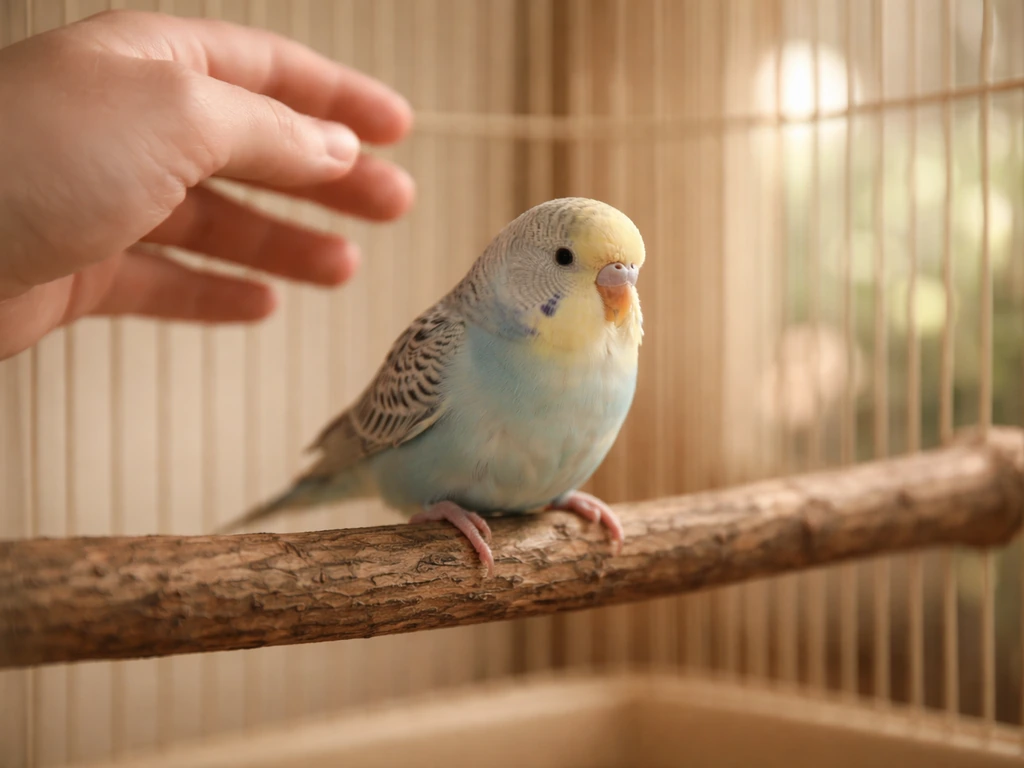
The moment you are done, release the bird back to its perch or cage promptly. Release the bird safely and calmly so it is comfortable and ready for its next interaction how to carry a bird. Do not linger with it in your hands. Place it gently on a perch and step back, giving it space to settle. Birds that are released onto a flat surface (like the bottom of a cage) instead of a perch are more disoriented and take longer to calm down.
After any handling session, watch for these signs that the bird needs more time to settle:
- Rapid breathing that does not slow within 2 to 3 minutes
- Feathers puffed up and bird sitting on the cage floor
- Refusing food or water for more than an hour after handling
- Continued alarm calls or flight attempts
If breathing does not normalize within a few minutes, open-mouth breathing appears, or the bird seems to be deteriorating, contact your avian vet. If you notice respiratory distress, the Merck Veterinary Manual advises placing the bird in a warm, oxygenated incubator before restraint or handling. Do not wait and watch.
Building handling tolerance through taming and training
The goal with any pet bird is to make handling so routine and predictable that the bird does not find it stressful at all. That takes time and consistency, but it is completely achievable with most pet species. Here is a realistic timeline and approach:
| Timeframe | Goal | What it looks like |
|---|---|---|
| Week 1 to 2 | Presence tolerance | Bird does not panic when you sit near the cage; may eat while you are present |
| Week 2 to 4 | Hand tolerance | Bird does not flee when your hand enters the cage; may investigate fingers |
| Week 4 to 8 | Step-up response | Bird steps onto your finger when asked, at least occasionally, without being forced |
| Month 2 to 4 | Comfortable handling | Bird can be picked up and held briefly with minimal stress; returns to cage calmly |
| Month 4 and beyond | Reliable handling | Bird steps up consistently, tolerates gentle touching, and recovers quickly from holds |
The step-up command is your best friend here. To teach it, present your finger horizontally against the bird's lower chest, just above its feet, and apply gentle upward pressure while saying 'step up' in a calm, consistent tone. When the bird steps on, reward it immediately with praise or a small treat. Practice for 2 to 3 minutes per session, once or twice a day. A bird that reliably steps up is infinitely easier to handle for vet visits, cage transfers, and emergencies than one you have to chase and catch every time.
Keep in mind that taming is not linear. A bird that was handleable can regress after a stressful event (illness, new environment, a scare) and need the process restarted from an earlier stage. That is normal. Be patient and do not force it. Forcing a hold repeatedly when a bird is not ready sets back trust significantly.
Routine veterinary care also plays a role here. Birds that are seen by an avian vet regularly are less likely to have undetected health issues that turn into emergencies requiring stressful emergency handling. Schedule at least an annual checkup, and keep your avian vet's number handy so you can call quickly when you are not sure whether a situation requires professional help. When in doubt, call first and describe what you are seeing before attempting to handle a bird that may be sick or injured.
FAQ
Can I hold a small bird upside down or with its head facing downward?
No. Keep the head free and supported, angled away from your fingers or to one side, and maintain a grip that lets the chest expand. If the bird tips into a head-down position, loosen and reposition immediately to avoid breathing restriction.
How do I know if my grip is too tight versus just secure?
You should be able to feel normal chest movement while the bird cannot wriggle free. If you cannot detect breathing through your fingers, or the bird’s chest looks compressed against your palm, loosen right away. Comfort is also an indicator, the hold should not escalate the bird’s panic within the first few seconds.
Is it safe to pick up a bird by grabbing its wings to stop flapping?
Not as a primary method. For flapping control, support the body with both hands and gently fold the wings using your thumbs without squeezing the keel. If the bird’s wings must be restrained, do it with a towel cradle rather than pinching or gripping the wing joints.
What should I do if the bird starts thrashing or biting while I’m holding it?
Stop fighting the motion. Pause to reassess chest freedom, then switch to a towel-based containment method and return the bird to its perch or cage as soon as it calms. If the bird is actively injuring itself or you cannot keep breathing visible, contact a vet or rehabilitator for guidance.
Can I hold a baby or fledgling that is on the ground?
Usually you should not. Observe for 30 to 60 minutes first because parents are often nearby even when the bird looks uncoordinated. Only pick up if there is a clear threat (traffic, predators, imminent harm) and then use safe containment until a licensed professional can take over.
Do I have to offer food or water while I’m holding a wild bird?
Generally no. The article advises not offering food or water unless a rehabilitator instructs you, because incorrect hydration methods can be dangerous for very small birds. Focus on warmth, darkness, and quick handoff instead.
Should I transfer a small bird from a cage to a carrier while I’m holding it?
Often it’s safer to guide the bird into a carrier instead of holding it for long. Use the shortest necessary contact, then place the bird into an air-holed container immediately. If the bird panics, switching to a carrier method and covering it to reduce visual stimulation can prevent repeated handling.
Is it okay to wear gloves when handling a pet budgie or finch?
Usually no. Gloves reduce your sensitivity, making it easier to squeeze too hard. If you must use a barrier for a specific reason like an actively biting bird, choose thin gloves you can still feel the bird’s breathing through.
How long can I hold a small bird before it becomes risky?
For nervous birds, keep contact very short (about 30 to 60 seconds), and for birds that are not yet comfortable, aim for brief holds (roughly 30 to 90 seconds). If stress signs persist or breathing does not normalize quickly after you set it down, stop and seek veterinary help.
What are the hygiene steps people commonly miss before and after handling?
In addition to washing hands, avoid touching your face during handling and prevent cross-contamination by cleaning any surfaces the bird or droppings contacted. If you used gloves or a mask, remove them carefully and wash hands again immediately after.
If I miss the step-up training, can I still handle the bird in an emergency?
Yes, but use the lowest-stress approach available. If the bird resists, switch to a towel cradle or container transfer rather than repeatedly chasing and forcing holds. After the emergency, restart trust-building with very short, calm sessions.