Handling a bird safely comes down to three things: reading the bird's body language before you touch it, supporting its body correctly when you do, and building the kind of trust that makes the whole process easier over time. Whether you're working with a tame parrot, a skittish budgie, or an injured sparrow in your backyard, the core principles are the same: go slow, minimize stress, and never restrict the bird's ability to breathe. Get those right and you'll avoid most of the bites, falls, and injuries that make handling feel scary for both of you.
How to Handle a Bird Safely and Humanely Step by Step
Clara Hayes
12 Apr 2026
Safety first: knowing when not to handle
Before you reach for any bird, ask yourself if handling is actually necessary right now. Birds in obvious distress, open-mouth breathing, tail bobbing with every breath, feathers slicked tight to the body, wings held away from the sides, or eyes closed while sitting upright are not safe to handle casually. These are signs of respiratory distress or heat stress, and forcing a struggling bird into your hands can make things much worse. If you see any of those signs, contact an avian vet immediately rather than attempting restraint yourself.
Birds have a far higher metabolic rate than mammals, which means oxygen deprivation during even a short restraint session can become a medical emergency fast. Keep handling sessions brief, especially for birds that are sick, injured, or unaccustomed to being held. If a bird goes quiet, limp, or stops resisting suddenly during restraint, release it immediately into a safe enclosure and call a vet.
For wild birds, disease risk is a real concern before you touch anything. Wild birds can carry avian influenza and other pathogens even when they look healthy. If you find a sick or dead waterfowl or shorebird, do not handle it. Indiana state guidance is blunt about this: avoid contact entirely when avian flu risk is possible. For any wild bird you do need to touch, wear disposable gloves and wash your hands thoroughly afterward. Psittacosis (parrot fever) is another risk worth knowing about: it can spread through direct contact with infected birds or by inhaling dust from feathers and droppings, so good ventilation and basic PPE matter whenever you're handling unfamiliar birds.
Approach and preparation: set yourself up before you reach in
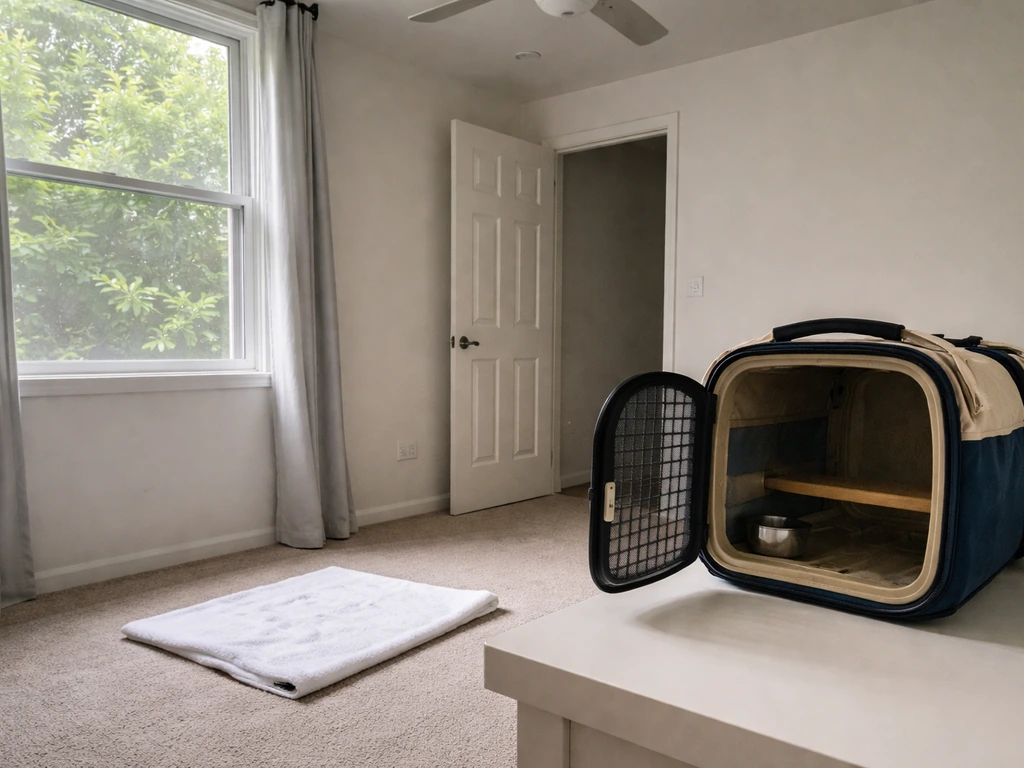
The environment you handle a bird in matters as much as your technique. Close windows, doors, and ceiling fans before you bring a bird out. Remove cats, dogs, and other pets from the room. Dim bright overhead lights slightly if the bird is very excitable, since lower light tends to calm many species. Have everything you need within arm's reach before you start: a towel if you'll need one, a carrier if you're transporting, treats if you're training. You don't want to be rummaging around with a bird on your hand.
Read the bird before you move toward it. A relaxed bird holds its feathers loosely, stands upright, and may lean toward you or chirp. A stressed or defensive bird crouches low, tucks its head, fans its wings or tail, and may hiss or lunge. Head-bobbing combined with a crouched posture is a warning, not a greeting. Lunging and charging at cage bars is a clear signal to wait. Other fear indicators include trembling, frantic pacing, and thrashing against enclosure walls. If you see these, back off, let the bird settle for several minutes, and try again. Pushing through active fear displays almost always results in a bite and a setback in trust.
Approach slowly and from the bird's front or side, never from above. Birds of prey swoop from above, so an overhead approach triggers a hard-wired startle response even in hand-raised parrots. Talk quietly and consistently as you approach so the bird always knows where you are.
Humane physical handling: support, restraint, and avoiding injury
The golden rule of bird restraint is: support the body, secure the wings against the sides, never squeeze the chest. Birds breathe differently from mammals. They lack a diaphragm and rely on movement of the chest wall and air sacs to breathe, so any pressure around the keel or ribcage that prevents that movement can cause rapid oxygen deprivation. Your grip should be firm enough to prevent escape but not so tight that you feel the bird's chest compress.
For most small to medium pet birds, the correct way to hold a bird is to place it gently on its back in your cupped hand or cradle it upright with your thumb and index finger loosely encircling its neck (not squeezing), your remaining fingers folding the wings against the sides, and the bird's keel resting in your palm. Secure the feet so the bird can't kick itself into a spin. Keep the head slightly higher than the body. Do not cover the nostrils or beak.
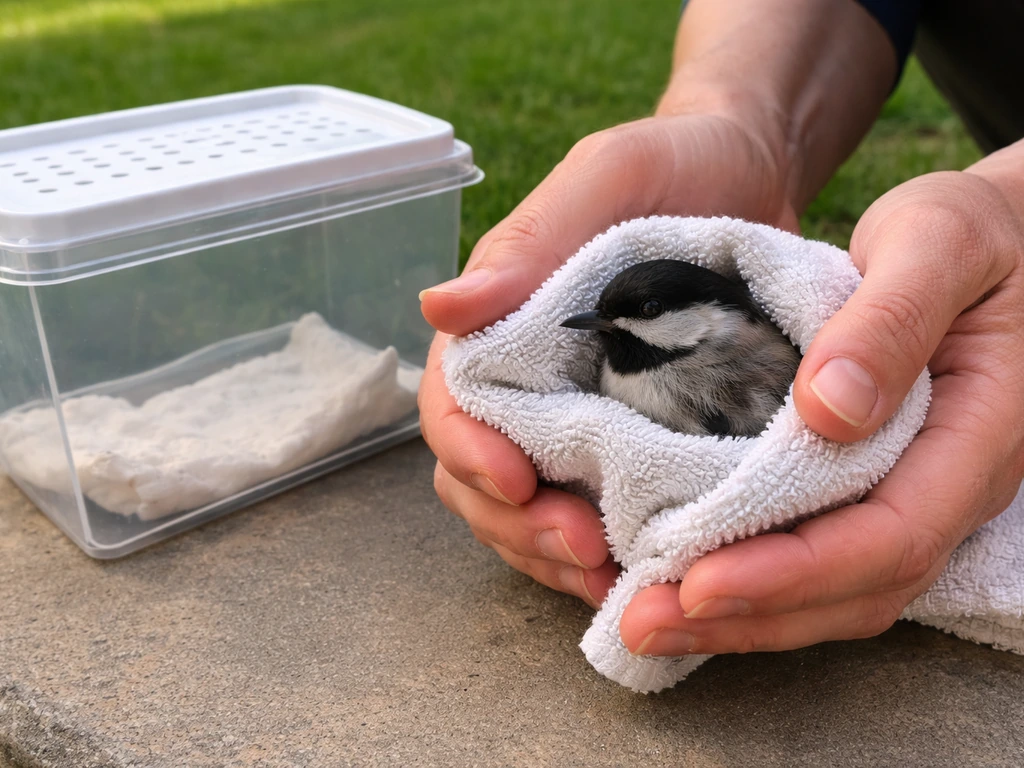
Towel restraint is a useful skill for medicating, examining, or moving a resistant bird, but it requires care. Lay a thin towel flat, place the bird near one corner, then gently roll the bird up so the wings are held against its body and the head emerges from the top. The towel wraps diagonally so one end secures the feet and the other covers the back and wings. The bird's head should always be free and visible.
Never wrap the towel around the neck or over the beak. Towel restraint is stressful for birds and can damage the human-bird bond if used frequently, so save it for situations where you genuinely need it, like giving medication or doing a health check, rather than routine handling.
Watch for entanglement. Rings, leg bands, and even long feathers can catch on towel threads or your fingers. Before you attempt restraint, check for anything that could snag and cause a broken toe or wing. If a wing or leg gets caught during handling, stop all movement and carefully work the entanglement free before releasing your grip.
Species-specific handling tips for pet birds
Parrots (medium to large: African Greys, Amazons, Conures, Macaws)
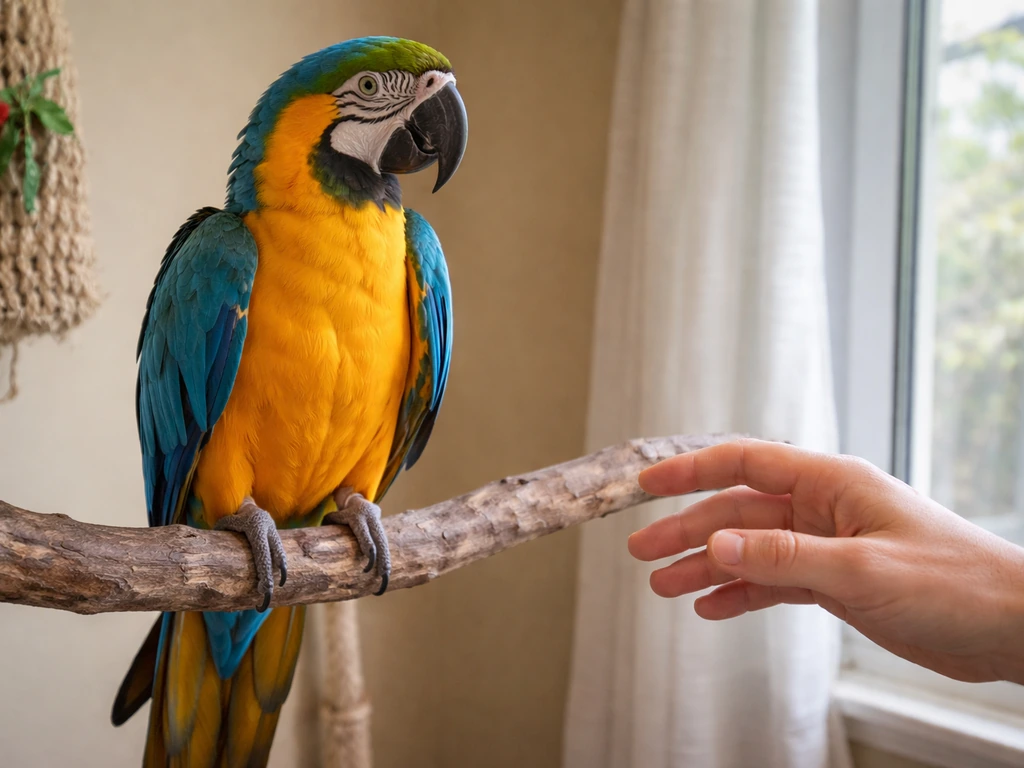
Large parrots can deliver a genuinely painful bite, so reading body language before you reach in is non-negotiable. A relaxed parrot accepts your hand approaching its lower chest and steps up cleanly. A defensive parrot pins its pupils rapidly (called pinning or flashing), raises its hackle feathers, and growls or lunges. Back off when you see those signs. When you do pick up a large parrot, present your forearm or wrist rather than fingers alone so the bird has a stable perch. Keep your grip loose: a trained parrot should be balancing itself, not being gripped. For restraint during health checks, towel technique applies here, and two-person handling is much safer than going solo with a large macaw or cockatoo.
Cockatiels
Cockatiels are generally more tolerant of handling than large parrots but still need a calm, confident approach. A relaxed cockatiel will flatten its crest slightly and lean toward your hand. A frightened one raises the crest fully upright and may hiss. Cockatiels are prone to panic flights inside the house, so always check that all windows and ceiling fans are off before letting one out. When holding a cockatiel, the index finger along the chest and thumb gently over the back works well for short handling. Avoid grabbing from above: scoop from below, always.
Budgies (Budgerigars)
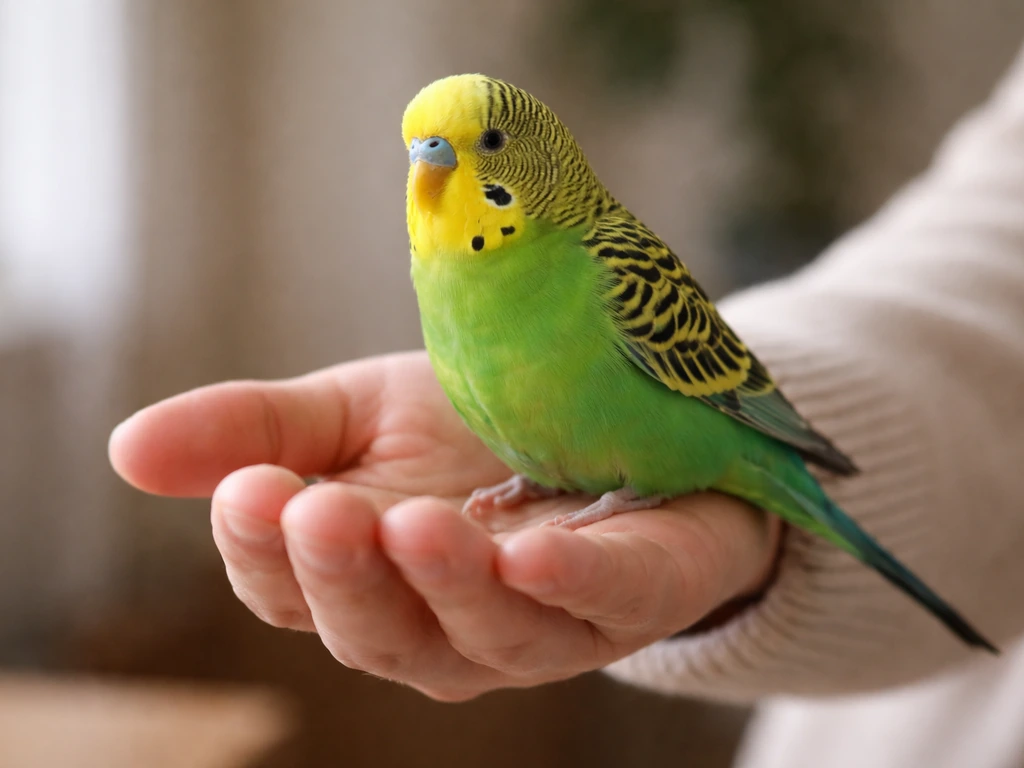
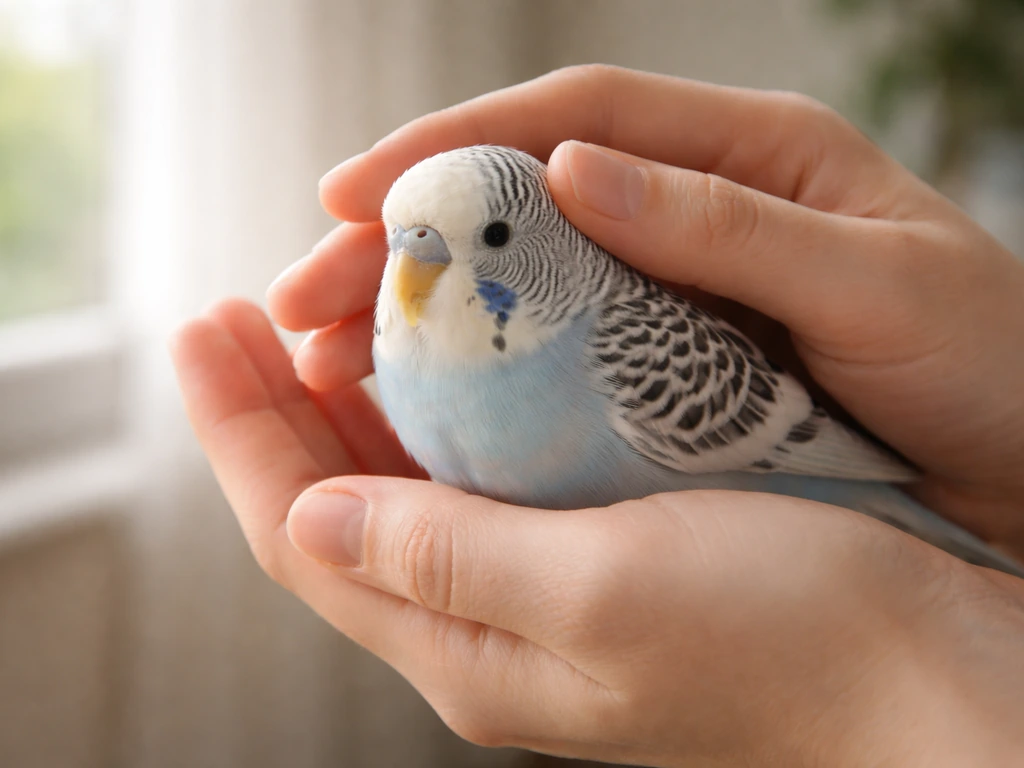
Budgies are small and fast, which makes them trickier to handle than their size suggests. When holding a small bird like a budgie, the technique is to let the bird perch on your finger and gently close your other hand around its back, keeping the wings against its body with minimal pressure. Never grab a budgie mid-flight or out of the air: the stress and the risk of injury are both too high. Budgies bite, and while it rarely breaks skin, a startled budgie that clamps down will hold on. Stay calm, don't pull away suddenly, and gently blow on the bird's face to encourage it to release.
Finches and other small softbills
Finches are the trickiest of the common pet bird groups to handle because they're fast, fragile, and rarely tame to human touch the way parrots do. Most finch owners handle their birds only when necessary: health checks, nail trims, or moving between enclosures. Capture a finch by dimming the room lights first, which reduces flight speed and panic. Cup the bird in both hands with gentle, even pressure, fingers slightly spread so you can feel the bird without crushing it. Keep sessions under 60 seconds when possible. Finches can go into shock surprisingly quickly under stress, so brief and calm is the goal every time.
Training birds to accept handling: step-up, desensitization, and building trust
The single best thing you can do to make handling easier is to train for it before you need it. A bird that has practiced stepping onto your hand hundreds of times for positive rewards is dramatically easier to move to a carrier, examine, or medicate than one that has only been grabbed when something was wrong. Punishment-based or forceful methods backfire: they create fear and aggression loops that make every future handling attempt harder. Positive reinforcement, moving at the bird's pace, is the only reliable approach.
Start with presence, not touch. Sit near the cage daily, talk quietly, and offer treats through the bars without reaching inside. Do this for several days until the bird approaches you reliably. Then begin offering your finger just inside the cage door at chest height, below the bird's feet, and wait. Don't push toward the bird: let it investigate. The moment it steps even one foot onto your finger, mark that with a calm "good" and offer a treat. Repeat until the bird steps up fully and confidently. This is the foundation of the step-up routine that helps you hold a bird without scaring it every time you need to.
Once step-up is reliable inside the cage, practice outside it. New environments excite and distract birds, so go back to basics in each new location: short sessions, high-value treats, no rushing. For cockatiels and budgies, Lafeber's guidance is useful here: coax with a treat held just out of reach of the step-up finger so the bird has to shift its weight forward to get it, which naturally encourages stepping. Lafeber’s “Teaching Your Bird” notes that teaching the Step Up command is critical to the bird-owner relationship and helps in transport and treatment situations. Keep training sessions under five minutes to avoid fatigue and frustration on both sides.
Desensitization to touch is a separate but equally important process. Once a bird steps up reliably, begin briefly touching its feet, then its chest, then its wings, pairing every touch with a reward. The goal over weeks is a bird that accepts light examination-style touch without flinching or biting. This makes nail trims, health checks, and vet visits far less stressful for everyone involved.
Step-by-step handling for common scenarios
Moving a bird to a carrier
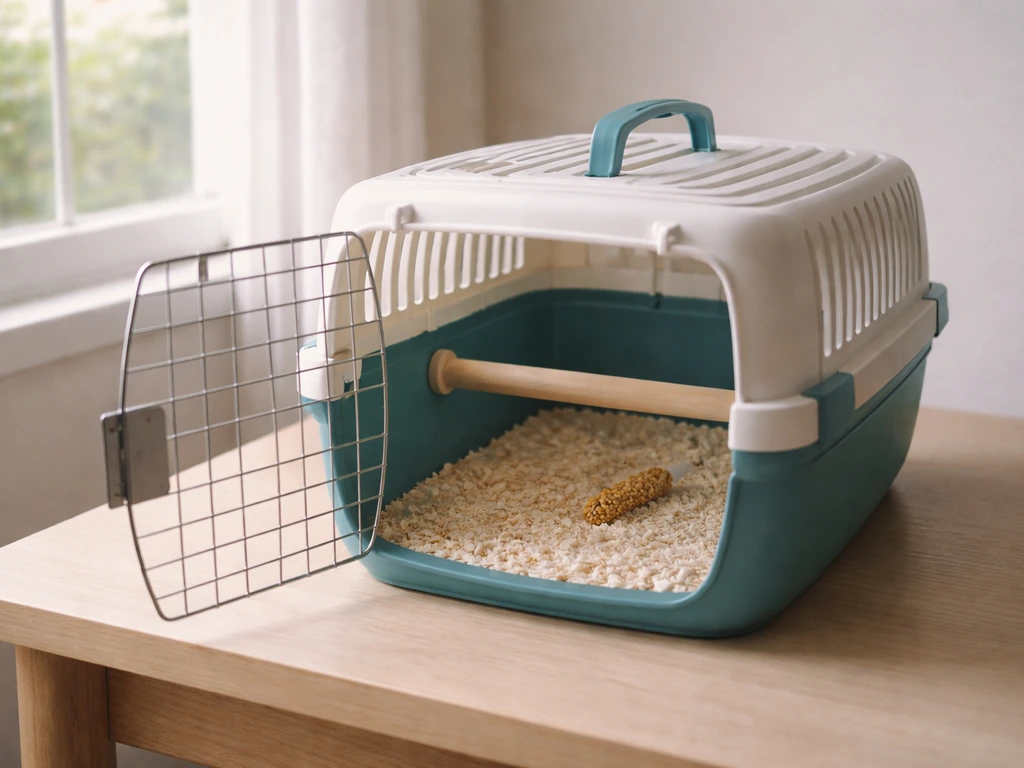
- Set up the carrier before bringing the bird out. Open the door, place a familiar perch or piece of the bird's regular bedding inside, and add a small treat near the back.
- Ask for a step-up and walk calmly toward the carrier. Don't rush or the bird will sense the urgency and resist.
- Position the bird at the carrier opening and gently encourage it to step inside by angling your hand so the bird naturally steps forward onto the perch inside.
- If the bird refuses, do not push. Step back, offer a treat, and try again. Forcing a bird into a carrier with your hands causes a bad association that makes future trips harder.
- Once inside, close the door quietly and cover the carrier partially with a breathable cloth to reduce visual stimulation.
Vet visits and health checks at home
If your bird needs a health exam, towel restraint is usually the method used. Practice towel desensitization at home by leaving a towel near the cage, then draping it over your hand while the bird perches on you, before ever attempting a wrap. When you do need to restrain for examination, work quickly and efficiently: the longer the restraint, the more stressful it becomes.
Some birds that are severely stressed, in pain, or completely unaccustomed to handling may require sedation for examination, and that's a decision for your avian vet, not something to push through at home. Injuries and illnesses in birds can look worse or better than they are, and the full picture may not be clear for 24 to 48 hours, so err on the side of calling the vet rather than waiting.
Escaped bird or snag situation
If a bird escapes into a room, resist the urge to chase it. Turn off fans, close doors and windows, dim the lights, and wait for the bird to land somewhere it feels secure, usually up high. Then approach slowly with your step-up finger and give it time to choose to come to you. Chasing a frightened bird leads to collisions with windows and walls.
If the bird has snagged a feather, leg band, or toe on something, stop all movement immediately. Panicked struggling worsens entanglements and can snap a bone. Support the bird's body first, then work the snag free slowly. Knowing how to carry a bird calmly after a stressful incident matters too: hold it close to your body, minimize movement, and return it to its cage or carrier to decompress.
Handling wild backyard birds: what's humane and what's legal
Most wild birds in the US are protected under the Migratory Bird Treaty Act (MBTA), which prohibits taking, capturing, possessing, or transporting migratory birds without a federal permit. That includes songbirds, shorebirds, raptors, and waterfowl. This isn't just a technicality: it's the framework that determines when you're allowed to handle a wild bird at all. In most cases, the legal answer is only to move it to temporary safety and then contact a licensed wildlife rehabilitator.
If you find a wild bird that appears injured or grounded, assess before touching. A bird sitting quietly on the ground but otherwise alert may be a fledgling learning to fly, not an injured bird. Fledglings often spend days on the ground while their parents continue to feed them. If a bird is lying on its side, bleeding, has obvious broken limbs, or has been caught by a cat, it needs professional help. The approach for picking up a wild bird is different from handling a pet, and using the wrong technique can cause additional injury.
For temporary containment while you arrange professional help, use a cardboard box with small ventilation holes punched in the sides. Line it with a thin towel or paper towels. Place the bird inside with minimal handling, close the box, and keep it somewhere quiet and away from people and pets. Hearing and seeing humans and domestic animals is stressful for wild birds and can make shock worse. Do not offer food or water unless a rehabilitator specifically instructs you to: giving the wrong thing can cause aspiration or other harm.
Contact a licensed wildlife rehabilitator as soon as possible. Most states have directories through their fish and wildlife agencies. Do not attempt extended care, medication, or housing of a wild bird at home: it is illegal without permits, and most wild birds don't survive long-term care without specialized knowledge and facilities.
Pet bird vs. wild bird handling: a quick comparison
| Factor | Pet Birds | Wild Birds |
|---|---|---|
| Legal status | No permit required to handle your own pet | Protected under MBTA; temporary handling only before handing to a rehabilitator |
| Disease risk | Low if bird is healthy and vet-checked; psittacosis possible | Higher; wear gloves, wash hands; avian flu risk with waterfowl |
| Approach method | Use step-up cue, read body language, go slow | Approach from behind, scoop gently, minimize visual contact |
| Restraint method | Towel or bare hand depending on training level | Cardboard box for containment; minimal direct handling |
| Recommended hold time | As long as needed if bird is trained; brief for untrained | Seconds to minutes; transfer to box immediately |
| Goal of handling | Building trust, routine care, vet visits, training | Temporary stabilization only; hand off to rehabilitator |
| When to stop | Signs of distress, breathing difficulty, limpness | Immediately after placing in containment box |
Troubleshooting: bites, fear, aggression, and stalled progress
When the bird keeps biting
Biting almost always means the bird was already past its comfort threshold before contact was made. Go back to basics: can you sit near the cage without the bird showing stress signals? If not, start there. If the bird steps up but bites when you try to move or carry it, the bite is probably about where it thinks it's going, not about you. Practice short step-up sessions that end with the bird going back to its familiar perch, not into a carrier or an exam position. Build positive associations with those end destinations separately before combining them.
When the bird is too scared to approach
Fear-based avoidance needs a slower timeline than most people expect. Some birds, especially those that were not socialized young or had bad experiences with handling, need weeks of passive presence before they'll accept a hand near them. Don't take it personally and don't rush it. Reduce all handling attempts to zero temporarily and focus entirely on building a positive association with your presence: treats near the cage, calm talking, no sudden movements. Progress looks like the bird moving toward you voluntarily, not you reaching further.
Realistic timelines by species
| Species | Basic step-up (days) | Comfortable handling (weeks) | Touch desensitization (weeks to months) |
|---|---|---|---|
| Hand-raised parrot | 1 to 5 days | 1 to 2 weeks | 2 to 4 weeks |
| Cockatiel (young) | 3 to 7 days | 2 to 3 weeks | 4 to 6 weeks |
| Budgie (young) | 7 to 14 days | 3 to 6 weeks | 6 to 12 weeks |
| Adult rescue parrot | 2 to 8 weeks | 2 to 6 months | 6 months or more |
| Finch | Rarely tames to hand | Not applicable for most individuals | Health-check handling only |
| Wild bird | Not applicable | Not applicable | Not applicable: minimize handling entirely |
When progress stalls completely
If you've been working consistently for more than a month with no measurable progress, it's worth consulting an avian vet or certified parrot behavior consultant. Sometimes there's an underlying health issue making the bird irritable or touch-sensitive that has nothing to do with training. Pain and discomfort are common hidden causes of aggression in birds, and a bird that's always been sweet but suddenly bites needs a vet check before more training. The Merck Veterinary Manual's guidance is worth remembering here: if a bird is extremely stressed or in pain, forced handling is not the answer. Getting professional support is.
Whatever species you're working with, patience and consistency beat technique every time. A bird that feels safe around you is far easier to handle than one that's technically "restrained correctly" while terrified. Build the relationship first, and the handling takes care of itself.
FAQ
What should I do if a bird suddenly panics or stops fighting during restraint?
Start by confirming the bird is breathing comfortably and not showing respiratory distress signs. If it keeps struggling, releases should be immediate, then try again only after it is calmer. If breathing looks labored, the bird goes limp, or it becomes unusually quiet suddenly, stop handling and contact an avian vet right away.
How can I tell if I’m holding a bird too tight, especially around the chest?
Keep your grip away from the keel pressure points, and instead think “stabilize the body” rather than “clamp down.” A quick self-check is whether you can still slide a finger between the bird’s chest area and your hand, if not, loosen until the bird’s chest wall can move freely.
Can I offer food or water during handling to reduce stress or prevent low blood sugar?
Do not give an impromptu water or food “to calm it” during handling. Dehydration or low blood sugar can be a concern, but offering the wrong food, or getting fluid into the beak, can increase aspiration risk. If the bird needs medication or care, follow your avian vet’s instructions for timing and delivery.
If my bird steps up but bites when I try to move it to a carrier, how should I adjust training?
If you’re training, reuse the bird’s usual safe landing point. For step-up practice, move only to the routine destination (like a favorite perch), end sessions there, and separate carrier or exam work into its own short training blocks so the bird does not associate the carrier with fear.
My bird bites during step-up or movement, what is the safest way to recover and prevent a repeat?
Use a “pause and reset” plan. Back off, let the bird settle for several minutes, remove any triggers like overhead lights or other pets, then return to the lowest step the bird can succeed at (often presence near the cage or step-up within the cage). Do not repeat the same trigger immediately after a bite.
When is it better to stop and call a professional instead of trying towel restraint or a different technique?
You need to match handling to the bird’s mobility and fear level. A bird that is actively panicking is not a good candidate for towel wrapping on the first attempt, because stress can increase shock risk. In that situation, the better next step is a quick avian vet call or a wildlife professional call (for wild birds) rather than escalating restraint methods at home.
What precautions should I take with gloves, cleaning, and shared equipment when handling an unfamiliar bird?
Treat birds like they are contagious until proven otherwise, especially with unfamiliar birds or wild birds. Minimize shared tools, sanitize surfaces afterward, and change gloves or wash hands before touching your own pets or their supplies. Good ventilation matters because some risks spread via airborne dust from feathers and droppings.
What if a leg band, ring, or feather gets caught during handling?
If a foot, toe, or band gets caught, stop all motion and free the entanglement slowly while keeping the bird supported. Afterward, check for swelling, reduced movement, unusual vocalization, or changes in posture, because small injuries can become worse quickly even if the bird seems “fine.”
How do I decide whether a grounded wild bird is a fledgling that needs space or an injured bird that needs help?
For wild birds, a key decision aid is “alert and responsive versus injured.” A grounded bird can be a fledgling, if it is alert, responsive, and not bleeding or with obvious limb injury, avoid handling and check for local guidance before intervening. If it is bleeding, has broken limbs, or was attacked by a cat, treat it as urgent and contact a rehabilitator.
Is a quiet bird always a safe bird to handle?
Do not assume a “quiet” bird is calm. Birds can freeze when stressed, so also watch for breathing effort and posture, such as feathers slicked tight, wings held away, tail bobbing with breathing, or eyes closed while upright. If you see those, handle less or stop and get veterinary help.
What’s the best way to regain control if my pet bird escapes into a room?
If your bird escapes, avoid chasing. Dim lights, close off escape routes, and wait for it to choose a landing spot, often higher areas. Then use your trained step-up routine when it is settled, and return it to its enclosure or carrier to decompress.
My bird has been friendly but suddenly started biting, could it be pain rather than fear?
If your bird seems painful or has new sudden behavior changes, stop relying on training alone. Schedule an avian vet exam, because pain can make previously workable handling techniques trigger bites. After treatment, retrain gradually with shorter sessions and rewards.
How can I prepare for a health check so the restraint is shorter and safer for the bird?
When handling as part of medical care, you generally want a clear plan for what you will do, who will help, and where the bird will go immediately afterward. If multiple steps are needed, stage the process into quick segments and end each segment back at a familiar perch, so the bird does not stay restrained longer than necessary.
Next Article
How to Hold a Wild Bird Safely and Humanely Today
Humane, safety-first steps for holding or avoiding handling a wild bird, with safe restraint, release, and rescue tips.