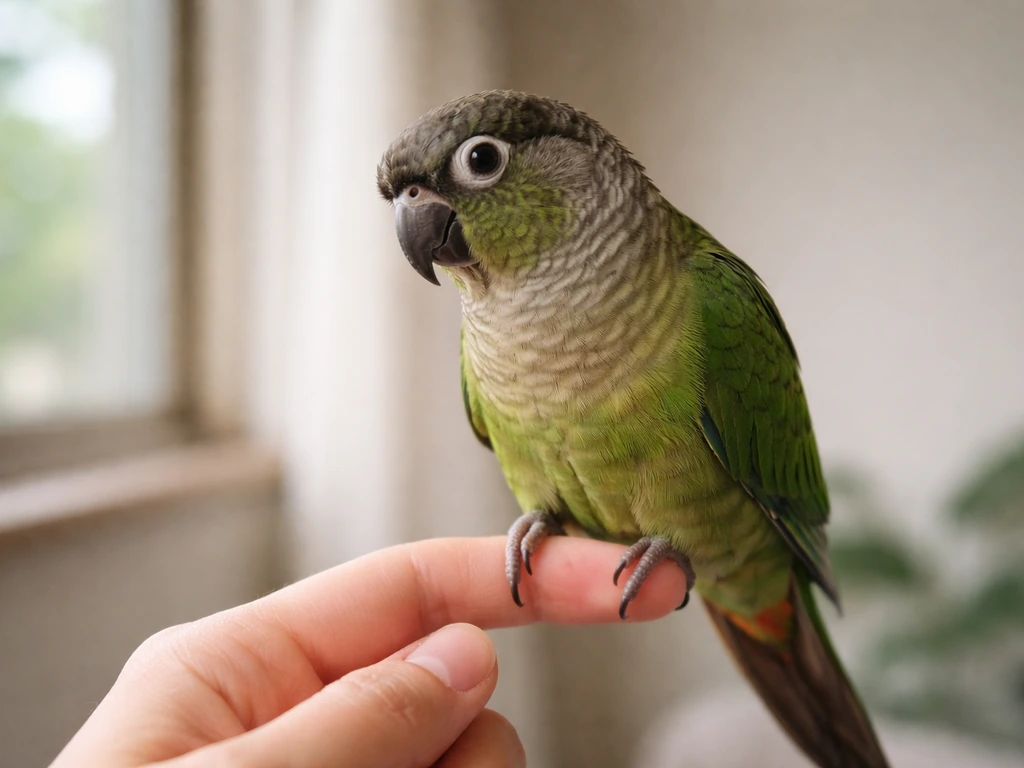
Taming a canary takes patience, consistency, and a willingness to let the bird set the pace. You can use a similar patience and step-by-step approach when learning how to tame a parakeet bird. Most pet canaries can go from skittish and cage-hugging to comfortably perching near you or accepting treats from your hand within a few weeks to a few months, depending on the individual bird. The process is almost entirely about reducing fear and building positive associations, not about forcing physical contact. If you go slow, keep sessions short, and use food as your main bonding tool, you will see real progress.
How to Tame a Canary Bird: Step-by-Step Training Guide
Clara Hayes
17 May 2026
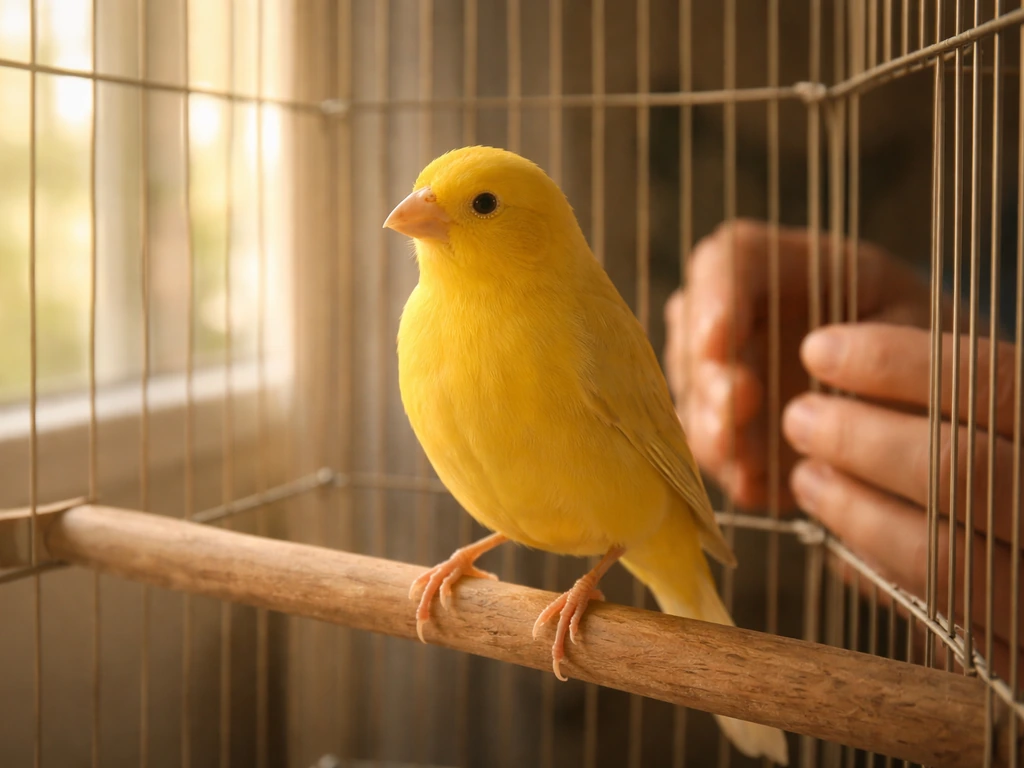
Understanding a canary's behavior and stress signals
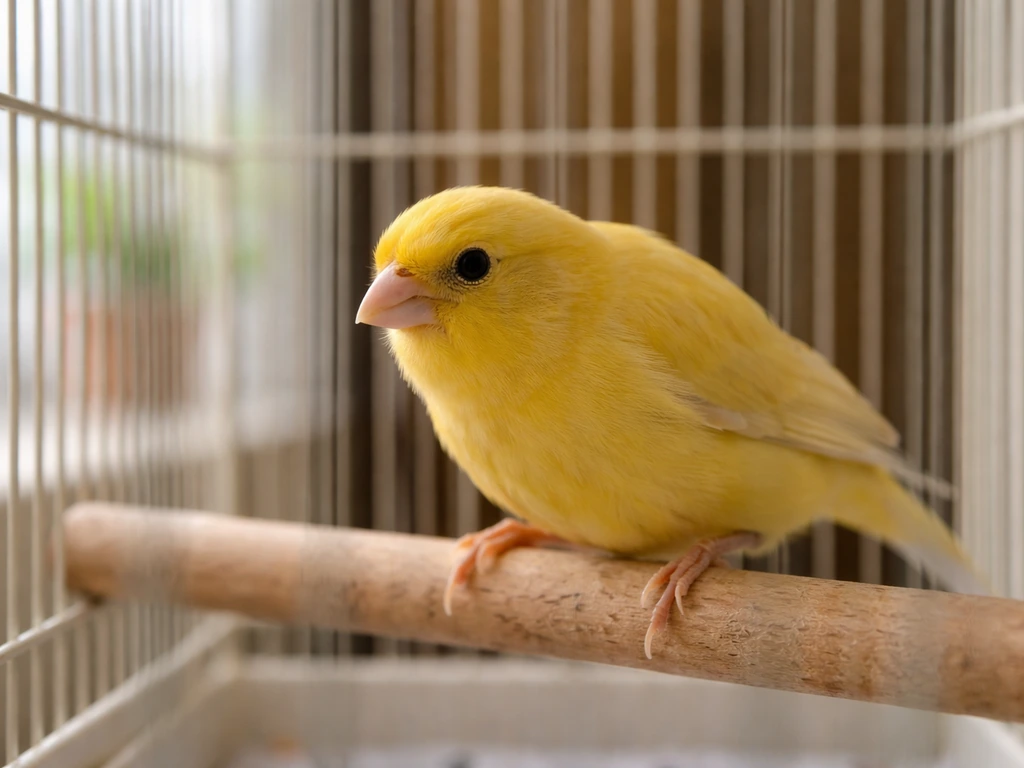
Before you start taming, you need to be able to read your canary. Canaries are prey animals, and their default response to anything unfamiliar is fear. Knowing what stress looks like lets you stop a session before it does more harm than good.
The clearest fear signals to watch for are feathers held tight and flat against the body (the opposite of a relaxed, slightly fluffed bird), wide round eyes instead of soft almond-shaped ones, and rapid breathing or visible tail bobbing. If you see open-mouth breathing or heavy sternal movement, that is a serious stress response and you should back off immediately. Restraint or handling during that state can make things dangerously worse very quickly.
Other signals that tell you to slow down include wings held slightly away from the body, a fanned tail, raised head feathers, hissing or panting sounds, and frantic flight around the cage. Silence can also be a warning: a bird that goes completely still and withdrawn when you approach is frozen in fear, not comfortable. On the flip side, a relaxed canary will sit upright with soft feathers, grind its beak gently, and may even sing when you are nearby. That is your green light.
If fear cues get ignored during training, canaries will escalate. You may see the bird lunge toward your hand, open its beak in a threat display, or bite. That is not aggression in the true sense, it is a bird that felt it had no other option. The goal of good taming practice is to never let things get that far.
Preparing the setup: cage, perch placement, light and quiet schedule
A good setup does a lot of the taming work for you before you even start training. A canary that feels safe in its environment is much easier to bond with than one that is already stressed by its surroundings.
Cage placement and environment
Place the cage in a relatively quiet room away from the sights and sounds of dogs, cats, or other animals that could trigger ongoing fear. Avoid drafts, air conditioning vents, and direct outdoor cold. Position the cage at roughly chest or eye level so your canary can see you without feeling threatened from above (which mimics a predator). Keep one side of the cage against a wall so the bird has a sense of security and only has to watch one or two directions.
Bar spacing should be around 3/8 inch or smaller to prevent any chance of the bird catching its head or leg between bars. Horizontal bars on at least two sides give your canary something to climb and grip, which reduces restlessness.
Perch placement
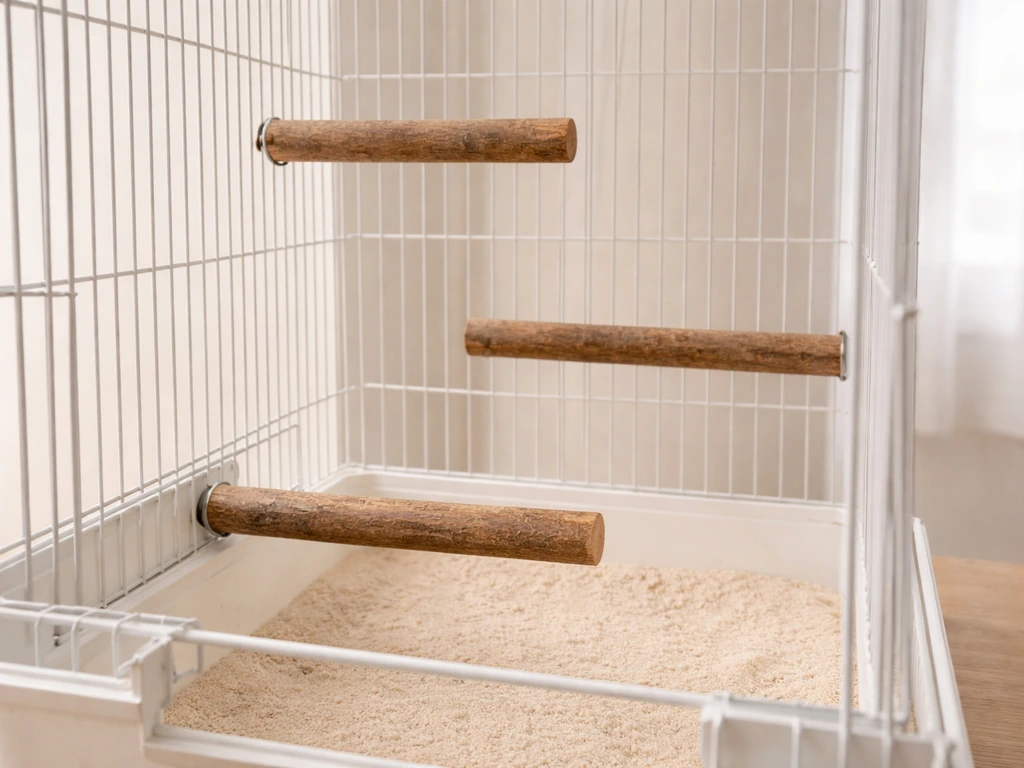
Set up perches at different heights, but make sure at least one perch is positioned where you can approach it from outside the cage without having to reach over the bird. This becomes important during hand-training. Avoid placing perches directly over food or water bowls, and space them so your canary can move freely without being forced into a corner.
Light and daily schedule
Canaries do best with a predictable light schedule. Aim for 10 to 12 hours of light per day. If you use a full-spectrum UV bulb to supplement natural light, position it 12 to 18 inches from where the bird typically perches. Cover the cage at roughly the same time each evening so your canary develops a consistent sleep routine. Predictability is itself calming, and a well-rested bird with a stable day/night rhythm will make more progress in training than one with erratic lighting and noise.
Let the bird settle first
If your canary is new to your home, give it about a week before you start any active taming work. During this settling period, go about your normal routine near the cage, talk softly, and let the bird observe you without any pressure. This alone starts building a positive association. After roughly a week, most canaries will have calmed down enough that real training can begin.
Step-by-step taming basics: trust-building and hand introduction
Taming a canary is a series of small, incremental steps. Each step should feel easy and non-threatening to the bird. Move to the next step only when the bird is clearly relaxed at the current one.
- Sit near the cage daily for 5 to 10 minutes without trying to interact. Read, work quietly, or just be present. The bird learns you are not a threat.
- Begin talking to your canary in a calm, low voice during these sessions. Over time the bird will start to associate your voice with safety.
- Move your chair or sitting position a little closer to the cage each day, stopping if the bird shows stress signs.
- Once the bird stays calm when you are right next to the cage, start placing your hand flat against the outside of the bars for a minute or two at a time. No sudden movements.
- When the bird no longer retreats from your hand on the outside, begin slowly opening the cage door and resting your hand just inside the door frame, not reaching in yet.
- Gradually move your hand a little deeper into the cage over several sessions, always pausing if the bird tenses up.
- Offer a small treat (millet spray works well) from your fingertips. The goal at this stage is simply to have the bird eat from your hand without flying away.
Keep every session to 5 to 10 minutes, once or twice a day. End each session while the bird is still calm and before it shows any stress signals. Ending on a positive note matters more than how much progress you made in that session.
Feeding strategy for bonding: target foods, timing, and positive reinforcement
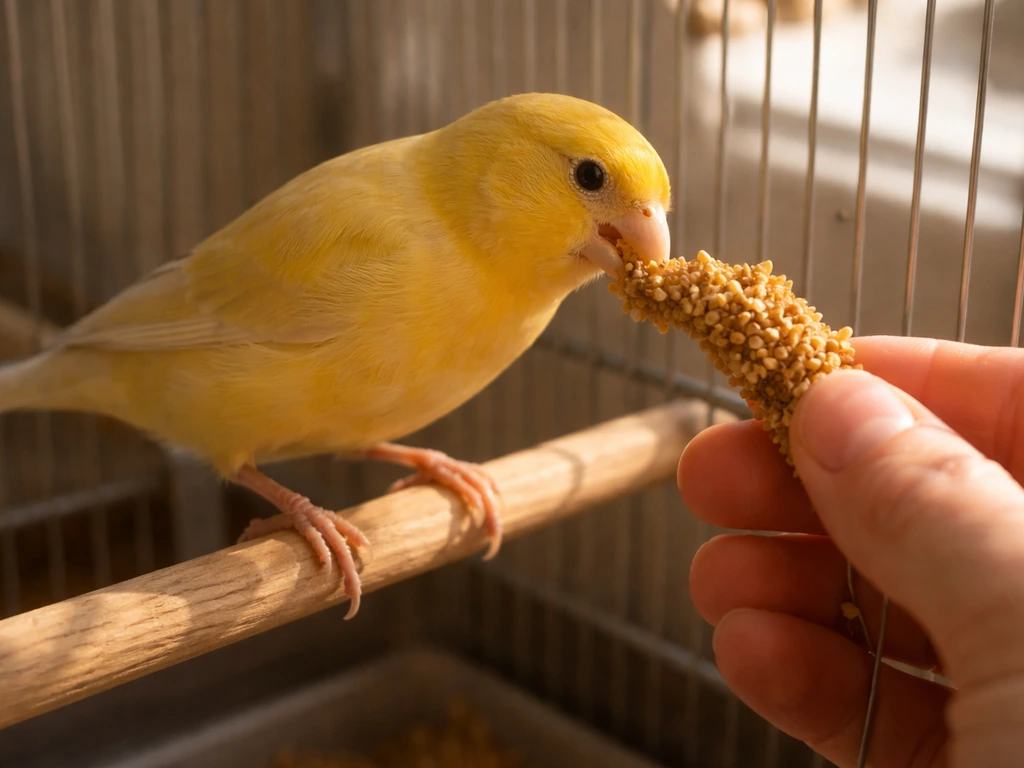
Food is your most powerful bonding tool with a canary. The strategy is straightforward: use a treat the bird genuinely loves, reserve it exclusively for training sessions, and pair it consistently with your presence and eventually your hand.
Millet spray is the go-to training treat for canaries. It is appropriately sized, easy to hold, and most canaries find it irresistible. The key is to offer it only during training sessions, not as a cage staple. That way it stays special and motivating. Do not overdo it either: blank" rel="noopener noreferrer">a few times per week as a treat keeps it meaningful without throwing off the bird's core diet of quality seed or pellets supplemented with fresh greens.
Timing is everything with positive reinforcement. Offer the treat the moment the bird takes a step toward your hand, not after it retreats and comes back. You want to mark the exact behavior you are encouraging. If the bird comes close to your hand and you wait too long, the reward lands on the wrong behavior. Be ready.
Positive reinforcement also means ignoring unwanted behaviors rather than scolding. If your canary flutters away or pecks at your hand, simply withdraw calmly and try again in a moment. Never pull away sharply or react dramatically, because that reinforces the bird's fear and makes the hand feel unpredictable.
Do your training sessions just before a scheduled feeding rather than right after a full meal. A slightly hungry bird is a more motivated bird. But do not withhold food as a training tactic, that crosses into stress induction and is counterproductive.
Handling and training milestones: perching, stepping up, and routine practice
Once your canary reliably takes treats from your hand inside the cage, you are ready to work toward the step-up. This is the foundation cooperative behavior for canaries and it takes many consistent sessions to achieve, especially with a bird that has never been hand-trained before.
The step-up cue
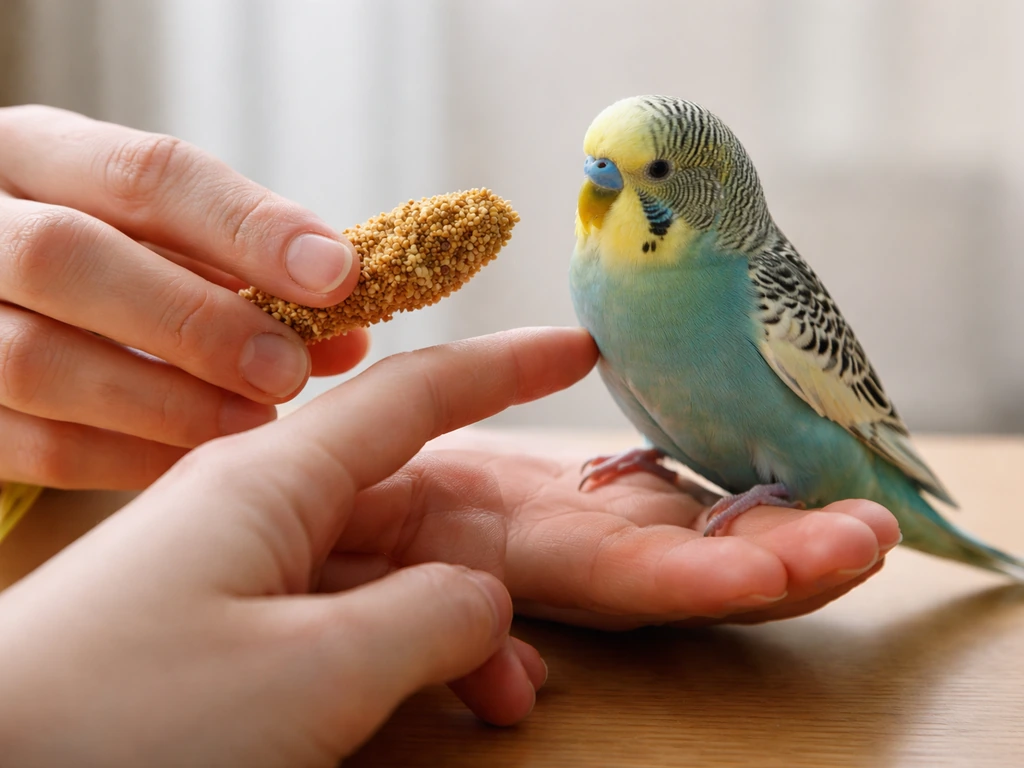
Hold a piece of millet spray or your chosen training treat between your fingers and bring your other hand's index finger slowly toward the bird's lower chest, just above where its feet meet the perch. Apply very gentle forward pressure. The bird will naturally shift its balance forward and often step onto your finger to stay upright. The moment it steps up, say 'step up' in a calm, consistent tone and immediately offer the treat. Repeat this pairing every session. Over time, just presenting your finger and saying the cue will prompt the bird to step up in anticipation of the reward.
Use a treat for the step-up cue that you do not give at any other time. This keeps the association strong and the behavior reliable. If the canary gets the same treat during casual interactions, the cue loses its predictive power.
Stick training as an intermediate step
If your canary is still hand-shy or prone to nipping, a short dowel rod or perch stick is a useful bridge. Teach the bird to step onto the stick first using the same chest-pressure technique, then gradually shorten the stick over sessions until you are holding it closer and closer to your hand. Eventually your finger becomes the perch. This approach works well for birds that are not quite ready for direct hand contact.
Building a routine
Practice once or twice daily, 5 to 10 minutes per session. Same time of day is ideal because canaries respond well to predictable schedules. End every session with a positive interaction, even if it is just the bird calmly eating from your hand. Consistent daily repetition matters far more than occasional long sessions.
Common problems and troubleshooting: biting, fear, sudden retreats, and aggression
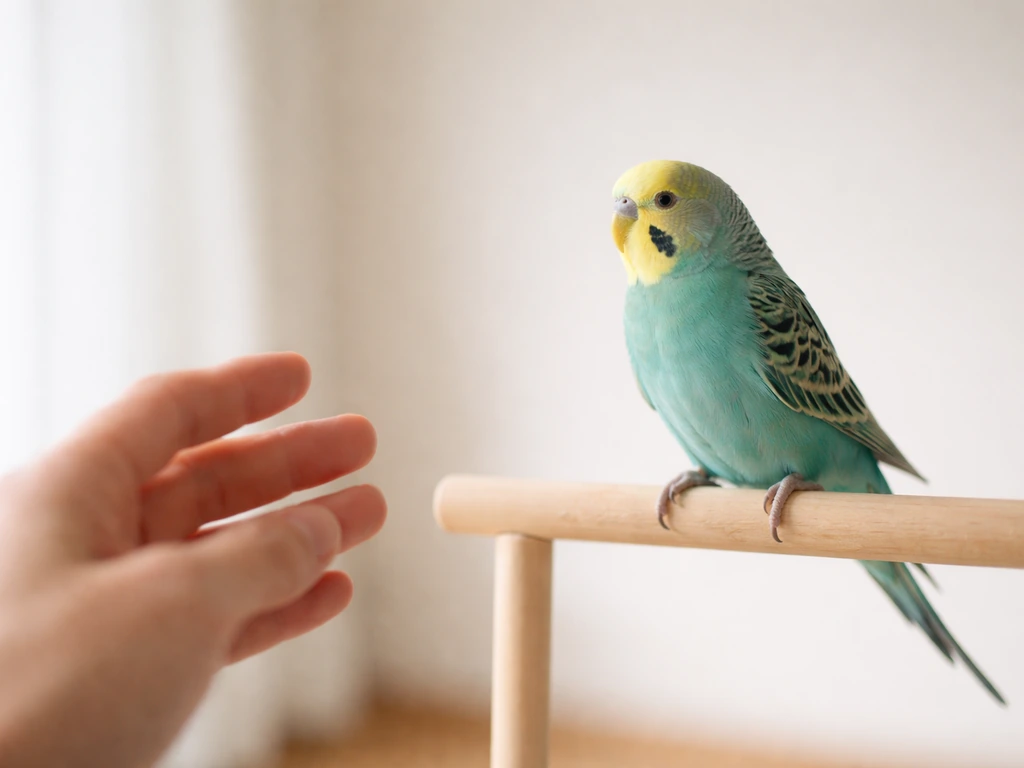
Setbacks are normal. Here is how to handle the most common ones.
| Problem | Likely cause | What to do |
|---|---|---|
| Biting or nipping the hand | Hand is too close too fast, or bird is at fear escalation threshold | Slow down. Go back to the previous step the bird was comfortable with. Never jerk your hand away sharply. |
| Sudden retreat after making progress | Environmental change, illness, molting stress, or a scary experience | Give the bird a few days of low-pressure presence only. Check for health issues. Resume training gradually. |
| Refusing food from your hand | Not hungry enough, or the treat is not appealing enough | Try training before meals. Switch to a different high-value treat like fresh millet spray. |
| Staying completely frozen or silent | High fear state, often in new birds or after a scare | Stop the session. Reduce your proximity. Go back to basics: calm presence near the cage only. |
| Excessive screaming or frantic flight | Overstimulation or session too long | End the session immediately. Shorten future sessions and reduce intensity of approach. |
| No progress after weeks of daily sessions | Rushing steps, inconsistent timing, or underlying health issue | Review whether you are moving too fast between steps. Consider an avian vet checkup. |
One thing worth repeating: biting is communication. A canary that bites is telling you it is not comfortable yet. Do not punish it, do not blow on it, and do not tap its beak. Just back up a step in the process and give the bird more time at that level before moving forward again.
Timeline expectations, consistency plan, and when to get help
Be honest with yourself about how long this takes. Canary taming typically takes months, not days. Omlet’s canary training tips also note that training can take a long time, often months, and you should only start when the bird is ready. Some birds with good early socialization will be stepping up within three to four weeks of daily sessions. Others, especially birds that were cage-raised with minimal human contact, may take six months or longer to reach the same milestone. Both are normal.
A realistic week-by-week plan
| Timeframe | Goal | What it looks like |
|---|---|---|
| Week 1 | Settling in | Bird is adjusting to the new space. Just be present near the cage. No active training yet. |
| Weeks 2–3 | Approach comfort | Bird stays calm when you sit close and talk softly. Hand on outside of cage causes no stress. |
| Weeks 4–6 | Hand inside cage | Bird accepts your hand inside the cage without retreating. May start investigating it. |
| Weeks 6–10 | Treat from hand | Bird takes millet spray or treats directly from your fingertips inside the cage. |
| Weeks 10–16+ | Step-up introduction | Bird begins stepping onto finger or stick with gentle chest-pressure cue and treat reward. |
| Months 4–6+ | Reliable step-up and handling | Bird steps up on cue consistently and tolerates short out-of-cage time near you. |
On a daily basis, keep sessions to 5 to 10 minutes, once or twice a day. Do not skip more than a day or two in a row if you can help it, because canaries do not generalize trust easily and gaps in routine slow things down noticeably. Weekly, assess whether the bird is reliably comfortable at the current step before moving forward. If not, stay at that step another week.
Pause training and contact an avian-experienced vet if your canary stops eating, shows open-mouth breathing, sits fluffed on the cage floor, or has visible changes in droppings. These are health signals, not training problems, and working with a sick bird will not help either of you. Also consider reaching out to an avian vet or certified parrot behavior consultant (IAABC or similar) if you have been consistent for three or more months with no measurable progress, because sometimes a fresh set of eyes catches something you have been doing that is accidentally reinforcing fear.
Ethical and legal considerations: pet canaries vs wild birds
Everything above applies to a domestic pet canary, which is a captive-bred bird with no legal protection issues and a reasonable expectation that human interaction is part of its life. Wild canaries, or any wild bird you encounter in your yard or outdoors, are an entirely different situation.
Why you should not try to tame a wild bird
In the United States, it is illegal under the Migratory Bird Treaty Act to possess, handle, or rehabilitate most wild bird species without a federal migratory bird rehabilitation permit. At the state level, many states including Washington explicitly make it illegal to possess any wild bird without a valid permit. These rules exist to protect wild populations, prevent disease transmission, and keep birds wild enough to survive in nature.
Beyond the legal issue, attempting to habituate a wild bird to human contact can genuinely harm it. A wild canary or finch that loses its fear of humans and predators becomes vulnerable. Stress from handling can cause rapid deterioration, and birds that appear calm during restraint may actually be in a state of tonic immobility, which is a fear response, not relaxation.
What you can do ethically with outdoor birds
If you want to attract and observe wild canaries or other songbirds in your yard, the right approach is passive: maintain a quality feeder, offer appropriate seed, keep cats indoors, and observe from a distance. Let the birds choose their comfort zone around you. Over time, some wild birds will habituate to a calm, predictable human presence without any hands-on interaction needed. That is the ethical version of building trust with a wild bird.
If you find an injured or ill wild bird, do not attempt to tame or rehabilitate it yourself. Contact a licensed wildlife rehabilitator in your area immediately. The USFWS website and state wildlife agencies maintain lists of permitted rehabilitators who can legally and safely help.
How canaries compare to other pet birds when it comes to taming
Canaries are generally more independent than parrots, budgies, or conures, and they do not have the same strong flock-bonding drive that makes those species eager for physical contact. If you are learning how to tame a conure bird instead, you will want to focus on consistent, reward-based hand training and patience with their natural curiosity conures.
Taming a canary means earning a comfortable coexistence and cooperative tolerance more than achieving the cuddly closeness you might get with a budgie or cockatiel. Finches are similar in this regard.
If you want a bird that actively seeks out handling and lap time, a canary may not be the right match, but if you want a bird whose song fills the room and who will eventually eat from your hand and step onto your finger, a tame canary is genuinely rewarding.
FAQ
How do I know which treat size and type will work if millet spray fails my canary?
If your canary shows no interest in millet spray, switch to another high-value, easy-to-grasp option your bird already eats readily, like small pieces of your preferred seed or a tiny portion of fruit or fresh greens. Keep the new treat reserved for training only, test it during a 5-minute session, and stop if the bird becomes hesitant or starts showing fear cues.
Is it okay to train outside the cage if my canary seems comfortable indoors?
Use caution. Even if the bird accepts treats in the cage, leaving the cage removes its safety context. For the first “out-of-cage” step, keep the bird on the perch/near the cage entrance, work in the same room, and only attempt it when the bird is relaxed during standard in-cage sessions. If breathing, freezing, or flitting increases, return to inside training.
Should I remove mirrors or cover reflective surfaces during taming?
Yes, if your canary reacts strongly. Reflective items can trigger territorial or fear responses that interrupt bonding. Remove mirrors and minimize shiny distractions during training until your bird is reliably calm and focused on you for several sessions.
What’s the best way to prevent bites during step-up training?
Practice at the earliest “safe” level and keep your finger movements slow and predictable. Avoid sudden forward pressure if the bird is tense, and only apply the smallest pressure needed for a natural shift of weight. If nipping starts, go back one step (treating near your hand or targeting the chest area without stepping up) and build back gradually.
Can I train with my canary inside a travel carrier?
Generally avoid it for taming milestones. Carriers reduce the bird’s sense of control and can increase stress, even when the bird takes treats. Use the primary cage or a consistent training setup unless a vet situation makes the carrier necessary, then focus on calm association rather than stepping up.
How often should I change the training routine if my canary seems stuck?
Don’t constantly switch steps, treats, or times of day. First, confirm you are ending sessions before stress escalates, keeping them to 5 to 10 minutes, and rewarding the exact behavior you want. If there is no measurable progress after about 3 months, consider a vet check and get an avian behavior specialist to review the process rather than restarting from scratch immediately.
Should I expect canaries to generalize trust to new locations or perches?
Not quickly. Canaries often do not generalize comfort well, so a bird that steps up on its usual perch may be cautious with a new perch height, shape, or room. Introduce new perches gradually, one small change at a time, and keep the cue and treat consistent so the association remains clear.
What if my canary takes treats but refuses to step up onto my finger?
That’s common. Keep treat-taking as the baseline, then refine the approach to step-up by using gentle chest-pressure only when the bird is relaxed. If finger contact is still too much, use a dowel or perch-stick bridge as a stepping stone, and shorten the distance to your hand over repeated sessions.
Is it ever useful to train at night or when the cage lights are dim?
Stick to the bird’s normal light schedule. Working in low light can make it harder for the bird to track your hand, and it can increase surprise stress. Use the consistent daytime routine, just before a scheduled feeding, and maintain stable lighting so training cues stay predictable.
What should I do if my canary stops singing or changes its droppings during training?
Treat this as a health red flag, not a training problem. Pause training immediately and contact an avian-experienced vet. Open-mouth breathing, fluffed sitting on the floor, or visible changes in droppings can indicate illness, and continuing sessions can delay proper care.
Can I tame two canaries at the same time, or should I train them separately?
Train separately when possible. Even bonded canaries can interrupt each other’s focus, and competition can raise fear or aggression around treats and hands. Once each bird reliably takes treats and steps up in its own routine, you can revisit joint time with extra space and slow, observation-first sessions.
How long should I wait between sessions to avoid losing progress?
Try to avoid gaps longer than a day or two. If you miss a session, expect trust to reset somewhat, because canaries learn in tight routine patterns. When you restart, drop back to the last step that previously felt easy and rebuild from there rather than pushing forward.
Next Article
How to Tame a Conure Bird: Step-by-Step Trust Training
Step-by-step trust training for conures: safe handling, routines, target and step-up cues, troubleshooting, and weekly t