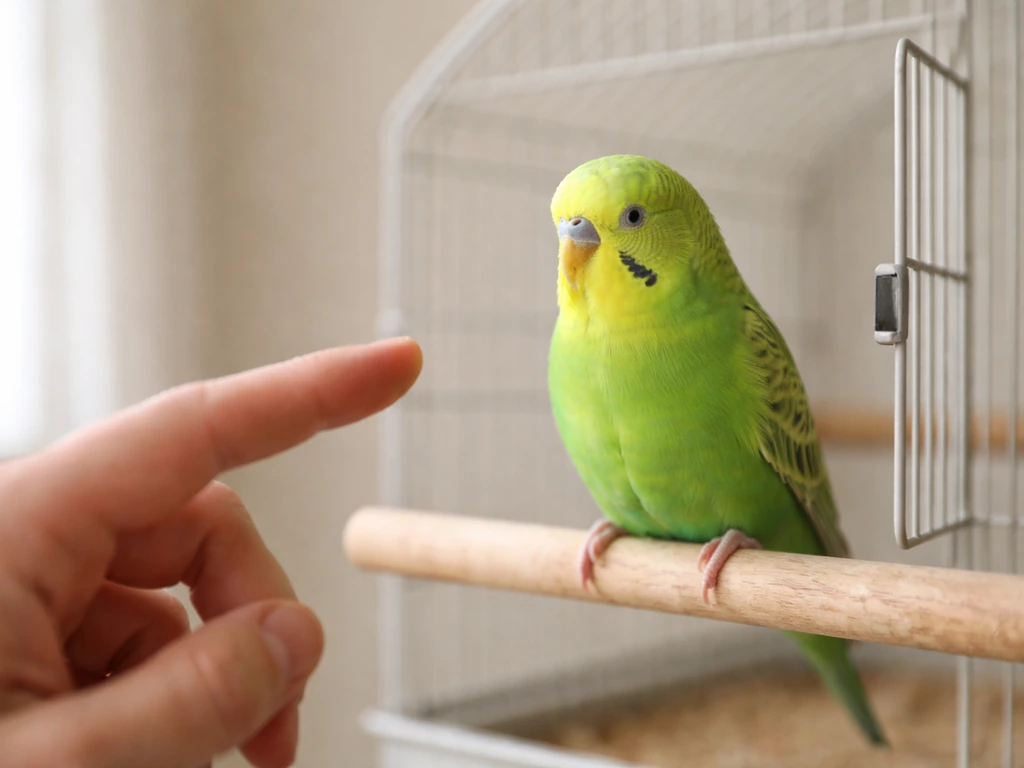
You can tame a budgie humanely by working through a series of trust-building stages: starting with quiet presence near the cage, progressing to hand-feeding, then to the step-up command, and finally to relaxed out-of-cage time. Most budgies reach basic hand-tameness in 2 to 6 weeks when you keep sessions short, stay patient, and never force contact. Mynah bird taming uses the same trust-building, no-rushing approach: keep sessions calm, read body language for stress, and reward any small signs of comfort how to tame a mynah bird. The single most important rule is this: if your bird looks scared, you've moved too fast. Back off one stage, give it a day, and try again.
How to Tame a Budgie Bird: Trust, Training, and Tips
Clara Hayes
14 May 2026
Understanding budgie temperament and the stages of trust
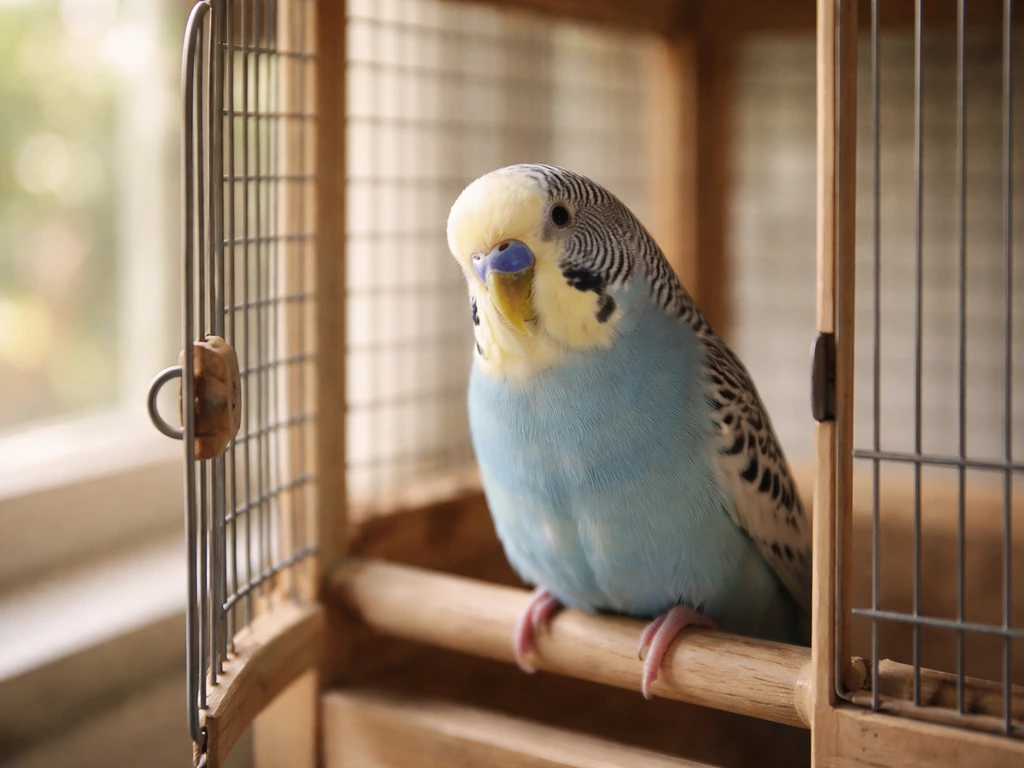
Budgies are small parrots with big social instincts. In the wild they live in large flocks, so they're naturally wired to read threats quickly and bolt from anything unfamiliar. That means your hand, your face, and even your voice can feel genuinely dangerous to a new bird. This isn't stubbornness. It's survival instinct, and it's the reason you can't rush taming.
Taming tends to move through four rough stages. First, the bird tolerates your presence in the room without panicking. Second, it accepts your hand near the cage door. Third, it steps onto your hand voluntarily. Fourth, it actively seeks you out. Each stage can happen in days or take a couple of weeks depending on the individual bird, its age, and whether it was hand-raised or parent-raised. Younger birds (under 12 weeks) and birds that had early human handling generally move faster, but even an older, skittish budgie can become a confident companion with consistent, low-pressure work.
One key thing to understand: taming and training are not the same as dominating. The goal is a bird that chooses to interact with you because it associates you with safety and good things. That framing, built on trust and respect rather than fear, is what separates humane taming from the old-school methods that can permanently damage your relationship with the bird.
Setting up a safe, trust-building home and routine
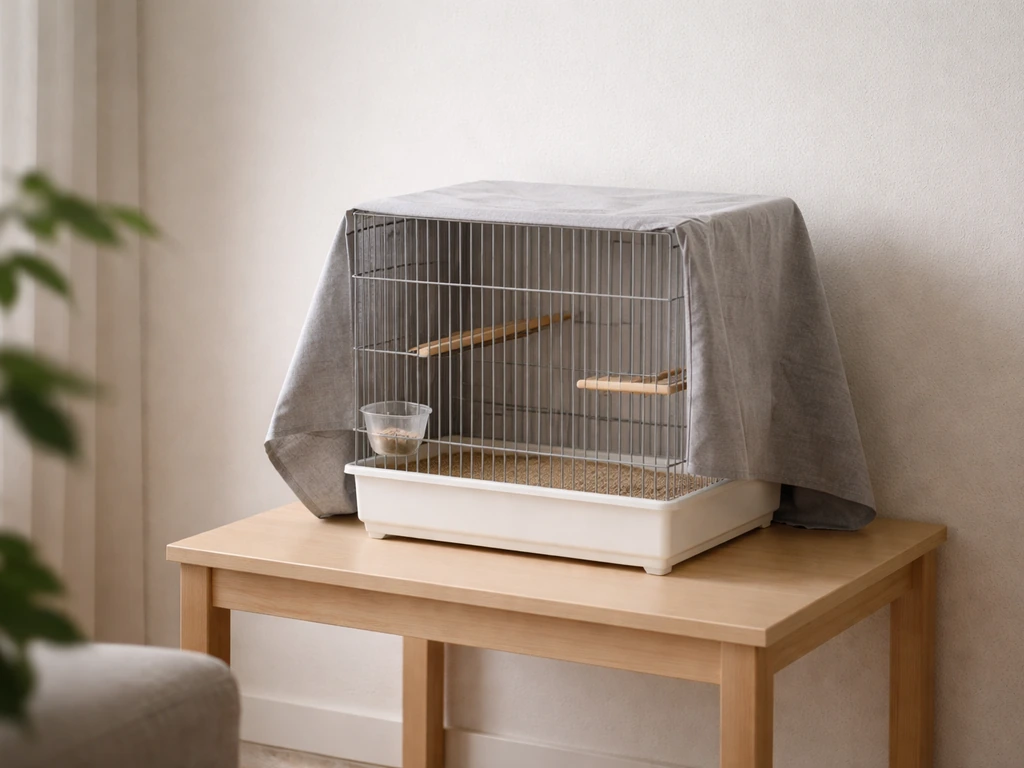
Before you do a single training session, get the environment right. A stressed bird in a bad setup can't learn anything useful, and a bad setup will undo your progress every single day.
Cage placement
Put the cage in a quiet, stable spot away from the kitchen (cooking fumes and Teflon are genuinely toxic to birds), away from cold drafts, and away from windows with direct sun. Heavy foot traffic and loud TVs create chronic low-level stress that keeps a budgie in a permanent state of alert. If something nearby is clearly stressing the bird, move the cage rather than waiting for the bird to "get used to it.
If something nearby is stressing your budgie, PetMD recommends moving the cage instead of forcing the bird to tolerate the situation move the cage rather than waiting for the bird to get used to it. " [Don't place perches directly above food or water bowls, since droppings will contaminate them during the day.
](https://www. petmd. com/bird/budgie-care-sheet)
Light and sleep

Budgies need 10 to 12 hours of light and 12 to 14 hours of darkness for proper rest. Use a cage cover or move the cage to a dark, quiet room at night. If natural sunlight is limited, a full-spectrum UV lamp on a 10 to 12 hour daily schedule supports health and mood. A well-rested budgie is a calmer, more receptive budgie, so getting the sleep schedule right is actually part of your taming plan.
Predictable daily routine
Budgies settle down fast when life is predictable. Uncover the cage at the same time each morning, offer fresh food and water on a schedule, and do your taming sessions at consistent times. This predictability signals safety. The bird learns that you showing up means good things are coming, not chaos.
Step-by-step hand-taming from day 1 (no forced handling)
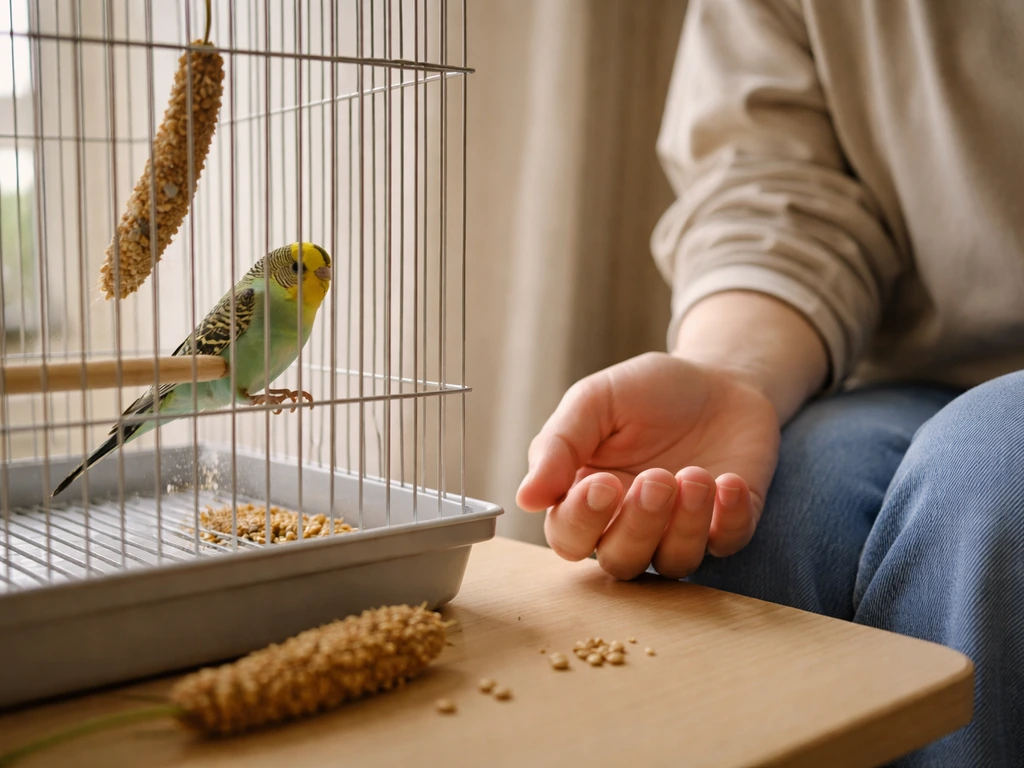
Here's the actual progression I use. Don't skip stages and don't rush. If you're unsure whether the bird is ready to move forward, wait another day.
- Days 1 to 3: Just exist near the cage. Sit at a comfortable distance, speak softly in a low, calm voice, and let the bird observe you. Don't reach toward the cage. Don't make sudden movements. Read a book, watch a video on your phone with the volume low. You're just proving you're not a threat.
- Days 3 to 7: Move closer gradually. Start sitting right next to the cage for short periods, still speaking softly. Let the bird come to the side of the cage nearest you on its own. If it does, that's progress.
- Days 5 to 10: Open the cage door and hold your hand still near (not inside) the opening. Don't push the hand in. Just let the bird see the hand at a non-threatening distance. Offer a small treat (a millet sprig works brilliantly here) held at the cage door level so the bird has to lean slightly toward you to grab it.
- Days 7 to 14: Move your hand slowly inside the cage and hold it still, low, and below the bird's perch level. A hand that approaches from above looks like a predator diving. Keep your hand level with or below the bird's feet. Hold a treat and wait. Do not chase the bird around the cage.
- Days 10 to 21: Once the bird is comfortable eating from your hand inside the cage, begin gentle step-up training (detailed in the next section). Keep each session to 5 to 10 minutes maximum. Ending on a positive moment matters more than session length.
Resist the urge to grab the bird or move your hand toward it during early sessions. That instinct to "just pick it up" is the single most common mistake beginners make, and it can set you back weeks. Training that makes the bird feel trapped teaches it that hands are scary, not safe.
Teaching key behaviors: step up, targeting, and gentle contact
The step-up command
Step-up is the foundation behavior. If you want a fuller overview of how to tame a parakeet bird, start with mastering step-up on cue first Step-up is the foundation behavior. Once a budgie steps confidently onto your hand on cue, everything else becomes much easier. Here's how to teach it without forcing anything.
Position your index finger or the side of your hand horizontally just below the bird's chest, pressing gently upward and forward against the lower chest feathers. Say "step up" in a clear, calm tone. The gentle pressure against the chest is a physical prompt that most birds respond to naturally. When the bird steps up, even just one foot, reward it immediately with a treat and calm verbal praise. Keep it brief. Return the bird to its perch, wait a moment, and repeat. Seven to ten repetitions per session is plenty.
If the bird shows any warning signs (leaning away, feathers slicked down, wings held away from the body) back your hand off immediately. Don't push through it. Forcing a step-up when the bird is signaling discomfort increases fear, not trust. A realistic timeline for a consistent, reliable step-up from a fresh bird is about 7 days of short daily sessions.
Targeting
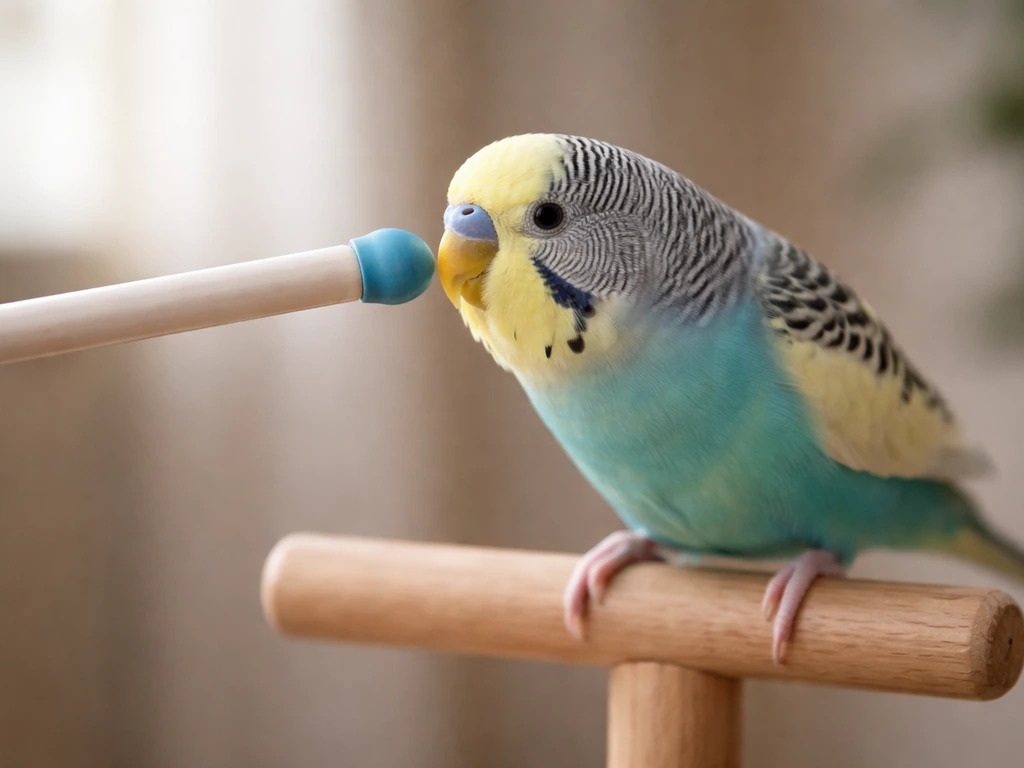
Targeting means teaching the bird to touch a specific object (usually a chopstick, a pencil eraser, or a dedicated target stick) with its beak on cue. It sounds simple but it's incredibly useful because it lets you guide the bird's movement without any physical coercion. The bird moves where it wants to go to touch the target; you're not dragging it anywhere.
Hold the target stick near the bird. When it looks at or touches it out of curiosity, mark that moment immediately with a click (if you're using a clicker) or a short verbal marker like "yes" and offer a treat. Over several sessions, place the target progressively farther away so the bird has to move toward it. You can use targeting to guide a bird onto a hand, off a forbidden spot, or back into the cage without any stress.
Gentle contact and touch
Once the bird is comfortable on your hand, you can slowly introduce gentle touch. Start with the back of a finger touching the bird's chest or feet, not the head or wings initially. Let the bird move away if it wants to. Over time, most budgies enjoy having their head and neck feathers gently scratched, especially around the cere and behind the crest. Follow the bird's lead entirely: if it leans into your touch, continue. If it moves away, stop.
Reading your budgie: body language cues and common setbacks
What your bird is telling you
| Body language signal | What it means | What to do |
|---|---|---|
| Feathers fluffed, eyes half-closed, one foot tucked up | Relaxed or sleepy | Good sign. Keep the current calm energy. |
| Feathers slicked flat against the body, wide eyes | Alert or frightened | You're too close or moving too fast. Back off. |
| Wings held slightly away from the body, panting | Fear or overheating. During taming, almost always fear. | End the session immediately. Give the bird space. |
| Tail bobbing gently | Normal breathing rhythm | Fine. Monitor if it seems labored. |
| Pupil rapidly expanding and contracting (pinning) | High excitement or focus, sometimes overstimulation | Proceed carefully. Watch for escalation. |
| Leaning toward you, standing tall, clicking beak gently | Curiosity and interest | Perfect time to offer a treat or advance slightly. |
| Beak open, lunging forward | Warning or active bite attempt | Back off calmly. Do not yell or jerk away. |
Common setbacks and how to fix them
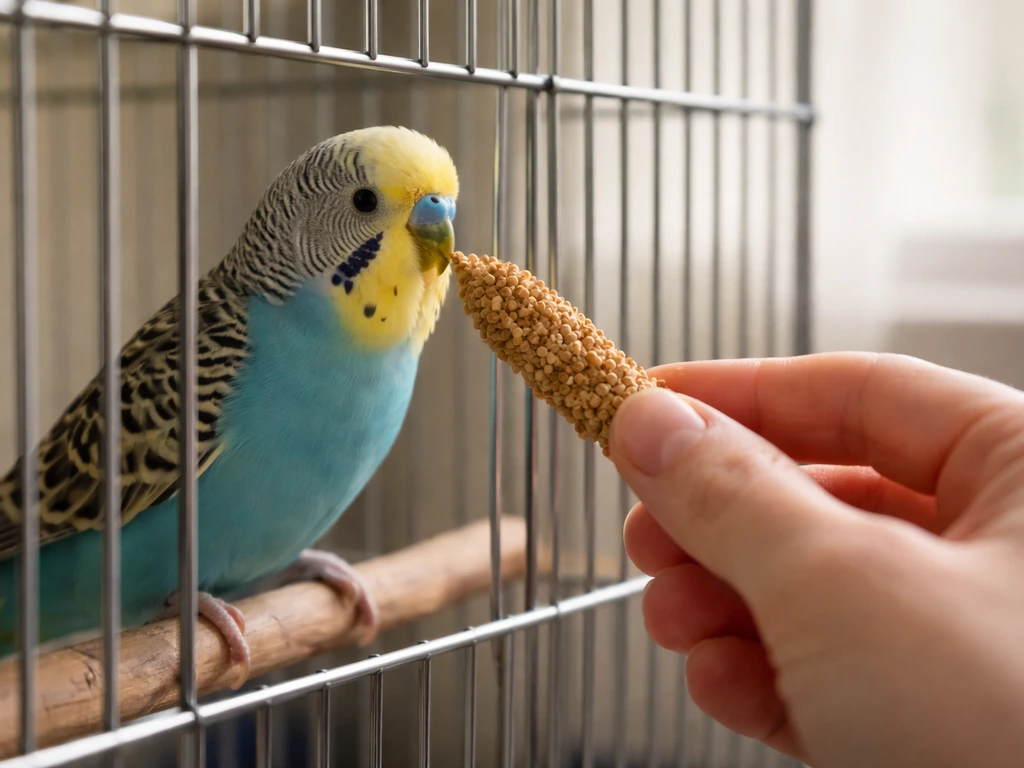
Stalled progress is normal and almost always fixable. Here's what tends to go wrong and what to do about it.
- Bird won't approach your hand at all: Go back to hand-feeding through the cage bars. Use millet spray, which most budgies find irresistible. Make sure your sessions aren't too long (over 10 minutes is usually too much). Check that nothing in the room is startling the bird (loud sounds, sudden movement behind you).
- Bird was progressing and then regressed: This is very common after a change in environment, a vet visit, or even a new object near the cage. Don't punish or push harder. Simply go back to the stage where the bird was last comfortable and rebuild from there.
- Bird won't take treats: Try a wider variety. Millet spray, small pieces of apple, and leafy greens are usually the most appealing. Try offering at the bird's most active and hungry time of day, typically morning. If the bird is genuinely uninterested in food treats, start with target training using praise and calm presence as the reward.
- Bird bites and won't stop: See the bite management section below.
- Bird seems fearful of your hands specifically: Wear different colors of clothing, change which hand you offer, try offering the back of your hand instead of the palm. Sometimes the issue is a specific visual cue the bird has associated with a bad experience.
Ongoing bonding, enrichment, and realistic timelines
Taming doesn't stop the day a bird steps up. Bonding is an ongoing relationship, and it needs regular maintenance. Aim for at least one hour of supervised out-of-cage time daily once the bird is comfortable leaving the cage. This enrichment time is where real bonding happens: the bird learns to explore near you, return to you, and associate your presence with freedom and fun rather than just brief training drills.
Keep training sessions short and consistent rather than occasional and long. Five to ten minutes daily beats a 45-minute session once a week every time. Introduce new perches, foraging toys, and puzzles gradually (new objects near the cage can startle birds that aren't used to change), but do introduce them because mental stimulation keeps budgies calm and engaged.
Realistic timelines
| Milestone | Typical timeline (consistent daily work) | Notes |
|---|---|---|
| Bird tolerates your calm presence near cage | 1 to 4 days | Faster for young or hand-raised birds |
| Bird accepts hand near cage door without panicking | 4 to 10 days | May take longer for older or parent-raised birds |
| Bird eats from your hand | 7 to 14 days | Use millet as the first treat |
| First reliable step-up | 1 to 3 weeks | 7-day plans work when sessions are short and consistent |
| Relaxed, voluntary out-of-cage interaction | 3 to 8 weeks | Varies hugely by individual |
| Confident, trust-based bond | 2 to 6 months ongoing | Ongoing enrichment and daily interaction maintain this |
If you've worked with other small birds like finches or canaries, you'll find budgies are generally more interactive and train faster once initial trust is established. Canary birds also respond well to the same kind of trust-building routine, so you may want to review how to tame a canary bird for bird-specific tips. The same patient, low-pressure approach is also the key when learning how to tame a finch bird small birds like finches or canaries.
They're closer in temperament to parakeets, which makes sense since budgies are a type of parakeet. More advanced parrot species like conures can take similar patience but often have different energy levels and bite strength, so the core approach here applies broadly but the specifics vary. If you’re specifically wondering how to tame a conure bird, the same trust-first approach applies, but you’ll need to tailor your pacing and enrichment to their often higher energy parrot species like conures.
Safety, humane handling, and bite management
Bite management
Budgie bites don't usually cause serious injury, but they sting, and your reaction to a bite matters a lot. The worst things you can do are yell, jerk your hand away sharply, or punish the bird by putting it back in the cage. All three teach the bird that biting works (you retreated) or create more fear (which makes biting more likely). Instead, when you feel a bite coming: move your hand very slowly and calmly in a different direction, end the session without drama, and take a moment to figure out why the bite happened.
Biting almost always has a cause: the bird was overstimulated, you moved too fast, something in the environment was alarming, or the bird had already shown warning signals that you missed. Review the body language table and look back at what happened just before the bite. Use that information to adjust your approach.
Humane handling principles
- Never use gloves during taming: they prevent the bird from learning to trust a human hand and can actually make hands feel more threatening. Gloves also reduce your sensitivity to the bird's signals.
- Never pin or restrain the bird against a surface: this is called flooding and it causes severe stress. The bird cannot choose to leave, which is the opposite of trust-building.
- Never use punishment: no tapping, no shaking, no putting the bird in the cage as discipline. Punishment doesn't teach the bird what you want and it actively damages trust. The RSPCA and other animal welfare organizations are explicit that punishment during bird training makes problems worse.
- Do use positive reinforcement only: clicks or verbal markers paired with food treats, calm praise, or preferred activities. If the bird did something right, mark it and reward it immediately.
- Wash your hands before handling: strong scents (perfume, soap, food) can alarm birds or provoke curious biting.
- Handle near a low surface initially: if the bird is nervous and flies off your hand, you want it landing somewhere safe, not crashing from a height.
A word on ethics
Taming a budgie is a commitment that lasts the bird's lifetime, often 8 to 15 years. The methods in this guide are built around the bird's welfare first because a taming process that uses fear or coercion might produce a bird that tolerates handling, but it won't produce a bird that trusts you. The difference is enormous, both for the bird's wellbeing and for the relationship you actually get to enjoy. Every session should feel like a choice the bird is making. If it doesn't, slow down.
FAQ
How do I know the exact moment to pause and go back a stage while learning how to tame a budgie bird?
Use behavior, not the clock. If you see leaning away, repeated head bobbing with a tense body, rapid blinking, or the bird freezes and stops taking cues, stop the current step and stay in the previous stage for at least a full day (offer food and calm presence only). When the bird resumes relaxed posture in your presence, you can try again.
What should I do if my budgie takes treats but still refuses step-up?
That pattern usually means the bird trusts food but not your hand pressure or your positioning. First, practice step-up from the same perch and height every time, keep your finger slightly farther below the chest than you think, and reward for any climb attempt (even one foot). If treats are taken quickly, try withholding the treat until after the bird makes contact with your finger, so step-up becomes the payoff.
Can I tame a budgie bird if it is parent-raised or older, and how should the schedule change?
Yes, but plan for slower, smaller wins. For older or parent-raised birds, shorten sessions to 2 to 5 minutes, keep your face turned slightly away, and increase the number of “micro-rewards” (reward looking at you, approaching the cage door, or touching your target stick). Expect progress to be less linear, and give yourself several extra days per stage rather than aiming for a fixed one-week step-up.
Which treats work best for taming, and how do I avoid overfeeding during training?
Use small, high-value treats like millet spray pieces or a tiny taste of preferred seed, but cut treats into very small portions so one session does not fill the bird. Keep daily treat time small and rely on the bird’s normal diet for the bulk of calories. If droppings look unusually large or watery, reduce treat frequency and confirm the bird is still getting adequate sleep.
Is it okay to train in the same room where other pets or kids are present?
Not reliably. Even if the budgie seems calm, constant background attention can prevent true relaxation. For taming sessions, choose the quietest room you have, keep other animals out of sight, and ask household members to avoid sudden movements near the cage. After step-up is consistent, you can gradually desensitize with short, controlled exposure, but never during a day you are seeing stress signals.
Why does my budgie bite, even when I’m trying to be gentle?
Common triggers are overstimulation (too long a session), misread body language (the bird was already warning), or surprise changes (new toys, loud noises, different clothing). When a bite happens, end the interaction calmly, wait at least 10 to 20 minutes before trying again, and remove any “next cue” pressure (like pushing for step-up). Then resume at the last comfortable stage and reward calmer behavior.
Should I introduce out-of-cage time immediately once the bird steps up?
Not necessarily. Stepping up is a trust cue, but out-of-cage exploration adds new risk. Start with very short sessions (5 to 10 minutes), keep one “safe return route” to the cage (like a familiar perch close to the cage opening), and avoid hovering over the bird. If the bird panics or won’t voluntarily return, you likely moved too fast and should revert to supervised near-cage play first.
How do I tame a budgie bird that flutters or panics when the cage door opens?
Treat the cage opening as a separate training cue. First, open the door for a few seconds while you are quiet and stationary, then close it without advancing. After the bird shows reduced startle (watching calmly, stepping closer), lengthen the open time gradually and introduce a target stick near the doorway. Only attempt step-up or “guided movement” when the bird no longer escalates at the door opening.
What is the safest way to let my budgie come back to the cage during training?
Make returning easier than staying out. Use a consistent cue (same verbal phrase and same hand position), position the target stick or familiar perch so the bird can choose it, and reward immediately on voluntary entry. Avoid chasing, block routes gently rather than grabbing, and stop the session if the bird seems trapped or begins frantic flapping.
Next Article
How to Tame a Parakeet Bird: Humane Step-by-Step Guide
Humane, step-by-step guide to tame a parakeet: trust, positive reinforcement, safe step-up, handling, and troubleshootin