Taming a conure comes down to one thing: earning trust on the bird's terms, not yours. You do that through short, consistent, positive sessions where your conure always has a choice, never feels cornered, and gets something it actually wants for being brave. Most healthy conures, whether a sun conure, green-cheek, blue-crowned, or nanday, can go from skittish and nippy to voluntarily stepping onto your hand within two to six weeks if you follow a structured approach and respect the bird's pace.
How to Tame a Conure Bird: Step-by-Step Trust Training
Clara Hayes
16 May 2026
What 'taming' a conure really means
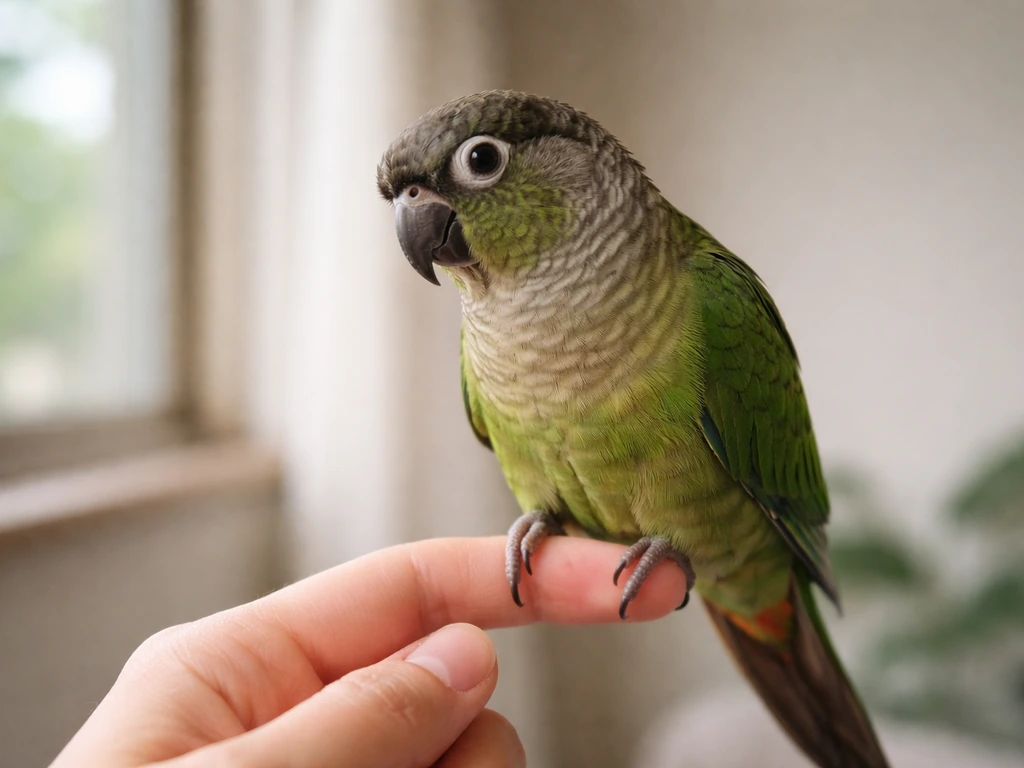
Taming is not about getting your bird to obey you. It is about your conure deciding you are safe and worth being around. That distinction matters a lot in practice. A bird that has been forced to comply through restraint or repeated flooding (being held until it stops struggling) may look tame but is actually suppressing fear. These birds often bite without warning later, because the early warning signals, fluffing, leaning away, eye pinning, wing spreading, were ignored until they escalated. Real taming means the bird approaches you, steps up without lunging or screaming, and stays calm during handling because it has genuinely learned that you predict good things.
Conures are naturally curious and social, which works in your favor. They bond intensely with people they trust. But they are also loud, high-energy, and not shy about biting when uncomfortable. Green-cheek conures tend to be slightly quieter and more tolerant of handling than sun conures, which are famously vocal and bold. Whichever species you have, the trust-building process is the same. The timeline may shift a little based on the individual bird's history, but the method does not change.
One more clarification worth making early: a hand-raised baby conure is not automatically tame. Hand-raising builds comfort with humans in general, but you still need to build a relationship with this specific bird in this specific home. And a wild-caught or previously neglected conure needs the same process, just with more patience at the start.
Setting up your conure for success before training starts
The environment you create determines how fast your conure relaxes. A stressed, disoriented bird cannot learn, so the setup phase is not optional background work, it is the foundation of everything that follows.
Cage placement and safety
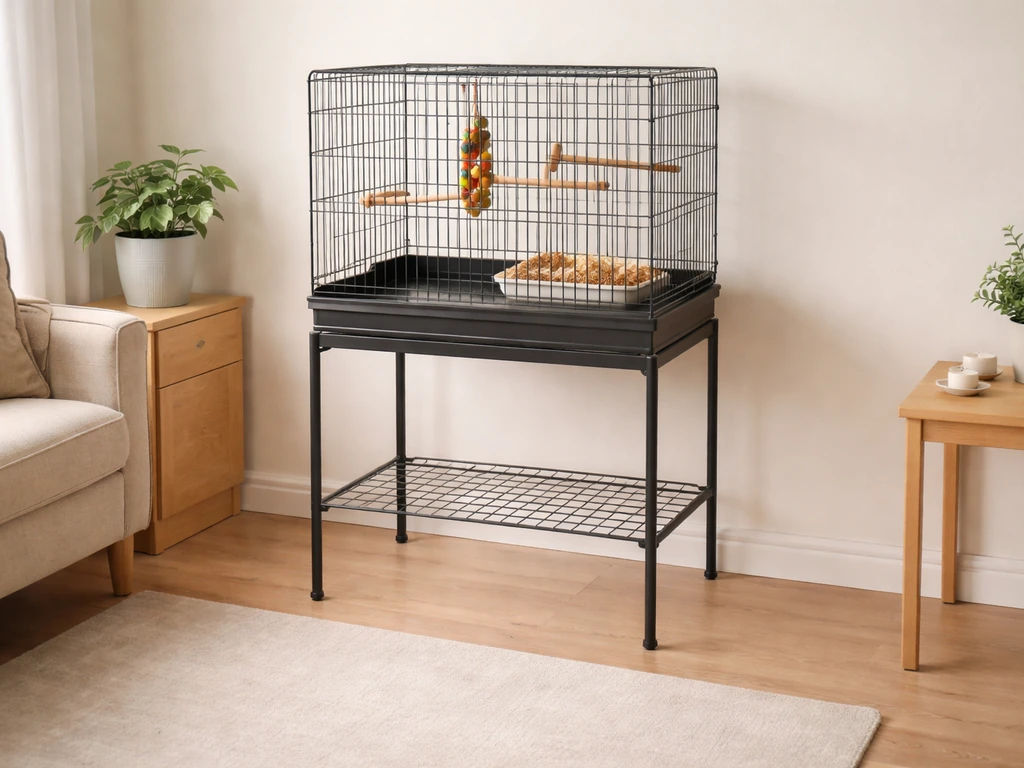
Place the cage at roughly chest height in a room where your household spends time, like a living room or home office. Conures are flock animals and feel abandoned in isolated rooms. Avoid kitchens (toxic fumes from non-stick cookware are lethal to birds), spots in direct sunlight with no shade, and drafty windows or air conditioning vents. Position the cage so one or two sides are against a wall. This gives the bird a 'safe corner' to retreat to, which reduces baseline anxiety significantly.
Inside the cage, include at least two perch heights, a foraging spot, and enough space for the bird to fully open its wings without touching the bars. For a standard conure, a minimum cage footprint of 24 by 24 inches (with bar spacing no wider than 3/4 inch) is a practical starting point, though bigger is always better. Before bringing the bird home, remove any mirrors, especially during early taming. Mirrors can cause confusion and obsessive behavior that slows training.
Establishing a daily routine
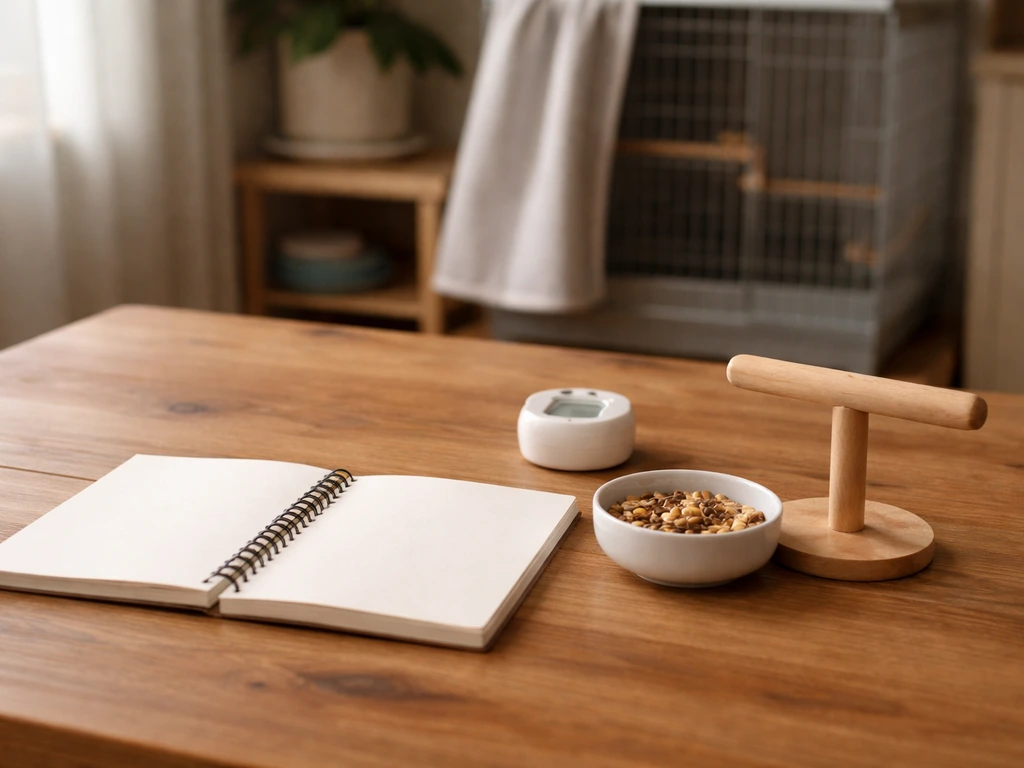
Conures thrive on predictability. Feed at the same times each morning and evening, cover the cage at roughly the same time each night (10 to 12 hours of darkness helps regulate mood and hormones), and start training sessions at the same time each day. This routine tells your bird what to expect, and a bird that knows what to expect is calmer and more ready to engage. Give any newly brought-home conure at least 48 to 72 hours to simply adjust before you start any hands-on training. During that settling period, sit nearby, talk softly, and let the bird observe you.
Basic training setup
- Keep sessions to 5 to 10 minutes maximum, two to three times a day. Conures have short attention spans and tire of repetition quickly.
- Train before meals, not after. A bird that is already full has no motivation to work for treats.
- Work in a small, bird-proofed room with the door closed and ceiling fans off. Fewer distractions and zero flight hazards make everything easier.
- Keep your own energy calm and slow. Conures read body language well and mirror your energy level.
- End every session on a success, even if that just means the bird took a treat from near your hand. Never end on a failed attempt.
Positive reinforcement: what to use and how to time it
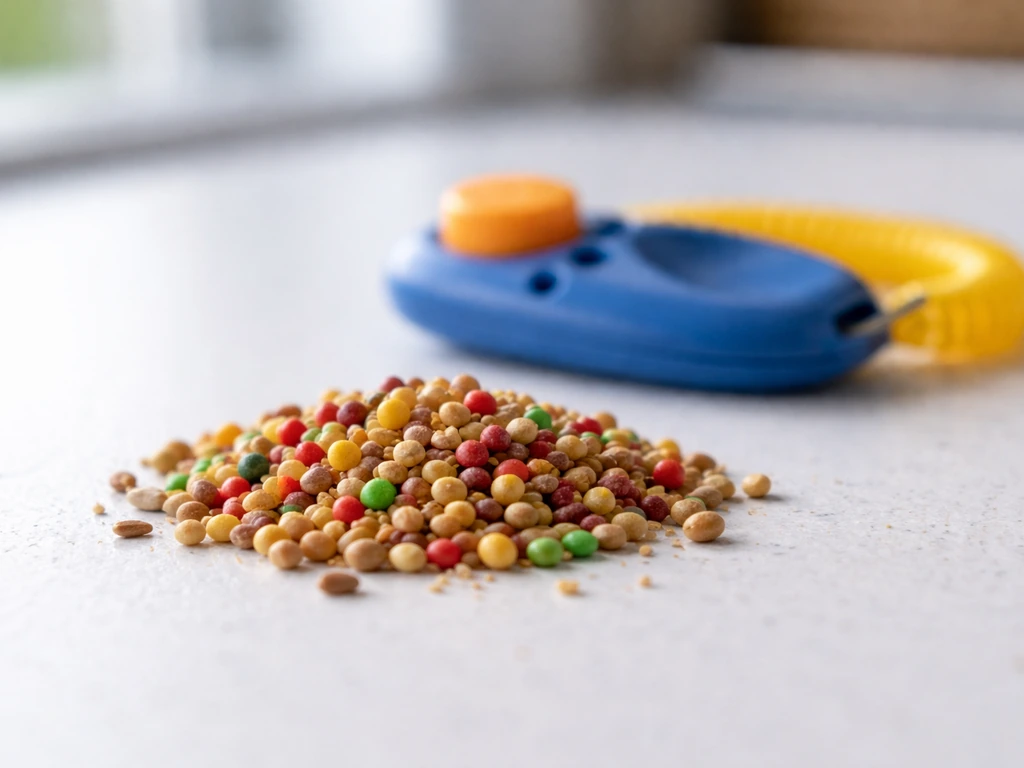
Positive reinforcement works by pairing a behavior with something the bird genuinely wants, the moment the behavior happens. The Association of Avian Veterinarians defines this as strengthening a behavior through an association with a desired reinforcer, and the World Parrot Trust frames it as the most effective method for parrots precisely because it builds trust and cooperation rather than fear. In practice, timing is everything. The reinforcer needs to arrive within one to two seconds of the desired behavior, or the bird cannot connect the two.
The best treats for conure training
Find your conure's 'high-value' treat, the one thing it goes absolutely wild for. Common favorites include small pine nut pieces, a tiny sliver of almond, a bit of mango or papaya, a small sunflower seed, or a pea. Keep portions tiny, like the size of your pinky fingernail. You want to deliver many small rewards per session, not fill the bird up in two bites. Test a few options and watch which ones make your conure lean forward with excitement rather than politely nibble.
Verbal praise ('good bird!' in a warm, upbeat tone) can become a secondary reinforcer once your bird associates it with treats. Eventually you can use praise alone to bridge short gaps between behaviors, though treats remain your primary tool for months. Avoid using head scratches as training rewards early in taming because physical contact is what you are working toward, not a starting point.
How to deliver the treat correctly
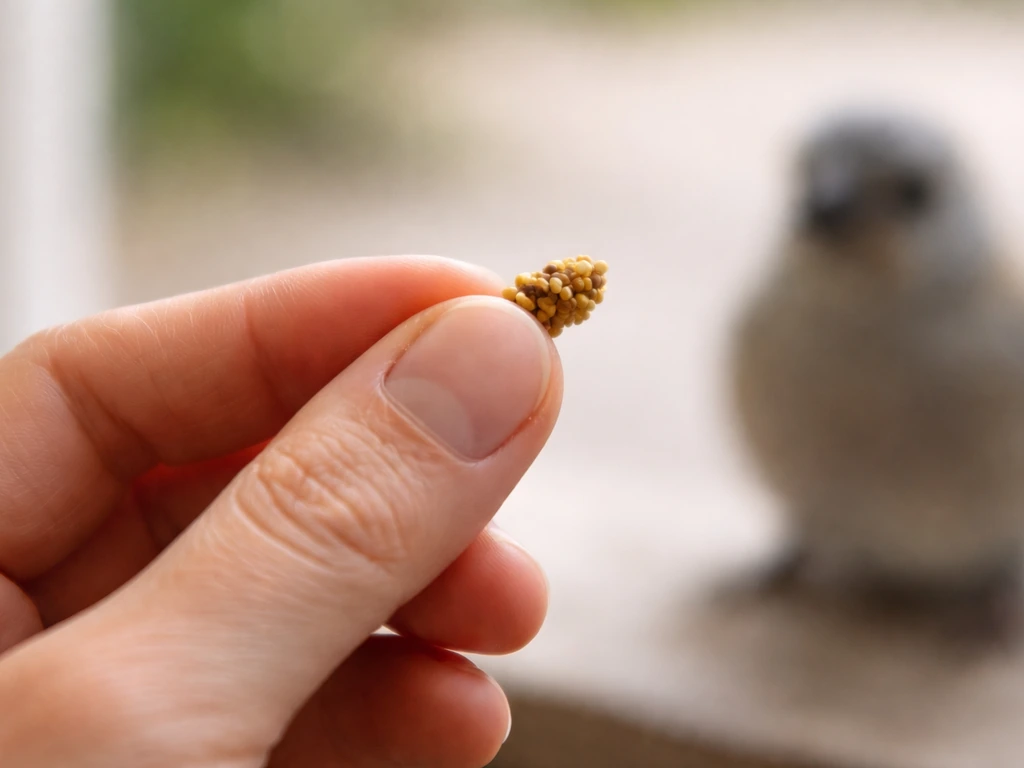
Hold the treat between your thumb and forefinger, presented at beak level or slightly below. Do not pull the treat back if the bird reaches for it, that creates frustration and biting. Be steady and deliberate. If you are using a target stick (more on that below), the treat gets delivered the moment the beak touches the target, not a second later. Precision here is what separates fast progress from stalled progress.
Step-by-step trust building: from across the room to voluntary contact
Think of taming in concentric circles. You start far away and gradually shrink the distance, only when the bird is showing relaxed body language. Rush any step and you reset trust. The body language you are looking for: feet flat on perch, feathers slightly relaxed (not slicked down in fear or puffed up in aggression), eyes soft, maybe leaning toward you with curiosity. Signs to back off: leaning away, crouching, feathers slicked tight, tail fanning, beak opening without vocalizing, or eye pinning (pupils rapidly dilating and contracting). Fear Free research confirms that ignoring these escalating fear signals leads to defensive biting.
- Week 1, Day 1 to 3: Sit 3 to 4 feet from the cage and read aloud, work on your laptop, or talk gently. Do not stare directly at the bird. Peripheral observation feels less predatory. Let your conure get curious about you.
- Day 3 to 5: Move your chair to about 18 inches from the cage. Offer a treat through the cage bars without expecting any particular response. If the bird approaches within a foot of your hand, that is progress. If it flees to the back, go back to the previous distance for another day.
- Day 5 to 7: Open the cage door and hold a treat just inside the door opening. Wait quietly. Do not push your hand in. Let the bird come to you. If it walks toward your hand and takes the treat, repeat this three or four times and end the session. This is a big milestone.
- Week 2: Start offering treats on an open palm held just inside the door at perch level. The goal is the bird stepping one foot onto your hand to reach the treat, then two feet. Do not curl your fingers around the bird. Let it sit, eat, and leave on its own terms.
- Week 2 to 3: Once the bird regularly steps onto your palm for treats inside the cage, begin asking for this outside the cage. Open the door, present your hand at perch level just outside, and wait. Many conures will venture out readily at this point.
- Week 3 and beyond: Practice moving slowly around the room while the bird is on your hand, introduce gentle talking, and gradually work toward brief touches on the chest and beak area, always letting the bird move away if it wants to.
Eye contact during this process should be soft and occasional. Sustained direct eye contact reads as a threat to many birds. Slow blinking, which you may recognize from cat behavior, signals calm in parrots too. Try it deliberately during your sessions and watch if your conure responds by relaxing slightly.
Target training and teaching the step-up
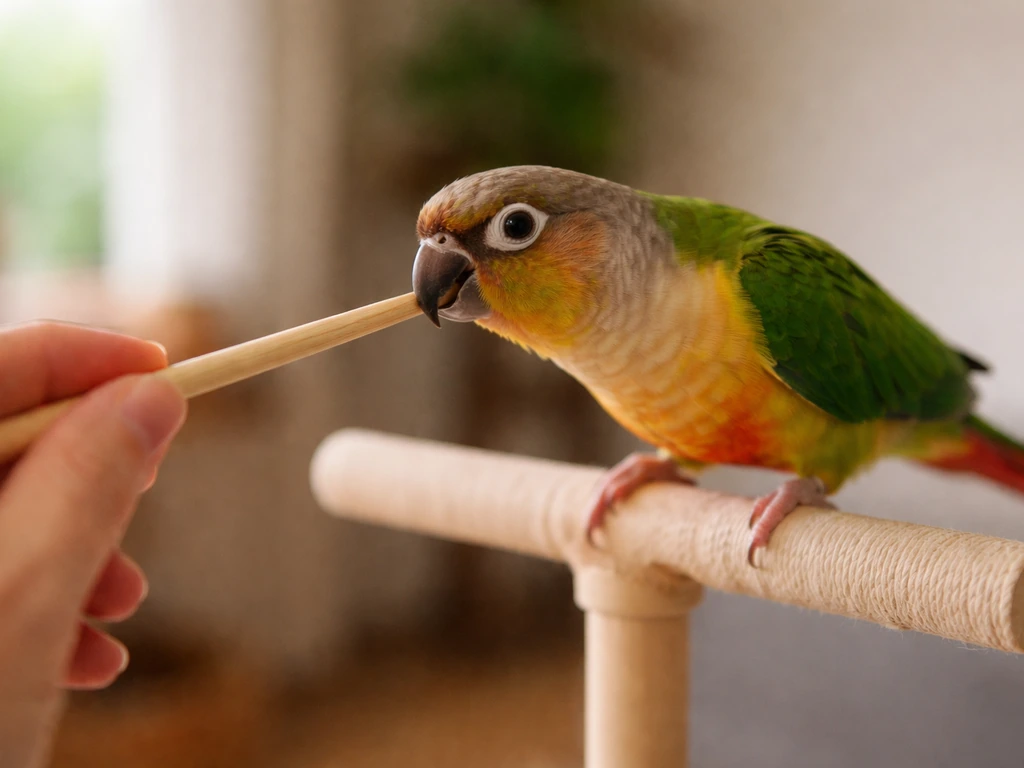
Target training is the single most useful foundational tool in conure taming. You teach your bird to touch its beak to the tip of a small stick (a chopstick, a pencil eraser, or a purpose-made target stick works fine) on cue. Once the bird understands that touching the target earns a treat, you can use the target to guide it onto your hand, into the carrier, to a scale for weight checks, and eventually to almost anywhere you need it to go, all without any physical pressure.
Teaching the target touch
- Hold the target stick a few inches from the bird's beak. Most curious conures will investigate it immediately. The instant the beak makes contact, click (if you use a clicker) or say 'yes!' and deliver the treat.
- Repeat five to ten times per session. Within one to three sessions, most conures are deliberately bopping the target to earn the reward.
- Once reliable, begin moving the target slightly so the bird has to lean or take a step to reach it. Gradually increase the reach required.
- To build the step-up, position the target just above and slightly behind your offered hand. The bird has to step onto your hand to reach the target. Reward the moment the foot lands on your hand, not just when the beak touches the target.
Adding the step-up cue
Once your conure is stepping onto your hand reliably with the target, introduce a verbal cue. Say 'step up' in a calm, consistent tone just before presenting the target. After about a week of this pairing, try giving the cue and presenting your hand without the target. Many birds will step up on the verbal cue alone within two to three weeks of consistent practice. Always reward the step-up, even after the bird knows the cue well, to keep the behavior strong.
Handling safety during this phase
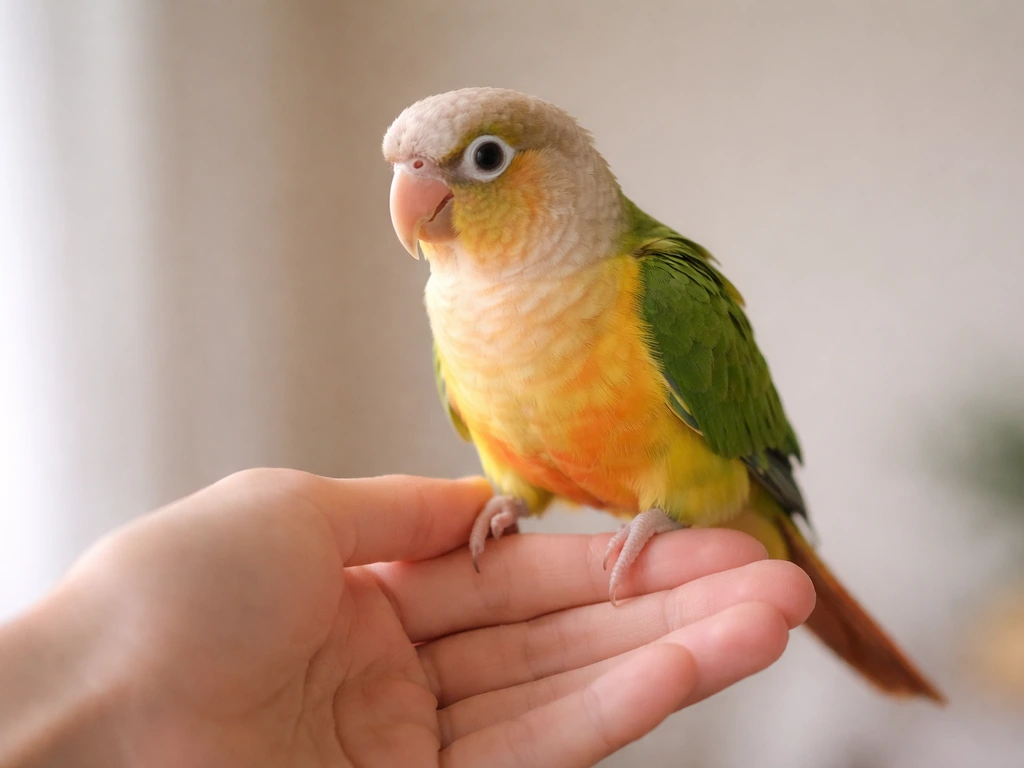
Keep your hand steady once the bird is on it. Shaking or pulling away reflexively is the most common reason birds bite during early handling. If your conure starts to walk up your arm toward your face, lower your hand gently to redirect it back to your hand level. Do not let a newly taming bird reach your face in the first few weeks. Conure beaks can break skin, and a face-level nip is startling enough that you will likely react in a way that frightens both of you. Position yourself so the bird is at chest or waist height when it is on you.
Troubleshooting: biting, fear, screaming, and stalled progress
Biting
Biting is communication, not defiance. Your conure bites because it felt it had no other option to get you to back off. The fix is learning to read the earlier warning signals (body tightening, leaning away, beak opening) and responding to those instead of pushing through until the bird bites. When a bite does happen, do not yell, pull away sharply, or put the bird down immediately as punishment. Any dramatic reaction, positive or negative, can actually reinforce biting because the bird learns that biting produces a big interesting response. Instead, calmly lower your hand or step back without comment, wait 10 to 15 seconds, and try again with a slightly easier ask. The World Parrot Trust specifically recommends replacing fear or aggression with alternative behaviors through positive reinforcement rather than punishment-based 'parrot breaking.'
If your conure bites consistently at a specific point in the training, like when you move your hand toward its back, that spot or movement is a trigger. Slow down, break that step into smaller pieces, and reinforce heavily at each sub-step. Do not skip past the trigger, work through it.
Fear and refusal to approach
If your bird consistently retreats or shows fear signals, you are working at a distance or pace that is too challenging. Go back to the last distance where the bird was calm and comfortable. That is your real starting point, not the one you wish it were. Some birds, especially those with unknown histories or past trauma, need two to four weeks of just sitting near the cage before any treat-offering begins. That is fine. Every day of calm coexistence builds a small amount of trust.
Screaming
Sun conures in particular can scream loudly enough to cause genuine hearing discomfort. Contact calls, short loud vocalizations when the bird wants to locate you, are normal and should be answered with a calm call back so the bird knows you are nearby. Do not rush to the room every time your conure screams loudly, as this teaches the bird that screaming summons you instantly. Instead, reward quiet behavior with attention and visits, and make sure the bird gets enough out-of-cage time so attention-screaming is not its only way to interact with you.
Training plateaus and regression
Almost every conure hits a phase around weeks three to five where progress seems to stall or even go backward. This is normal. It often coincides with the bird becoming more comfortable and therefore testing limits, or with a minor environmental change like a new person in the house, a moved piece of furniture, or a schedule shift. During a plateau, drop back to the last reliable behavior, reinforce it heavily for a few days, and then try to advance again. Regression after a molt, illness, or a stressful event like a vet visit is also normal and temporary.
Over-handling
More handling is not always better. Conures need time in their cage to decompress, explore, and just be birds. A bird that is handled for hours every day without breaks can become overstimulated, nippy, and hormonally activated. Aim for two to three structured training sessions of 5 to 10 minutes plus one or two longer out-of-cage play periods per day, but always watch the bird's body language and return it to the cage before it gets overtired.
Your week-by-week session plan and realistic timeline
Here is what realistic progress looks like for a typical conure with no severe prior trauma. Birds with a more difficult history may take twice as long at each stage, and that is completely okay.
| Timeframe | Where you should be | What to focus on |
|---|---|---|
| Days 1 to 3 | Bird is aware of you but not panicking | Settling in, routine establishment, no training yet |
| Days 4 to 7 | Bird watches you calmly, may approach cage bars | Treat delivery through bars, soft talking, short presence sessions |
| Week 2 | Bird takes treats from your hand at the cage door | Open-door treat sessions, beginning of target training |
| Week 3 | Bird steps onto your hand inside the cage | Step-up practice inside cage, reliable target touch |
| Week 4 | Bird steps out of cage onto your hand | Out-of-cage handling, step-up cue introduction |
| Weeks 5 to 6 | Bird steps up on cue reliably, tolerates brief touch | Expanding handling, walking around room, gentle contact |
| Month 2 and beyond | Bird chooses to interact, seeks you out | Building repertoire, introducing carrier, new environments |
Daily session structure: start with two to three target-touch repetitions as a warm-up (easy wins), then move to the current training goal for three to five attempts, and finish with something the bird does well and enjoys. This arc, warm up, challenge, win, keeps the bird motivated and ends on a positive association every time.
Your next-step checklist based on where your bird is right now
- Bird won't come near you yet: Move your chair further away. Sit quietly for 10 minutes twice a day. Offer treats without expectation. Give it another 3 to 5 days before reassessing.
- Bird takes treats but won't step up: Confirm you are training before meals. Switch to a higher-value treat. Try the target stick approach to the hand instead of direct luring.
- Bird steps up but bites when handled: You are moving too fast into handling. Go back to just step-up with no additional touch for a week. Add one new touch at a time, paired with heavy treat reinforcement.
- Bird was taming well but has regressed: Check for environmental changes, health issues (feather condition, weight loss, discharge), and reduce session difficulty. Return to an earlier reliable step for a few days.
- Bird screams during or after sessions: Ensure sessions end before the bird gets frustrated. Increase out-of-cage time and make sure you are responding to contact calls appropriately.
When to get professional help
An avian vet checkup is always a good idea within the first month of bringing a conure home, and any time training suddenly stalls or the bird's behavior changes sharply. Pain, nutritional deficiencies, and hormonal issues can all masquerade as behavior problems. A bird that was progressing well and suddenly becomes aggressive, lethargic, or stops eating needs a vet visit, not more training sessions.
If you have been consistent with the approach above for six to eight weeks and your conure is still biting hard enough to break skin regularly, refusing all food rewards, or showing prolonged signs of fear and stress, it is worth consulting a certified parrot behavior consultant (look for someone credentialed through the International Association of Animal Behavior Consultants or endorsed by the World Parrot Trust). These professionals can observe your specific bird and setup and give you feedback that a general guide cannot provide. This is especially important for conures that have been through rehoming, neglect, or abusive handling, where trust may need to be rebuilt on a much longer timeline with more specialized techniques.
If you are also working with other species, the core principles here, patience, positive reinforcement, reading body language, and respecting the animal's pace, apply broadly. The same trust-first training principles can also guide you with a mynah, so learning how to tame a mynah bird will help you adapt the steps to that species’ behavior. The taming process for parakeets and budgies follows a very similar structure, though those birds tend to be smaller, faster to startle, and often benefit from even shorter initial sessions. If you're wondering how to tame a budgie bird, use the same trust-first, positive reinforcement approach, but start with shorter sessions and gentler handling cues. The same gentle trust-building steps from this guide can help you learn how to tame a parakeet bird at your bird’s pace parakeets and budgies. Finches and canaries are typically not handled the same way conures are, so the approach there differs more significantly. If you are working with how to tame a canary bird, focus on gentler, lower-stress sessions and gradual comfort with your presence rather than the same step-up style handling Finches and canaries are typically not handled the same way conures are. If you are trying to tame a finch bird, it helps to use gentler, distance-based trust building suited to how finches naturally learn and socialize Finches and canaries are typically not handled the same way conures are.
Taming a conure is genuinely one of the more rewarding things you can do as a bird owner. The moment your conure walks across the room and climbs onto your shoulder because it wants to be near you, not because it has to, is worth every patient, careful session it took to get there. Start small, stay consistent, and trust the process.
FAQ
Can I tame my conure by offering treats outside the cage first?
Yes, but only if you do it carefully. When you begin offering treats, do it from inside the cage and keep your fingers slow and still. Many nippy conures learn faster when the first “win” is beak touches on the target or treat, not a hand near the bird’s face. If your bird lunges or fluffs, pause and go back a step in distance until it can accept the treat calmly.
My conure was hand-raised, do I still need to follow the full taming plan?
A hand raising is not the same as tameness. Even hand-raised babies may be fearful with new owners, new routines, or new handling styles. Treat the first weeks as relationship building, not “catch-up” training, and expect that step-up and calm handling still need to be taught separately from general human familiarity.
What should I do if my conure keeps trying to lunge or bite when I say “step up”?
If it keeps lunging during step-up, the cue or your position is probably too close too soon. Lower your hand to a comfortable perch height, pause the step-up attempt, and return to target training for a few days so the bird can rebuild certainty. Also avoid trapping the bird against a wall, give it a clear retreat route in the cage setup.
How do I find a truly high-value treat for my conure?
Test treat value with micro portions and watch for the real difference in body language. A high-value reward usually makes the bird lean in with quick interest, track your fingers, and reach forward promptly. A “low value” treat gets polite nibbling without urgency, or it gets ignored once the bird gets distracted.
My timing feels right, but training stalls, how can I troubleshoot reinforcement timing?
Use a strict timing rule: reward the exact moment the behavior happens, within about 1 to 2 seconds. If you delay, the bird learns the wrong association, which can look like “regression.” A helpful tactic is to practice targeting first, because you get a clear, instantaneous touch event to reinforce.
Does cage covering and consistent sleep really affect how fast my conure tames?
Covering the cage at the same time each night helps mood and hormones, but you still need a consistent morning start. If you start training immediately after the lights go on, some birds are groggy and more irritable, which increases biting risk. Wait until the bird shows relaxed interest, then begin with easy target repetitions.
Is it okay to reward my conure with head scratches during early taming?
If you use scratches as a reward early, you may accidentally reward fear or overstimulation rather than calm approach. Replace it with short, predictable reinforcers: target touches, quiet settling near you, or stepping onto your hand. Once the bird is reliably cooperative during handling, you can offer brief, consent-based contact only when the bird leans in calmly.
What if my conure refuses treats during sessions?
Most conures will keep food-seeking behavior even when they are too stressed to learn. If your bird is refusing treats, try three “reset” checks: confirm the room is not too hot or drafty, confirm the bird is not hungry enough to be frantic or too full to care, and reduce session difficulty by increasing distance and switching back to easy warm-up wins. If refusal persists alongside lethargy or sudden behavior change, treat it as a possible health issue.
How do I know when to stop training so my conure does not get overtired or nippy?
Keep sessions short and end on a win. If you push past the point where the bird’s body language tightens, you can create an “association” between training and frustration, leading to extra biting later. A practical rule is to stop while the bird is still successfully completing the last step, not when it starts resisting.
Can I let my conure climb onto my shoulder during the early taming stage?
Yes, after early trust is built. Start by positioning yourself so the bird is at chest or waist height, and do not allow face-level reach for the first few weeks of handling. If your bird climbs toward your face, gently lower or redirect your hand rather than jerking away, because sudden movement can trigger more lunging.
My conure seems to be stalling around the middle of training, what’s the smartest way to handle a plateau?
If you want to move faster, the best lever is clarity, not intensity. Make each step smaller, reinforce heavily for the relaxed body-language version of that step, and use the target to control distance. Also remember that stalls around weeks three to five are common, so respond by dropping back to the last reliable behavior for a few days before restarting progress.
How should I respond immediately after my conure bites so it does not worsen the problem?
A key “edge case” is that accidental fear learning can happen if you respond with big emotions or sudden handling after a bite. After a bite, stay calm, step back or lower the hand without drama, wait briefly, then try again with an easier ask. This prevents the bird from learning that biting creates an unpredictable, intense response.
What if my conure bites at the same moment every session, like when my hand moves toward its back?
If bites are triggered by a specific movement, treat it like a training obstacle. Break that movement into sub-steps, reinforce each micro-step, and avoid skipping ahead until the bird stays relaxed for multiple repetitions. For example, if the bird bites when your hand shifts toward its back, practice the approach with smaller angles and reward early calm moments before the “danger” position.
My conure is backing away and staying fearful, should I keep pushing the distance closer?
If your bird keeps retreating, the pace is too fast or the distance is too close. Go back to the last distance where the bird could take treats or complete target touches calmly. Then rebuild gradually, using shorter sessions and ending early. This avoids forcing exposure, which can create a longer fear cycle.
What should I do if my conure seems to suddenly become more aggressive during hormonal periods?
Sometimes the bird is behaving hormonally rather than just “untrained.” Common signs are increased territorial behavior, more intense screaming, and sudden irritability around hands. During these periods, you still use positive reinforcement but reduce handling time, keep sessions very short, and focus on target-based cooperation and calm proximity until the mood settles.
Next Articles
How to Tame a Budgie Bird: Trust, Training, and Tips
Step-by-step budgie taming plan: build trust, start hand training, teach step up and targeting, troubleshoot setbacks sa
How to Tame a Parakeet Bird: Humane Step-by-Step Guide
Humane, step-by-step guide to tame a parakeet: trust, positive reinforcement, safe step-up, handling, and troubleshootin
How to Tame a Mynah Bird: Training Steps and Safety Tips
Humane, safety-first steps to tame and train a mynah bird: trust building, hand feeding, cues, and troubleshooting.