
You can tame a pet parakeet by working in short, calm sessions every day, letting the bird set the pace, and rewarding every small step with a treat or soft praise. If you want a quick overview of the process, focus on trust building, positive reinforcement, and teaching step-up at a comfortable pace taming a pet parakeet. Most budgies and parakeets go from fearful to stepping up willingly within two to eight weeks when you use positive reinforcement consistently and never force contact. The key is building trust before you ever reach into the cage.
How to Tame a Parakeet Bird: Humane Step-by-Step Guide
Clara Hayes
28 Apr 2026
First: figure out what kind of parakeet you have and what 'tame' actually means
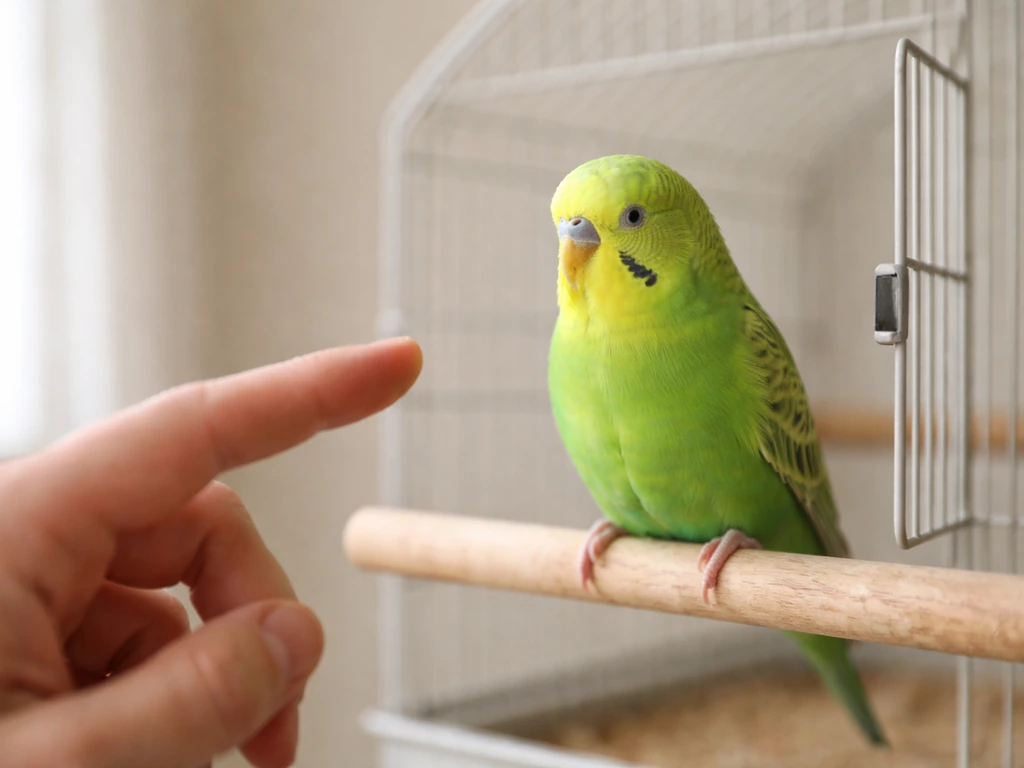
Most people searching this topic have a pet budgie (budgerigar) or a similar small parakeet bought from a breeder or pet store. That bird was likely hand-raised to some degree but may still be fearful of hands, especially if it spent weeks in a crowded shop cage or hasn't been handled since purchase. For that bird, 'taming' means reducing fear, building voluntary proximity, teaching a reliable step-up, and reaching a point where you can handle it safely without either of you panicking.
A different situation is a wild or feral parakeet, or an escaped pet you've found outdoors. Monk parakeets, ringnecks, and similar species now live wild in many parts of the U.S. and Europe. These birds have not been socialized to people and the taming process is far longer and harder. If you've found an injured wild parakeet, the right first move is to contact a licensed wildlife rehabilitator rather than attempting to tame it yourself. Cover the bird gently with a towel (tucking the wings and covering the head to reduce stress), keep it warm and quiet, and make that call. Taming is not the priority when a bird is stressed or injured.
If the found bird appears healthy and uninjured, it may be someone's escaped pet. Check local lost-bird boards, put up notices near where you found it, and contact local avian rescues before deciding to keep it. An escaped pet parakeet that is already hand-tame will often step up readily once it's recovered from the stress of being outside. One that's been living wild for months is a much bigger project. The rest of this guide focuses on taming a pet parakeet in your home, but the same trust-building principles apply to a rehomed or rescued bird.
Set up a calm, safe space before you do anything else
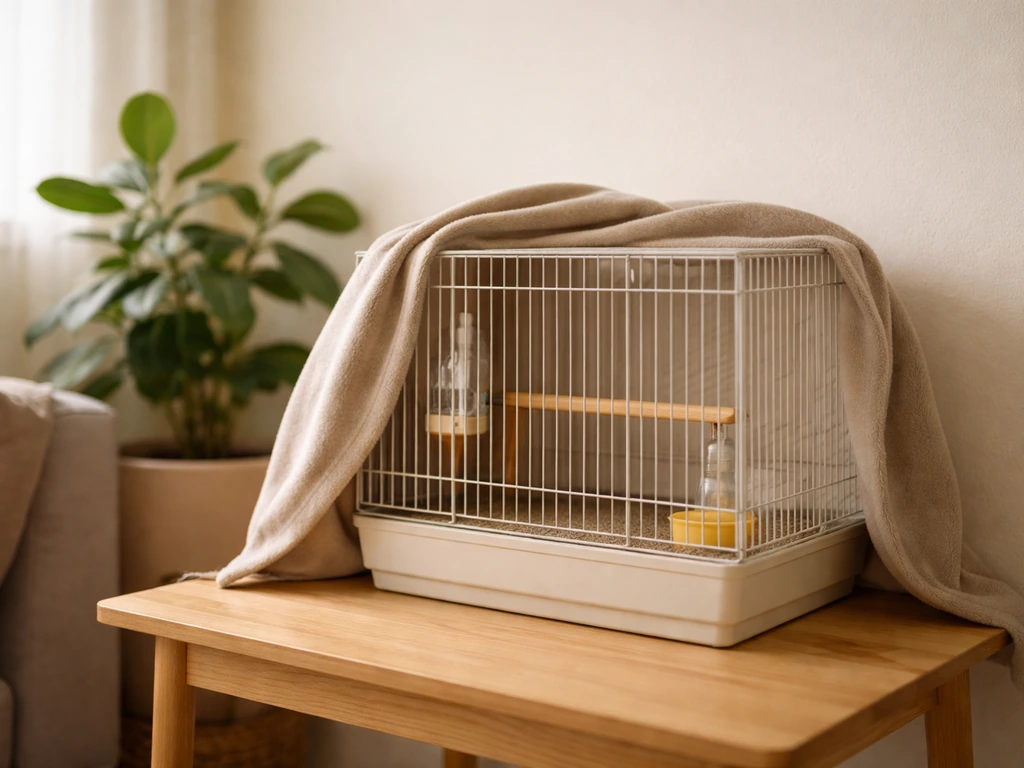
Environment is where taming either starts well or gets derailed immediately. A stressed bird in a bad cage location will be far harder to tame than the same bird in a well-placed, predictable space. Get this right first and every step after becomes easier.
Where to put the cage
Place the cage in a room where people spend time regularly, like a living room or home office, so the bird gets used to human voices and movement without being directly approached. Avoid windowsills: direct sun can overheat a small parakeet quickly, and windows are often drafty. Drafts are a real welfare risk, so keep the cage away from air conditioning vents, fans, and exterior doors. The ideal spot is at roughly human eye level or slightly below, against a wall so the bird has a sense of security on at least one side, and where it can see you going about your day without feeling bombarded.
Perch placement matters more than most people think
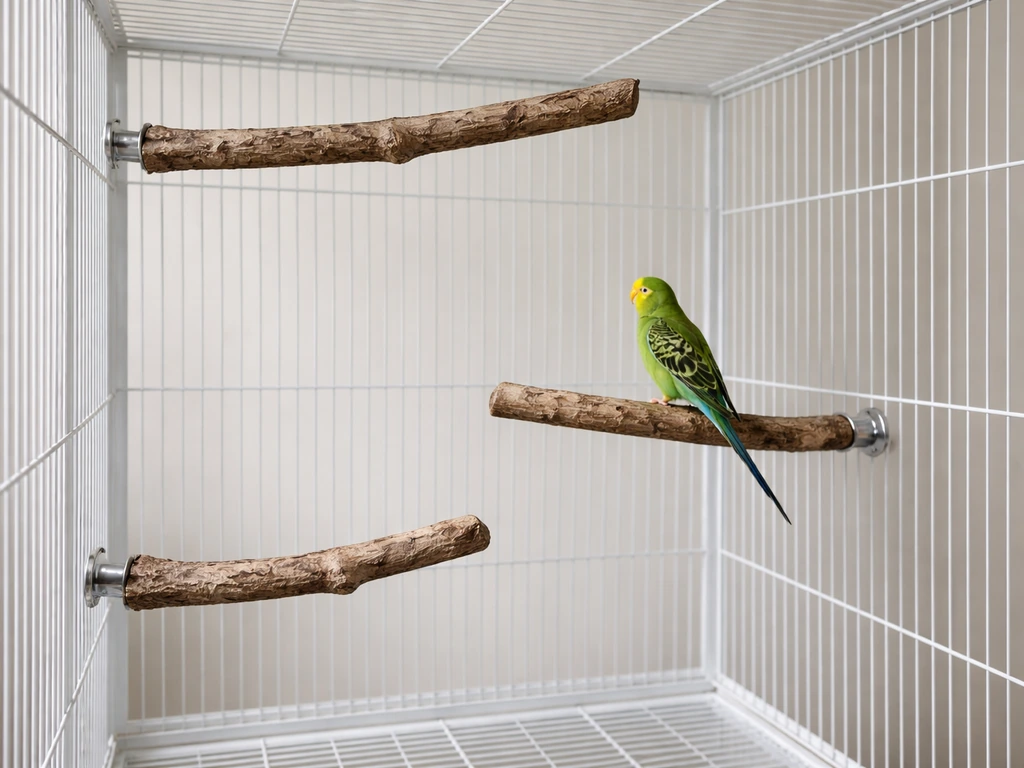
Use at least three perches at different heights and positions. A good setup includes one high perch (this becomes the bird's 'safe' retreat spot), a middle wooden perch near the center of the cage for daily activity, and a lower perch or slightly uneven orthopedic perch leading toward the food and water cups. Having that high retreat perch is important during early taming: when your bird feels startled or uncertain, it needs somewhere to go. A bird that can retreat feels safer and is less likely to bite out of panic.
Lighting and routine
Parakeets do well with a consistent 10 to 12 hours of light followed by a dark, quiet sleep period. Use a cage cover at night to signal sleep time and keep the light cycle predictable. Erratic light schedules disrupt sleep, and a sleep-deprived parakeet is grumpy, more fearful, and much harder to train. Set a consistent time for uncovering the cage each morning and covering it each evening, and stick to it. This predictability alone reduces anxiety before you've touched the cage door.
A few things to remove from the environment
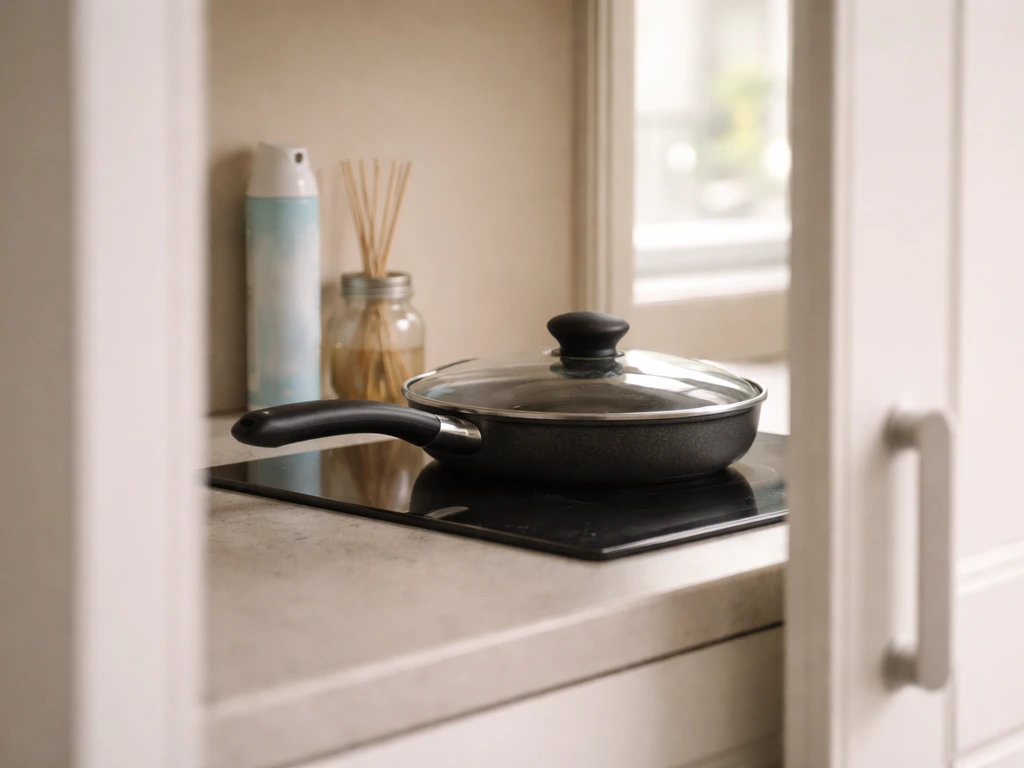
- Non-stick cookware: PTFE fumes from overheated Teflon are lethal to small birds
- Scented candles, air fresheners, and aerosol sprays
- Other pets that can see the cage (cats and dogs trigger constant stress even through glass)
- Loud televisions or music directly facing the cage during early adjustment days
- Open windows and ceiling fans running during any out-of-cage time
Build trust from outside the cage first
Rushing to open the cage and grab your bird is the single most common mistake new owners make, and it can set back taming by weeks. The foundation of every technique in this guide is the same: the bird chooses to approach you, not the other way around. World Parrot Trust likewise emphasizes that positive reinforcement is the most effective training approach for parrots, recommending rewarding desired behaviors such as step-up or calm behavior positive reinforcement is the most effective training method. Your job in the first week or two is to become boring and predictable, not exciting and threatening.
The first few days: just exist near the cage
Sit or stand near the cage for 10 to 15 minutes at a time, a couple of feet away, talking softly or reading aloud. Don't stare directly at the bird (direct eye contact can read as threatening to prey animals), but let it observe you. Use a calm, low voice. If the bird presses into a corner, freezes, or pants, you're too close. Back up. When it resumes normal perching, eating, or preening while you're present, that is a win and your baseline for the next step.
Introduce your hand through the cage bars
Once the bird is comfortable with you nearby, start slowly resting your hand on the outside of the cage bars for a minute or two at a time. Don't push fingers in and don't move quickly. Let the bird investigate at its own pace. Some birds will approach within a day; others take a week. Either is normal. When the bird stays calm near your hand outside the bars, you're ready to move inside.
Treats and what to use
Find out what your bird loves most. For most parakeets and budgies, millet spray is irresistible and works perfectly as a high-value training treat. Small pieces of fresh vegetable (carrot, leafy greens) also work. Avoid seeds as the primary diet, but a single millet sprig held near or through the bars is a powerful trust-building tool. Offer the treat slowly, hold it still, and let the bird decide to come to you. Once it's reliably eating from the treat while you hold it still through the bars, open the door and offer the treat just inside the cage opening. Same rule: you hold still, the bird moves.
Teach step-up and voluntary hand interaction
Step-up is the single most useful behavior you'll ever teach your parakeet. It means the bird steps onto your finger or hand on a verbal cue, willingly, without being grabbed. Once a bird steps up reliably, everything else, including vet visits, returning to the cage, and handling for health checks, becomes dramatically easier. A PubMed-indexed study on laboratory macaws found that positive reinforcement training helped them voluntarily participate in veterinary procedures.
Target training: the fastest route to step-up
Target training means teaching the bird to touch a specific object (like the tip of a chopstick, a pencil, or a purpose-made target stick) with its beak in order to earn a treat. It sounds simple because it is, and it's one of the most effective tools in bird training. Start outside the cage by holding the target near the bars. The moment the bird touches or investigates it, immediately say 'yes' or click a clicker in a consistent, brief way and follow with a treat. Repeat this five to ten times per session. Once the bird consistently touches the target, you can move it to guide the bird's position, gradually using it to lure the bird toward your hand.
Teaching the actual step-up
- With the cage door open and the bird calm on a low or middle perch, hold your index finger horizontally at the bird's lower chest, just above where its legs meet its belly
- Say 'step up' in a firm but calm, friendly tone, every single time, the same way
- Press your finger gently but steadily against the chest. The slight pressure on the lower chest naturally prompts the bird to lift a foot to step onto something stable
- The moment a foot touches your finger, say 'yes' and offer the treat immediately
- Keep the first sessions very short: three to five repetitions, then let the bird go back to its perch on its own
- End every session while the bird is still interested and before it shows any stress signals
Consistency in the cue is everything. Say 'step up' every single time you present your finger, and never use the gesture without the word. After a few days the bird will anticipate what the word means and the behavior will become reliable even without the treat every time, though you should still reward frequently during the learning phase.
Building voluntary hand interaction beyond step-up
Once step-up is solid, start extending handling time gradually. Let the bird stand on your hand for 30 seconds, then a minute, then longer. Move slowly around the room. Talk softly. Let the bird explore your arm and shoulder at its own pace. Never force the bird to stay on you if it wants to step off onto a safe surface. Voluntary interaction, where the bird chooses to come to you and chooses to stay, is the goal. A bird that stays because it wants to is tame. A bird that stays because it can't escape is just tolerating you, and that relationship breaks down under any stress.
Handling without stress: touch, bites, and getting the bird back in the cage
Handling a small parakeet requires some specific technique, both for the bird's safety and yours. Small birds have fragile ribcages. Never squeeze around the chest or hold the bird tightly enough to restrict breathing. When you do need to restrain a parakeet for a health check or nail trim, the technique vets use is called the ringer's grip: the bird's head is gently held between the index and middle fingers (or index and thumb) with the body resting in the palm, wings tucked. This keeps the bird secure without pressure on the chest. Practice this only after the bird is comfortable with your hand, and keep it very brief.
What to do about bites
Parakeet bites rarely break skin, but they can pinch hard and they always mean something. A bite is communication: 'I'm scared,' 'I'm overstimulated,' 'I don't want this right now,' or occasionally 'I'm hormonal and feeling territorial. ' Don't yell, don't pull away sharply, and never punish the bite. Punishment, including tapping the beak, makes fear and aggression worse, not better.
Instead, stay calm, avoid putting your face or ears near the bird (bites to soft facial tissue are the main injury risk), calmly set the bird on a neutral surface, and step out of its sight for a couple of minutes. Then reassess: what triggered the bite? Was the session too long? Was the bird giving warning signs (flattening feathers, pinning eyes, leaning away) that you missed?
Bites are training feedback, not bad behavior.
Returning to the cage
Some parakeets become reluctant to go back into the cage, especially once they realize out-of-cage time is ending. Never chase or grab the bird to return it. Instead, teach a 'go in' behavior by holding a treat just inside the cage opening so the bird steps in voluntarily to get it. You can also use the target stick to guide the bird back inside. Place a visible perch near the cage door so the bird has an easy landing spot on its own. Make going back into the cage a positive event every single time. If cage return becomes stressful, the bird will start avoiding your hand during out-of-cage time because it associates your hand with the end of freedom.
Preventing escapes during handling
Always close windows, turn off ceiling fans, and remove other pets from the room before opening the cage for handling. Check that toilet lids are down. Parakeets can be injured or killed by very ordinary household hazards in seconds if they panic and fly. Make this check a pre-session ritual so it becomes automatic.
Troubleshooting the common problems
The bird won't come near my hand at all
Back up a step, literally. If the bird won't approach your hand inside the cage, go back to offering treats through the bars. If it won't do that, go back to just sitting near the cage. You may have moved forward too fast. There's no shame in spending two full weeks just doing trust-building from the outside. Some birds, especially those with a history of rough handling or long periods in crowded shop cages, need more time. A bird that was never handled as a chick (not hand-raised) may need a month or more before it accepts hand proximity.
Biting when you change food or water
This is cage territorial behavior, very common in budgies. The bird has claimed the cage as its space and lunges at anything that intrudes. The fix is to reduce the intrusiveness of your approach: move slowly, approach from the side rather than straight on, avoid direct eye contact, and talk softly as you reach in. You can also briefly offer a treat at the cage door to redirect attention before reaching toward cups. Over time, as overall trust increases, cage-entry aggression usually fades.
Screaming for attention
If your parakeet screams when you leave the room and you come running, you've taught it that screaming works. Don't run back in, and don't yell back. Wait for a brief pause in the noise, then go in and calmly give attention. You're reinforcing quiet, not noise. A predictable out-of-cage schedule helps: the bird that knows you'll be back at a consistent time is less anxious than one on an unpredictable schedule.
Sudden aggression or personality change in a previously tame bird
If a bird that was tame suddenly starts biting, lunging, or acting fearful, think through what changed. Common non-medical triggers include seasonal hormonal changes (budgies can become territorial and nippy during hormonal cycles), a change in routine, poor sleep, a new pet in the household, or a rearranged room. Hormonal aggression in parakeets typically involves territorial lunging, guarding corners of the cage, and nipping at hands. The first management step is adjusting the environment, not punishing the bird.
Reduce nesting opportunities (remove anything that looks like a nest box or dark corner), ensure the sleep schedule is consistent, and temporarily shorten handling sessions. If behavior changes are sudden and can't be explained by environment or season, see an avian vet. Pain and illness mimic behavioral problems very closely in birds.
Two birds and neither will tame
A bonded pair of parakeets is far harder to tame than a single bird because the birds provide each other with everything they need socially and have much less motivation to interact with you. This doesn't mean it's impossible, but it means you need to work with each bird individually in a separate room during training sessions. Taming in pairs takes significantly longer. If bonding with your birds is important to you and you're starting from scratch, a single bird is much more likely to bond to you quickly.
Realistic timeline and how to stay consistent
| Stage | Typical timeframe | What success looks like |
|---|---|---|
| Settling in | Days 1 to 7 | Bird eats, preens, and moves around cage normally while you're nearby |
| Hand near cage bars | Days 5 to 14 | Bird approaches your hand at the bars without retreating |
| Taking treats from hand | Days 7 to 21 | Bird eats from your fingers or a treat you're holding at the cage opening |
| Step-up inside cage | Weeks 2 to 4 | Bird steps onto your finger on cue at least 3 out of 5 attempts |
| Out-of-cage handling | Weeks 3 to 6 | Bird steps up at cage door, sits on hand calmly for several minutes |
| Reliable, relaxed tame | Weeks 4 to 10+ | Bird approaches voluntarily, steps up on cue, and tolerates gentle touch |
These timelines are averages. A young hand-raised budgie bought directly from a reputable breeder might be stepping up within a week. A rehomed adult bird with a history of poor handling might take three months. Both are normal. The single biggest predictor of how fast taming goes is consistency: short daily sessions beat long occasional ones every time. Ten minutes of focused, calm interaction every day is far more effective than an hour on weekends.
Session length and frequency
Keep training sessions to five to fifteen minutes, two to three times per day. Always end the session while the bird is still engaged and before it shows stress signals. Stress signals to watch for include rapid breathing, feathers tightly slicked down, crouching, repeatedly flying away, biting, or freezing. Stopping before you reach that point means the bird ends the session on a positive note and looks forward to the next one.
When to get outside help
See an avian vet if: the bird hasn't eaten normally in 24 to 48 hours after bringing it home; it sits puffed up on the cage floor; it's lost weight visibly; biting or aggression appears suddenly in a previously calm bird; or you notice any discharge from the eyes, nares, or beak.
Behavioral problems that haven't responded to two to three months of consistent positive training are also worth a vet conversation, because underlying health issues can look exactly like behavioral problems in birds. If you adopted a bird from a rescue or shelter and taming progress has stalled, many avian rescues offer behavioral advice, and some avian vets work with certified parrot behavior consultants.
Don't wait for a crisis; the earlier you get eyes on an unusual behavior, the easier it is to address. Taming a parakeet is genuinely one of the most rewarding things you can do as a bird owner, and having support when you hit a wall isn't a failure. The process is similar when learning how to tame a conure bird, but you should adjust for the conure's size and temperament taming a parakeet.
If you want the best results, follow the same trust-building steps used in this guide, adjusted to your canary bird's temperament how to tame a conure bird. It's good bird ownership. If you are wondering how to tame a finch bird, the same basics of patience and reward still apply, but the setup and techniques can be different from parakeets.
If you are also looking for how to tame a mynah bird, use the same principles of patience, consistency, and positive rewards while adjusting the handling approach for the species.
FAQ
Can I train my parakeet to step up without ever picking it up? (I want minimal handling.)
Yes, but use the “one step at a time” rule. If you teach step-up first and only then introduce perching on a nearby towel, perch, or climbing stand, you avoid the common mistake of trying to handle the bird before it trusts your hand. For an extra-smooth transition, keep sessions short and end them while the bird is still calmly engaging with the treat.
My bird steps up sometimes, then refuses. What should I adjust first?
Don’t rely on a single cue word if your body language changes. If you say “step up” but sometimes your hand moves closer fast, or you approach from the front, the bird may learn “step up only when you are calm and slow.” Pick a consistent hand height and approach angle (side approach is often easier) and use the same verbal tone every time for a week before changing anything.
How do I tell if my parakeet is scared of my hand or just protecting its cage?
Territorial behavior is often confused with fear, so check the context. If the bird lunges mostly when hands enter its cage and relaxes when you are present outside the cage, treat it as cage-guarding and back off. A practical fix is to increase outside-of-cage trust-building and only do cage-door sessions with treats delivered at the opening, not reaching toward cups or toys.
What should I do if step-up works, but out-of-cage time makes my parakeet stressed?
If your parakeet is already comfortable stepping up, you can keep training going without escalating stress by using a shorter leash of progress: step up, one treat, step off, repeat. If your bird shows even mild stress (freezing, fast breathing, repeated turning away), stop at that exact point. This helps prevent “taming regression” where the bird learns out-of-cage equals pressure.
How can I safely do nail trims or vet handling if my bird still resists?
Avoid holding the bird “briefly” in ways that restrict movement. Instead of restraining the chest, use a quick, secure grip technique only when necessary, and keep the wings tucked without squeezing. Also prepare the moment by removing distractions, having the next step ready (carrier, towel, or vet check tools), and minimizing total handling time so the bird does not generalize stress to your hands.
My parakeet won’t go back into the cage. How do I get it in without chasing?
Use body position to reduce chase risk. When the bird won’t return, place a favorite perch or doorway landing spot near the cage entrance, then offer the treat just inside so the bird can walk in voluntarily. If the bird repeatedly ignores the treat, pause and back up to target training at the bars for a couple of sessions before trying again later.
How do I know whether I’m progressing too fast or I should be concerned something else is wrong?
Don’t assume lack of progress means you are doing it “wrong,” timing matters. If you have moved too quickly, go back one stage and rebuild from treats through the bars or simply sitting near the cage. A good decision aid is this: if the bird is freezing, panting, or turning away, you are past its current comfort level, so you should reduce intensity immediately.
My parakeet was tame but suddenly bites more. When is it time to call a vet?
Yes, sudden changes can be environmental or health related. However, check the easy environmental triggers first, like rearranged furniture, new household noise or scent, inconsistent sleep schedule, or a new pet. If the bird is acting puffed up, not eating, or the aggression appears rapidly without an obvious trigger, switch from training changes to an avian vet check.
Why does my bird sometimes get bitey right after I think it’s improving?
Watch your timing and session length. Ending too late is a major cause of bites, because the bird’s stress curve rises and you accidentally teach “struggle until the session ends.” Aim to stop at the first signs of discomfort, and keep sessions frequent and short. A practical target is to end while the bird is still eating calmly and not after it starts retreating repeatedly.
Can I tame two bonded parakeets at the same time, or should I separate them?
Yes, but set training boundaries. If you have two bonded birds, expect slower hand training and plan separate sessions in different rooms so each bird can learn that your presence is safe. Start with one bird’s step-up and target training while the other stays out of sight, then repeat for the second bird. Training in pairs without separation is a common reason people think taming is impossible.
Next Articles
How to Tame a Mynah Bird: Training Steps and Safety Tips
Humane, safety-first steps to tame and train a mynah bird: trust building, hand feeding, cues, and troubleshooting.
How to Tame a Finch Bird: Humane Step-by-Step Guide
Humane, step-by-step how to tame a finch bird: trust, setup, routines, troubleshooting, and safe handling options
How to Catch a Bird Without Killing It: Humane Steps
Humane, trap-free steps to catch a wild backyard bird safely, minimize stress, contain it calmly, then release or reloca