You can tame a mynah bird with patience, consistency, and positive reinforcement, and most pet mynahs will start showing real trust within two to four weeks of daily sessions. The key is working at the bird's pace, never forcing contact, and using high-value food rewards to make every interaction feel worth their while. If you are dealing with a wild or escaped mynah, the rules are different, and I will cover that too, but for a hand-reared or captive-bred bird, you can start building trust today.
How to Tame a Mynah Bird: Training Steps and Safety Tips
Clara Hayes
26 Apr 2026
What you are actually working with: mynah temperament and what taming means
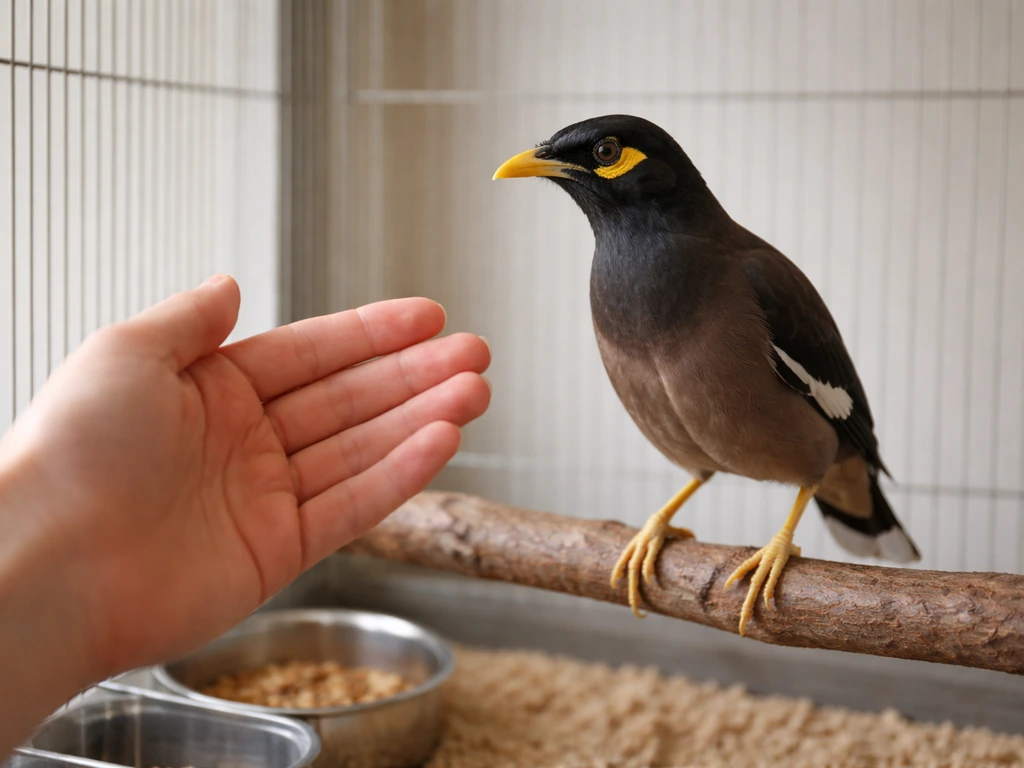
Mynahs are not parrots, and that matters for training. The two species you are most likely to encounter as pets are the hill mynah (Gracula religiosa), famous for its clear, uncanny mimicry, and the common myna (Acridotheres tristis), a scrappier, more territorial bird. Both are highly intelligent and food-motivated, which works strongly in your favor. But they are also naturally wary of hands, quick to stress, and more fragile than a parrot of similar size, so they need a gentler, slower approach to handling.
Taming a mynah does not mean making it a cuddly lap bird. Realistically, a well-tamed mynah is calm around you, steps onto your hand or a perch on cue, accepts hand-feeding without lunging, and tolerates brief gentle handling for health checks. That is genuinely useful, safe for the bird, and achievable. Deep petting tolerance like you might get from a cockatiel is not something most mynahs enjoy, and chasing that goal will set you back.
Your starting point matters a lot. A hand-reared mynah that was raised from a chick will tame far faster than a wild-caught or previously neglected adult. An adult bird with no prior positive human contact may take months, not weeks, to reach the same milestones. Be honest with yourself about where you are starting so your timeline expectations stay realistic.
Set up the right environment before your first session
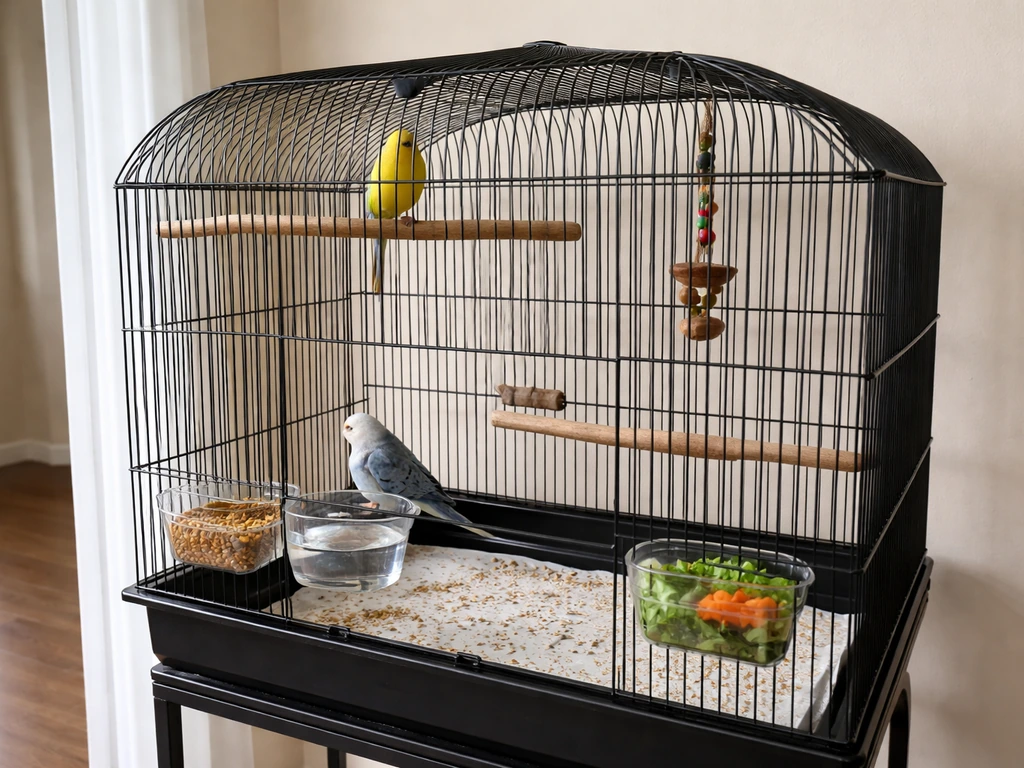
The cage and daily routine are doing taming work even when you are not actively training. Get this part right first, and everything else gets easier.
Cage size and placement
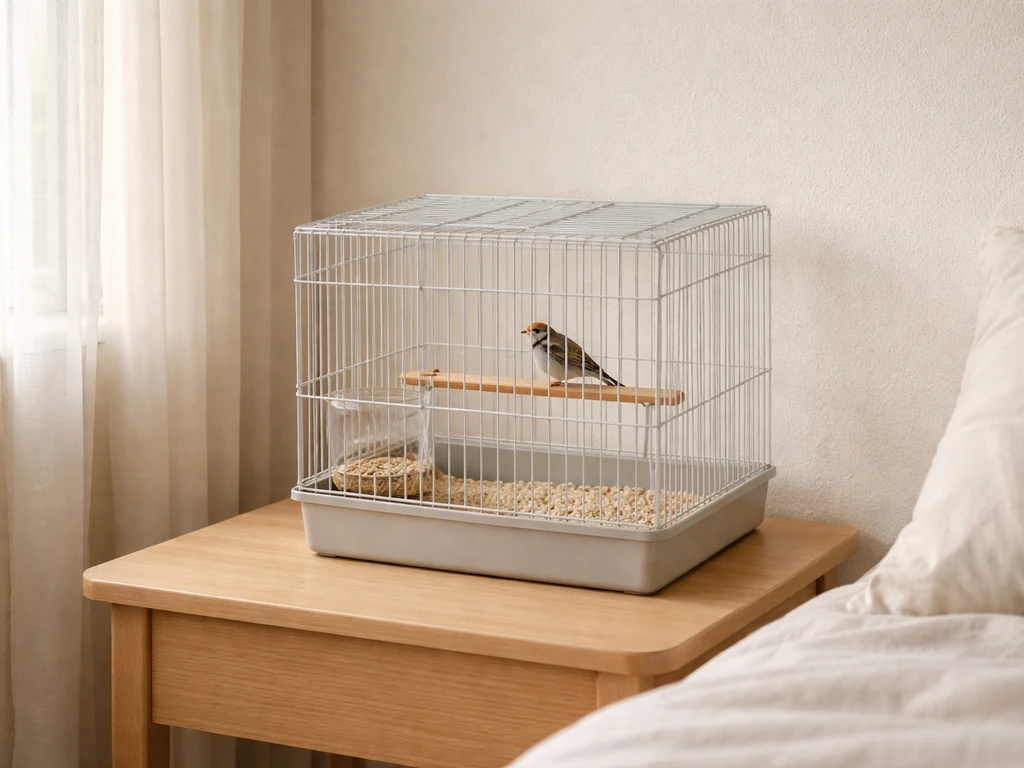
Mynahs are active, fast-moving birds. A minimum cage size of 36 inches wide by 24 inches deep by 36 inches tall is a reasonable starting point, but bigger is always better. Place the cage at roughly your eye level or slightly below, in a room where the bird can observe your normal daily activity without being overwhelmed. A position where the bird can see you moving through the room naturally, without you making direct eye contact or approaching, is ideal for early desensitization. Avoid kitchens (fumes), direct drafts, and spots where the bird has no visual retreat, such as being completely surrounded on all sides with no corner to back into.
Perches and enrichment
Use natural wood perches of varying diameters (roughly 3/4 inch to 1.5 inches for most mynahs) so the bird's feet get a workout and do not develop pressure sores. Place one perch near the front of the cage at a height that will eventually make hand-training easy, and one higher up as a retreat. Mynahs eat a high-volume diet heavy in fruit, with grubs and insects rounding it out. Fresh fruit chunks like papaya, berries, and mango work perfectly as training treats because mynahs are naturally drawn to them, and they are easy to offer from your fingers without the bird having to get too close at first.
Daily routine
Predictable routines reduce background stress dramatically. Feed, clean, and interact at consistent times each day. Cover the cage at the same time each night to signal sleep. Talk to the bird calmly as you go about your day, keeping your voice low and your movements slow and deliberate near the cage. The goal in the first week is simply for the bird to stop treating your presence as an emergency.
Reading the bird: stress signals to watch for
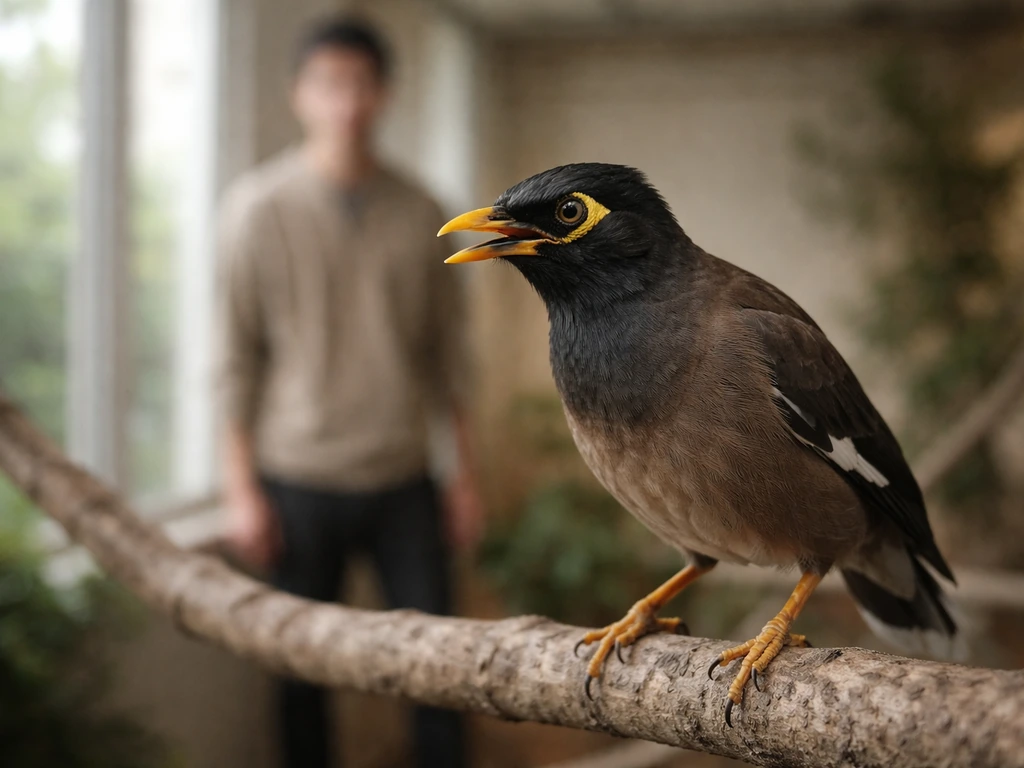
You cannot train a stressed mynah effectively, and pushing through stress signals creates fear conditioning that can take months to undo. Learn to read what the bird is telling you before you reach for a treat or open the cage door.
- Excessive screaming, hissing, or loud alarm calls when you approach
- Panting or open-mouth breathing when you are nearby
- Wings held slightly away from the body and feathers slicked down tight
- Lunging toward or away from you when you move near the cage
- Rapid, shallow breathing or a visibly heaving chest
- Crouching low on the perch or pressing into a corner
If you see any of these, back off immediately. Move out of the bird's line of sight for a few minutes and let it settle. A sudden increase in biting or lunging that seems out of character is worth a vet visit to rule out pain or illness before assuming it is a behavior problem. Mynahs can mask illness well, and a bird that suddenly becomes more defensive may be telling you something is physically wrong.
Step-by-step desensitization and trust building
This is where most people rush and set themselves back. Go slowly, end every session on a positive note, and keep sessions short (five to ten minutes maximum at first). The goal of these early steps is not touching the bird, it is simply making your presence predict good things.
- Sit near the cage at a comfortable distance and just exist. Read, work quietly, or talk softly. Do this daily for several days until the bird is watching you calmly rather than alarming.
- Once the bird is relaxed with your nearby presence, move your chair slightly closer each day. Stop and hold at any distance that produces stress signals, and work back from there.
- Begin speaking directly to the bird in a calm, low voice. Mynahs are vocal learners and often start showing curiosity when they realize your voice is consistent and non-threatening.
- Offer a small piece of fruit through the cage bars without making direct eye contact or reaching in. Hold your hand still and let the bird approach the treat on its own. Do not push the treat toward the bird.
- Repeat the treat-through-bars routine until the bird reliably approaches your hand without hesitation. This can take anywhere from a few days to two or three weeks depending on the individual bird.
- Begin placing your hand inside the cage, resting calmly on or near the lower perch, with a treat resting on your open palm. Do not move your hand. Let the bird make the choice to approach.
Patience here is not just a virtue, it is a strategy. Every time the bird voluntarily approaches you, it is making a behavioral decision that becomes slightly easier to repeat next time. Forcing contact resets that process back to zero.
Positive reinforcement training: hand-feeding, target training, and step-up
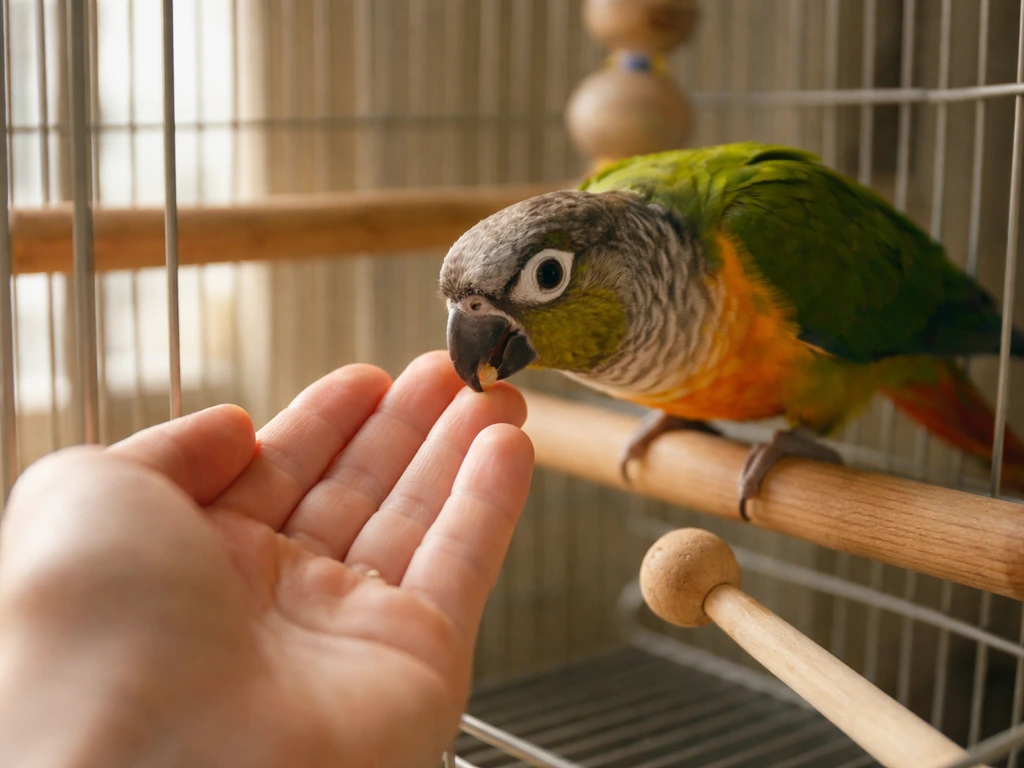
Hand-feeding
Once the bird is taking food from your palm inside the cage without flinching, you are hand-feeding. This is the foundation everything else builds on. Keep sessions to five to eight minutes, offer three to five treats per session, and always let the bird come to you. Do not use food deprivation to motivate the bird; mynahs eat a large volume of moist food and their blood sugar can drop quickly. Keep their regular diet available and use treats as additions, not substitutes.
Target training
Target training is the fastest way to build a communication bridge with a mynah. Use a simple target stick (a chopstick or a pencil with a small ball of tape on the end works fine). Present the target near the bird. The moment the bird touches or approaches the target, blank" rel="noopener noreferrer">immediately mark the behavior with a clicker or a clear verbal marker like 'yes,' and give a treat. Repeat until the bird is reliably touching the target on purpose. Then start moving the target to guide the bird to different positions in the cage. This becomes the foundation for step-up and later for more complex behaviors. A clicker is genuinely useful here because it blank" rel="noopener noreferrer">helps you mark the exact moment of the correct behavior, which helps the bird understand faster.
Teaching step-up
Do not rush to step-up until hand-feeding is solid. When you are ready, start with a dowel or short perch rather than your bare hand if the bird is still uncertain. Press the dowel gently against the bird's lower chest, just above its feet, while positioning a treat slightly above and in front of its head. The bird will naturally step forward and up to reach the treat. The moment one foot lands on the dowel, mark and reward. Build up to two feet, then to your actual hand. Always give the bird a chance to step onto you voluntarily before applying any pressure. Forcing the step-up will produce bites, not compliance. A Reddit post on r/parrots describes progressing to more consistent step-up behavior with clicker and target tools using positive reinforcement Forcing the step-up will produce bites, not compliance..
Add a consistent verbal cue like 'step up' each time you present your hand or the dowel. After enough repetitions, the cue alone will start to prompt the behavior. Keep the cue calm and steady, not loud or repeated multiple times in a row.
Moving to handling: short sessions, managing bites, and flight safety
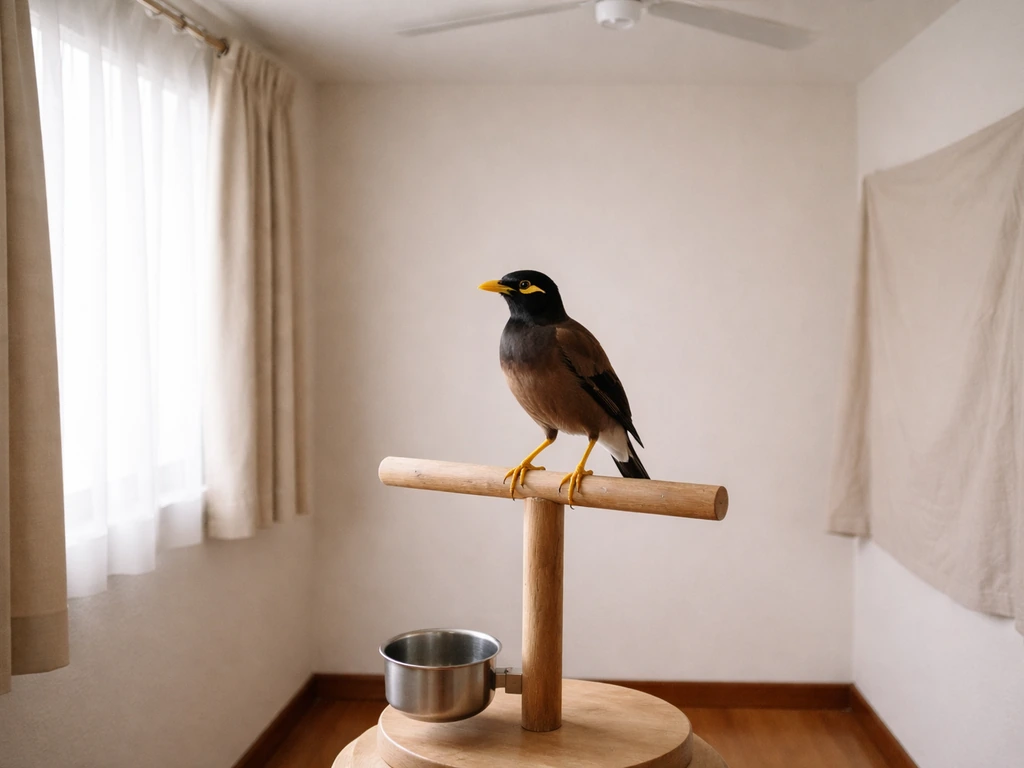
Once step-up is reliable inside the cage, begin stepping the bird out of the cage into a small, bird-proofed room. Close windows, cover mirrors, switch off ceiling fans, and make sure there is no way for the bird to reach a dangerous surface or escape. Mynahs are fast fliers and a bird that is not fully comfortable with handling can bolt and injure itself, or escape if taken near an open door or window by mistake.
Keep out-of-cage sessions short at first, around three to five minutes. Let the bird step back into the cage on its own rather than placing it back in, which keeps the cage feeling like a safe choice rather than a trap. Gradually increase session length as the bird stays calm and relaxed on your hand.
Managing bites
Mynahs have strong beaks and a bite to the fingers, face, or ear is not trivial. Do not punish biting or yell, because that reinforces the bird's fear and makes future bites more likely. Instead, stay calm, move out of the bird's sight for a minute or two, and end the session. Then review what happened: Was the session too long? Did you move too fast? Was the bird already showing stress signals you missed? Biting is almost always the bird telling you it felt it had no other option. Your job is to back up a step in the training plan and rebuild confidence at that level before moving forward again.
Troubleshooting common problems
| Problem | Likely Cause | What to Do |
|---|---|---|
| Bird won't approach treats at all | Too much pressure too soon, or wrong treat | Back up to just sitting near the cage. Try different fruits: papaya, mango, or live mealworms. |
| Bird takes food but bites when you try step-up | Moving to handling before hand-feeding is solid | Return to hand-feeding only for another week. Introduce dowel before bare hand. |
| Bird screams every time you approach | Cage placement causing stress, or early negative associations | Move cage to a quieter spot with more visual cover on three sides. Increase passive presence time. |
| Bird was improving but suddenly regressed | Stressful event (vet visit, loud noise, new pet), or illness | Rule out illness first. Return to the last step the bird was comfortable with and rebuild slowly. |
| Bird won't step up even with treat lure | Not yet motivated enough or hand still triggers fear | Keep training sessions right before a meal when motivation is higher. Practice target training more before attempting step-up. |
| Bird refuses food during sessions | Sessions too long, bird is full, or too stressed to eat | Shorten sessions to 3-5 minutes. Offer treats right when the bird appears calm, not when it is already showing stress. |
Regression is completely normal and does not mean you have failed or that the bird will never tame. It means you hit a threshold. Every bird has them. Back up, re-establish confidence at the previous step, and move forward again more gradually. Progress in bird taming is almost never linear.
Realistic timelines: what to expect and when
These are honest averages based on consistent daily sessions of five to ten minutes. Individual birds vary significantly based on age, history, and personality. Mynahs with high exploration drive and low neophobia (fear of new things) tend to move faster through these stages.
| Training Stage | Hand-Reared Pet Mynah | Adult with No Prior Handling |
|---|---|---|
| Bird tolerates your presence calmly | 2-5 days | 1-3 weeks |
| Takes treats through cage bars | 3-7 days | 2-4 weeks |
| Takes treats from your open palm inside cage | 1-2 weeks | 3-6 weeks |
| Reliable step-up on dowel inside cage | 2-4 weeks | 6-12 weeks |
| Step-up on bare hand, inside cage | 3-5 weeks | 8-16 weeks |
| Calm out-of-cage handling for 5+ minutes | 4-8 weeks | 3-6 months |
What to do today: your starter plan
- Make sure the cage is properly sized, placed at eye level, and away from drafts, kitchens, and high-traffic chaos.
- Identify two or three high-value treats your mynah responds to (try papaya, mango chunks, or mealworms).
- Sit near the cage for ten minutes today, speaking softly and moving slowly. Do not try to touch or feed through the bars yet. Just be present.
- Note the bird's baseline stress level at the start of the session and at the end. Write it down.
- Set a daily session time and commit to it. Consistency matters more than duration.
Track your sessions in a simple notebook: date, session length, what you tried, how the bird responded, and whether you ended on a positive or neutral note. You will see patterns emerge within two weeks that tell you exactly where the bottlenecks are.
Mynahs vs. other pet birds: how does taming compare?
If you have experience taming budgies, parakeets, or conures, you will find mynahs more food-motivated but generally less tactile. If you are also curious about another popular small parrot, this guide can pair well with our tips on how to tame a budgie bird. If you are also looking for parakeet-specific steps, the same trust-building approach can be adapted for how to tame a parakeet bird parakeets. They respond extremely well to the same positive-reinforcement and desensitization principles, but they rarely seek physical affection the way a well-tamed cockatiel or conure does. They are also louder and faster, which makes handling safety a bigger concern. Finches sit at the other end of the spectrum, where hands-off observation is the norm and handling is rarely the goal. Finches are different from mynahs, so if you are looking for how to tame a finch bird, you will usually focus on hands-off trust and minimizing stress rather than step-up handling goals Finches sit at the other end of the spectrum. Mynah training sits somewhere in the middle: you are working toward reliable, calm handling rather than a pet that seeks out petting. If you are comparing this approach to another small bird, you can also review how to tame a canary bird for a related patience and reinforcement framework taming compare.
Legal and ethical considerations for wild or escaped mynahs
This section matters a lot depending on where you are and what kind of mynah you are dealing with. The common myna (Acridotheres tristis) is considered an invasive species in many parts of the world including the United States, Australia, and several Pacific island nations, and is not protected under the Migratory Bird Treaty Act in the US. The hill mynah and some other species, however, may fall under different protections depending on your jurisdiction. The jungle myna (Acridotheres fuscus) has its own regulatory status depending on where it appears.
If you find an injured wild mynah, the legally and ethically correct step in most US states is to contact a licensed wildlife rehabilitator before doing anything else. Multiple states including Washington, Michigan, Tennessee, and Maryland require a state or federal wildlife rehabilitation permit to possess, house, or treat wild birds, even temporarily. Violating these rules can carry fines and can disqualify you from obtaining a permit in the future. Do not attempt to tame or keep a wild-caught native or protected bird species without the proper credentials.
For an escaped pet mynah that lands in your yard and appears tame or is banded, it is reasonable to provide temporary shelter while you contact local animal control or bird rescue organizations. A bird that steps up readily and shows no fear of humans is almost certainly someone's escaped pet rather than a wild bird. In that case, your taming efforts may be as simple as re-acclimating the bird to indoor life while you locate its owner.
If you are keeping a captive-bred mynah purchased from a legitimate aviculture source, none of the rehabilitation permit rules apply. But it is worth confirming the bird's origin documentation, especially if you are in a region where mynah trade is regulated, to make sure you are on the right side of local exotic animal laws.
Above all, the ethical foundation for taming any bird is the same: the bird should have choice in interactions wherever possible, training should be built on positive reinforcement rather than force or deprivation, and the bird's welfare comes before your training timeline. A mynah that is genuinely comfortable with you is a far more interesting companion than one that tolerates handling out of learned helplessness. Take the slow road. It is worth it.
FAQ
How do I tell if my mynah is stressed versus just being cautious during training?
Watch for escalation cues like rapid head bobbing, freeze-and-stare, tail pumping, pinned eyes, or sudden repeated lunges. If the bird’s breathing looks more labored or it stops taking treats mid-session, that is usually stress, not normal caution, so pause and let the bird reset for a few minutes out of reach.
My mynah takes treats from my hand but still bites when I try step-up. What should I do?
Separate feeding from handling. Keep hand-feeding inside the cage, then go back to dowel or perch step-up only after the bird is calmly approaching the treat target. If biting happens, end the session immediately and rebuild from the last successful point (often target touch) rather than repeating step-up attempts right away.
How often should I train, and is daily training enough?
Aim for short sessions once per day, five to ten minutes, because frequent long sessions increase overstimulation for mynahs. If the bird is highly responsive, two short sessions on the same day can work, but keep each one ending positively before the bird shows avoidance or irritability.
What treats are safest and most effective for taming, and how much should I use?
Use small fruit pieces like papaya, mango, or berries as high-value rewards, and keep treats consistent so the bird learns faster. Offer only a few treats per session (about three to five) and keep the regular diet available, because mynahs can reject training if they get full from too many sugary rewards.
Can I tame a mynah without using a clicker or target stick?
Yes. You can mark the exact correct moment with a consistent verbal cue like “yes,” but timing still matters, so practice accuracy. Without a target stick, use a safe target object (same approach each time) or rely on guiding with the perch toward a treat, but avoid sudden movements near the feet and beak.
Should I ever use food deprivation to make mynahs more motivated?
No. Do not reduce their diet to force training, mynahs eat frequently and their blood sugar can drop quickly. If motivation is low, increase treat preference (slightly different fruit), shorten sessions, and improve timing, reward should happen within seconds of the correct action.
My mynah is aggressive right when I approach the cage door. Does that mean I’m doing it wrong?
It often means the bird associates your approach with something stressful. Adjust your routine by reducing direct approach, stand slightly to the side, talk calmly, and reward any calm behavior when the bird notices you. Also check for triggers like cleaning smells, loud household sounds, or drafts that can raise baseline stress.
Is it okay if the bird regurgitates or fluffs and acts extra hormonal during training?
Regurgitation or intense fluffed behavior can signal hormonal readiness or discomfort. Keep training low-intensity during those periods, shorten sessions, and avoid prolonged cuddling or close face contact that can encourage sexual behavior. If it escalates, consult an avian vet to rule out health issues.
How should I handle cage cleaning, since that often happens before or during training?
Clean at a consistent time and avoid overlapping with reward sessions at first. If the bird reacts strongly to cleaning, do a brief desensitization routine: let the bird see you prepare supplies, then reward calm behavior, then clean after the bird has settled.
What should I do if my mynah repeatedly bites during the same step, even after backing up?
Repeated biting suggests either the step is too hard or there is a specific trigger like fatigue, hunger timing, a certain room, or handling angle. Use your training log to identify patterns (time of day, session length, what you were doing right before the bite), then reduce variables, switch step method, and consider a quick check with an avian vet if the pattern suddenly changes.
How do I bird-proof a room for step-out so the bird does not escape or injure itself?
Before opening the cage, close all windows and secure external doors, cover mirrors, and turn off ceiling fans. Remove climbable hazards like unsecured bookshelves, hot surfaces, and dangling cords, and use a clear “return to cage” plan so the bird can choose to step back in within a few minutes.
My mynah regresses after making progress. How do I prevent it from happening again?
Regression usually happens after thresholds, changes in routine, or overly long sessions. To reduce repeats, keep session length capped, end on neutral or positive behavior, avoid introducing two new variables at once (for example, new treats and longer out-of-cage time), and keep the cue and handling method consistent.
Is it safe to put two mynahs together while training one of them?
Not as part of taming. Competition for space and attention can raise stress and distract your training cues, plus territorial mynahs may redirect aggression at hands. If you plan to house multiple birds, do it with proper spacing, separate training routines, and gradual introductions under calm, supervised conditions.
When should I involve an avian vet or behavior professional?
Involve an avian vet if biting increases suddenly, the bird seems unusually defensive, shows reduced appetite, weight change, breathing issues, or appears sore. For training, a certified avian behavior consultant can help if you cannot find a stress trigger or if you keep hitting the same threshold for weeks despite backing up and refining your routine.
Next Article
How to Tame a Finch Bird: Humane Step-by-Step Guide
Humane, step-by-step how to tame a finch bird: trust, setup, routines, troubleshooting, and safe handling options