Petting a finch is genuinely possible, but it requires a different mindset than petting a dog or even a parrot. Finches are wired to be flighty and independent, so most of the work is about earning trust before you ever lay a finger on one. If you follow a patient, step-by-step process, you can absolutely reach a point where your finch tolerates and even enjoys gentle head scratches. Here is exactly how to get there.
How to Pet Your Finch: Safe Taming and Trust Steps
Clara Hayes
6 Apr 2026
Understanding finch temperament and trust levels
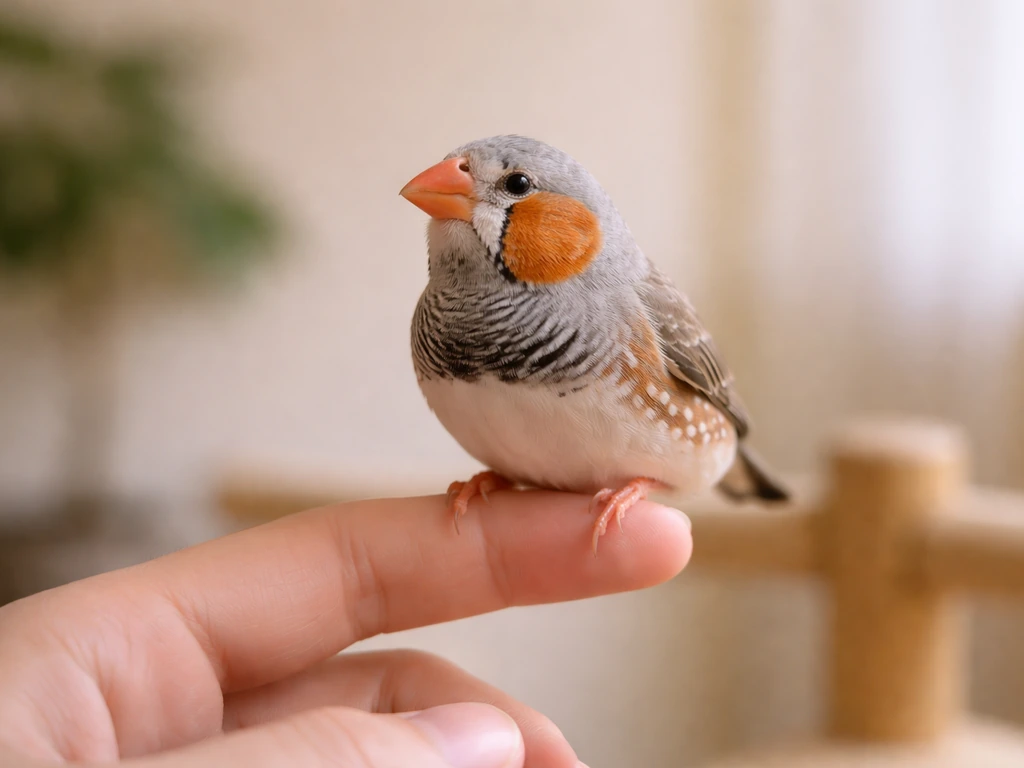
Finches are prey animals with strong flight instincts. Unlike parrots or cockatiels, they were not domesticated to seek human company, so your hand is, by default, a scary predator-shaped thing entering their space. That does not mean they cannot warm up to you, it just means the timeline is longer and the process is gentler than with hookbills.
Zebra finches, the most commonly kept species, are highly social but primarily with other finches. Research on captive zebra finches confirms that individual familiarity shapes approach and avoidance behavior, meaning a bird that has had time to recognize you as a consistent, non-threatening presence will respond very differently than one that sees you as a stranger. Single-housed finches also carry an extra stress load: veterinary sources note that solo finches are at higher risk of stress-related health problems, so if your bird seems especially skittish, having a companion can help regulate its baseline anxiety before you start taming work.
Broadly, finches land somewhere on a trust spectrum. Some hand-raised birds are already comfortable with fingers from day one. Most pet shop birds sit in the middle, curious but cautious. Newly acquired adult birds can be quite fearful at first. Knowing where your bird sits helps you calibrate your expectations and choose the right starting phase in the steps below. If you are new to bird ownership in general, our broader guide on how to get a bird as a pet covers what to look for when selecting a finch that will be easier to tame.
Setting up a safe finch-friendly environment for handling
Before you attempt any hands-on interaction, the environment needs to work in your favor. A stressed finch in a bad setup will never tame well, no matter how patient you are.
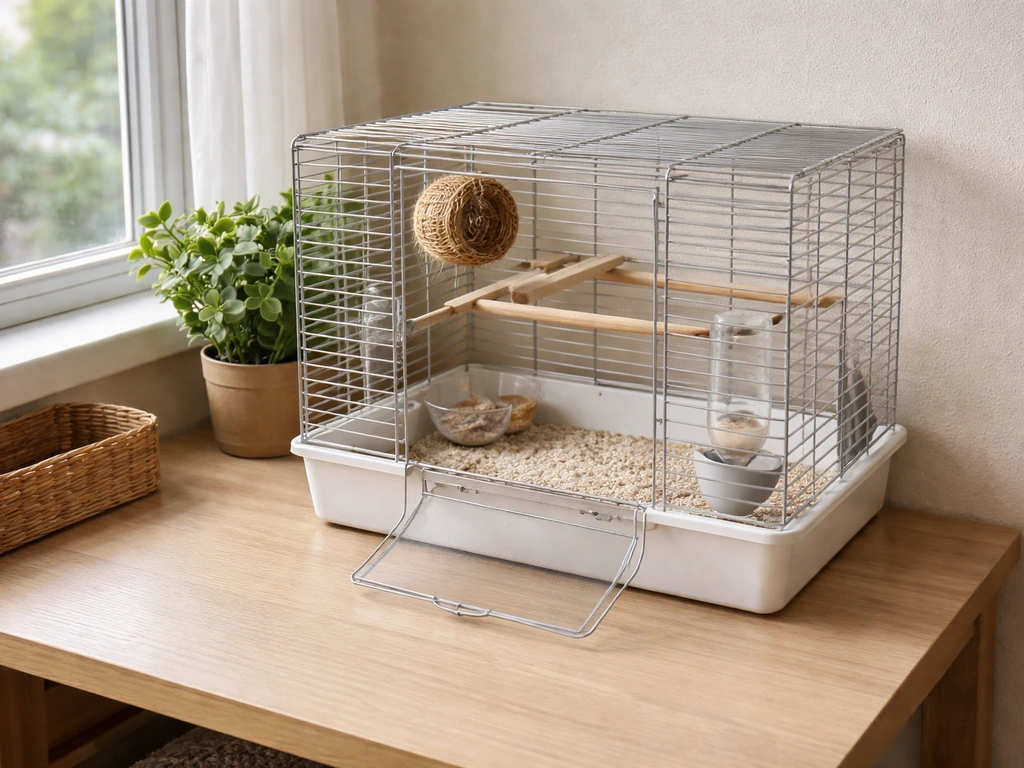
Cage placement matters more than most people realize. Put the cage in a spot that is protected from drafts, open windows, air conditioners, and heaters. Sudden temperature changes and moving air are stressors for finches. A moderate-traffic room where the bird can see normal household activity without being in the middle of chaos is ideal. A wall behind the cage gives the bird a sense of security on at least one side.
Lighting consistency is equally important. Finches do best with predictable light cycles that mimic sunrise and sunset. Switching lights on and off randomly, especially at night, disrupts sleep rhythms and elevates stress. A stressed, sleep-deprived bird will be far more reactive when you approach the cage. Use a lamp on a timer if your room lighting is irregular.
Cage size affects temperament too. Finches rely on flight and horizontal movement for both physical and mental health. A cage that is wide enough to allow short horizontal flights gives your bird an outlet for its energy, which in turn makes it calmer and more tolerant during interaction. A cramped bird is an agitated bird.
Once the cage is set up well, spend the first few days just sitting near it. Talk quietly, move slowly, and go about your routine nearby. Do not attempt to open the cage or insert your hand yet. You are simply teaching the bird that your presence equals calm, not danger. This phase can last anywhere from three days to two weeks depending on the individual bird.
Step-by-step taming and hand-trust routines
The progression below is not a rigid schedule, it is a series of gates. Only move to the next stage when your bird is consistently calm at the current one. Rushing causes setbacks that take longer to undo than the time you saved.
- Voice and presence phase: Sit near the cage daily and speak softly. Offer a small amount of a favorite food (millet spray works well) through the cage bars so the bird starts associating you with good things. Two or three short sessions of about five minutes each day works well. The RSPCA recommends this kind of gentle verbal praise and food-reward pairing across repeated short sessions over several days.
- Hand-outside phase: Start resting your hand on the outside of the cage during feeding. Let it sit there, motionless, while the bird eats. You are teaching the bird that your hand is not a threat before it ever enters the cage.
- Hand-inside phase: Open the cage and slowly insert your hand, palm up or palm flat. Do not move it. Leave it for several seconds and then remove it calmly. Repeat this daily. Some birds will touch your motionless hand as they pass by naturally, which is a great sign. Others will fly to the far perch and wait you out, and that is fine too.
- Extended hand-inside sessions: Work up to keeping your hand inside for five minutes at a time. Pair it with treats placed on or near your palm to encourage approach. The goal is for the bird to visit your hand voluntarily, not because it has been cornered.
- Belly-brush prompt: Once the bird regularly perches near or on your hand, you can gently brush the underside of its belly with a fingertip to prompt a step up. Most finches will hop onto your finger when given this cue. This is a low-force, controlled way to establish finger taming without grabbing.
- Gentle petting introduction: Only begin petting attempts once the bird is stepping onto your finger or sitting calmly on your hand for short periods. See the next section for exactly how to do this.
If you want to understand the broader principles behind getting any bird comfortable with touch before applying them specifically to your finch, the general guide on how to touch your bird is worth reading alongside this one. The conditioning logic is the same, the finch-specific adjustments are in the timing and the gentleness.
How to pet a finch (where, when, and what to avoid)
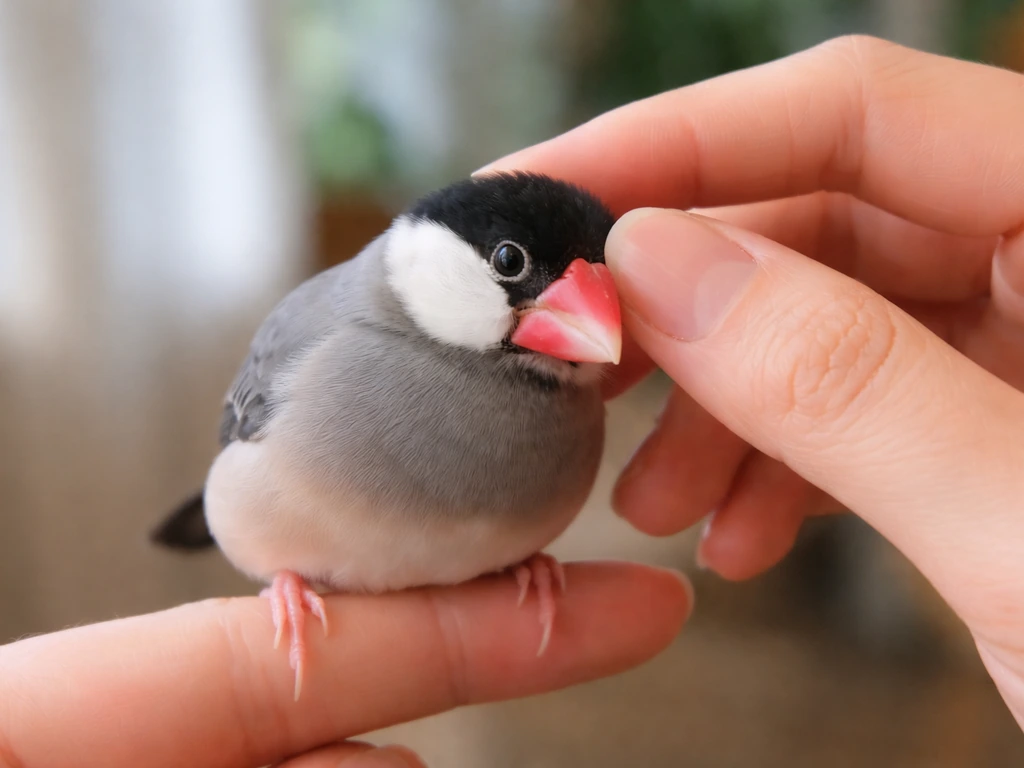
Once your finch is hand-tame and calm on your finger, you can begin introducing petting. The key rules here are location, speed, and reading body language in real time.
Where to pet a finch
Stick to the head and neck only. That means the top of the head, around the cheeks and chin, and the back of the neck. These are the areas birds groom each other in the wild (called allopreening), so they are naturally more comfortable with contact there. A bird that is enjoying the attention will often turn its head sideways to offer you better access to its cheek or chin area. That is your green light to continue. For a deeper look at the principles behind locating the right touch points on any bird, the article on where to pet a bird gives helpful species-wide context.
Do not pet the back, wings, or tail. For larger parrots, back and wing stroking can trigger hormonal responses. For finches, it mostly just feels threatening and invasive, like a predator pinning them. Keep all contact from the neck up.
How to approach and touch
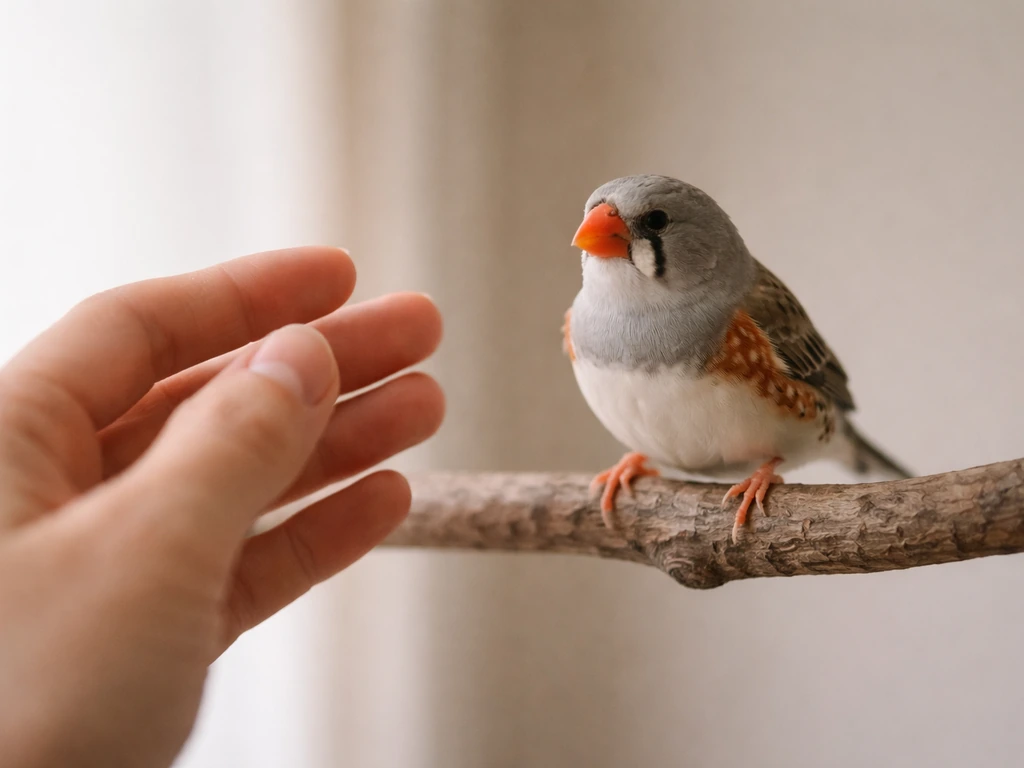
Always approach slowly and from the front so the bird can see your hand coming. Coming in fast from above mimics a hawk strike and will send even a tame finch into a panic. Use one fingertip and start with a single, slow stroke from the back of the head toward the neck. Keep the motion smooth, predictable, and brief at first, just two or three strokes, then pause and let the bird respond. Your goal is to build a positive association with touch, so short and pleasant beats long and tolerated.
The RSPCA's desensitization approach is helpful here: if your bird is not yet comfortable with direct finger contact, you can drape a soft cloth over your hand and use the covered hand to touch the back of the bird's head near the lower jaw first. This takes the skin-contact novelty out of the equation and gives the bird something less alarming to get used to before bare-finger petting begins.
When to pet and when to stop
Pet your finch when it is calm, alert, and has been interacting with you willingly. Avoid sessions right after cage cleaning, feeding changes, or any stressful event. Keep petting sessions short, two to four minutes maximum to start. Watch for the bird leaning into your finger, closing its eyes slightly, or turning its head to give you access. Those are go signals. If it shuffles away, fluffs up, opens its beak in a warning, or tries to fly off, stop immediately and let it settle. Petting a reluctant bird just teaches it that your hand is something to escape from.
For a broader picture of how to pet a bird safely across different species, that guide covers the general do's and don'ts that apply beyond finches as well.
If you need to pick up your finch
Sometimes handling is necessary even when a bird is not fully tame, such as for health checks or cage maintenance. If you must pick up your finch, place your palm across its back and wings with your middle and index fingers positioned gently around its neck. This prevents the bird from struggling or pecking without requiring you to squeeze. Use this hold only when necessary and keep it brief. It is restraint, not bonding, and should not substitute for the patient taming process described above.
Troubleshooting fear, biting, and setbacks
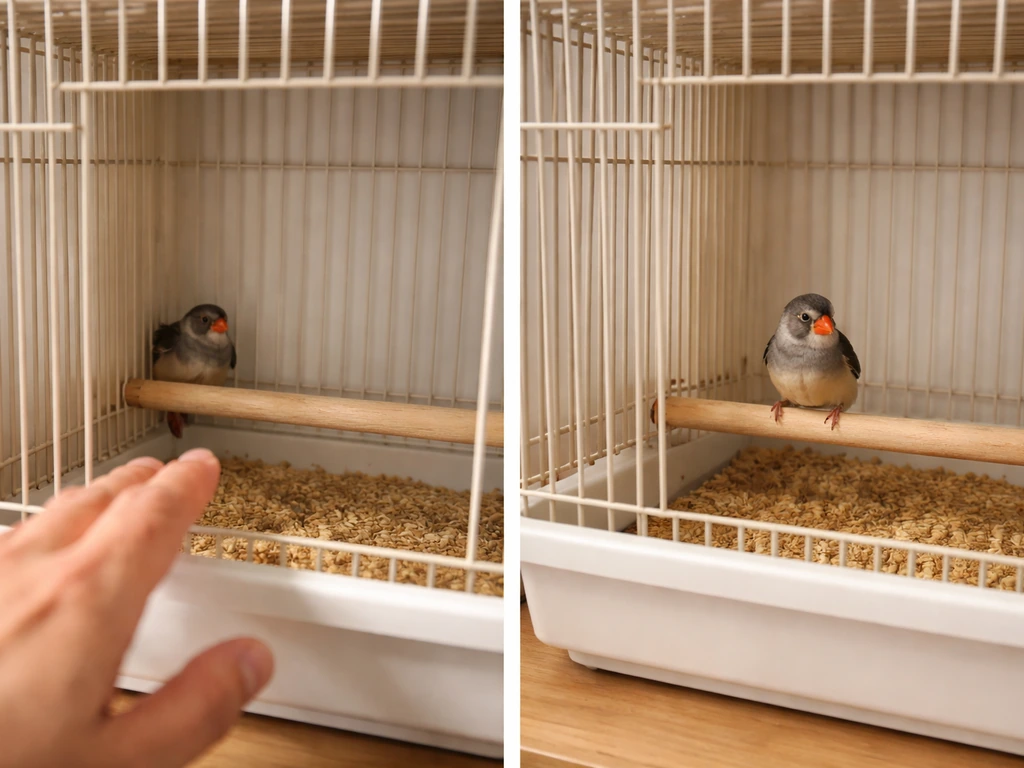
Setbacks happen with every bird. A loud noise during a session, an accidental sudden movement, or even a bad day for the bird can reset progress by days or more. The most important thing is not to take it personally or escalate your approach out of frustration.
If your finch flies to the back of the cage every time your hand enters, you have moved too fast. Go back to the hand-outside phase for a few days and rebuild from there. Flying away is not failure, it is communication. The bird is telling you it is not ready for that stage yet.
If your finch bites, resist the urge to pull your hand back quickly. PetMD advises that if a bird bites while trying to step up, you should not pull away or yell, because that can teach the bird to be afraid of the moving hand and of you resist the urge to pull your hand back quickly. A sharp retraction teaches the bird that biting works as an escape tool and it will use it more. Instead, stay calm, pause your hand, and end the session by slowly withdrawing. Chewy's conditioning advice is useful here: keep your hand associated only with good things by ending sessions before the bird gets to the point of biting. Predict the bite before it happens by watching body language.
Here are the stress and illness signals to watch for that should cause you to immediately pause a session and reassess:
- Fluffed feathers during or after handling (not just during normal resting)
- Open-mouth breathing or panting at any point
- Tail bobbing in sync with labored breathing
- Repeated biting even after sessions have been reduced in duration
- Visible irritability or agitation that persists outside of handling sessions
- Refusing food or sleeping more than usual after sessions
Fluffed feathers, open-mouth breathing, and tail bobbing can indicate either stress or illness. LafeberVet notes that respiratory difficulty or dyspnea can include open-mouth breathing, increased sternal motion, and tail bobbing open-mouth breathing, and tail bobbing. If these signs persist beyond a handling session or appear when the bird is alone in its cage, contact a vet rather than continuing taming work. A sick bird should not be in a taming program.
One common problem that surprises new owners is a bird that seemed to be progressing and then suddenly regresses. This often happens after a change in the environment (new furniture near the cage, a different daily schedule, a new pet in the house). Go back one phase in the taming steps and rebuild trust from that point. Finches are sensitive to change, and regression is almost always fixable with patience.
Building a repeatable routine and realistic timeline
Consistency is the biggest factor in taming success with finches. Two or three short sessions per day, every day, outperforms one long weekly session by a wide margin. Five minutes of calm, positive interaction daily builds familiarity faster than anything else.
Here is a realistic timeline for a starting-from-scratch finch that is not hand-raised:
| Phase | Typical Duration | What You're Doing | Success Signal |
|---|---|---|---|
| Voice and presence | Days 1–7 | Sit near cage, talk softly, offer treats through bars | Bird eats normally while you're nearby |
| Hand-outside cage | Days 5–14 | Rest hand on cage exterior during feeding | Bird no longer flinches at hand near cage |
| Hand-inside cage (stationary) | Days 10–21 | Insert hand, leave still, withdraw calmly | Bird passes near hand without fleeing |
| Hand-inside (treats on hand) | Days 14–28 | Treats on palm, encourage approach | Bird lands on or touches your hand voluntarily |
| Belly-brush step-up | Weeks 3–6 | Prompt finger step-up with belly brush | Bird steps onto finger reliably |
| Gentle petting introduction | Weeks 4–8+ | Single strokes on head and neck, short sessions | Bird leans in or closes eyes during touch |
Some birds move through these phases in three to four weeks. Others, particularly adult birds that had little human contact early in life, take three to six months. Both are normal. The worst thing you can do is skip phases because the bird seems calm in one moment. Consistent behavior across multiple sessions is what tells you it is ready to move forward.
One thing that helps sustain the routine is making it enjoyable for the bird beyond just the petting itself. Finches that are well bonded with their owner often enjoy gentle mimicry sounds, the presence of their person near the cage during the bird's natural active periods (usually morning and late afternoon), and the predictability of knowing what comes next. You are not just training a behavior, you are building a relationship.
Once your finch is comfortable with head and neck petting, you might notice it grooming around your fingernail or trying to engage with your hand in a social way. This is the bird treating your hand like a companion, which is about as good as it gets with this species. If you want to understand what that social grooming behavior looks like from the bird's perspective, the article on how to preen a bird explains the role of allopreening in bird bonding and how you can gently participate in it.
Some owners ask whether it is okay to kiss their finch once a bond is established. It is worth knowing the hygiene and safety considerations involved before doing that. The article on how to kiss a bird covers what is safe and what to be cautious about. And if you have been doing all your taming work inside the Finch mobile app and landed here looking for in-app guidance instead, the dedicated walkthrough on how to pet bird on the Finch app is what you need.
The bottom line is that petting a finch is a reward that comes at the end of a trust-building process, not the starting point. Follow the phases above, keep sessions short and positive, read your bird's body language in real time, and you will get there. It just takes longer than you expect and is more satisfying than you think.
FAQ
How long should I wait before I even try to touch my finch after bringing it home?
Plan on at least the early “sit near the cage” phase, 3 to 14 days, even if the bird looks curious. If the finch is still flying off, calling anxiously, or avoiding your presence, do not advance to finger contact yet, keep your hand outside the cage area for longer and work up gradually.
Can I start petting if my finch is calm but won’t let me get close to its head?
Yes, but use a lower-intensity version first. Try brief, covered-hand contact or touch the perch area the bird chooses to approach, then only increase to bare-finger head strokes once the bird leans in and stays put. If it tolerates your hand without leaning forward, you are not ready to pet.
What if my finch keeps biting or nipping during attempted head scratches?
Treat bites as a signal to end the session sooner, not to “tough it out.” Stop at the first warning body language, withdraw slowly, and rebuild from the earlier gate (presence without touch or covered-hand touch). Avoid fast hand retraction, it can turn the bite into a learned escape tactic.
Is it safe to pet my finch when it is on the bottom of the cage or on the floor?
It can be riskier. Ground level can increase startle responses because the bird has less height and escape options, and your hand may look more predator-like. Aim for petting when the bird is perched and alert, with your approach coming from the front and taking place at eye level when possible.
Can I pet my finch through the bars or should I only pet through an open door?
Prefer contact when you can keep your hand slow, controlled, and stable through the most natural opening, usually the open door. Petting through bars can be more unpredictable, and the bird may react defensively if it cannot choose distance. If you do pet through bars, keep sessions extremely short and stop if the bird flinches.
Do all finch species respond the same way to petting?
No. Zebra finches are often more readily social, but other finches can be more flighty or less interested in human contact. Adjust expectations by your bird’s trust spectrum, use shorter sessions, and do not assume that tolerance for head contact at one time means the bird will accept it the next day.
My finch fluffs up or tail bobs during petting. Does that mean it is enjoying it?
Not automatically. Fluffing and tail bobbing can mean stress or discomfort, especially if the bird also opens its mouth, pants, or tries to move away. If those signs appear together or persist beyond the session, stop and reassess the setup, timing, and health status with a vet if it continues.
How do I tell the difference between “happy petting” and “I’m overwhelmed”?
Look for repeatable comfort cues: leaning into your fingertip, relaxed posture, slight eye-softening, and turning its head to offer access to the cheek or chin area. Overwhelm cues include rigid body tension, rapid retreat, repeated flapping, beak opening as a warning, or any attempt to launch away. When in doubt, end the session early.
What should I do if my finch regresses after a routine change, like new furniture or a new schedule?
Go back one stage and rebuild trust from there, not just “resume petting.” Remove or reduce the biggest triggers near the cage if possible, keep hand interactions brief, and use consistent timing for visits. Regression usually improves with patience and a stable, low-stress routine.
How many times per day, and how long, is ideal for learning how to pet a finch?
Use short, frequent sessions, 2 to 3 times daily, with 5 minutes total as a solid starting point. When you move into direct petting, begin with 2 to 4 minutes maximum. Consistency matters more than duration, a calm routine beats occasional long sessions.
Should I pet my finch right after feeding or after I clean the cage?
Avoid it. After feeding changes or cage cleaning, stress and disruption are higher, and your hand can feel associated with sudden changes. Wait until the environment feels stable again, and let the bird settle into normal behavior before attempting any contact.
When can I stop using a cloth-covered hand and move to bare fingertips?
Move on only when the bird reliably accepts the covered touch without defensive behavior and shows clear approach cues during the session. If the bird still startles, avoids, or leans away, keep the cloth method longer. The transition should be gradual, one small step at a time.
Is it okay to pet my finch outside the taming phase if I just want bonding?
If it is fully tame and the bird is choosing contact, bonding petting is fine, but always keep to safe areas and short sessions. If the finch is not consistently hand-tame, “casual petting” is one of the most common reasons progress stalls, because you can accidentally skip the readiness cues.
Next Articles
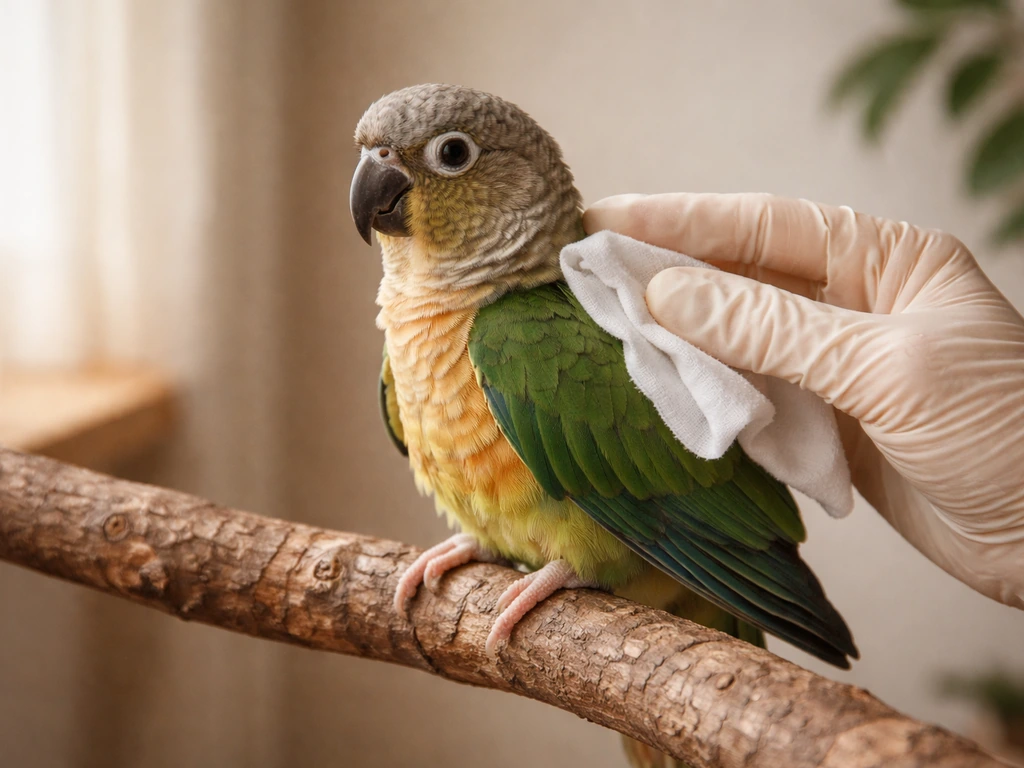
How to Preen a Bird Safely: Step-by-Step Guide
Learn safe, humane steps to help a pet or backyard bird preen, with do nots, timelines, and when to seek care.
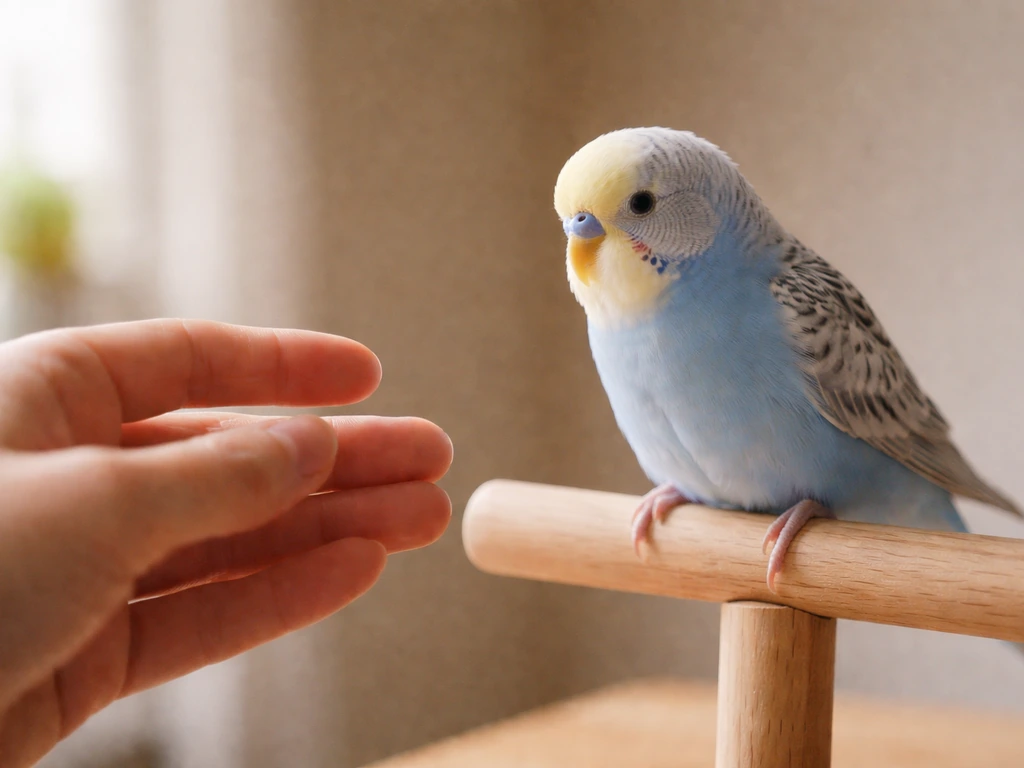
How to Pet a Bird Safely: Step by Step Guide
Step-by-step how to pet a bird safely, using right approach, hand position, timing, body language, and wild bird ethics.
How to Catch a Bird Without Killing It: Humane Steps
Humane, trap-free steps to catch a wild backyard bird safely, minimize stress, contain it calmly, then release or reloca