You can absolutely share a close, affectionate moment with your bird, but 'kissing' the way humans do it is something most birds find stressful and even dangerous for both of you. The real goal here is earning your bird's voluntary closeness through trust, reading their body language, and using safe alternatives that feel just as sweet without the risk. Think gentle head scritches, cheek-to-feather contact on your bird's terms, and beak touches your bird chooses to initiate. That's what a bird kiss actually looks like, and it's far more rewarding than anything forced.
How to Kiss a Bird Safely: Consent and Humane Training
Clara Hayes
17 May 2026
What 'Kissing a Bird' Actually Means (and Why Consent Matters)
When most people search for this, they want to know how to get closer to their bird in an affectionate way. That's a wonderful instinct. The problem is that direct face-to-face contact, pressing your lips to a bird's beak or face, skips every step that makes that closeness meaningful and safe. Birds don't understand that gesture the way we mean it. A beak coming at their face can feel threatening, and a bird that feels cornered will bite, struggle, or shut down entirely. Forced contact doesn't build a bond; it erodes trust.
There's also a genuine health angle. The CDC identifies psittacosis (caused by Chlamydia psittaci) as a disease that can spread through beak-to-mouth contact, and there's no vaccine available to prevent it. Zoonotic disease risk from pet birds is real and should not be underestimated, especially for anyone who is immunocompromised. This doesn't mean you can't be close with your bird; it means you should be smart about how you do it. Letting a bird press its beak gently to your cheek or finger on its own terms is very different from pressing your mouth to its face.
So when you see a bird owner whose cockatiel tucks its head against their cheek or whose budgie taps its beak lightly on their nose, that's not something they trained in a day. It grew out of consistent trust-building over weeks or months. The bird chose that contact. That's the version worth working toward.
Bird Safety First: How to Tell If Your Bird Is Comfortable or Stressed
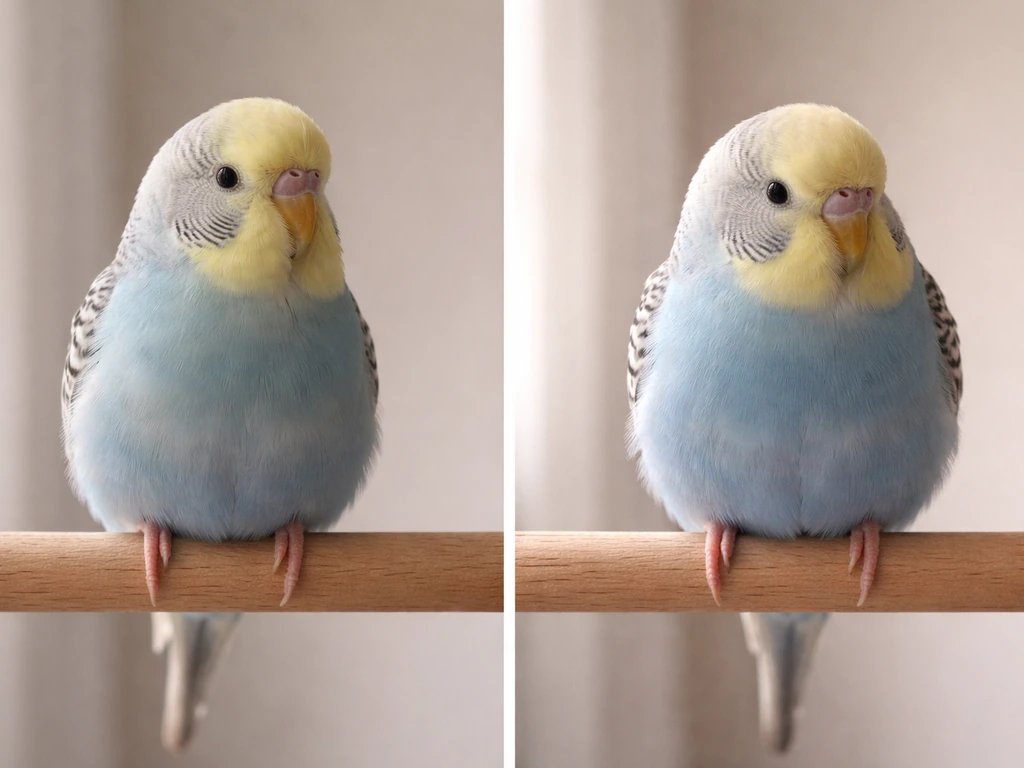
Before you do anything else, you need to be able to read your bird. This is the single most important skill in the whole process. A comfortable bird looks loose and easy: feathers lie smooth and close to the body, eyes are soft and may half-close, the bird leans toward you or stands upright without leaning back, and it may make soft vocalizations. A stressed bird is telling you to stop, and the signals are very clear once you know what to look for.
- Feathers puffed up and held tight to the body simultaneously (different from casual fluffing after a nap)
- Crouching low and flat, or leaning as far back as possible away from your hand
- Rapid, shallow breathing or open-mouth breathing when not hot
- Eye pinning (rapid pupil dilation and constriction) paired with a stiff, forward-leaning posture
- Tail fanning or wing spreading without launching into play
- Hissing, clicking, or repeated alarm calls
- Lunging or feinting toward your hand without making contact
- Regurgitating or freezing completely still
Eye pinning on its own is worth a careful look. It can mean excitement in a happy bird that's engaging with you, but paired with a stiff posture or leaning forward aggressively, it's a warning sign. Context is everything. Always assess posture and environment together, not just one signal in isolation. If you're seeing two or more stress signals at once, stop, back off, and give the bird a few minutes to settle before trying again.
The Step-by-Step Path to Earning Real Closeness
Trust with birds is built in layers. You can't rush a layer without undermining the next one. Here's the sequence that actually works, no matter what species you're starting with.
Stage 1: Just Being Present (Days 1 to 7)
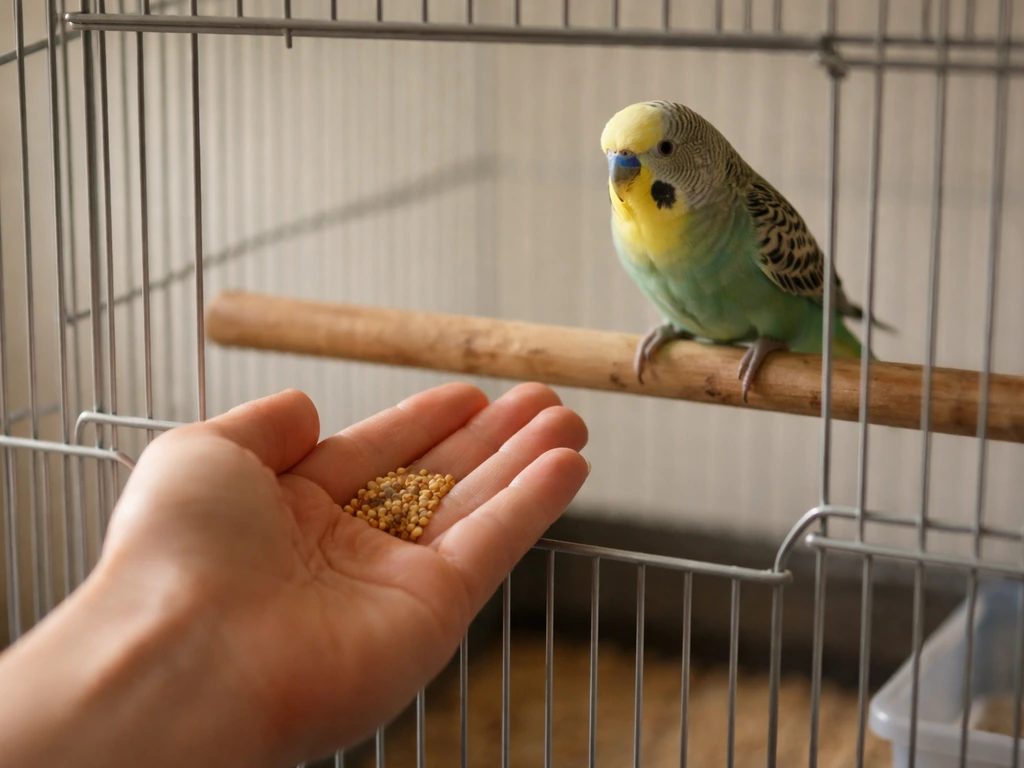
Sit near the cage for 10 to 15 minutes a day and do nothing threatening. Read, talk quietly, eat a snack. Let the bird get used to your presence without any pressure to interact. Move slowly. Don't stare directly at the bird (a prolonged direct stare is predator behavior). If the bird approaches the cage bars near you, that's progress worth noting.
Stage 2: Hand in the Cage (Days 5 to 14)
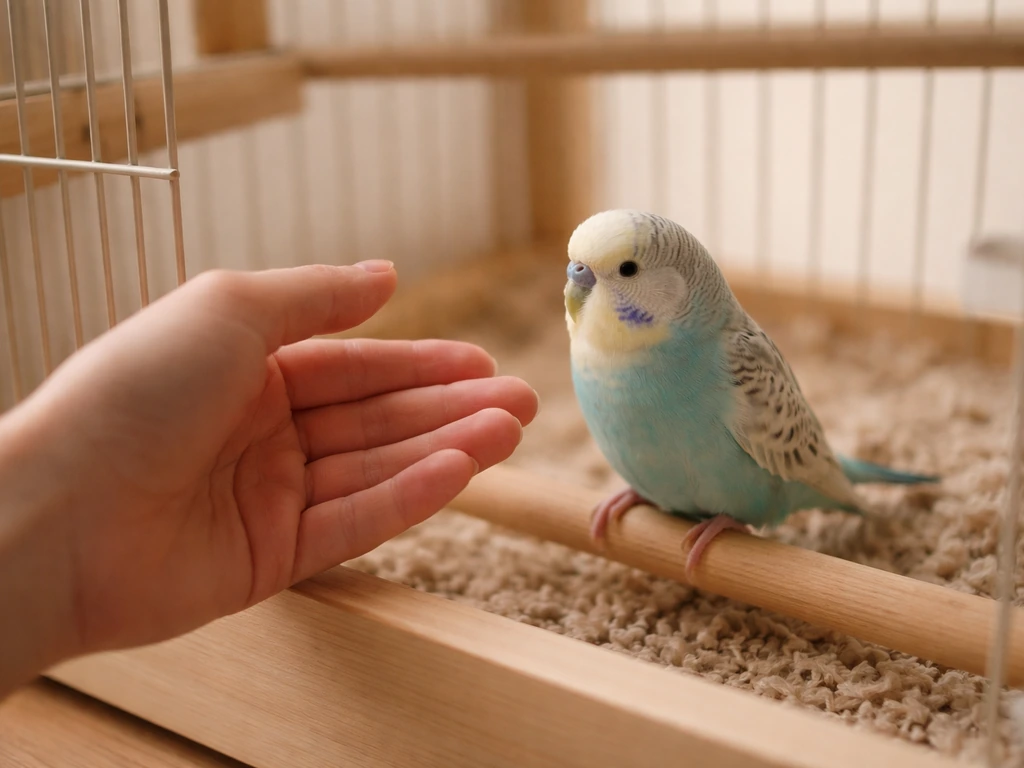
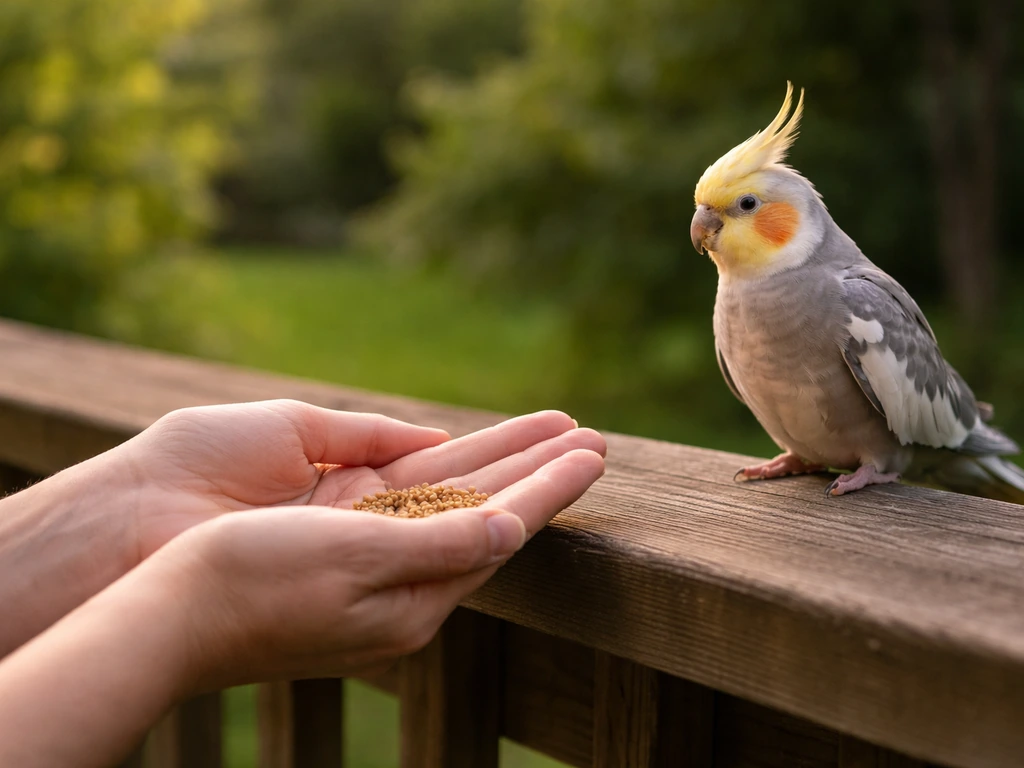
Once your bird is relaxed with you nearby, start placing your hand calmly inside the cage, palm up, and just leave it there. Don't reach for the bird. Offer a small, high-value treat on your palm, like a bit of millet for smaller birds or a piece of almond for larger parrots. If the bird approaches to eat, great. If not, try again the next session. Keep sessions around 5 to 10 minutes, two or three times a day. Shorter sessions end on a positive note and prevent fatigue and frustration on both sides.
Stage 3: Step-Up Training (Week 2 and Beyond)
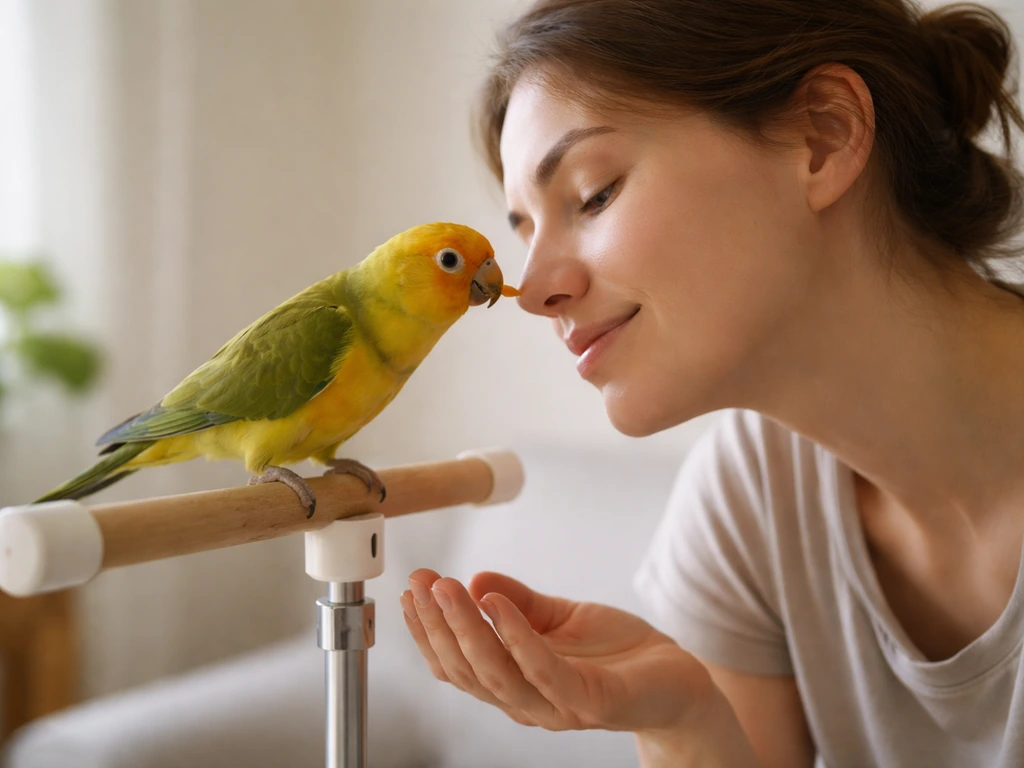
Once the bird takes treats from your hand consistently, introduce the step-up cue. Hold one finger or your whole hand horizontally at the bird's lower chest and say 'step up' in a calm, even tone. When the bird steps on, reward immediately with a treat and verbal praise. If the bird is hand-shy or has a biting history, a short perch or dowel can stand in for your finger at first. Shaping works well here: reward any approximation of the behavior, like just leaning toward your hand, then reward stepping one foot up, then the full step-up. Each small success gets a reward. When the bird does something especially well, offer a jackpot reward, a bigger treat or a longer scratch, to reinforce that particular breakthrough.
Stage 4: Building Voluntary Closeness to Your Face (Week 4 and Beyond)
Once your bird is stepping up reliably and sitting calmly on your hand, you can start gently bringing the bird closer to your face, at the bird's own pace. Turn your head slightly sideways, offer your cheek rather than looking straight at the bird. Let the bird explore. Some birds will approach your cheek or hair out of curiosity. If the bird taps its beak against your cheek or nibbles your hair, that's a bird-initiated 'kiss.' Don't force it. Let the bird decide how close is close enough. This is the moment you've been working toward, and it means far more because the bird chose it.
Species-Specific Tips
The general sequence above applies broadly, but each species has its own temperament and physical needs. Here's what to adjust depending on who you're working with.
| Species | Typical Temperament | Preferred 'Kiss' Style | Key Caution |
|---|---|---|---|
| Parrots (medium to large) | Highly social, emotionally complex, can be territorial | Cheek rubs, preening your hair or eyebrows, beak tap on hand | Biting risk is high with forced contact; watch for eye pinning plus forward lean |
| Cockatiels | Gentle, affectionate, often crest-expressive | Head scritches behind the crest, cheek nuzzle, soft whistle back-and-forth | Crest position is your primary mood indicator; flat crest back means threat or fear |
| Budgies | Curious, social, quick to warm up with patience | Forehead tap on your nose or finger, mirror-style beak touching | Small and quick to bite if startled; very short sessions work best early on |
| Finches | Generally not hands-on birds; prefer bird company | Presence and calm proximity; not typically a hands-on cuddly species | Avoid handling unless medically necessary; focus on enrichment and observation |
| Backyard/Wild Birds | Not tame; no handling expected or appropriate | None; maintain respectful distance | Legal and health risks apply; never attempt contact (see section below) |
Parrots
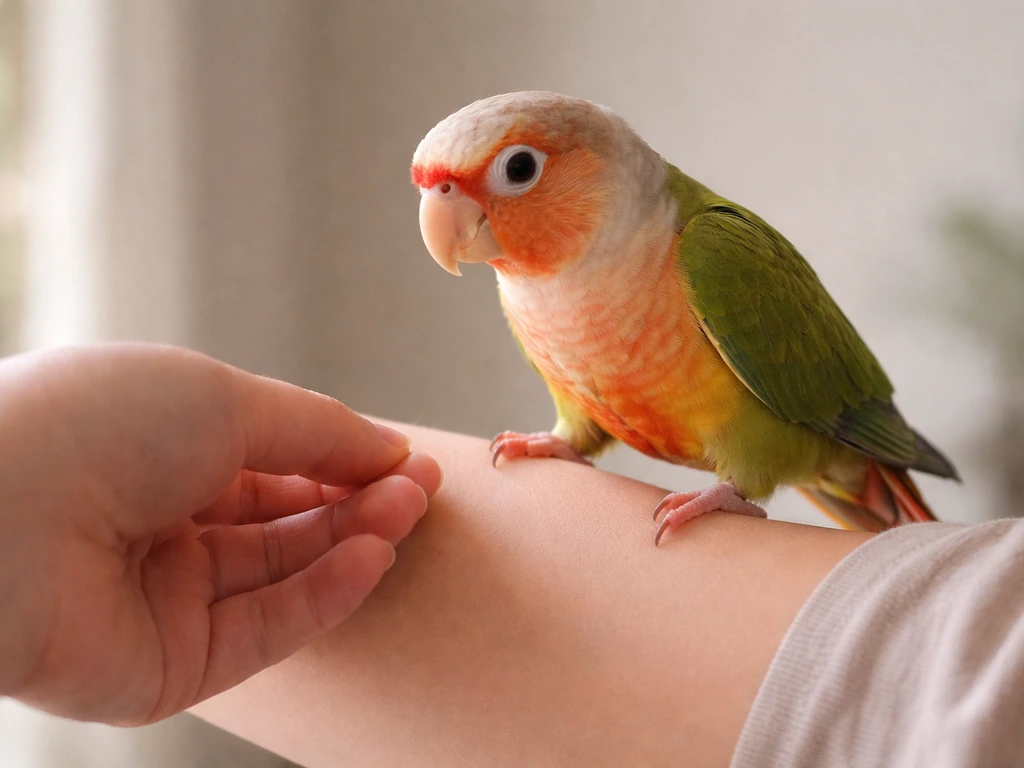
Parrots are emotionally intelligent and bond deeply, but that same intensity means they can be unpredictable if they feel pushed. A parrot that trusts you might preen your hair, nibble your ear gently, or press its beak against your cheek in a calm, exploratory way. That's the version to aim for. Never move your face quickly toward a parrot, and never put your lips near the beak. A startled or overstimulated parrot bite can be serious, and beak-to-mouth contact carries disease risk. Read posture constantly during close-contact moments.
Cockatiels
Cockatiels are often the easiest species to build this kind of close relationship with. A tame cockatiel will often seek out contact with your face on its own once trust is established. The crest tells you almost everything: relaxed and slightly raised means content; fully erect means alert or excited (which can be good or overstimulated); flat back against the head means scared or defensive. Soft cheek scritches on the orange cheek patches are almost universally loved. A cockatiel pressing its head into your fingers and chittering quietly is about as close to a kiss as it gets.
Budgies
Budgies can be incredibly affectionate but they're tiny and bite-prone when surprised. Early taming with millet and short, patient sessions pays off fast. A tame budgie may tap its beak against your fingernail, lip, or nose out of curiosity. Some budgies will preen your eyelashes or eyebrows, which is deeply trusting behavior. Because of the psittacosis risk, avoid letting a budgie tap its beak on your lips directly. A cheek or nose tap is lower-risk and still feels special. Keep sessions to 5 to 10 minutes while building trust.
Finches
Finches are a different category entirely. They are not naturally hands-on birds and prefer the company of other finches over human interaction. Trying to handle or kiss a finch causes significant stress. The goal with finches is calm coexistence: they enjoy watching you, singing in response to your voice, and having enriched, spacious environments. If you want hands-on affection in your bird family, a finch is not the right species for that. Love them by giving them space and a good flock. Petting or kissing a finch is covered more in depth in guides on how to pet a bird and how to touch your bird for species-specific context. If you want step-by-step guidance for the finch side, start with our guide on how to pet a bird in the finch app, safely and at your bird's pace how to pet bird on finch app. If you specifically want to learn how to pet bird in finch, start by focusing on calm coexistence and safe, hands-off interaction rather than forcing closeness. If you want more hands-on help, follow our guide on how to pet a bird and what to do based on your bird’s comfort cues.
Backyard and Wild Birds
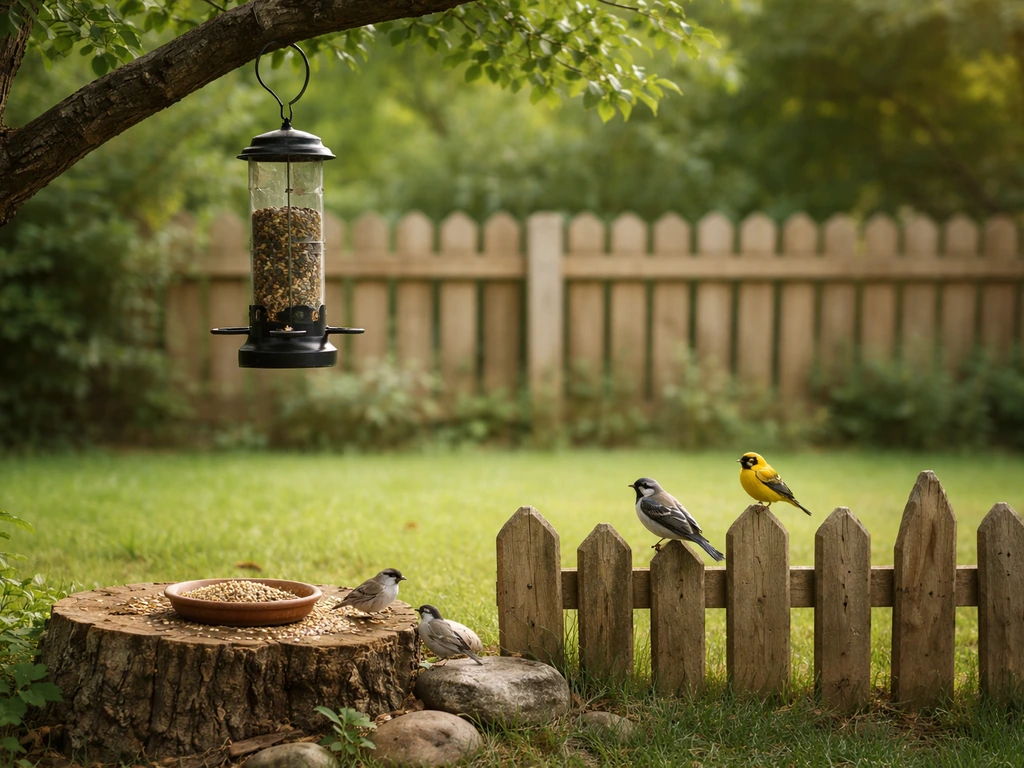
For wild birds in your yard, there is no safe version of physical contact. Beyond the ethical and legal issues with handling wild birds, the health risks are real and direct. The CDC has linked Salmonella outbreaks to touching wild songbirds, bird feeders, and birdbaths, and warns that getting sick can happen when you touch your mouth with unwashed hands after contact. Always wash your hands thoroughly after any interaction with wild bird areas. If you find an injured wild bird, contact a licensed wildlife rehabilitator. Do not attempt to handle, pet, or bring the bird to your face. Enjoy wild birds from a respectful distance with binoculars, a well-placed feeder, or a birdbath.
How to Do Affectionate 'Kisses' Safely: What to Do and What to Skip
Once your bird is comfortable and approaching your face voluntarily, here's how to make the most of that closeness while keeping both of you safe.
Safer Alternatives That Feel Just as Affectionate
- Offer your cheek turned sideways and let the bird press or preen against it
- Hold your bird near your face and breathe slowly and calmly so your bird learns your scent
- Let the bird tap its beak gently to your finger, knuckle, or cheek instead of your lips
- Mimic your bird's soft sounds back to it (contact calls, quiet chirps) while it's close to your face
- Give gentle head scritches behind the ear feathers, around the crest, or at the nape of the neck
Where to Touch (and Where Not To)
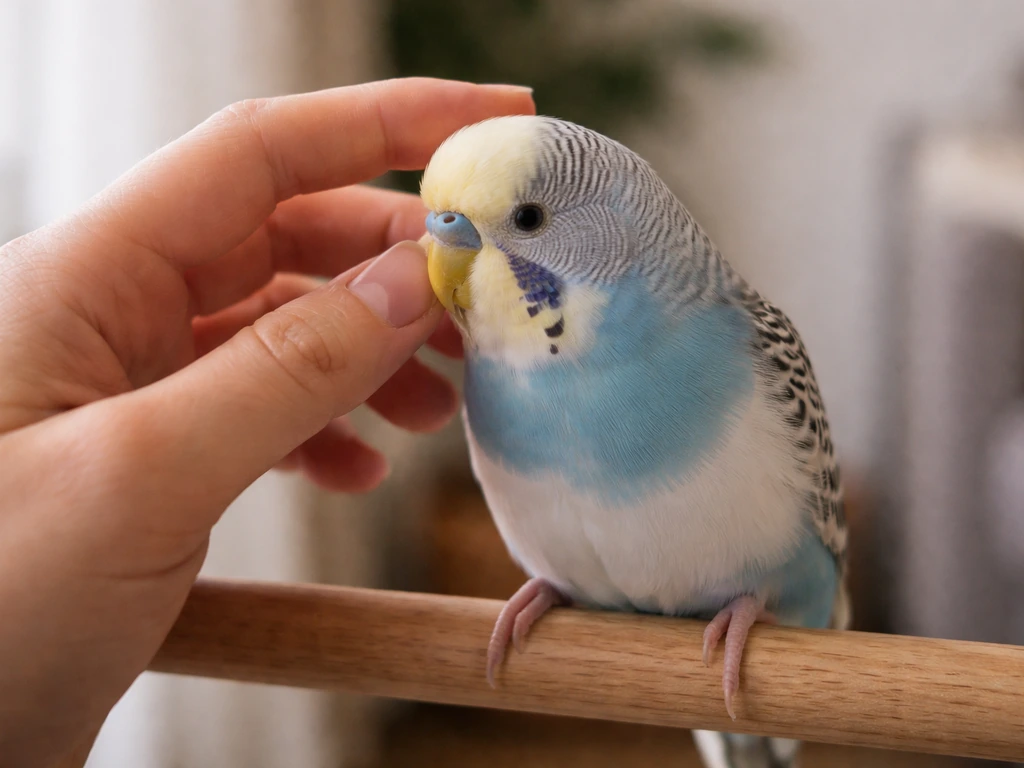
Most birds enjoy being touched on the head, behind the crest, around the ears, and along the back of the neck. These are areas they can't preen themselves, so your touch mimics what a flock mate would do. Avoid petting the back, wings, and tail in ways that simulate mating behavior, which can cause hormonal issues over time, particularly in cockatiels and parrots. And importantly, don't touch the face or beak forcefully. You can let a bird touch its beak to you; you don't press your face into the bird.
What to Avoid Entirely
- Pressing your mouth directly to a bird's beak (beak-to-mouth contact is a known psittacosis transmission route)
- Blowing air into the bird's face (startling, disorienting, and stressful)
- Forcing the bird's head toward your face when it's pulling away
- Making loud, sudden noises or movements during close contact
- Allowing a bird to tap its beak on your lips if you have any open cuts or sores in the area
- Kissing a bird when it has shown any signs of illness (weight loss, discharge, changes in droppings), and making sure your bird has routine veterinary care before regular close contact
Reading Body Language and Knowing When to Stop
Even a well-tamed, trusting bird can hit a limit. Moods change, birds get tired, and sometimes a noise or movement in the room shifts everything. Learning to redirect before a bite or a panic response is the difference between a setback and a non-event.
Stop and Redirect When You See These Signs
- The bird is leaning away or trying to move off your hand
- Feathers go suddenly tight to the body with a stiff posture
- The bird raises its foot as if to step off, repeatedly
- Tail starts fanning or wings lift slightly in a threat display
- Any vocalization shifts from soft to sharp or alarm-like
- Eye pinning combined with a forward-leaning, tense posture
Troubleshooting Common Problems
| Problem | Likely Cause | What to Try |
|---|---|---|
| Bird refuses to approach your hand | Not enough trust built yet; moving too fast | Back up a stage; go back to treat-on-palm with no pressure to step up |
| Bird bites when you come close to its face | Face approach feels threatening; skipped steps | Stop face-proximity attempts; rebuild from step-up; never approach face head-on |
| Bird was friendly, now suddenly aggressive | Hormonal changes, illness, or change in environment | Rule out illness with a vet visit; reduce close-contact until mood stabilizes |
| Bird steps up but won't sit calmly near your face | Overstimulated or still building confidence | Keep sessions shorter; reward calm sitting with treats before attempting closer contact |
| Bird taps beak too hard (painful) | Normal beak exploration, not necessarily aggression | Say 'gentle' calmly and redirect to a toy or treat; don't react dramatically as this can reinforce the behavior |
From Cuddly Moments to Long-Term Bonding: Realistic Timelines
Building this kind of voluntary closeness takes real time. A previously untouched bird may show early calming changes within the first week of gentle, consistent presence. Step-up reliability often comes within two to four weeks of daily short sessions. Voluntary face-contact, the bird-initiated 'kiss,' can take anywhere from one month to six months depending on the bird's history, age, and individual personality. Every bird is different, and that's not a flaw; it's just who they are.
The IAATE, which sets professional standards for bird training, emphasizes that blank" rel="noopener noreferrer">each bird is an individual with specific behavioral and physiological needs, and that trainers must choose practices suited to each bird rather than applying a one-size approach. That philosophy is worth carrying into your daily sessions. Some days will be great; some will be flat. blank" rel="noopener noreferrer">Keep sessions short (5 to 15 minutes), end on a positive note, and don't skip days if you can help it. Consistency matters more than duration.
As your bond deepens, you'll start to notice your bird seeking you out, calling for you when you leave the room, or flying to your shoulder without being asked. These are the real milestones. The beak-to-cheek tap is lovely, but it's one small moment in a much richer relationship that you're building week by week. Pair close-contact practice with enrichment, foraging opportunities, and good nutrition, and you'll have a bird that genuinely enjoys your company in all the ways that matter. That's a stronger foundation than any forced kiss could ever be.
If you're working on related skills, understanding exactly where to pet a bird and how to read comfort during general handling gives you a much cleaner picture of what your bird enjoys. And for species like finches where handling is generally off the table, focusing on how to get a bird as a pet that fits your desired interaction style from the start saves a lot of frustration later.
FAQ
If my bird initiates contact, does that automatically mean it is safe to let it “kiss” my mouth or lips?
No. Bird-initiated beak contact is a good sign, but mouth-to-beak contact still increases disease risk and can overstimulate some birds. Stick to lower-risk cheek or finger contact (beak gently tapping or pressing briefly), and keep your lips out of reach even if your bird seems affectionate.
What are the signs I should stop immediately during face or cheek contact practice?
Stop if you see leaning forward with a stiff body, pinned eyes paired with rigid posture, frantic head bobbing, sudden tail or wing spreading, lunging toward your face, or any attempt to block you by moving your body away. If any stress signals appear together, end the session calmly and give a few minutes before trying again.
How can I tell the difference between a “happy” bird kiss behavior and an overstimulated one?
A calm, exploratory approach usually comes with relaxed feather position, soft eyes (sometimes half-closed), and steady, slow movements. Overstimulation often looks like stiffness, rapid head movement, louder vocal bursts, crest flattening or fully erect crest that stays up, and repeated quick attempts to reach your face that feel frantic rather than curious.
My bird likes head scritches but suddenly won’t approach my face. Is that regression normal?
Yes, changes in mood, routine, noise, and hormones can shift comfort quickly. Treat it as information, not failure, and return to earlier steps, such as hand treats and cheek-to-cheek on the bird’s schedule. Also check for recent changes like a new cage location, cleaning products, or visitors in the room.
Should I remove my bird from the cage to practice face contact?
Usually no. Face-contact training works best with the bird controlling proximity, and taking the bird out can create a cornered feeling. If your bird is not confidently stepping up and relaxing on your hand, focus on step-up and calm time first, then practice near the cage so the bird can choose distance.
What’s a practical “safe alternative” if I want the affectionate feel of a kiss but I can’t do face-to-face contact?
Aim for the same emotional payoff without direct lips, for example, allow brief beak taps to your cheek or fingertip, or reward the bird for leaning its head into your offered cheek. You can also create a “target” behavior, having the bird tap a finger or a small handheld target near your face, then reward immediately.
How do I reduce bite risk while still encouraging closeness?
Use gradual shaping, start with treats from your palm, then step up, then very short cheek-lean opportunities only after the bird is relaxed on your hand. Avoid sudden face movements, do not push your face toward the bird, and end the session after successful, calm contact rather than trying to extend it.
Is there a difference in risk or technique between species, beyond the general advice?
Yes. Smaller parrots like cockatiels and budgies are often more likely to seek head-and-cheek contact, but they also vary in bite likelihood. Finches generally should not be handled or kissed, and wild birds should not receive physical contact at all. Within parrots, prioritize species-typical cues like crest position and keep lip-to-beak contact off the table for everyone.
How long should I expect before my bird shows a real “beak-to-cheek tap” behavior?
Many birds show progress in stages, hand-treat comfort within about a week, consistent step-up over a few weeks, and voluntary face contact anywhere from one to several months depending on age, past handling, and temperament. If there is no comfort with earlier steps, extend training at that stage instead of pushing toward the face.
What should I do if my bird bites or panics after it had previously been calm?
First, stop all face and close-contact practice for that day. Remove your face and hands gently, then let the bird settle. Next session, go back one or two steps to something the bird reliably accepts, like cage-side calm time or palm treats, and rebuild slowly with short sessions to prevent the bird from associating your approach with stress.
Are there any cleanliness habits I should follow before or after close-contact sessions?
Wash your hands before practice, especially if you have touched other birds, and avoid touching your mouth, eyes, or food during training. After sessions, wash again, since beak contact can transfer germs to your skin. If you are immunocompromised, be extra strict about avoiding mouth contact entirely and consider reducing direct beak-to-cheek contact as well.
Next Article
How to Touch Your Bird Safely Step by Step Guide
Step-by-step safe bird touching for pets and wild birds: positioning, stress signs, trust tips, and what to do after bit