
If you searched "how to catch a cardinal bird," here's the honest answer: you can't legally trap or handle a wild Northern Cardinal, and you don't need to. What you actually want is to get cardinals visiting your yard reliably and confidently, close enough to watch and enjoy. That's completely achievable, and this guide walks you through exactly how to do it.
How to Catch a Cardinal Bird Safely and Humanely

Clara Hayes
8 Apr 2026
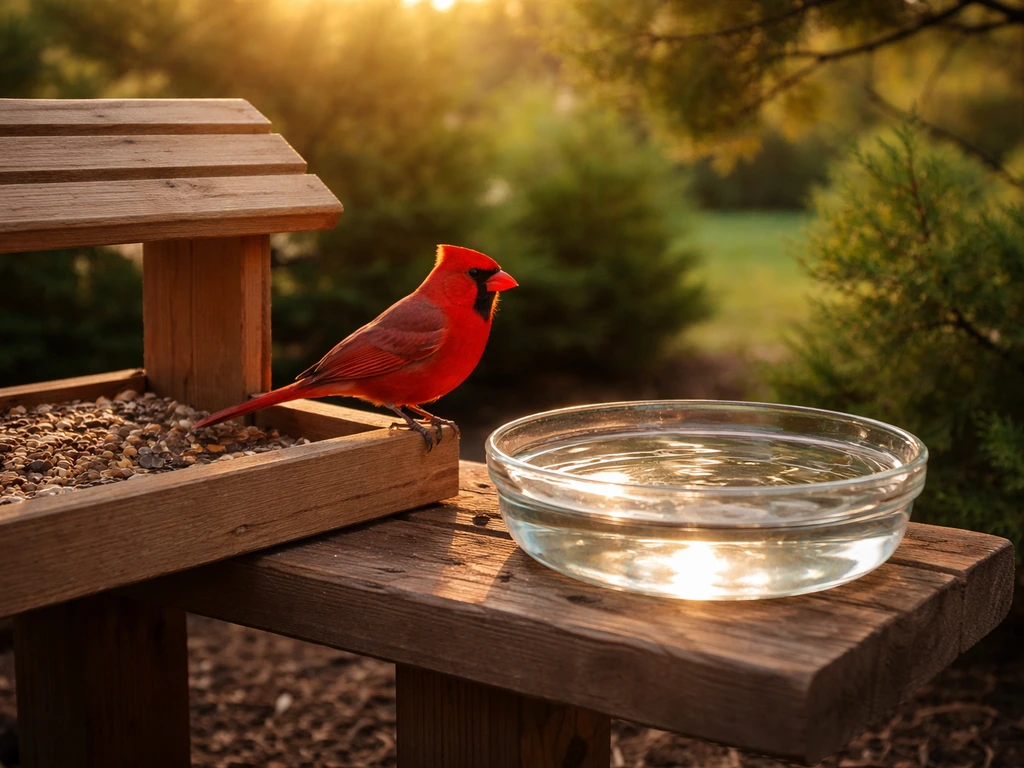
"Catch" vs. "attract": what you can actually do with a wild cardinal
Wild Northern Cardinals are protected under the U.S. Migratory Bird Treaty Act (MBTA), which makes it unlawful, without specific federal authorization, to pursue, hunt, take, capture, or kill migratory birds. That means physically trapping or handling a cardinal is off the table unless you're a licensed wildlife rehabilitator or researcher with the right permits. So when people ask how to "catch" a cardinal, what they really mean is: how do I get one to come to me consistently? And the answer to that is a solid attracting plan built around food, water, cover, and patience.
The Northern Cardinal (Cardinalis cardinalis) is one of the most recognizable backyard birds in North America. The male's brilliant red plumage and the female's warm buff-brown with red accents make them easy to identify. They're not migratory, meaning they stay in the same territory year-round, which is great news because once you establish a reliable feeding station, you can attract the same pair across all four seasons. They prefer forest edges and areas with shrubs or small trees, which describes most suburban backyards perfectly. They're granivorous, cracking open seeds with a stout conical bill, but they also eat insects and fruit, so a yard that offers varied natural food in addition to feeders is genuinely more attractive to them.
The humane, legal attracting plan: food, water, and shelter
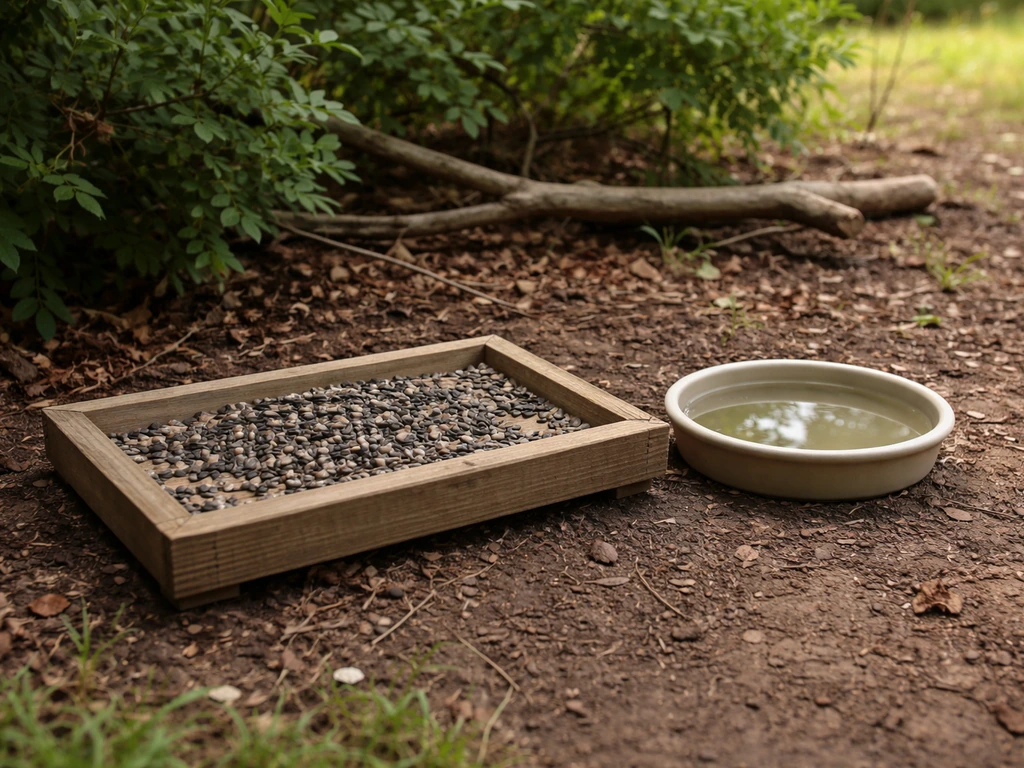
Getting cardinals to show up consistently comes down to three things: food they want, water they can use, and cover that makes them feel safe. Nail all three and you'll see results. Focus on just one and you might get occasional visits, but not the reliable daily pattern that makes backyard birding genuinely rewarding.
For food, sunflower seeds are the single best starting point. Cardinals have a strong preference for them, and black-oil sunflower seeds in particular are easy to crack with their bill. Safflower seeds are a close second and have the bonus of being less attractive to squirrels and European starlings, so you'll get more cardinals and fewer competitors. Cracked corn and small apple pieces round out the menu nicely. If you can, add a few native fruiting plants like dogwood, mulberry, or blackberry to your yard, because natural foraging opportunities from plants like these make your space feel like genuine habitat rather than just a drive-through.
Water is often the most underrated element. A birdbath or small fountain gives cardinals a place to drink and bathe, and moving water is especially effective because the sound carries and alerts birds from a distance. Keep it clean, changing the water every two or three days in warm weather to prevent mosquito breeding and bacterial growth. In winter, a heated birdbath is a serious upgrade, because open water is scarce when everything freezes.
For shelter, dense shrubs and small trees are essential. Cardinals nest in thickets and dense foliage, typically placing nests about 3 to 6 feet off the ground in plants like dogwood, hawthorn, honeysuckle, rose bushes, or cedars. If your yard is open lawn with no shrubby cover, cardinals will visit occasionally but won't feel secure enough to become regulars. Planting a few native shrubs along a fence line or property edge is one of the most impactful long-term investments you can make. In the meantime, leaving leaf litter on the ground and keeping some seedheads standing through winter gives cardinals both cover and natural foraging material.
Yard setup: where to put feeders and how to reduce stress
Feeder placement matters more than most people realize. Cardinals prefer platform or hopper-style feeders over tube feeders because their body size and feeding posture suit a flat, open surface. Place feeders within 10 to 15 feet of shrubby cover so cardinals can dart to safety quickly if startled. Avoid setting feeders in the middle of wide-open lawn, where birds feel exposed and stressed.
Window collisions are a serious and preventable hazard. The safest placement for any feeder near a window is either very close (within 3 feet) or more than 30 feet away. Counterintuitively, feeders placed right up against a window are safer because birds don't build up enough speed to cause fatal injury if they startle and hit the glass. At the 3-to-30-foot middle zone, birds can hit windows at full flight speed with fatal results. If you have feeders in that danger zone now, move them. You can also apply window decals, tape strips, or external screens to break up the reflection that birds mistake for open sky.
Male cardinals can be territorial and aggressive around feeders, especially during breeding season. If you have a large yard or already attract multiple birds, consider setting up two or three feeding stations spread apart to reduce competition and stress. Squirrel baffles on feeder poles are worth the investment too, both to protect your seed supply and to prevent the feeder-rocking and food-scattering that can deter nervous birds.
The right food and a simple feeding routine
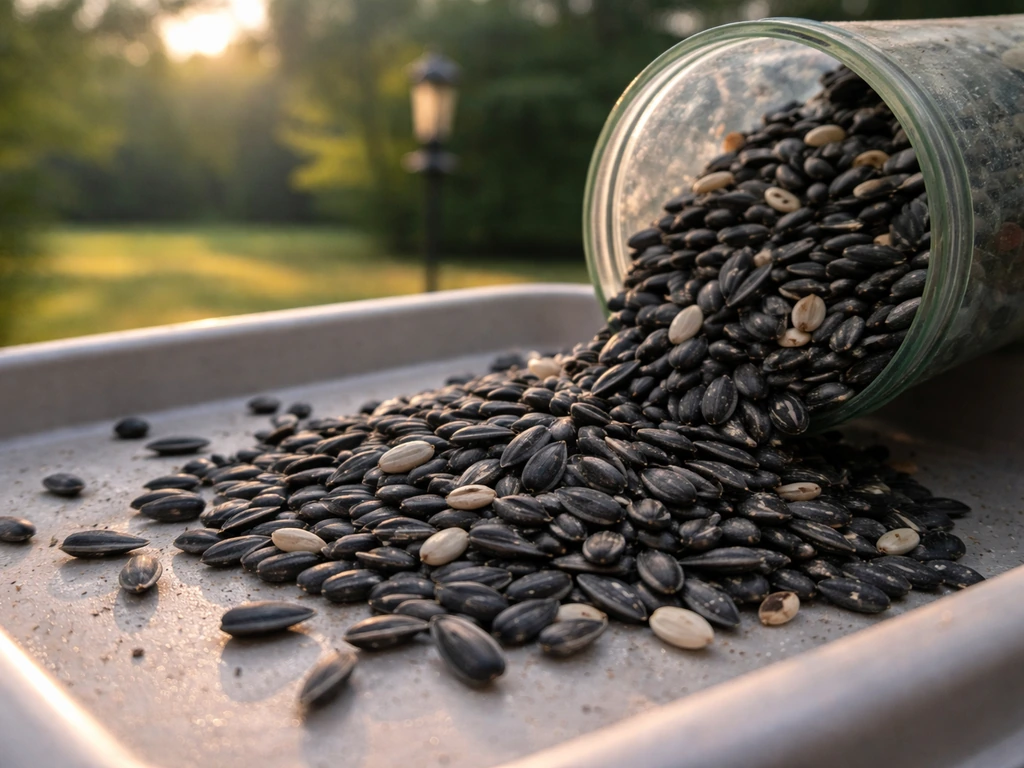
Consistency is what turns occasional visitors into regulars. Fill your feeders at the same time each day, ideally early morning, which is when cardinals are most actively foraging. Keep feeders stocked through the full day because cardinals also feed again around dusk. Don't let feeders go empty for several days in a row, especially in winter, because birds that find an unreliable food source will simply stop checking.
Black-oil sunflower seeds are your go-to. Buy them in bulk (25-pound bags are cost-effective if you're committed to year-round feeding) and store them in a sealed container to prevent moisture and mold. Offer safflower seeds in a separate hopper or mixed in with the sunflower. Cracked corn can go on a ground tray or platform feeder since cardinals are comfortable foraging at or near ground level. Avoid cheap seed mixes loaded with milo or wheat, because cardinals will toss those aside and the mess can attract pests. A small dish of apple slices placed near the feeder adds variety and can occasionally draw cardinals who might otherwise skip past.
| Food | How to offer it | Cardinal appeal |
|---|---|---|
| Black-oil sunflower seeds | Platform or hopper feeder | Very high, strong preference |
| Safflower seeds | Hopper feeder or mixed | High, deters many competitors |
| Cracked corn | Ground tray or platform | Moderate, good supplemental |
| Apple pieces | Small dish near feeder | Moderate, adds variety |
| Dogwood/mulberry berries (native plants) | Natural yard planting | High, supports habitat feel |
Timing and seasonal strategy
Cardinals are year-round residents, so there's no wrong time to start. That said, late winter into early spring is one of the best windows to establish a new feeding station. From roughly February onward, male cardinals ramp up their singing and territorial behavior as breeding season approaches, and birds are actively scouting their home range. A new feeder that goes up in late January or February has a good chance of being discovered before nesting begins.
During the spring and summer nesting period (eggs are typically found from April through September), you may notice a single pair dominates your feeder while actively defending the territory from other cardinals. That's normal. The male may bring food to the female at the feeder, which is a sign your setup is genuinely integrated into their home range. Don't be discouraged if you only see one pair during this period.
Winter is actually a fantastic time for feeder activity. Cardinals flock loosely in winter, sometimes foraging alongside juncos and sparrows, so you may see more birds at once than during breeding season. Keep feeders stocked reliably through cold snaps, because this is when supplemental food matters most. A heated birdbath becomes especially valuable in December through February.
Building trust without ever touching them
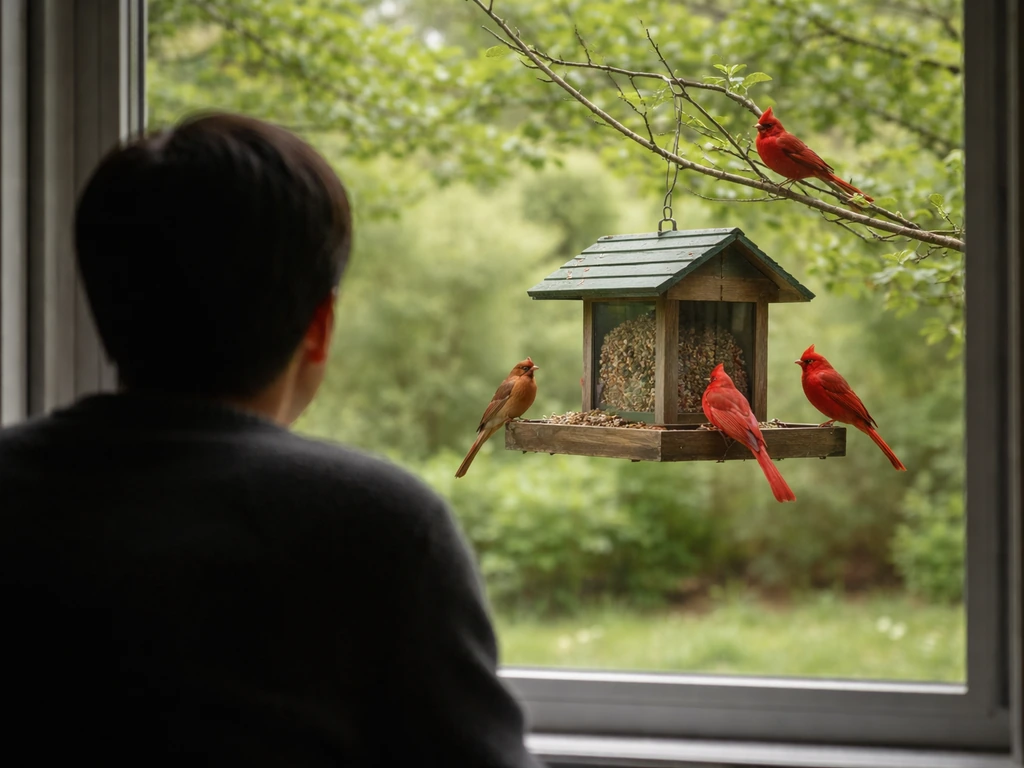
Getting closer to wild cardinals is a slow process built on consistency and predictability, not on coaxing or handling. The goal is for them to associate your presence with safety rather than danger. Think of it as a slow trust curve that plays out over weeks, not days.
- Start by observing from indoors. Sit near a window where you can see the feeder without being seen well. Watch for patterns: what time do they arrive, which feeder do they prefer, do they perch in a particular shrub first? Note these down. You're learning their routine before they learn yours.
- After a week or two of reliable feeder visits, begin sitting outside at a distance of about 20 to 30 feet from the feeder, staying still and quiet. Read a book, have coffee, just be present without directing attention at the birds. Do this at the same time cardinals normally visit.
- Over the following weeks, gradually move your chair a few feet closer every few sessions, only when cardinals are arriving calmly and without alarm calls. If a bird gives a sharp "chip" note and flies off, you've moved too fast. Back up.
- Use slow, predictable movements when outdoors. Avoid sudden gestures, don't stand up quickly, and keep noise low. Cardinals are alert and will associate your presence with calm if you consistently give them no reason to startle.
- Once cardinals are comfortable feeding while you're seated 10 to 15 feet away, you've effectively achieved a meaningful trust relationship with a wild bird. That's the realistic and genuinely rewarding goal here.
Some birders who are patient enough eventually get to a point where cardinals will feed within arm's reach while they sit still on a porch. It's rare and takes months, but it happens through exactly this kind of slow, non-threatening routine. This approach mirrors the trust-building methods used with other species: if you're curious about how the same patient method works with other birds in your yard, the techniques for how to catch a dove bird follow a very similar habituation framework.
Why cardinals aren't showing up (and what to fix)
If you've had a feeder up for two or more weeks with no cardinal visits, run through this checklist before giving up. Most problems have a straightforward fix.
Wrong food or stale seed
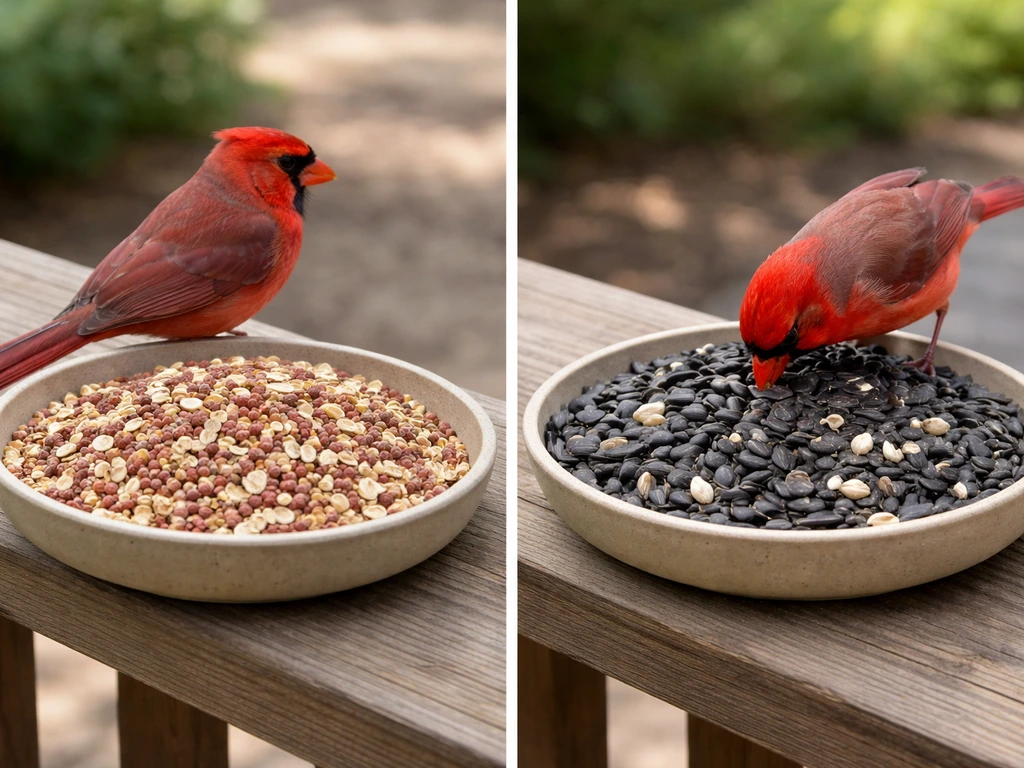
If your feeder is filled with a generic wild bird mix dominated by milo, wheat, or oats, cardinals will ignore it. Swap to straight black-oil sunflower or safflower immediately. Also check whether your seed has gone moldy or clumped from moisture, because cardinals won't touch spoiled food. Empty the feeder, let it dry completely, and refill with fresh seed.
No nearby cover
Cardinals rarely feel safe feeding in the open. If your feeder sits in the middle of a lawn with no shrubs within 15 feet, birds may land briefly and leave. Temporarily place a few potted shrubs near the feeder, or relocate the feeder closer to existing hedges or a fence with climbing plants. Long-term, planting native shrubs is the real answer.
Window collision risk is scaring birds away
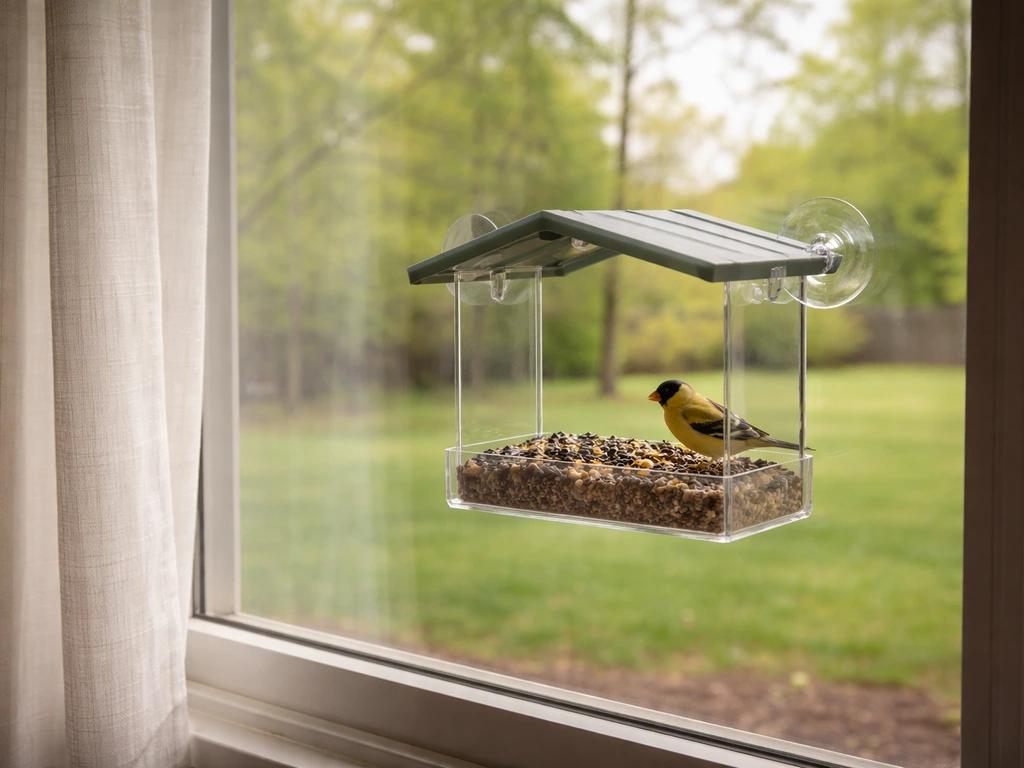
If a bird has hit your window near the feeder, others may have witnessed it and avoid the area. Move the feeder to within 3 feet of the glass, or more than 30 feet away, and apply window collision deterrents like tape strips or decals to the outside of the glass.
Feeder competition
Aggressive species like European starlings, house sparrows, or squirrels can dominate a feeder and keep cardinals away. Safflower seed helps because starlings and squirrels generally dislike it. A caged feeder that physically excludes larger birds can also protect your seed supply for cardinals and other smaller species. Cardinals that feel bullied off a feeder will simply stop trying. This kind of territorial tension is something you'll also notice if you're working on how to catch a blue jay bird, since jays and cardinals regularly compete at the same feeders.
It's too early in the season for discovery
Local birds have to find your feeder before they'll visit regularly, and that can take two to four weeks, sometimes longer if cardinals aren't frequently passing through your immediate area. Keep the feeder stocked consistently and give it time. Discovery is slow but cumulative: once one bird finds it, others follow.
Your yard doesn't match their habitat needs
Cardinals that nest nearby are the most likely to become feeder regulars. If there's no suitable nesting habitat within their territory (dense shrubs, thickets, or small trees within a few hundred yards), they may simply not be resident in your area. Planting native shrubs and leaving some natural structure in your yard is a long game, but it's the most durable fix. If you're interested in how habitat-specific needs differ between species, it's worth reading about how to catch a crane bird to see how dramatically habitat requirements can vary for different wild birds.
A few more species worth watching alongside cardinals
Once you've set up a good cardinal-friendly yard, you'll likely attract a range of other interesting species. Small finches are frequent companions at sunflower feeders, and if you want to refine your approach for them specifically, the guidance on how to catch a finch bird covers the feeder and food differences worth knowing. If you keep or are curious about kept songbirds, understanding how to catch a canary bird is a completely different skill set suited to domestic birds rather than wild ones. And for those interested in attracting bolder, more opportunistic wild birds, reading up on how to catch a raven bird gives a good sense of how dramatically different bird personalities and approach strategies can be across species.
Your next steps starting today
If you want cardinals in your yard reliably, here's what to do right now. Pick up a bag of black-oil sunflower seeds and safflower seeds today. Set up a platform or hopper feeder within 10 to 15 feet of shrubby cover, positioned either within 3 feet of your nearest window or more than 30 feet away. Add a clean birdbath nearby if you don't have one. Then sit back, be consistent, and give it three to four weeks before judging the results. Cardinals are creatures of habit, and once they find a reliable, safe food source, they come back every single day. That steady, daily presence of a brilliant red male or a quietly elegant female at your feeder is the real reward, and it's well within reach.
FAQ
Is it ever legal to trap or handle a Northern Cardinal if it’s damaging my property or getting into my garage?
Generally no. Under the U.S. Migratory Bird Treaty Act, you cannot trap, capture, or handle cardinals without specific federal authorization. If a cardinal is in a garage, the safest option is to guide it out using lights and open doors, and if it keeps repeating the behavior, contact a licensed wildlife rehabilitator for humane exclusion tips.
How long should I wait before I assume my yard setup is not working?
If your feeder is in place and stocked consistently, plan on at least 2 to 4 weeks for discovery, sometimes longer if cardinals are not actively passing through your immediate area. You can track progress by checking daily at the same times, early morning and dusk, when cardinals are most likely to show up.
What’s the quickest way to fix feeders that cardinals ignore?
Switch from generic mixes (especially those heavy in milo, wheat, or oats) to mostly black-oil sunflower and add safflower as a backup. Also check for moisture or mold, empty the feeder, let it dry fully, and refill with fresh seed. Cardinals will avoid spoiled food even if other birds keep eating.
Can I feed cardinals with a tube feeder or should I only use platform or hopper feeders?
Cardinals do better with platform or hopper-style feeders because their feeding posture fits those designs. Tube feeders can work occasionally, but if you see them hovering or passing by, replace the feeder with a flat surface option rather than continuing to troubleshoot with the same feeder type.
Why are there no cardinals during the day, but I see other birds at my feeder?
Cardinals may not feel safe landing in open areas. If your feeder is surrounded by lawn, try moving it closer to dense shrubs or add a couple of potted shrubs temporarily to recreate quick escape cover. Also confirm feeder height and placement, within 10 to 15 feet of cover, so they can dart away if startled.
What should I do if a cardinal keeps hitting my windows even after moving the feeder?
Window strikes can be triggered by reflections or patterns, not just flight speed. Use deterrents on the outside of the glass (for example decals, screens, or tape strips) and ensure the feeder placement follows the safer zones (within 3 feet or more than 30 feet). If collisions continue, reassess the reflection sources, like shiny plants or unshaded porch lights at night.
Are heated birdbaths safe for cardinals, and how do I prevent water-related problems?
Heated birdbaths are a good winter upgrade because cardinals need drinking and bathing even in freezing weather. In warm months, change water every 2 to 3 days to reduce bacteria and mosquito breeding, and scrub the basin periodically so birds are not forced to choose between convenience and cleanliness.
How do I stop squirrels from taking all the seed but still keep the feeder usable for cardinals?
Use squirrel baffles on the pole and consider seed choices that squirrels are less interested in, safflower works well for this. If squirrels are knocking feeders around, tighten mounting hardware and ensure the feeder is stable, because constant disturbance can make cardinals stop visiting even if seed is available.
Will I attract cardinals if I live in a more urban area with fewer shrubs?
Yes, but you may need to actively create the cover element. Add native shrubs along a fence line or near the feeder location, aiming for dense thickets or small trees nearby. In the short term, potted shrubs placed near the feeder can help cardinals feel safe while the long-term landscaping matures.
What if I see a male cardinal defending the feeder and the female seems absent?
That pattern can be normal during the nesting season, the male may defend a territory and bring food to the female at specific times. Don’t assume your setup failed, instead keep feeding reliably and avoid frequent changes to feeder placement or seed type during the breeding window.
Do I need to stop feeding cardinals once nesting starts?
No, generally you just need to keep it consistent. Sudden empty feeders can break the routine and cause them to search elsewhere. Focus on stable food quality, clean water, and safe feeder placement, while avoiding loud disturbances near nesting cover.