If you're searching for how to catch a raven bird, the most useful thing I can tell you right now is this: in almost every situation, "catching" a raven means earning its trust enough to get close, not physically grabbing it. Ravens are federally protected migratory birds in the United States, they're surprisingly intelligent, and attempting a hands-on capture without authorization can hurt you, harm the bird, and land you in legal trouble. What most people actually need is one of three things: a way to attract a raven and observe it safely, a method to get close enough to assess whether it's injured, or guidance on who to call when the bird genuinely needs help. This guide covers all three.
How to Catch a Raven Bird Safely and Humanely
Clara Hayes
9 Apr 2026
Tame vs. capture: what "catching" a raven actually means
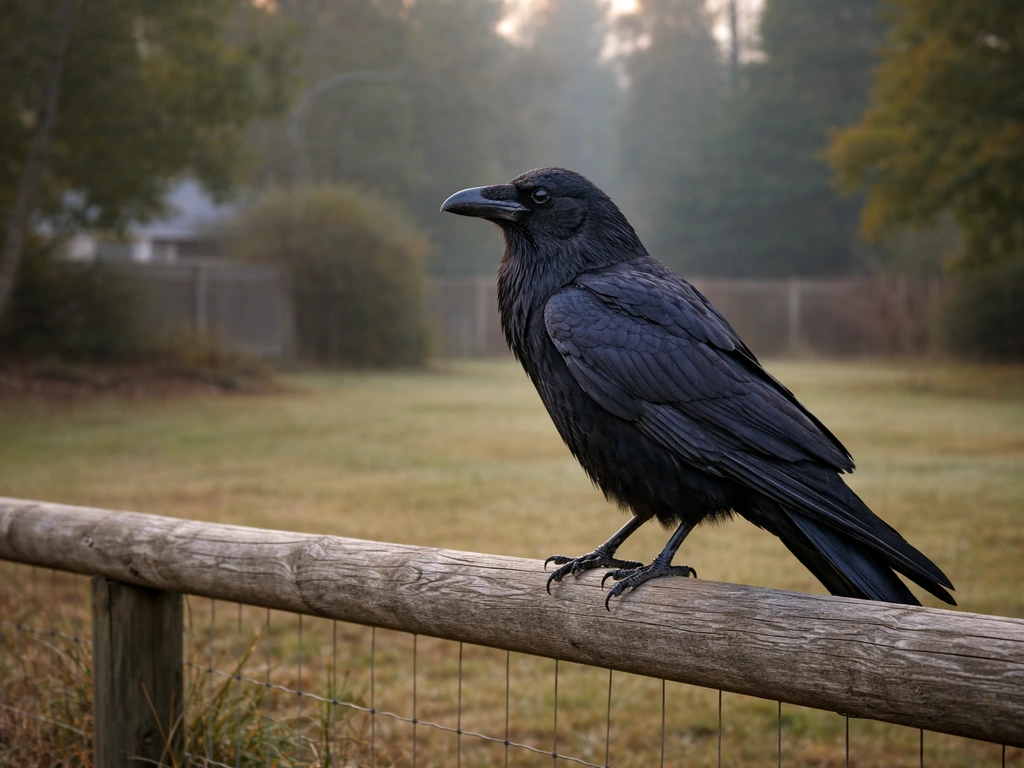
Ravens are not songbirds you can casually net and release. They're large (roughly 22 to 27 inches long, with a wingspan up to 4 feet), sharp-billed, highly social, and cognitively wired to treat you as a potential competitor or threat. Research shows ravens actively track what other individuals can and cannot see, and they use that information strategically when approaching food or unfamiliar animals. In plain terms: a raven is watching you as carefully as you're watching it, and it's drawing conclusions. That's why the word "catch" means something different depending on what you're actually trying to do.
- Attract and earn trust: You want the raven to approach you voluntarily, close enough to observe its condition, offer food ethically, or simply enjoy its presence. This is the path most backyard birders and wildlife watchers are on.
- Assess and refer: You think the raven is injured or sick and you need to get close enough to confirm before calling a licensed wildlife rehabilitator.
- Physical capture and transport: The bird is clearly injured and needs professional care. This should only happen under direct guidance from a licensed rehabilitator, using their instructions, and only when absolutely necessary.
Most of this article is about the first two paths. The third path almost always belongs to a professional, and I'll explain exactly when and how to hand that off. Ravens also cache food and use diversionary tactics around other birds, so if a raven is suddenly showing up and acting interested, it may be recruiting you as a food source or simply investigating a potential competitor, not expressing affection. Understanding that context helps you read the bird's behavior correctly.
The legal and ethical reality of handling wild ravens
Common ravens (Corvus corax) are protected under the Migratory Bird Treaty Act. The relevant federal definitions under 50 CFR § 10.12 include "take," which covers pursuing, hunting, capturing, collecting, or killing a migratory bird. Possession of a wild raven without a federal permit is illegal for the general public, full stop. That includes well-intentioned situations where you pick one up, keep it overnight, and plan to release it in the morning.
The U.S. Fish and Wildlife Service's migratory bird permitting framework makes clear that capture, handling, and possession activities require proper authorization. Even wildlife rehabilitators need state-level permits to legally possess and treat wild birds. In Michigan, for example, a DNR wildlife rehabilitation permit is explicitly required to capture, transport, house, or treat native wild birds. In Georgia, California, and most other states, the same rule applies. If you're a private citizen who found a raven in your yard, your legal lane is: observe, call, and assist a professional. It is not: pick up, house, or treat.
Beyond legality, there's a real safety angle. Ravens have powerful beaks that can puncture skin deeply, and their feet and claws can grip and scratch with surprising force. Larger birds handling situations also carry exposure risks. The CDC recommends using gloves, eye protection, and respiratory protection in situations involving sick or potentially infected birds, and that their secretions and excreta can carry pathogens including avian influenza. If you do need to briefly handle a raven while waiting for a rehabilitator, wear thick gloves (leather if possible), eye protection, and wash your hands thoroughly afterward. CDC advises against touching sick or dead birds, as well as feces or contaminated surfaces, without appropriate personal protective equipment CDC advises against touching sick or dead birds without appropriate personal protective equipment.. Don't touch your face.
How to attract ravens to you humanely
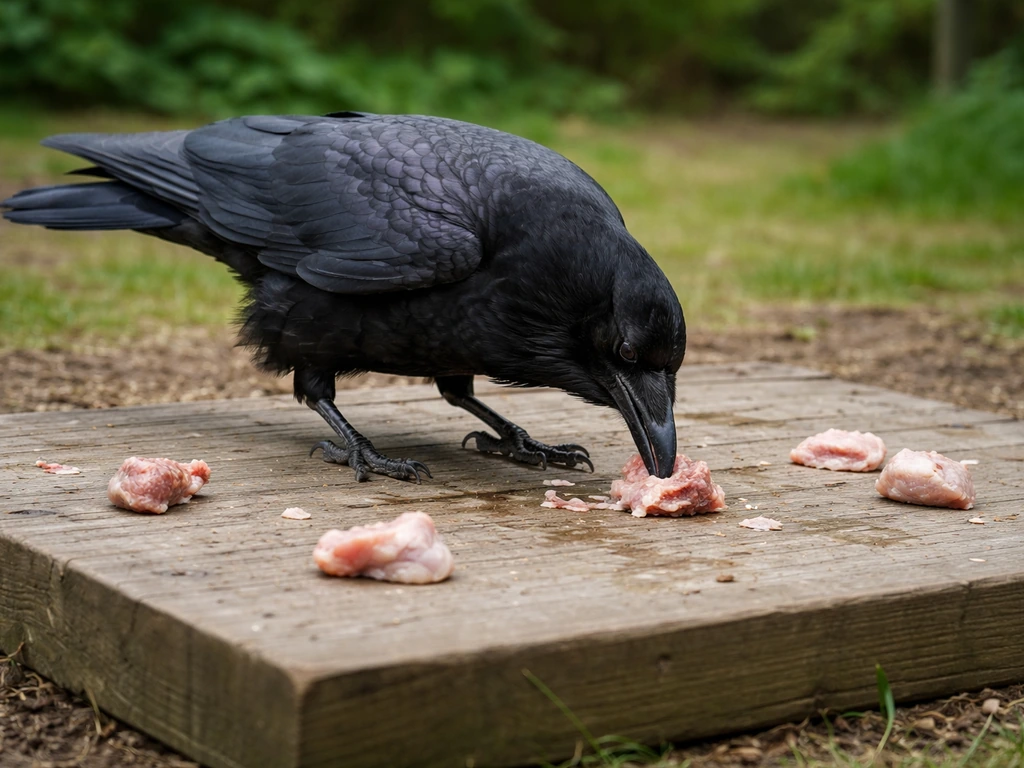
Ravens are omnivores with a strong preference for protein-rich food. In the wild they eat carrion, insects, eggs, small animals, and berries. If you want to draw a raven closer on its own terms, food is your most reliable tool, but the type of food and how you offer it matter a great deal.
What to offer
- Unsalted, unseasoned meat scraps or dog kibble (high-protein, low-additive options ravens respond to well)
- Hard-boiled eggs or scrambled eggs with no salt or butter
- Whole peanuts in the shell (ravens are corvids and enjoy manipulating food)
- Fresh water in a wide, shallow dish, changed daily
- Avoid bread, crackers, chips, processed foods, or anything salted or sugared
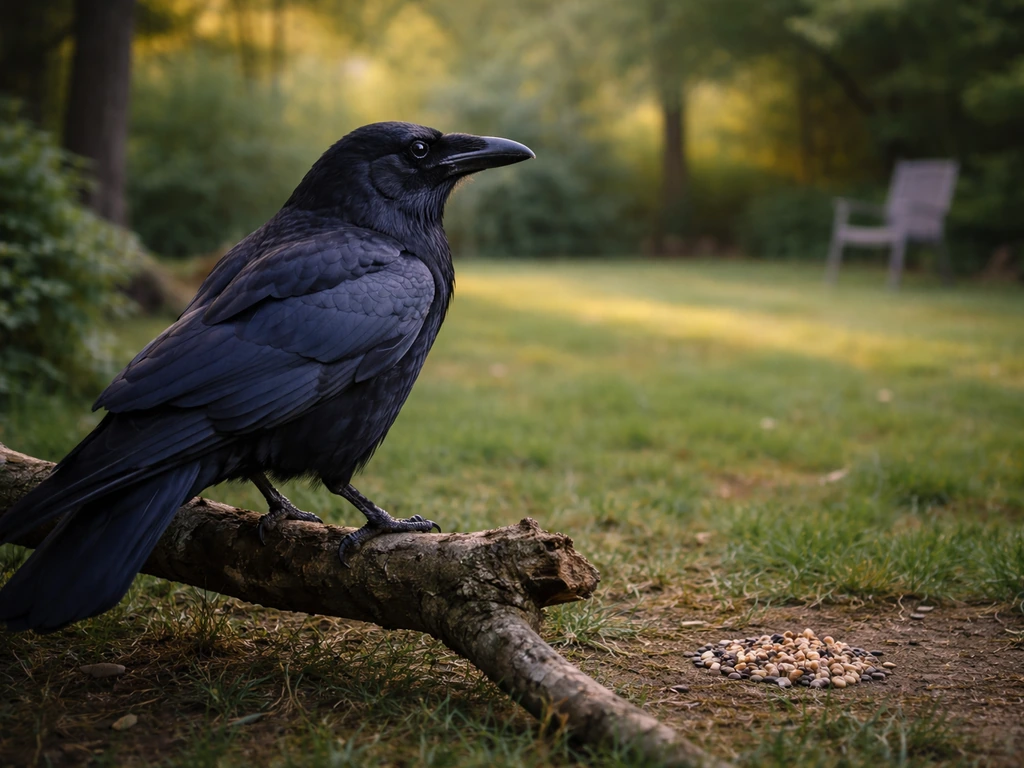
Place food on a flat surface like a low platform feeder, a stump, or a large flat rock, somewhere with good sightlines for the bird. Ravens feel safer when they can see in all directions. Don't place food near dense shrubs or tight corners where the bird might feel trapped. Consistency matters more than quantity: offer food at the same time each day, typically in the morning when ravens are most actively foraging.
Habitat and water cues
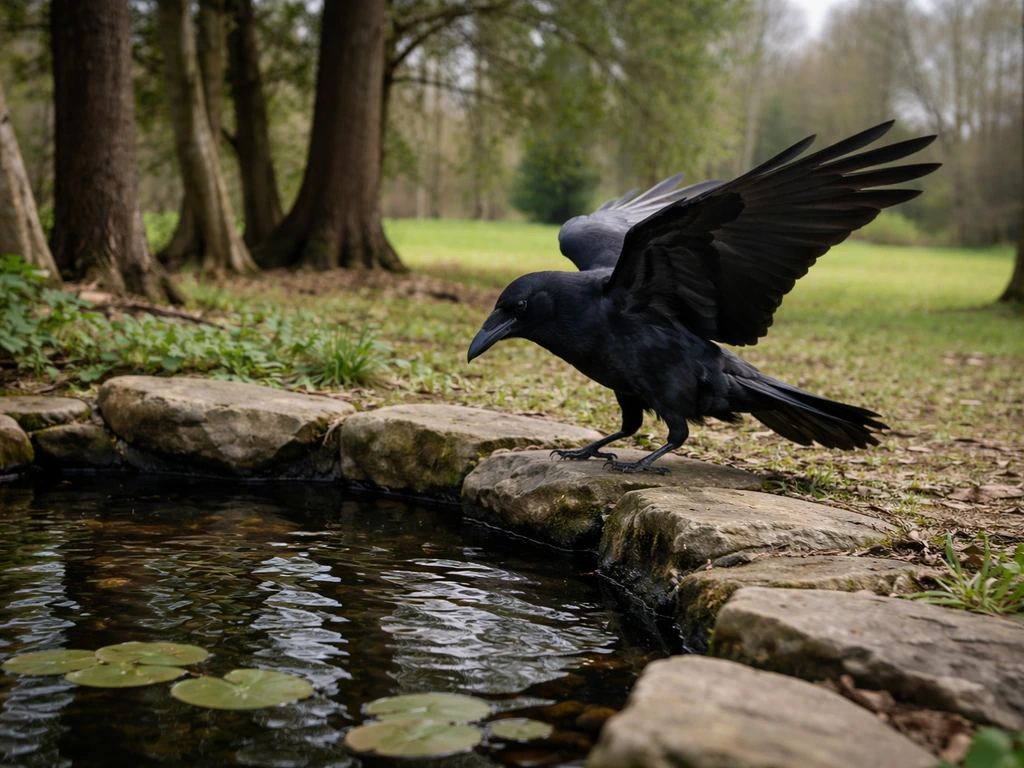
Ravens are attracted to open areas where they can land and scan before committing. A yard that borders open land, has tall perching trees nearby, and offers a reliable water source is naturally more appealing. A large birdbath or shallow dish on the ground works well. Change the water every day. If you notice ravens passing over your yard regularly, that's a good sign you're in their range. Putting out food and water consistently can shift them from flyover birds to regular visitors within a couple of weeks.
Building trust step by step
This is the part that takes patience, and I want to be realistic with you: ravens are not like canary birds, which can be habituated to human presence fairly quickly in a controlled setting. Wild ravens are cautious, intelligent, and will not rush the process on your schedule.
- Week 1 to 2 (distant presence): Place food and water out daily, then go back inside. Let the raven come and go without any human visible. This establishes that your yard is safe and food-reliable.
- Week 2 to 3 (visible but passive): Start sitting outside at a distance of at least 30 to 40 feet from the food while it eats. Don't look directly at the bird. Ravens read direct eye contact as a threat or challenge. Sit sideways, read a book, or look at your phone.
- Week 3 to 4 (closer passive presence): Gradually move your sitting spot 5 feet closer every few days, only if the raven is eating comfortably without flying off. If it flushes, you've moved too fast. Go back to your previous distance for a few more days.
- Week 4 onward (slow active engagement): Once the raven is comfortable with you at 15 to 20 feet, you can try gently tossing a piece of food a few feet in front of you. Use a slow underhand motion and no sudden movements.
- Timing: Morning sessions of 15 to 30 minutes are more productive than random or evening appearances. Ravens learn routines quickly and will start anticipating your presence.
Never make sudden movements, loud sounds, or direct approaches toward the bird. Ravens use a threat-assessment framework: anything that looks like a predator lunging is treated as a predator lunging. Keep your posture low, your movements slow, and your voice calm and quiet if you speak at all. Some people have success with a soft, repeated sound (like a low whistle or a specific word) that becomes associated with food over time, similar to how falconers condition birds to a call.
When to stop trying and call a wildlife professional
If a raven in your yard is clearly injured, you need to shift gears immediately. Signs that a raven needs professional intervention include: one wing hanging lower than the other, inability to fly after several hours on the ground, visible blood or open wounds, stumbling or falling over, seizure-like head movements, or being completely unresponsive to your approach at close range. A healthy raven will not let you walk up to it. If one does, something is wrong.
The American Bird Conservancy and Audubon both recommend the same first step: call a licensed wildlife rehabilitator before you do anything else. Do not attempt to feed or give water to an injured raven before speaking with a professional. Well-meaning feeding of an incorrect diet can cause more harm than going without food for a few hours, and that guidance applies whether you're dealing with a raven or a crane bird found on the ground.
To find a licensed rehabilitator near you, call your state's fish and wildlife agency directly, or use the NWRA (National Wildlife Rehabilitators Association) locator. The U.S. Fish and Wildlife Service also advises contacting a licensed wildlife rehabilitator for any bird found on private property. When you call, describe what you're seeing in as much detail as possible: the bird's posture, how long it's been there, whether it can fly, and any visible injuries. The rehabilitator will tell you exactly what to do next, including whether to attempt to contain it and how.
If a rehabilitator advises you to temporarily contain the bird while you transport it, use a cardboard box with ventilation holes, lined with a towel. Keep it in a warm, dark, quiet space. Do not offer food or water unless the rehabilitator specifically instructs you to. Do not keep the bird longer than necessary. The goal is a safe handoff, not a home rehabilitation project.
Troubleshooting: when the raven won't cooperate
The raven won't come near at all
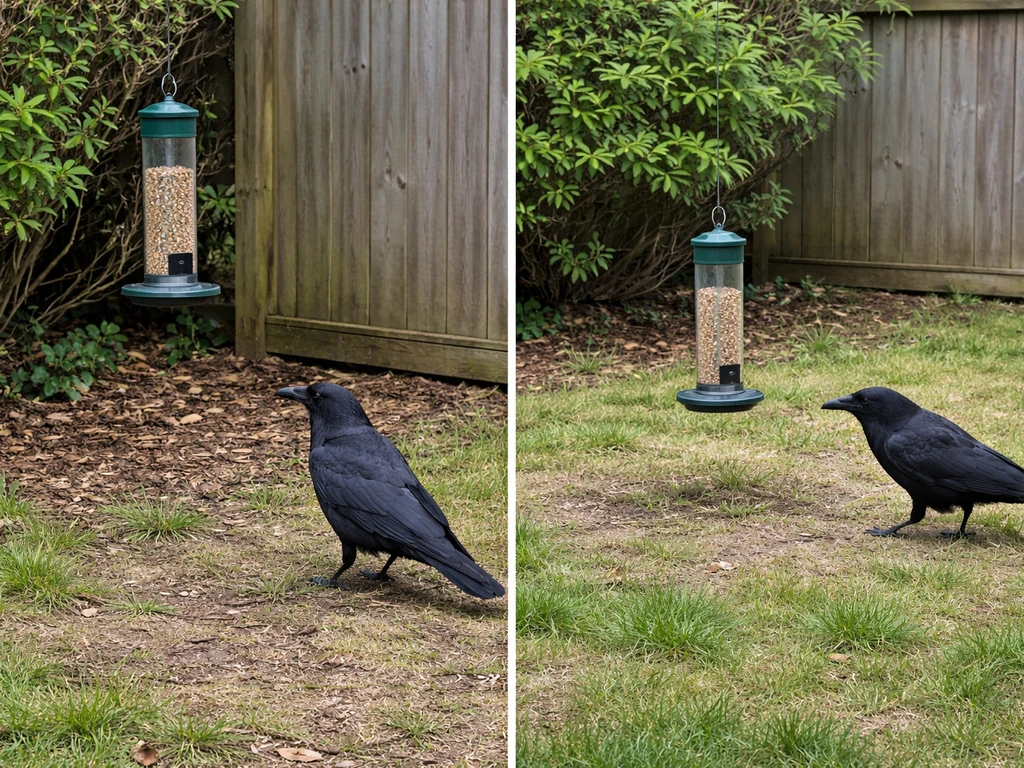
- Check your food placement: too close to walls, fences, or shrubs can feel like a trap to the bird. Move the feeding spot to a more open area.
- Reduce your visible presence: if you're watching from a window or door, try moving further back or using a screen.
- Be more consistent: missing even a day or two of the feeding routine can reset a raven's trust level significantly.
- Check for other disturbances: dogs, cats, or active foot traffic near the feeding area will override any habituation progress.
The raven is wary but interested
- This is normal and actually a good sign. Don't rush it.
- Stay at your current distance for at least a full week before attempting to move closer.
- Avoid making eye contact. Look at the ground near the bird rather than at the bird itself.
- Try lowering your physical profile: sit in a low chair or even on the ground.
The raven is acting aggressively (dive-bombing, vocalizing loudly, or running at you)
- Back away slowly and calmly without turning and running. Running triggers chase responses.
- It's likely nesting season (typically February through June in most of the U.S.). Ravens are intensely territorial around nests. Check for a nearby nest site and if found, give the area a wide berth for the rest of the season.
- Do not wave your arms, throw things, or attempt to shoo the bird. This escalates the confrontation.
- If aggression continues over multiple days with no nest obvious, the bird may be food-conditioned and testing dominance. Reduce feeding frequency temporarily.
The raven is approaching but seems to be following or stalking you
This usually means you've crossed into habituation territory, where the bird has learned to associate you reliably with food. A habituated raven that follows people can become a problem: it may become aggressive toward other people, create conflicts with neighbors, or lose the healthy wariness it needs to survive independently. The Wildlife Center of Virginia notes that human imprinting and habituation in birds can cause lasting harm to their ability to live as wild animals. To prevent this, stop hand-feeding immediately, return to leaving food at a fixed location only, and reduce the frequency of your sessions. The goal is a wild raven that tolerates your presence, not a dependent one.
What to do once the raven gets close
Getting a raven to come within 10 to 15 feet of you voluntarily is a genuine accomplishment and the appropriate endpoint for most backyard encounters. At that range you can observe its eyes (should be bright and alert), its plumage (should be glossy black with no obvious bare patches or discharge), its feet and beak (no obvious swelling, lesions, or drooping), and its behavior (alert, interested, able to fly away quickly). If it looks healthy, you're done. That's a success. Keep offering food on schedule, enjoy the visits, and maintain the relationship as a wild-bird-to-observer one.
Do not physically handle a healthy wild raven for any reason. There is no legal or ethical justification for it without a permit, and it will undo weeks of trust-building in a single encounter. If you want to experience what it's like to work closely with corvids, consider volunteering with a licensed wildlife rehabilitation center or a bird banding program. Those are the settings where hands-on work happens legally and safely.
If the raven you've attracted appears sick or injured at close range, that's when you act fast. Don't attempt to grab it yourself. Call a wildlife rehabilitator immediately, describe the symptoms, and follow their instructions for containment and transport. Some rehabilitation centers, like the Philadelphia Metro Wildlife Center, offer direct guidance over the phone to help you safely contain a bird for transport if absolutely necessary. If you do end up needing to briefly contain the bird, that's a very different situation from methods used for, say, catching a dove bird, which is far smaller and easier to handle safely without injury to either party.
Raven vs. other large corvids: quick comparison
If you're not 100% sure what you're looking at, here's a quick reference. Ravens are often confused with crows and other large dark birds, and the approach you take should match the species correctly.
| Feature | Common Raven | American Crow | Blue Jay |
|---|---|---|---|
| Size | 22–27 inches, wingspan up to 4 feet | 17–21 inches, wingspan around 3 feet | 9–12 inches, wingspan around 16 inches |
| Tail shape | Wedge-shaped (diamond point in flight) | Fan-shaped (rounded in flight) | Rounded |
| Beak | Very large, heavy, slightly curved | Medium, straight | Medium with slight hook |
| Voice | Deep, hollow "kraa" or croaking | Higher-pitched caw | Harsh "jay" or mimicry calls |
| Typical habitat | Open country, forests, mountains, coasts | Urban/suburban, farms, forests | Woodlands, suburban yards |
| Approachability | Very wary, high intelligence | Moderately wary, adaptable | Bold but skittish |
The approach methods for attracting a blue jay bird are somewhat similar in terms of food and consistency, but blue jays are much smaller and far more accustomed to suburban settings, so the timeline for habituation is usually faster. Ravens require more patience and a larger buffer zone, especially early on.
Special note on finches, doves, and other smaller species
If you arrived at this article because you're also dealing with other birds in your yard, it's worth knowing that the legal rules about possession and handling apply across species. Techniques for catching a finch bird or catching a cardinal bird also fall under the Migratory Bird Treaty Act protections, and the same "attract, observe, call a pro" framework applies. The physical risks are lower with smaller birds, but the legal constraints are essentially the same.
Your decision checklist for today
Here's how to figure out what to do right now based on what you're actually seeing:
- Raven is healthy, just won't come close: Start the habituation routine above. Set up food and water at a fixed spot today, stay out of the way for the first week, and be consistent.
- Raven is injured or clearly in distress: Do not attempt to grab it. Call a licensed wildlife rehabilitator now. If you don't know one, call your state fish and wildlife agency or search NWRA's directory.
- Raven is aggressive toward people: Check for a nearby nest. If nesting season, give it space and wait it out. If not nesting season, reduce feeding and contact your local wildlife agency for guidance.
- Raven is following you or acting unusually tame: Stop hand-feeding immediately. This is a habituation warning sign. Go back to fixed-location feeding only and reduce session frequency.
- You're not sure it's a raven: Use the comparison table above. If still unsure, take a photo or video from a distance and contact your local Audubon chapter or wildlife agency for a quick ID before doing anything else.
The bottom line is that the most effective thing you can do for a wild raven, whether you want to enjoy its presence or help it through a difficult moment, is to respect the process. Go slow, stay legal, and know when to hand off to someone with the training and permits to do more. blank" rel="noopener noreferrer">NWRA publishes wildlife rehabilitation standards in PDF form, describing minimum industry expectations for rehabilitation care. Ravens are remarkable birds, and the relationship you build with one on its own terms is genuinely worth the patience it takes.
FAQ
If a raven is acting friendly, can I “catch” it by using a net or grabbing it quickly to relocate it?
No. Even if the bird seems calm, ravens can injure you and can suffer harm from rough handling. More importantly, removing or possessing a wild raven typically requires federal and state authorization, so using a net or relocating it yourself is both unsafe and likely illegal.
What should I do if I find a raven on the ground but I cannot tell whether it is injured, just resting, or fledgling?
Treat it as potentially injured. Keep your distance, watch from a safe spot, and contact a licensed wildlife rehabilitator. If it is fully capable of flying and is just resting, professionals may advise leaving it alone. Do not attempt feeding or water until you have guidance.
Can I leave out food indefinitely to keep ravens coming back?
You can, but be aware it increases repeat visits and can contribute to habituation. If the raven starts lingering closely, approaching people, or showing aggressive behavior, stop hand-feeding and reduce how often you provide food, keeping it only at a fixed location if advised by a professional.
What if the raven keeps swooping at me or my dog when I put out food?
That is often competition or threat signaling rather than affection. Stop moving suddenly and avoid direct approaches, then reduce or remove food temporarily to break the pattern. If attacks are persistent, contact a local animal-control or wildlife professional for non-lethal conflict guidance.
Is it okay to give a raven leftovers like bread, cooked meat, or dog food?
Not without professional advice. Raven diets vary, and inappropriate foods can cause digestive problems or attract harmful secondary issues (like waste or pests). If you are offering food to attract an apparently healthy raven, stick to the simple, species-typical approach (food placed safely and consistently), and avoid feeding during injury situations unless a rehabilitator instructs you.
If I must contain an injured raven for transport, how long is too long?
Keep it for the minimum time needed to get help. A short, supervised transfer may be acceptable if a rehabilitator specifically directs you, but long holding periods increase stress and disease exposure risk. If you cannot arrange transport quickly, call again for updated instructions.
How can I tell whether a raven is “healthy but bold” versus “sick enough to require help”?
Use posture and mobility as your primary indicators. A healthy raven typically can rise and fly away promptly and shows alert, coordinated behavior. Red flags include inability to fly after a few hours, visible wounds, stumbling, or unusual head/neck movements. If you are uncertain, err on the side of calling a rehabilitator.
Do I need to report a raven to anyone if it is injured or dead on my property?
Yes, it is safest to contact a licensed wildlife rehabilitator or your state fish and wildlife agency for instruction. Dead birds can also involve disease risks, and professionals can guide next steps for safe handling, disposal, or testing requirements.
What personal protective steps should I use even if the raven looks healthy?
Avoid handling. If you are cleaning up droppings or dealing with a bird that might be ill, wear gloves, consider eye protection, and wash hands thoroughly afterward, avoid touching your face, and keep pets away from the area until you are done.
If I only want to attract ravens for observation, where do I set up so they feel safe without increasing conflict?
Use an open landing area with good sightlines, and place food on a flat surface where the bird can scan in all directions. Avoid tight corners or dense cover where it can feel trapped, and keep your own movement minimal during visits to reduce repeated stress or defensive behavior.
Are ravens the only birds with strict rules, or does the same guidance apply if I’m trying to attract other large dark birds?
The core issue is wild bird protections. If you are dealing with any native wild bird, especially if you are considering capture, relocation, or possession, the legal constraints and safety risks can be similar. For uncertain identification, do not handle the bird, and contact a licensed rehabilitator to confirm species and the correct action.