
If you searched "how to catch a blue jay bird," here's the honest answer upfront: you almost certainly cannot and should not physically catch one, and in most cases doing so would break federal law. But that doesn't mean you're out of options. What most people actually want is to get a blue jay close, earn its trust, encourage it to visit reliably, or safely handle one that's injured. All of that is possible, and this guide walks you through every step.
How to Catch a Blue Jay Bird Safely and Humanely
Clara Hayes
11 Apr 2026
Why you can't just catch a blue jay
Blue jays (Cyanocitta cristata) are protected under the federal Migratory Bird Treaty Act (MBTA), which is listed under 50 CFR § 10.13. The MBTA makes it unlawful to pursue, hunt, take, capture, kill, or possess migratory birds without a federal permit. Violations can result in misdemeanor or even felony charges depending on the nature of the violation. This isn't a technicality that gets overlooked. It's actively enforced, and "I didn't know" is not a legal defense.
State law adds another layer. Massachusetts, for example, explicitly prohibits capturing and relocating wildlife off your property. New York's DEC defines "take" to include trapping and restricts where you can release an animal, blocking release on public land or someone else's property. Most other states have similar rules. If your goal is to move a blue jay somewhere else, you will likely need to check with your state wildlife agency before doing anything.
Beyond the legal side, physical capture is genuinely dangerous for the bird. Washington Department of Fish and Wildlife warns that capture, handling, transport, and release increase stress and trauma significantly, and that mortality rates rise as a direct result. Blue jays are intelligent, high-strung birds. The stress of being caught can kill them even when the capture itself goes smoothly. Unless there's a genuine emergency, the bird is always better off free.
Humane, legal alternatives to physical capture
The good news is that most of the reasons people want to "catch" a blue jay can be addressed without ever touching the bird. Here's how to think about it:
- Want it to visit your yard reliably? Set up a food and water station using the blue jay's preferred foods (more on this below) and build a consistent routine.
- Want it to come close to you? Use patient, repeated low-key presence sessions to build tolerance, which is the same approach used for taming any wild bird.
- Want to relocate a nuisance bird? Contact your state wildlife agency first. In most states you'll need a permit, and you may find there are non-capture deterrents that work better anyway.
- Bird seems injured or in distress? Do not attempt a DIY rescue. Contact a licensed wildlife rehabilitator, which is exactly what the U.S. Fish and Wildlife Service recommends.
If you're dealing with a blue jay that's acting aggressively toward other birds, consider that this is normal territorial behavior and not something that requires intervention. Swapping out crowded feeders for native plantings, as recommended by wildlife organizations, can spread resources out and reduce conflict without anyone getting stressed or arrested.
How blue jays actually behave (and what you can use)
Blue jays are bold, curious, and smart. They're also wary, and they watch everything. Understanding their behavior patterns is the foundation of every approach in this guide.
Blue jays are prolific food cachers. They can cache thousands of acorns in a single season, and they remember where those caches are. This matters because it means they treat reliable food sources as part of a learned foraging map, not a one-off stop. If your yard has food they like, they will come back, and they'll come back more often over time. That's your biggest leverage point.
Vocally, blue jays use distinct calls to claim territory and alert to threats. During breeding season they go quiet near the nest, making them seem to disappear, but they'll attack loudly and aggressively if they feel the nest is threatened. Outside of nesting season they're noisier and more exploratory. This seasonal pattern matters for timing your trust-building sessions. Spring nesting season (roughly March through July) is not the right time to push for close encounters.
Blue jays spook easily at sudden movement, new objects, and direct eye contact. They'll land near something novel and study it for a while before committing. Patience, stillness, and consistency matter more than any trick or bait. Similar patience-based approaches work well with other bold, intelligent wild birds, much like the slow process of building trust with a raven bird, which shares blue jays' intelligence and wariness.
Setting up a blue-jay-friendly yard routine
Food: what to offer and where
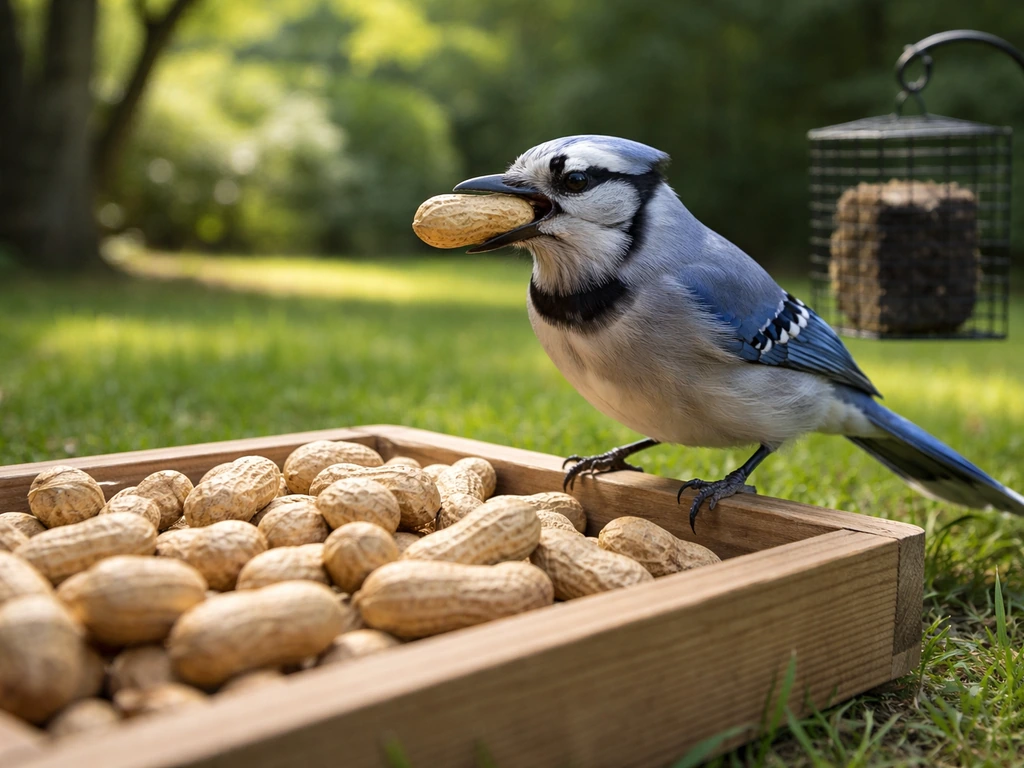
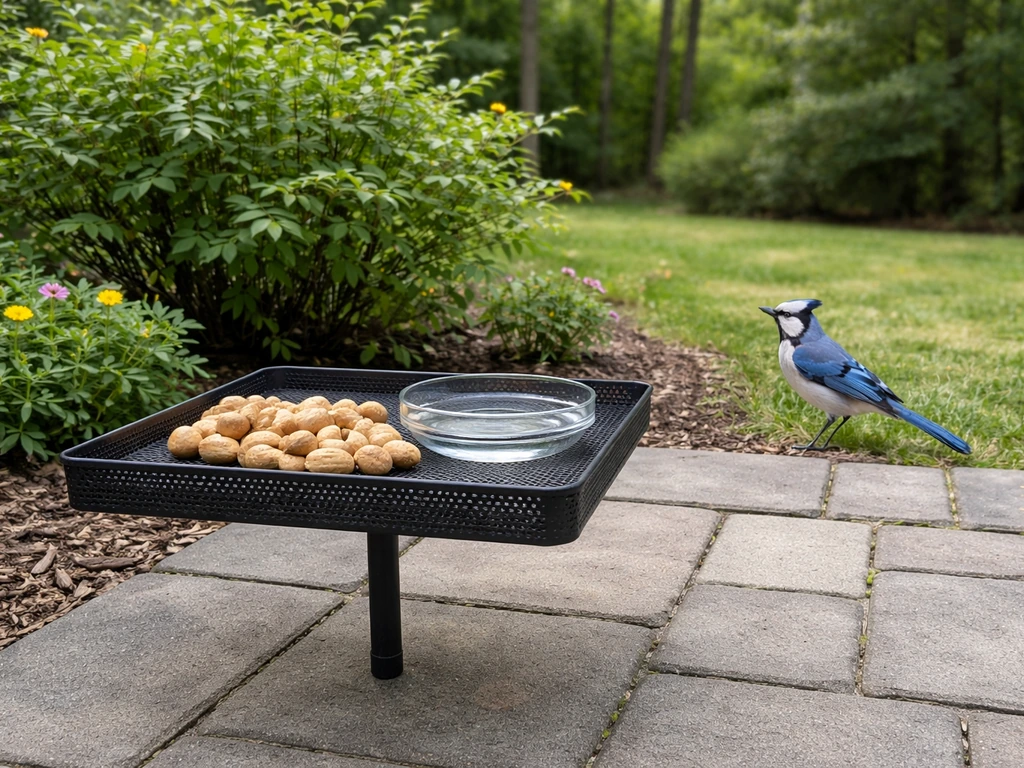
Peanuts are your best tool. Cornell Lab's feeder observation program documents blue jays visiting peanut feeders consistently, picking whole peanuts over other offerings. Suet is also a strong attractant. Platform feeders work best because blue jays are large birds and prefer open surfaces where they can land, assess their surroundings, and grab food without being cramped. Avoid tube feeders with small perches. Blue jays will ignore them.
Place feeders at least 30 feet from windows to reduce collision risk. Closer than 3 feet is the other safe zone (birds hit windows because they can't distinguish the glass, not because they're flying too fast from nearby feeders), but 30 feet or more gives the bird a longer flight path and time to course-correct. The Wildlife Center of Virginia lists window collisions as one of the most significant causes of bird injury and death, and feeder placement is one of the easiest ways to reduce that risk. Wildlife Center of Virginia also recommends managing feeder and bath placement, including an about-30-feet-away approach, to reduce the collision risk window collisions as one of the most significant causes of bird injury and death.
Mount feeders on pole-mounted stations with predator guards to keep cats away. Blue jays are sharp enough to notice and avoid areas where predators lurk, and if a cat has spooked one near your feeder, that bird may avoid the spot for days.
Water, cleaning, and feeder hygiene
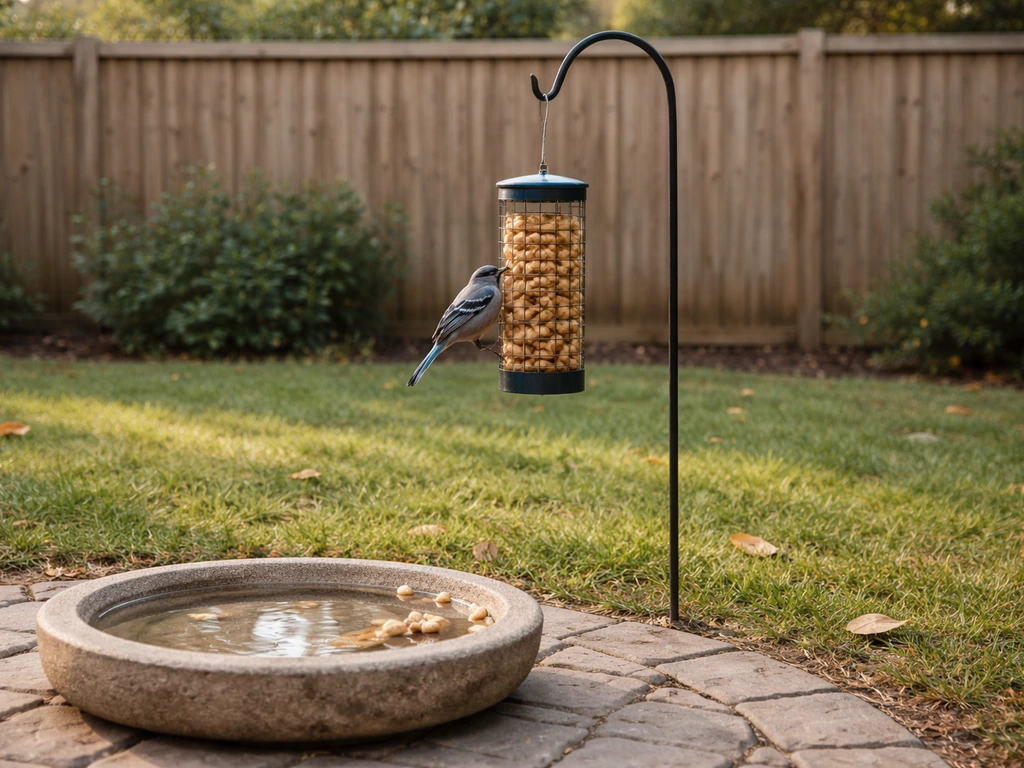
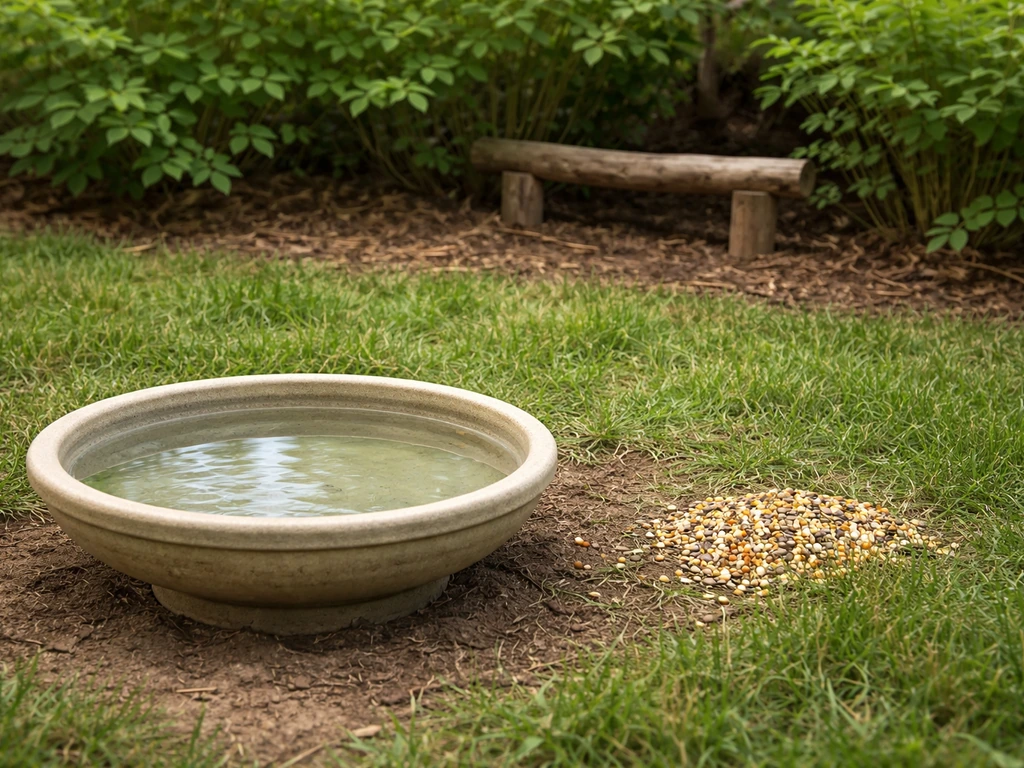
Add a birdbath with fresh water, ideally with a gentle dripper or wiggler. Blue jays are drawn to moving water sounds. Change the water every 1 to 2 days. For feeders, clean them about every two weeks following Cornell Lab's Project FeederWatch guidance. A diluted bleach solution (roughly 1 part bleach to 9 parts water) works well as a disinfectant; rinse thoroughly and dry completely before refilling. Also clear debris and old seed from the ground under feeders, which harbors disease and attracts rodents.
Timing and routine
Refill feeders at the same time each morning. Blue jays are early risers and will learn your schedule faster than you expect. Once you're part of their foraging map, they'll show up before you do. Sit quietly near the feeder area at the same time each day. Don't look directly at the birds. Wear neutral-colored, non-reflective clothing. The goal is to become furniture: present, predictable, and unthreatening.
Live trapping: when it's appropriate and when to skip it
Live trapping a blue jay should be a genuine last resort, not a first response. The stress involved is significant, legal hurdles are real, and the practical success rate for untrained people is low. That said, here's what you need to know if it's truly necessary.
First, contact your state wildlife agency and confirm that capture and relocation is permitted in your state and situation. Many states prohibit releasing a trapped bird on public land or another person's property. In Massachusetts, relocating wildlife off your property is outright illegal. Get written confirmation of what you're allowed to do before you set any trap.
If you do receive permission, use a live cage trap (a Havahart-style trap) baited with whole peanuts. Place it in an area the bird already visits. Check the trap every 30 to 60 minutes without fail. A bird left in a trap for hours in heat or cold, or without water, can die. Once caught, cover the trap with a light cloth immediately to reduce visual stimulation and keep the bird calmer.
For injured birds specifically, trapping may be necessary to get them to a rehabilitator, but the handling protocol changes. See the section on handling safety below.
For comparison, the ethical framework for managing trapped birds is consistent across species. The same careful, legally-aware approach applies whether you're reading this guide or learning how to catch a crane bird, where live trapping decisions are similarly governed by state and federal wildlife rules.
Handling safety: protecting yourself and the bird
If you ever need to handle a blue jay, whether it's injured, trapped, or has flown into your home, follow these steps to minimize harm to both of you.
- Wear thick gloves. Blue jay beaks are strong and can puncture skin. Their claws are sharp. Even a disoriented bird will instinctively bite and scratch.
- Dim the lights if you're indoors. A bird in a bright room will panic and fly into walls. Dimming lights calms them quickly.
- Drape a lightweight towel over the bird before picking it up. This reduces visual input, calms the bird, and protects your hands. The Center for Wildlife specifically recommends this technique for wildlife rescue.
- Wrap gently but firmly. Loose enough to breathe, firm enough that it can't flap and injure itself. Hold the wings folded against the body.
- Place the bird in a well-ventilated cardboard box with air holes punched in the top. Line it with a soft cloth. Do not use a wire cage for transport as the bird will injure itself trying to escape.
- Keep it dark, quiet, and warm (but not hot). Do not offer food or water during transport unless a rehabilitator specifically advises it.
- Get it to a licensed wildlife rehabilitator as fast as possible. The American Bird Conservancy is clear that most injured birds need professional medical treatment, not home care.
Do not attempt to splint wings, treat wounds, or house the bird long-term on your own. Beyond being illegal without a federal permit, it rarely ends well for the bird. The U.S. Fish and Wildlife Service's standard guidance is to minimize handling, place the bird somewhere quiet, and call a professional.
Troubleshooting: when the blue jay won't cooperate
It won't come close
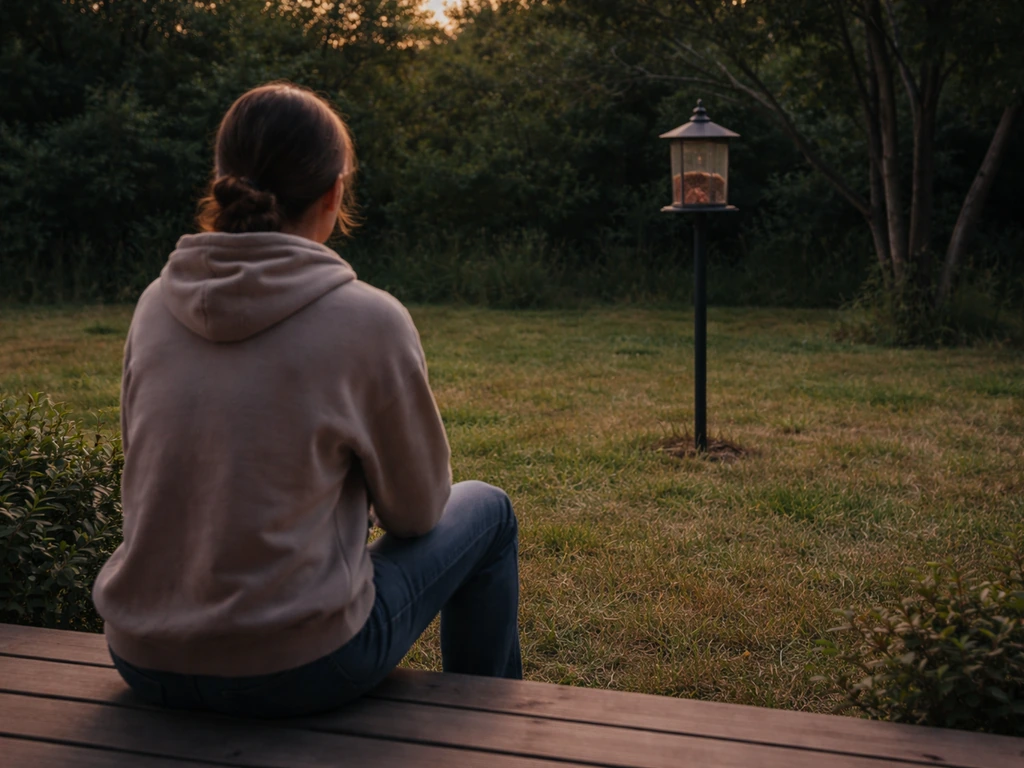
Give it more time and less stimulus. If you've been standing near the feeder, step back by 10 feet. Reduce movement entirely during feeder visits. Blue jays study new situations carefully before committing. A bird that sits in a tree watching your feeder for 15 minutes is not avoiding it, it's evaluating it. That's normal. Don't chase or approach.
It gets spooked every time you move
Wear the same neutral-colored clothes each session. Avoid sunglasses, which can look like large predator eyes. Move in slow, deliberate patterns rather than quick motions. Sit in a chair rather than standing. Being lower and stationary makes you far less threatening in the bird's perception.
It keeps attacking
If a blue jay is dive-bombing you, you're near a nest. This is strong territorial behavior and it peaks in spring. Don't approach that area again until late summer when nesting is complete. There is no useful technique to stop a nesting bird from defending its nest. Just change your route and wait it out.
It visits the feeder but won't get closer to you
This is the most common situation, and patience is the only real answer. Start by moving your chair slightly closer to the feeder each week, not each day. Hold a few peanuts in an open, still palm while you sit. Don't move your hand toward the bird. Let it make the decision to approach on its own timeline. Some birds take months. That's not failure, that's how wild birds work.
Other birds are keeping it away
Blue jays are dominant at most feeders, but larger gatherings of starlings or grackles can temporarily displace them. Add a second feeder away from the main station, dedicated to peanuts, and the blue jay will often claim it as its own territory.
A quick comparison: attracting vs trapping vs professional intervention
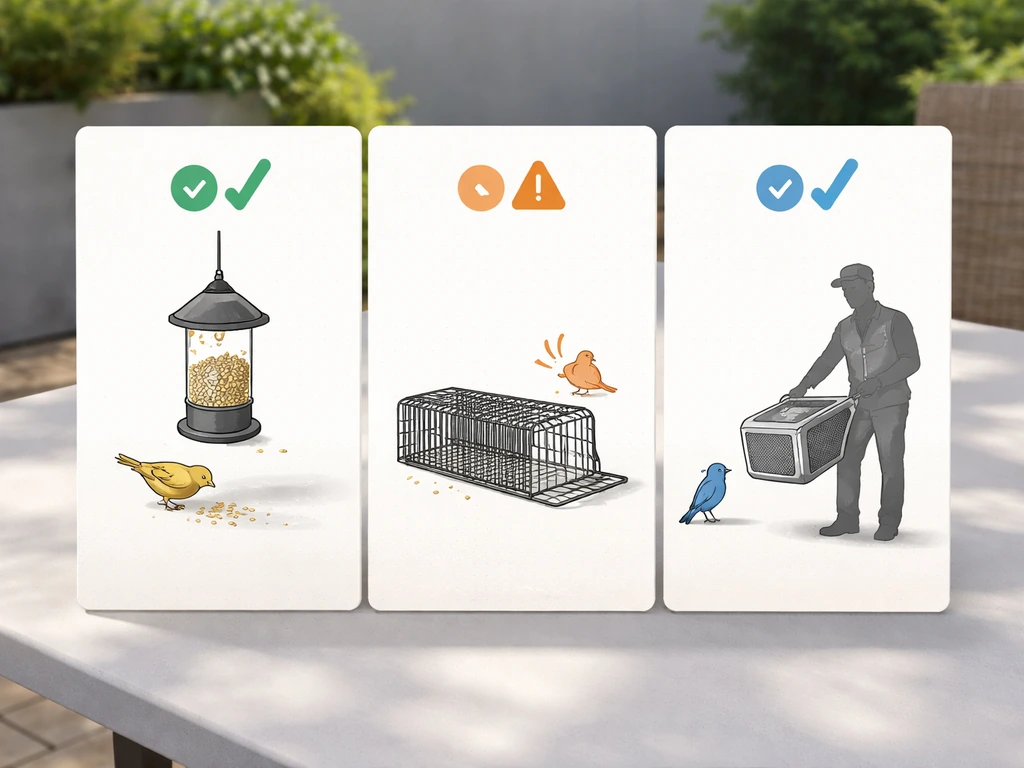
| Method | Best for | Legal status | Stress to bird | Recommended? |
|---|---|---|---|---|
| Feeder/food luring | Regular visits, trust-building | Always legal | None | Yes, start here |
| Patience/presence sessions | Getting the bird to approach you | Always legal | None | Yes, primary strategy |
| Live trapping (with permit) | Nuisance relocation, injured bird rescue | Legal only with state approval | High | Last resort only |
| Physical hand-capture | Injured bird in emergency | Requires federal/state permit | Very high | Only if no other option |
| Wildlife rehabilitator | Injured, orphaned, or ill birds | Always legal and recommended | Minimized by professionals | Yes, for any health emergency |
Building trust over time: what a realistic timeline looks like
Here's what to actually expect if your goal is getting a blue jay to approach you comfortably. This timeline assumes daily sessions of 20 to 30 minutes near an active feeder.
| Timeframe | What typically happens |
|---|---|
| Week 1 to 2 | Blue jay discovers feeder, visits when you're not present or at a distance |
| Week 3 to 4 | Bird begins visiting while you're seated quietly nearby, stays alert and watchful |
| Month 2 | Bird tolerates your presence at 10 to 15 feet without flushing immediately |
| Month 3 | Some birds will land on a nearby surface while you hold food; most stay at feeder distance |
| Month 4 and beyond | Occasional hand-feeding possible with the most bold individuals; most birds settle at 5 to 8 feet comfort zone |
| Setbacks | Any sudden disruption (loud noise, new person, predator sighting) can reset progress by 1 to 2 weeks |
This trust-building framework is consistent across many wild yard birds. If you're also working with other species in your yard, the foundational approach used for blue jays transfers well. For example, the incremental patience strategy described here is essentially the same method explained in guides like how to catch a cardinal bird, another feeder-loyal species that rewards consistency over time.
Smaller songbirds respond similarly but can progress faster because they're often more accustomed to human proximity in suburban areas. The techniques for attracting a finch bird close enough to observe or hand-feed share the same core steps: reliable food, predictable timing, reduced stimuli, and patient presence.
When to stop and call a professional
Stop trying to handle or approach a blue jay yourself if any of these apply:
- The bird is on the ground and not flying away from you (this usually means something is wrong, not that it's tame).
- You see visible injury: drooping wing, bleeding, or inability to hold its head up.
- The bird is breathing with its mouth open and not in intense heat.
- A baby blue jay (fluffy, short tail, yellow gape) has fallen from a nest.
- The bird has been in the same spot for more than a few hours without moving.
In any of those situations, contact your nearest licensed wildlife rehabilitator. The Minnesota DNR notes that rehabilitators are specifically trained to minimize additional suffering and to manage the stress of capture and containment. You can find a licensed rehabilitator through the National Wildlife Rehabilitators Association or your state wildlife agency's website. If you must move the bird to safety before help arrives, use the towel-and-box method described in the handling section above.
The same escalation principle holds for other species you may encounter. Whether you're looking into how to catch a dove bird or managing any other protected wild bird, the rule is the same: attraction and trust-building are always your first tools, and a licensed professional is always your resource when the bird is in distress.
Your next steps, starting today
If you want a blue jay to visit your yard reliably, do these things today: pick up whole peanuts or a peanut feeder, set it on a platform or tray feeder in a visible, open location at least 30 feet from windows, and fill it before 8 a.m. tomorrow. Then sit outside near it for 20 minutes without looking directly at any birds that arrive. That's it. That's the first session.
If your situation involves a bird that needs to be moved or is injured, call your state wildlife agency today to understand your legal options before you take any physical action. For an injured bird, skip that step entirely and go straight to a wildlife rehabilitator.
Blue jays are genuinely rewarding birds to spend time around once they trust you're not a threat. They're smart enough to recognize individual humans, vocal enough to tell you when they're happy with your offerings, and bold enough that, with patience, some individuals will eventually eat from your hand. That outcome is worth working toward the right way. And if you're also working on attracting other curious, capable birds alongside them, exploring guides like how to catch a canary bird for indoor taming context can give you a useful comparison point for how trust-building differs between wild and domesticated species.
FAQ
Are blue jays protected even if I find them on my property or near my feeders?
Yes. They are protected under the Migratory Bird Treaty Act, so “I found it on my land” does not remove restrictions on taking, capturing, or handling. You can still attract and observe them, but physical capture or relocation generally requires state-specific permission and (for most actions) a federal permit.
What should I do if a blue jay keeps attacking my windows or flying into the same spot?
Treat it as a collision hazard, not a “behavior problem.” Increase feeder distance to at least 30 feet if possible, and add visual cues on the glass (for example window film or blinds) to break up reflections. If the bird is injured, do not attempt to “catch and fix,” contact a wildlife rehabilitator immediately.
Can I use bread, corn, or birdseed instead of peanuts to attract a blue jay?
Peanuts (whole, in particular) are usually the most reliable choice for consistent visits, and suet is also a strong attractant. Generic mixes can work inconsistently because blue jays can prefer specific items they trust, and the wrong choices can increase competition with other species that may crowd them out.
How often should I clean the feeder and birdbath, and what if I see droppings or mold?
Clean feeders about every two weeks and remove old seed and debris under and around them to reduce disease and rodents. For the birdbath, change water every 1 to 2 days, and if you see heavy contamination, disinfect the feeder/bath and fully dry before refilling (rinsing well so no residue remains).
What if the blue jay won’t come back after I change the feeder location or timing?
Expect a “recalibration” period. Blue jays rely on learned routines and caches, so moving too fast can reset the foraging map. Revert to the previous setup for several days, keep the same morning refill time, then make one small change at a time so they can evaluate the new conditions without pressure.
Is it safe to try to hand-feed a blue jay once it seems comfortable?
You can progress gradually, but do it without escalation. Keep sessions short, stay seated, and avoid reaching toward the bird. If the bird shows stress signals (hard stares, sudden backing away, repeated sudden flights), stop trying to close the distance and return to passive presence until it settles.
What are clear signs that I should stop trying to approach and contact a rehabilitator?
Stop and call help if the bird appears weak (can’t perch normally), has visible injuries, is acting disoriented, is bleeding, or is repeatedly making contact with hazards. Also treat “unusual silence” or a blue jay acting unlike its typical high-alert behavior as a reason to seek professional guidance.
Can I relocate a blue jay that’s bothering my other birds or nesting nearby?
Relocation is typically the wrong first step and often illegal. The aggressive behavior described is usually territorial. Instead, reduce conflict by adjusting resources (spacing feeders, managing crowding, and using appropriate nearby planting/cover). If nest-defense behavior puts people at risk, contact your state wildlife agency for non-capture solutions.
If I must trap a blue jay for an emergency, what’s the biggest mistake to avoid?
Leaving the bird unattended. Check live traps every 30 to 60 minutes at minimum, and never ignore weather risks, heat, or cold exposure. Also, prepare the permit and release location rules in advance, because in many places you may not be allowed to release a trapped bird where you want.
How long should trust-building take before I give up?
There is no universal timeline. Some blue jays take weeks to months to eat from a hand or get very close, especially if there has been prior disturbance. A practical decision aid is to maintain consistent feeding and low-stimulus presence for several weeks; if there is zero improvement and the bird avoids even the safe feeder area, reassess feeder type, placement, and your movement level rather than escalating attempts.
Next Articles
How to Catch a Raven Bird Safely and Humanely
Humane, safe steps to earn a wild raven’s trust with food and routines, plus when not to catch
How to Catch a Cardinal Bird Safely and Humanely
Humane guide to attract northern cardinals to your yard with safe feeder setup, food, water, and trust-building tips.
How to Catch a Dove Bird Safely and Humanely
Humane steps to gain a dove’s trust, set safe bait and shelter, and learn low-stress handling only when needed.