
The most effective way to catch a loose canary is not to chase it, it's to lure it into a familiar cage or baited enclosure using food, a calm voice, and patience. Chasing a canary almost always causes it to panic, fly into walls, and injure itself. Whether you're dealing with an escaped pet canary inside your house, a canary that got out into your yard, or a small yellow bird you've spotted near your home and aren't quite sure what it is, the core method is the same: reduce the bird's fear, give it a reason to come closer on its own, and then close the door once it's safely inside. Ravens can be wary and may require a different approach than small pet birds, so use the bird-specific guidance in this guide to plan safely how to catch a raven bird.
How to Catch a Canary Bird Safely and Humanely
First: escaped pet canary or something else?
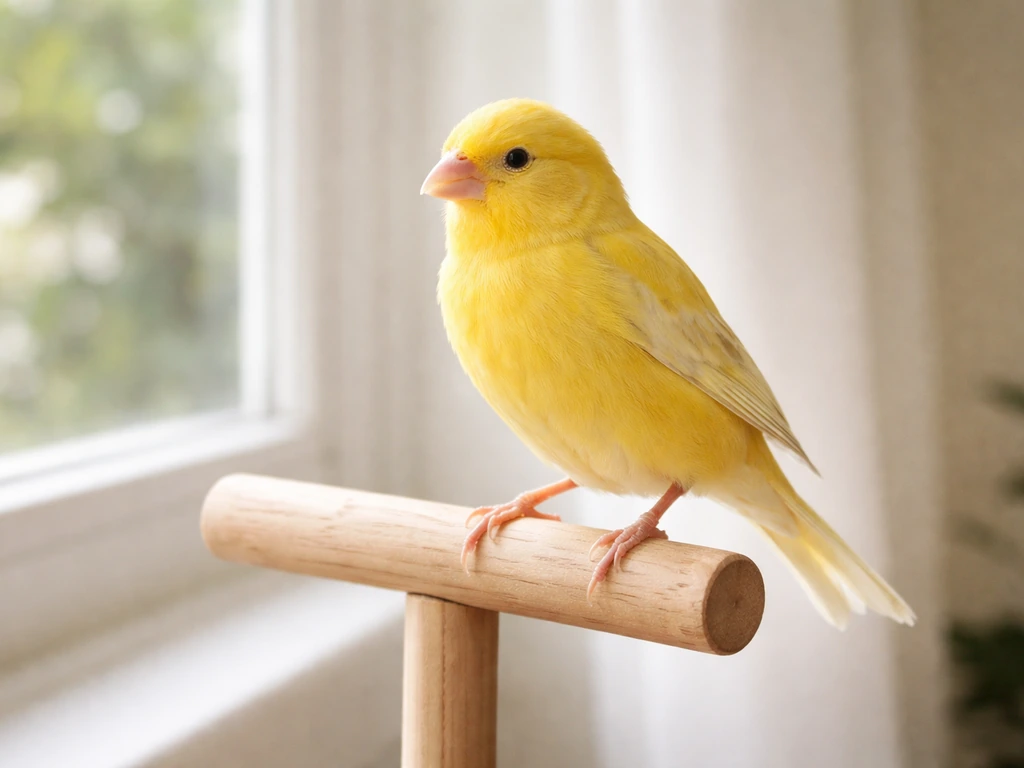
Before you do anything else, take a moment to figure out what you're actually dealing with, because the right approach depends on it. A true canary (Serinus canaria domesticus) is a small songbird, usually 4–5 inches long, most commonly bright yellow but also orange, white, or variegated. They have a round head, a short conical beak, and a distinctive melodic song. If the bird you're seeing matches that description and is acting tame or confused (landing near people, not fleeing at normal distances), it's almost certainly an escaped pet, and that's good news, because pet canaries are used to humans and often respond to voices and food quickly.
If the bird looks similar but isn't quite right, it's very skittish, has streaky brown coloring, or you're outdoors in a region with wild finch species, you may be looking at an American goldfinch, a pine siskin, or another wild finch. Wild birds in the US (and most countries) are protected under law, and catching them without a permit is illegal. The good news is that the luring and observation tactics in this article apply to either situation, but you'll need to call a licensed wildlife rehabilitator instead of trying to keep or tame a wild native bird. If you're dealing with a wild finch, focus on luring and observation, and get help from a licensed wildlife rehabilitator if you're not sure it isn't protected. If the bird you've found is clearly injured or grounded, skip ahead to the legal/ethical section near the end of this article.
One more scenario worth naming: some readers searching for how to catch a canary are actually looking for how to attract one to their yard or set up a humane trap for a stray canary someone else's bird has escaped. If you are trying to figure out how to catch a blue jay bird instead, the same non-chasing approach of using a humane setup and luring with food can give you a better chance of success. If you are actually trying to learn how to catch a cardinal bird, the good news is many humane luring and humane-trap basics overlap with canary capture tactics. All of those situations are covered here. If you meant how to catch a crane bird, the same idea applies: use a safe lure, reduce stress, and avoid risky chasing. The methods for catching a dove bird or a finch bird share a lot of overlap with canary capture tactics, but canaries are slightly more human-habituated than wild species, which makes them a little easier to work with. These same gentle lure-and-catch principles can also help if you’re trying how to catch a dove bird.
When to stop and call for help instead
If the bird is grounded, bleeding, breathing with its mouth open, or unable to perch, it needs a wildlife rehabilitator or avian vet right away, not a DIY capture attempt. The same applies if you're not sure whether the bird is a canary or a protected wild species. In those cases, observe from a distance, contain the area if you can (without cornering the bird), and contact your local avian rescue or animal control for guidance before you touch anything.
Set yourself up before you try anything
The single biggest mistake people make is rushing into a room or yard and trying to grab the bird immediately. Spend five minutes on prep first, it makes everything easier and keeps the bird safer.
Supplies to gather
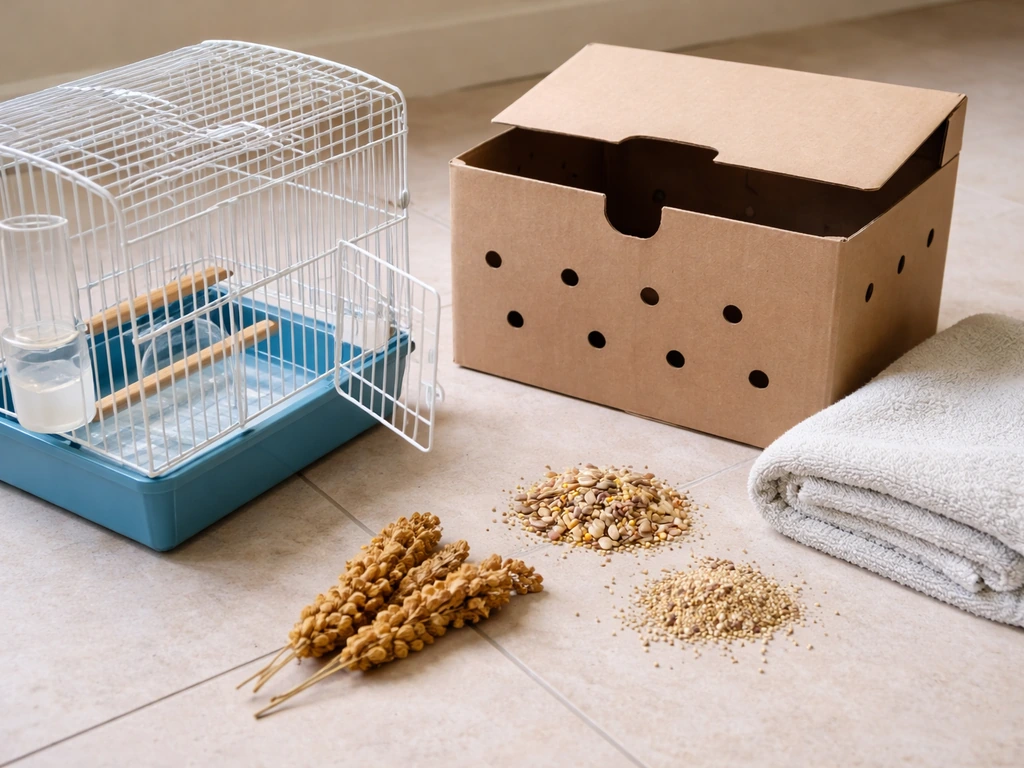
- A cage: ideally the canary's own cage, or any small bird cage with a door that opens wide and latches quickly. If you don't have one, a cardboard box with ventilation holes punched in the sides will work temporarily.
- Familiar food: canary seed mix, a spray of millet, a slice of cucumber or apple. Smell and visual familiarity are your best tools.
- A light towel or cloth (not fluffy — something thin enough to feel where the bird is under it). This is a backup for direct handling, not your first move.
- A small dish of water.
- A phone or tablet to play canary song recordings (YouTube or a bird song app works fine).
- A helper if possible — one person to herd gently, one to manage the cage door.
Indoor setup: reduce hazards and limit the space
If the bird is inside the house, close every door and window before you do anything else. Check for ceiling fans (turn them off), open toilets (close the lid), mirrors and large windows (draw curtains or blinds, canaries can fly full speed into glass), and any gaps behind large appliances. The goal is to get the bird into the smallest, safest space possible. Ideally, herd it gently from open areas into a single room. Move slowly, avoid sudden arm movements, and don't raise your voice. A frightened canary can hit a wall hard enough to injure itself.
Outdoor setup: define a zone and work with daylight
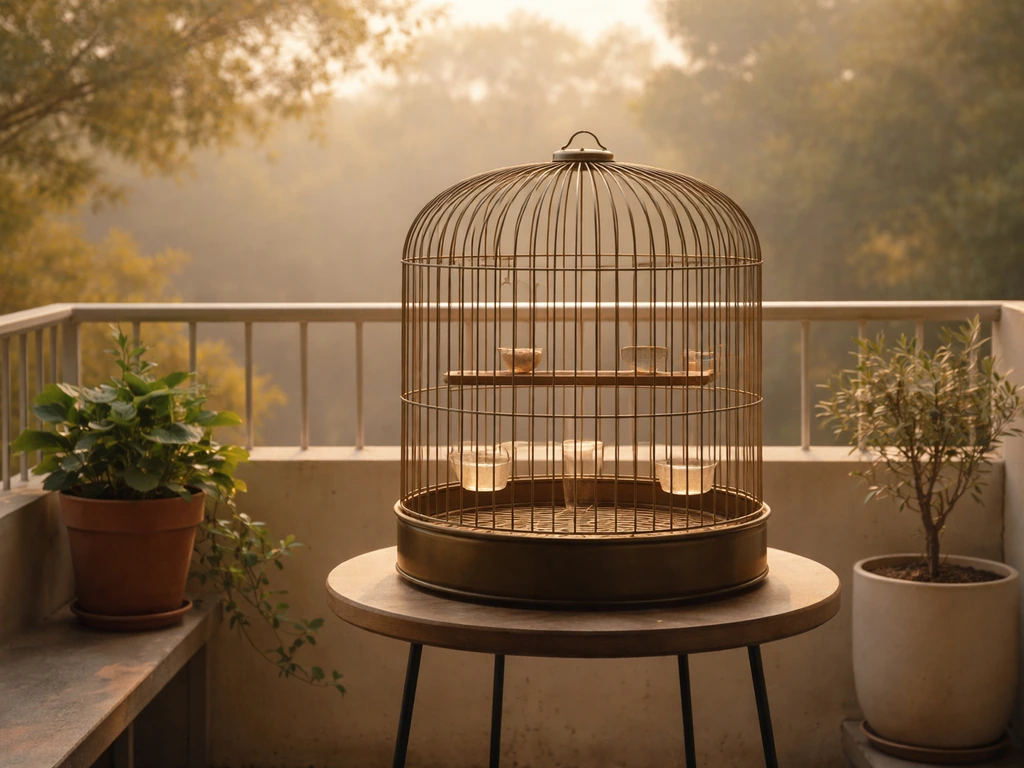
Outdoors is harder because you can't close a door. Your best tools are timing and environment. Canaries are most active and approachable in the early morning (first two hours after sunrise) and late afternoon. Midday is the worst time to attempt a catch because birds are more alert and heat-stressed. Identify where the bird is landing and perching most often, set up your lure station there, and stay back. Don't attempt to corral or chase a canary in an open yard, it won't work and will exhaust the bird.
How to lure a canary close enough to catch
Luring is the heart of the whole process. Done right, the bird essentially walks into the trap on its own, and that's infinitely better than any grab-and-chase method.
Use the cage as the lure
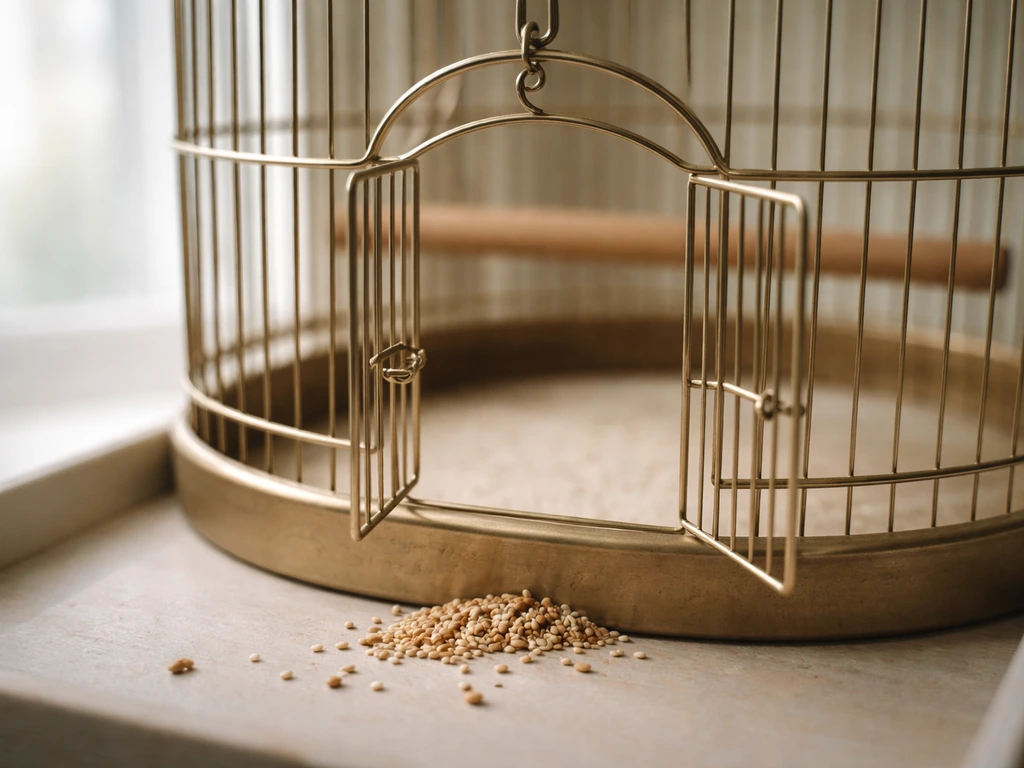
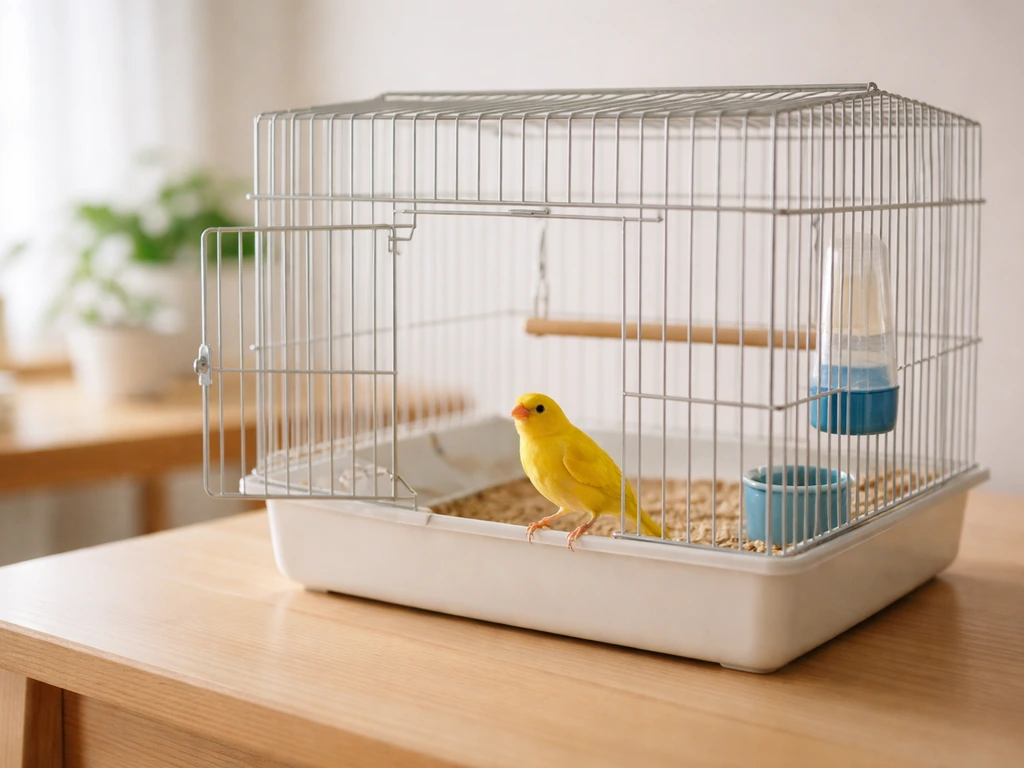
If you have the canary's own cage, this is your strongest tool. Place it at the bird's eye level (not on the floor, canaries feel vulnerable low to the ground). Open the door wide, put fresh seed and a small treat inside, and then back away. Sit down or crouch if you're nearby, being at bird eye level is less threatening than looming over it. Many escaped pet canaries will fly back into their own cage within minutes if it's placed correctly and the area is quiet.
Food and scent
Canary seed mix scattered lightly near the cage entrance draws the bird toward the source. Spray millet is particularly effective, canaries find it irresistible. Place a small piece just inside the cage door and a few seeds leading up to it like a trail. If you're working outdoors, a shallow dish of seed on a flat surface (a garden table or deck railing) works well. Change it fresh every few hours so the smell stays strong.
Voice and recorded song
Canaries respond strongly to familiar voices and to the sound of blank" rel="noopener noreferrer">other canaries singing. Talk to the bird softly using its name if you know it, or play a canary song recording quietly from your phone. Keep the volume low, you want the bird curious, not startled. Place the phone near the cage entrance so the audio draws the bird toward the opening rather than toward you. This technique works particularly well for birds that are perched high and reluctant to come down.
Light and cover
Canaries prefer well-lit areas and tend to fly toward light. If your bird is in a dim room, open curtains in the room where the cage is placed, and close the lights in adjacent areas. The bird will naturally move toward the lighter space. Conversely, if you need to calm a bird that's flying frantically, dimming the room (not full dark) can slow it down and reduce panicked flight. Outside, positioning the cage in a lightly shaded spot (not full sun) with nearby low shrubs or a perch gives the bird somewhere to land and observe before entering.
Humane capture methods: how to actually close the deal
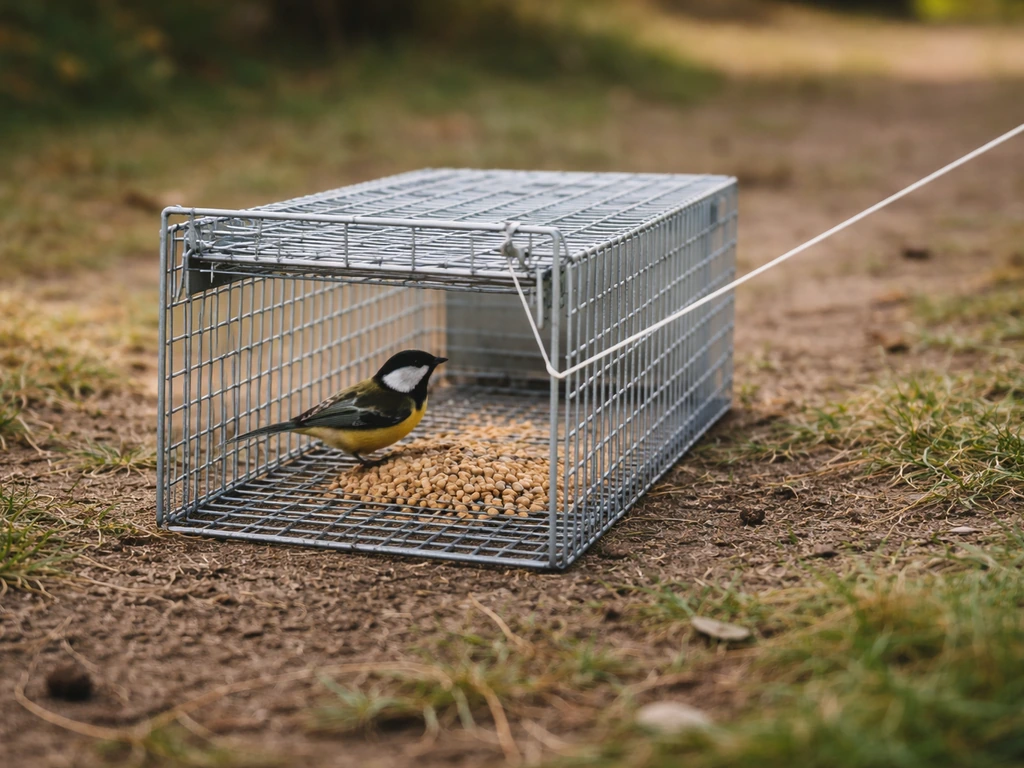
There are two main approaches, and which one you use depends on whether the bird has entered or is approaching the cage.
The passive trap method (best for most situations)
Set up the baited cage, attach a thin string to the cage door, and run it to your position 8–10 feet away. Sit quietly, don't move, and wait. When the bird goes inside, pull the string to close the door. This works indoors and outdoors and is by far the least stressful method for the bird. It requires patience, sometimes 20 minutes, sometimes a couple of hours, but it's worth it. If you have a spring-loaded cage door with a trigger perch (the kind sold for trapping birds for banding purposes), that works even better for outdoor scenarios.
Guided entry: directing the bird into the cage
If the bird is inside and will not approach the cage on its own, you can gently herd it toward the cage using slow arm movements, guiding it from behind and to the sides. Never rush or flap your arms, move like you're directing water, not chasing. Get the bird to the same wall as the cage, then let it find the opening. One person guides, the other watches the door. The moment the bird is fully inside, close the door quietly.
Towel catch: only as a last resort
If the bird is exhausted, grounded, or stuck somewhere it can't fly out of, a towel catch is appropriate. Approach slowly, drop a thin towel gently over the bird (covering the head first, this immediately reduces panic), then cup both hands around the bird through the towel, holding the wings against the body. Do not squeeze. Move directly to the cage or transport box, lower the bird inside, and remove the towel from below. This method causes less stress than it looks like, but it should not be your opening move, always try luring first.
What to do in the first 30 minutes after you catch it
Getting the bird into the cage is step one. What you do next matters a lot for how quickly it settles.
Calming the bird immediately
Once the bird is secured, partially cover the cage with a light cloth. Leave the front partially open so it can see out but feels sheltered on the sides and top. A high corner perch inside the cage helps enormously, canaries feel safest when they can get up high and assess their surroundings. Keep the room quiet, reduce foot traffic around the cage, and lower your own voice for at least 30 minutes. Don't tap the cage, don't reach inside, and don't let other pets (cats, dogs) approach. The bird needs to understand it's safe before anything else happens.
Food, water, and warmth
Make sure fresh seed and clean water are accessible inside the cage before you close the door. A stressed or escaped bird can become dehydrated quickly, especially if it's been loose for more than a few hours. If the bird seems cold, lethargic, or fluffed up (a sign of stress or illness), provide warmth: place a heating pad on low under half the cage bottom, with a folded towel between the pad and the cage floor so the bird can move away from the heat if needed. The target ambient temperature for a stressed canary is around 80–85°F (27–29°C). Never place the entire cage on a heating pad, always give the bird a cooler side to retreat to.
If the bird needs transport (to a vet or rescue)
Use a small carrier, travel cage, or a cardboard box with ventilation holes punched in the sides. Line it with a paper towel or thin cloth, not fluffy material that can catch toes. Hold the box steady and level during transport. Do not put food and water dishes that can slosh or tip. Keep the car quiet and at a comfortable temperature. Cover the box to reduce visual stimulation during the drive.
Building trust after you've got the bird secured
Catching the bird is the beginning, not the end. Whether this is your own escaped canary or a stray you've taken in, the taming and trust-building process follows a predictable timeline, and rushing it always backfires.
Days 1–2: just let it settle
For the first 48 hours, your job is to be present without being a threat. Sit near the cage for 10–15 minutes at a time, speak softly, and let the bird watch you. Don't try to handle it, don't reach into the cage, and don't move the cage to different locations. Consistency in environment lowers the bird's stress baseline. By the end of day two, most canaries that were previously tame will be eating normally and moving around the cage calmly. If a bird is still huddled, fluffed, or not eating after 48 hours, call an avian vet.
Days 3–7: start building association
Start offering treats through the cage bars by hand, spray millet works well here. Don't push the treat forward; just hold it still and let the bird come to you. Talk in a calm, low voice while you do this. By mid-week, many canaries will approach the bars when you sit down near the cage, especially if feeding time has become predictable. Routine is your best tool: same times, same motions, same voice.
Week 2 and beyond: hand taming milestones
Canaries are not typically step-up birds the way parrots or cockatiels are, but they can become remarkably comfortable with humans if you're consistent. By week two, a previously tame bird should be singing again (silence is a stress indicator), eating a full diet, and approaching you when you open the cage door. A bird that's new to human contact will take longer, sometimes four to six weeks before it reliably accepts your hand near it without fleeing to the far side of the cage. Don't rush it. Every positive interaction is a deposit in the trust account.
| Timeline | What to expect | Your action |
|---|---|---|
| Day 1–2 | Flighty, quiet, possibly not eating | Partial cage cover, minimal disturbance, ensure food and water are accessible |
| Day 3–5 | Starting to eat, watching you | Sit nearby, talk softly, offer millet through bars |
| Day 6–7 | Approaching cage bars, more active | Begin consistent treat sessions, keep routine tight |
| Week 2 | May start singing, less cage-hugging | Open cage door supervised, let bird set the pace |
| Week 3–4 | Comfortable near hand, tolerates presence | Hand treats inside cage, gentle handling attempts if needed |
| Week 5–6+ | Singing regularly, approaching confidently | Trust is established — continue positive reinforcement daily |
When things aren't going to plan
Most canary catch attempts hit at least one snag. Here's how to troubleshoot the most common ones.
The bird won't enter the cage or approach the food
- Move the cage closer to where the bird is actually spending most of its time — not where you want it to be.
- Try a different food: if canary seed isn't working, try live mealworms, fresh cucumber, or a hard-boiled egg crumble. Variety often breaks the standoff.
- Reduce your own presence. If the bird can see you, it may be too alert to approach. Set up the lure and leave the area entirely for 20–30 minutes.
- Check whether something near the cage is scaring the bird: a window with movement outside, a humming appliance, or another pet in view.
The bird panics when you approach the cage
- Back off and reduce stimulation. Dim the room slightly (not dark) and sit on the floor rather than standing — your height is intimidating.
- Play a canary song recording at low volume from near the cage to help the bird associate the space with safety.
- Partially cover three sides of the cage so it feels like a shelter rather than an exposed box.
The bird keeps escaping or won't stay contained
- Check every gap: canaries can squeeze through openings you'd never suspect. If your cage has bars more than half an inch apart, the bird can fit through.
- Outdoors: if the bird keeps leaving the lure area, try setting up the cage inside a larger enclosure like a pop-up bird aviary or a screened porch — the extra enclosure layer gives you a buffer.
- Don't keep attempting catches in rapid succession. Each failed attempt increases the bird's fear response. Reset, wait 30 minutes, and try a quieter approach.
The bird fluttered into something and seems hurt
If the bird hit a window, flew into a wall, or is sitting grounded and not moving normally, stop the catch attempt immediately. Use the towel method to gently secure it, place it in a ventilated box lined with a paper towel, and call an avian vet or wildlife rehabilitator. Don't try to splint wings or examine injuries yourself, canaries are fragile and internal injuries aren't always visible.
The legal and ethical side of catching a bird
Canaries (Serinus canaria domesticus) are domesticated birds and are not protected under the Migratory Bird Treaty Act in the US or equivalent wildlife laws in most countries. You can legally catch, keep, and tame an escaped or stray domestic canary without a permit. However, it's worth posting found-bird notices locally (Nextdoor, Facebook groups, vet offices) in case the bird has an owner searching for it.
Wild birds are a completely different story. In the US, most wild songbirds, including goldfinches, siskins, and other canary-lookalikes, are protected under federal law. Catching, possessing, or transporting them without a permit is a federal offense. If you are not certain the bird is a domestic canary, do not attempt to keep it. Instead, contain the area, observe from a distance, and contact a licensed wildlife rehabilitator. Columbus Audubon similarly recommends contacting animal control or a local wildlife rehabilitation center and provides guidance for trapped birds contact a licensed wildlife rehabilitator. The same principle applies if you've found a canary that appears ill or injured: a rehabilitator or avian vet should assess it before you attempt any intervention.
Ethical checklist before you catch
- Confirm the bird is a domestic canary, not a protected wild species.
- Check for signs of ownership: a leg band, unusual tameness near humans, or evidence someone nearby is looking for a lost bird.
- Post a found-bird notice in your neighborhood before keeping any stray bird.
- Use the least stressful capture method available — luring and passive trapping before any direct handling.
- If the bird is injured, sick, or you're unsure of the species, contact a wildlife rehabilitator or avian vet before proceeding.
- Do not use sticky traps, adhesive glue boards, or nets not designed for safe bird capture — these cause serious injury.
- Once caught, minimize handling until the bird is calm and oriented.
If you're dealing with a wild bird that's in immediate danger (stuck somewhere, surrounded by cats, injured in a visible way), it's legal in most places to temporarily contain it for transport to a rehabilitator, but keeping it is not. The moment you have it contained, make the call. Most wildlife rehabilitators are listed through your state wildlife agency or through organizations like the National Wildlife Rehabilitators Association.
To recap the core workflow: don't chase, do lure. Set up a safe environment first, use food and familiar sounds to bring the bird to you, close the door once it's inside, cover the cage partially to calm it, and then let time and routine do the trust-building work. It's slower than grabbing, but it's the only method that ends with a calm, healthy bird that actually tolerates being near you.
FAQ
How do I know if I should keep trying to lure, or stop and get professional help?
A good sign it is safe to proceed with the same lure-and-catch approach is if the bird repeatedly chooses to approach your voice or food, even if it hesitates. If it keeps trying to escape, repeatedly crashes into surfaces, or you cannot get it to step into a cage entrance after several prepared attempts, stop and switch to either a wildlife rehabilitator/avian vet (if wild is possible) or the towel method (if it is injured or clearly grounded).
What should I do if my canary keeps flying toward windows or mirrors even after I close doors?
Start by covering any reflective surfaces you cannot remove, including shiny appliance doors and picture frames, and dimming only adjacent rooms if the bird is already spiraling. Avoid full blackout, which can make the bird fly harder into what it perceives as obstacles. If the bird keeps heading toward a specific window or mirror, block that line of sight first and then reset your lure station in the room with the safest exit path.
What if the bird won’t enter the cage door after setting up food and sound?
If the bird will not enter the cage after 20 to 60 minutes, try changing only one variable at a time. For example, move the cage slightly closer to where it is perching, switch from scattered seed to a clear “trail” of millet into the doorway, or reposition the phone speaker so the song source is near the entrance rather than near you. Avoid moving the cage repeatedly, because that teaches the bird to chase the setup.
Can I cool or warm the bird during capture attempts to make it easier to catch?
Do not use that method as a primary plan. Canaries can become chilled or dehydrated quickly if they are stressed, so you want a fast, calm transition once they are inside. If it is a warm day indoors but the bird is still fluffed and not moving normally, focus first on quiet, partial covering, fresh water, and gentle warmth control (heat pad on low under half the cage). Then contact an avian vet if appetite does not return after 48 hours.
Are there common towel-catch mistakes that make injuries or stress worse?
Never place a canary on its back to restrain it, and do not try to tape or bind wings. If you must towel-catch, keep the bird’s body supported, hold wings gently against the torso, and move directly to a ventilated carrier. Any bleeding, open-mouth breathing, or inability to perch is an emergency, so plan for immediate vet or rehabilitator transport.
How can I avoid spooking the bird when I use the string-closure cage method?
If you are using a string to close the cage door, keep the string slack and out of the bird’s reach so it does not tangle or spook the bird. Stand 8 to 10 feet away, stay still, and close once the bird is fully inside. Do not pull the door closed early, because partial closures can startle the bird into collisions or prevent it from entering fully.
I’m trying this outdoors without any way to close off an area, what’s the safest alternative?
If the bird is outside and you cannot close doors, the safest “containment” is to remove hazards and reduce escape routes without cornering. Keep people and pets away, keep the area quiet, and place the cage near the bird’s most common landing spot. You can also wait for lower activity windows, early morning or late afternoon, and then execute the lure station approach.
What should I do if I suspect the canary is exhausted after being loose for hours?
Yes, but only as part of a humane plan. If you already have the bird contained in a carrier, do not keep it in a hot car even briefly, especially if the carrier is covered. Instead, move it to a stable indoor location, keep ambient temperature comfortable, and call an avian vet if it is fluffed, lethargic, or not eating.
When can I let a canary bathe after I catch it?
Do not offer bath water to a stressed or newly captured canary until it has stabilized and is eating normally. Introduce bathing only after trust is underway, because water routines can increase panic and risk chilling. Focus first on warmth control if needed, quiet, and consistent feeding.
What are the key signs that my captured canary needs a vet sooner than 48 hours?
Treat “singing” and normal posture as your main indicators. If it is silent, not eating, or remains hunched and fluffed for more than 48 hours, assume illness or injury until proven otherwise and contact an avian vet. Also watch for abnormal breathing, tail bobbing, or discharge around the beak, those are reasons not to wait.