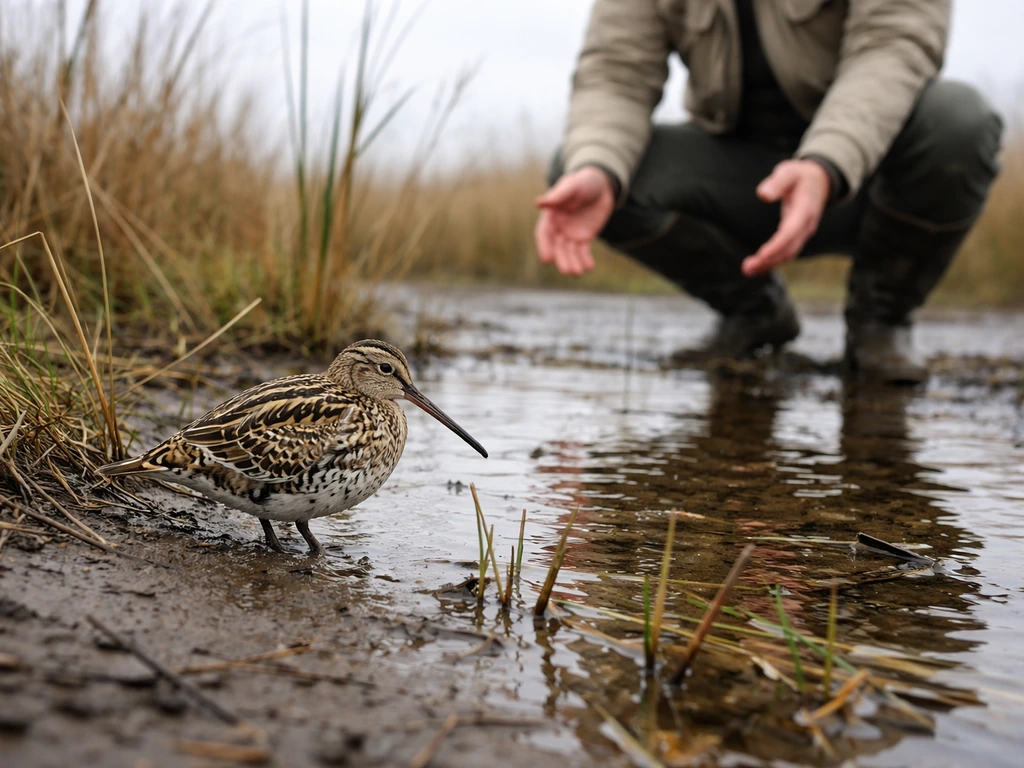
If you need to capture a bird safely, skip the snare entirely. Traditional snares and cable-loop traps cause serious injury to birds and are restricted or outright illegal for most wild species across the United States. The humane, legal way to catch a bird is to use a box trap, funnel trap, or walk-in cage, pre-bait the area over a few days, then let the bird walk in on its own.
How to Snare a Bird: Humane, Legal Alternatives and Steps
Clara Hayes
6 May 2026
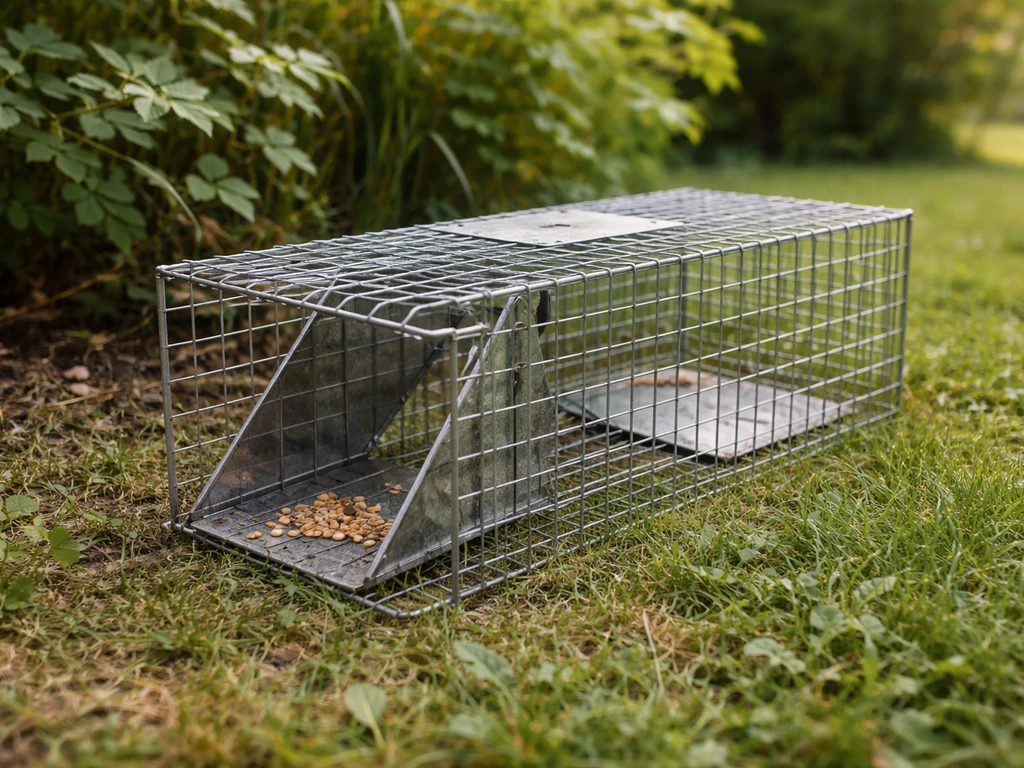
For a complete walkthrough of how to capture a bird legally and humanely, follow the matching trap and placement steps in this guide. For a pet bird like a parrot or budgie, a towel or hands-on guided approach inside a familiar space usually works better than any trap at all. Here is exactly how to do it for each situation.
If you are trying to catch a unique bird species, the steps and legal requirements can change, so check the species-specific guidance before you trap how do you catch a unique bird.
Why snaring a bird is risky and usually illegal
The word "snare" usually refers to a loop or cable set to tighten around an animal's leg, neck, or body. For birds, this is almost always a bad outcome. A tightening loop can break a leg, cut off circulation within minutes, or kill a small bird outright. Even a correctly sized snare intended for larger animals will injure a bird badly before you can check it.
Legally, you're on thin ice too. Virginia's administrative code restricts snare use on wild birds and animals, requiring written landowner permission and specific loop-size limits. Rhode Island's nuisance wildlife regulations explicitly ban spring-loaded or counterbalanced cable restraints. Missouri requires cable restraint devices to be set so the animal cannot become entangled, and violations carry real penalties. At the federal level, the Migratory Bird Treaty Act protects hundreds of common backyard species, making unauthorized capture a federal offense regardless of the method used. If you're dealing with a wild bird, you almost certainly need a permit to trap it legally, and a snare will never be the permitted method.
There are legitimate reasons to capture a bird: a pet bird has escaped and needs to come back inside, a wild bird is injured and needs a rehabilitator, or you're relocating a problem bird under a proper nuisance wildlife permit. If you are trying to capture a peacock bird, these humane, guided catch principles and permit rules also apply how to catch a peacock bird. In every one of those cases, a humane trap or a hands-on catch is the right tool. The rest of this guide covers exactly how to do that.
Humane capture options and when to use each one
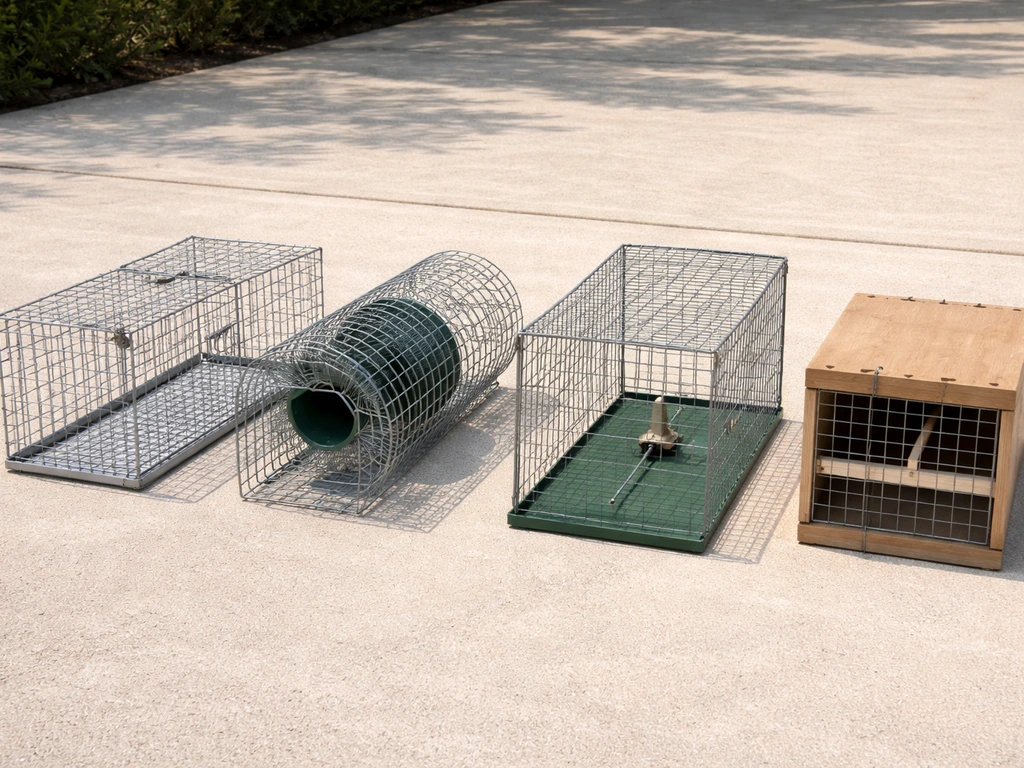
There are four main trap styles worth knowing. Each one suits a slightly different situation, so matching the trap to the bird matters. If you are specifically trying to capture quail, the safest approach is still to use humane, legal trap setups rather than snares or cable-loop traps trap quail bird.
| Trap Type | Best For | How It Works | Typical Setup Time |
|---|---|---|---|
| Box or cage trap | Small to medium wild birds, escaped pet birds outdoors | Bird enters for bait, trigger plate or treadle drops a door | 15-30 minutes to set; 1-3 days pre-baiting recommended |
| Funnel trap | Sparrows, finches, and other small flock birds | Wide opening narrows inward; bird enters easily but can't find the exit | 30-60 minutes to build or position; works overnight |
| Walk-in (drop-door) cage | Larger birds like pigeons, doves, peacocks | Open-floor cage propped on a stick with a pull string or treadle | 20-40 minutes to set; operator must watch and pull string |
| Towel or net catch | Tame or semi-tame pet birds, injured birds that can't fly | Throw a lightweight towel or drop net over the bird from above | Immediate; no pre-baiting needed |
For most pet bird escapes or backyard situations, a standard box trap (also called a live trap or cage trap) from a hardware or farm supply store is your fastest and most reliable option. Look for one sized appropriately: a small model (around 16 inches long) for finches and small songbirds, a medium model (24 inches) for pigeons, doves, or escaped cockatiels, and a large model (32 inches or more) for parrots and larger birds. Spring-loaded doors that lock in the closed position are much safer than simple drop-door designs that can re-open if the bird panics.
Attract the bird first, catch it faster
Trying to trap a bird that has no reason to approach you is slow and frustrating. Spending two or three days pre-conditioning the bird to visit a specific spot will cut your actual catch time dramatically. This is especially true for wild birds and escaped pet birds that are spooked and staying at a distance.
- Pick one fixed location and place food there every day at the same time, ideally morning when birds are hungriest.
- Use the bird's preferred food: sunflower seeds or millet for small songbirds, fruit and nuts for parrots, small insects or mealworms for insectivores.
- Place the unset trap (door propped open and secured so it cannot close) in the same spot for one to two days before you plan to catch. Let the bird get comfortable entering it.
- On the day you want to catch, remove any food outside the trap so the only meal is inside. Set the trigger mechanism and step back at least 10-15 feet.
- Stay quiet and still. Checking or moving toward the trap every few minutes will delay entry by hours.
For an escaped pet bird still in your yard, playing a recording of its own voice or the sounds of your home (other pets, your voice, familiar music) near the trap area has a strong draw. Birds that know you may also simply step onto your hand or arm if you sit very still with food extended and wait long enough, sometimes 20-40 minutes with a calm, food-motivated bird.
Catching pet parrots, cockatiels, and budgies
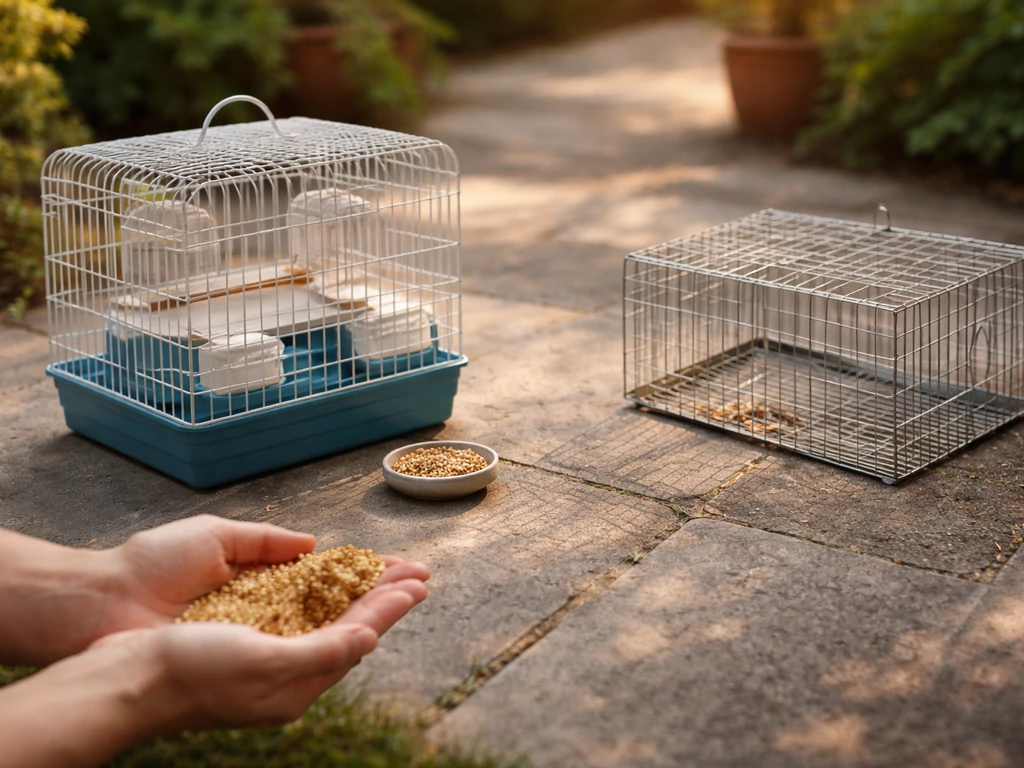
Pet birds that are already somewhat hand-tame are usually best caught by hand rather than by trap, even if they've escaped outside. Here's how to think about each species.
Parrots (African Greys, Amazons, conures, and similar)
Parrots are smart and suspicious. A trap they haven't seen before will often get ignored for days. Your best bet outdoors is to bring their cage outside with food and water inside and the door open, placed in a familiar spot. Many escaped parrots return to their own cage voluntarily within 24 hours if they can see and hear it.
If the bird is approachable, approach slowly from the front, hold your arm low and steady, and say the step-up cue. Avoid grabbing from above, which triggers a predator-attack response. If you must use a cage trap for a truly wild-flighted bird, a large walk-in design baited with favorite fruits (mango, papaya, banana) works better than spring-door designs, which startle them badly and can cause beak or toe injuries.
Cockatiels
Cockatiels tire faster than larger parrots and often land within an hour of escape. Use a familiar cage or a medium box trap baited with millet spray. Cockatiels respond well to hearing another cockatiel (or a good recording) and to whistled tunes you've used with them before. Once a cockatiel lands on the ground and is clearly tired or disoriented, a lightweight towel tossed gently over the bird from above is the fastest option. Cup the bird immediately in two hands, keep wings against the body, and move directly to a carrier.
Budgies
Budgies are small and fast but also flock-oriented. If you have other budgies, placing them in a cage near the trap or capture area is your strongest attract tool. A small live trap or even a cardboard box propped on a stick with millet inside can work for a budgie that's hungry and alone. If the budgie is still somewhat tame, dim the room lighting if you've managed to get it back indoors: reduced light slows their reaction speed and makes a hand-catch much easier. Approach from below, not above.
Catching finches and common wild yard birds
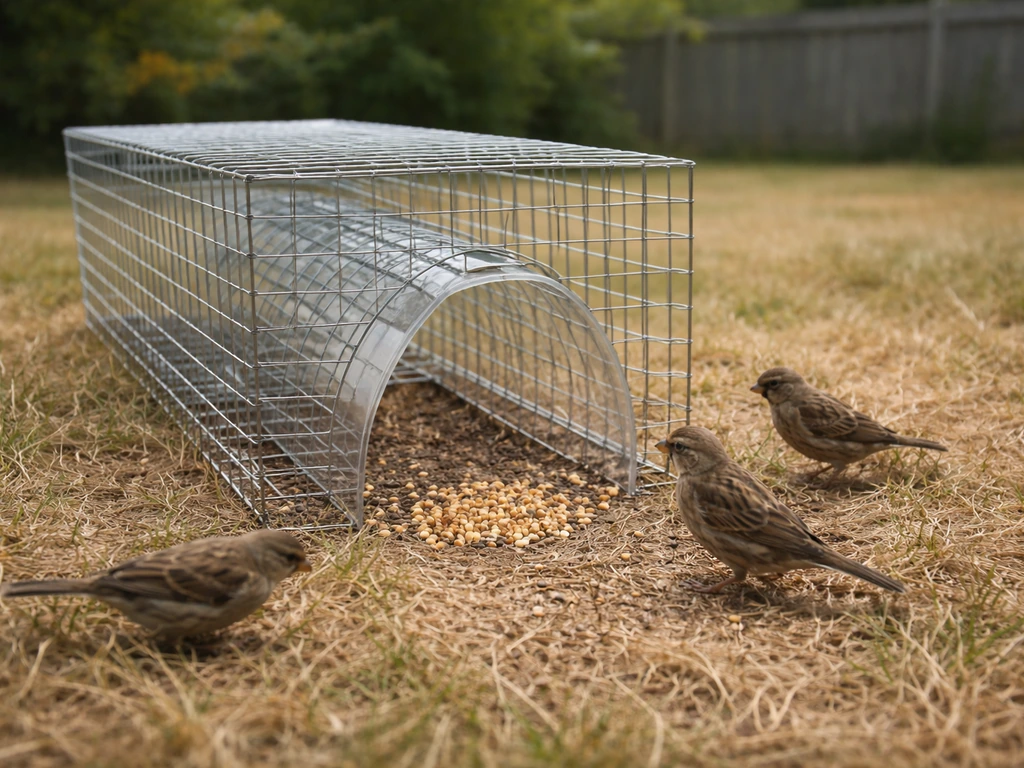
Finches
Finches, including house finches, goldfinches, and zebra finches that have escaped, are best caught with a funnel or tube trap. Their flock behavior means they will follow other birds into a trap readily. Bait with nyjer (thistle) seed or small millet. Place the trap at an established feeder location so the birds already feel comfortable there. A finch can fit through surprisingly small gaps, so check that your trap's mesh is no larger than half an inch or the bird will simply walk out. Expect a catch within one to three feeding cycles if pre-baiting was done correctly.
Common wild yard birds (sparrows, pigeons, doves, starlings)
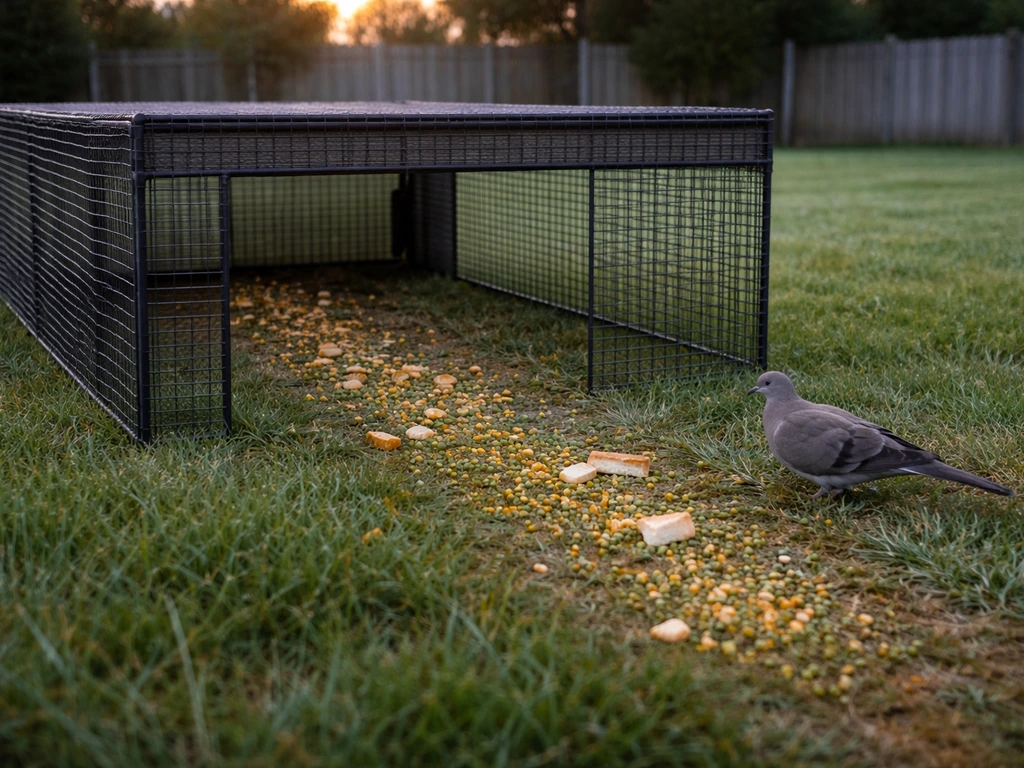
Pigeons and doves do well in large walk-in drop traps because they naturally feed on the ground in groups. Scatter cracked corn, peas, or bread inside and around the trap. Sparrows and starlings respond well to box traps at existing feeding stations. One practical note: house sparrows and European starlings are not protected under the Migratory Bird Treaty Act, so captures for humane relocation or population management are generally not federally restricted for these two species. Most native songbirds (robins, wrens, thrushes, warblers) are protected, and trapping them without a federal bird-banding permit is illegal regardless of your reason. If you're dealing with an injured native songbird, skip the trap entirely and call a licensed rehabilitator.
Setting up the capture area: bait, placement, and timing
Where you place a trap and when you set it are often the difference between a catch on day one and a trap that sits empty for a week. Follow these specifics.
- Place the trap on level ground with no tall grass underneath that could block the door mechanism.
- Position it against a wall, fence, or large planter on at least one side. Birds feel exposed in the open and are more likely to enter a trap that has cover on the sides.
- Face the door opening away from prevailing wind and afternoon sun. Overheated traps stress birds and can be fatal in summer.
- Set traps in early morning (first two hours after sunrise) and late afternoon (two hours before dark). These are peak feeding windows for most species.
- Check the trap at least every 30-60 minutes once set. Leaving a bird in a closed trap for hours in heat or cold is harmful and in some states it's a legal violation.
- Use species-appropriate bait: sunflower seeds for sparrows and chickadees, millet for doves and finches, corn for pigeons, fruit for thrushes and mockingbirds, and live mealworms for robins and bluebirds.
- Remove all other competing food sources in the area (clean up feeders and spilled seed) on the day you set the trap.
If the bird is trap-shy and keeps circling without entering, try covering three sides of the trap with natural material like branches, leaves, or burlap. This reduces the see-through effect that makes many birds hesitant. You can also try moving the bait trail: place small amounts of seed leading from outside the trap to just inside the entrance, then a larger pile at the trigger plate.
What to do right after you catch the bird
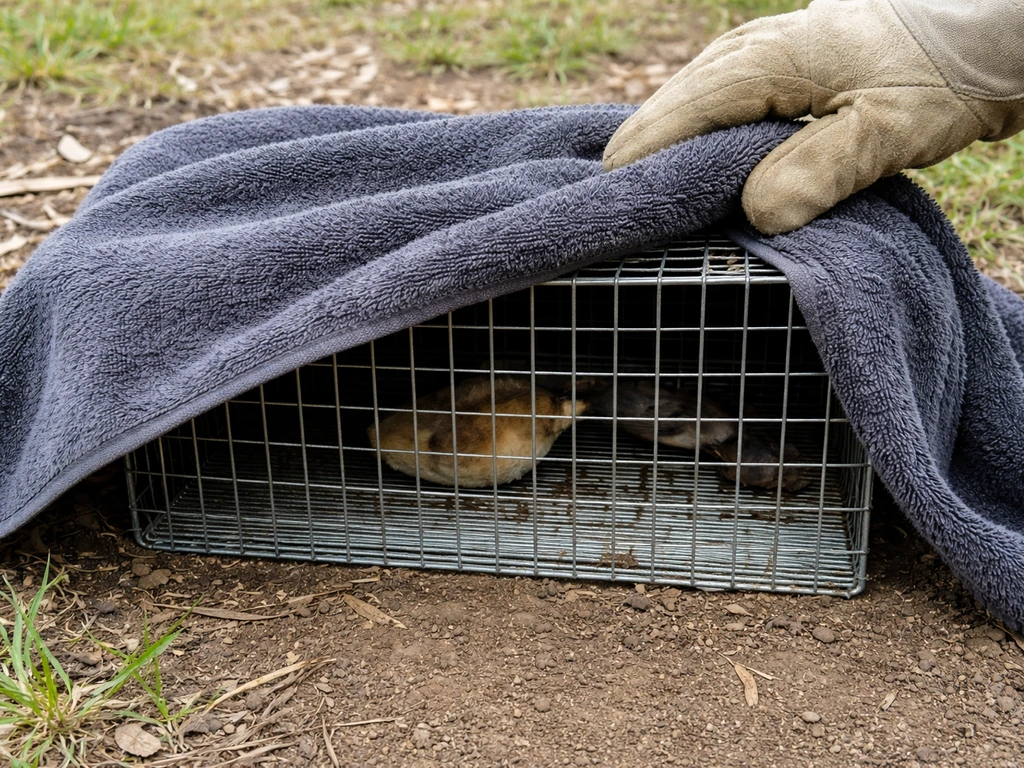
The moment a bird is in the trap is actually a high-stress moment for the animal. Moving fast and calmly is important here.
- Cover the trap immediately with a dark cloth or towel. Darkness calms birds rapidly and reduces panic-flapping that causes feather and wing damage.
- Move the covered trap to a quiet, temperature-controlled indoor space before opening it. Do not open a trap outdoors unless you are transferring directly to a secure carrier.
- For a pet bird going into a familiar cage: open the trap door against the cage door opening so there is only one direction for the bird to go. Most birds will step forward into the cage on their own.
- For a wild bird: wear thin leather or nitrile gloves. Reach in firmly with one hand and cup the bird with both hands, pressing wings gently against its body. Support the feet. Do not squeeze the chest as this restricts breathing.
- Place the bird in a secure cardboard carrier or ventilated transport box with paper towels on the floor. Do not use a wire cage for an injured wild bird as feathers and toes catch on the bars.
- Offer water via a shallow bottle cap inside the container. Skip food for the first 30-60 minutes while the bird calms down.
- Keep the environment quiet and dark for at least 20-30 minutes before doing anything else.
For pet birds returning home, once they are back in their regular cage and visibly calm, do a quick physical check: run a finger gently along both wings to feel for swelling or asymmetry, check the feet and nails for any cuts from the trap mechanism, and look at the keel bone (the ridge on the chest) to assess whether the bird has lost weight during its time outside. If anything looks wrong, call an avian vet.
Legal and ethical lines, and when to call a rehabilitator
Before you trap any wild bird, ask yourself three questions: Is this bird a protected species? Do I have the right permit? Am I planning to keep it? If the answer to the first is yes and the answers to the second and third are no and yes respectively, you are looking at a federal violation.
Federal regulations at [50 CFR 21. 4 set the scope and conditions for Migratory Bird Treaty Act protections](https://www. law. cornell.
edu/cfr/text/50/21. 4), including limits on possession and transport and the narrow circumstances where exemptions apply. The U. S.
Fish and Wildlife Service and guidance from veterinary institutions like the Tufts Wildlife Clinic are clear that keeping wildlife in captivity without proper permits is illegal in most circumstances, even with good intentions.
Trapping for humane relocation of a nuisance bird (like pigeons roosting on your roof) may be permitted in your state under a nuisance wildlife control framework, but you typically need a permit, and the trap type is restricted. Check with your state wildlife agency before setting anything. Trapping for rehab purposes requires a federal and usually a state wildlife rehabilitator permit.
Call a licensed wildlife rehabilitator if any of these apply:
- The bird is injured (bleeding, dragging a wing, unable to stand, or barely responsive).
- It's a baby bird that has clearly fallen from a nest rather than a fledgling learning to hop on the ground.
- You've been trying to trap it for more than three days without success and it appears to be getting weaker.
- You are not sure of the species and don't know if it is protected.
- The bird appears sick (puffed up, eyes half-closed, not reacting to your presence) rather than just tired.
- You caught it but are unsure how to handle it without injury to yourself or the bird.
You can find a licensed rehabilitator through the National Wildlife Rehabilitators Association directory or by calling your state fish and wildlife agency. In many areas, animal control officers can also respond to downed or injured wild birds and have the equipment and permits to handle them safely. Handing off to a professional is not giving up. It is often the best outcome for the bird.
If you found this useful, situations involving specific species like quail, birds of prey, snipe, or peacocks each come with their own legal wrinkles and capture techniques worth reading up on separately. Birds of prey are treated as protected wildlife in many places, so learn the legal, humane approach before attempting any capture. The same core principles apply: humane traps, proper bait, careful handling, and knowing when the situation calls for a permit or a professional.
FAQ
Can I use a snare just to control a nuisance bird quickly?
If the bird is a protected species or you lack the right nuisance wildlife permit, quick capture is still a legal risk. Even where a permit exists, many states restrict or forbid loop and cable restraints for birds, so a humane walk-in or box trap is the safer default.
What if I already set a snare or cable trap and a bird might be caught?
Do not wait to “check later.” If you find an animal in any restraint, stop attempting to manage it yourself and contact a licensed wildlife rehabilitator or animal control so they can assess injuries and handle legal reporting.
How do I tell whether the bird is protected before I try any trapping?
Start by identifying the species and then check both federal status and your state’s wildlife rules. The key decision point is whether it is a native migratory songbird or another protected category, since protected status typically requires permits even for humane intent.
Do I need a permit even if I plan to release a trapped bird back outside?
Often, yes. Capturing and holding wildlife can still be regulated even if your goal is release, and transporting or keeping it longer than necessary can add additional legal issues.
Can I keep a wild bird temporarily in a cage while I look for help?
In most cases, temporary holding without the proper rehabilitator authorization is still considered unlawful captivity. The practical alternative is to contact a licensed rehabilitator or animal control quickly and follow their instructions.
Is a standard mouse trap or catch box acceptable for birds if I adjust the trigger?
No. Bird anatomy and stress levels make “borrowed” devices risky, and many hardware-store traps are not designed to prevent entanglement, crushing, or injuries. Use purpose-built live bird trapping setups sized for the species.
What trap size should I choose if I cannot identify the exact bird?
Choose a larger, gentler option rather than a tight fit. If the bird is unknown, smaller traps can increase panic and injury, while an appropriately larger box, funnel, or walk-in cage lets the bird enter without getting jammed against the mechanism.
How long should I leave a trap out before changing tactics?
If pre-baiting was done and the bird is trap-shy, expect a faster first entry after you establish familiarity. If a trap sits empty for several days, change placement and concealment methods (for example, partially cover sides with natural material) instead of repeatedly reusing the same setup.
What should I do immediately after a bird enters a humane trap?
Move calmly and prepare the carrier before opening the trap area. Reduce handling time, avoid grabbing from above, and check feet and wing alignment right away, because stress injuries can worsen quickly.
Are pigeons and starlings treated differently under federal law?
Yes. Some non-native nuisance birds are not protected under the Migratory Bird Treaty Act, while most native songbirds are protected. Still, state rules can differ, so always check local nuisance wildlife and permit requirements.
If the bird is injured, should I still trap it to get it to a rehabber?
Generally no. For injured native birds, the safest approach is to contact a licensed rehabilitator and let them guide capture or assessment, since trapping can increase stress and cause additional harm.
How can I reduce the chance a trapped pet bird panics and gets hurt?
Use a familiar cage location or a trap near the bird’s usual perches, and avoid sudden shadows or overhead grabs. For smaller birds, dim lighting inside when possible and keep the capture area quiet so the bird enters rather than thrashes.
Next Article
How to Catch a Snipe Bird Safely and Humanely
Humane, safety-first steps to identify and capture a snipe or encourage it to stay for safe relocation.