If you're searching for how to catch a snipe bird, the first thing worth knowing is that 'catch' can mean very different things depending on your situation. You might want to observe one up close, photograph it, encourage one to linger in your yard, or physically capture an injured bird for rehab. Each goal calls for a completely different approach, and the stakes are real: snipe are protected migratory birds in most countries, so getting the method wrong can mean harm to the bird, stress you didn't need, or even a legal problem. Let's sort out exactly what you need and how to do it right.
How to Catch a Snipe Bird Safely and Humanely
Clara Hayes
22 Apr 2026
What 'Catching a Snipe' Actually Means (And Why It Matters)
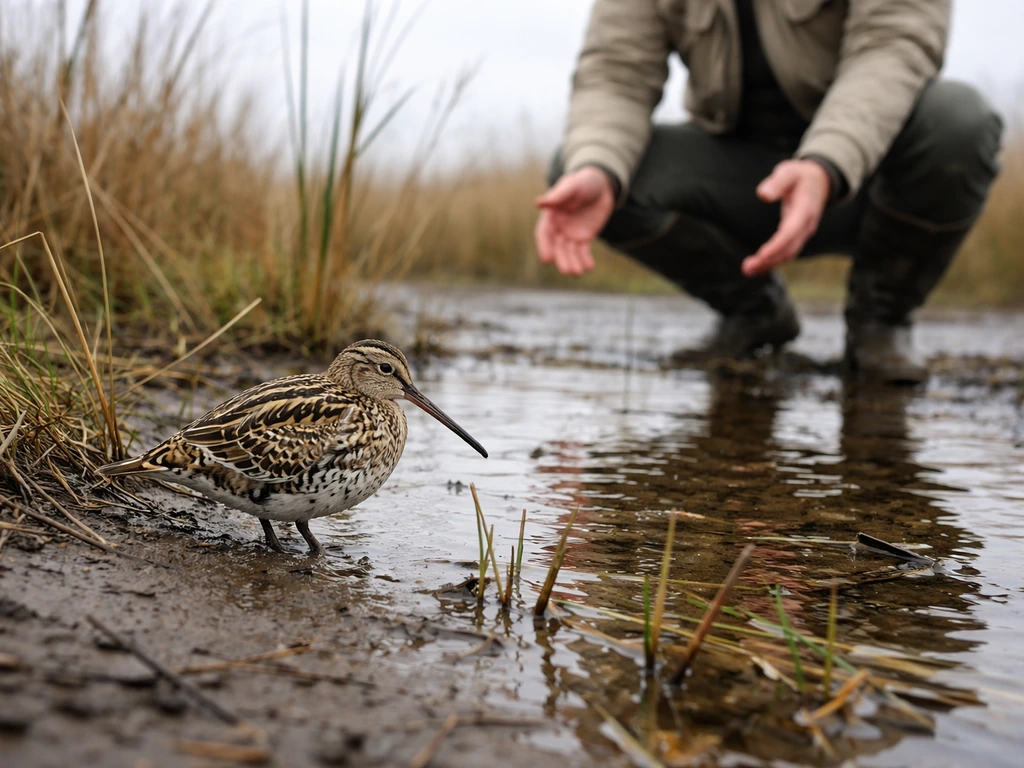
Most people asking this question fall into one of three camps: they want to get close enough to watch or photograph a snipe, they want to attract one consistently to a specific spot, or they have a bird that looks injured or disoriented and needs to be moved to safety. These are genuinely different problems. Stalking a healthy snipe for a photo requires patience and stillness. Attracting one for regular observation requires habitat tweaks. And physically handling one for relocation or rehab requires preparation, the right tools, and ideally a licensed wildlife rehabilitator in the loop before you even touch the bird.
Before anything else, safety comes first, and it applies in two directions. Your safety matters because snipe have a long, sharp bill and will probe and peck if frightened. The bird's safety matters because stress alone can kill a wild bird, and improper handling causes injuries. Under the U.S. Migratory Bird Treaty Act (MBTA), it is unlawful for an unpermitted person to pursue, capture, possess, or transport migratory birds. The same protections exist in Canada, the UK, and most of Europe. So before you move a single step toward that bird, be honest about which of those three goals you actually have.
Where Snipe Live and How to Identify Yours
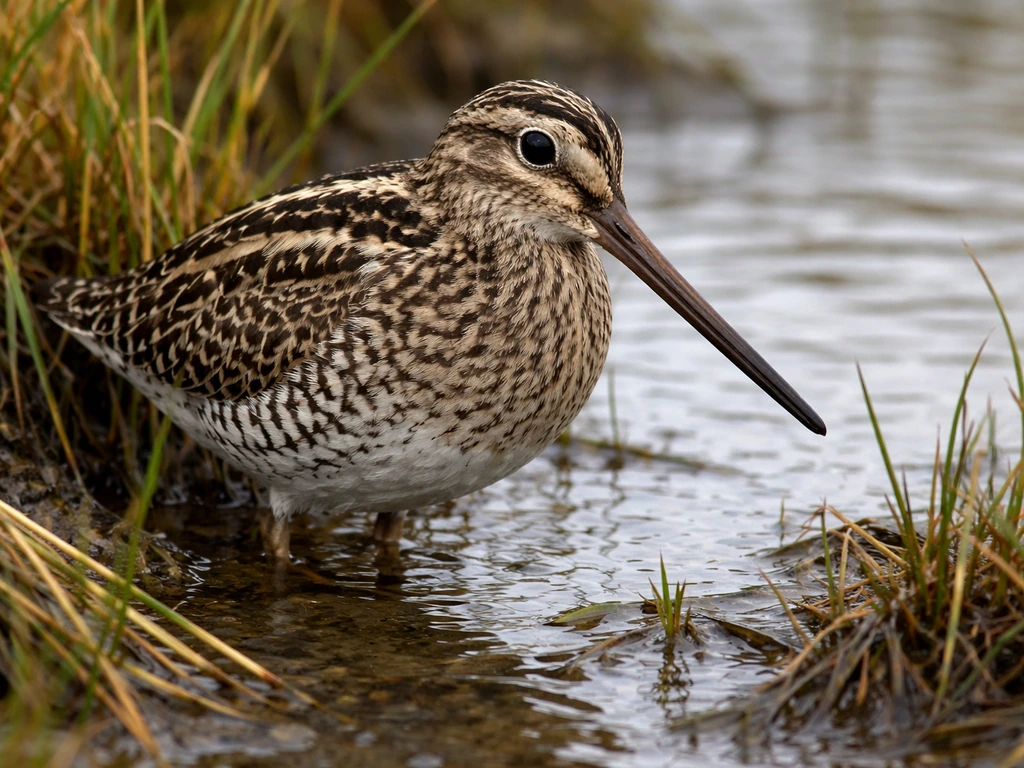
The most common species you're likely to encounter in North America is the Wilson's Snipe (Gallinago delicata), a stocky shorebird about 10 to 11 inches long with a bill nearly 3 inches long, bold brown and buff stripes running down the back and head, a short tail, and short greenish-yellow legs. In the UK and Europe, the Common Snipe (Gallinago gallinago) is nearly identical and fills the same ecological niche. Both are perfectly camouflaged in marshy vegetation, and both produce a distinctive winnowing sound in flight during breeding season.
Snipe are birds of wet, boggy ground. They favor marshes, wet meadows, flooded fields, muddy shorelines, and the dense, sedge-heavy edges of ponds and streams. If you're seeing a long-billed, streaky-brown bird probing soft mud in or near a wetland area, there's a good chance it's a snipe. They're far less likely to appear in a typical backyard unless you live near a wetland or your property includes soggy, overgrown areas near water.
Misidentification is a real concern here. Dowitchers, woodcocks, and sandpipers share similar habitats and body plans. The American Woodcock is probably the most commonly confused species with snipe: it's similarly chunky and long-billed, but rounder, with very large eyes set high on the head and a plainer brown coloration without the bold striping. Wilson's Snipe has sharper head stripes, a narrower body, and longer legs. If you're planning to physically handle a bird, being absolutely certain of the species is not optional.
| Feature | Wilson's Snipe | American Woodcock |
|---|---|---|
| Body length | 10–11 inches | 10–12 inches |
| Bill length | ~2.5–3 inches | ~2.5–3 inches |
| Head pattern | Bold brown and buff stripes | Plain, barred brown, large eyes |
| Body shape | Slender, streamlined | Round, plump |
| Leg color | Greenish-yellow | Pinkish |
| Preferred habitat | Open wet marshes, mudflats | Moist woodland edges, thickets |
| Flight pattern when flushed | Fast, erratic, zigzag | Direct, fluttering, owl-like |
Attracting Snipe for Observation (No Handling Required)
If your real goal is to watch or photograph a snipe rather than capture one, you're in luck, because this is both legal and much easier than physical capture. Snipe respond to habitat far more than to lures or calls. They need three things: soft, probing-depth mud or saturated soil, cover vegetation like sedges, rushes, or tall grasses nearby, and minimal human disturbance. If your property or a nearby edge has any of these, you can encourage a visiting snipe to stay longer and return more reliably.
Simple habitat tweaks that invite snipe to linger
- Leave a low-lying, soggy patch of your yard unmowed and undisturbed, especially near a ditch, stream, or pond edge.
- Allow leaf litter and organic debris to accumulate in wet areas, which concentrates invertebrates that snipe probe for.
- Avoid foot traffic, dog activity, and mowing near the area during dawn and dusk, when snipe are most active and feeding.
- If your yard is dry, a simple shallow muddy tray (a large plant saucer filled with soft soil kept consistently damp) placed at ground level near dense vegetation can attract snipe and other shorebirds during migration.
- Install a motion-activated trail camera set low to the ground so you can observe without disturbing the bird.
Getting physically close for photos requires a slow, patient approach. Snipe rely on their camouflage as a first defense and will often freeze rather than flush immediately. Move in a wide arc, stay low or use natural cover like a berm or vegetation screen, and stop frequently. Bright clothing, fast movement, and noise are the main triggers for flushing. A 200–400mm telephoto lens and a prone or low-crouch position will serve you far better than trying to get within arm's length.
Physically Capturing a Snipe for Relocation or Rehab
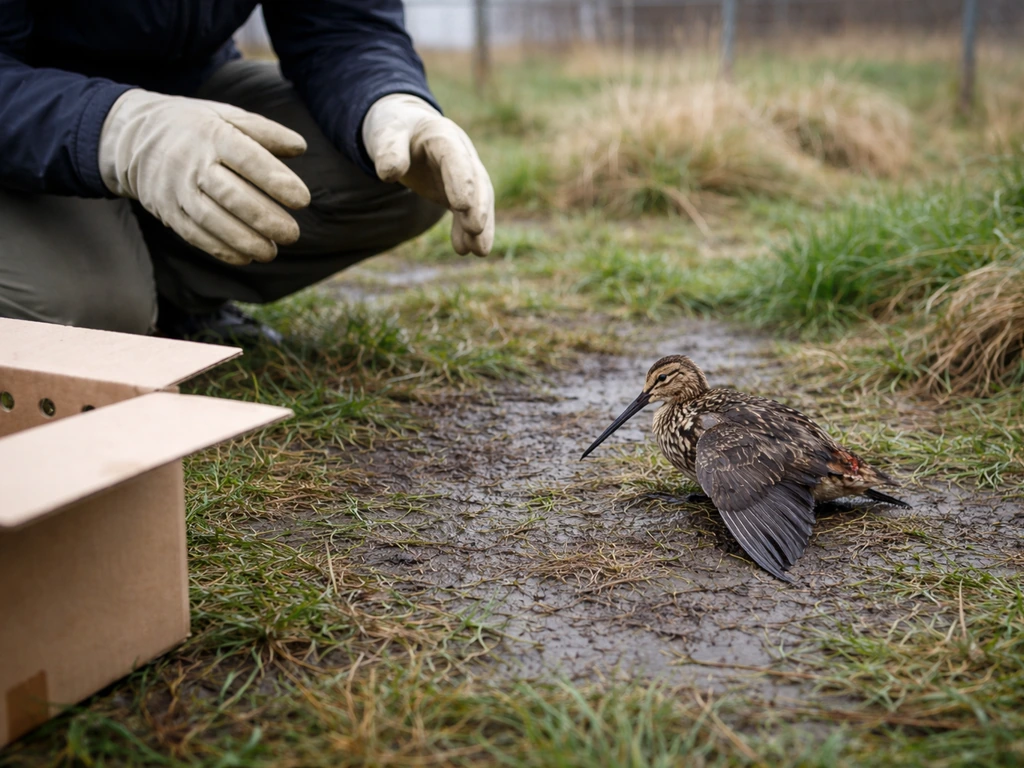
This section applies specifically to situations where a snipe genuinely needs help: it's clearly injured (visible wound, one wing drooping and not held symmetrically, unable to move from an exposed location after extended time), it's been found in a dangerous location like a road or building, or a rehabber has asked you to assist with a transfer. If the bird is alert, moving normally, and foraging, it almost certainly does not need your help. Many wildlife agencies, including Maine's Department of Inland Fisheries and Wildlife, specifically note that humans often misread normal bird behavior as injury, and intervention does more harm than good in those cases.
What to prepare before you approach
- A ventilated cardboard box or pet carrier lined with a non-slip surface like a folded towel. The box should be just large enough for the bird to stand, not roomy enough to flap around in.
- A lightweight towel, thin fleece cloth, or pillowcase to drape over and contain the bird during capture.
- Thin leather gloves or work gloves, since snipe bills are sharp enough to pierce skin.
- A contact number for your nearest licensed wildlife rehabilitator, ideally confirmed before capture begins.
- A second person if possible, to open the box while you hold the bird.
Step-by-step capture plan
- Call a local wildlife rehabilitator or animal control officer first. Explain what you're seeing. They may be able to respond directly, or they can authorize you to transport and walk you through the specific steps for your situation.
- Approach from the side, not head-on. Move slowly and keep your body low. Talk quietly and continuously in a calm, low voice. Sudden silence followed by movement is more alarming to birds than steady quiet sounds.
- When within arm's reach, drop the towel or cloth gently over the bird in one smooth motion, covering the head first. Darkness immediately reduces panic and defensive behavior.
- With both hands, feel through the cloth to locate the bird's body and wings. Cup both wings firmly against the body, your thumbs crossing over the back. Do not squeeze the chest, as birds breathe by expanding their ribs and sternum.
- Lift the bird smoothly and transfer it directly into the prepared box. Lower it in gently with the cloth, then remove the cloth once the bird is contained and the lid is mostly closed.
- Close and secure the box. Keep it in a quiet, dark, warm (but not hot) space away from pets, children, and loud noise. Do not offer food or water unless directed by a rehabilitator.
- Transport to the rehabilitator as quickly as possible, ideally within an hour or two.
Handling, Calming, and Holding Safely
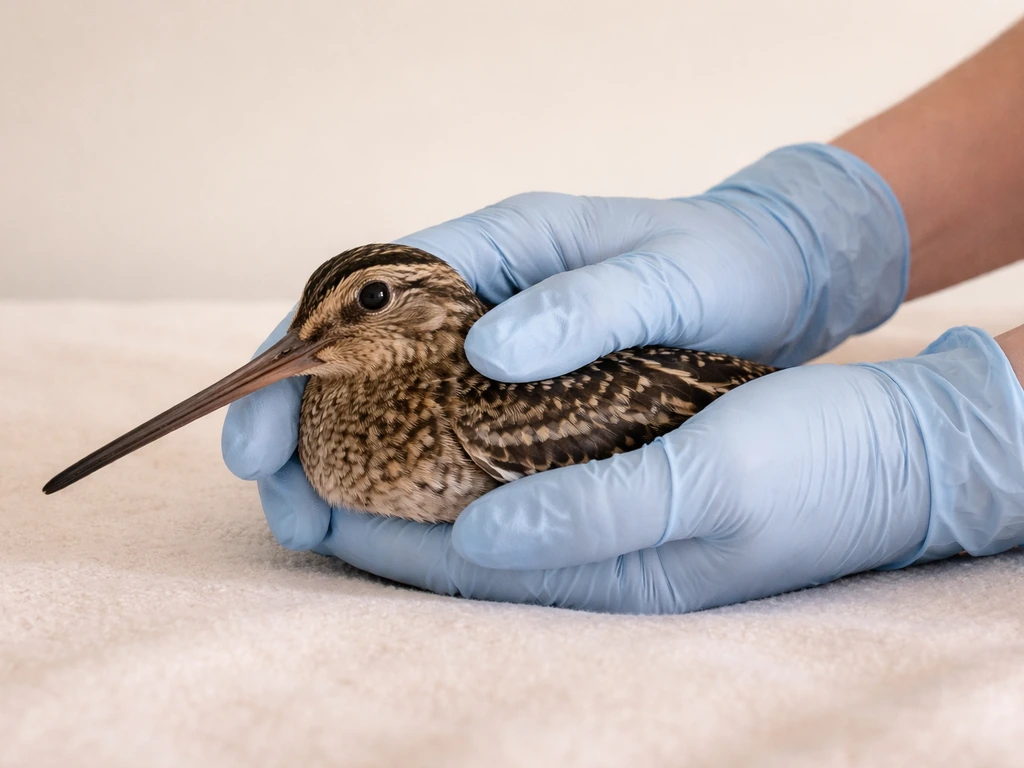
The single most important thing to understand about handling any wild bird is that stress is a medical emergency for them. A bird that looks calm may be shutting down physiologically, not relaxing. Keep handling time to an absolute minimum: the entire process from capture to containment should take under two minutes if possible. Every extra second of handling adds cortisol stress hormones that can cause capture myopathy, a condition where muscle damage and metabolic collapse occur hours or even days after the stressful event.
The correct grip for a snipe involves holding both wings pressed against the body at all times, with the bird's belly resting in your cupped palm and your fingers gently wrapped around the wings and lower body. Keep the bird horizontal or very slightly head-up, never head-down. Point the bill away from your face at all times. Snipe have long, flexible bills and will probe instinctively, so protect your eyes specifically and keep the bill pointed outward and downward.
Once in the box, darkness is your biggest calming tool. Wildlife guidance from the UK's Wildlife Trusts confirms that keeping an injured or captured bird in a dark, quiet environment significantly reduces stress. A box in a quiet room, away from voices and traffic noise, will do more for the bird's recovery than any other measure you can take in that window before the rehabilitator takes over.
Before releasing the bird (if a rehabilitator or authority has determined it is healthy and release is appropriate), always transfer and release at the exact location where the bird was found, during daylight, in suitable weather. Open the box on the ground in the habitat, step back at least 10 feet, and let the bird exit on its own schedule. Never toss or 'launch' a bird to encourage flight.
When Things Go Wrong: Troubleshooting Common Problems
Even experienced wildlife handlers run into snags. Here are the most common ones and what to actually do about them.
| Problem | Likely Cause | What to Do |
|---|---|---|
| Bird flushes before you get close | Approach angle too direct, movement too fast | Slow down, approach from the side, use natural cover, wait longer between steps |
| Bird keeps moving but won't flush | It's a healthy bird that doesn't need help | Stop the capture attempt; healthy snipe don't need intervention |
| Towel toss missed the bird | Throw was too high or too slow | Retrieve the cloth calmly, wait a minute for the bird to resettle, try again once more maximum |
| Bird is contained but very active and agitated in box | Box too large, too bright, too noisy | Move to a smaller, darker, quieter space; do not open to check unless necessary |
| Bird appears limp or unresponsive after capture | Capture shock or underlying illness | Call a rehabilitator immediately; do not attempt to feed or warm without guidance |
| Can't locate a rehabilitator quickly | No local resource known in advance | Contact your state/provincial wildlife agency or local animal control; they maintain lists |
Know when to stop
Set a firm limit of two capture attempts in a single session. If you have not contained the bird after two tries, stop completely. Repeated failed attempts increase the bird's stress dramatically, increase your risk of injuring it through additional chasing, and often cause it to move into an even more difficult location. If the bird is genuinely injured and you can't capture it, call animal control or a wildlife rehabilitator and give them a precise location description. A professional with a net and experience will have a much higher success rate than a well-meaning second or third attempt on your part.
The Legal and Ethical Side You Can't Skip
In the United States, snipe are migratory birds covered by the Migratory Bird Treaty Act. If your situation is more like trapping an unusual species than handling a typical snipe, see how do you catch a unique bird for a related, goal-specific approach. This law makes it illegal for an unpermitted person to pursue, capture, possess, or transport them. Canada’s Migratory Birds Convention Act, 1994 includes criminal-law prohibitions relating to possession of migratory birds and nests, with exceptions addressed through the Act’s permitting and regulatory framework blank" rel="noopener noreferrer">Migratory Birds Convention Act, 1994 prohibitions on possession of migratory birds and nests. If you are specifically trying to catch a peacock bird, the safest approach is to follow local wildlife rules and work with a licensed professional rather than attempting DIY capture. If you want the practical steps for what to do in an urgent situation, focus on minimizing stress and getting the bird to a licensed wildlife rehabilitator as quickly as possible capture, possess, or transport. This article focuses on snipe, but the same general planning and legal cautions apply if you are searching for how to snare a bird. A federal Migratory Bird Rehabilitation permit authorizes qualified individuals to take and temporarily hold injured migratory birds specifically to transfer them to a licensed rehabilitator, with holding periods capped at 180 days under standard permits. The practical takeaway: the moment you pick up a snipe, you are legally required to be moving it directly to a licensed rehabilitator, not keeping it at home.
In the UK and Europe, similar protections exist under the Wildlife and Countryside Act (UK) and equivalent EU frameworks. Handling without a license is prohibited unless the bird is injured and you're transporting it directly to a vet or rehabilitator.
The ethical dimension is equally important. Snipe are wild birds that do not tame or acclimate well to human contact. Unlike a parrot or cockatiel that can build trust with a person over time through consistent positive interaction, a wild snipe's stress response to humans does not diminish with repeated exposure in a captive setting. Keeping one 'to see if it gets better' without professional rehab guidance is almost always the wrong call, both ethically and legally.
When to call a professional instead of handling it yourself
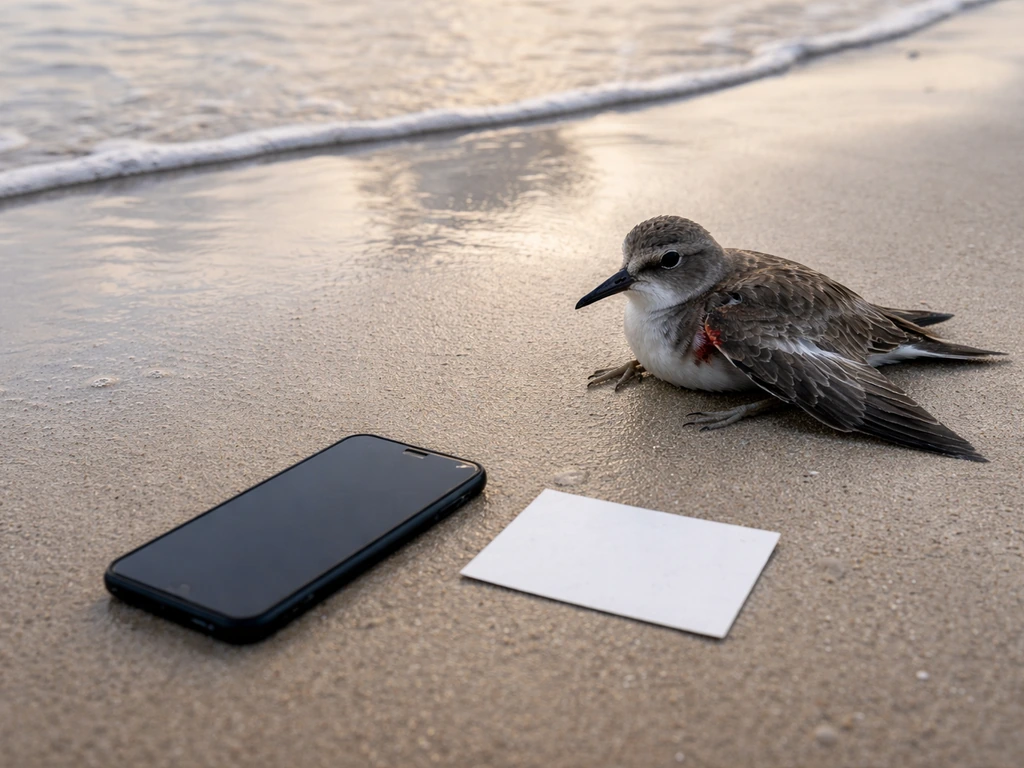
- The bird has an obvious wound, a broken wing, or cannot bear weight on both legs.
- The bird has been in the same exposed location for more than two to three hours without moving.
- The bird was struck by a vehicle, window, or cat.
- You have made one capture attempt and failed.
- You are uncertain whether the bird is actually injured or just resting.
- You are in a jurisdiction where you are unsure of the permit requirements.
To find a licensed rehabilitator quickly, contact your state fish and wildlife agency, call a local veterinary clinic (they often have direct contacts), or search the National Wildlife Rehabilitators Association or Wildlife Rehabilitators Association directories. Washington Department of Fish & Wildlife also provides guidance on how to find a permitted wildlife rehabilitator for injured wildlife National Wildlife Rehabilitators Association or Wildlife Rehabilitators Association directories. Having this number saved before you ever need it is genuinely one of the most useful things you can do if you live near wetland habitat where snipe pass through.
If you're curious about broader capture and handling techniques for other wild birds, the approaches for snipe share principles with methods used for quail, shorebirds, and other ground-foraging species, though each species has specific size, temperament, and habitat factors that matter. If you are specifically looking for how to trap a bird of prey, make sure you only consider legal, safety-first guidance and avoid DIY capture attempts broader capture and handling techniques. If you want to learn how to trap a bird easy, use only legal, safety-first guidance for the species and conditions involved. The core rule across all of them remains the same: the bird's welfare comes first, legal requirements come second, and your own preference for how the situation resolves comes last.
FAQ
If I just want to take a closer look, do I still risk breaking the law by “approaching” a snipe?
In many places, the legal issue is not only physical capture. Pursuing a protected migratory bird, repeatedly flushing it, or attempting to corral it can be treated as “take” or harassment. If you are not moving it for verified rescue and transfer, keep distance, avoid chasing, and use a telephoto lens rather than walking it down.
What should I do if the snipe flushes and I cannot see where it went?
Stop advancing and give it time to settle. Snipe often freeze then re-assess after disturbance, and repeated searching can turn a temporary concealment into a longer stressful event. Use binoculars or zoom rather than circling or pressing into cover.
How can I tell whether a “wounded” snipe is actually injured or just acting normally?
If it is alert, foraging, or able to stand and hold posture, it is more likely healthy. Red flags for true injury include prolonged inability to move away from exposure, visible bleeding or open wounds, a wing that hangs droop-symmetrically, or repeated collapse when approached briefly. If unsure, assume it needs professional assessment rather than handling.
Can I put the snipe in a towel or blanket to restrain it more securely?
Avoid materials that can cover the face with pressure or make the bird overheat. The priority is minimizing handling time and preventing the bill from moving toward your face. If you must assist transport for a licensed purpose, a controlled, ventilated containment box in a dim area is usually safer than improvised wrapping.
What if I find a snipe at night or in bad weather?
Do not attempt repeated capture in darkness or during storms. In those conditions, focus on calling the right wildlife contact, keeping people and pets away, and waiting in a safe spot to avoid trampling habitat. If rescue staff instruct you to assist, do so briefly and only for direct transfer.
Is it ever acceptable to keep the bird temporarily at home “until morning”?
Usually no for protected migratory birds. Under migratory-bird rules, an unpermitted person generally cannot possess or transport them beyond what is necessary to immediately transfer to a licensed rehabilitator. If it is not clear that a rehabilitator has accepted the transfer, treat immediate contact as part of the emergency response plan.
How should I reduce my risk of being pecked if the bird won’t settle?
Keep your face and hands positioned so the bill points away from you, and use a wide approach that lets the bird choose when to flush or move. Wear protective eyewear if you are in striking range, and recruit help so one person can guide containment while another calls for assistance.
What containment setup works best during transfer?
Use a sturdy, escape-resistant box with ventilation, keep it in a quiet dim space, and line the base to prevent slipping while avoiding loose materials the bird can tangle in. Mark the time you contacted the rehabilitator, and keep the process moving so the holding period before transfer is as short as possible.
If I’m trying to attract snipe for photography, what’s the biggest mistake people make?
People overdo lure, noise, or repeated walking into cover, which flushes birds and prevents return visits. The higher-leverage changes are habitat-based (cover and soft probing substrate) and reducing disturbance, then waiting quietly for the bird to resume foraging.
Do snipe ever get confused with other birds, and what should I do if I might have the wrong species?
Yes, especially with similar shorebirds like woodcock and dowitchers. If you are considering any handling, pause until you are confident, because “almost right” can still lead to illegal or harmful actions. If you cannot be confident, switch to observation and contact a wildlife expert for ID verification.