
Yes, you can safely and humanely trap a quail bird, but how you go about it depends entirely on one thing: whether that quail is wild or someone's escaped pet. Get that question answered first, and the rest of the process becomes a lot clearer. This guide walks you through the full process from legal checks to safe handling the moment the bird is in hand.
How to Trap Quail Bird Safely and Humanely Step by Step
Clara Hayes
17 Apr 2026
Wild quail or escaped pet? Figure this out first
Before you set a single trap, you need to identify what you're dealing with. Wild quail and escaped domestic quail can look almost identical, but the capture approach, the legality, and what you do afterward are completely different.
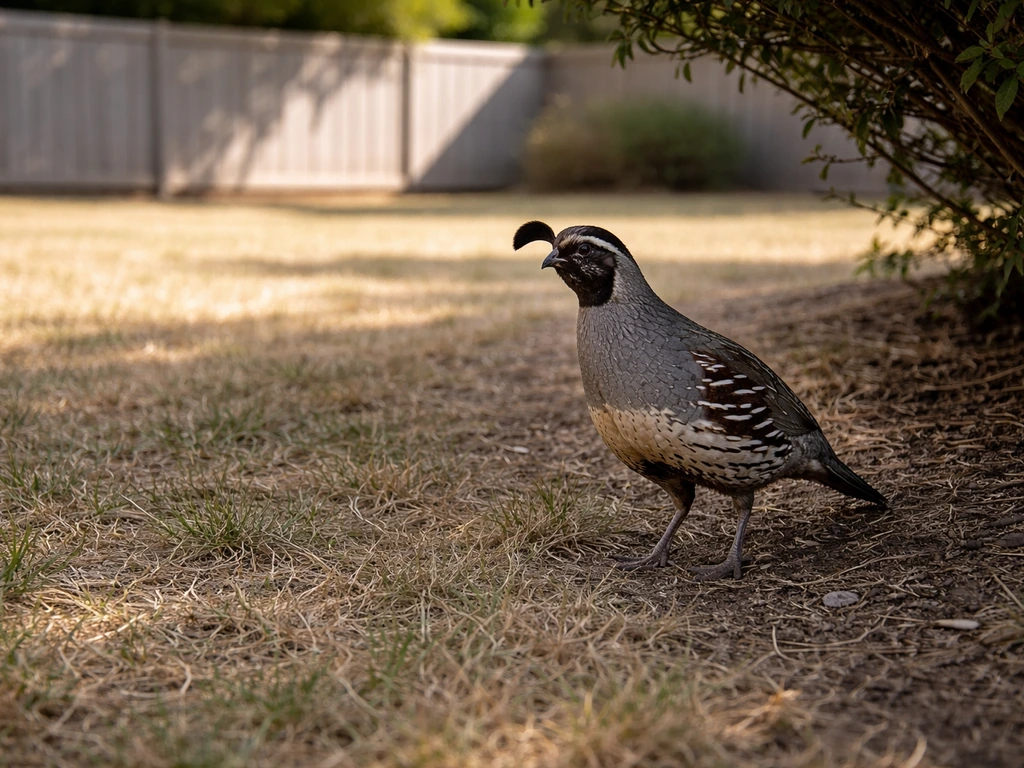
A wild quail will be extremely skittish, won't tolerate close human presence, and will be behaving in a way that looks completely natural for the environment, scratching through leaf litter, dusting in dry soil, moving in a covey (a small group). An escaped pet or farm quail is often alone, may be confused or lethargic near human structures, might not flee aggressively when you approach, and could even show interest in you. Domestic quail (most commonly Coturnix or Japanese quail) have often been raised around people and may vocalize or pace near a fence or building.
Your end goal also matters here. Are you trying to capture a bird in distress so you can release it or get it to a rehabilitator? Are you retrieving a pet that escaped from your own aviary? Or are you trying to relocate a wild quail for population management on your land? Each of these situations calls for a slightly different approach and, crucially, a different legal standing.
Check the law before you do anything else
This is non-negotiable. Wild quail in most countries are protected by wildlife legislation, and trapping them without the correct permit or authority is illegal regardless of your intentions. In the UK, the Wildlife and Countryside Act makes it generally unlawful to deliberately capture, injure, or kill any wild bird without a licence. In the US, native migratory birds fall under federal protection. Even if quail aren't specifically listed as endangered in your region, the act of trapping itself may require authorization.
The US Fish and Wildlife Service has clear guidance on humane capture and handling of migratory birds, including requirements around how frequently traps must be checked, known as trap check intervals, and how birds must be handled and disposed of after capture. The USGS publication page hosts the federal publication record for “The humane capture, handling, and disposition of migratory birds” and associated collaboration, making it a suitable citation for the existence and scope of humane-capture guidance The US Fish and Wildlife Service has clear guidance on humane capture and handling of migratory birds. Violating these standards isn't just ethically wrong, it can carry real legal consequences.
Before you set up anything, do these checks:
- Contact your state, provincial, or national wildlife agency and ask whether trapping quail on your property requires a permit.
- If the bird appears injured or orphaned, contact a licensed wildlife rehabilitator rather than attempting to trap it yourself without guidance.
- If you believe the quail is someone's escaped pet, post on local community boards and contact nearby farms or aviaries before trapping.
- If you are on public land or a nature reserve, do not attempt any trapping without explicit written permission from the land manager.
- Document your reasons for trapping in writing before you begin, this protects you if questions arise later.
Which humane trapping approach should you use?
There are several live-capture methods that work well for quail. The right one depends on whether you're dealing with a single bird or a small group, how much time you have, and how close the bird is already coming to a given spot. None of these involve harming the bird. If you're curious about how these methods compare to broader live-capture strategies, the principles behind how to capture a bird safely apply across many species and are worth understanding before you start.
| Method | Best for | Pros | Cons |
|---|---|---|---|
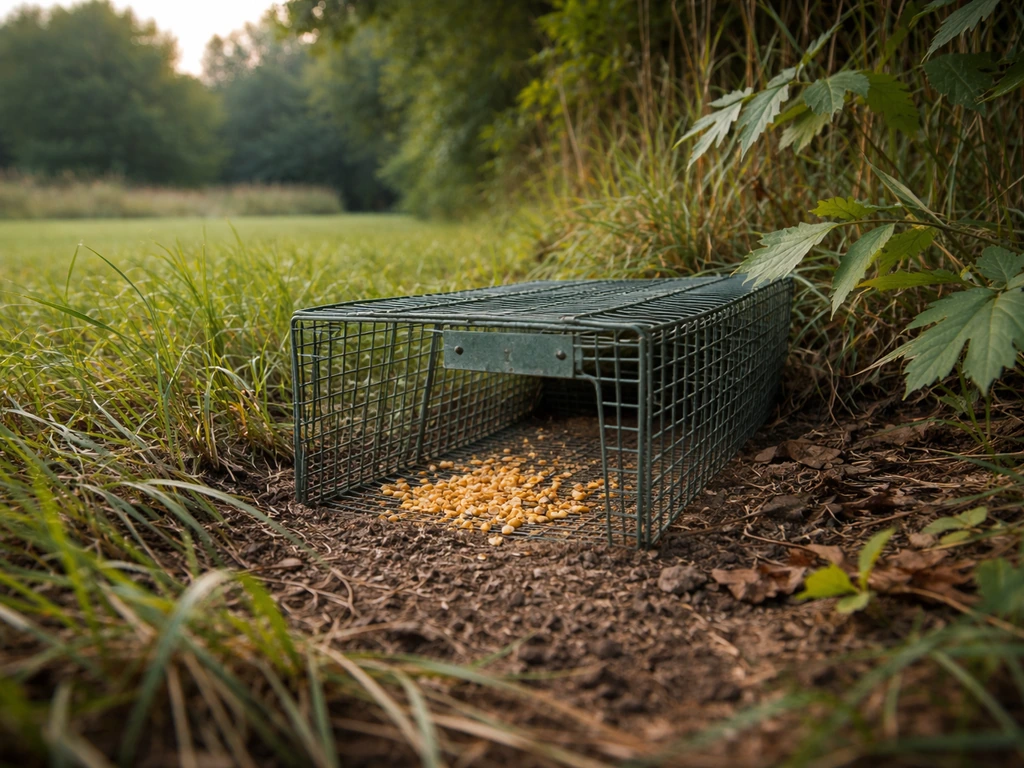
| Wire cage live trap with drop door | Single or small group of quail near a feeding area | Inexpensive, reliable, easy to monitor | Must be checked frequently; can cause panic if bird is confined too long |
| Funnel/walk-in trap | Birds already comfortable with a feeding spot | Bird enters on its own without a trigger mechanism | Takes longer to work; needs the right baiting setup |
| Box trap with stick-and-string trigger | Quick catch in emergency situations | No special equipment needed | Requires you to be present; harder to time correctly |
| Clap net or bow net | Experienced handlers trapping multiple birds | Efficient for small groups | High skill level required; risk of injury if not used correctly |
For most people trying to catch a single quail humanely, the wire cage live trap or a funnel-style walk-in trap is the safest starting point. They require the least skill, allow the bird to remain calm while confined, and give you time to check and release without the panicked scramble of a net catch. If you're dealing with a more unusual situation, such as a unique bird that doesn't respond to standard methods, you may need to adapt your approach significantly.
Attracting quail to your trap: bait, location, timing, and shelter
Quail are ground foragers. They spend their time scratching through loose soil and leaf litter looking for seeds, small insects, and plant material. To attract them reliably, you need to think like one. The trap itself means nothing if it's in the wrong place or baited with the wrong food.
Best bait for quail
- Millet (white proso millet is excellent and widely available)
- Cracked corn scattered in and around the trap entrance
- Commercial quail feed or game bird starter crumbles
- Sunflower seeds (smaller chips work better than full seeds)
- Mealworms for added protein attraction, especially in colder months
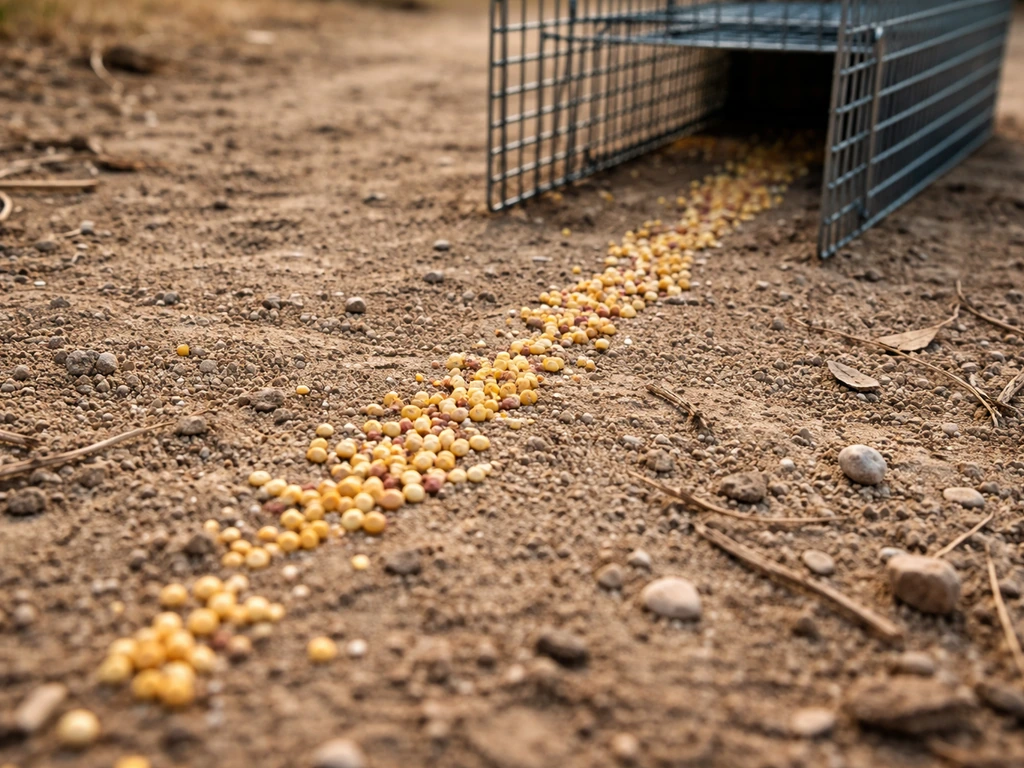
Scatter some bait in a trail leading toward the trap, not just inside it. Quail follow food, so a bait trail that starts several feet away from the entrance and gradually leads inside is far more effective than just filling the trap and hoping for the best.
Location and timing
Set your trap at the edge of cover, not in open ground. Quail feel safest near shrubs, tall grass, brush piles, or fence lines. Placing a trap in the middle of a mowed lawn is almost guaranteed to fail. Early morning (within the first two hours after sunrise) and late afternoon (the last 90 minutes before sunset) are when quail are most actively foraging, so these are your best windows.
If you've spotted the quail in a specific area more than once, that's your location. Don't move the trap around every day, quail are creatures of habit and will return to familiar spots. Give each location at least two to three full days before deciding it isn't working.
Shelter and concealment cues
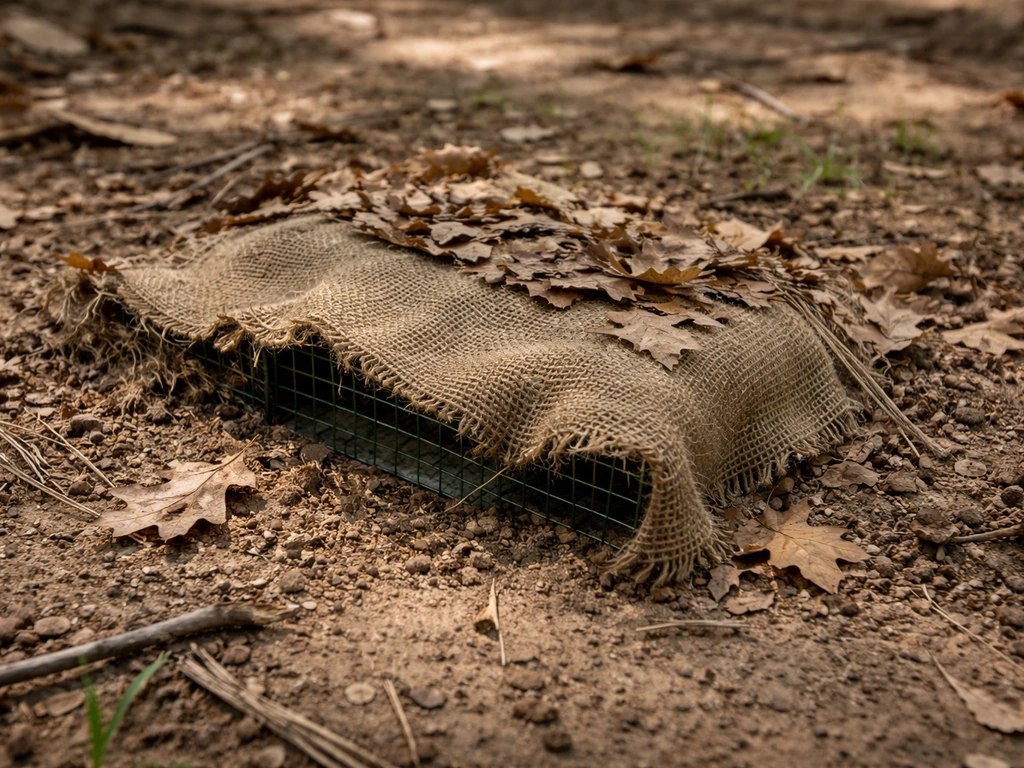
Cover your trap partially with natural material: dead leaves, a piece of burlap, or loose brush. This serves two purposes. It makes the trap look less threatening to the bird, and it makes the interior feel like a sheltered space rather than an exposed cage. Leave the entrance clear. If the trap looks too open and foreign, quail will avoid it even if the bait is perfect. You can also position the trap with one end against a natural barrier like a fence or hedge so the bird feels it's entering a natural sheltered corridor.
Step-by-step trap setup, monitoring, and preventing injury
- Choose your trap location based on observed quail activity, ideally at the edge of shrubby cover or along a fence line.
- Place the trap on flat ground so it doesn't rock or shift when the bird enters. A tilting trap will spook the bird immediately.
- Partially conceal the trap with natural materials but keep the entrance fully open and unobstructed.
- Scatter bait in a trail starting about 6 to 8 feet from the entrance, with the densest concentration just inside the trap.
- Set the trigger mechanism carefully. For a drop-door trap, make sure the trigger plate is sensitive enough to trip on a quail's light weight (roughly 3 to 5 ounces for most quail species) but not so sensitive it fires in a breeze.
- Step away completely. Don't hover near the trap. If you're watching, do so from a distance of at least 30 to 40 feet, or monitor via a simple trail camera.
- Check the trap every 30 to 60 minutes at minimum. Never leave a live trap unattended for more than 2 hours in warm weather or more than 1 hour in extreme heat. A confined bird can overheat, dehydrate, or injure itself trying to escape.
- If the trap fires and you find the bird inside, approach slowly, stay low, and keep your voice quiet and calm.
Frequent trap checks aren't optional. This is the single most important welfare rule. A quail left in a closed trap for hours will exhaust itself, injure its beak and feet trying to find an exit, and may die from stress or heat exposure. The US Fish and Wildlife Service's humane handling framework specifically emphasizes trap check intervals as a core requirement, and it applies whether you're a licensed bander or a private individual retrieving an escaped bird.
Safe handling right after the catch
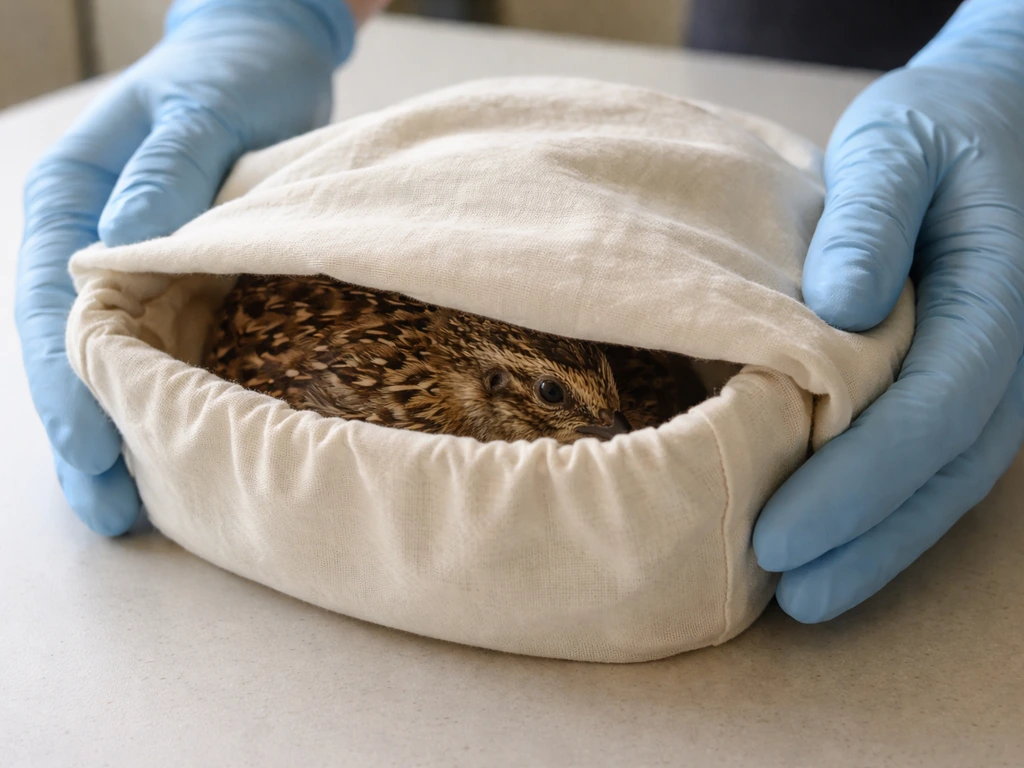
The first 60 seconds after capture are when injury is most likely. Quail panic and thrash, and their legs and wings are fragile. Here's the right way to handle one the moment it's in your hands.
- Open the trap door slowly and cover the opening with a cloth, pillowcase, or breathable bag before reaching in. This gives the bird something to step into rather than bursting out into open air.
- Wrap your hand around the bird's body gently but firmly with your fingers over the wing joints to prevent flapping. Don't squeeze the chest, quail breathe with their chest and ribcage, and compression can suffocate them.
- Hold the bird upright or slightly tilted so its head is higher than its body. This is less stressful than holding it on its back.
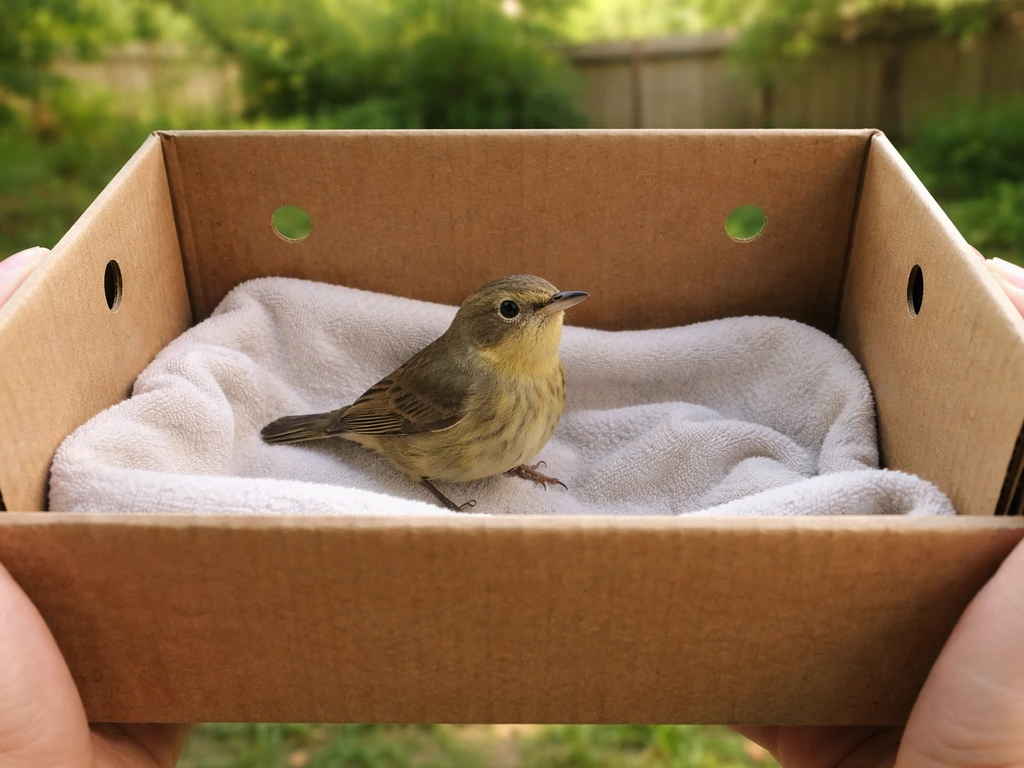
- Minimize time in your hands. Move the bird into a secure, dark, ventilated container like a cardboard box with air holes as quickly as possible.
- Keep the environment quiet. No dogs, no children running up, no loud voices. The RSPCA specifically recommends keeping the area calm and reducing stimuli when dealing with a captured wild bird, and the same principle applies immediately post-capture.
- Do not offer food or water in the first few minutes. Let the bird settle for 10 to 15 minutes in the quiet, dark container before making any decisions about next steps.
If the bird appears injured (holding a wing oddly, bleeding, unable to stand), don't continue handling it beyond moving it to the secure container. Call a licensed wildlife rehabilitator immediately.
What to do if the quail won't go near the trap
Quail avoidance is frustrating but almost always fixable. There are a handful of reasons a quail will approach, hesitate, and walk away, and each has a specific fix.
| Problem | Likely cause | Fix |
|---|---|---|
| Bird approaches but won't enter | Trap looks or smells foreign | Rub the trap with soil or dry leaves to reduce human scent; leave it in place for 2 to 3 days unset so the bird gets used to it |
| Bird doesn't come near at all | Wrong location | Move the trap to where you've actually seen the bird, not where you think it should be |
| Trap fires but the bird escapes | Trigger is too slow or the door gaps | Test the trigger multiple times before setting; check that the door drops flush with no gap at the bottom |
| Bird was entering but stopped after a few days | Bait has gone stale or moldy | Replace bait daily; stale millet and wet cracked corn repel rather than attract |
| No activity at all in the mornings | Wrong timing | Switch to late afternoon check-in periods; some individual birds are more active then |
| Bird actively avoids the area now | You've been too present near the trap | Set the trap and leave the area entirely for the first few hours; use a trail camera instead of physical monitoring |
Realistic timelines: if a quail is actively foraging in the area and you've set the trap correctly, a first capture can happen within one to three days. If you're dealing with a very cautious bird or one that has already been startled by the trap once, expect five to ten days. Don't give up before two weeks of consistent effort unless circumstances change. Learning how to approach avoidance behavior is a skill in itself, and many of the same principles that apply when you're trying to figure out how to catch a snipe bird (another notoriously elusive ground bird) translate directly to working with stubborn quail.
Weather also matters more than most people realize. Hot, dry days push quail activity into shorter windows around dawn and dusk. Cold or rainy weather can suppress foraging entirely for a day or two. If you've had a run of bad weather, don't count those days as failed attempts. Reset your timeline once conditions normalize.
After the catch: release, transport, or rehab
Once you have the bird safely contained, you have a short window to make good decisions. Here's how to think through each scenario.
If the quail is wild and uninjured
Release it where you caught it, ideally within an hour. Don't transport a wild quail to a different location unless you have a specific, permitted reason. Wild birds are territorial and disoriented by new environments. Open the container at ground level in the same area, step back, and let the bird leave on its own. The RSPCA notes that wild birds may take a little time to leave once given a chance, so don't rush the process or try to push the bird out. Leave the area quiet and give it space. Abrupt release into an unfamiliar spot is more harmful than a calm release at the capture site.
If the quail appears injured or is clearly in distress
Keep it in a dark, quiet, ventilated container (a cardboard box works well) and contact a licensed wildlife rehabilitator or your local animal control agency as soon as possible. Do not attempt to feed or treat the bird yourself unless instructed by a professional. Transporting wildlife without the right authority is illegal in many jurisdictions, so confirm with the rehabilitator before you drive anywhere. The methods for safely containing and transporting a bird in distress overlap with guidance on how to trap a bird easily while minimizing further harm, so brush up on those techniques before you move the animal.
If the quail is an escaped pet
Return it to its owner if you've identified one. If you believe the bird is yours (an escaped aviary bird, for instance), move it to a secure, familiar enclosure and check it over for injuries from being loose. Escaped domestic quail can pick up parasites and injuries outdoors, so a quick visual health check and a call to your vet if anything looks off is worth doing before reintroducing the bird to your flock. Knowing how to snare a bird safely, in the sense of containing it without harm, is a skill that helps enormously when you're reuniting an escaped domestic bird with its home enclosure.
If you captured the quail for authorized population management or research
Follow the specific handling and transport protocols outlined in your permit or research protocol. If you're banding or tagging birds, the US Fish and Wildlife Service's humane disposition framework applies fully, including documentation requirements. If you're working with a special situation, such as capturing a bird of prey that was pursuing your quail, the approach differs significantly: how to trap a bird of prey involves entirely different legal requirements and handling skills that are outside the scope of this guide.
One final note: trapping quail is genuinely a different skill set from trapping most other birds. Quail are ground-level, skittish, and acutely sensitive to anything that feels out of place in their environment. But they're also creatures of habit who return to the same spots every day. Use that predictability in your favor, stay patient, check your trap consistently, and keep the whole process as calm and low-key as possible. That approach, combined with the right setup, will get you there. If you want to broaden your knowledge of live bird capture methods more generally, the overview of how to catch a peacock bird covers some useful large-bird containment principles that translate well to handling confident, ground-foraging birds.
FAQ
How often do I need to check a quail trap to be humane and compliant?
Check traps at the shortest interval you can manage, and prioritize frequent checks from the moment the trap is set until removal. Plan your schedule so you can inspect immediately, because the welfare risk rises quickly after capture, especially in heat or direct sun. If you are subject to permit rules, follow the exact trap check interval stated in your authorization.
What should I do if the trap captures something that is not a quail?
Treat it as a wildlife welfare emergency. Keep your hands off the animal as much as possible, cover the trap to reduce stress, and contact the appropriate authority or wildlife rehabilitator right away. Do not attempt to re-bait or reset the same trap until you can identify why non-target captures happened (for example, bait attracting other ground birds or placement too close to animal pathways).
Can I trap quail on my property if I think it is “just a nuisance” bird?
Possibly, but you should not assume. If it is wild, capture is often legally protected regardless of your intent, and even escaped quail may be regulated differently depending on your state or country and whether it is treated as domestic property. Confirm your status before you set any live-capture device, especially if you plan to transport, relocate, or release elsewhere.
How can I tell whether a quail is wild or an escaped domestic bird when they look similar?
Look for behavioral and context clues, not just appearance. An escaped pet or farm quail is more likely to be alone near buildings or fences, show reduced flight response to humans, or appear “confused” around human structures. A wild quail typically stays in cover, feeds like it belongs in that habitat, and moves in a way that matches local natural behavior (for example, covey behavior and strong avoidance). If you are unsure, pause and treat it as potentially protected wildlife until verified.
My trap keeps getting sprung or empty, what are the most common setup mistakes?
Most failures come from placement, not bait. Avoid open lawns, do not set the trap far from cover, and always leave the entrance visually unobstructed. Also, don’t move the trap daily, and make sure bait placement creates a trail that starts outside the entrance and leads inward. Finally, check whether your bait is appropriate for quail ground foraging (seeds and small natural foods), since the wrong food can draw different species or none at all.
What time of day is best to trap quail, and should I adjust for weather?
Quail foraging often peaks near dawn and again before sunset, so set and check during those windows. In hot, dry conditions, expect shorter activity periods and adjust your plan to the tightest active times. After cold or rainy stretches, give the area time to return to normal activity, rather than counting each non-capture day as failure.
What do I do if the quail gets injured while in the trap?
If you see bleeding, inability to stand, or unusual wing positioning, limit handling and move it to a secure container only. Then contact a licensed wildlife rehabilitator immediately for triage guidance. Do not attempt to feed, medicate, or “test it” repeatedly, because extra handling can worsen shock, fractures, or stress injuries.
Should I release the quail immediately after capture or can I hold it for longer?
For wild quail, aim for release at the capture site within a short window, ideally within about an hour, and open the container at ground level while stepping back. If the bird is sluggish, overheated, or visibly stressed, holding it in a dark, quiet, ventilated container is safer until a rehabilitator can advise, but prolonged captivity increases risk. For escaped domestic birds, timing should align with your reunification plan and any veterinary checks you can do quickly.
If I’m trying to relocate a wild quail, do I need special permission?
Yes. Relocation is frequently regulated and may be treated as capture, transport, and release of protected wildlife. Even when the birds are not endangered locally, moving them to another area can violate wildlife laws or public land rules. Use your permit or local authority guidance, and avoid “short drives” as a casual solution, because transport can spread stress and disease.
How should I contain a quail after capture to reduce harm?
Use a dark, quiet, ventilated container to minimize panic, and keep it at the capture site or in a controlled environment while you arrange help. Avoid overcrowding, cover the container to reduce visual stress, and keep it out of direct sun. Do not feed the bird unless a rehabilitator instructs you, and avoid squeezing or restraining the legs in a way that can trigger fractures.
What if the quail is part of a predator situation, like a hawk or owl involved?
Do not improvise. Predator-related quail captures can involve additional legal and safety constraints, and the correct approach for handling or intervening differs substantially. Contact local wildlife authorities or a rehabilitator and follow their instructions, because attempting to trap around a raptor can create injuries and complicate legal compliance.
How long should I keep trying before I conclude it isn’t working?
If everything is set correctly and the bird is actively foraging, expect a first capture window of about one to three days. If the bird is very cautious or has been startled before, plan for about five to ten days. If conditions remain stable, continue consistent efforts up to around two weeks before changing strategy, but don’t count days of unusual weather as failed attempts.
Next Articles
How to Capture a Bird Safely and Humanely: Step by Step
Humane, safety-first steps to capture an unknown wild bird or avoid it, with aftercare, taming tips, and legal guidance.
How Do You Catch a Unique Bird Safely and Humanely
Humane, safety-first steps to catch a unique bird: pet training or wild temporary capture, plus checklists and handoff r
How to Catch a Bird Without Killing It: Humane Steps
Humane, trap-free steps to catch a wild backyard bird safely, minimize stress, contain it calmly, then release or reloca