Catching a bird of prey is genuinely different from catching almost any other bird, and if you are searching for how to do it, the first thing you need to know is this: in most situations involving a wild raptor in the U.S., physically trapping it yourself is illegal without a permit, and even attempting it can create serious legal risk. That said, there are real, legitimate reasons someone ends up needing to contain or safely handle a bird of prey, whether it is an owned falconry bird that escaped, an injured hawk on your lawn, or a disoriented owl that flew into your garage. This guide walks you through what to actually do depending on your specific situation, starting with the safest and most legal options first.
How to Trap a Bird of Prey Safely and Legally
Clara Hayes
21 Apr 2026
Why catching a bird of prey is a completely different situation
Birds of prey, which include hawks, falcons, owls, eagles, ospreys, and kites, are protected under two major pieces of federal law. The Migratory Bird Treaty Act (MBTA) makes it unlawful without authorization to take, kill, capture, trap, pursue, or even attempt any of those things with a migratory bird, and the definition of 'take' is intentionally broad. Bald and golden eagles get even stronger protections under the Bald and Golden Eagle Protection Act (BGEPA), which carries its own set of criminal penalties. Under 50 CFR § 21.76, you need an actual rehabilitation permit to take or temporarily possess a migratory bird for rehab purposes. The one narrow exception is transporting a sick or injured migratory bird directly to a licensed rehabilitator or vet, and only for that purpose.
Beyond the legal issue, these birds are physically dangerous in a way that songbirds and waterfowl simply are not. A red-tailed hawk has talons strong enough to puncture to the bone, and even a small kestrel can draw blood through a thick glove if it decides it does not want to cooperate. The beak is a secondary concern for most raptors; it is the feet you want to control at all times. A panicked bird in a confined space can also injure itself badly, breaking feathers, bruising the keel, or damaging its wings against walls and fencing. The combination of legal risk, personal injury risk, and risk to the bird means that trapping a bird of prey with DIY gear is almost never the right move. The right move depends heavily on what you are actually dealing with.
Figure out what you're dealing with before you do anything
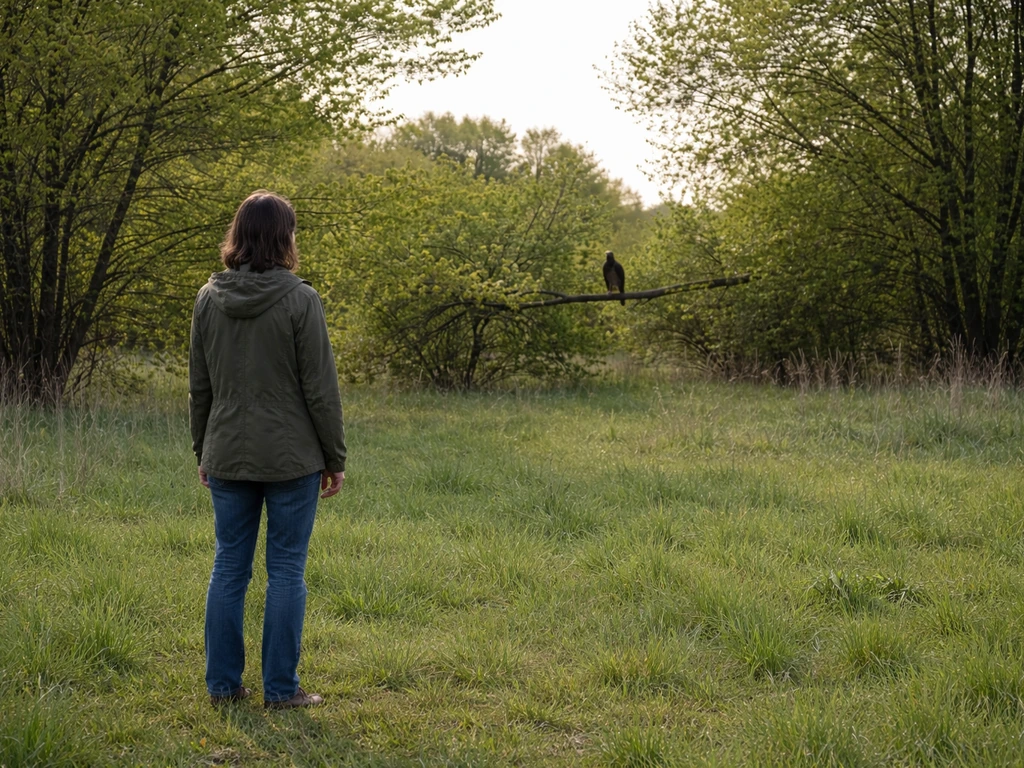
The single most useful thing you can do in the first few minutes is slow down and observe from a distance of at least 20 to 30 feet. Resist the instinct to approach immediately. What you notice during those first few minutes will completely change your next steps.
Pet raptor or wild bird?
A captive or falconry bird almost always has equipment on it. Look for jesses (thin leather straps around the legs), a bell attached to a leg or tail, anklets, or a bewit (a small leather loop). If you see any of that, this bird belongs to someone and was likely flying free during a falconry session before something went wrong. That changes everything: the bird may be trained to come to a lure or fist, it is used to human contact, and your job is primarily to keep it calm, prevent it from escaping the area, and find its owner. If the bird has no equipment at all and you are not in an area where falconry birds are commonly flown, you are very likely looking at a wild bird.
Injured or healthy?
A healthy wild raptor that lands near you and stays there is usually either hunting, resting, or investigating something. It should be alert, holding itself upright, tracking movement with its eyes, and it will likely fly away on its own when it is ready. If a bird is sitting on the ground and not flying away when you approach to within 10 feet, that is a strong signal that something is wrong. Signs of injury or distress include drooping wings (especially if asymmetric), the bird holding one foot up without alternating, labored breathing or open-mouth panting, visible wounds or blood, the bird lying on its side, or eyes that appear partially closed and dull. A bird sitting hunched on the ground, not responding normally to your presence, needs help, and getting it to a licensed wildlife rehabilitator is your priority.
Species clues that matter
You do not need to be an ornithologist, but a rough ID helps you gauge danger and temperament. Large birds like red-tailed hawks, great horned owls, and Cooper's hawks are the most commonly encountered and carry the highest injury risk from talons. A great horned owl especially can exert over 500 PSI of grip force, which is not something bare hands can safely manage. Smaller raptors like American kestrels, sharp-shinned hawks, or screech owls are less physically dangerous but still capable of cutting you if frightened. If you see a very large bird with a white head or tail (bald eagle) or solid dark brown coloring with a golden nape (golden eagle), do not attempt any handling at all; back off and call professionals immediately given the BGEPA protections and the sheer physical risk involved.
Humane alternatives to trapping: what actually works
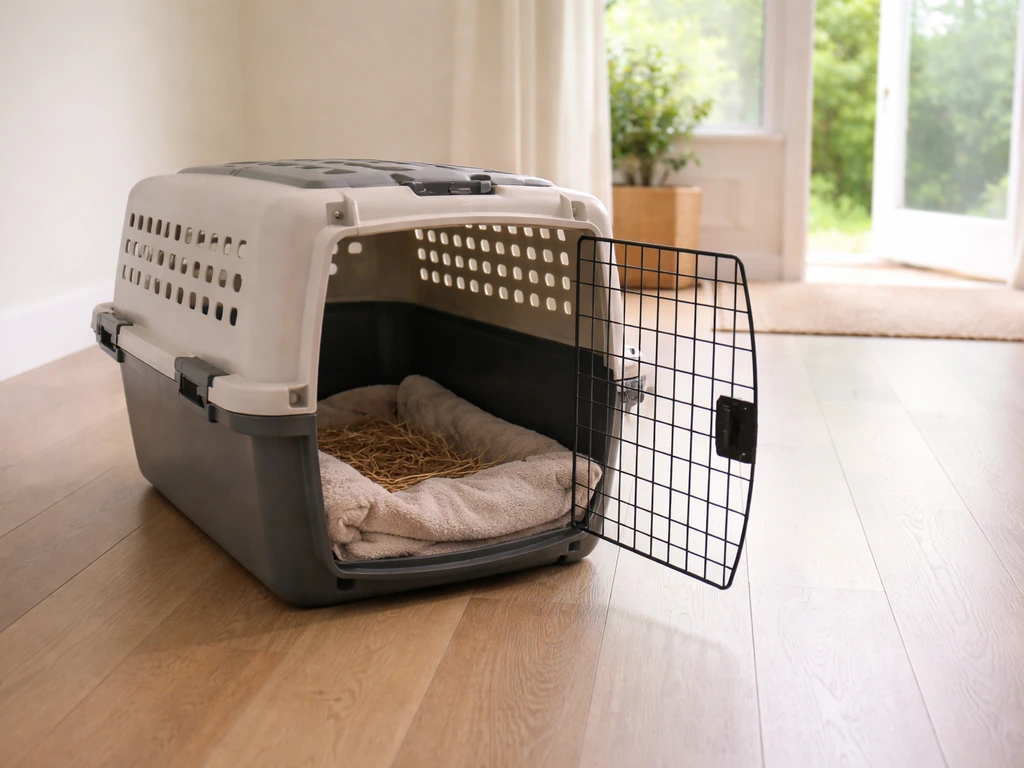
In the vast majority of situations, you do not need to physically trap a bird of prey. You need to either remove the hazard that brought it there, guide it out of a space it cannot escape on its own, or support an injured bird until help arrives. Here are the options that work without putting you, the bird, or your legal standing at risk.
Controlling the area
If a hawk or owl has flown into an enclosed space like a garage, barn, or screened porch, the best first step is to reduce the amount of available space. Close interior doors to limit the bird's movement to one room or zone. Open the largest exit possible, whether that is a garage door, a barn door, or a large window. Then step out of the space entirely. Many birds will find the exit on their own once the area is quiet and they are not being chased. Give it 20 to 30 minutes before trying anything else. Darkening the space except for the exit can also help because birds tend to fly toward light.
Luring a falconry bird
If you are dealing with a bird that has falconry equipment on it, a lure is your best tool. A falconry lure is typically a weighted leather pad with meat attached, swung in a circle. If you do not have a lure, a piece of raw meat (chicken wings or thighs work well) placed in an open area where the bird can see it from a perch may attract it down. Do not wave your arms or make loud noises. Move slowly, keep low, and present the food from the side rather than reaching over the bird. If the bird steps onto your gloved fist or approaches the lure, allow it to eat before attempting any restraint.
Calling the right people
For an injured wild bird, the most effective thing you can do is call a licensed wildlife rehabilitator. The National Wildlife Rehabilitators Association and the National Wildlife Federation both maintain directories, and your state wildlife agency can refer you to permitted rehabilitators in your area. You can use the National Wildlife Rehabilitators Association's directory to find nearby wildlife rehabilitators, wildlife centers, and related resources blank" rel="noopener noreferrer">The National Wildlife Rehabilitators Association and the National Wildlife Federation both maintain directories. You can also call local raptor centers or bird of prey sanctuaries, which are often the best equipped to handle raptors specifically. If you are dealing with a lost falconry bird, contact your local falconry club or post immediately in falconry forums and social media groups; most falconers have their birds banded with contact information. If you find a blank" rel="noopener noreferrer">lost falconry bird, the Minnesota Falconers Association provides step-by-step guidance on how to report and coordinate help.
How to set up a low-stress, controlled capture when you have no other option
Sometimes, particularly with an injured bird that cannot fly and is in a dangerous location (near a road, in an area with dogs or cats, or in weather that is getting worse), you need to safely contain it while you wait for a rehabilitator or arrange transport. If you are looking for how to trap a bird easy, use only the legal, low-stress containment steps described here and get help from a wildlife rehabilitator when needed contain it. This is not trapping in the DIY sense; it is minimally invasive containment to prevent further harm. Here is how to prepare and execute it as safely as possible.
What to have ready
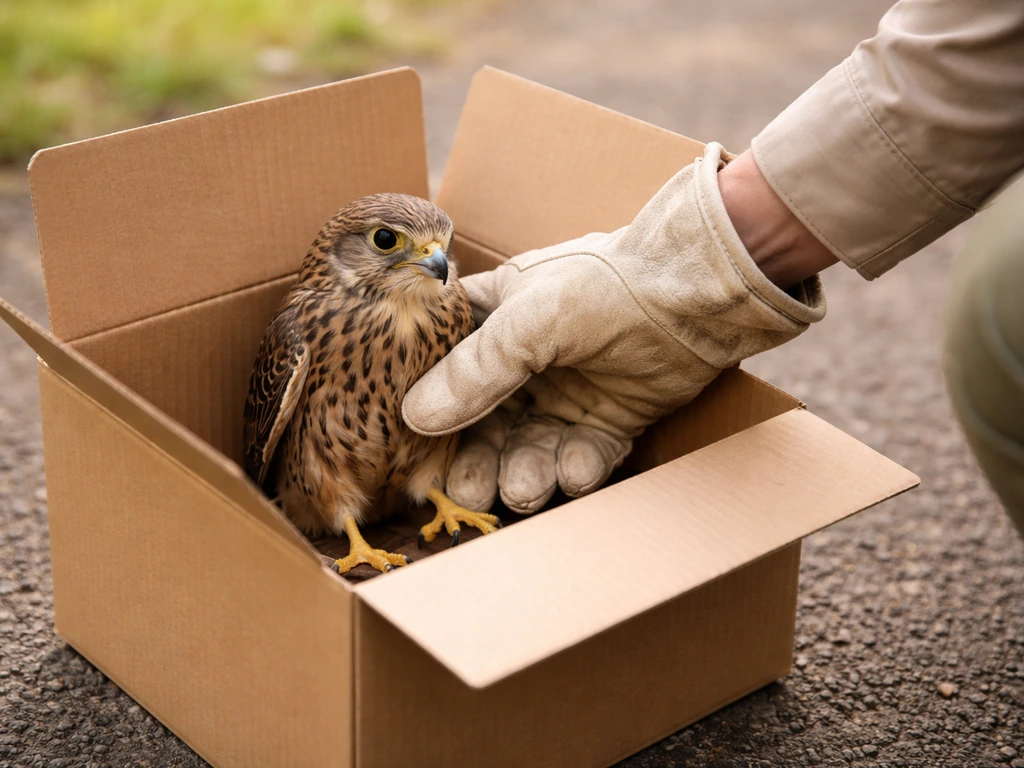
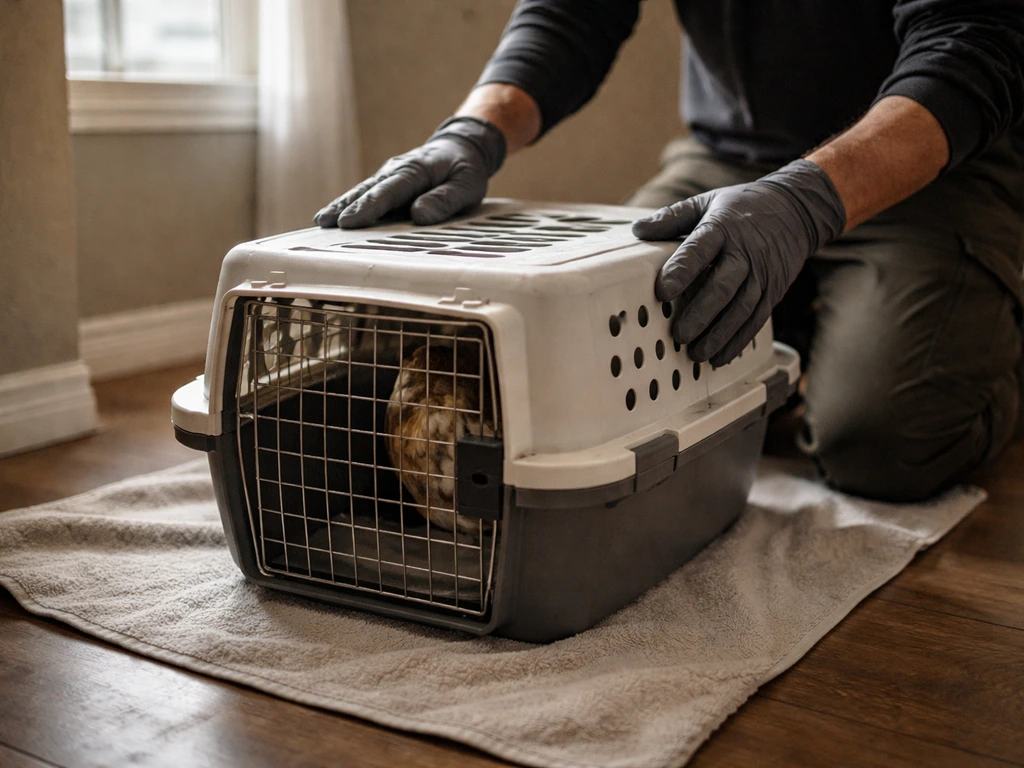
- A cardboard box or plastic carrier, large enough that the bird can sit upright but small enough that it cannot fully spread its wings and thrash around (a box roughly 18 x 18 x 18 inches works for most mid-sized hawks)
- Ventilation holes in the box (punch them with a screwdriver before you start, not while holding the bird)
- A thick bath towel or lightweight blanket, at least 36 inches square, for controlled covering
- Heavy leather gloves, ideally elbow-length; standard gardening gloves are not sufficient for anything larger than a kestrel
- A second person to hold the box open and guide the bird in if possible
- A dark, quiet, and temperature-stable indoor area where the contained bird can wait without additional stress
How to position yourself and approach
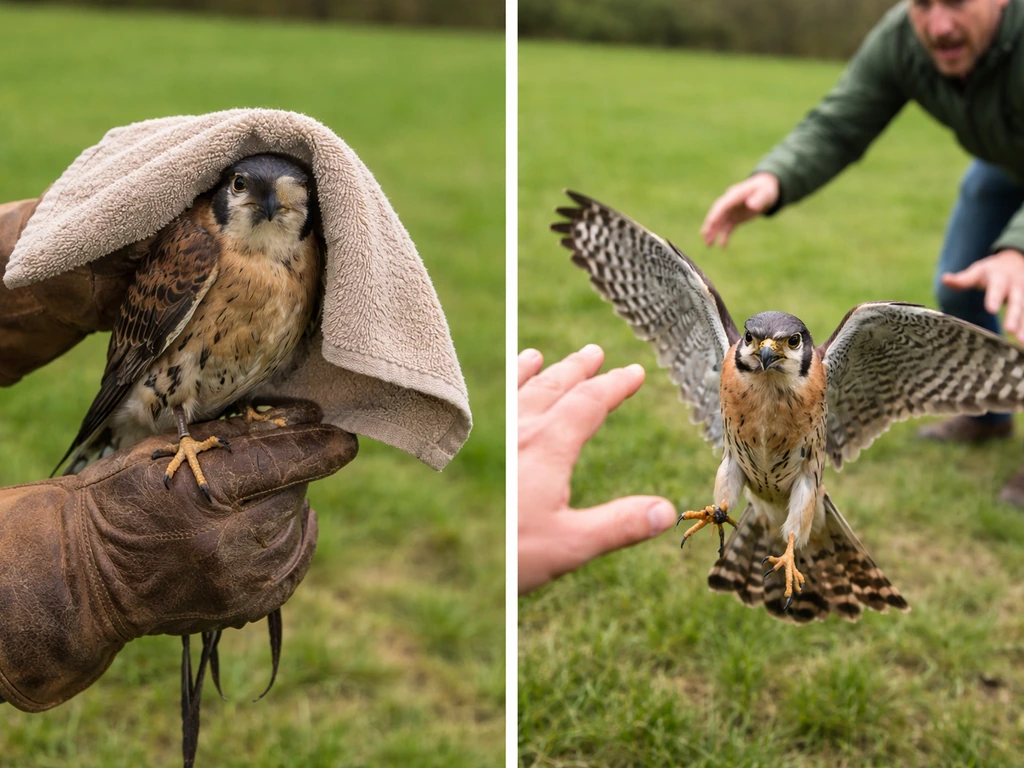
Approach from the side rather than head-on. Birds of prey have excellent lateral vision and a direct frontal approach reads as a predatory threat. Move slowly, crouch slightly to reduce your apparent size, and avoid making sudden sounds. Have your towel ready, held loosely in both hands. When you are within 3 to 4 feet of the bird, gently and quickly drape the towel over its entire body from above, covering its head first. The sudden darkness almost always causes the bird to stop moving for a few seconds, and that window is when you act. With the towel still covering it, place both hands over the bird's back and wings, hold them against its body (not squeezing hard, just preventing flapping), and lift it into the box. Lower it in gently and close the box.
The most critical thing here is controlling the feet. Before the bird goes into the box, make sure the talons are pointed downward or toward the floor of the box, not toward your hands. If a talon hooks into you, do not yank; that makes puncture wounds worse. Stay calm and gently unwrap the talon by rotating the foot rather than pulling.
Handling and containment basics after you have the bird
Once the bird is in the box, the goal is to keep it as calm and stable as possible until you can get it to professional care. Place the box in a quiet room away from pets, children, and loud noises. Do not keep opening the box to check on the bird; every time you open it you reset its stress level. Keep the room dimly lit. Do not offer food or water unless a rehabilitator specifically instructs you to, because improper feeding can actually harm injured raptors.
If you are transporting the bird, secure the box so it cannot slide or tip in the vehicle. A towel or blanket around the outside of the box helps muffle road noise and vibration. Keep the car temperature moderate, around 65 to 75 degrees Fahrenheit, and drive calmly. Avoid running the heater directly at the box, since overheating is a real stress risk for birds.
For a falconry bird that you have gotten back onto your fist or lure, keep it hooded if you have a hood available, or cover its head lightly with a soft cloth while you arrange safe transport or contact its owner. Falconry birds that are calm on the fist can usually stay there without a box if you are indoors and the bird is eating.
Quick do's and don'ts
| Do | Don't |
|---|---|
| Wear heavy gloves before handling any raptor | Grab at the bird with bare hands |
| Cover the head with a towel to reduce panic | Chase a bird that can still fly |
| Control the feet from the start | Pull against a talon that has hooked you |
| Keep the box dark and quiet | Keep opening the box to check on the bird |
| Transport the bird in a secure, ventilated box | Put the bird in a wire cage where feathers can snag |
| Contact a licensed rehabilitator immediately | Attempt to feed or treat injuries yourself |
Troubleshooting: when the bird won't cooperate
Things rarely go exactly as planned. Here are the most common situations where a capture attempt stalls, and what to adjust.
The bird keeps moving away before you can get close
If a bird is moving away consistently but not flying off entirely, it is likely not injured badly enough to warrant immediate hands-on intervention yet. Back off and call a rehabilitator for guidance before trying again. Repeatedly chasing a bird that can still move raises its stress hormones significantly and can cause capture myopathy, a serious muscle condition that can be fatal even hours after the actual capture. If the bird is in immediate danger (road traffic, predators), try to herd it with a long-handled broom or a large piece of cardboard, using it as a gentle barrier rather than something you swing or poke with.
The bird panics when you throw the towel
Throwing the towel from too far away is the most common mistake. If the towel lands short or only partly covers the bird, it will thrash and potentially injure itself. Practice the motion before you approach: you want to lay the towel rather than throw it, with a smooth draping motion from directly above at a distance of no more than 18 to 24 inches. If you missed and the bird is now loose in a room, stop, dim the lights, and wait for it to land somewhere before trying again.
Time of day and weather are working against you
Raptors are typically more active and alert in the morning and late afternoon. An approach attempt at midday in full sun is harder because the bird's visual acuity is at its peak. At dusk or on overcast days, birds tend to be slightly less reactive. Cold, wet weather can both increase a bird's urgency for food (making luring easier) and increase stress during handling. Do not attempt a capture in heavy rain if at all possible; wet feathers reduce a bird's ability to thermoregulate and increase post-capture shock risk.
The bird escaped during handling
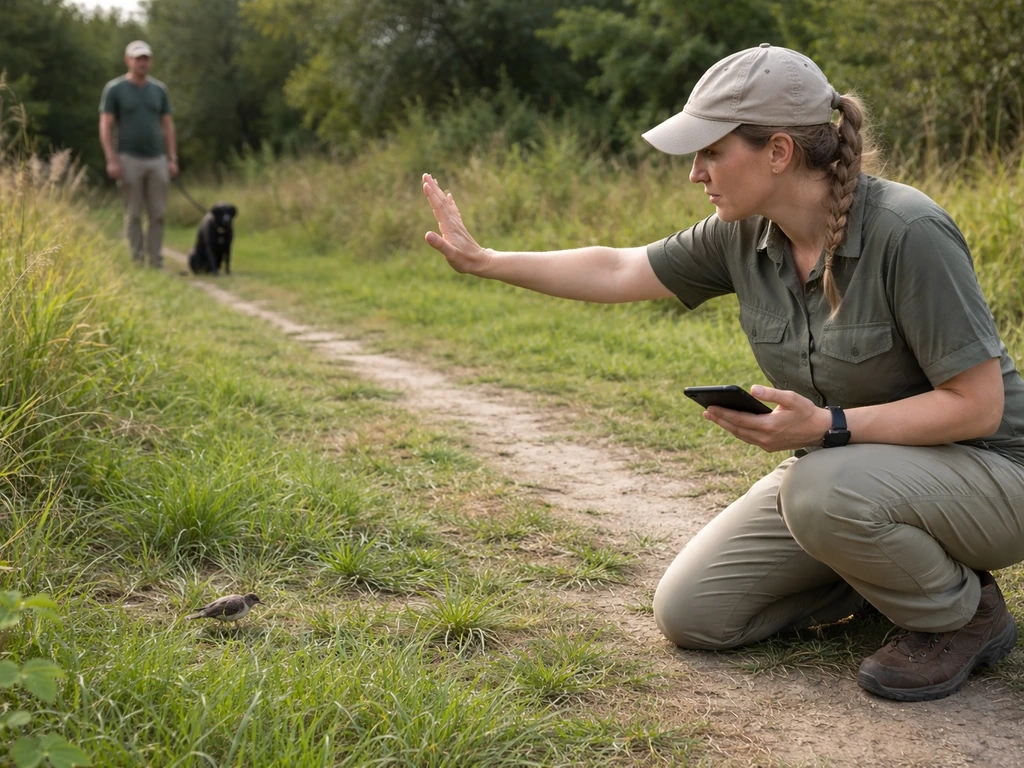
Stay calm, mark the spot where it lands, and do not run after it. Give it 10 to 15 minutes to settle before trying again. Call the rehabilitator or your contact at the falconry club and report what happened so they can adjust their advice. If it was a falconry bird and it flew to a high perch, the owner may be able to call it down more effectively than you can.
When to stop and call in the professionals
There are situations where stopping and calling for help is not just the safest option but genuinely the only responsible one. Know these before you start.
- The bird is a bald or golden eagle: stop everything, keep people and pets away from the area, and call the U.S. Fish and Wildlife Service or your state wildlife agency directly. Do not attempt any handling.
- The bird has an obvious severe injury such as a compound fracture, deep laceration, or is in shock and unresponsive: minimize handling to what is strictly necessary to get it into a box, and get it to a vet or rehabilitator within the hour.
- You have already attempted capture once and the bird escaped or you were injured: call a licensed rehabilitator and let them take over.
- The bird is healthy and capable of flight: leave it alone. A healthy wild raptor does not need your help and your attempting to catch it is both illegal and counterproductive.
- You are uncertain whether you are allowed to handle the bird in your specific state: your state may have additional protections beyond the federal MBTA. Call your state wildlife agency for a quick answer before doing anything.
- The situation has lasted more than a few hours without resolution: fatigue, repeated stress attempts, and prolonged exposure all lower the bird's chances. Get professional support.
Wildlife rehabilitators and raptor centers exist precisely for these situations. They have the training, the equipment, the legal permits, and the species-specific experience to handle raptors safely and give them the best chance of recovery and release. There is no shame in stepping back and making a phone call; that is often the most helpful thing you can do.
A realistic timeline if you are helping an injured bird
If you have contained an injured raptor and are waiting for or transporting it to a rehabilitator, here is roughly what to expect. The first 30 to 60 minutes are about safe containment and reducing additional stress. Transport to a rehabilitator should ideally happen within 2 to 4 hours of initial capture. At the rehab center, an initial triage assessment usually happens within a few hours of arrival. Depending on the injury, a raptor in professional care may be there anywhere from a few weeks (for minor injuries) to several months (for wing fractures or neurological issues). Birds that recover fully are released back to the wild; those that cannot survive in the wild and have become habituated to humans may be placed in education programs at licensed facilities.
If you are in a situation with a falconry bird or a bird you are trying to reclaim for a licensed owner, the process of rebuilding trust and getting a bird comfortable back on the glove after a stressful escape can take anywhere from a day to a few weeks depending on how long the bird was loose and how conditioned it was to begin with. This is similar in spirit to the trust-building work involved with other bird handling situations, though raptors have their own specific behavioral needs and should only be worked with by someone with proper falconry or raptor handling training.
The short version: what to do right now
Observe from a safe distance first and figure out whether you are dealing with a pet or wild bird, injured or healthy. If it is a healthy wild raptor, leave it alone and do not attempt capture. If it is injured, call a licensed wildlife rehabilitator before touching it, and if you must contain it for transport, use the towel-and-box method described above with heavy gloves. If it is a falconry bird with equipment on it, use food to lure it and contact the owner through local falconry networks. And if you see a bald or golden eagle, call the authorities immediately and keep your distance. This is not the same as trapping a quail or catching a pet parrot that escaped; raptors demand a higher level of respect, preparation, and legal awareness at every step. If your goal is to learn how to capture a bird, the safest approach is to start with legal and humane options first and only consider containment if you truly have no alternative trapping. Peacocks are different from raptors, so check the specific steps for how to catch a peacock bird before you try any containment. For snipe specifically, the safest approach is usually to avoid DIY trapping and instead focus on legal, humane alternatives or contact local wildlife professionals for guidance snipe bird.
FAQ
If I think I have a pet falconry bird, can I legally handle it myself to get it back faster?
You generally still need to be careful, because you are dealing with a protected raptor. If the bird has falconry equipment (jesses, bell, anklets, bewit), your fastest safe step is to contact the owner through local falconry networks. If you must intervene to prevent immediate harm, prioritize minimizing stress (lure, hooding, quiet control), and avoid any action that could be seen as taking or trapping a wild migratory bird without authorization.
What should I do if the raptor is bleeding or has an exposed injury but still seems alert?
Assume it is injured and prioritize contact with a licensed wildlife rehabilitator before extended handling. If you must contain it while waiting, use minimal-stress containment (towel-over method) and keep the feet controlled. Do not try to clean wounds, apply ointments, or “test” wing movement, because raptors can worsen injuries rapidly and improper care can reduce survival chances.
Can I use fishing line, nets, or sticky tape to catch a bird of prey quickly?
No, those methods are highly likely to injure a raptor (entanglement around wings and talons, cuts, fractures) and they also increase legal and ethical risk. The article’s low-stress approach (reducing space, luring if it is a falconry bird, or towel-and-box containment only when necessary) is the safer decision path.
How do I tell the difference between a wild raptor and an injured raptor pretending to be calm?
A key cue is behavior consistency during approach. A resting healthy wild bird often remains upright, tracks you with its eyes, and typically flies off when you get close enough. A bird that sits hunched, droops or holds one wing differently, keeps one foot up without normal switching, or has dull, partially closed eyes is signaling distress even if it is not panicking.
If I cannot tell whether it is a bald eagle or a golden eagle, should I still try to capture it with a towel?
No. When the species could be a bald or golden eagle, the safest choice is to back away and call professionals immediately. Even without certainty, the physical risk from large eagles and the extra legal protections mean you should treat it as “do not handle” until authorities or a permitted wildlife professional says otherwise.
Do I need to feed the bird or give water while I wait for help?
Usually not. The article advises not offering food or water unless a rehabilitator specifically instructs you. Improper feeding can worsen injuries, cause aspiration, or interfere with the bird’s stress physiology. If the bird is a falconry bird and is luring normally, feeding may be appropriate only as part of the owner-directed recovery, not as improvised care for an unknown injured wild raptor.
What if the raptor keeps escaping out of an open window or door when I try to guide it out?
Try reducing and funneling movement rather than chasing. Close interior doors to limit it to one room or zone, open the largest exit, then step out and let it find the way during a quiet period. If it will not leave after about 20 to 30 minutes, contact a rehabilitator for guidance instead of escalating with repeated runs, which increases stress and can lead to conditions like capture myopathy.
Is capture myopathy always fatal, or is it reversible if I stop chasing soon?
It can be fatal, and timing matters. The risk described in the article arises after repeated stress and chasing even if the bird “looks fine” during capture attempts. If the bird is still able to move away, back off and contact a rehabilitator promptly for what to do next, rather than trying again quickly.
What should I do if the towel slips and the bird is loose again in the room?
Stop immediately. The article’s guidance is to dim the lights and wait for the bird to land rather than restarting with frantic movement. Let it settle for a short period (about 10 to 15 minutes) and then consider calling a rehabilitator for an adjusted plan, especially if it is injured or you cannot control the feet safely.
How should I prepare a box for transport, and is it okay if the bird can see out?
Secure the box so it cannot tip or slide in the vehicle, and use padding (like a towel or blanket around the outside) to muffle vibration and road noise. For calm and stability, keep the bird in a quiet area and avoid repeated opening. The goal is reducing stimulation, so limit unnecessary exposure to movement and light while you drive.
What glove type or handling gear should I use if I must secure a raptor briefly?
The article indicates heavy gloves for situations where containment is necessary, and stresses controlling feet before the bird goes into the box. If you do not have appropriate protective gear and you cannot control the feet safely, do not attempt DIY handling. Instead, step back, isolate the area, and contact a wildlife rehabilitator or raptor center to manage the situation with proper equipment.
Next Articles
How to Trap a Bird Easy: Humane Steps for Safe Capture
Humane steps to catch and relocate birds safely, with tools, timing, handling, and when to call a vet or wildlife pro.
How to Trap Quail Bird Safely and Humanely Step by Step
Humane, step-by-step guide to safely trap quail using bait, live-capture setups, monitoring, handling, and release or tr
How to Capture a Bird Safely and Humanely: Step by Step
Humane, safety-first steps to capture an unknown wild bird or avoid it, with aftercare, taming tips, and legal guidance.