
Catching a peacock safely comes down to one thing: slowing everything down. These birds are big, fast, and easily panicked, but they're also food-motivated and surprisingly catchable when you work with their behavior instead of against it. Whether you're retrieving an escapee from your own flock, dealing with a neighbor's wandering bird, or trying to help an unknown peacock you found in your yard, the same core approach applies: read the bird's comfort level, use food to draw it into a controlled space, and only attempt a hands-on catch when you've genuinely set yourself up to succeed.
How to Catch a Peacock Bird Safely and Humanely
Clara Hayes
17 May 2026
First, figure out what situation you're actually in
Before you grab a net or start chasing anything, take five minutes to observe the bird from a distance. That observation tells you almost everything you need to know about how to proceed, and it could also save you from accidentally breaking the law.
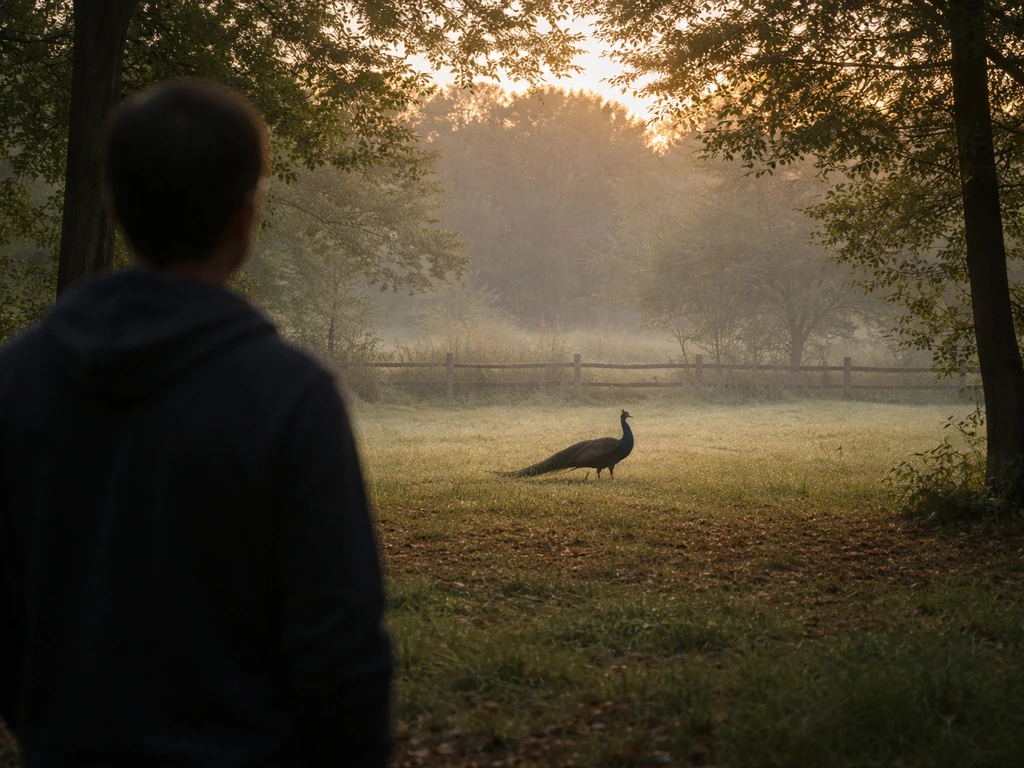
A domestic escapee or a bird that's been around people will often show it immediately. It may approach you, scratch around near buildings or gardens, and tolerate you standing within 10 to 15 feet without bolting. Peafowl kept as garden or livestock birds can become remarkably calm around humans, especially if they've been fed by hand. That relaxed body language is your green light for a closer approach.
A truly wild, feral, or unfamiliar bird behaves differently. It stays close to dense cover, gives alarm calls (a loud, repeated honking shriek) when you get within 30 to 40 feet, and may launch nearly vertically into the air with rapid, loud wingbeats when it feels cornered. If you're seeing that kind of response, treat it as a higher-stress situation and adjust your plan accordingly.
The legal piece matters here too. In the U.S., regulations differ significantly depending on whether the bird is someone's domestic/exotic bird or an injured wild animal. Non-permitted individuals cannot legally possess, hold, or care for injured wild birds under federal law. If you genuinely can't determine ownership and the bird appears injured or sick, contact your local animal control or a licensed wildlife rehabilitator before you do anything else. Local animal control agencies handle stray and non-native exotic animals and can point you to the right resources. This isn't a technicality to skip over; it protects both you and the bird.
| Situation | Key Signs | Best First Step |
|---|---|---|
| Domestic escapee (yours or neighbor's) | Calm around people, near homes, tolerates close approach | Check for owner, attempt gentle retrieval yourself |
| Stray domestic bird (unknown owner) | Semi-tame, in a residential/rural area | Contact local animal control, attempt humane containment |
| Wild or feral bird | Alarm calling, avoids cover, flushes early | Do not chase; call animal control or wildlife rehabilitator |
| Injured/sick bird (any origin) | Grounded, unable to fly, lethargic | Call a licensed wildlife rehabilitator immediately |
Get your gear and permissions sorted before you approach
Peacocks are not small birds. A fully grown male (peacock) can weigh 8 to 13 pounds and stands about 3 to 4 feet tall at the body, with a train that adds another 4 to 5 feet. Their beaks are strong and their legs are powerful. They rarely cause serious injury to experienced handlers, but a panicked bird in close quarters can scratch, strike, or knock things over. Going in prepared makes the whole process safer for both of you.
- Wear long sleeves and long pants to protect your arms and legs from claws and wing strikes
- Thick gardening gloves or leather work gloves if you plan any direct handling
- Closed-toe shoes, preferably boots
- A large towel or light blanket for wrapping the bird during transport
- A helper if at all possible: one person to guide, one to catch
- Permission from the property owner if the bird is on someone else's land
- Phone number for your local animal control and nearest wildlife rehabilitator saved and ready
Before you start, set a realistic goal for the session. If the bird is calm and you have food, you might get hands-on in 20 to 30 minutes. If it's skittish, plan for multiple shorter sessions over a day or two. Rushing a peacock almost always backfires: a frightened bird that flies into a fence or a road is a much worse outcome than waiting a few more hours.
How to approach a peacock without sending it running
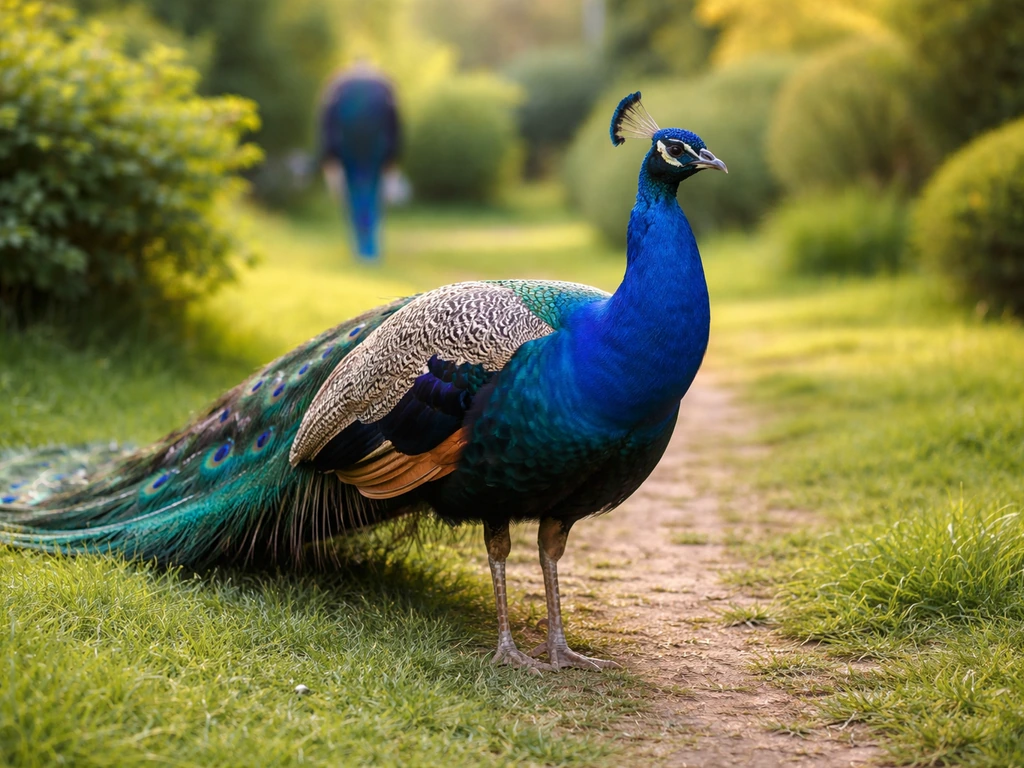
Peacocks read body language the same way most prey animals do: direct, fast movement equals threat. Your job during the approach phase is to look boring and unthreatening. Walk slowly, avoid direct eye contact, and move at an angle rather than straight toward the bird. Stay low if you can, crouch rather than loom. Talk quietly and steadily in a calm, low voice.
Watch the bird's posture as you get closer. A relaxed bird keeps its head in a neutral position, forages, or looks around casually. A stressed bird raises its head high, freezes, starts alarm calling, or shifts its weight toward its escape route. A stressed peafowl may start alarm calling when it feels threatened, which fits a high-stress, unknown situation rather than a bird that is comfortable with close human presence [stressed bird raises its head high, freezes, starts alarm calling](https://animaldiversity.
org/accounts/Pavo_cristatus/). Peafowl males can fan and display their train during courtship, while alarm or disturbance situations are associated with alarm calling and agitation rather than normal foraging or resting starts alarm calling. If you see any of those stress signs, stop moving and wait.
Let the bird settle before you take another step. This stop-and-wait technique genuinely works and is the fastest way to actually close the distance.
Timing matters more than most people expect. Peacocks are most approachable in the early morning when they're actively foraging and hungry, and again at dusk when they're looking for a roosting spot. Midday, especially in warm weather, they're often resting and more alert to disturbance. If you have the choice, early morning is your best window.
If the bird is a domestic bird that's been handled before, you may be able to skip a lot of this and simply walk up slowly with food in an outstretched hand. Always lead with the food, not with grabbing. Let the bird eat from your hand or off the ground right next to you before you make any move to restrain it.
Set up your attraction and containment area
A controlled containment strategy is what separates a successful catch from an exhausting two-hour chase. The idea is simple: use food to draw the bird into a space where your options for a calm, low-stress capture are dramatically better than out in the open.
Choosing the right bait
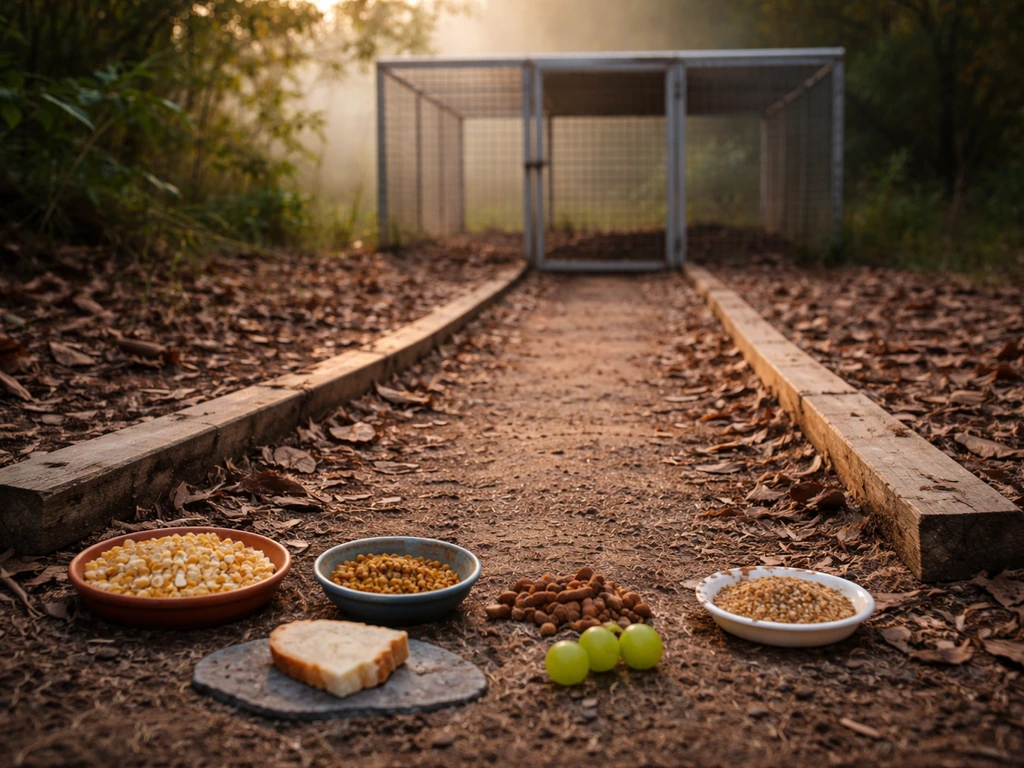
Peafowl are omnivores and highly food-motivated. The most reliable attractants are cracked corn, mealworms, cat food (wet or dry), bread, grapes, and commercial game bird or poultry pellets. Scatter a small amount 20 to 30 feet away from your target area first to get the bird's attention and moving toward you, then create a trail leading to your containment zone. Don't put all the food out at once; use small amounts to keep the bird moving in the right direction.
Setting up a containment zone
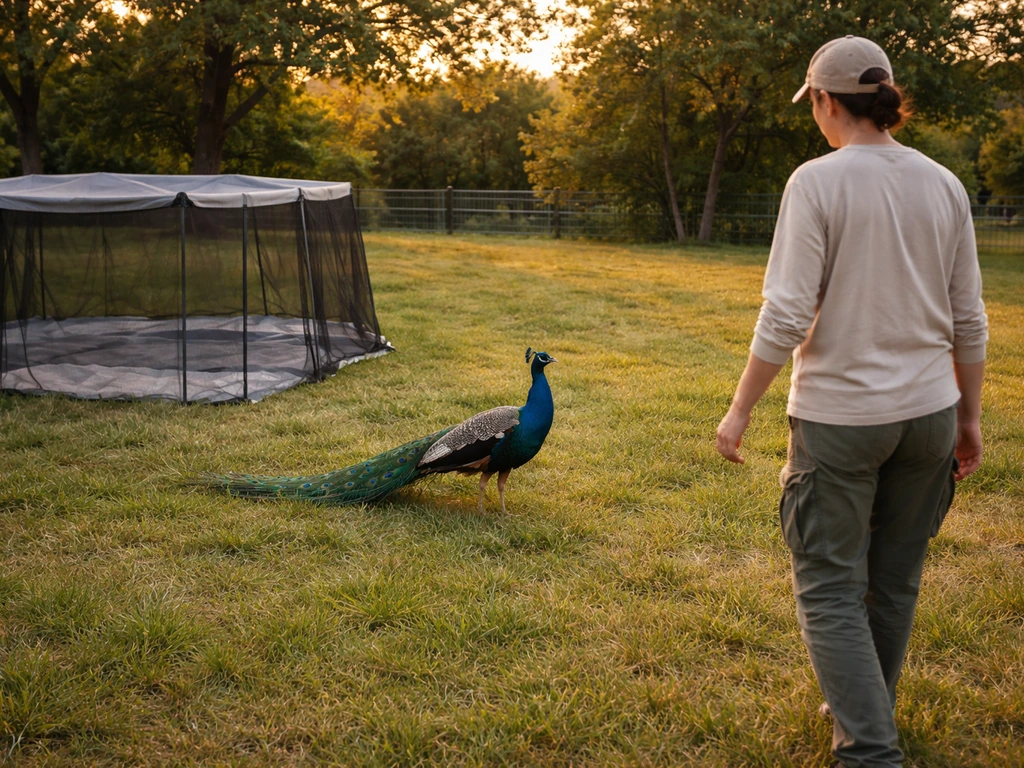
Ideally, you want to funnel the bird into an enclosed or semi-enclosed space: a corner of a fence, a shed with an open door, a portable pen, or a temporary enclosure made from garden netting or livestock panels. The key measurements for a temporary pen are at least 6 feet tall (peacocks can jump and fly vertically) and no gaps wider than a few inches at ground level. If you're setting up permanent or semi-permanent peafowl housing, use 1-inch by 2-inch mesh or smaller on the lower 2 to 3 feet of the enclosure to prevent neck entanglement.
Position two or three people (or use fencing/temporary barriers) to gently guide the bird toward the containment area without rushing. Think of it like herding: wide, slow, calm movements on the outside of the bird's position, never directly behind it at speed. You want the bird to choose to walk into the space because the food is there, not because it's panicking away from you.
Humane capture methods that actually work
Once the bird is in a contained or semi-contained space and calm, you have a few options depending on the situation and your experience level. Always choose the least-stressful method that's appropriate for your setup.
Hand capture (best for calm, tame birds)
For a bird that's already comfortable with people, this is the cleanest approach. Move in slowly from the side (not from behind, which triggers a flight response). Place one hand firmly over the bird's back and wings to prevent flapping, then use your other hand to secure both legs. Hold the legs gently but firmly between your fingers to prevent kicking. Keep the bird's body against yours to make it feel secure. Never grab by the tail train or attempt to lift by the wings.
Drop net or landing net (for less tame birds)
A large landing net (the kind used for fishing or livestock work) or a drop net staked over a food pile is the most practical tool for a bird that won't let you get close enough for hand capture. The critical technique here is concealment: birds will avoid visible netting, so cover the net with natural material (leaves, grass, burlap) or position it so the bird approaches from the non-net side. Once the bird is under or near the net, deploy it quickly and get to the bird immediately to prevent entanglement stress and injury.
When removing a bird from a net, take hold of both legs with one hand first, then secure the body and wings with your other arm. Be careful not to squeeze the chest or restrict breathing. Remove the bird from the same side of the net it entered to reduce wing and leg stress, and keep the body in a natural, upright position throughout. This technique applies whether you're dealing with a peacock, a quail, or any other bird you need to handle safely.
Box or crate trap (overnight or unattended situations)
A large wire crate or livestock crate propped up with a stick and a food trail leading inside is the classic humane trap for a bird you can't catch during the day. If you want an even easier approach, focus on observation, calm movement, and using food to guide the bird into a containment area before you attempt any restraint how to trap a bird easy. Use a string attached to the prop stick and wait at a distance, or use a self-triggering mechanism if you need to leave it unattended. Check the trap every 30 to 60 minutes at minimum; a trapped peacock left alone too long will injure itself trying to escape.
What to do right after you catch it
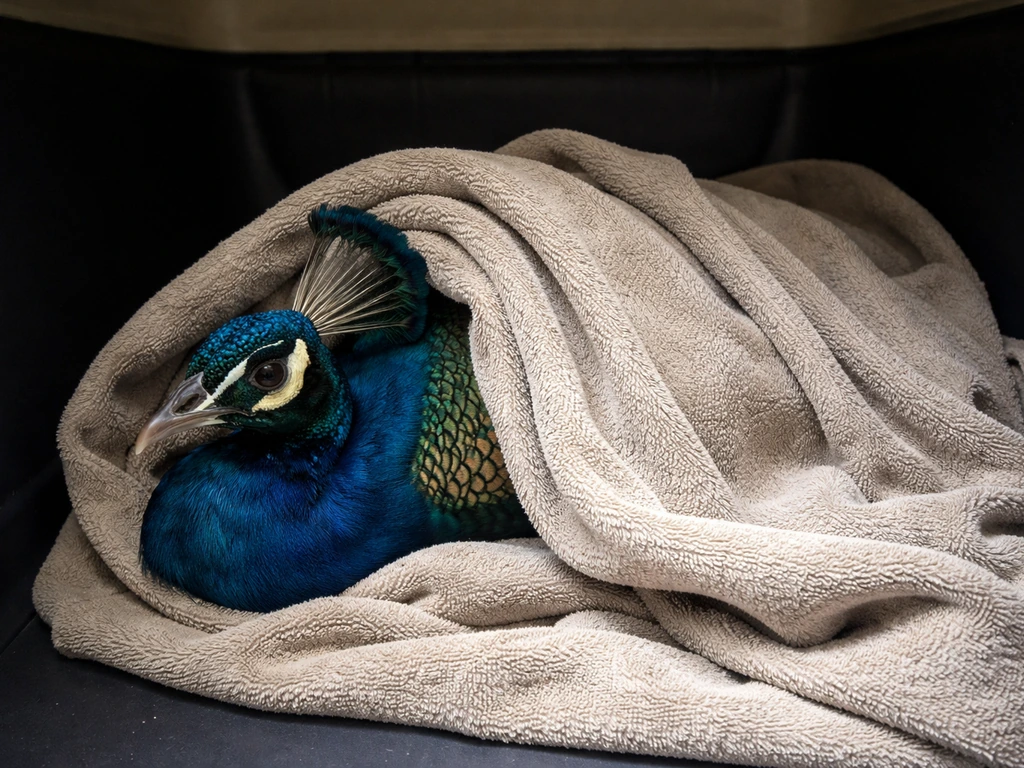
The first few minutes after capture are the highest-stress period for the bird. Your job is to calm it down as fast as possible and get it into a secure, dark, quiet space.
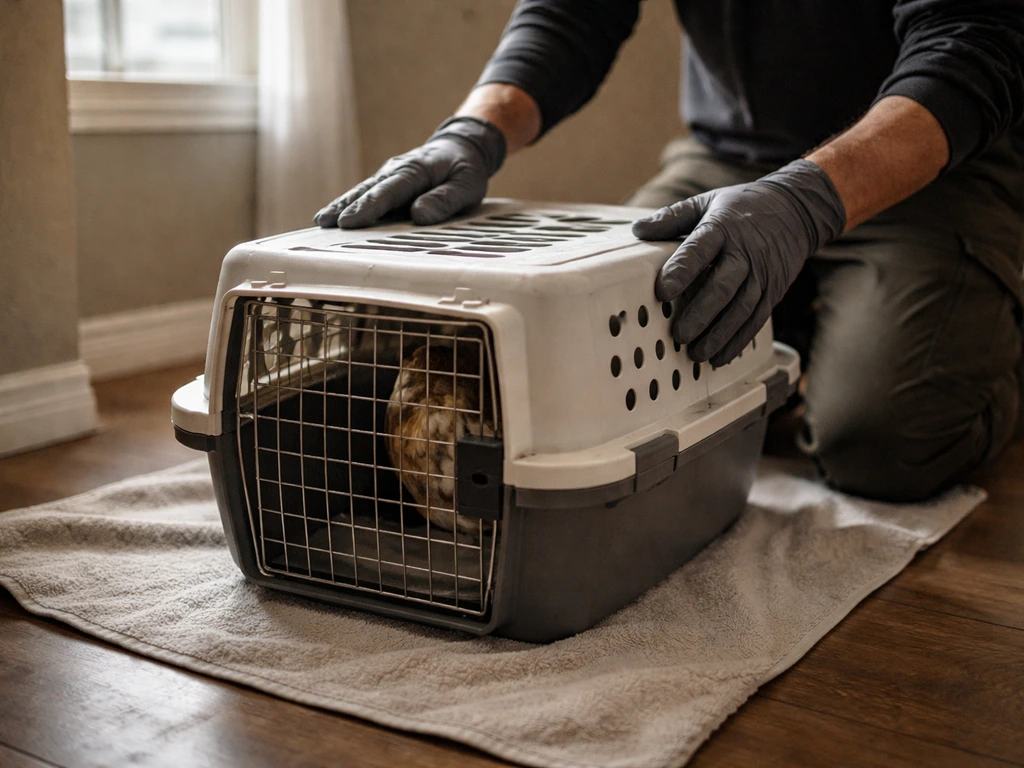
- Wrap the bird loosely in a large towel or light blanket immediately after capture. This limits wing movement, reduces visual stimulation, and genuinely calms most birds within seconds.
- Place the wrapped bird into a large, ventilated container: a cardboard box slightly larger than the bird, a plastic storage bin with ventilation holes cut into the sides, or a pet carrier. A peacock needs a container that's at minimum 24 inches wide and 36 inches long; bigger is better.
- Put the container in a quiet, dark indoor space away from pets, children, and noise. Keep the temperature comfortable, not hot.
- Do not offer food or water for the first 30 to 60 minutes while the bird settles. After that, a small amount of water in a low dish is appropriate.
- Check the bird visually for obvious injuries: cuts, drooping wings, labored breathing, or discharge from the eyes or beak.
- If the bird is injured, contact a licensed wildlife rehabilitator or avian vet immediately regardless of whether it's domestic or wild.
- If the bird appears healthy and is a confirmed domestic escapee, contact the owner or arrange appropriate housing. If ownership is unknown, contact local animal control to check for reports of a missing bird.
For transport, keep the container stable and avoid loud music, sudden braking, or extreme temperatures in the vehicle. Covering the crate with a blanket to block light and muffle sound helps keep the bird calm during the drive.
Troubleshooting checklist and when to call for help
Not every catch attempt goes smoothly on the first try. Here are the most common problems and what to do about them.
| Problem | Likely Cause | Fix |
|---|---|---|
| Bird won't approach the food trail | Too much human presence or movement nearby | Back off 40+ feet, reduce people, try again at dawn |
| Bird circles the containment zone but won't enter | Entry point too exposed or too obvious | Add natural cover around the entrance, use longer food trail |
| Bird panics and flushes when you approach | Moving too fast or too directly | Slow down, approach at an angle, use stop-and-wait method |
| Bird is hiding in dense vegetation | Already in flight-response mode | Stop attempting capture today; bait the area and return at dawn |
| Bird gets tangled in netting | Net deployed too slowly or bird hit the net at speed | Approach immediately, hold legs first, extract from entry side |
| Bird escapes again after initial catch | Container not secured or handler lost grip | Check container latches, use a towel wrap, get a second person |
| Bird appears injured or cannot fly | Injury or illness | Call a wildlife rehabilitator or avian vet, do not attempt solo transport if serious |
When you should stop and call a professional
Call your local animal control or a licensed wildlife rehabilitator if: the bird is clearly injured and you can't safely contain it, you've made three or more unsuccessful capture attempts and the bird is becoming more stressed with each one, you're unsure whether the bird is domestic or wild and it needs medical attention, or the situation requires access to property you don't have permission to enter. There's no shame in making that call.
A rehabilitator has equipment, experience, and legal authority that makes the outcome better for the bird. The goal is always the bird's welfare, not a successful solo capture. If you want a step-by-step plan, you can also look up how to snare a bird in a way that prioritizes safety and compliance bird's welfare.
If you've been searching for help with other bird capture scenarios, the approaches here share a lot of common ground with methods used for catching other ground-dwelling birds like quail, and the same slow-and-steady principles apply to more general bird capture and handling situations. If you’re looking for how to catch a snipe bird, apply the same emphasis on patient observation and low-stress movement before you try any trapping method.
If you are also working on how do you catch a unique bird, keep the same slow-and-steady, low-stress mindset and adjust details for that species’ behavior catch other ground-dwelling birds like quail. The same slow-and-steady approach is also useful when you are trying to figure out how to trap a bird of prey safely catching other ground-dwelling birds. The specifics differ by species, but patience and preparation are always the foundation.
FAQ
Is it ever okay to try catching a peacock on your own if you are not sure who owns it?
Yes, but only in controlled situations. If you can identify the bird as a domestic/exotic pet that belongs to someone, ask the owner first and follow their setup for food, containment, and handling. If you do not have clear ownership, and especially if the bird looks injured or sick, contacting animal control or a licensed rehabilitator is the safest next step before attempting any capture.
What should I do if the peacock keeps stopping to eat instead of walking into the pen?
Feeding is usually the safest “first tool,” but avoid trying to lure with large amounts of slippery or messy food. Use small, consistent portions so the peacock keeps moving toward the pen rather than stopping to gorge. Also remove other tempting foods nearby, so your trail stays the most attractive option.
How do I know when to pause the approach because the peacock is getting too stressed?
A good rule is to stop the approach as soon as you see the bird freeze, raise its head high, start alarm calling, or shift its weight toward an escape route. Pause for several minutes until posture relaxes again, then resume with slower angles and reduced movement. If the bird escalates to repeated alarm calls or rapid vertical takeoffs, switch to containment first rather than trying to hand-catch.
What if the peacock won’t hold still and keeps flapping during capture?
Handle peafowl in short, deliberate sessions only after containment. If the bird starts flapping hard or trying to twist away, release and reset your plan, because repeated struggles increase the risk of wing and leg injury. For uncooperative birds, a drop net or large crate approach is often less stressful than repeated hand attempts.
What should I do if I cannot catch it after several attempts?
If you hit the maximum safe attempt count, stop chasing. After three or more unsuccessful attempts where the bird is clearly more stressed each time, call animal control or a wildlife rehabilitator. At that point, your best next move is usually improving containment (bigger pen, better cover, clearer funnel), not increasing speed or force.
How should I respond differently if the peacock looks injured or sick?
If the peacock is likely injured, treat it as a higher-risk welfare and legal situation. Keep distance, reduce your movement, and avoid cornering it in a way that forces sudden flight. Do not attempt hands-on restraint unless you are trained, and instead contact animal control or a rehabilitator who can assess injuries and use proper equipment.
What is the best time to catch a peacock, and does weather change the plan?
Early morning and dusk are best, but weather matters too. During very hot midday, plan for longer “quiet” waits because the bird may be less food-driven and more alert to disturbance. If there is rain or strong wind, expect faster escalation when it feels exposed, so make your containment setup first and lure only when you can guide immediately.
What are the most common mistakes people make that make peacocks run away?
Avoid standing directly behind the bird or moving straight at it at speed, because prey animals interpret that as a threat. Also avoid looming over it, fast arm motions, and extended eye contact. The most effective alternative is to keep a diagonal line of approach and use the food trail so the bird’s movement is guided by choice, not panic.
How should I handle the bird immediately after capture and during transport to keep it calm?
Cover the crate or pen to reduce glare and sound during the first minutes after capture, and keep the container stable to prevent sliding or twisting. Avoid sudden braking, loud voices, and extended delays where the bird is forced to remain in the same position without calming. If you need to pause, move the container to the quietest safe area available.
What if I cannot build a perfect pen, but need to contain the peacock quickly?
If the bird is already in your yard or near your home, use existing structures to reduce stress, for example, a shed doorway or fence corner, instead of building a large complex setup. Your goal is a predictable, short funnel distance. Confirm the pen height is adequate for vertical takeoff and check ground-level gaps, because most escapes happen at the lowest point or by panic flight upward.
Next Articles
How to Snare a Bird: Humane, Legal Alternatives and Steps
Humane legal ways to catch or relocate birds safely, avoiding snares, with trap setup, pet care, and handling steps
How to Catch a Snipe Bird Safely and Humanely
Humane, safety-first steps to identify and capture a snipe or encourage it to stay for safe relocation.
How to Trap a Bird of Prey Safely and Legally
Humane, legal steps to safely manage and contain raptors without traps, with when to call rehab and how to reduce risk.