You can use a large clear bottle, plastic container, or bottle-shaped cover to gently guide or cover a bird in an emergency, but only in a very specific, controlled way. The goal is never to trap or strike the bird with it. Instead, you lower the container slowly over a calm or grounded bird to contain it without crushing, chasing, or stressing it further. This works best for an exhausted, stunned, or injured bird that isn't flying. For a healthy, flighted bird, a bottle alone won't cut it, and you'll get better results using a towel, a box, or simply reducing exits and letting the bird calm down first.
How to Catch a Bird With a Bottle Safely and Humanely
Clara Hayes
5 May 2026
When a bottle capture makes sense (and when it absolutely doesn't)
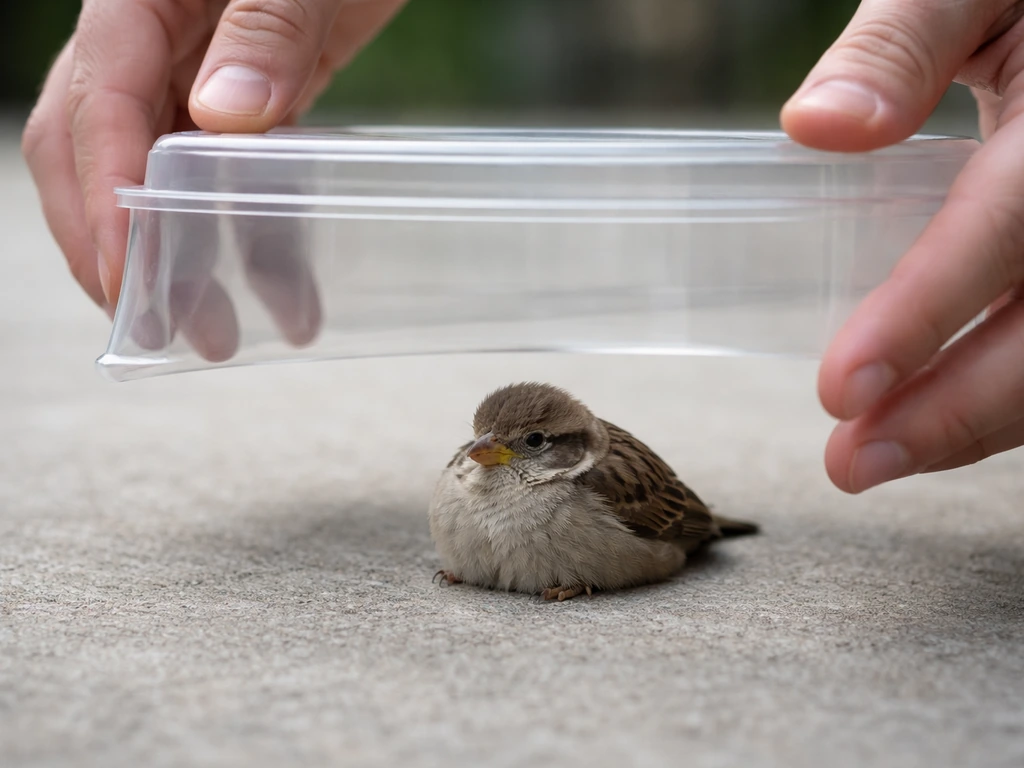
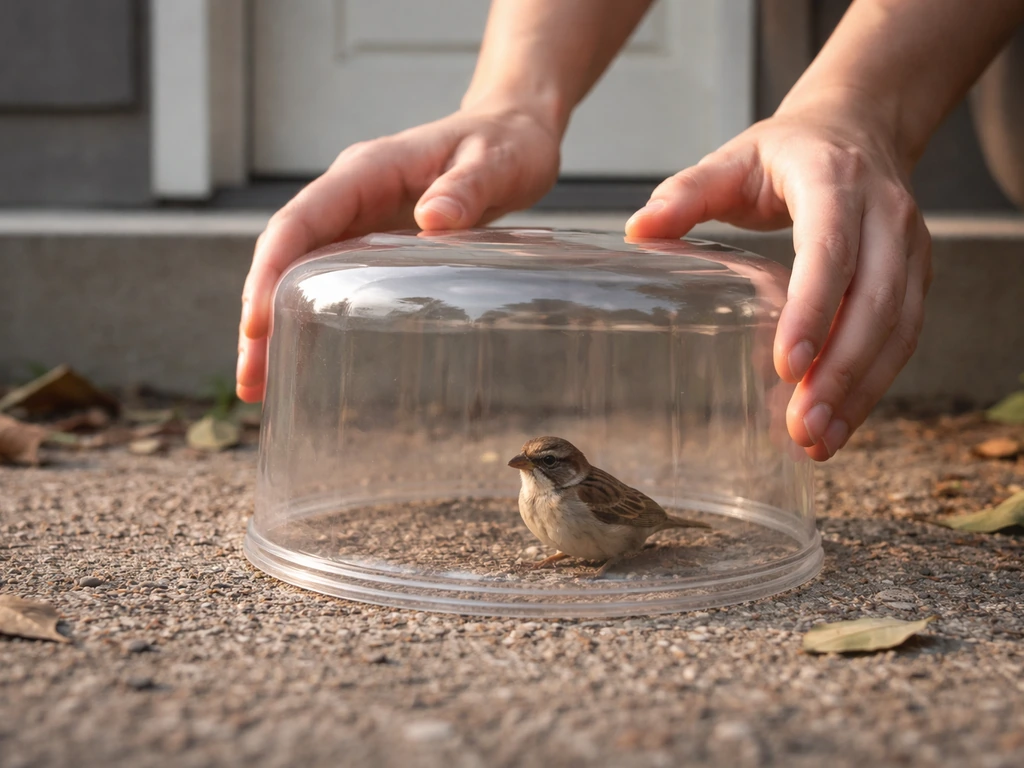
The bottle method is useful in one main scenario: a grounded bird that is too weak, stunned, or injured to fly, sitting on a flat surface where you can slowly lower a container over it. Think a window-collision stunned sparrow on your patio, or an escaped budgie sitting exhausted on your kitchen floor. In those cases, a large clear plastic bottle with the bottom cut off, a wide-mouth jar, or even a round plastic container gives you a low-profile, see-through cover you can ease down without looking threatening.
Where it goes wrong: people sometimes see viral videos of birds "caught" with a bottle and try to replicate it on a healthy, active bird. Chasing a bird with any container causes extreme panic, and a bird in full flight or defensive mode can injure itself badly by crashing into walls, windows, or furniture. The RSPCA warns specifically against throwing covers at a flying injured bird, because the impact can worsen injuries. If the bird is still flying or actively fleeing, skip the bottle approach and focus on controlling the space first.
- Bottle/container cover: appropriate for grounded, stunned, exhausted, or very tame birds on a flat open surface
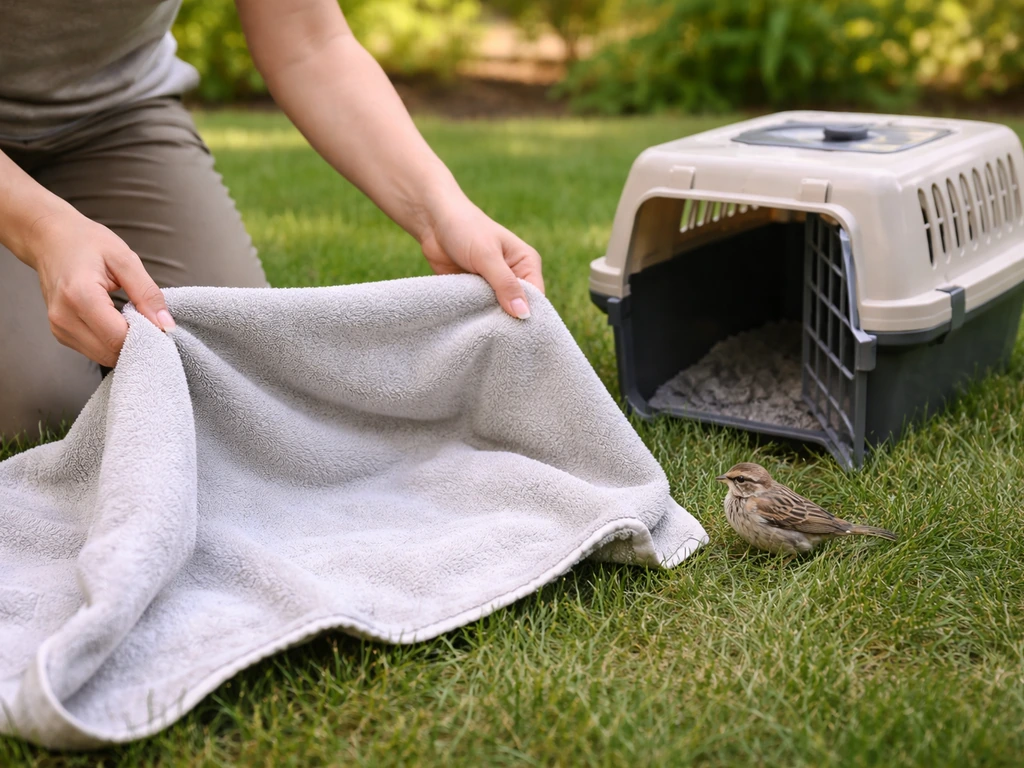
- Towel or pillowcase cover: better for a bird in a corner or caught in a small space, since it conforms to irregular surfaces
- Box drop method: great for wild birds on patios or in garages, especially with a prop-and-string setup (similar to how-to-catch-a-bird-with-a-box techniques)
- Reduced exits and patient waiting: best for a healthy wild bird trapped indoors, letting it find the single open window or door on its own
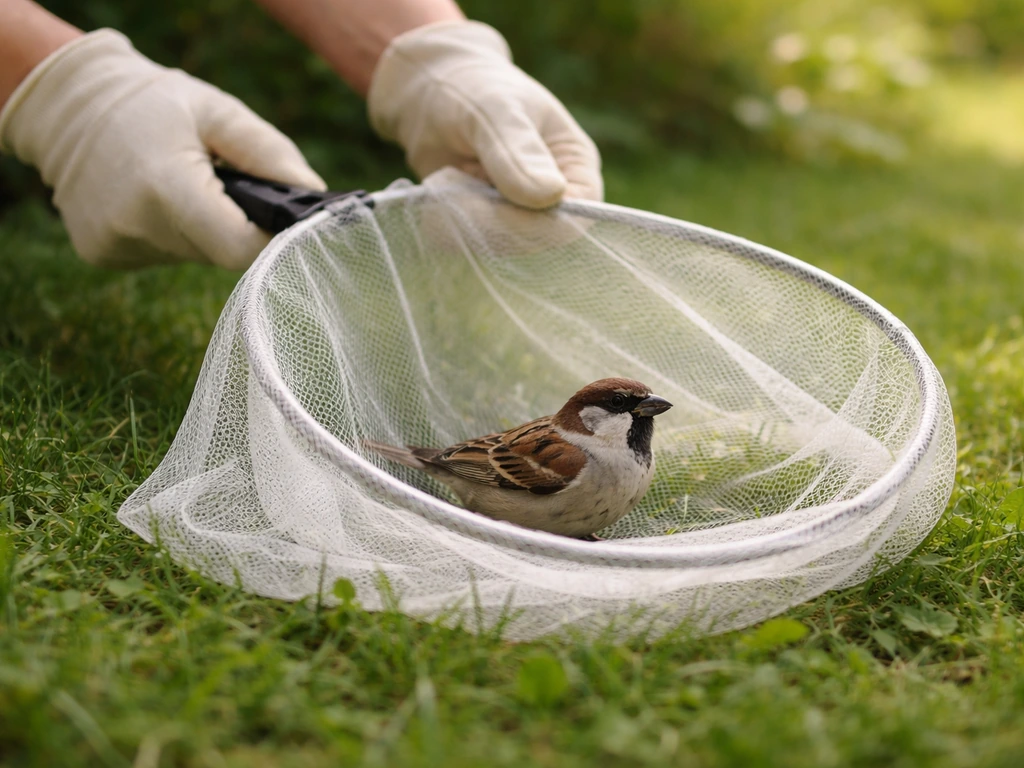
- Net: most reliable for fast-moving healthy birds in open spaces, though it requires some skill to avoid injury
Figure out what you're dealing with before you touch anything
Who the bird is changes everything about how you should proceed. Take thirty seconds to observe before you move.
Wild bird, apparently healthy
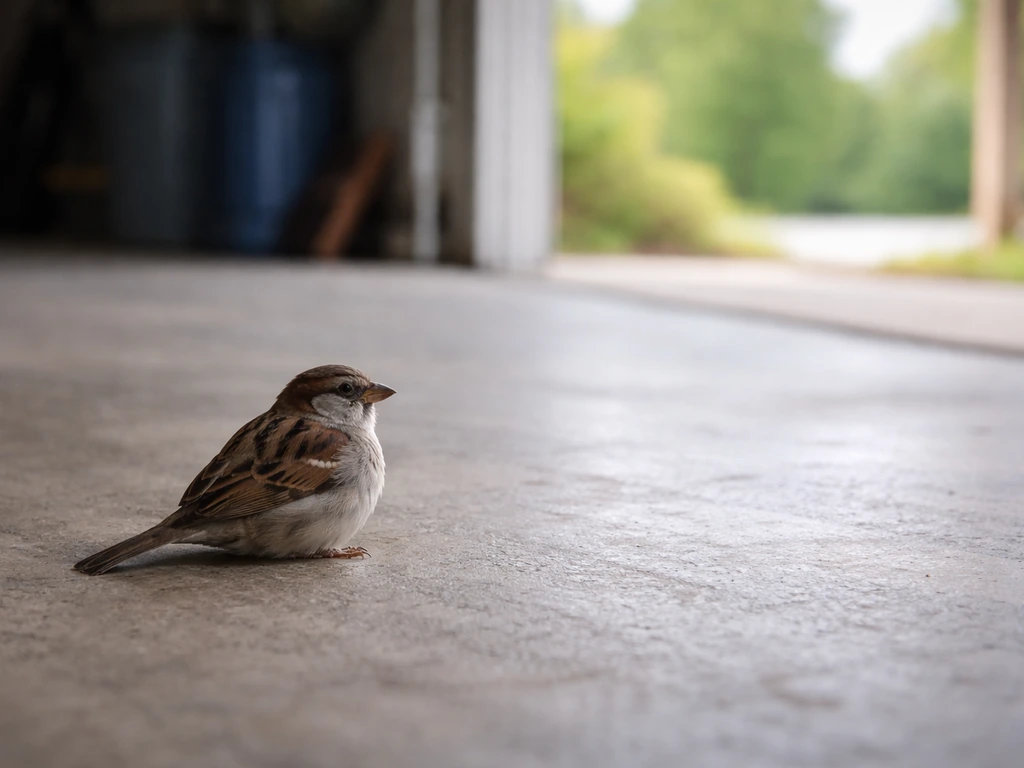
A wild bird that got inside your house, is sitting in your garage, or is caught on your porch usually just needs one clear exit and some time. Don't chase it. Close curtains on windows that aren't the exit point, open one door or window, dim the lights in the rest of the room, and wait. Most birds will find their way out within 10 to 30 minutes. Only attempt a physical capture if it has been more than an hour, the bird is clearly exhausted, or it's in a dangerous location. If a physical capture is necessary, use the approach that matches the bird's condition, such as how to catch a bird in a cage when it is grounded and calm.
Wild bird, injured or stunned
A bird that has hit a window, is sitting on the ground with eyes half-closed, or is listing to one side needs capture, but gently. This is the situation where a bottle or container cover works well. Keep in mind the CDC advises keeping a safe distance from wildlife and not touching sick birds with bare hands, so gloves are non-negotiable here. After securing the bird, your job is to get it to a permitted wildlife rehabilitator, not to treat it yourself.
Nestling or fledgling
If the bird is featherless or covered in fluffy down with a big gape (wide mouth), it's a nestling. If it has short tail feathers, is hopping, and looks scruffy but can perch, it's a fledgling. The Washington Department of Fish and Wildlife is clear that there is almost never a good reason to remove a baby wild bird from its natural environment, as doing so can be harmful or fatal to the bird and disruptive to rehabilitators. Look for the nest, look for parents nearby, and leave the fledgling alone unless it is in immediate danger (like on a road or being approached by a cat). If a nestling has fallen and you can see the nest, place it back. The "don't touch or the parents will reject it" myth is false. Only capture and transport a baby bird if there is clear physical danger or obvious injury, and then go straight to a rehabilitator.
Escaped pet bird
An escaped parrot, cockatiel, budgie, or finch is a very different situation. These birds may be banded, may respond to their name or a familiar whistle, and are often exhausted and disoriented after being outside. They are usually more approachable than wild birds but can still panic and injure themselves if chased. If the bird is in your home, the bottle or container method can work well for grounded birds. If the bird is outside in a tree or on a roof, check the sibling guides on catching birds in trees and catching birds alive for outdoor-specific approaches that apply there.
Prep checklist before you attempt a capture
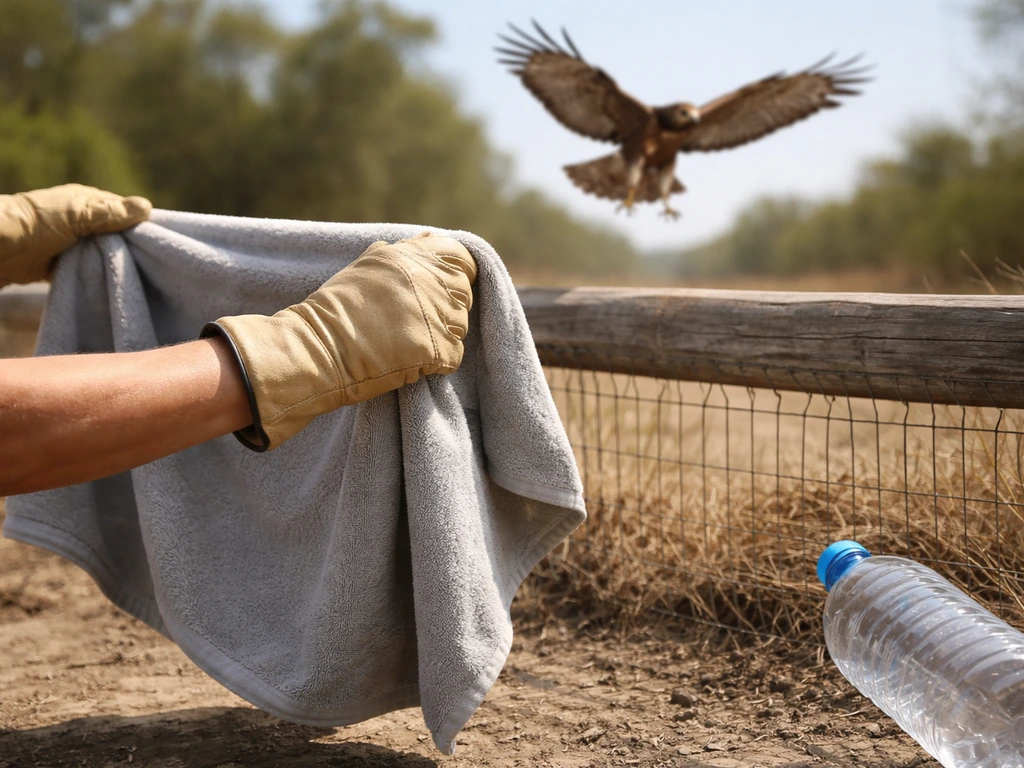
Rushing in unprepared is the number one cause of a failed (and stressful) capture. Spend two minutes getting ready first.
- Gather your gear: a large clear plastic bottle (2-liter works, or a wider container for bigger birds), a lightweight towel or thin cloth as a backup, and a cardboard box with a lid and small air holes for containment after capture
- Put on gloves: thin leather or nitrile gloves protect your hands from bites and scratches, and protect the bird from oils and pathogens on bare skin
- Control the space: close interior doors, cover or block windows that aren't exits (for wild birds), and remove obstacles the bird could crash into
- Dim the lights: birds are calmer in low light and less likely to fly at bright windows; this is one of the most effective stress-reduction tricks you have
- Silence the room: turn off TVs, ask other people and pets to leave, and move slowly once you're in the space
- Have your containment box ready: line the bottom with crumpled paper towels, punch small air holes in the lid, and have it within arm's reach before you start the capture
- Know who to call: look up your nearest licensed wildlife rehabilitator before you begin so you're not searching while holding a panicking bird
Step-by-step: how to cover and secure a bird with a bottle
This technique works on a grounded bird on a flat surface. Move slowly and deliberately the entire time. Any sudden movement will reset the bird's stress response.
- Prepare your bottle: cut the bottom cleanly off a large clear plastic bottle (a 2-liter soda bottle or wide-mouth gallon jug), so you have an open-bottomed, open-topped cylinder you can see through and lower over the bird
- Approach from the side, not from above: crouch down to the bird's level and approach at an angle rather than looming from overhead, which triggers a predator response
- Move in a single slow arc: bring the bottle down in one continuous, slow, smooth motion to cover the bird completely; do not hesitate or move in and out, as repeated motion is more stressful than one deliberate approach
- Cover the bird fully: the open bottom of the bottle should ring the bird with a few centimeters of clearance on all sides; the bird should be contained but not compressed
- Slide a firm flat surface underneath: use a piece of cardboard, a thin cutting board, or a book slid slowly under the bottle's rim to create a floor; keep pressure even so you don't trap a foot or wing in the gap
- Transfer to your containment box: with one hand firmly holding the bottle down onto the cardboard base, tilt the whole assembly gently, slide the bird into your pre-prepared box, and close the lid quickly but calmly
- Settle the box: place it in a quiet, warm, dark location immediately; avoid looking in or tapping on the sides
If the bird keeps moving or won't stay still
Stop. Back away for five minutes. A bird that is still mobile may not need capture at all, or it may need to tire itself out a bit more before it will tolerate containment. If it's fluttering but grounded, dim the lights further and try again. If it is actively flying, switch to the towel method: drape the towel over the bird in a corner or low surface, then gather the cloth around the bird (wings tucked in) and lift cloth and bird together. Do not leave the bird wrapped in the towel for more than a minute or two, as birds overheat very quickly when wrapped. NYC Bird Alliance also cautions that if a bird was caught using a towel, you should not leave it in the bag with the bird because talons may get caught in the towel fibers Do not leave the bird wrapped in the towel for more than a minute or two.
Tips specific to your bird's species and situation
Pet parrots (African greys, conures, Amazons, cockatiels)
These birds often respond to familiar voices and their own name. Before attempting any physical capture, try sitting on the floor at their level and speaking calmly. Offer a familiar perch (your arm or a stick perch) rather than reaching directly with your hand. A cockatiel or parrot that trusts you may step up willingly when it's tired and scared. If it won't step up, use the bottle cover method described above, or drape a light cloth over it gently without pressing down on the wings. Avoid grabbing at the beak or feet, as parrots bite hard when scared and can fracture toes if their feet are grabbed while they're gripping.
Budgies
Budgies are fast and can zip through small gaps, so space control is extra important. Turn off ceiling fans before doing anything else. A small clear container (even a plastic food container about 15 cm wide) works well for a grounded budgie. In a dim room, a tame budgie will often land on your shoulder or head within a few minutes if you simply sit still and wait. If it's an untamed bird, the bottle or towel cover works fine since budgies are small enough that even a lightweight cloth can be lowered without risk of injury.
Finches and small songbirds
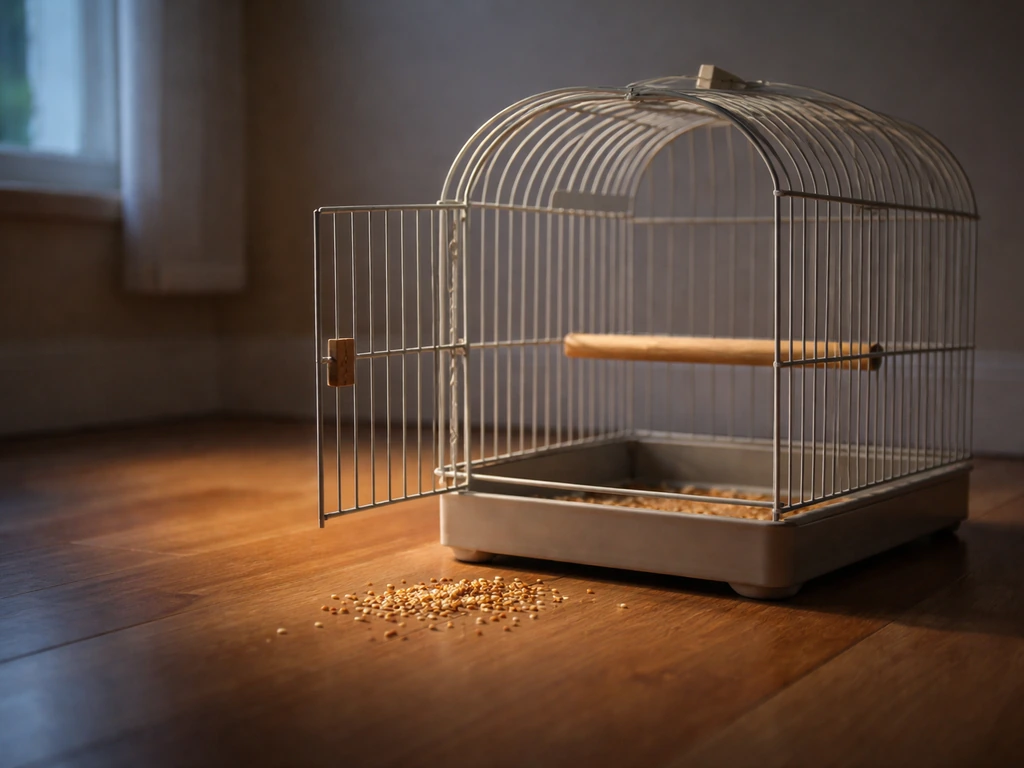
Finches are extremely fragile and very fast. The biggest risk with a finch is cardiac stress, not physical injury from the cover itself. Keep your capture attempt as brief and calm as possible. A stunned finch can be covered with a small plastic cup or bottle in seconds. For a healthy escaped finch, your best bet is often to place the open cage in the room and let the bird return to it on its own, since finches are strongly attracted to their flock and familiar food source.
Common wild yard birds (sparrows, starlings, robins, pigeons)
These birds typically end up in garages, screened porches, or living rooms. The most humane and effective method for a healthy wild bird indoors is always to open one exit, cover all other windows, turn off lights, and wait. The bottle technique works if the bird has been trapped long enough to be exhausted and is resting on a flat surface. Pigeons are calm enough that a large container can be lowered over them fairly easily. Robins and sparrows are quicker and more skittish. For stunned window-collision birds, place the covered box in a quiet spot and check every 15 minutes to see if the bird is alert enough to fly away on its own.
Raptors and larger birds
Do not attempt to capture a hawk, owl, or falcon yourself using any improvised method unless you have no other option. Raptors have powerful talons that can cause serious puncture wounds, and the stress of capture can be fatal to an already-injured raptor. Call a wildlife rehabilitator immediately and follow their instructions for containment if transport is absolutely necessary.
What to do right after the bird is secured
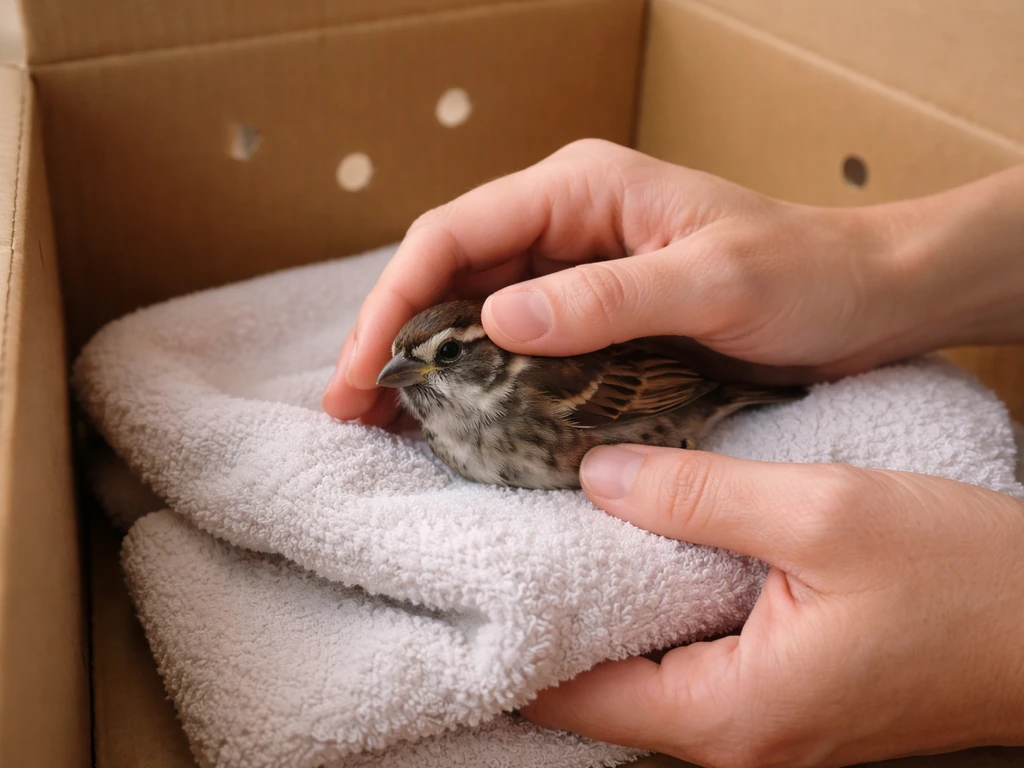
The capture itself is only step one. How you handle the next hour matters just as much for the bird's survival and recovery.
Secure containment
Your containment box should be cardboard (not glass, which causes panic from reflections), with small air holes and a secure lid. Line the bottom with paper towels for grip and cushioning. The box should be just large enough for the bird to stand and turn around, but not so large that it can build up speed and injure itself on the walls. Once the bird is inside, resist the urge to peek in repeatedly. Medina Raptor Center specifically warns that peering into the container can trigger fresh panic in an already-stressed bird.
Warmth and environment
Place the box somewhere quiet, dim, and warm but not hot. Room temperature (around 20 to 25 degrees Celsius, or 68 to 77 degrees Fahrenheit) is appropriate for most small birds. If the bird is in heat stress, place the box in a cool, air-conditioned room. If the bird is cold or wet, you can place the box on (not directly on) a heating pad set to low, with a towel between the pad and box to prevent overheating. Never place a heating pad inside the box, and do not put the box in direct sunlight.
Quick injury check
If you need to check for injury (broken wing, bleeding, eye damage), do it quickly and then return the bird to the dark box immediately. Look for: a wing that droops at an odd angle, blood or wet feathers, labored breathing, or an inability to hold the head upright. Do not attempt to splint, bandage, or medicate a wild bird yourself. For pet birds, you can assess more carefully, but even then, first aid is not a substitute for a vet visit. Lafeber's avian first aid guidance is clear on this.
Food, water, and next steps
For a wild bird you're transporting to a rehabilitator (within a few hours), do not offer food or water. Golden Gate Bird Alliance similarly advises that you do not attempt to provide food, water, or first aid to an injured wild bird and instead follow their towel-and-containment guidance until a permitted rehabilitator can take over do not offer food or water. Many injured birds cannot swallow safely, and force-feeding or offering water can cause aspiration. For an escaped pet bird that you've recovered and know is healthy, offer fresh water and a small amount of familiar food once it's calm and has been in the dark box for 20 to 30 minutes. Then, if it's a pet, return it to its cage or a secure temporary enclosure. If it's a wild bird, call your nearest licensed wildlife rehabilitator and follow their instructions.
The legal side of catching wild birds
This is genuinely important and not just fine print. In the United States, almost all wild birds (including common songbirds, shorebirds, raptors, and waterfowl) are protected under the Migratory Bird Treaty Act. It is illegal to possess, keep, or rehabilitate a migratory bird without the proper federal and state permits. Wildlife rehabilitators must hold a federal Migratory Bird Rehabilitation permit (and the appropriate state permit) to legally care for these birds. Most states have similar laws protecting non-migratory species too.
The good news is that the law gives you a specific, protected path when you find an injured bird. Under 50 CFR § 21.31, you can legally take possession of a sick, injured, or orphaned migratory bird without a permit for the sole purpose of immediately transporting it to a permitted rehabilitator. That's it. You pick it up, you put it in a box, you drive it to someone licensed to care for it. You are not allowed to keep it, treat it, or wait several days to see if it gets better.
The U.S. Fish and Wildlife Service is direct about this: do not attempt to treat or raise a wild animal yourself, because it could harm the animal, harm you, and it's against state and federal law. This isn't meant to make you feel bad for caring. It's because wild bird medicine is genuinely complex, and even well-meaning care can cause nutritional deficiencies, imprinting problems, and other issues that permanently reduce the bird's chances of survival in the wild.
When to call a wildlife rehabilitator (and how to find one)
- Any wild bird with an obvious injury: broken wing, blood, eye damage, inability to stand
- Any wild bird that hasn't recovered from a window strike after 1 hour in a quiet, dark box
- Any nestling that cannot be returned to its nest
- Any wild bird you've had in your possession for more than a couple of hours
- Any bird showing signs of disease: discharge from eyes or nostrils, labored breathing, unusual neurological symptoms like head tilting or circling
- Any raptor, heron, or larger bird, regardless of how it looks
To find a permitted rehabilitator near you, search your state wildlife agency's website, use the National Wildlife Rehabilitators Association directory at nwrawildlife.org, or call your local animal control or humane society who can refer you. Many rehabilitators accept after-hours calls. When you call, describe the species (or your best guess), the bird's condition, and how long you've had it. They'll tell you exactly what to do next.
Preventing the situation from happening again
For pet bird owners, most capture situations happen because of an escape. The simplest prevention is a double-door entry system for your bird room, closing windows before opening cage doors, and trimming flight feathers if your bird is not in a secured aviary. Building trust with your bird so it steps up reliably on cue takes time but is the best long-term safety net. A bird that reliably steps up doesn't need to be caught at all.
For backyard birders dealing with birds that get trapped indoors, the fix is usually structural: repair or screen gaps in soffits and eaves where birds enter, use window decals or UV-reflective tape to prevent window strikes, and keep garage and screen doors closed during peak bird activity in spring and fall. If a species keeps returning and becoming a nuisance, attracting them to a designated feeding area away from entry points is a gentler solution than repeated captures.
FAQ
Can I use a bottle on a bird that is still moving around or trying to fly?
Usually no. The bottle method only fits a bird that is grounded and calm enough to be lowered onto, if you see active fleeing or wing-fluttering with impact risk, switch to controlling the room first (one exit, lights dim) or use the towel method instead of trying to cover it while it is still airborne.
Is it safe to throw the bottle or snap a cover over the bird quickly?
No, that approach increases injury risk and panic. Lower a wide container slowly from above and pause if the bird tenses, if you cannot do a controlled, slow lowering motion, stop and switch to space control and waiting.
What size bottle or container is best for the humane method?
Use a large, clear, low-profile container that does not force the bird to crouch or fold awkwardly, wide-mouth works better than narrow-neck bottles because you can ease it down without jabbing, and the container should be just big enough to contain standing and turning.
How do I lower the bottle without startling the bird?
Move with a slow, continuous motion and avoid hovering close for long periods. Start with your hands near the floor or surface, then commit to lowering in one steady step, if the bird flinches hard or runs into a wall, back away for a few minutes before trying again.
Should I wear gloves only for wild birds, or also for pets?
For wild birds, gloves are strongly recommended because of disease exposure and stress handling. For pets, gloves are optional based on temperament, but if you are unsure the bird will stay calm, use the safest handling you can and minimize direct contact to reduce bites and scratches.
How long should I keep trying the bottle method before changing tactics?
If the bird is not settling, do not keep resetting stress. Back away for about five minutes, darken further, and try again only if it is clearly grounded, if it is still highly mobile or repeatedly panics, switch to towel capture or full room exit control.
What should I do immediately after the bird is inside the bottle or container?
Transfer it to the containment box right away if you used a bottle temporarily, then avoid looking in repeatedly. Place the box in a quiet, dim, warm area (room temperature for most small birds), and limit handling until you can contact a rehabilitator.
Can I feed or give water to a bird I caught in the bottle?
For wild birds, generally no, especially if it might be injured, because swallowing problems and aspiration can happen. For escaped pet birds you believe are healthy, you can offer water and a small amount of familiar food after it has been calm in the dark for 20 to 30 minutes.
What if the bird seems uninjured but I still cannot catch it with a bottle?
Try space control instead of escalating capture. For most indoor situations, open one exit, cover other windows, dim lights, and wait about 10 to 30 minutes, physical capture is better reserved for cases lasting over an hour or when the bird is clearly exhausted or in danger.
What if the bird is a baby, like a nestling or fledgling, should I bottle-cover it to help?
Only in immediate danger. Nestlings are usually left in place or returned to the nest if you can do so safely, fledglings are often left alone unless they are on a road or being threatened, if you are unsure, contact a rehabilitator before handling.
Do laws mean I cannot even hold a wild bird for a short time?
In the U.S., there is a narrow, permitted path for migratory birds: you can take possession briefly for the sole purpose of immediate transport to a licensed rehabilitator. You cannot legally treat it, keep it, or delay days to observe it for recovery.
How should I choose between trying to capture and calling for help right away?
Call a wildlife rehabilitator immediately if the bird is in a high-risk situation (raptors like hawks or owls, severe bleeding, suspected major trauma), for window-collision birds in moderate condition you can attempt humane capture only if it is grounded and you can do it calmly, otherwise prioritize exits and waiting.