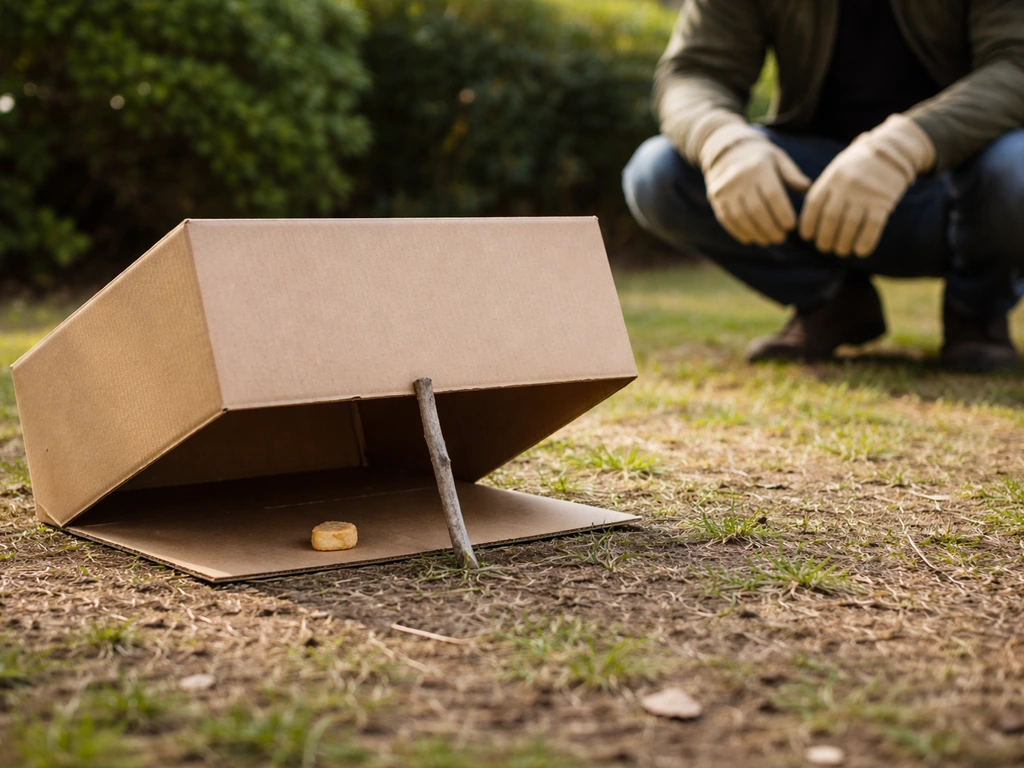
The safest way to catch a bird in or with a cage is to set up the cage as an inviting destination rather than a trap, let the bird move toward it on its own terms, and only intervene with gentle herding or a towel when the bird is already close and calm. That approach works whether you are guiding an escaped pet parrot back to its home cage, using a baited cage to lure a loose bird in a room, or setting up a humane cage trap for a wild bird in a yard. The exact steps shift a little depending on species and situation, but the core logic stays the same: reduce stress, remove escape routes gradually, and never chase.
How to Catch a Bird in a Cage Safely and Humanely
Clara Hayes
24 Apr 2026
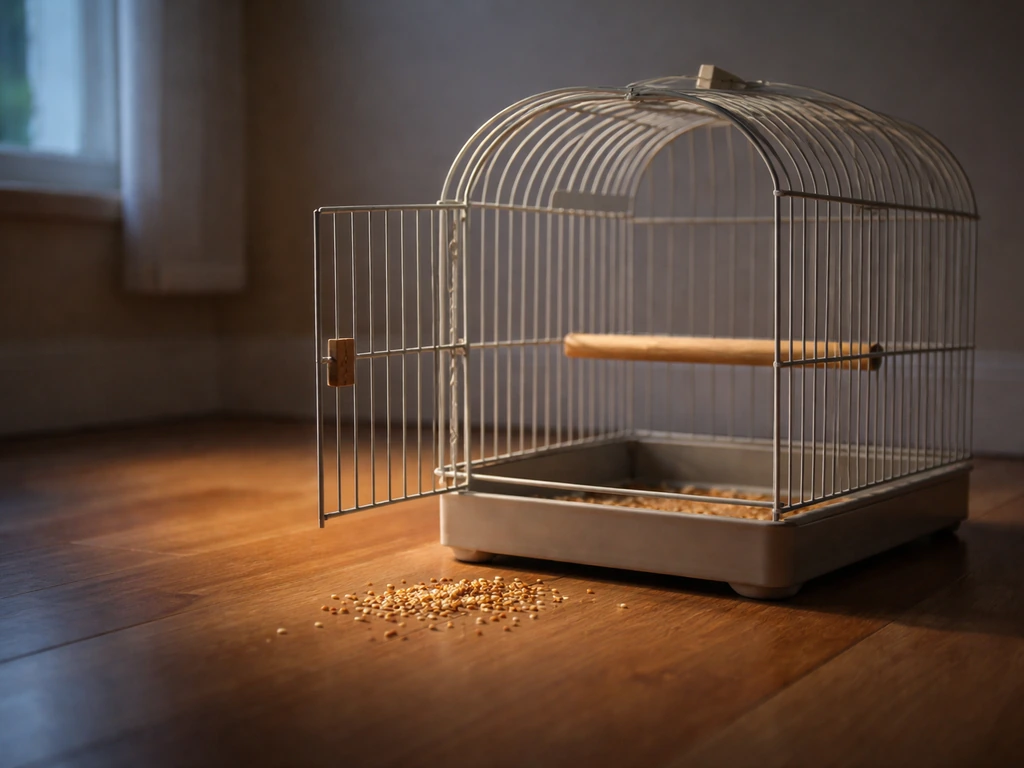
First: Figure Out What You're Actually Dealing With
Before you touch a cage or a towel, get clear on your situation, because the goal and the method are different for a pet bird versus a wild one. Most people searching this topic fall into one of three camps.
- A pet bird (parrot, cockatiel, budgie, finch) has escaped its cage and is loose in a room, in the house, or just outside a window.
- A wild bird has flown into the house, garage, or shed and needs to be guided out or temporarily contained.
- Someone wants to attract and capture a wild bird in the yard using a baited cage, either out of curiosity or for a rehoming/rescue purpose.
The first two are generally fine to handle yourself with the guidance below. The third one is where you need to stop and think carefully, because capturing wild birds in the U.S. is federally regulated. The Migratory Bird Treaty Act makes it unlawful to pursue, capture, or possess most wild birds without a permit, and violations carry real consequences. If a wild bird is injured and needs help, the right move is to contact a licensed wildlife rehabilitator, not to cage it yourself. If the bird is simply visiting your yard and you want to observe it, a baited cage trap is not the right tool. Keep that context in mind as you read through the methods below.
Set Up the Right Cage Before You Do Anything Else
The cage itself matters a lot. A cage that is too small, has bar spacing that is too wide, or is positioned wrong can injure a bird or make capture harder. Here is what to check before you start.
Bar Spacing by Species
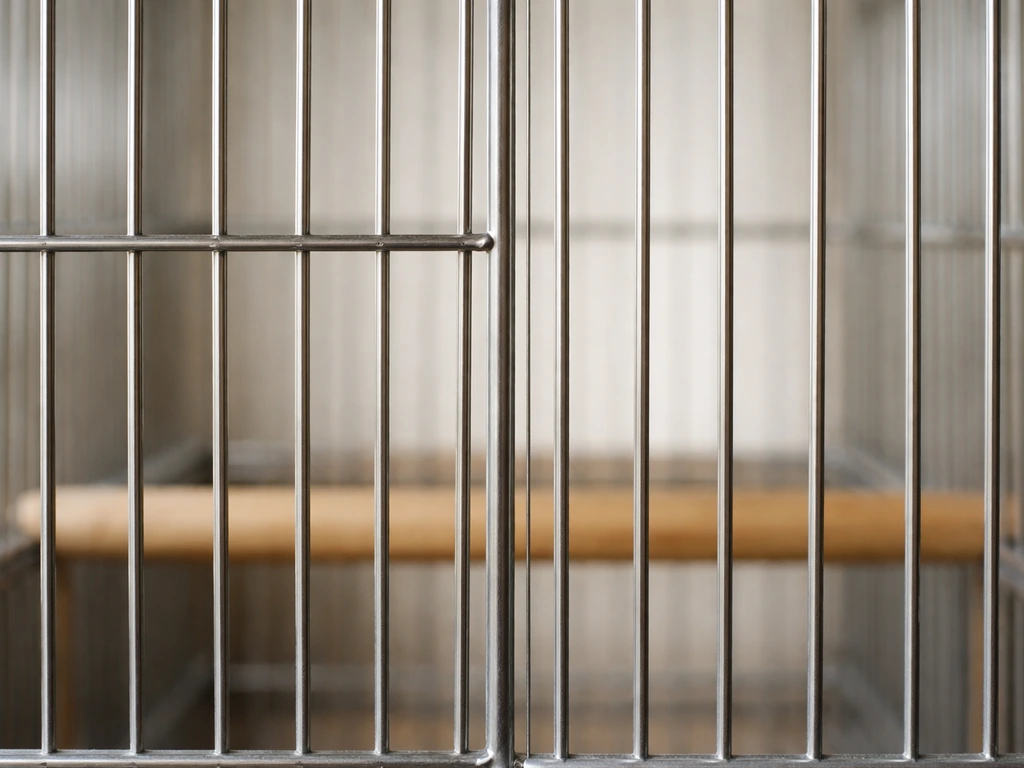
Bar spacing is the detail most people overlook and it is the one most likely to cause injury. A bird that can poke its head through the bars can get stuck and panic, or break its neck trying to pull free. For small birds like budgies and finches, bar spacing should be no more than half an inch. Cockatiels sit in the same range. Larger parrots can handle wider spacing, but for any capture or temporary holding scenario, tighter is safer.
| Species | Safe Bar Spacing | Minimum Workable Cage Size for Capture Use |
|---|---|---|
| Budgie / Parakeet | Up to ½ inch | 18 x 18 inches or larger |
| Finch / Canary | Up to ½ inch | 18 x 18 inches or larger |
| Cockatiel | Up to ½ inch | 24 x 18 inches or larger |
| Conure / Lovebird | ½ to ¾ inch | 24 x 24 inches or larger |
| African Grey / Amazon Parrot | ¾ to 1 inch | 36 x 24 inches or larger |
| Macaw / Cockatoo | 1 to 1.5 inches | 48 x 36 inches or larger |
Cage Setup Checklist Before You Start
- Place a familiar perch inside at a comfortable height, not too high, not on the cage floor.
- Add the bird's favorite food or treat in a visible spot near the perch or on the cage floor.
- Line the bottom with a paper towel or flat liner so footing is secure.
- Remove any sharp edges, loose wires, or objects that could snag a wing.
- If this is the bird's home cage, do not rearrange it. Familiarity helps the bird feel safe.
- Leave the cage door wide open and position it so it cannot swing shut accidentally during the approach.
- Dim the lights in the room slightly. Bright overhead lighting increases a bird's stress level.
- Close all windows, ceiling fans, fireplaces, and doors to other rooms before you start.
Room Safety Precautions
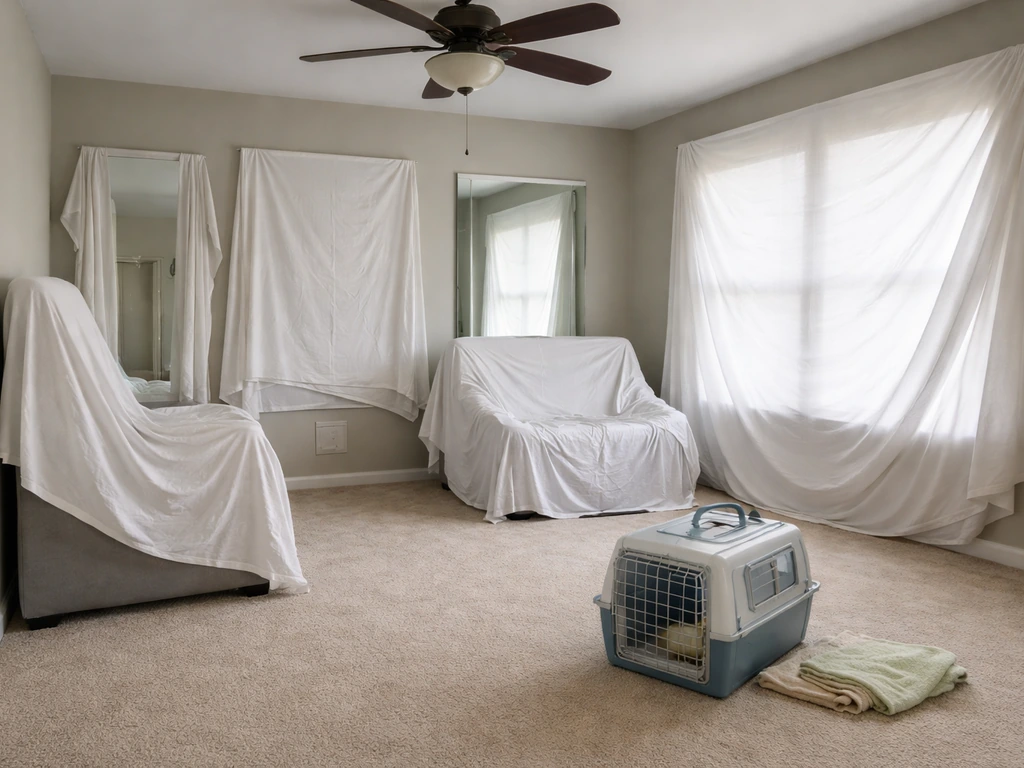
A loose bird in a room can injure itself badly in seconds. Before you move the cage into position or attempt any kind of luring, do a quick room sweep. Turn off ceiling fans completely. Cover mirrors and large windows with a sheet or towel so the bird does not fly into the glass. Move fragile objects off shelves. If there is a dog or cat in the house, they need to be in a completely separate, closed room before you begin. The goal is to give the bird a safe, calm space with one obvious destination: the open cage.
How to Lure the Bird Into the Cage
Luring works better than chasing in almost every situation. A bird that is chased gets more stressed, more erratic, and harder to catch. A bird that is lured in calmly is already in a lower-stress state when the cage door closes, which makes everything that follows easier.
Placement and Food Attractants
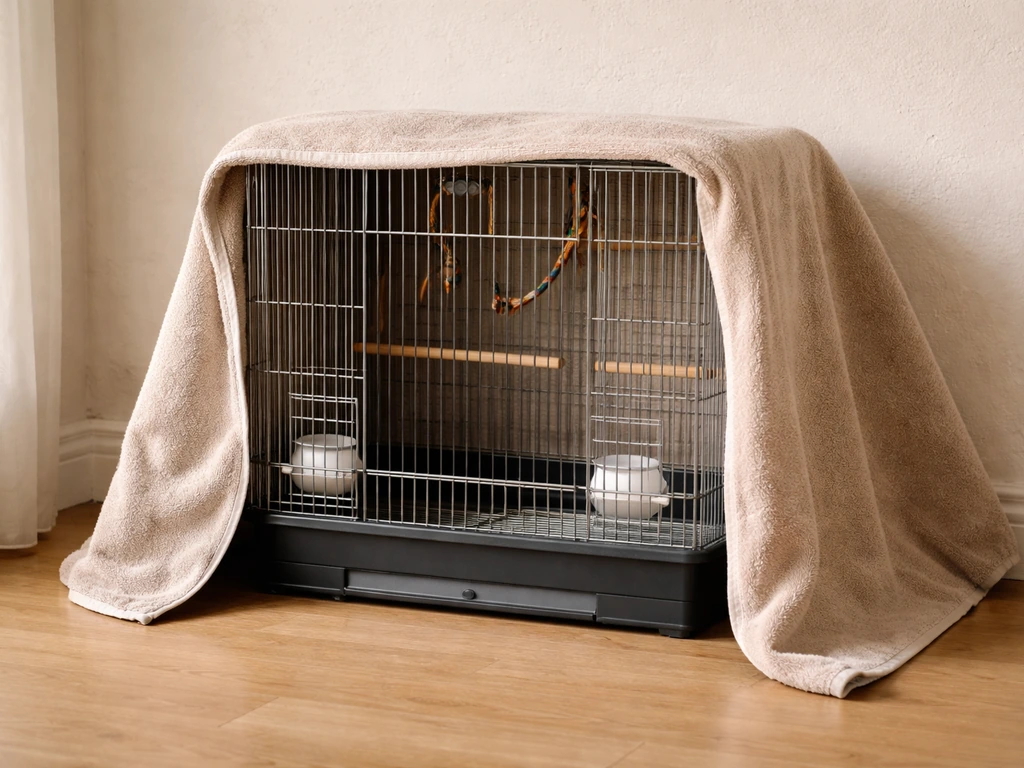
Position the cage near where the bird has been perching or resting, not in the center of the room where the bird has to fly past a lot of open space to reach it. Low placement is usually better for birds that have landed on the floor. If the bird is perching high up, place the cage at or just below that height.
Use food the bird already recognizes: millet spray for budgies and finches, sunflower seeds or nuts for parrots and cockatiels, or whatever treat the bird reliably responds to. For wild birds visiting a yard, use species-appropriate seed or suet placed inside a baited cage trap. The USFWS permits use of lures inside bait cages under authorized methods, but again, confirm your legal standing before trapping any wild bird.
Partial Cage Covering to Create a Safe-Feeling Space
Covering three sides of the cage with a dark cloth or towel before placing it in the room can make the inside feel more den-like and secure to a stressed bird, because it reduces visual noise and creates a sense of shelter. Leave the front (door side) uncovered so the bird can see the food and perch inside. This works especially well for smaller birds like finches and budgies. For parrots, especially if they are already agitated, partial covering is helpful, but watch the bird's reaction. Some individuals will avoid anything that looks like a covered space if they are already in a high-alert state.
Using a Familiar Decoy or Companion Bird
If you have a second bird that is already calm and caged, placing that cage close to the open capture cage can draw in a loose bird that wants company. This works particularly well with budgies, cockatiels, and finches, which are highly social and will be drawn toward the sound and sight of a cagemate. Place the calm bird's cage touching or adjacent to the open cage so the loose bird has to pass through or enter the open cage to get close. Do not use a stressed bird as a decoy.
Step-by-Step Capture by Bird Type
The general approach is the same across species, but the pace, the tools, and the amount of direct intervention change based on how big the bird is and how tame it is.
Parrots (African Greys, Amazons, Conures, Macaws, Cockatoos)
- Darken the room as much as possible without making it completely black. Birds are calmer and less likely to fly in low light.
- Place the open cage in a corner with food and a familiar perch visible inside.
- Sit or crouch near the cage quietly, ideally without making eye contact with the bird, and wait. Talk softly or play a recording of familiar sounds.
- If the bird does not approach after 10 to 20 minutes, slowly reduce the available space by closing interior doors or hanging a sheet across part of the room.
- If the bird is on the floor or a low surface, gently herd it toward the cage door by walking slowly from behind, using a large towel held open as a visual guide, not a chase tool.
- Once the bird enters or is very close, do not lunge. Allow it to step in. If it stops at the door, calmly place your hand or the towel behind it to block retreat.
- If the bird will not enter and direct capture is needed, use a large towel: drape it over the bird from above in one smooth motion, wrap loosely, and transfer immediately into the cage. Never squeeze the body. Support the feet.
A note on towel restraint for parrots: incorrect technique genuinely can cause injury, including a broken wing or worse, if the bird is grabbed too hard or the wing is pulled at an angle. Wrap loosely, keep the wings against the body, and move deliberately. The Psittacine Disaster Team describes this as the least-stress method when done calmly, and that is accurate as long as you do not rush it.
Cockatiels
- Turn off overhead lights and close blinds so the room is dim but not dark.
- Place the open home cage with millet or seed visible inside in a corner or against a wall.
- Sit close to the cage and whistle a familiar tune or play a sound the bird knows. Cockatiels often respond to their own name or a specific whistle.
- If the bird is on a high perch, offer your hand or a stick perch as a step-up invitation before attempting any physical catch.
- If needed, gently corral the bird into a corner using your hands or a small folded towel, then guide it to the cage door.
- Cockatiels tame enough to step up can often be picked up and placed directly into the open cage door.
Budgies and Parakeets
- Dim the room. Budgies calm down significantly in lower light and are less likely to do repeated panic flights.
- Place the open cage low, near where the bird has landed, with millet inside.
- Move very slowly. Even a small fast movement will send a budgie back into flight.
- Use a companion bird cage nearby if available.
- If the budgie lands on a flat surface, you can cup your hands gently around it (do not grab) and place it in the cage.
- If it is perching, offer a finger step-up. Tame budgies will usually step up if you are calm and your approach is slow.
Finches and Canaries
Finches and canaries are fast, flighty, and rarely tame enough to step onto a hand willingly. Your best option is almost always the lure-and-wait method with the open cage, a companion bird nearby, and patience. If you need to physically catch one, wait until it has tired from flying (usually within 20 to 30 minutes in a closed room) and has landed somewhere low. Then use a small, soft net or cup your hands gently from behind.
If you must use bare hands, do it only as a last resort with gentle control and a clear plan to move the bird safely into the cage right away cup your hands gently. Direct towel restraint is usually too rough for birds this small and can cause real harm. Transfer immediately to the cage once caught.
Common Wild Birds (Sparrows, Starlings, Pigeons, Doves)
If a wild bird has flown into your home or garage, the goal is to guide it out, not to cage it. If you are set on keeping the bird alive during capture, the humane step-by-step approach in how to catch a bird alive is the safest place to start.
If you are dealing with a bird outside and want to capture it safely, use a humane approach like the one described in how to catch a bird without killing it. If you do end up needing a more hands-on approach in a room, see also how to catch a bird in a tree for the adjacent decision points how to catch a bird without killing it. Open the largest window or door and close off all other exits.
Dim interior lighting so the bird is drawn toward the natural light of the exit. If it has been inside for a while and is exhausted, it may land on the floor, at which point you can gently cover it with a light cloth, pick it up without squeezing, and carry it outside to release.
If you are setting up a baited cage trap in a yard for a wild bird for any reason, check your legal situation first (see the legal section below). If you are trying to catch a bird using a bottle setup, make sure you also understand the humane and legal limits for baited cage trapping.
For an injured wild bird, cover it with a cloth, place it in a ventilated cardboard box, and call a licensed wildlife rehabilitator the same day.
Once the Bird Is In: Handling and Immediate Aftercare
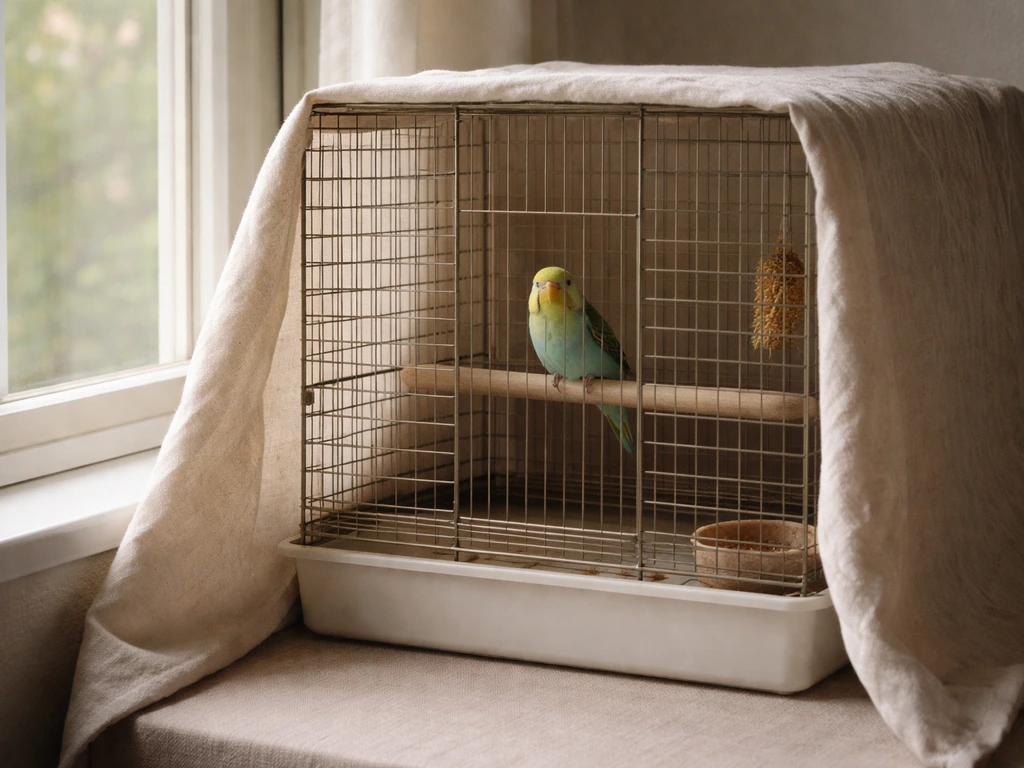
Close the cage door calmly and immediately, without slamming it. Then stop. Do not reach in, rearrange the cage, or move the cage right away. Give the bird a few minutes to settle. A bird that has just been caught or lured in is in a heightened stress state, and every additional interaction in the next five to ten minutes compounds that stress.
- Cover three sides of the cage with a light cloth for the first 15 to 30 minutes to reduce visual stimulation. Watch the bird's breathing. Fast open-mouth breathing that does not slow within a few minutes is a warning sign.
- Keep the room quiet. No loud voices, no other animals nearby, no sudden movements.
- Make sure the temperature is comfortable, roughly 70 to 80 degrees Fahrenheit. A stressed or injured bird benefits from a slightly warmer environment for energy conservation.
- Provide fresh water and food inside the cage but do not force the bird to interact with you.
- If the bird is a pet being returned to its home cage, let it explore on its own terms before you attempt any interaction.
- If the bird is injured (limping, holding a wing at an odd angle, not perching), do not wait to see if it improves on its own. Contact an avian vet or wildlife rehabilitator immediately.
For pet birds that went through a stressful capture, it is normal for them to be fluffed, quiet, and uninterested in food for an hour or two. If that goes on longer than a few hours, or if you see any physical signs of injury, call your avian vet. Some injuries do not become fully apparent for 24 to 48 hours, so a vet check after any physically difficult capture is worth doing.
Starting Trust-Building After Capture
If this was a pet bird that has been loose for a while, or a bird that had a frightening capture experience, expect it to need some time before it is back to its normal comfort level with you. Do not try to handle it again on the same day if the capture was stressful. Spend time near the cage without making demands. Talk quietly, offer treats through the bars, and let the bird set the pace. For birds that were already well-tamed, most will resettle within a day or two. For birds that are still in early taming stages, a difficult capture can temporarily set back trust, but patient daily interaction will rebuild it.
Troubleshooting: When the Bird Won't Go In
If you have had the cage set up for 20 minutes or more and the bird is still not approaching, something in the setup or the environment is working against you. Go through this checklist before you escalate to any physical intervention.
| Problem | Likely Cause | Fix |
|---|---|---|
| Bird stays in one spot and won't approach | Room too bright or noisy | Dim lights further, reduce noise, and give the bird more time |
| Bird keeps flying to the same window or wall | Feels drawn to light/outside | Cover that window with a sheet; reduce competing visual draws |
| Bird approaches the cage but won't enter | Door position uncomfortable or cage feels unfamiliar | Move food closer to the entrance; try a different perch height |
| Bird enters and immediately exits | Not relaxed enough; door movement scared it | Remove yourself further from the cage; let it enter without you nearby |
| Bird panics every time you move | You are too close or moving too fast | Back up, slow all movements, and wait longer between position changes |
| Wild bird ignores the baited cage entirely | Wrong bait or wrong placement | Switch to a species-specific food; move cage closer to natural cover |
| Bird is exhausted but still won't enter | Stress and fatigue make it freeze in place | Gently use a towel to cover and scoop rather than continuing to wait |
If the bird has been loose in a closed room for more than an hour without entering the cage and is showing signs of exhaustion (landing on the floor, labored breathing, unsteady perching), shift to a more direct method. A calm towel approach at that point is more humane than continued stress from failed luring attempts. Methods like bare-hands capture or net-based capture can work in some situations too, though those carry their own considerations that go beyond what a cage setup alone can handle. If you are considering net-based capture, review this guide on how to catch a bird with a net first so you do it safely.
Legal and Ethical Lines You Should Know
This matters most if wild birds are involved, but it is worth knowing regardless of your situation.
In the United States, the Migratory Bird Treaty Act prohibits capturing, possessing, or keeping the vast majority of wild bird species without a federal permit. USFWS humane capture guidance explains that [authorization is required for most activities involving capturing, handling, and disposition of wild migratory birds](https://www. fws. gov/sites/default/files/documents/220211TheHumaneCaptureHandlingAndDispositionOfMigratoryBirds_Final.
pdf) under the regulatory framework in 50 CFR. The USFWS regulatory FAQ materials explain that possessing migratory bird specimens generally [requires appropriate authorization or permits](https://www. fws. gov/apps/sites/default/files/documents/2025-02/faq-regulatory-authorizations-rule-final.
pdf). This is not a technicality, it is a criminal statute. Common backyard species like sparrows, robins, swallows, finches, warblers, and most others you would see visiting a feeder are protected. The U.
S. Fish and Wildlife Service issues permits for specific authorized activities, including licensed wildlife rehabilitation and research, but casual capture for rehoming or keeping is not an authorized exception. Individual states add their own layers of regulation on top of the federal baseline.
The ASPCA's position is clear: wild-caught birds should not be kept as pets, and birds should be sourced from shelters, rescues, or reputable breeders rather than taken from the wild. If you found a bird and want to give it a home, contact a local bird rescue or shelter first.
For injured wild birds, the legal path is also clear: contain the bird temporarily and safely, then hand it off to a licensed wildlife rehabilitator as soon as possible. Many states require notification or transfer to a licensed facility within a specific timeframe. Do not attempt long-term care of a wild bird yourself without the proper permits and training.
When to Call a Professional Instead
- The bird is a raptor (hawk, owl, falcon) or a large wading bird. These birds can cause serious injury to an untrained handler and should be handled only by licensed rehabilitators.
- The bird appears seriously injured (unable to stand, bleeding, unresponsive to movement).
- You have tried humane luring and towel methods and the bird is still loose after several hours.
- The bird is a protected wild species and you are uncertain about your legal standing.
- The bird is showing signs of illness that suggest a contagious disease (discharge from eyes or nostrils, neurological symptoms, large numbers of birds affected nearby).
Your Immediate Action Plan for Today
If you need to catch a bird right now, here is the short version of everything above in order. This article focuses on humane strategies that help you catch a bird without killing it.
- Close all windows, doors to other rooms, and ceiling fans in the area where the bird is.
- Remove or contain any other pets.
- Cover large mirrors and windows with sheets to prevent flight-into-glass injuries.
- Set up the cage with the right bar spacing, a familiar perch, and food visible near the open door.
- Dim the lights in the room.
- Position the cage in a corner or against a wall near where the bird is perching.
- Back away from the cage and wait at least 15 to 20 minutes without making sudden movements.
- If the bird has not approached, slowly reduce available space in the room using a hanging sheet.
- If direct capture is needed, use a soft towel: cover the bird from above, wrap loosely with wings against the body, and transfer immediately to the cage.
- Once the bird is in, close the door, cover three sides of the cage, and let it settle quietly for at least 30 minutes before doing anything else.
The things that sink most attempts are moving too fast, having a room that is too bright and open, and not giving the bird enough time to make the choice on its own. Slow down, set up the environment correctly, and let the cage do most of the work for you.
FAQ
What should I do if the bird won’t go into the cage after 20 minutes?
If the bird is not entering within about 20 minutes, treat it as an environmental issue rather than a behavior issue. Re-check bar spacing, cage size, placement near the bird’s usual perch, and room safety (fans off, mirrors/windows covered, pets separated). Then try a different lure type the bird already recognizes, or add a calm cagemate if you have one.
Can I use a bottle or homemade trap to catch a bird in a cage?
Do not use the bottle trick or any improvised barrier unless you are sure it can safely guide the bird without entrapment that injures wings or traps the feet. For wild birds, improvised setups can also put you closer to prohibited capture practices, so use a humane exit-based plan or a properly authorized bait cage approach instead.
How long should I wait after closing the cage, and when should I worry?
For pet birds, plan for a short recovery window. After the cage door closes, stop interacting for at least 5 to 10 minutes, then offer food through the bars and keep the bird in a quiet, dim area. If the bird shows any injury, open-mouth breathing, ongoing labored breathing, or physical asymmetry, contact an avian vet.
Is it okay to move the cage while the bird is approaching?
Yes, relocating the cage too soon is a common failure. Once the bird is close, keep the cage where it is and avoid repositioning that forces extra flights or sudden movement. If you must adjust, do it calmly while the bird is already settled or following the bird’s next perching spot.
What is the safest way to physically catch a finch or similar small bird if luring fails?
If you can get the bird to land low and then remain still, you can often avoid towel or bare-hand escalation. Use a small soft net or gently cupped hands from behind to guide directly into the cage, then transfer immediately to reduce struggling time.
Can I use another bird as a decoy, and how do I avoid making things worse?
Do not use a decoy bird that is stressed or struggling. A calm companion works best when its cage is touching or adjacent to the open capture cage, so the loose bird has a low-effort path to companionship. If the decoy bird reacts with aggression or panic, skip this method.
What’s the correct way to restrain a parrot with a towel safely?
For towel restraint, the key is not how tightly you wrap, it is how you handle the body. Wrap loosely, keep wings aligned against the body, avoid pulling at an angle, and move deliberately. If the bird is highly agitated, reconsider and switch back to a luring or net-based approach rather than forcing restraint.
What should I do if a wild bird is exhausted indoors?
If the bird is exhausted, focus on preventing injury from repeated flutters. For an indoor wild bird, open a clear exit and dim interior lighting so it can move toward the doorway naturally. If it lands on the floor due to exhaustion, you can gently cover it with a light cloth and place it into a ventilated box for transfer.
If I find an injured wild bird, how long can I legally hold it?
For wild birds, you should not aim to keep the bird as a pet or hold it longer than necessary. Use containment only long enough to hand it off to a licensed wildlife rehabilitator, and be prepared that many states require notification or transfer within a specific timeframe.
What room safety checks should I do before trying to lure a bird into a cage?
Start with a quick hazard check: turn off ceiling fans, cover reflective surfaces like mirrors and large windows, remove fragile items, and keep cats and dogs completely separated in a closed room. This reduces frantic collisions, which is one of the fastest ways capture attempts go wrong.
Next Article
How to Catch a Bird With a Box Safely Step by Step
Humane step by step box capture for pet or backyard birds, with bait, placement, calm handling, and stop rules.