
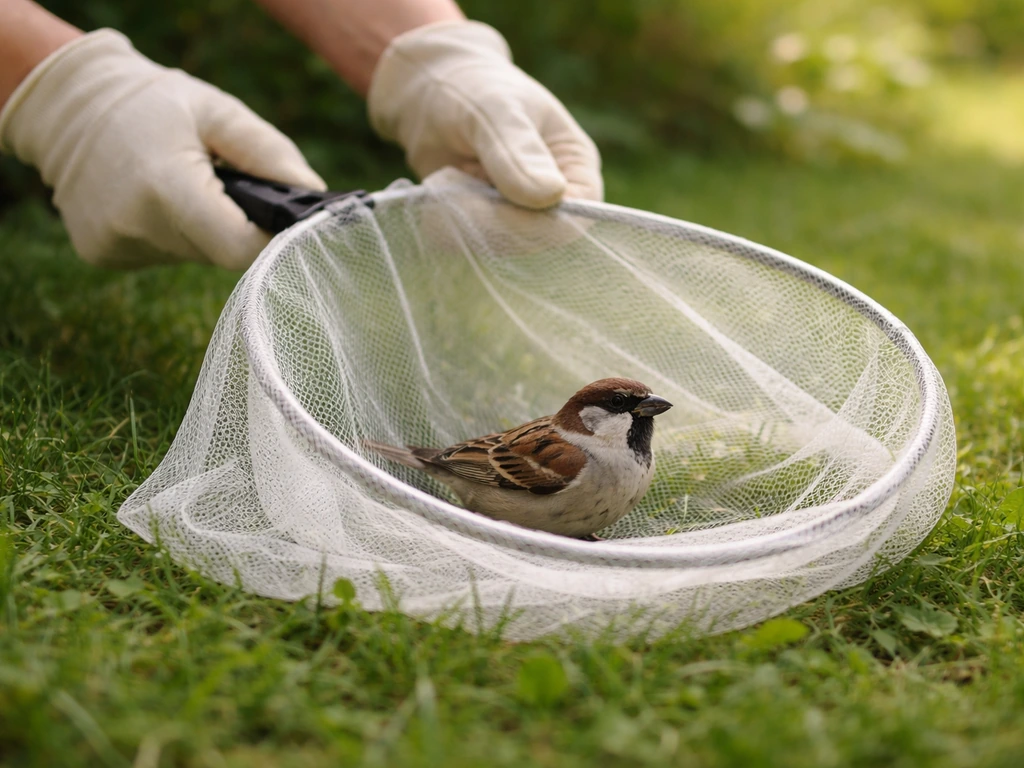
To catch a bird safely with a net, move slowly, minimize the chase, and use a soft-mesh net sized to the bird. For a pet bird indoors, close all windows and doors first, dim the lights slightly, and sweep the net in a smooth arc rather than jabbing at the bird. For a wild bird outdoors, approach from a low angle, limit open escape routes, and only net the bird if it genuinely cannot fly or is in immediate danger. The whole process, done right, takes less than two minutes and leaves the bird calm enough to handle.
How to Catch a Bird With a Net Safely and Humanely
Clara Hayes
25 Apr 2026
Before you grab a net: legal and humane alternatives
If the bird in question is a wild species, stop and think before you do anything. In the United States, the Migratory Bird Treaty Act (MBTA) broadly prohibits capturing, possessing, or transporting migratory birds without a federal permit. That covers a huge range of common backyard birds: robins, sparrows, warblers, doves, and most songbirds you are likely to encounter. Only a federally issued Migratory Bird Rehabilitation permit, typically held by a licensed wildlife rehabilitator or organization, legally authorizes someone to take and temporarily hold an injured migratory bird. Most states add their own layer of permits on top of that. In Washington state, for example, you need a separate state wildlife rehabilitation permit to legally care for any injured wild bird until it can be released. The practical takeaway: if you find an injured or grounded wild bird, your safest and most legal path is to contact a licensed wildlife rehabilitator rather than catching and keeping the bird yourself.
That said, there are legitimate situations where you will need to physically catch a bird with a net, and this guide covers all of them. The key is being clear about your situation before you start. Ask yourself which of these scenarios applies.
- A pet bird (parrot, cockatiel, budgie, finch) has escaped its cage or is loose indoors and needs to be returned safely.
- An injured or grounded wild bird needs to be contained and transported to a licensed wildlife rehabilitator or vet.
- A tame or banded bird (like a racing pigeon or escaped dove) needs capture for its own safety.
- You are a permitted rehabilitator or researcher with legal authorization to handle wild birds.
If you are dealing with a pet bird that is not injured and is simply untamed or flighty, netting should actually be your last resort. A towel approach, a darkened room, or patient trust-building and step-up training will almost always cause less long-term stress than a net chase. Methods like these, covered more in the guides on catching a bird with your bare hands or catching a bird alive, are often more effective for skittish pet birds. If you need to catch a bird alive, choose gentler, lower-stress methods first and only use a net when the bird is truly in danger how to catch a bird alive. Catching a bird with your bare hands is generally riskier than using a net or a calmer method, so it should only be considered in very specific situations and with proper precautions. Use the net when the bird is genuinely in danger, you cannot corner it safely by hand, or time is critical. If you want to reduce harm even more, use the steps in this guide on how to catch a bird without killing it.
Picking the right net and setting the scene
The single biggest mistake people make is using the wrong net. A heavy fishing net, a pool skimmer, or any rigid-frame net with coarse mesh can break a wing or trap a leg. You need a soft, fine-mesh net with a padded or cushioned rim. Here is how to match the net to the bird.
| Bird size / type | Recommended net diameter | Mesh size | Notes |
|---|---|---|---|
| Finch, budgie, small parrotlet | 12–16 inches | 1/4 inch or finer | Use lightest possible net; even a soft butterfly net works |
| Cockatiel, conure, pigeon | 18–24 inches | 1/4 to 1/2 inch | Padded rim essential; avoid wire frames |
| Large parrot (African Grey, Amazon, Macaw) | 24–30 inches | 1/2 inch max | Thick leather gloves recommended; have a second person present |
| Injured wild songbird / robin / starling | 12–18 inches | 1/4 inch or finer | Lightweight nylon; handle with extreme care |
| Injured wild dove / pigeon / crow | 18–24 inches | 1/2 inch | Approach from behind; hood the bird immediately after capture |
Before you even pick up the net, set the scene. For an indoor capture, close every window, door, and chimney flue. Turn off ceiling fans immediately, they are a leading cause of bird injury. Pull curtains or blinds so the bird does not fly into glass. Dim the lights by about half: this reduces the bird's visual field and lowers its panic response without leaving you unable to see. Remove other pets from the room. For an outdoor capture, identify the bird's likely escape routes and position a second person to close off the largest gap. The goal is to create a smaller, predictable space without cornering the bird so tightly that it panics and injures itself.
A few safety items to have on hand before you start: a clean, breathable cloth or small towel to wrap the bird after capture, a cardboard box or pet carrier lined with a non-slip towel for temporary housing, and thin leather gloves if you are working with a large or stressed bird. Bite and scratch wounds from parrots or even a frightened wild bird can be significant.
Step-by-step capture: indoors vs outdoors
Catching a bird indoors
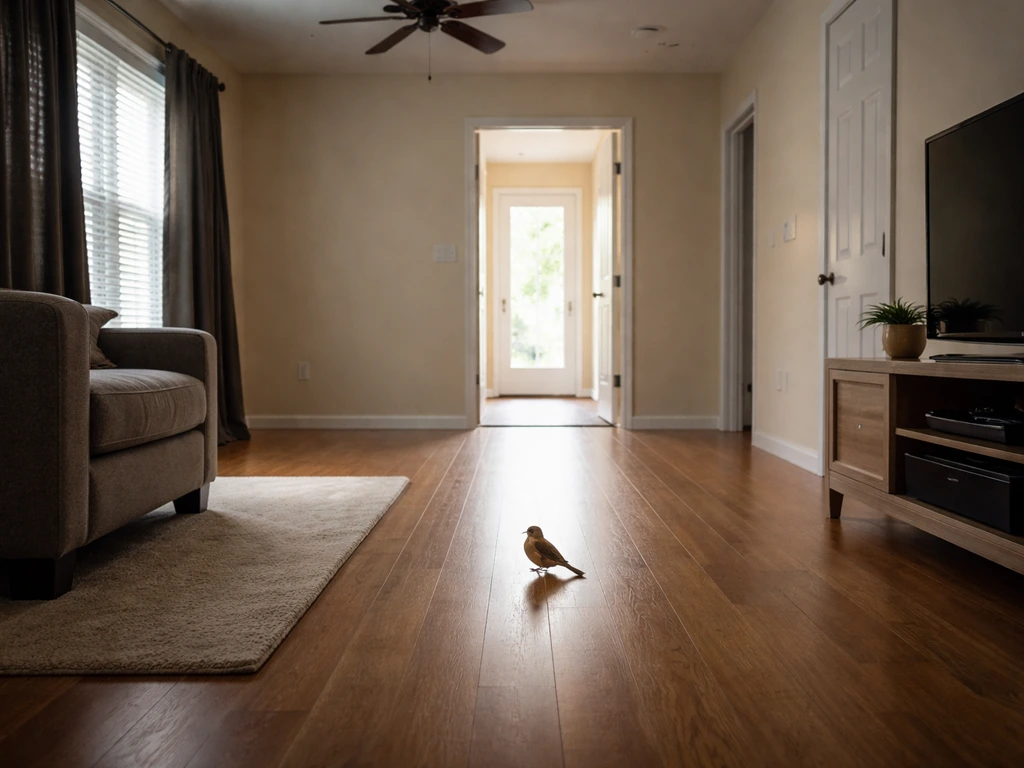
- Secure the room: doors closed, fans off, windows covered, other pets removed.
- Dim the lights or close the blinds to about 50% brightness. Do not go fully dark unless you know exactly where the bird is.
- Let the bird settle. Wait 2 to 3 minutes after it last flew. A perched bird is dramatically easier to catch than one in mid-flight.
- Approach slowly from below and to the side, keeping the net low and slightly behind you so the bird does not fixate on it.
- Move in a wide, quiet arc rather than walking straight at the bird. Straight-line approaches trigger a flight response faster.
- When you are within one arm's length, bring the net up and over the bird in one smooth, decisive arc, covering it completely. Speed matters here: a hesitant, slow scoop gives the bird time to dodge.
- Once the net is over the bird, gently press the rim to the floor or perch surface to prevent escape. Do not press down on the bird itself.
- Reach in with one hand and cup the bird gently but firmly, with its wings folded against its body. Wrap it in your cloth if needed.
- Transfer to a prepared carrier immediately. Do not hold the bird in the air longer than necessary.
Catching a bird outdoors or in a yard
- Confirm the bird genuinely cannot fly or is in immediate danger before attempting capture. A bird that is resting on the ground is not always injured.
- Use the "ten-minute rule": watch the bird for 10 minutes before approaching. If it hops away, holds its wings normally, and responds to stimuli, it is likely fine and does not need capture.
- If capture is warranted, reduce the open space by positioning a helper or using a fence/wall as a natural barrier on one side.
- Approach slowly in a crouching walk rather than upright, which appears less threatening to most birds.
- Keep the net below the bird's sight line as long as possible. Hold it at your side or behind your back as you close in.
- Make your move when the bird is still and facing away or sideways. Bring the net down over the bird in a single, confident arc.
- Press the rim firmly to the ground immediately. Grass and uneven surfaces create gaps, so shift the rim to seal them.
- Place one hand over the rim of the net to prevent the bird from hopping up through the net's opening, then reach in and secure the bird.
- Place the bird in a dark, ventilated box immediately. Darkness reduces heart rate and calms most birds within minutes.
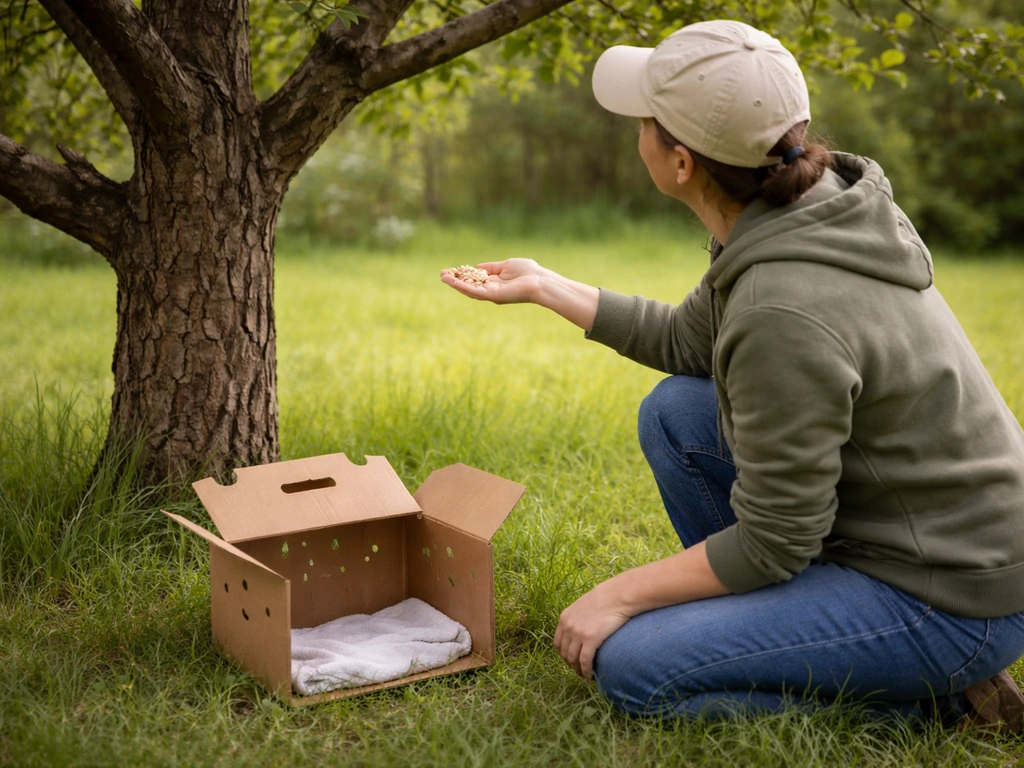
One thing that trips up a lot of people outdoors: chasing. If the bird keeps hopping or flying short distances, chasing it will exhaust and injure it. Stop, let it settle, and start the approach again. A slow second attempt almost always works better than a frantic pursuit. Other methods like using a box or cage as a lure can sometimes work better than a direct net capture for outdoor birds, and are worth considering if the bird is mobile but not in immediate danger. If you are trying to catch a bird in a cage, use the same cage-lure principle with a safe, predictable space so the bird does not panic or injure itself. A boxed lure can be a practical approach when you are not trying to net the bird directly using a box. If the bird is up in a tree, the same idea of creating a controlled landing space can help you catch it more safely and with less panic catch a bird in a tree.
Keeping the bird calm and preventing injury during capture
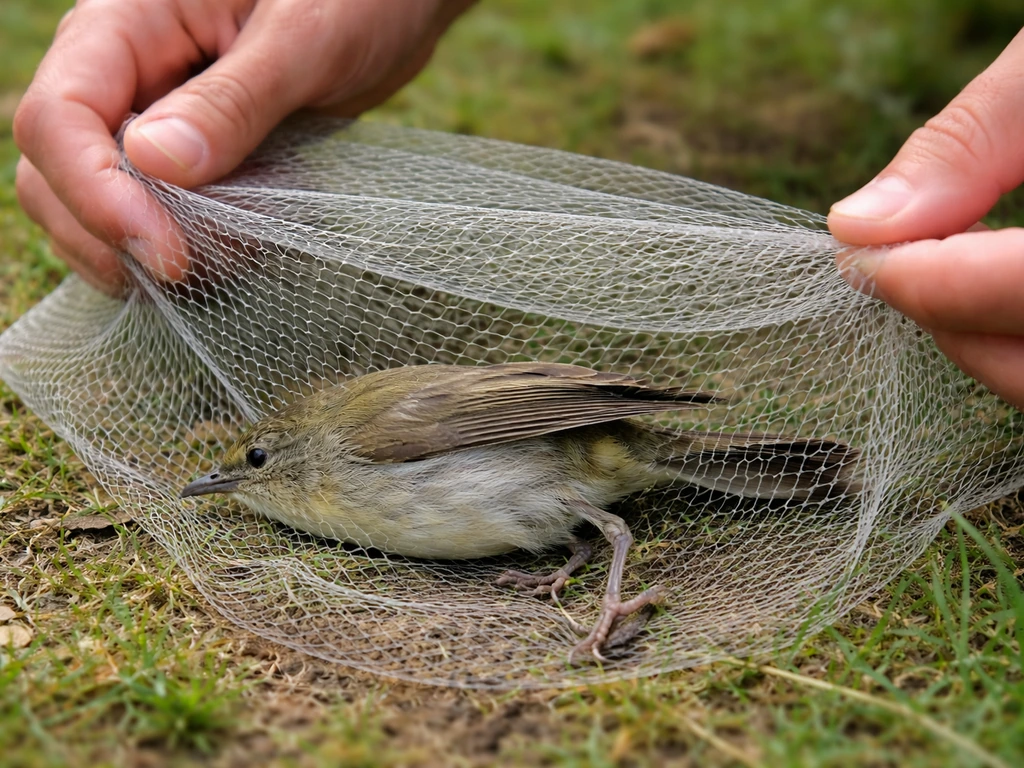
The capture moment itself is when most injuries happen, and almost all of them come from two causes: entanglement and panicked thrashing. Here is how to avoid both.
- Use fine-mesh nylon. Coarse mesh catches toes, toenails, and primary feathers. If a foot gets caught, stop and work it free gently rather than pulling the bird out.
- Do not scoop and lift. Once the net is over the bird, keep it pressed to the floor or surface and reach in from the side to secure the bird before lifting anything.
- If the bird thrashes, hold the net still and wait 15 to 20 seconds. Most birds stop thrashing if the net stops moving. Matching their movement amplifies panic.
- Never grab a bird by its tail, wings, or legs if you can avoid it. Cup the body with both hands, wings held gently against the sides.
- Work quickly but without jerking motions. Every extra second inside the net increases stress.
- If you are working with a large parrot and it bites through the net, keep your grip calm and steady. Releasing suddenly causes the bird to fall or thrash harder.
- After transfer, cover the carrier box with a towel to create darkness. This lowers the bird's heart rate within 2 to 3 minutes in most species.
A quick note on timing: early morning is the best time to attempt capture, both indoors and outdoors. Birds are calmer, slower, and less aerobatic in the first hour or two after sunrise. Avoid capture attempts at dusk when birds are already agitated and flying erratically.
What to do right after capture: handling, housing, and your next decision
Once the bird is secured, you have a short window to make the right decisions. The first five minutes after capture are critical for the bird's wellbeing and for your ability to assess its condition.
Immediate handling
Hold the bird in a "handler's grip": the bird's back rests against your palm, its neck between your index and middle fingers (loosely, not squeezing), and your remaining fingers gently folded around the wings and body. This restrains the wings without crushing the chest. Birds breathe using their chest muscles, so never grip the body tightly around the thorax. If the bird is large or particularly stressed, wrapping it in a thin cloth first and then holding the wrapped bird is safer for both of you.
Temporary housing
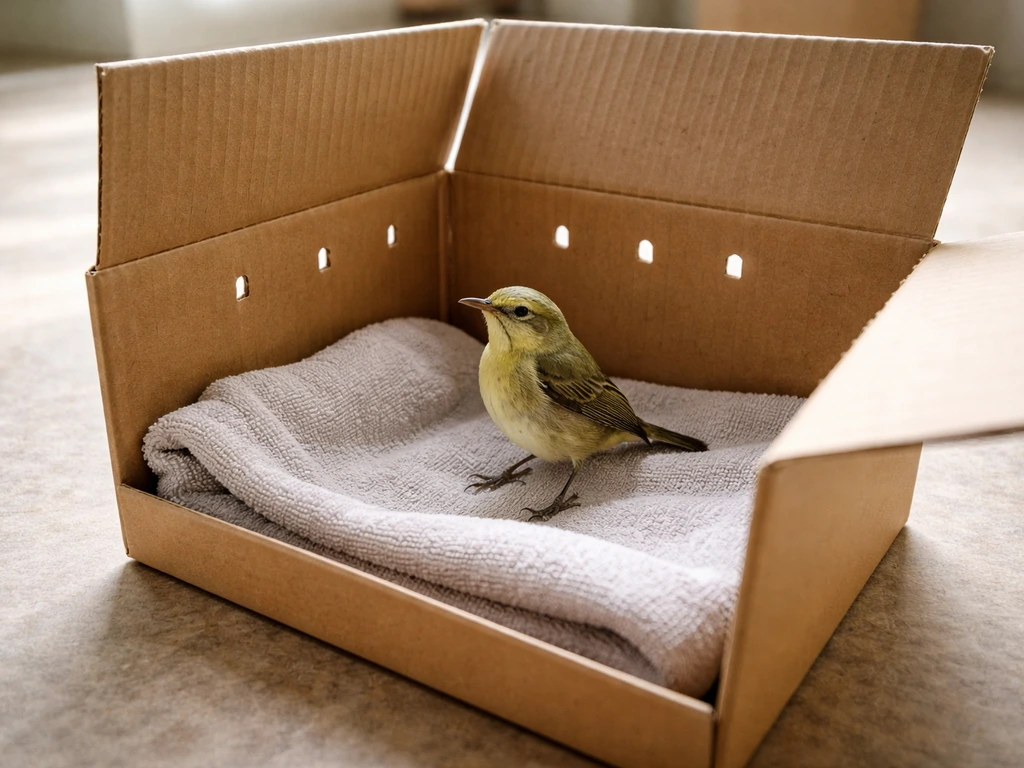
A ventilated cardboard box lined with a folded towel is ideal for temporary housing of 30 minutes to a few hours. The box should be just large enough for the bird to stand upright. Too much space means the bird will try to fly and hurt itself against the walls. Punch several small holes (about half an inch) in the upper sides for ventilation, keep the box in a quiet, room-temperature location (between 65 and 75°F is ideal for most species), and drape a towel over it to maintain darkness. Do not offer food or water to an injured wild bird unless directed by a rehabilitator, as aspiration is a real risk if the bird is in shock.
Release, transport, or rehoming: making the call
This is the most important decision you will make after capture, and it hinges on what kind of bird you have and why you caught it.
- Wild bird, uninjured (caught for safety, now recovered): release it in the same location within 30 minutes. The longer you hold it, the more stress you cause.
- Wild bird, visibly injured (bleeding, broken wing, unable to hold head up, unable to stand): contact a licensed wildlife rehabilitator immediately. Do not attempt to treat it yourself. Use the USFWS or your state wildlife agency's website to find the nearest permitted rehabilitator.
- Pet bird, escaped indoors or recaptured from yard: return to its cage, check for injury, and give it time to settle before resuming normal interaction.
- Escaped pet bird (parrot, cockatiel, budgie) with unknown history: hold temporarily, post found-bird notices in your area, and contact local avian rescues.
- Racing pigeon or banded bird: check the band number, look up the owner through a pigeon racing registry, and contact them directly.
Species-specific tips and troubleshooting
Budgies and finches
These are the smallest and most fragile birds you are likely to net. Use the lightest net you have, ideally a soft butterfly net with fine mesh. Budgies and finches are fast and change direction quickly, so patience at the "wait for it to settle" stage is essential. In a small room, turning the lights almost completely off and using a small flashlight to locate the bird on its perch is extremely effective before the net approach. Be especially careful with finches: they can go into shock from handling stress more quickly than larger birds. Keep the capture time under 30 seconds from net to carrier.
Cockatiels
Cockatiels are easier to catch than finches because they tend to land and stay put once tired. They hiss and lunge when frightened but rarely bite hard. The main risk with cockatiels is feather damage, particularly to their long tail feathers. Approach the net from behind and above rather than from the front, and do not drag the bird along the floor inside the net. If the cockatiel is partially tame, try calling its name and offering a millet spray first before resorting to the net.
Parrots (conures, Amazons, African Greys, Macaws)
Large parrots are the most dangerous birds to net due to their bite strength and wing power. African Greys and Amazons in particular can cause serious puncture wounds. Always wear thick leather gloves, have a second person present if possible, and use a net with at least a 24-inch diameter. After capture, wrap the bird in a towel immediately and keep handling minimal. Parrots that are caught rather than stepped up will often associate handling with fear, so the aftermath (trust rebuilding) is especially important here.
Common wild yard birds: robins, sparrows, starlings, pigeons, doves
Grounded wild songbirds (robins, sparrows, starlings) are usually either injured or temporarily stunned after a window strike. Window-stunned birds typically recover within 20 to 60 minutes if left in a dark, quiet container, so place them in a ventilated box and check every 15 minutes. If the bird is still disoriented after an hour, contact a rehabilitator. Pigeons and doves are heavier and calmer than songbirds, making them easier to net. Approach from behind and hood the bird quickly after capture: covering the head immediately calms pigeons remarkably fast. Crows and jays are intelligent and will actively dodge the net. For these species, a cage trap with a food lure is often more effective than a hand net if you have time.
Troubleshooting: when things go wrong
- Bird keeps flying to high perches indoors: turn off all lights completely and wait 5 minutes. Birds almost always drop to lower perches in the dark.
- Bird is tangled in the net: stop moving the net entirely, work one foot or feather free at a time using slow, gentle pressure. Scissors as a last resort only.
- Bird is limp or unresponsive after capture: hold it loosely in your cupped hands at body temperature for 5 minutes. If no improvement, call a rehabilitator or avian vet immediately.
- Bird escapes again before you can secure it: reset the room, wait 10 minutes, and try again. Chasing immediately after an escape almost never works.
- Bird is biting through the net aggressively: hold steady, do not pull away. Ask your helper to place a towel over the net and bird together before you reach in.
Aftercare: checking for injury, building trust, and stopping it from happening again
Assessing the bird after capture
Before you do anything else, run a quick physical check. Look at the wings first: they should fold symmetrically against the body with no drooping on one side. Check the keel (the breastbone ridge): in a healthy bird it should be just barely palpable, not sharp and prominent. Feel gently along the legs and feet for swelling or unnatural angles. Look at the eyes: they should be bright and responsive, not sunken or half-closed. Check for any blood, missing feathers in patches, or wounds around the face and neck. If anything looks wrong, call an avian vet or wildlife rehabilitator before proceeding.
Calming a stressed pet bird and rebuilding trust
A pet bird that was netted will likely be more fearful of your hands for days or even weeks afterward. This is normal and fixable with patience. Start by giving the bird 24 to 48 hours of quiet time in its cage with no forced handling. Sit near the cage and talk softly, or simply be present without making direct eye contact (direct stares read as predatory to most birds). After that settling period, reintroduce step-up training starting from zero: low pressure, short sessions of 5 minutes, and lots of treat reinforcement. Most cockatiels and budgies bounce back within one to two weeks. Parrots may take longer, particularly African Greys, which have long memories for stressful events.
Preventing it from happening again
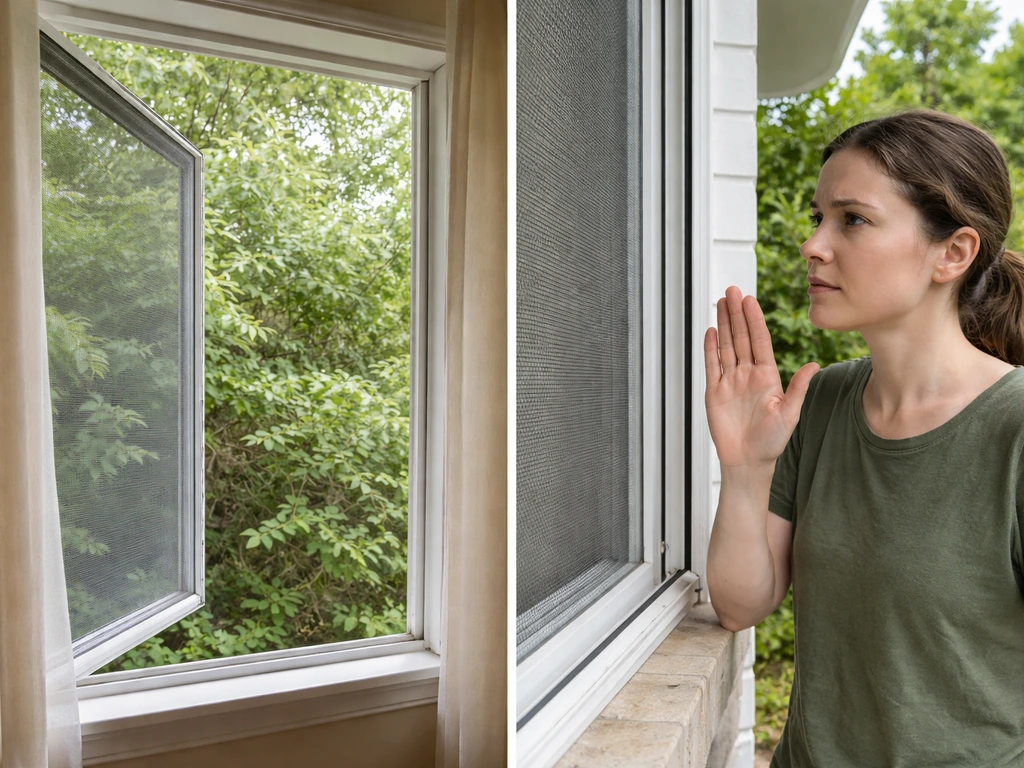
For pet birds, the most common causes of needing emergency capture are open windows, ceiling fan accidents, and insufficient taming work. Install window screens rated for birds (standard window screens can fail if a determined parrot pushes against them), make a household rule that fans are off any time a bird is out of its cage, and invest time in step-up and recall training so the bird comes to you voluntarily. For yards and outdoor encounters, reducing attractants like uncovered grain or open water sources will lower the number of injured or grounded birds visiting your property. If you regularly encounter situations where you need to catch birds for rehabilitation, pursuing your own state and federal rehabilitation permits is the right long-term move: it is the only way to legally and fully help the birds you encounter. If you want the quickest humane option for a specific situation, use this guide to understand how to catch a bird with a bottle catch birds.
Your post-capture checklist
- Bird secured in dark, ventilated box at room temperature: check.
- Physical assessment done (wings, keel, legs, eyes): check.
- Decision made: release, vet transport, rehabilitator contact, or return to cage.
- If wild bird: rehabilitator contacted or release completed within 30 minutes.
- If pet bird: back in cage, quiet time begun, trust-rebuilding plan in place.
- Room hazards addressed: fans off, windows screened, doors closed.
- Net cleaned, dried, and stored for next use (a damp net develops mold and weakens mesh).
FAQ
What net size should I use if I am not sure how big the bird is?
Choose a net where the mesh can fully cover the bird without tightening, aim for a diameter that lets the bird fit inside with a few inches of clearance, and keep the bag portion deep enough that the bird does not end up half-outside. If you are between sizes, it is usually safer to go larger but still fine-mesh and soft-rimmed, because forcing a too-small net increases wing and leg entanglement.
Can I use a throw-net or fishing net if I only have those available?
It is risky. Rigid-frame nets and coarse, knotted mesh can cause wing fractures, leg entrapment, and eye or beak injuries. If you must improvise, do not use anything with rigid handles or thick cord netting, and prioritize soft, fine, breathable mesh plus a cushioned rim that will not snag feathers.
How do I prevent the bird from panicking right when the net touches it?
Avoid coming in from below or jabbing. Approach smoothly, then lower the net rather than striking, keep your movement slow, and stop once the bird is fully contained. The first second after contact matters, if you keep the net moving the bird will thrash more and increase the chance of entanglement.
What should I do if the bird escapes after I start netting?
Do not chase immediately. Back off, let it settle, close or block escape gaps again, and try a second approach after it becomes still or moves predictably. If you keep chasing, you often turn a manageable capture into an injury risk because exhaustion leads to awkward landings and collisions.
How long can the bird safely stay in the box or carrier after capture?
Use the shortest time needed to get a proper handoff or medical assessment. A ventilated box with minimal space is appropriate for short periods, but prolonged confinement without guidance can worsen stress and, for injured birds, delay care. If you are not confident you can assess it quickly, contact an avian vet or wildlife rehabilitator promptly.
Should I cover the carrier fully with a towel?
Partial darkness helps, but keep ventilation visible and do not block the air holes. If the towel touches the mesh or openings, airflow can drop and the bird can overheat or suffocate, especially in warm rooms. Secure the towel so it creates calm without sealing vents.
What if I suspect the bird is injured but it is still moving normally?
Treat it as potentially injured even if it can hop or flutter. Look for subtle asymmetry (one wing droops, one leg holds differently), breathing difficulty, and any blood or feather loss around the face or neck. If you see any signs, skip extended handling and contact a professional rather than trying repeated net attempts.
Is it safe to net a bird during rain or strong wind outdoors?
Usually no. Wet conditions reduce traction and increase the chance you slip, the bird may burn energy faster in gusts, and visibility drops so you cannot approach smoothly. If you can wait safely, reschedule for calmer weather; if the bird is in immediate danger, prioritize capture speed and a secure, ventilated container.
Do I need a second person every time I net a bird?
Not for every situation, but it helps a lot outdoors. A second person can close escape routes without you breaking your approach rhythm, which reduces chasing and contact time. If you are alone, plan the space first, remove obstacles, and ensure you have a clear path to get the bird into the carrier quickly.
Can I offer food or water immediately after capture?
Not for injured wild birds, because swallowing or aspiration risk can be higher when a bird is in shock or not fully alert. For pet birds, follow your usual taming and vet guidance, but for any bird you think may be injured or stunned, focus on warmth, darkness, ventilation, and professional advice instead of feeding.
What if the bird is a parrot and I am worried about bites but I cannot find gloves?
Do not improvise with thin cloth or kitchen gloves, which can still allow puncture wounds. If you do not have proper protective gear, reduce the need for netting by switching to calmer alternatives (towel cover, dim room, creating predictably enclosed space) and contact a bird-safe professional or experienced handler for high-risk birds.
How can I tell whether I should attempt a net capture at all?
Use a simple decision rule: only net if the bird is in immediate danger, cannot be secured safely using less stressful methods, or you genuinely cannot corner it without increasing injury risk. If you have the option to wait for it to settle or to improve the environment (darkened room, closed escape routes), do that first because repeated net attempts raise stress and injury odds.
After a successful capture, when is it better to call a vet or rehabilitator rather than just keep the bird calm?
Call promptly if you notice breathing trouble, blood, asymmetrical wing or leg position, sunken eyes, prolonged disorientation beyond an hour, or if the bird was attacked by a predator or involved in a collision. For pets, contact an avian vet quickly if you see feather damage, limping, or changes in posture that do not improve after the initial quiet period.
What should I do about my own safety if the bird is wild and may bite or carry disease?
Minimize handling time, avoid face-level handling, and use barrier protection (gloves for larger birds, a towel for control). Wash hands thoroughly after any contact, keep children and other pets away from the bird and the container, and treat the bird as potentially unsafe until a professional takes over.
Next Articles
How to Catch a Bird in a Cage Safely and Humanely
Humane, safety-first steps to catch and relocate a bird using a cage, with setup, troubleshooting, and aftercare.
How to Catch a Bird With a Box Safely Step by Step
Humane step by step box capture for pet or backyard birds, with bait, placement, calm handling, and stop rules.
How to Catch a Bird in a Tree: Humane Steps for Pets and Wild Birds
Humane, safety-first steps to coax a pet or wild bird down from a tree, plus first aid and next care.