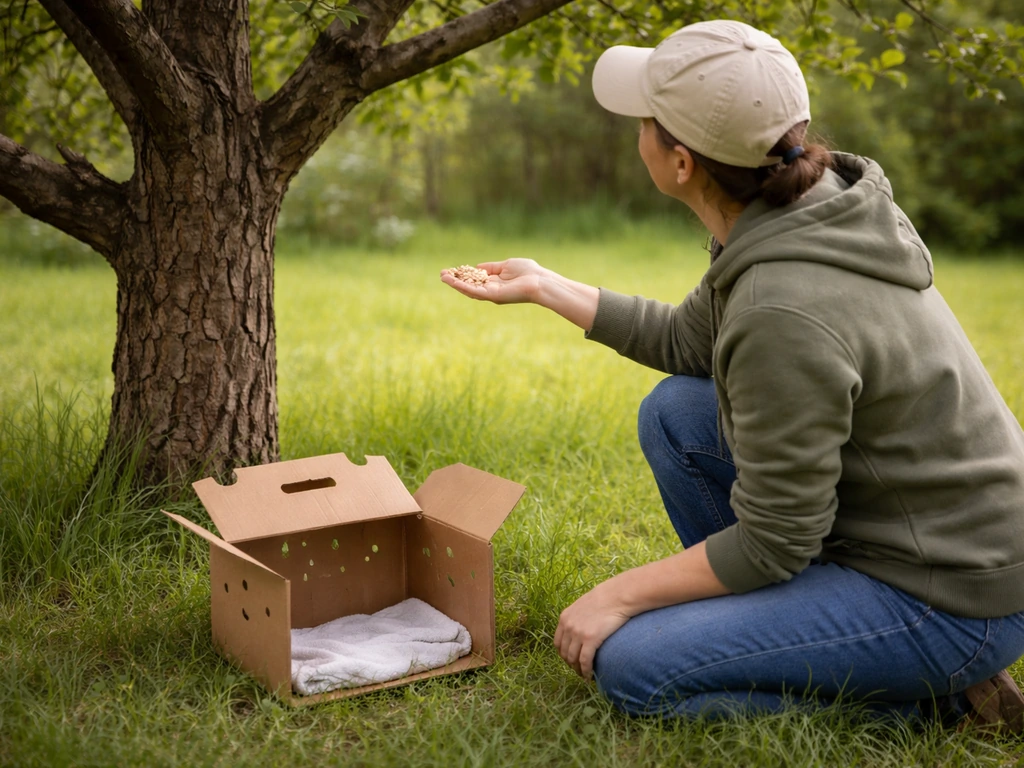
Yes, you can safely catch a bird using a box, and when it's done right it's one of the most stress-free methods available. The box approach works whether you're dealing with an escaped pet parrot in the backyard, a stunned wild bird on your porch, or a finch that slipped out of its cage. The key is understanding that the box itself isn't a trap in the scary sense. It's a dark, enclosed, calming space that birds naturally feel safer moving into than away from, as long as you set it up correctly and give them a reason to enter.
How to Catch a Bird With a Box Safely Step by Step
Clara Hayes
14 Apr 2026
First, make sure catching this bird is the right call
Before you grab a box, stop for 60 seconds and think through the scenario. The method you use, and whether you should intervene at all, depends heavily on what kind of bird you're dealing with and why you're catching it.
If it's your own escaped pet bird, you're clear to proceed. Catch it, get it safe, and work on rebuilding trust afterward. If it's a wild bird that looks injured, grounded, or in immediate danger (hit by a car, attacked by a cat, tangled in netting), brief intervention to contain and transport it to a rehabilitator is generally considered acceptable and humane. In the U.
S. , however, the Migratory Bird Treaty Act makes it unlawful to pursue, capture, or possess most wild migratory birds without a valid permit. That covers a huge range of common backyard species: sparrows, robins, warblers, and more. In the UK, trapping wild birds requires appropriate licensing under frameworks like Natural England's GL33 standard licence conditions.
The practical upshot is this: if the bird isn't injured and isn't your pet, your safest and most legal move is to observe, not capture.
For a genuinely injured or distressed wild bird, your role should be minimal intervention followed by a fast handoff to a professional. As a rule of thumb, if you're unsure whether a situation calls for capture, contact a licensed wildlife rehabilitator before you do anything else. Getting the bird to a rehabilitator within an hour is the gold standard if it's in distress. Once you've confirmed the capture is appropriate and legal, move on to setting up the box.
Getting the box right before the bird arrives
The box is doing most of the work here, so it needs to be set up properly. A cardboard box is ideal because it's opaque, absorbs sound, and has a soft interior that won't injure wings. Avoid plastic bins or wire cages for initial capture because the reflective or open surfaces increase panic.
Size and ventilation
The box should be large enough that the bird isn't tightly confined but small enough that it can't build up flight speed and hurt itself. For a budgie or small finch, a shoebox-sized box (about 12x8x6 inches) works well. For a cockatiel or a medium wild bird like a starling, go up to a standard shipping box around 18x12x10 inches. For a large parrot or a crow-sized bird, you want at least a 24x18x18 inch box. Punch several pencil-sized ventilation holes (about 8 to 10) in the upper sides and lid before you start, keeping them small enough that the bird can't get a wing tip caught.
Entry and exit design
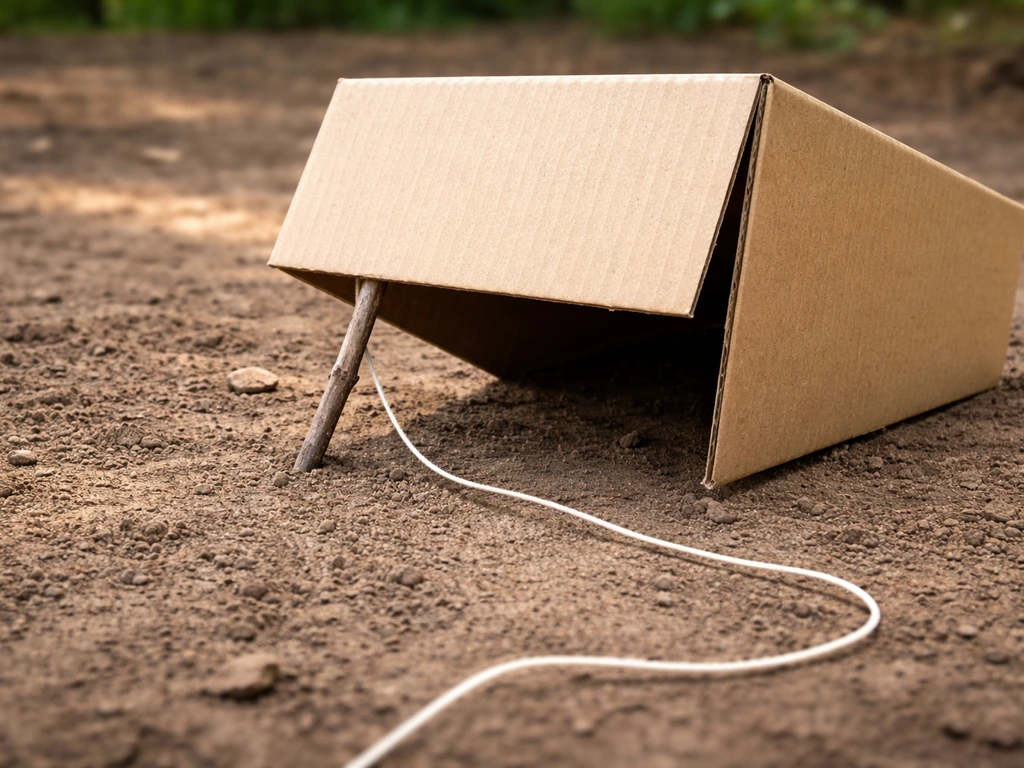
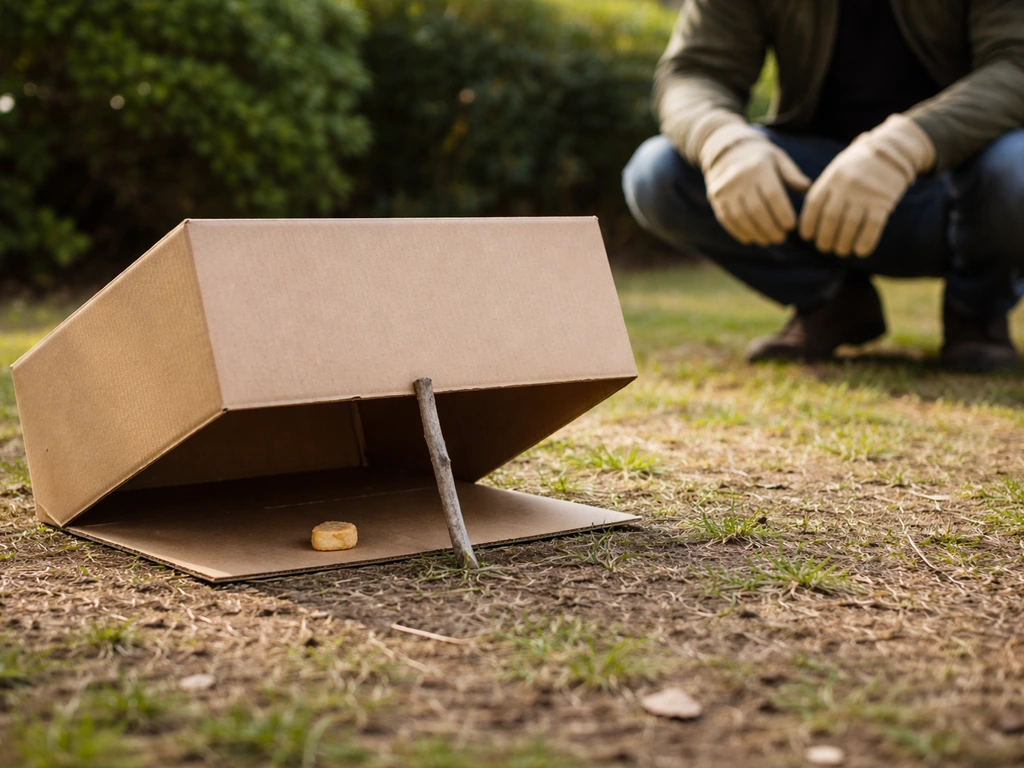
For a prop-and-pull trap setup, cut a flap or leave one full end of the box open, then prop the open end up with a stick tied to a long piece of string you can pull from 10 to 15 feet away. This is the classic setup for yard birds. For an escaped pet bird that you can approach more closely, you can skip the prop entirely and use the open-lid method: lay the box on its side with the opening facing the bird, guide the bird in, then fold the lid closed. Line the bottom of the box with a small folded towel or a few sheets of newspaper to give the bird something to grip and absorb any impact.
Placement matters a lot
Set the box in the same area where you've been spotting the bird. Place it flat on the ground or on a stable surface, never balanced on a fence or ledge where it could tip. Keep it in partial shade: direct sun heats up cardboard fast and a hot box is a stressor. If you're dealing with a pet bird that's stuck in a tree or on a roof, catching a bird in a tree involves slightly different positioning, but the box prep steps are identical.
How to lure the bird into the box
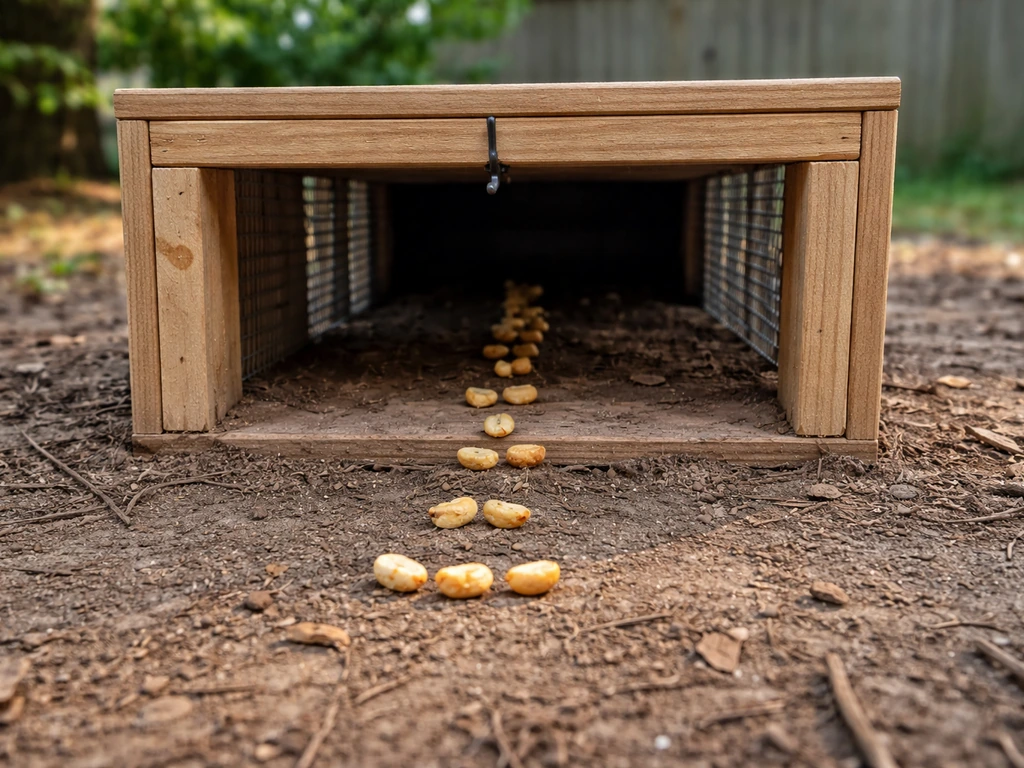
Luring is where most people go wrong, usually by rushing it. The bird needs to feel like the box is a safe choice, not a trap. Give the setup at least 20 to 30 minutes to work before you intervene further.
Bait and attractants
Place bait just outside the box first, then just inside the opening, then deeper inside. This creates a food trail that pulls the bird forward naturally. For pet birds, use their favorite treats: millet spray for budgies and finches, sunflower seeds or a favored pellet for cockatiels, and a high-value food like almonds, grapes, or a piece of their regular chop for parrots. For wild yard birds, use whatever feeders they're already attracted to: black-oil sunflower seed for most songbirds, mealworms for robins and bluebirds, and cracked corn for sparrows and doves.
Visual cover and lighting
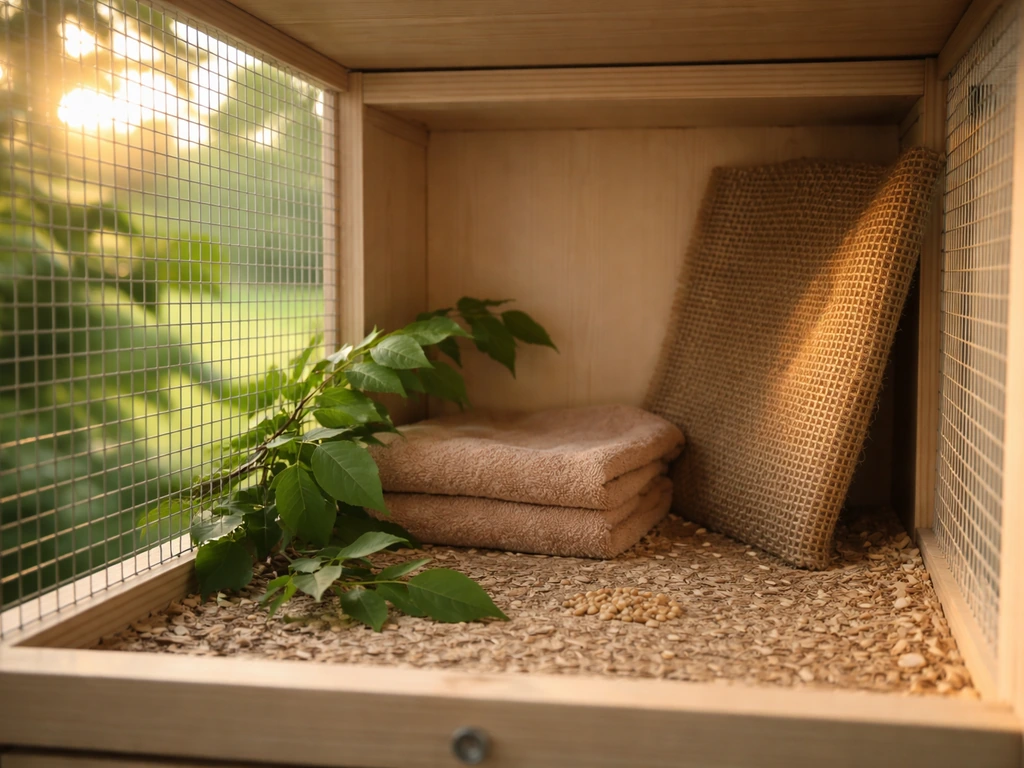
Birds are less likely to enter an open, exposed box. Lean a leafy branch, a piece of burlap, or a folded towel against one side to make it feel more shelter-like. Keep the interior of the box dim but not pitch black. If the opening faces into bright sunlight, the bird won't be able to see the interior clearly and will hesitate. Facing the opening toward shade, with a small scattering of bait visible just past the threshold, works much better.
Best timing
Early morning is your best window, particularly for pet birds. They're hungry after the night, more motivated by food, and less energized for sustained flight. For wild birds, the same logic applies: early morning and late afternoon, when birds are actively foraging, produce the best results. Avoid midday in warm weather; heat-stressed birds are more unpredictable and a hot box is dangerous.
The step-by-step capture process
Once the bird is close to or partially inside the box, here's how to close the deal without blowing it.
- Get into position before the bird is near the box. If you're using the prop-and-string method, sit or crouch at least 10 to 15 feet away and stay completely still. Hold the string loosely in your hand.
- Wait for the bird to move fully past the opening and into the box, not just peek in. Patience here is everything. If you pull the string while the bird is halfway in, you'll hit it or scare it off entirely.
- Pull the string sharply and steadily in one motion to drop the prop and bring down the open end. Don't yank violently; just a firm, continuous pull.
- Move to the box immediately but calmly. Do not run. Place one hand over the opening as you approach to prevent the bird from pushing back out.
- If using the open-lid/guide method for a pet bird: crouch low, keep your movements slow, and use a treat to coax the bird toward the box entrance. As the bird steps in, fold the lid down with your other hand in one smooth motion.
- Once the bird is inside, close and secure all flaps. A few strips of tape or a rubber band around the box keeps it from popping open during transport.
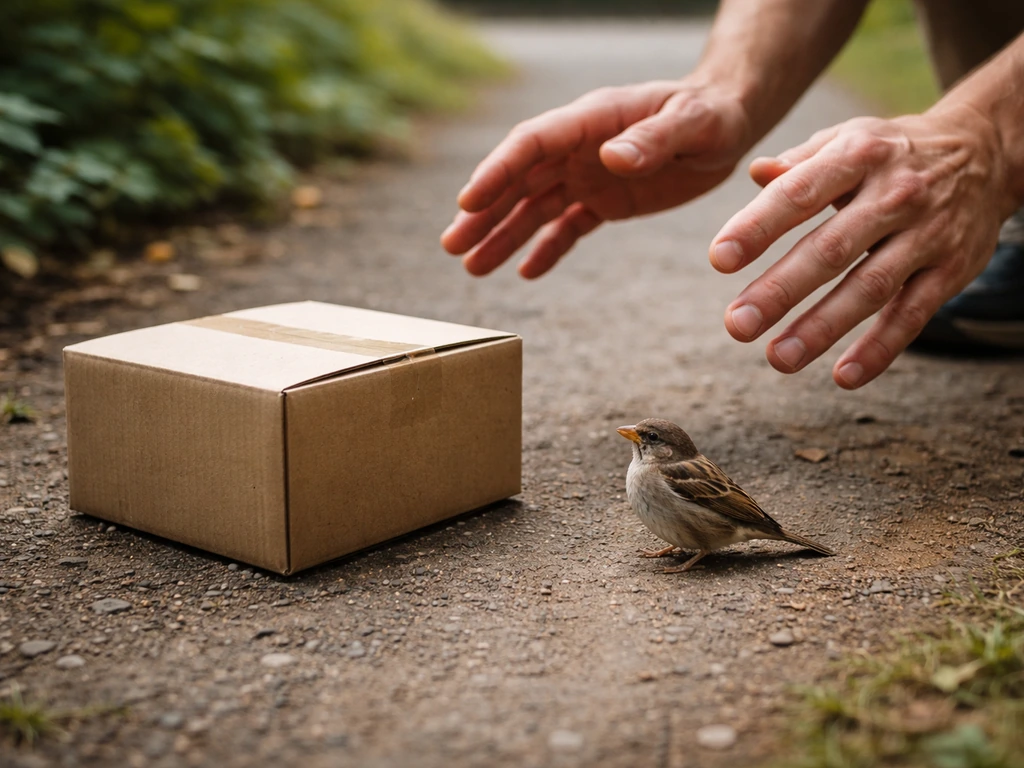
If the bird is visible and contained but not in the box yet, you may need to gently guide it. Catching a bird with your bare hands is sometimes necessary as a last resort to guide a grounded bird the final few inches into the opening, but use bare hands only if the bird is calm, grounded, and not thrashing. Approach from behind, use a light cupped grip, and place rather than drop the bird into the box.
What to do once the bird is inside
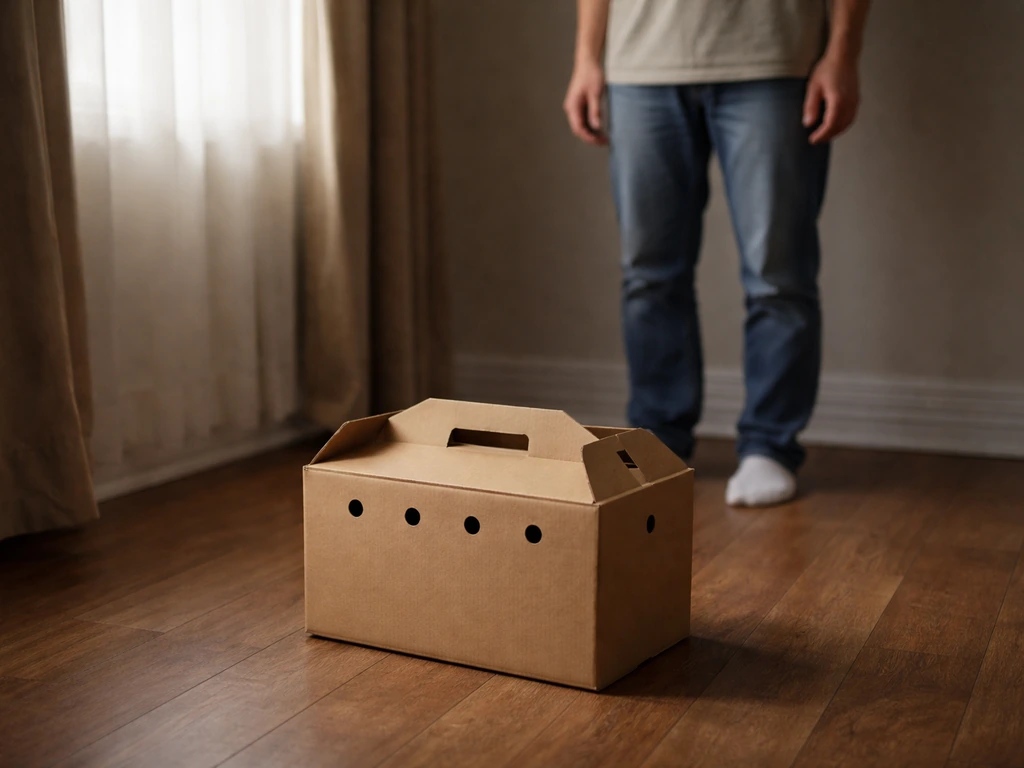
The first two minutes after capture are the highest-stress window for the bird. How you handle this period directly affects whether the bird injures itself and how quickly it calms down.
Immediate calming
Keep the box closed and set it somewhere dark and quiet. Tufts also recommends keeping the bird warm and in a quiet, dark place, since human noise, touch, and eye contact can be very stressful set it somewhere dark and quiet. Don't open it to peek, don't tap the sides, and keep voices low. Darkness is genuinely calming for birds; their heart rate drops quickly in low light. Give the bird at least 5 to 10 minutes before you do anything else, even checking on it.
Quick safety checks
When you do open the box slightly to check in, look for these warning signs: heavy panting or open-mouth breathing (overheating or severe stress), bleeding, a wing held at an odd angle, or eyes closed in a bird that would normally be alert. If you see any of these in a wild bird, the priority shifts from containment to getting veterinary or rehabilitator support immediately. For an escaped pet bird that seems physically fine, just stressed, keep the box dark for a few more minutes before transitioning it back to its cage.
Transport and transfer
Keep the box upright and level during transport. Don't put it on a car seat where it can slide; put it on the floor of the vehicle or secure it with a seatbelt. Keep the car at a comfortable temperature (between 65 and 75°F is ideal for most birds). For a pet bird, when you're ready to transfer it back to its cage, bring the cage to the box rather than carrying the open box across the room. Open both the cage door and the box flap simultaneously so the bird can move directly between them, rather than being briefly loose in a room.
Tips that change depending on the bird species
The core box method stays the same across species, but a few details shift significantly depending on what you're dealing with.
| Bird Type | Best Bait | Box Size | Key Handling Note |
|---|---|---|---|
| Budgie | Millet spray, spray millet on a stick | Shoebox (12x8x6 in) | Very fast, light grip needed; prone to panic flights indoors |
| Cockatiel | Millet, sunflower seeds, familiar pellets | Medium box (18x12x10 in) | Respond well to owner's voice; call softly during luring |
| Parrot (medium-large) | Almonds, grapes, favorite chop | Large box (24x18x18 in) | Intelligent and cautious; may need multiple sessions over days |
| Finch (canary/zebra) | Millet, small seeds | Shoebox or slightly larger | Extremely fast; prop-and-pull method works better than hand guide |
| Common wild yard birds (sparrows, robins, doves) | Black-oil sunflower, mealworms, cracked corn | Medium box | Minimize handling time; legal/MBTA caution applies |
| Larger wild birds (pigeons, starlings, crows) | Bread, corn, protein bait | Large box (24x18x18 in) | Wear gloves; beaks are strong; contact rehab for injured birds |
For pet parrots specifically, patience across multiple sessions often works better than a single capture attempt. Parrots are smart enough to associate the box with danger if a first attempt fails, so if your parrot walks away from the setup once, give it a full day before trying again. Placing the box near the cage for a few hours so the bird can investigate it voluntarily can dramatically increase success. If you're trying to catch a parrot that's escaped outdoors, check our guide on how to catch a bird alive for additional outdoor-specific strategies.
For small finches and canaries, the speed of the bird is the biggest challenge. A prop-and-pull setup outperforms the hand-guide method almost every time. If you're indoors, closing off the room to reduce the flight area is a huge help. You can also compare the box method against a net-based approach to catching birds, which some people find more reliable for very fast, small species in open spaces.
Troubleshooting: when the bird won't cooperate
Most failed attempts come down to a handful of fixable problems. Here's what to check.
- The bird won't approach the box at all: The box is probably too exposed or too novel. Cover one side with a towel, move it closer to where the bird is already spending time, and let it sit untouched for 30 to 60 minutes before trying again.
- The bird enters but backs out before you can close it: You're pulling the string too early. Wait until the bird's entire body (not just head and shoulders) is past the opening threshold.
- The bird keeps panicking inside the box: Make sure there's no light leaking in through the sides. Tape over any cracks and keep the box somewhere quiet. Darkness reduces panic fast.
- The box scares it completely: Try placing food around the box without any prop or string for a day. Let the bird associate the box with food before you attempt any capture. You can also try a bottle-based bird capture method as an alternative if the box shape itself is causing avoidance.
- You accidentally caught the wrong bird: Release it immediately and gently. Open the box away from you, let the bird exit on its own, and reset the trap with more species-specific bait.
- The bird is inside but it's clearly injured and you're not sure what to do: Stop. Close the box, keep it dark and quiet, and call a wildlife rehabilitator or avian vet right now.
One more scenario worth mentioning: if the bird is up high and won't come down to the box at ground level, you may need to adjust the whole approach. A cage-based luring setup positioned at height, or a completely different strategy, will serve you better in that situation than a ground-level box.
When to stop and call a professional
There are situations where the most helpful thing you can do is put the box down and make a phone call. Knowing when you've reached that point is just as important as knowing how to set up the trap.
Call a licensed wildlife rehabilitator if: the bird is a large species with a sharp beak or talons (hawks, owls, herons), the bird is bleeding or has an obvious broken bone, it's been more than 30 minutes and the bird is getting weaker not stronger, or you have any doubt about whether catching it is legal in your area. The Raptor Trust and similar organizations are clear that large birds with sharp talons and beaks should be left to licensed professionals, not handled by well-meaning members of the public. You can locate a wildlife rehabilitator in the U.S. through the National Wildlife Rehabilitators Association or your state's fish and wildlife agency.
For pet birds that are injured (from a fall, cat attack, or collision), get them contained using the box method described above and then get them to an avian vet as fast as possible, ideally within an hour. Don't try to treat injuries yourself or offer food and water to a bird in obvious distress until a vet has assessed it. Birds Georgia advises not to give an injured or orphaned bird food or water while it is being prepared for transfer to a rehabilitator, and to focus on keeping it warm, dark, and quiet instead blank" rel="noopener noreferrer">Don't try to treat injuries yourself or offer food and water to a bird in obvious distress until a vet has assessed it.
If you're committed to catching a bird humanely and want to understand all the options before deciding which method fits your situation best, it's worth reading up on how to catch a bird without killing it so you have a full picture of the safest approaches available. The box method described in this guide is one of the gentlest, but it works best when you match the setup to the specific bird, stay patient, and know in advance exactly what you'll do the moment the bird is inside.
FAQ
How can I tell if I should stop trying to catch the bird and instead call a professional right away?
If the bird is repeatedly crashing into surfaces, it cannot right itself, it is bleeding, or it is showing heavy open-mouth breathing, do not continue attempts. Stop containment and contact a licensed wildlife rehabilitator or avian vet, especially for raptors, owls, herons, and any bird with visible talons or a sharp beak.
What if the bird keeps backing out of the box after I close the lid?
Darken and quiet the containment setup first, keep hands and voices away, and wait 5 to 10 minutes before moving it. If it is an escaped pet, place the box near the cage for voluntary entry later, instead of forcing immediate transfers that can cause another panic cycle.
Where should I place the box if the bird is already on the floor but won't approach the opening?
Position the opening so it faces into shade and away from bright windows or reflective surfaces. Also make the entrance easier to visually understand by angling the leafy or fabric “side cover” so the bird can see a clear, sheltered path into the dark interior.
Can I use food as bait for a wild bird, or will that make things worse?
Food can help, but only use bait the bird is already seeking at that site (such as black-oil sunflower, mealworms, or cracked corn). Avoid strong-smelling or unfamiliar items, and do not oversaturate the area with multiple food points, which can pull the bird away from the opening.
Should I cover the box completely or leave it partially visible?
Leave the interior dim but not pitch black. If you completely black it out or place it under deep shade, the bird may hesitate because it cannot orient to the entrance and bait. A partially dim interior with bait visible just past the threshold usually works better.
What is the safest way to transport the bird after it is contained?
Keep the box upright and prevent sliding or tipping during transit, then maintain a moderate vehicle temperature (around 65 to 75°F for most birds). Avoid ventilation that blasts directly on the bird, and secure the box so it does not shift if you brake or turn.
How long should I wait before I assume the attempt failed?
Give the setup at least 20 to 30 minutes before changing tactics. If the bird approaches then leaves, allow a full rest period (for pet birds, a full day is often better than repeated same-day attempts) so the bird does not learn the box as a recurring threat.
Is it okay to peek inside the box to see what the bird is doing?
Peeking can raise stress levels, especially within the first few minutes after capture. If you must check, wait 5 to 10 minutes, open only slightly, and look for specific danger signs like bleeding or a wing held at an odd angle. If those appear, switch to veterinary or rehabilitator support immediately.
What if I accidentally catch the wrong bird, like a different species than I intended?
Treat the captured bird as an urgent safety priority. Do not release it immediately if it appears injured or disoriented. For wild birds, contact a wildlife rehabilitator when you are unsure about injury, legality, or proper handling, and avoid attempting further “re-capture” attempts until the bird is assessed.
Can I use the box method at night?
For most situations, avoid night attempts unless you are using the box for an injured bird and you can keep everything quiet and dim. Night conditions reduce the bird’s foraging motivation and may increase collisions, so if it is a wild bird, daylight observation and early morning timing are usually more effective.
What should I do if the box gets too hot while I am waiting?
If the cardboard is warm to the touch or the bird is exposed to direct sun, move the setup to partial shade immediately. A hot box increases stress and can worsen overheating, particularly for small birds, so heat management is as important as bait placement.
Next Article
How to Catch a Bird in a Tree: Humane Steps for Pets and Wild Birds
Humane, safety-first steps to coax a pet or wild bird down from a tree, plus first aid and next care.