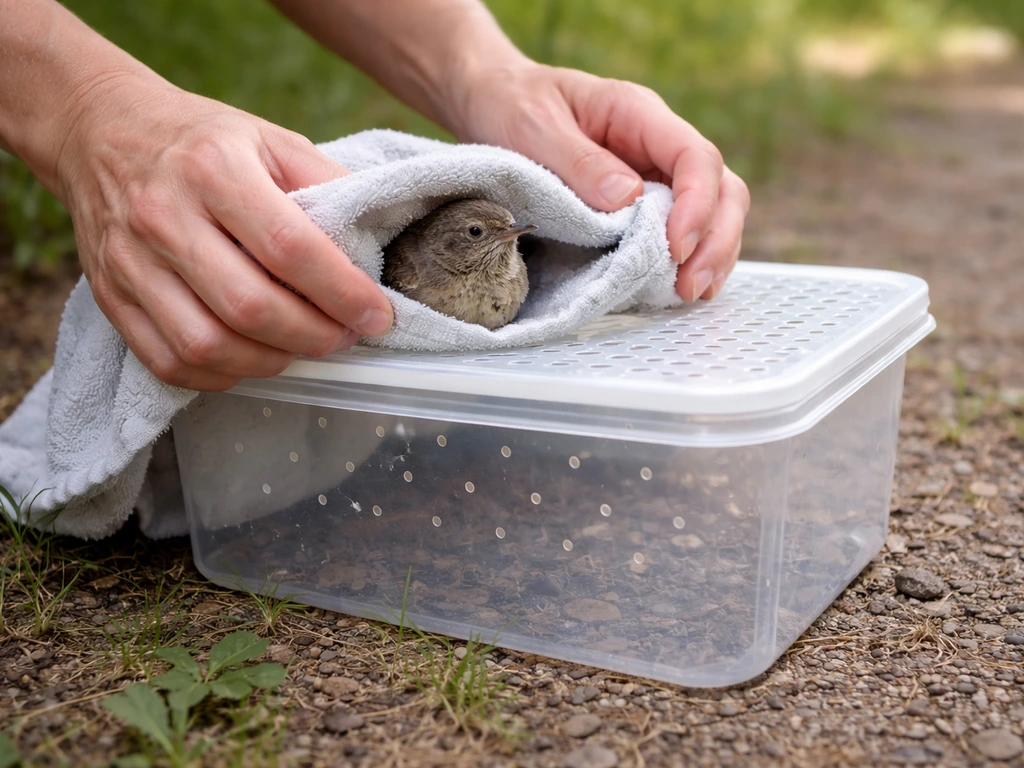
If a bird is stuck in a tree right now, here's the short answer: don't climb after it, don't throw things, and don't rush. Whether it's your escaped cockatiel or a wild bird that looks injured, the approach is the same in the first few minutes: slow down, assess the situation, and pick the right strategy for that specific bird. The rest of this guide walks you through exactly how to do that.
How to Catch a Bird in a Tree: Humane Steps for Pets and Wild Birds
Clara Hayes
12 Apr 2026
First: Figure Out What You're Dealing With
Before you do anything else, take 60 seconds to answer three questions. Is this a pet bird or a wild bird? Does it look injured? And is it actually in distress, or just resting? The answers drive your entire plan.
Pet birds (parrots, cockatiels, budgies, finches, and similar species) that have escaped outdoors are almost always panicking or disoriented. They've entered an overwhelming environment and often fly higher when frightened, not lower. That means you need a luring strategy, not a chase. Wild birds perched in a tree are usually fine and should be left alone. The exception is a bird that is clearly injured: sitting on a low branch and unable to fly, fluffed up and unresponsive, visibly dragging a wing, or has blood visible on its feathers.
Here's a simple decision tree to guide you:
- Is it your pet? Go directly to the luring and coaxing section below.
- Is it a wild bird that appears healthy and just perching? Leave it alone. It doesn't need your help.
- Is it a wild bird that looks injured (can't fly, drooping wing, bleeding, on the ground under the tree)? Don't try to 'catch' it from a tree. If it's fallen or grounded, proceed with gentle capture steps and contact a licensed wildlife rehabilitator immediately.
- Not sure whether it's injured? Watch for 60 seconds without moving closer. A healthy bird will shift position, look around, and react to you. A bird that stays completely still as you approach within a few feet is likely unwell.
- If the bird poses any risk to public safety or you genuinely can't reach a rehabilitator, contact your local animal control agency as a backup.
On the legal side: handling wild birds without authorization is restricted under federal and state law in the US. US federal guidance also allows a “good samaritan” to take possession of a sick, injured, or orphaned migratory bird without a federal rehabilitation permit specifically to immediately transport it to a permitted rehabilitator blank" rel="noopener noreferrer">handling wild birds without authorization is restricted under federal and state law in the US. The U.S. Fish and Wildlife Service directs people to contact a local veterinarian, humane society, or county wildlife agency to find the nearest qualified rehabilitator for injured or orphaned wild birds. The U.S. Fish and Wildlife Service also provides a humane capture, handling, and disposition framework for migratory birds, emphasizing that licensed wildlife rehabilitators are typically the best place for sick or injured birds to receive care contact a local veterinarian, humane society, or county wildlife agency to find the nearest qualified rehabilitator. In states like Florida and New York, wildlife rehabilitation is a licensed activity, meaning you can transport an injured bird to a licensed rehabilitator but you cannot house or treat it yourself without the proper permit. When in doubt, call before you act.
Set Up the Ground Before You Move Closer
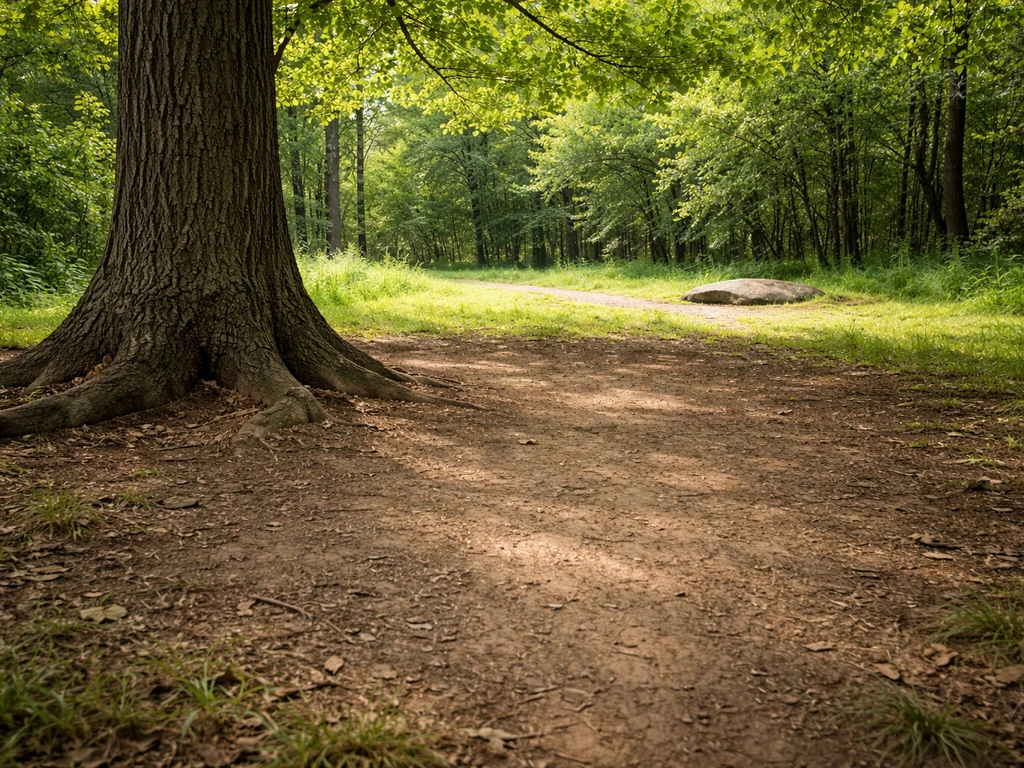
Your physical setup on the ground matters more than most people realize. A spooked bird that flushes out of one tree will often fly further away and land somewhere much harder to access. Before you take a single step toward the tree, do the following.
Clear the escape routes you don't want the bird to take. If there's an open road, a neighbor's yard with a dog, or dense brush nearby, try to position one or two calm helpers at those edges before you approach. Don't let them wave their arms or make noise. Just having a human silhouette standing quietly at a certain point is often enough to redirect a bird's flight path toward a safer area.
Remove tools that create noise or look threatening. Garden rakes, brooms, ladders being hauled noisily across gravel, and even bright umbrellas can spook a bird in seconds. If you need to bring a net or a carrier, carry it low and close to your body, covered with a cloth if possible, and move slowly. Wear subdued colors if you have time to change. Avoid red or bright yellow, which can startle some species.
Plan your access route to minimize tree-shaking. If you need to get closer, walk in a wide arc to approach from the side the bird is facing, not from directly beneath. Walking beneath a perched bird often causes it to fly. Keep at least 10 to 15 feet of distance initially and observe how the bird reacts to your presence before closing in further.
Luring the Bird Down: What Actually Works
This is the most important section if you have an escaped pet. Luring is almost always the right first move, and in many cases it's the only move you'll need. Rushing a bird or trying to physically grab it from a high branch is dangerous for both of you. Luring takes patience but it works.
For Escaped Pet Birds
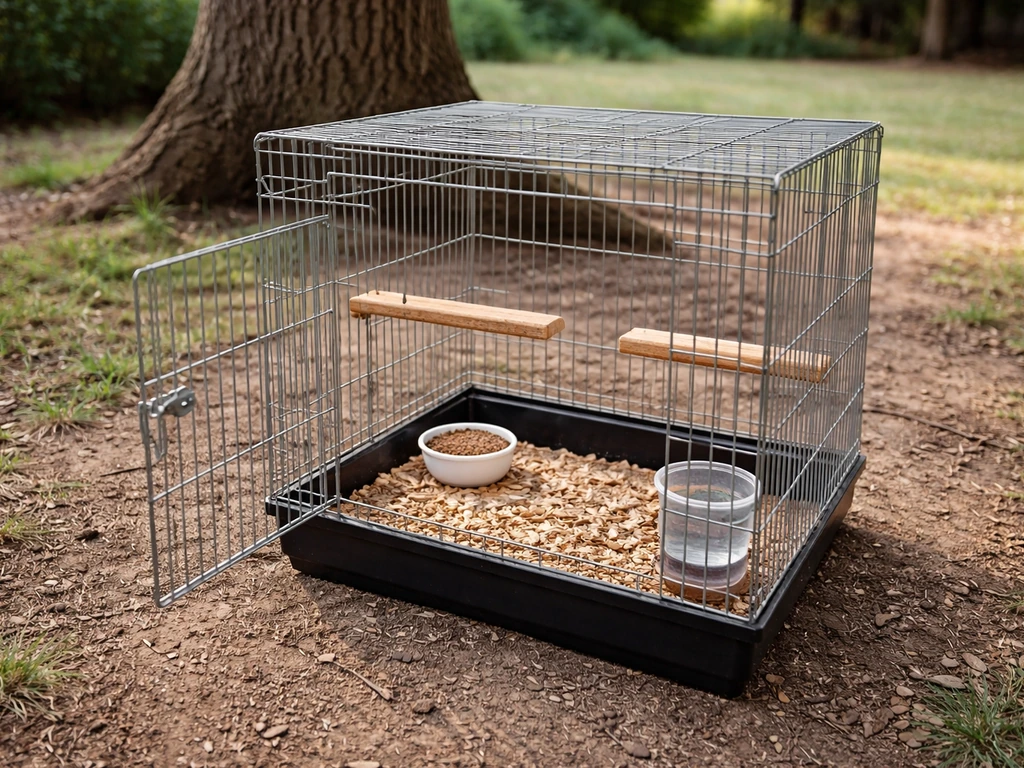
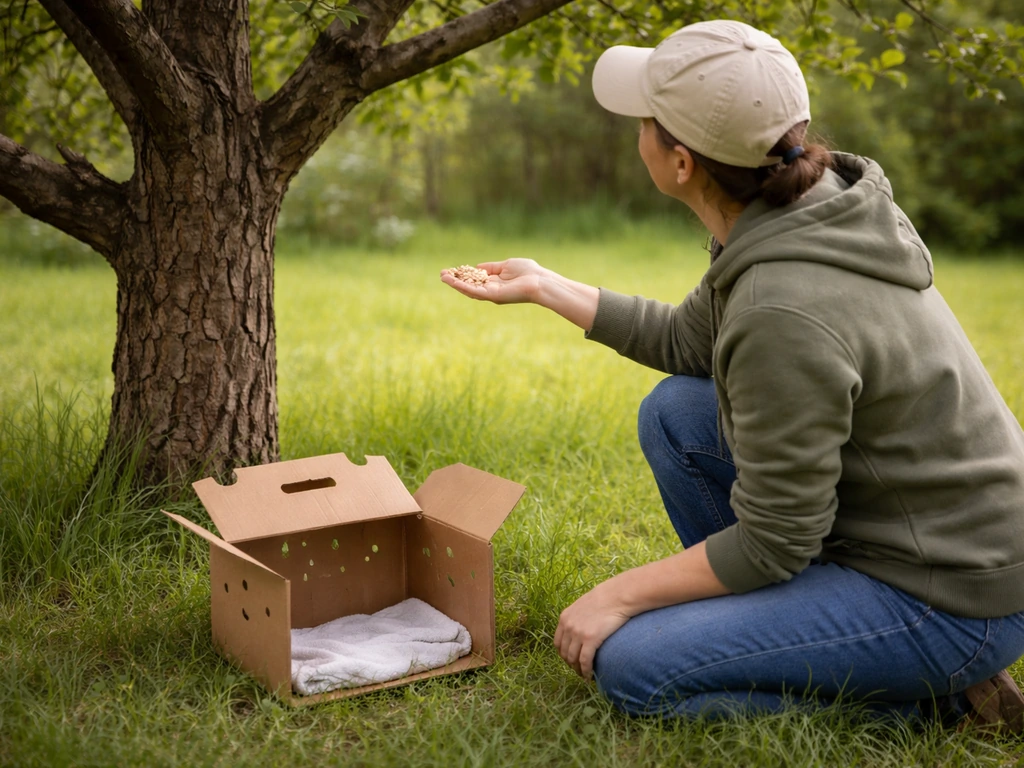
Start with the bird's favorite food, held in your open palm or placed in its familiar food dish. Stand calmly below or to the side of the tree and offer the dish at arm's length or set it on a surface at your eye level if you can (a fence post or outdoor table works well). Millet spray is consistently effective for budgies and finches. Sunflower seeds, almonds, or whatever treat your parrot or cockatiel is obsessed with should be your first choice. The smell and the familiar sight of the dish can trigger a conditioned response in a bird that is otherwise too scared to move.
Bring out familiar objects. The bird's own cage, placed open and well-stocked with food and water near the base of the tree, works surprisingly well for many escaped birds, especially if they're getting tired, cold, or hungry. Place a favorite perch, toy, or even a piece of clothing that smells like you near the cage entrance. Don't stand right next to it. Set it up and then step back 20 feet, or go inside where the bird can see through a window. Some birds will fly straight back into their open cage within 20 to 30 minutes when they're ready.
Use voice cues. If your bird knows its name or responds to a specific phrase or whistle, use it calmly and repeatedly. Don't shout. Speak in the same tone you use indoors during positive interactions. If you have a recording of your bird vocalizing (many owners have these from videos), playing it softly on your phone can trigger a response, especially in parrots and cockatiels that call back to flock sounds. For finches, playing finch song recordings at low volume has drawn birds down from foliage in my experience.
For species-specific context: budgies tend to freeze and hide when scared but respond well to flock sounds. Cockatiels often call back when they hear you whistling their contact call. Parrots (especially larger species like African greys, amazons, and conures) may initially fly away from you but often circle back and land nearby once they're exhausted or if they see something familiar. Finches are the most difficult because they are small, fast, and driven by flock instinct rather than individual bonding with a person.
For Wild Birds (Injured or Grounded)
You're not trying to lure a wild bird back to you. If the bird must be captured, the approach in this guide focuses on how to catch a bird alive while minimizing stress and injury. If a wild bird is genuinely grounded or injured and needs to be captured for transport to a rehabilitator, the goal is to get it to a lower, accessible position (or wait for it to come down on its own). Do not place food on a high branch to coax it further up. Instead, if the bird is already low enough to approach, proceed directly to the safe capture steps in the next section.
When and How to Use Nets, Towels, or Other Capture Aids
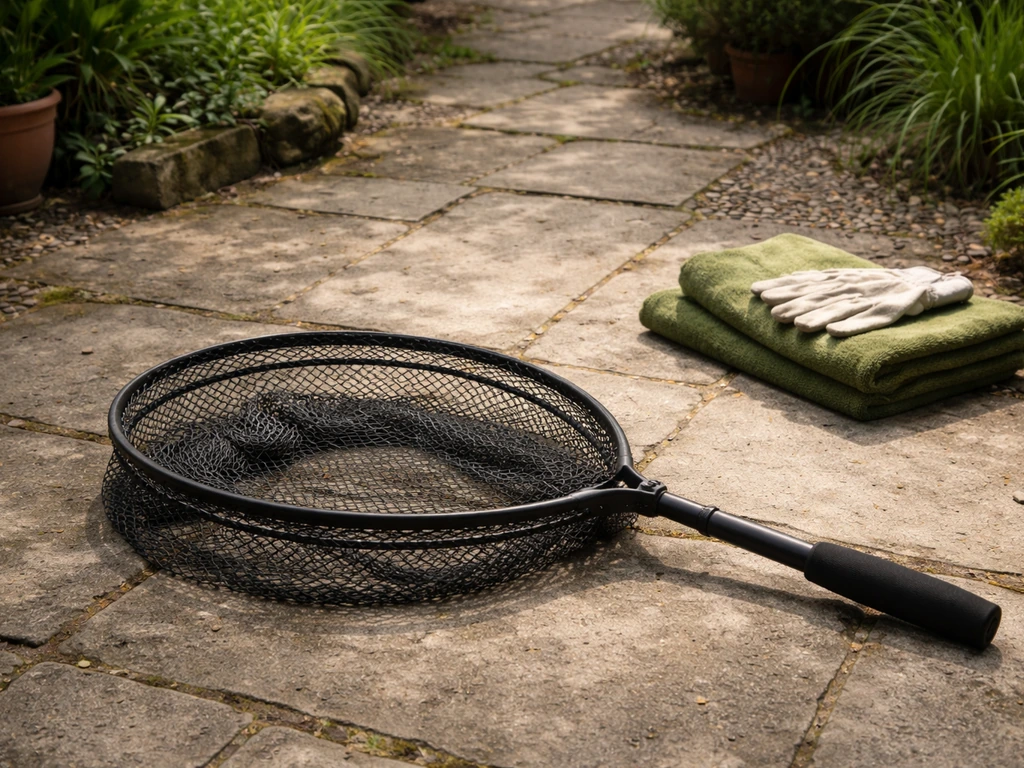
Physical capture aids should be a last resort, not a first move. If you are wondering how to catch a bird with a bottle, this is where you should be extra careful and treat it as a last-resort capture method Physical capture aids. If luring and patience do not work, use the safest capture method so you can catch the bird without killing it how to catch a bird without killing it. To do it with a box, use it only after you have the bird calmly within reach and can move the container over it quickly and safely how to catch a bird with a box. If luring hasn't worked after a reasonable attempt (30 to 60 minutes for a pet bird in mild weather, immediately for a visibly injured grounded bird), then a net or towel becomes the right tool. Done correctly, this is safe for the bird and for you. Done wrong, it causes broken feathers, injury, or further escape.
A soft landing net with a deep bag (the kind used for butterfly or fish netting, with a padded or rolled rim) is the safest option for mid-air capture of a small to medium bird. Using a net to catch a bird safely requires a smooth, swift single scoop rather than a swatting motion. Swatting drives the bird into the net rim and can break a wing. Instead, bring the net up from below in a single arc and then fold the bag over to close the opening. Practice the motion before you're in the moment.
FAQ
What should I do first if I’m trying to catch a bird in a tree and I’m not sure if it’s injured or just resting?
Pause and watch from a distance for 1 to 2 minutes. A resting bird usually looks alert, maintains steady posture, and will shift normally when you change position, while an injured bird is often fluffed, unresponsive, breathing with visible effort, or shows obvious imbalance (for example, it cannot straighten its body on the branch). If you see blood, a wing dragging, or it cannot fly, switch immediately to the injured-bird transport plan and contact a local wildlife rehabilitator or avian vet as appropriate.
How long should I keep trying to lure a pet bird before using a net or towel?
Use time as a decision trigger, not a feeling. In mild weather, many escaped pet birds come around within about 30 to 60 minutes of consistent, calm luring (food and familiar items visible, minimal crowding). If the bird is visibly injured, grounded, or clearly unable to fly, treat it as urgent and move to capture steps right away rather than waiting hours.
Is it safe to shake the tree, bang pots, or use a strong flashlight to force the bird down?
It’s usually not. Shaking and loud noise can trigger panic flight and make the bird land in a more dangerous or hard-to-reach spot, and bright, sudden light can also startle some species. Instead, keep movement slow, remove noisy tools, and focus on redirecting flight paths by having calm helpers positioned at the edges of where you do not want the bird to go.
If my pet bird is circling high in the canopy, should I put food higher up to coax it down?
Avoid placing food on a high branch to lure it deeper into the treetop. Food works best when it’s at an accessible level where the bird has a realistic choice to descend, and when the bird associates the dish, scent, and routine with safety. If it won’t come down, keep the open cage and familiar food visible near the base and continue voice cues rather than escalating with higher placements.
Can I use a pillowcase or adhesive trap if I can’t get close enough with a net?
Don’t. Adhesive or glue-based traps can cause severe distress and injury, and pillowcases made of synthetic material often trap air poorly and can overheat a bird. If you must use a capture aid, prioritize a soft landing net with a padded rim, or a lightweight towel drape that you control without squeezing the chest.
What’s the safest way to use a net, so I don’t hurt the bird?
Commit to one smooth scoop rather than swatting. Bring the net up from below in a single arc, then fold or close the bag immediately to prevent flapping and wing damage. Before the situation gets tense, practice the motion with the net near the ground so you can repeat it consistently when the bird moves suddenly.
How do I transport an injured wild bird after capture, and should I give it water?
Place it in a well-ventilated cardboard box lined with something non-slip (a thin cloth works) and keep the box dark, warm, and quiet. Do not offer food or water before you connect with a licensed rehabilitator, because some injuries can make swallowing or aspiration risky. Your job is stabilization for the short window, then professional care quickly.
What are signs I should call a wildlife rehabilitator immediately, even if the bird looks okay at first?
Get help quickly if the bird is grounded, fluffed and unresponsive, dragging a wing, bleeding, or breathing with visible effort. Also treat it as urgent if the bird cannot maintain balance or cannot fly but is otherwise active. In those cases, the difference between hours and days can affect survival and recovery.
How should I keep people from making the situation worse when catching a bird in a tree?
Avoid crowding and talking loudly, because it often keeps the bird perched and increases stress. If you have helpers, assign each person a quiet, specific role at a predetermined edge location, with one or two people standing still and not waving or making sudden gestures. You want controlled visuals and minimal noise so the bird can choose a calmer flight path.
After I catch my pet bird, how soon can I check if it’s fine?
Minimize handling and give it a short recovery window. Put it in its cage or a travel carrier, dim the environment by covering it lightly, and keep the space quiet for about 30 to 60 minutes before you reassess. Offer water and a small amount of familiar food, but avoid reaching in to “comfort” it right away, since extra handling can prolong stress and delay settling.
What should I do if my bird got out long enough that it might have cooled down or is exhausted?
Focus on passive comfort rather than pursuit. Leave food, water, and an open cage visible, keep human movement calm and predictable, and consider waiting for the bird’s active periods (often early morning) rather than forcing repeated attempts. If you suspect cold or injury, especially if it is lethargic on the perch, contact an avian vet for guidance.
How can I prevent a repeat escape if my bird can already open simple latches?
Upgrade the access points that birds figure out. Check door and window security wherever the bird spends time, use a properly latched screen, and add a secondary barrier such as a closed room or hallway “airlock” to prevent direct access to exterior exits. For cages, use more secure hardware, since spring-loaded or carabiner-style clips tend to be more reliable than basic latches for clever birds.
Next Article
How to Catch a Bird With Your Bare Hands Safely
Humane, safety-first steps to catch a bird with bare hands or safer alternatives for wild and pet birds.