The short answer: no, you almost certainly cannot keep it
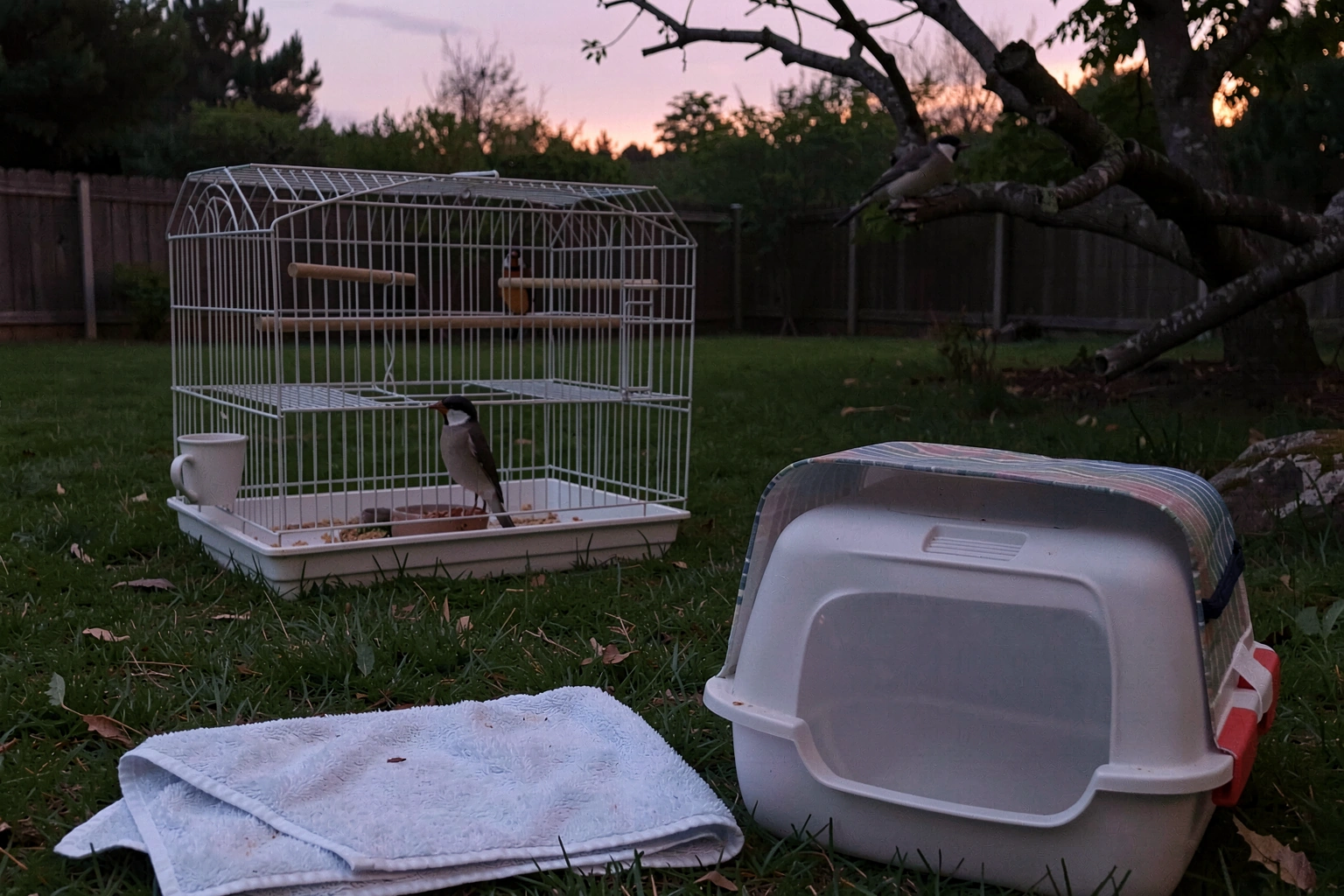
If you found a wild bird and you're wondering whether you can catch it and keep it as a pet, the direct answer is: in almost every jurisdiction, no. In the meantime, the safest approach is to focus on temporary aid and professional help rather than trying to catch it and keep it outside how to catch a bird outside. If you're looking for how to catch a loose bird, the safest approach is still temporary aid and getting professional help instead of trying to keep it. In the United States, the Migratory Bird Treaty Act and federal regulations under 50 CFR § 21.12 require you to immediately release a captured wild bird unless it is exhausted, ill, injured, or orphaned. Even then, you are expected to hand it off to a licensed wildlife rehabilitator, not keep it yourself. Minnesota's DNR states this plainly: permits are not issued to keep wild animals as pets. New York City explicitly prohibits selling, giving, receiving, keeping, or displaying wild animals except through licensed wildlife rehabilitators, zoos, or aquariums. In the UK, the Wildlife and Countryside Act 1981 adds another layer, with Schedule 4 and Schedule 5 species requiring specific licences, and improper captivity creating real criminal exposure. Canada's Migratory Birds Regulations follow a similar pattern: possessing a live migratory bird is generally prohibited without a permit, with narrow exceptions for temporary help in genuine emergencies. The consistent message across all of these frameworks is the same: catch it only if it genuinely needs help, contain it only temporarily, and get it to a professional as fast as possible.
Before you touch anything, spend a minute watching the bird from a short distance. What you see will tell you a lot about what to do next, and it will change your entire course of action.
Is it a nestling?
A nestling is featherless or has only sparse pin feathers, and likely has its eyes closed or barely open. It cannot hop, walk, or fly. If you see a bird like this on the ground, it has genuinely fallen or been pushed from a nest nearby. The U.S. Fish and Wildlife Service is clear here: if you can find the nest, put the bird back in it. The old myth that a parent bird will reject a nestling you've touched is not true. If the nest is destroyed or completely out of reach, that's when you move to contacting a rehabilitator.
Is it a fledgling?
Fledglings look like small, slightly scruffy versions of adult birds. They have feathers, can hop, and may even fly short distances. Wildlife Care of SoCal notes a fledgling typically has a very short tail, roughly a quarter to half an inch, along with visible feathers and the ability to walk or hop. Audubon points out that fledglings hop around, while nestlings in real distress may drag themselves along the ground using their bare wings. If a bird can hop away from you, it is almost certainly a fledgling doing exactly what it should be doing. Leave it alone. Its parents are almost always nearby. Virginia DWR confirms that parent birds tend to stay in the area for at least a day, continuing to feed and watch over fledglings on the ground.
Is it injured or in genuine distress?
Signs of a truly injured adult bird include visible wounds, blood, drooping or asymmetrical wings, an inability to fly after several minutes of observation, or a bird sitting completely still and allowing you to approach closely. A wet, chilled bird lying on its side is also in real trouble. A bird that flew into a window and is stunned may simply need 20 to 30 minutes in a quiet spot to recover before flying off on its own. Watch before you act.
What to do (and not do) the moment you find it
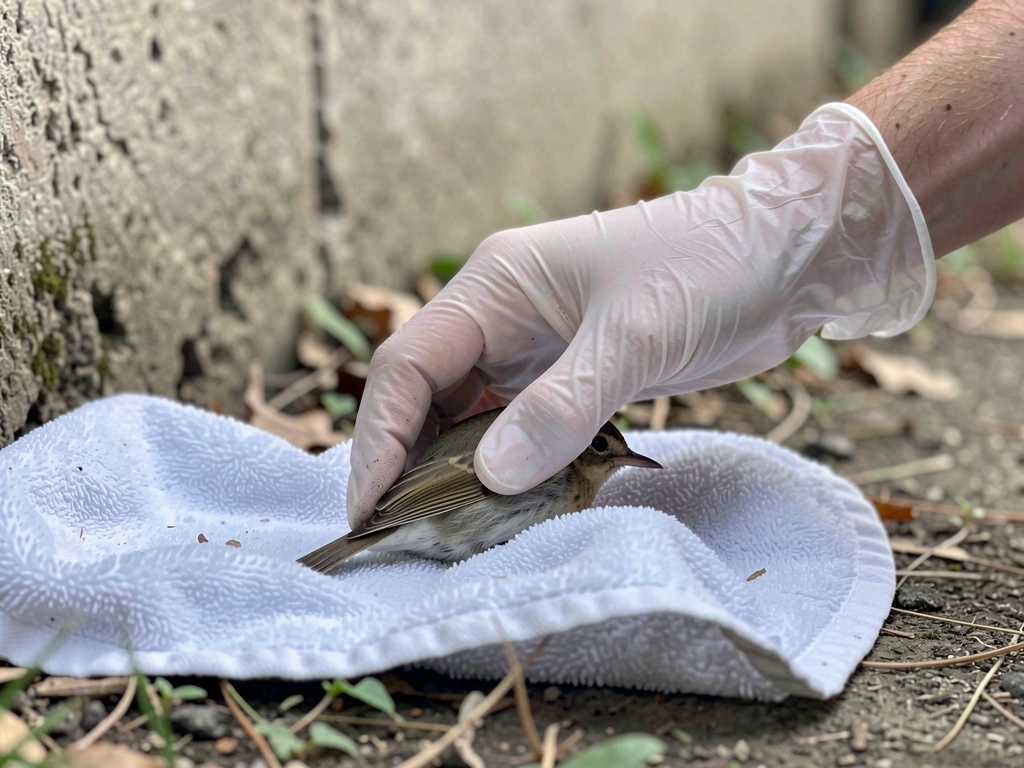
Your actions in the first few minutes matter a lot. Stressed birds can go into shock, and well-meaning handling causes real harm. Here's what to do and what to avoid:
- Do stay calm and quiet near the bird. Sudden movements and noise increase its stress response.
- Do observe for several minutes before deciding the bird needs help.
- Do place a light towel gently over an injured bird to calm it before picking it up. Virginia DWR specifically recommends this approach.
- Do wear gloves if you have them, or use a towel as a barrier when handling.
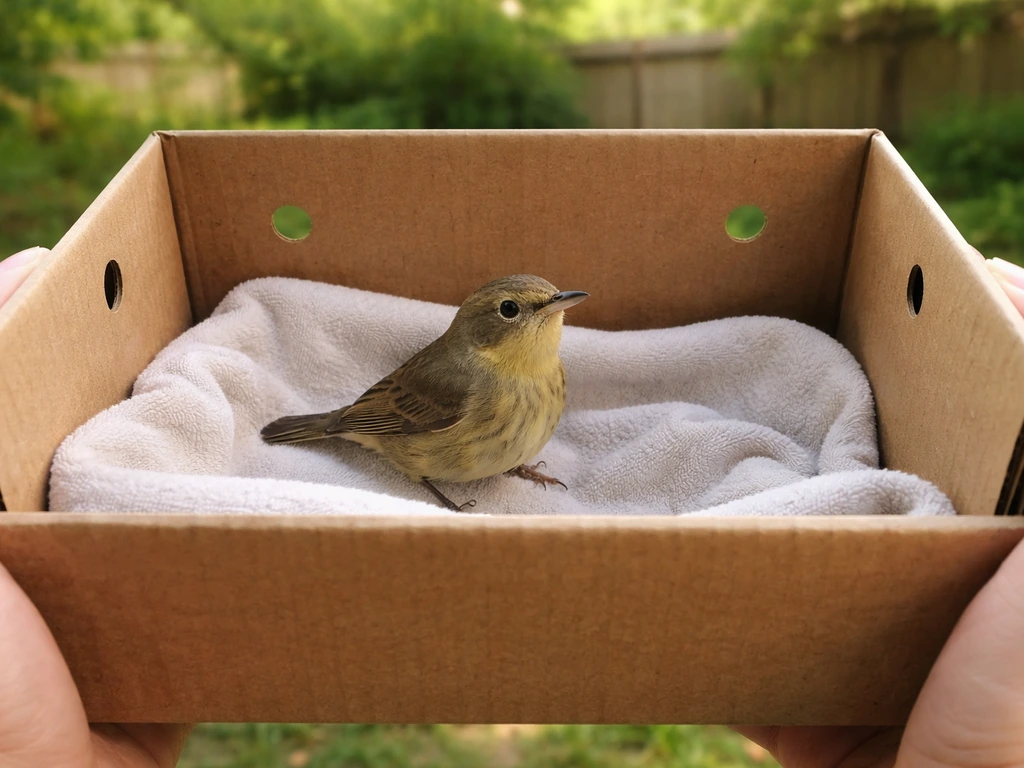
- Do place the bird in a ventilated cardboard box with a non-looping towel or sheet on the bottom so it can stand without sliding.
- Do keep the box warm, dark, and quiet, away from people and pets.
- Do not chase an injured bird. Virginia DWR explicitly warns against this because it causes further harm and exhaustion.
- Do not give the bird any food or water. This is one of the most common mistakes people make and it can cause serious harm or impede treatment when a rehabilitator receives the animal.
- Do not try to fix a wing, splint a leg, or treat any wound yourself.
- Do not put the bird in a cage with perches, mirrors, or toys. It is not a pet situation.
- Do not handle the bird more than absolutely necessary.
Temporary holding: how to keep it safe until help arrives
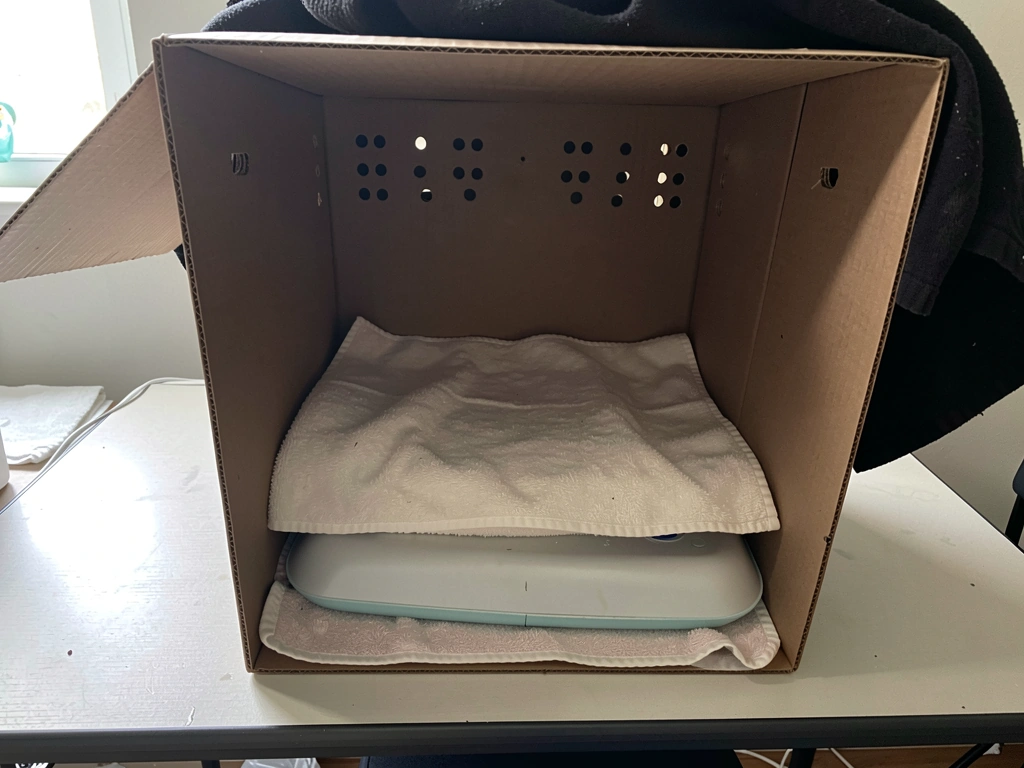
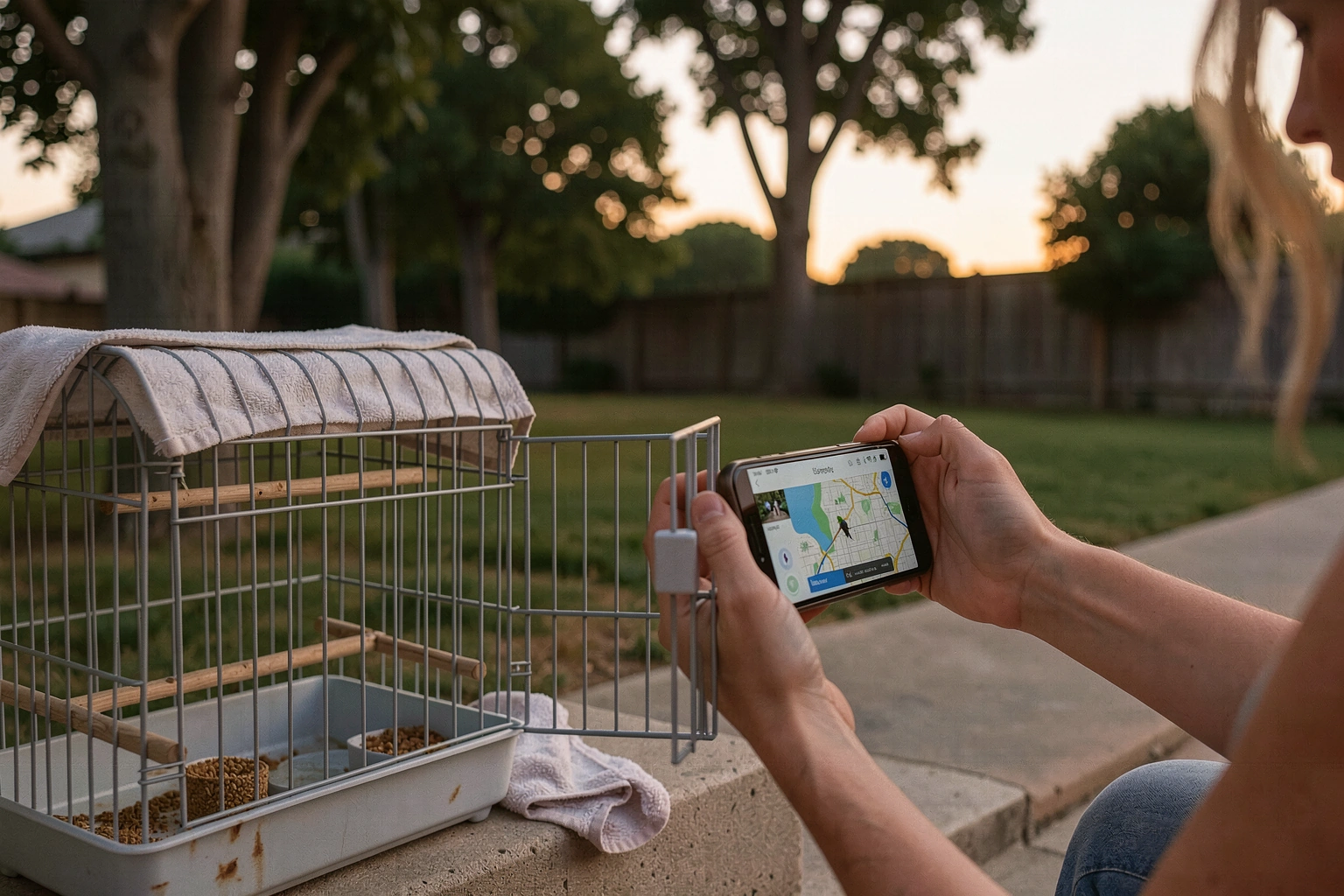
If the bird does need to be contained while you arrange transport or wait for a rehabilitator, here's how to do it humanely. This is temporary holding, not keeping. The goal is to minimize stress and keep the bird stable, nothing more.
- Find a cardboard box with a lid. Poke several small ventilation holes in the sides, near the top.
- Line the bottom with a plain towel or sheet, avoiding anything with loops that claws can get caught in.
- Place the bird inside gently, using a towel to cover and scoop it rather than grabbing with bare hands.
- Close the lid securely so the bird cannot escape and injure itself further.
- If the bird is cold, wet, or a very young unfeathered nestling, place a heating pad on its lowest setting under half the box (not the whole box) so the bird can move away from the heat if needed. Virginia DWR recommends a 75-watt bulb nearby as an alternative heat source. Southwest Virginia Wildlife Center also suggests a warm sock filled with uncooked rice as an improvised warmer.
- Set the box in a warm, dark, quiet room, away from children, other pets, and foot traffic.
- Do not open the box repeatedly to check on it. Minimize contact entirely.
- Aim to get the bird to a rehabilitator within one hour if at all possible, as Best Friends Animal Society advises.
Think Wild's guidance puts it well: the sooner a quiet, dark place is secured, the better, and do not offer food, water, or handling beyond what's needed. Frog Hollow Wildlife Rehabilitation echoes this: do not administer food or water, do not attempt to fix an injury, and wait for a rehabilitator's instructions.
Why keeping a wild bird is risky, and usually illegal
Even if you have good intentions, keeping a wild bird without a permit creates real legal exposure. In the US, migratory birds are federally protected, and the rehabilitation permit framework under 50 CFR § 21.76 includes strict record-keeping requirements, including the date received, type of injury, and disposition. Those requirements exist for a reason: they ensure the animal is properly tracked and cared for. Private individuals are not authorized to do this work.
Beyond legality, there's a biological reason why keeping wild birds long-term is a bad idea even if you wanted to. Young birds that spend too much time around humans imprint on them, meaning they come to identify with humans rather than their own species. The Wildlife Center of Virginia explains that rehabilitation staff take specific precautions to prevent this, including using decoys and minimizing human-facing care for young birds. The U.S. Fish and Wildlife Service identifies imprinting and habituation to human feeding as risks that directly reduce a bird's chances of surviving after release. A bird that imprints on you cannot be safely released into the wild. It becomes dependent, unable to integrate with its own species, and essentially unreleasable. That's not a good outcome for the bird.
The ASPCA also notes that even domestically bred pet birds, particularly parrots, have complex care requirements that most households are genuinely unprepared for. Wild-caught birds have those same needs plus the additional burden of stress from captivity and the loss of survival skills. The idea of keeping a wild bird as a pet, even a songbird, is almost never in the bird's interest.
Who to call right now, and exactly what to say
Your single best resource is a licensed wildlife rehabilitator in your area. Here's how to find one and what to tell them:
Where to find help
- U.S. Fish and Wildlife Service website: search for licensed wildlife rehabilitators by state.
- Your state's fish and wildlife agency: most states run a helpline. Virginia, for example, has a toll-free number (1-855-571-9003) staffed Monday through Friday, 8:00 AM to 4:30 PM Eastern.
- Wildlife Center of Virginia: available 7 days a week, 9 AM to 5 PM Eastern, and can help identify species and triage even if you're not in Virginia.
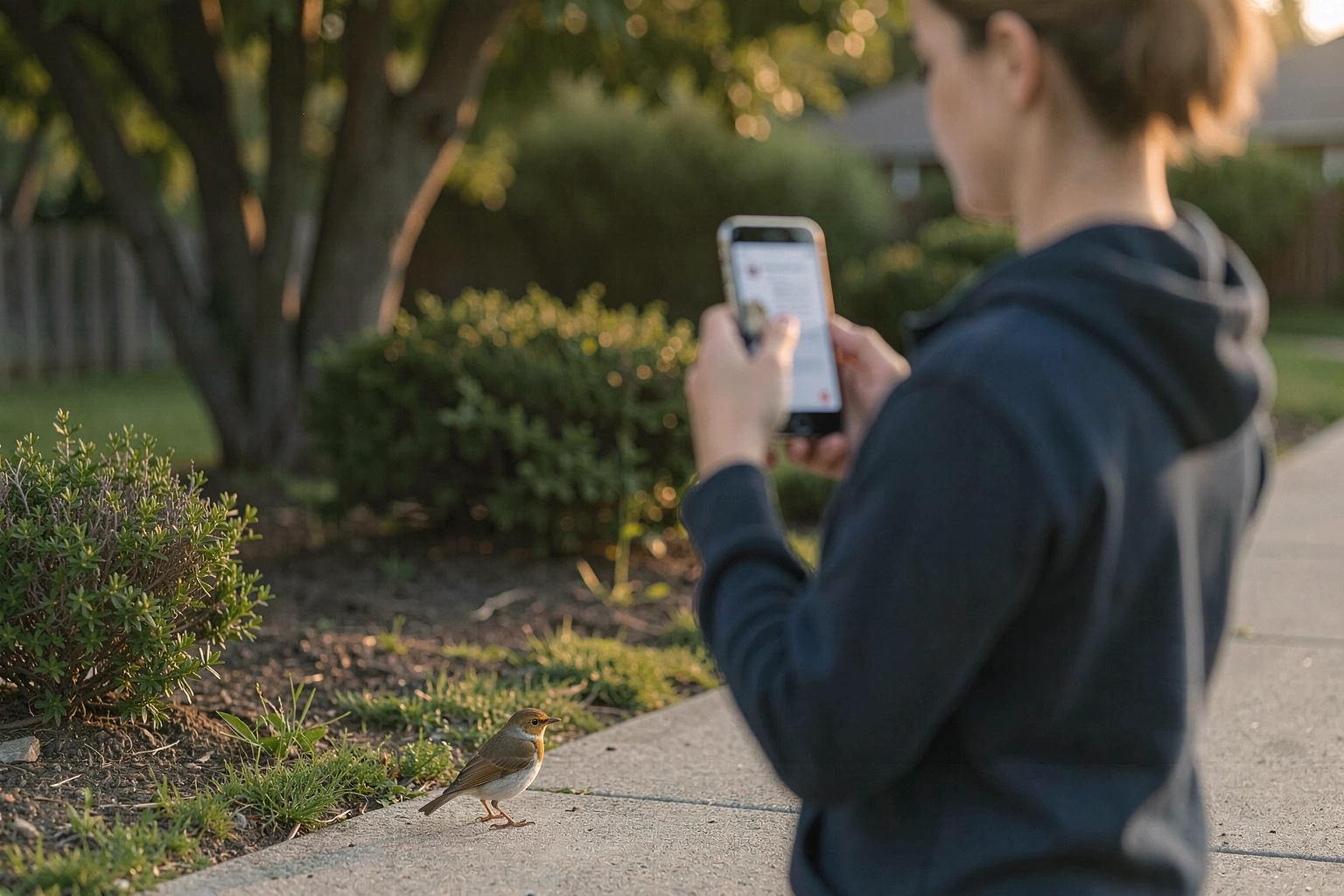
- Think Wild Wildlife Hospital: accepts photos and texts via hotline so staff can assess the bird's age, condition, and species before you even bring it in.
- Local animal control: they can refer you to a permitted rehabilitator even if they can't handle wildlife directly.
- Local wildlife rescue organizations and bird-specific rescues: many cities have bird rescue groups that handle common species.
- An emergency veterinarian: licensed vets in the US can legally stabilize an injured migratory bird temporarily under 50 CFR § 21.12(c) without a federal permit.
When you call, Best Friends Animal Society recommends being prepared to give: your name, your address or location, the time you found the bird, the exact location where you found it, the species if you know it (or a description of size, color, and markings), and a description of what happened or what you observed. If you can safely take a photo, do it before you box the bird. Think Wild staff can identify species and condition from a photo and tell you the right next step, which saves time and avoids unnecessary handling.
What happens after rehab, and the mistakes people make along the way
The goal of wildlife rehabilitation is always release back to the wild. Once a bird reaches a licensed rehabilitator, they assess the injury or condition, provide appropriate medical care, and begin a structured process of preparing the bird for release. Under the federal rehabilitation permit framework, there are even timing and season constraints: if a bird cannot be released within a 180-day window, the rehabilitator needs additional authorization to continue holding it. This is a structured, regulated process, not just someone keeping a bird in a cage.
For young birds especially, rehabilitation centers take deliberate steps to prevent imprinting. Staff may use puppets, minimize eye contact, and house chicks with other birds of the same species so they develop normal species identity and survival behaviors. If a bird does imprint on humans through well-meaning but untrained private care before reaching a rehabilitator, the chances of successful release drop significantly.
The most common mistakes people make
| Mistake | Why it's harmful | What to do instead |
|---|
| Giving food or water | Can cause aspiration, make the animal sick, and interfere with treatment | Nothing by mouth until a rehabilitator advises |
| Feeding bread, seeds, or 'bird food' | Wrong nutrition for the species or age, can cause irreversible harm | Contact a rehabilitator for species-specific guidance |
| Keeping the bird in a cage 'just for now' | Causes stress, injury from cage bars, and starts the imprinting process | Use a plain ventilated box, dark and quiet, for transport only |
| Handling the bird repeatedly to check on it | Repeated stress can cause shock and death | Minimize handling entirely; check as rarely as possible |
| Waiting too long before calling for help | The bird's condition can deteriorate quickly | Call a rehabilitator immediately, aim for transport within one hour |
| Raising a young bird yourself | Imprinting makes the bird unreleasable and dependent on humans | Get it to a rehab center with trained staff and surrogate birds |
| Assuming a fledgling on the ground is abandoned | Fledglings are supposed to be on the ground; parents are watching | Observe from a distance for at least an hour before intervening |
The Wildlife Center of Virginia puts it directly: food can make an injured animal sick and can impede further treatment when the rehabilitator receives it. Virginia DWR reinforces that handling and assistance are often more harmful than good, and advises moving the bird only when truly necessary. These aren't overcautious guidelines, they reflect what actually happens to birds that get well-meaning but untrained private care.
The practical path forward
If you've found a wild bird today, here's the summary of what to do: observe before acting, identify whether it's a fledgling (leave it alone), a nestling (return to nest if possible), or a genuinely injured bird (contain it safely). If you are looking up how to catch wild bird in the moment, treat this as temporary aid only and focus on getting professional help fast <a data-article-id="BEF4E106-50AF-48E6-B78B-C640EB438894">wild bird today</a>. If you are looking up how to catch bird in the moment, treat this as temporary aid only and focus on getting professional help fast. If you are specifically looking up how to catch a bird in wcue, treat this as temporary aid only and focus on getting professional help fast how to catch bird. If you are trying to <a data-article-id="04896B65-294A-43AD-821A-E12A52D3045D">catch a small bird</a> because it seems trapped or hurt, the safest option is still temporary aid and a quick handoff to a wildlife rehabilitator. If you are dealing with a lost or trapped bird, focus on temporary help and contact a licensed wildlife rehabilitator rather than trying to keep or catch it long-term. Then call a licensed wildlife rehabilitator immediately, give them the details they need, and get the bird there within an hour if you can. Do not feed it, do not give it water, do not handle it more than necessary, and do not plan to keep it. If you want to help birds long-term, look into volunteering with a licensed wildlife rehabilitation organization in your area. That's the legal path, the ethical path, and the one that actually works for the birds.