If your bird just flew out the door or window, stop and take a breath. You have a real chance of getting it back, but the next few hours matter a lot. Here is exactly what to do right now, in order, so you can act fast without making things worse. Follow the steps below so you know exactly <a data-article-id="15ABC2C4-1551-455D-B981-CB4FCF073049">how to catch a bird</a> without making it panic. For a small bird specifically, keep the same low-stress approach and work the recovery spot and sound cues first how to catch a small bird.
How to Catch a Lost Bird: Step-by-Step Recovery Guide
Clara Hayes
22 Mar 2026
The first 10 minutes: what to do immediately
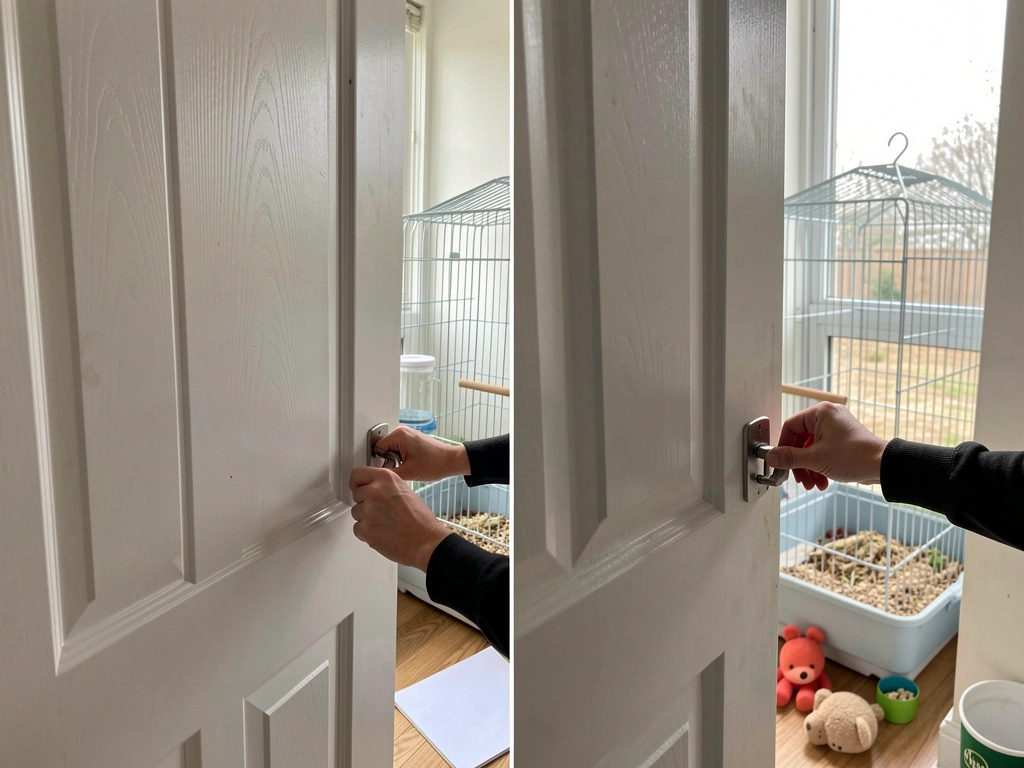
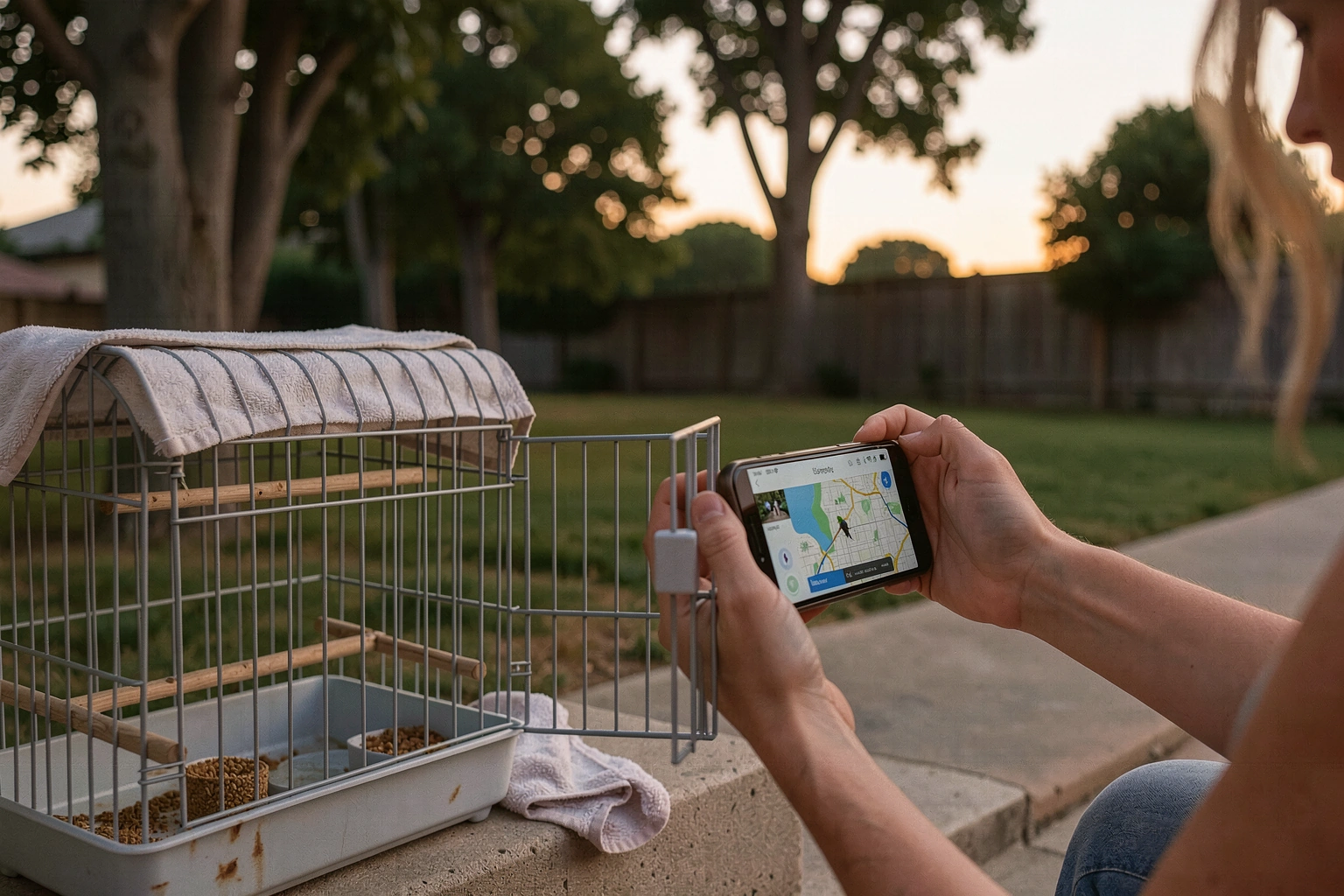
The moment you realize your bird is loose, your first job is to stop the situation from getting worse. Close every door, window, and vent in the house if the bird is still indoors. If it has already made it outside, note exactly where you last saw it and which direction it flew. That last-seen location is your anchor point for the entire search.
Call your bird's name loudly as it is flying or moving away. Some birds will respond to their name, a familiar whistle, or even a favorite phrase and circle back almost immediately. Do not chase it, run at it, or make sudden movements. Panic on your part becomes panic in the bird, and a panicked bird flies farther and higher.
If you have someone with you, one person should stay near the last-seen spot while the other gets the bird's cage, food, and a familiar toy ready to bring outside. Split the roles early so you are not wasting time doubling up on the same task.
- Close all interior doors and windows immediately (if the bird is still inside).
- Note the exact last-seen location and the direction the bird flew.
- Call the bird's name loudly and calmly as it moves.
- Do not chase or rush toward it.
- Send someone to prepare the cage, food, water, and a favorite treat or toy.
- Grab your phone so you can take photos and start spreading the word.
How to search smart: indoors vs. outdoors, day vs. night
Searching indoors
Lost birds inside a house often find the highest, warmest spot they can and stay there. Check the tops of cabinets, curtain rods, ceiling fans, and bookshelves first. Move slowly and keep your voice calm. Birds in an unfamiliar or frightening situation often go quiet, so listen for rustling, scratching, or the sound of small claws on a hard surface. Turn off background noise like the TV so you can hear better.
Be very careful around windows and mirrors. A bird that sees its reflection in glass or the outdoors reflected in a large window may fly directly into it. If you spot the bird near a window, move slowly and try to block the reflection before it has a chance to crash into it.
Searching outdoors
Start your outdoor search in a circle around the last-seen location. Most pet birds, especially clipped or inexperienced fliers, do not travel far in the first hour. Then focus on the exact outdoor search steps in our guide on how to catch a bird outside. If the bird is already outdoors and you need more targeted steps, see our guide on how to catch a wild bird for comparison how to catch a bird outside. For practical step-by-step tactics, use our guide on how to catch a bird in wcue. They land in trees, on rooftops, or on fences and sit still. Scan upward, not outward. Bring binoculars if you have them.
Talk to the bird continuously as you search. Play a recording of its own voice or familiar sounds from your phone. If you have another bird at home, bring it outside in a carrier so its calls can carry. Birds are strongly drawn to the sounds of their own species and their known companions.
Night searches are actually your best shot
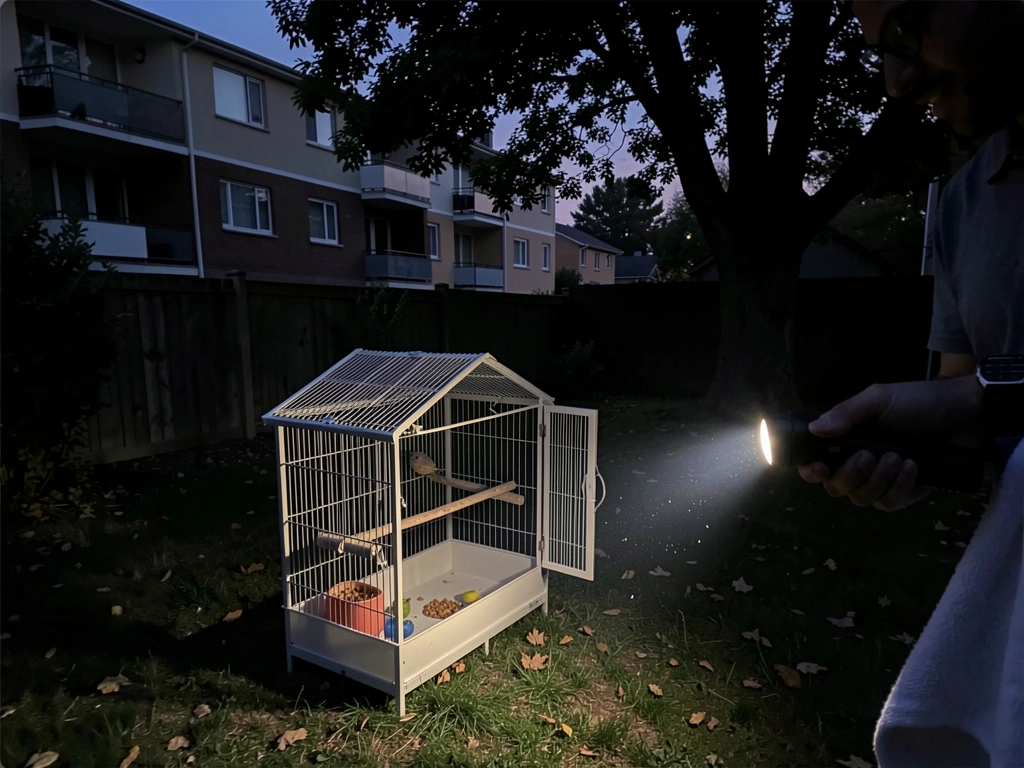
This is one of the most important things to know: nighttime is your best chance for a low-stress capture. Birds are calmer, less likely to fly, and easier to approach in the dark. If you have located your bird in a tree during the day but cannot get close enough, wait until it is fully dark and approach slowly with a flashlight. Keep the beam low and indirect. The bird will likely sit still and allow you to pick it up or place a towel gently over it. This is consistently the most effective and least traumatic approach for recapture.
Using familiar cues and lures to bring it back
Your bird already knows what it loves. Use that. The goal is to make the area around your home feel as safe and familiar as possible so the bird chooses to come back on its own, rather than you having to chase it down.
Sound
Call the bird by name, sing a song it knows, or whistle its favorite tune. If you have a recording of its voice on your phone (from a video, for example), play it on a small speaker near your set-up recovery spot. For paired or bonded birds, let the companion call from its carrier. These sounds are far more compelling to a bird than your voice alone.
Food and smell
Bring out the bird's absolute favorite treat, not just its regular food. For many parrots, this means sunflower seeds, a piece of fruit, or a specific nut. Place it in or near the open cage in a spot the bird can see from a tree or rooftop. Birds have a limited sense of smell compared to mammals, so scent-based luring is less effective, but familiar food in a visible dish is still a strong visual cue.
Familiar objects
Place the bird's favorite toy or perch outside near the cage. For budgies and parakeets, placing a mirror or a favorite bell toy at the entrance of the open cage can work well. The idea is to recreate enough of its normal environment outdoors that the bird sees and moves toward it.
Set up a recovery spot before you do anything else
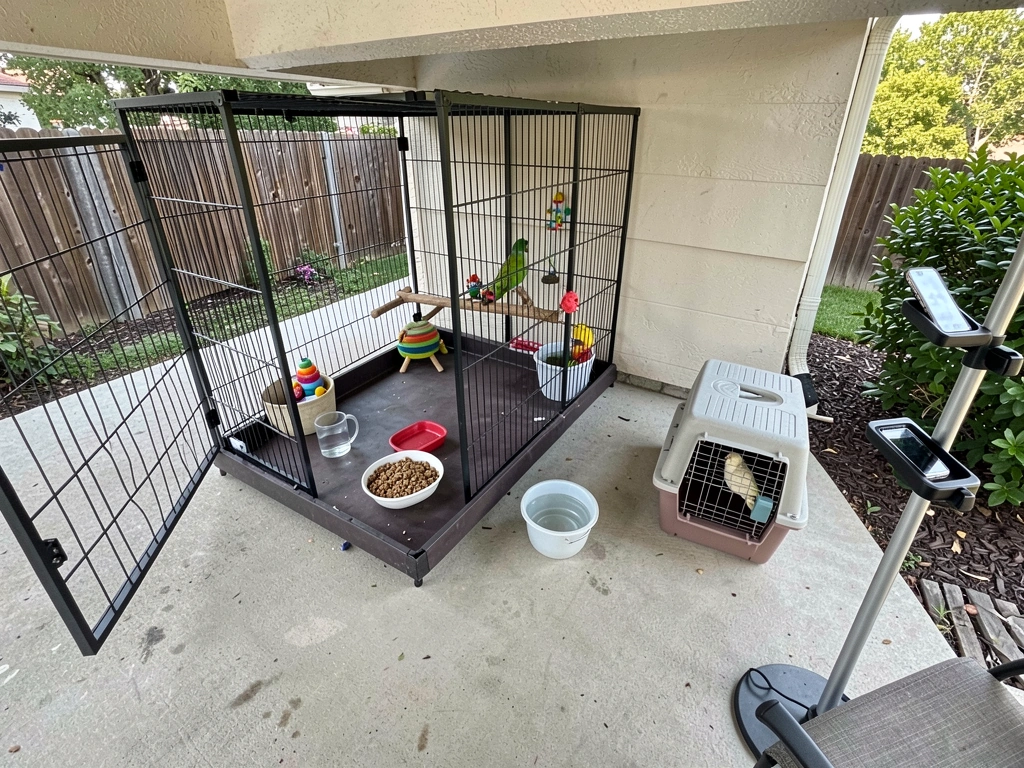
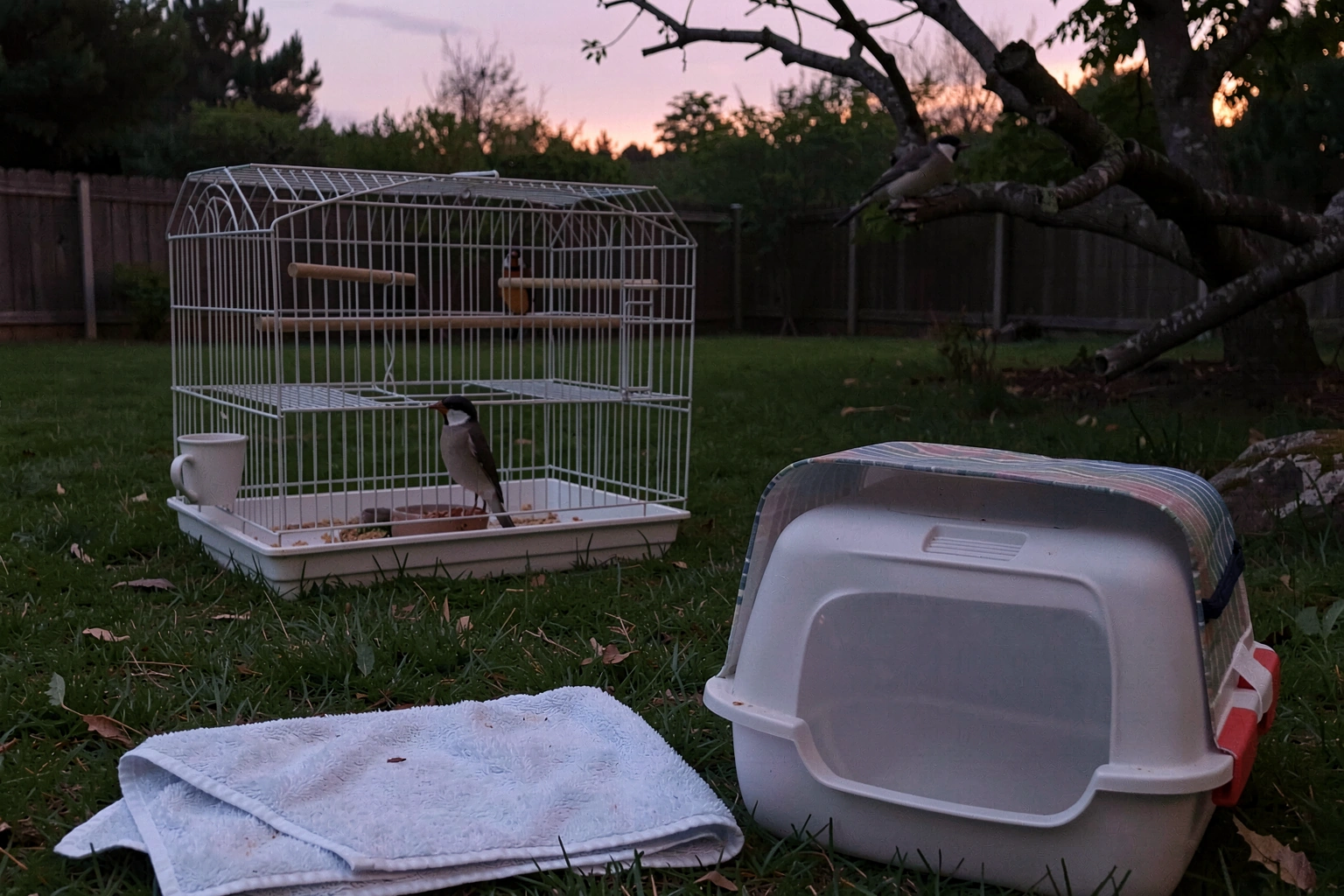
A home base recovery spot is one of the most effective tools you have. Place the bird's cage outside in a visible, sheltered location, ideally near the spot where it escaped or where it was last seen. Open the cage door. Put fresh food, water, and favorite treats inside. Add a familiar toy. The cage should be visible from above, so the bird can spot it from a tree or rooftop.
Keep the setup in place even when you are not actively watching it. Some birds come back hours later, or early the next morning when they are hungry. If you can position a chair nearby and check it every 15 to 30 minutes, do that. Try to keep the area calm and free of dogs, cats, or loud activity that would spook the bird on approach.
If you have a companion bird, placing it in a carrier next to the open cage adds another layer of attraction. The sounds of its cagemate calling are often more powerful than any lure you can set up.
At night, dim the outdoor lighting near the cage rather than flooding it with bright lights. A softly lit, calm spot feels safer to a bird than a spotlight situation. Once recovered, cover the cage partially with a towel to reduce stress and help the bird settle.
Tell people fast: who to contact and what to post
Getting the word out quickly dramatically increases your chances. Your first call should be to your local SPCA or Humane Society. Many people who find a lost bird bring it directly to the nearest shelter, and if your bird is not listed there, it may sit unclaimed for days. Call them, then follow up in person if possible.
After that, list your bird on lost-and-found bird databases. Sites like 911 Parrot Alert maintain searchable listings that both owners and finders use. Post your listing the same day the bird escapes. Local bird rescues (such as Mickaboo in Northern California, Florida Parrot Rescue, and others in your area) also maintain lost-and-found resources and can match finders with owners. Look for their specific lost-and-found contact paths rather than their general contact forms.
For social media, post to Nextdoor, Facebook community groups for your neighborhood, and any local birding or parrot owner groups you can find. Include a clear recent photo of the bird, its species and color, any distinctive markings, the neighborhood where it escaped, and your contact number. Ask people to share rather than approach the bird, since a crowd of people chasing the bird will push it farther away.
- Call your local SPCA or Humane Society first.
- List the bird on 911 Parrot Alert and other lost-and-found bird databases.
- Contact local bird rescues and shelters with a lost-and-found submission.
- Post on Nextdoor and neighborhood Facebook groups with a clear photo.
- Include species, color, markings, escape location, and your phone number.
- Walk the immediate neighborhood and hand flyers to anyone you see.
- Ask neighbors to check their yards, garages, and sheds.
When you find it: reuniting safely and handling injuries
Safe handling when you catch it
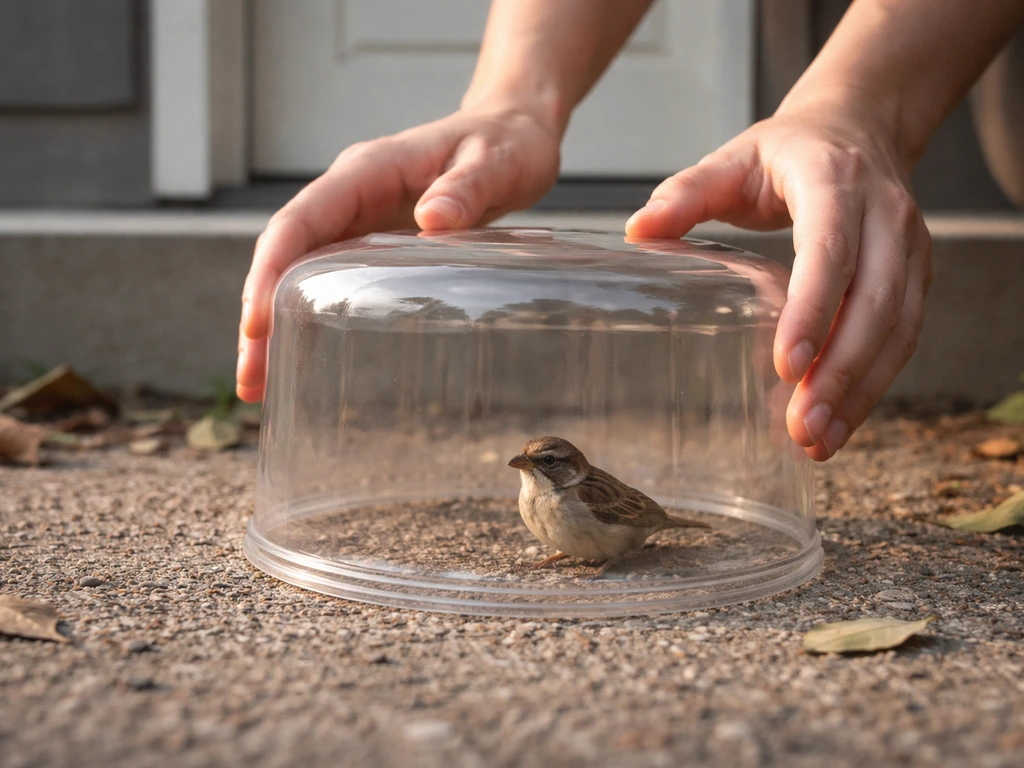
When you get close enough to pick up your bird, move slowly and keep your voice calm. If the bird will step up onto your finger or hand, great. If it is scared and will not cooperate, drape a light towel or thin cloth gently over it and scoop it up carefully. Support the body without squeezing. Get it into a secure carrier or back into its cage as quickly and smoothly as possible. Cover the carrier on all sides except one to reduce drafts and keep the bird calm.
Keep the bird warm during transport. If the weather is cold, place a heating pad on a low setting under one half of the carrier (not the whole bottom) so the bird can move away from the heat if needed. Wrap the carrier in a towel for extra insulation. Once home, give it quiet, warmth, food, and water, and resist the urge to handle it extensively right away. Let it decompress.
What to do if the bird is injured
If the bird flew into a window or a car, or landed hard, check it for visible injury before you try to move it. Speed matters here: the sooner a bird gets proper treatment, the better the chances of recovery. Get it to an avian vet or wildlife rehabilitator as quickly as possible. Do not try to force-feed it or give it water by syringe unless a vet has specifically instructed you to do so.
Contact an avian vet or emergency shelter immediately if you notice any of these signs:
- Open-mouth breathing or tail bobbing with each breath.
- Bleeding from a blood feather, nail, or beak that will not stop.
- Head trauma or inability to hold the head upright.
- Inability to perch or stand.
- Unresponsiveness or extreme lethargy.
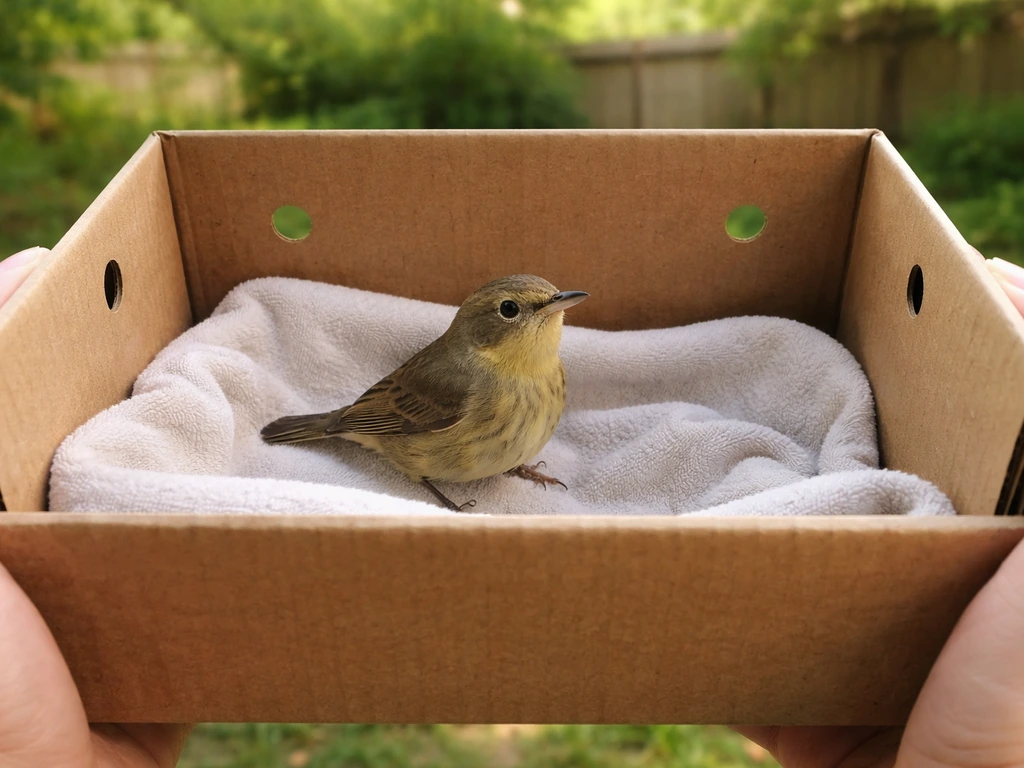
While you are getting help, keep the bird warm, dark, and quiet. Place it in a box or carrier with air holes, cover it with a light towel, and minimize handling. Note the exact location where the bird was found so you can tell the vet or rehabilitator. Partially covering the carrier with a blanket reduces stress and helps the bird stay calm during transport.
Preventing the next escape
Once your bird is safely home, take a few minutes to think through how it got out. Most escapes happen through doors and windows that were open while the bird was out of its cage. Set a household rule: before the cage is opened, every exterior door and window in the room must be closed. This is especially critical for balconies, which are easy to forget.
Consider whether wing clipping makes sense for your bird. A clipped bird can still flutter and land, but cannot gain altitude and fly long distances, which dramatically reduces the escape risk. Talk to your avian vet about whether it is appropriate for your bird's breed and lifestyle.
It is also worth keeping a current clear photo of your bird on your phone at all times, along with a note of any ID bands or unique markings. If escape happens again, you will be ready to post immediately rather than scrambling to find a usable image.
Quick reference: day-by-day action plan
| Timeframe | Priority actions |
|---|---|
| First 10 minutes | Close all openings, note last-seen location, call the bird by name, prepare cage and food |
| First hour | Set up outdoor recovery spot with open cage, food, water, and companion bird if available |
| First 2 to 3 hours | Search nearby trees and rooftops, play recordings of the bird's voice, walk the neighborhood |
| Same day | Call SPCA and local shelters, post on lost-and-found databases and social media, distribute flyers |
| That night | Attempt nighttime approach if location is known (calmer, best capture conditions) |
| Following days | Keep recovery spot active, refresh food and water daily, check shelter listings, keep posting |
FAQ
How long should I search before I assume the bird is gone for good?
Search as long as it stays light, then continue at dusk and into the fully dark hours, since nighttime approaches are often the easiest. Also keep the home-base cage outside overnight and check every 15 to 30 minutes, because some birds return hours later or early the next morning when they are hungry and calmer.
What if my bird is silent and I cannot hear any rustling or scratching inside the house?
Start with the warm, high spots first (cabinet tops, curtain rods, near ceiling fans), then switch to slow, quiet listening while you turn off background noise. If you cannot locate it quickly, wait 10 to 15 minutes without moving, because some birds become more active when they hear calm, familiar voices or settle after the initial scare.
Should I set up the cage indoors instead of outdoors if I’m worried about weather or predators?
You can keep the cage indoors if it allows the bird to see it from its current location, but outdoors often helps because a bird that escaped is more likely to return to a familiar home base visible from trees or rooftops. If you do place it outside, choose a sheltered spot and keep dogs and cats away, and consider covering part of the cage at night to reduce stress.
Can I use a net to catch my lost bird if it won’t step up?
It is usually safer to avoid sudden, unfamiliar capture tools. A better approach is a towel drape and a careful scoop if the bird is close enough, or a wait-until-dark approach to reduce panic. Nets can spook birds into flying farther and higher, and they can also cause injury if the bird thrashes.
My bird got out but it’s a flightless or heavily clipped bird. Does that change my search method?
Yes. A clipped or inexperienced flier often does not travel far in the first hour, so focus on scanning upward, not outward, around the last-seen location. Expect the bird to land and sit still on rooftops, fences, or tree branches, and be patient while listening for small claw sounds.
What if I find the bird but it won’t let me approach even slowly?
Keep your voice calm and continuous, and stop closing distance. Use the setup already created, like the open cage and favorite sounds, and wait for the bird to settle. At night, use a low, indirect flashlight beam and try to place a towel gently over it only when you are close enough to prevent it from bolting away.
How should I handle the carrier or towel when capturing to avoid hurting the bird?
Support the body without squeezing. If using a towel, use a light, thin cloth so the bird is guided and contained without excessive pressure, and cover the carrier on all sides except one to reduce drafts while transporting. Move smoothly and keep the capture time as short as possible.
What should I do immediately if my bird is found injured after a window strike or fall?
Check for visible injuries and get to an avian vet or a wildlife rehabilitator right away, speed matters for outcomes. Do not force-feed or syringe water unless a professional has instructed you, and keep the bird warm, dark, and quiet in a ventilated container while you arrange treatment.
Which injuries or symptoms mean I should contact help urgently?
Treat any breathing difficulty, bleeding, seizures, severe lethargy, inability to perch or stand, or repeated uncontrolled head bobbing as urgent. The moment you notice these signs, contact an avian vet or emergency shelter and minimize handling during transport.
How can I prevent losing my bird again after this experience?
Create a simple door and window rule, before the cage is opened, every exterior door and window in the room must be closed, especially balconies. Also keep a current clear photo on your phone and a quick note of distinctive markings, so you can post immediately if an escape happens again.
Should I post online immediately even if I’m still searching nearby?
Yes. Post the same day with a clear recent photo, species and colors, distinctive markings, the neighborhood where it escaped, and your phone number. Ask people to share rather than approach, so a crowd does not chase the bird farther away while you focus on the last-seen area and home base.