
The safest, most humane way to catch a bird depends almost entirely on one thing: which bird you are dealing with and why. A tame budgie that flew out the window needs a completely different approach than an injured house sparrow on your patio or a cockatiel that has never been handled. Get that identification and context right first, and the rest of the process gets a lot easier.
How to Catch a Bird Safely: Beginner Steps by Species
Clara Hayes
11 Apr 2026
Humane and legal first steps (and when NOT to catch)
Before you reach for a towel or a net, take thirty seconds to assess the situation. Not every bird you see on the ground needs your help. The U.S. Migratory Bird Treaty Act (MBTA) makes it unlawful to take, possess, or transport migratory birds without a permit, and that covers the vast majority of wild bird species you will encounter in your yard: songbirds, raptors, waterfowl, and more. The Animal Legal & Historical Center reproduces the MBTA's broad prohibition language in plain terms, including the ban on taking, possessing, or transporting migratory birds without a permit the MBTA makes it unlawful to take, possess, or transport migratory birds without a permit. State laws add another layer. Washington State, for example, makes it illegal to possess any wild bird without a valid permit, and California advises against capture or handling without guidance from a trained professional. Breaking these laws can result in real fines, even when your intentions are good.
That said, the law recognizes short-term emergency aid. If a bird is clearly injured (visible bleeding, a broken or drooping wing, unable to stand), you can place it in a box and transport it to a licensed wildlife rehabilitator. Under federal MBTA regulations, a person who finds a sick, injured, or orphaned migratory bird may take possession without a permit only for immediate transport to a permitted rehabilitator or licensed veterinarian blank" rel="noopener noreferrer">licensed wildlife rehabilitator. For full guidance on the process of how to catch a bird in Wcue, review the capture methods matched to the bird’s situation and stress level If a bird is clearly injured. The key word is transport, not keep. Contact a rehabilitator or your state wildlife agency as soon as possible, and follow their instructions. Rehabilitators are often volunteers, so if you reach voicemail, leave a detailed message and check the recorded instructions for next steps while you wait.
Do NOT try to catch a wild bird in these situations: the bird is a fledgling hopping on the ground (this is completely normal behavior; fledglings leave the nest before they can fully fly, and their parents are almost certainly nearby feeding them), the bird looks healthy but is simply resting, or you are hoping to keep a wild bird as a pet. On that last point, if you are curious about whether you can catch a wild bird and keep it, the short answer in most jurisdictions is: no, not legally, and not humanely.
- Keep pets and children away from a bird on the ground while you assess it.
- Do not offer food or water to a wild bird you have not yet identified as needing help.
- Do not handle a potentially sick bird with bare hands (use gloves or a towel).
- If the bird looks healthy, monitor from a distance for 30 to 60 minutes before intervening.
- For injured or confirmed-orphaned birds, contact your state wildlife agency or a licensed rehabilitator before doing anything else.
Identify the bird and set the right goal
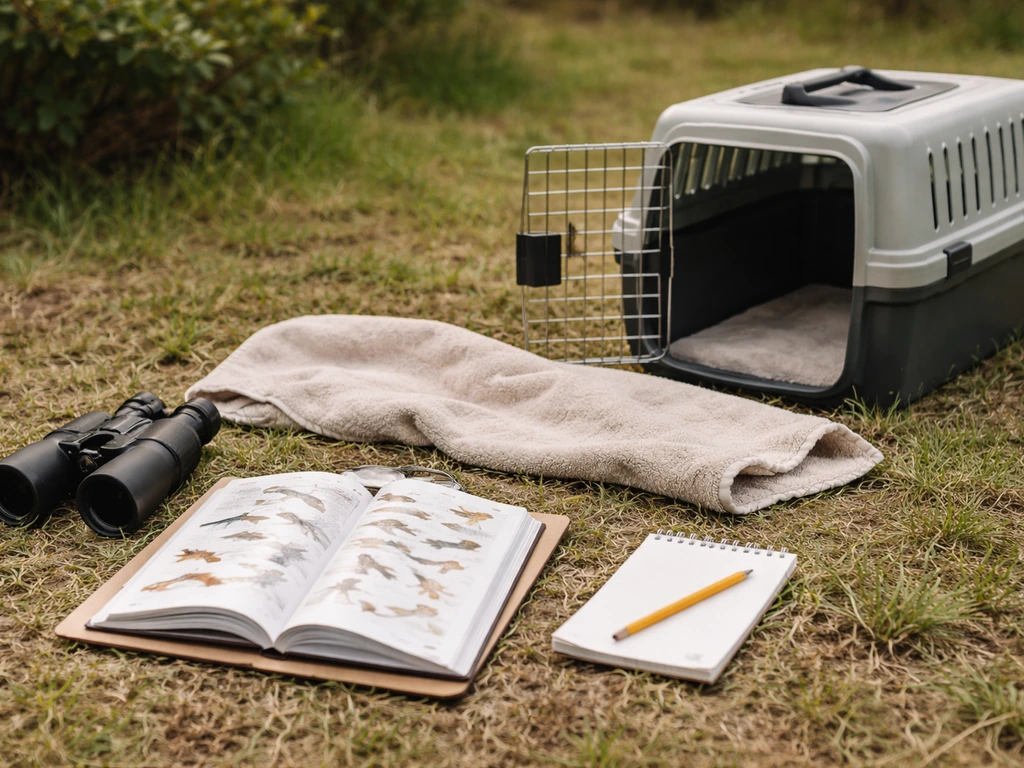
Identification changes everything. A bird that looks like a random small brown bird could be an escaped pet finch, a native sparrow, or a migratory warbler. Getting it right takes about two minutes and saves you a lot of trouble. Start with the basics: size and shape, bill structure (thick seed-cracker vs. thin insect-prober), and any obvious markings on the head or body. Audubon's birding guidance points to bill shape as one of the fastest ways to narrow identification. For audio help, the Cornell Lab of Ornithology's Merlin Bird ID app can listen to a bird's call and give you a likely species ID within seconds. It is free and genuinely reliable.
Once you have a rough ID, set your goal clearly before doing anything physical. The goal determines the entire method:
- Escaped pet bird (parrot, cockatiel, budgie, finch): Goal is recovery and return to safe housing. Use training-based luring first.
- Injured wild bird: Goal is stabilization and handoff to a licensed rehabilitator. Minimize handling and stress.
- Healthy wild bird in distress (trapped inside a building, caught by a cat): Goal is safe containment and quick release outdoors.
- Wild bird you want to attract to your yard: Goal is habitat improvement and patience, not capture.
- Baby bird on the ground: Reassess whether it actually needs help before touching it at all.
Best low-stress capture methods for different situations
There is no single best method. The right technique depends on whether the bird is tame, semi-tame, or completely wild, and whether you are indoors or outside. Here is how to think through the options.
Hand luring (tame or semi-tame pet birds)
If the bird knows you and has been handled before, your hand is the best tool you have. Hold a treat (a favorite seed, a small piece of fruit) at the bird's chest height and wait. Do not chase. Chasing a bird that can fly is always slower than letting the bird come to you. Once the bird steps up onto your finger, keep your movements smooth and slow. The Petco bird training approach reinforces this: use a quiet room, hold your finger or a target stick at the right height, and reward every approach, even a small one. This is the same step-up training you would use inside the house, just applied in a recovery context.
Towel method (less tame or stressed birds)
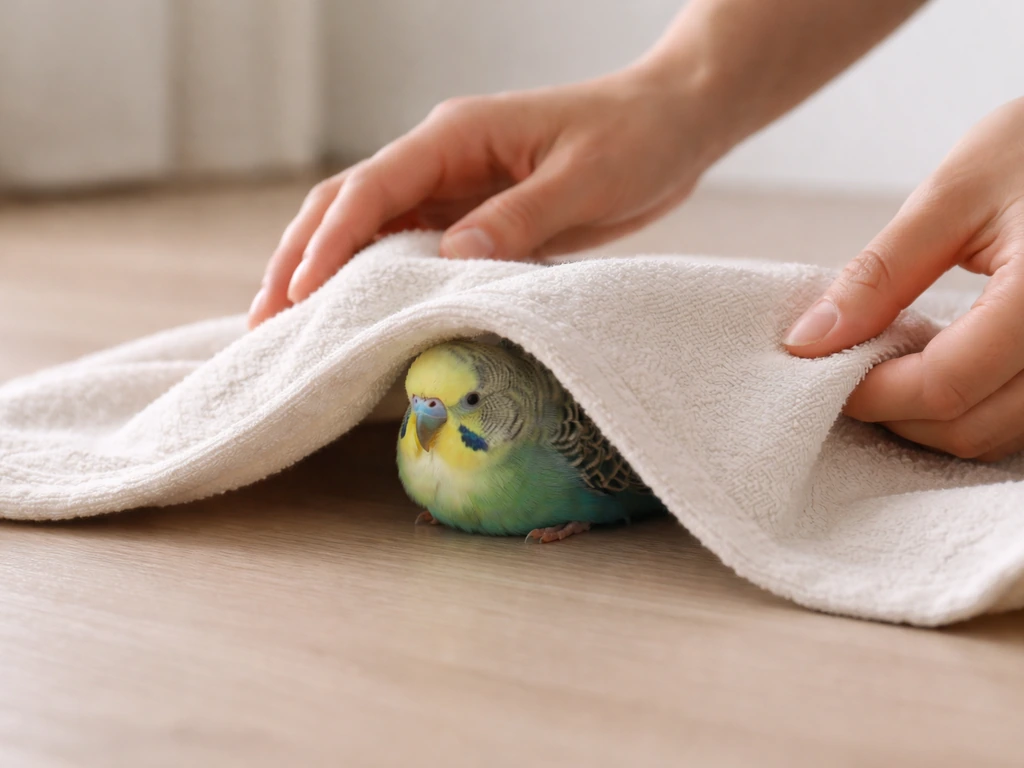
For a bird that will not step up willingly, a soft towel is your next best option. Approach slowly and calmly, keeping your movements low to the ground. Drape the towel over the bird in one steady, confident motion rather than hesitating and pulling back. Hesitation makes the bird bolt. Once the bird is covered, cup your hands around it through the towel. You want gentle but firm pressure, not a squeeze. The darkness under the towel actually calms most birds almost immediately.
Room confinement (bird loose indoors)
If a bird has gotten loose inside your home, your first move is to close off the room it is in and darken the space by drawing blinds or turning off lights. Birds orient toward light, so if you open one window (with the screen removed) in an otherwise dark room, many birds will fly straight toward it and out. Cover mirrors and reflective surfaces with a towel, since birds will hit them repeatedly if they can see their reflection. For how to catch a loose bird inside your home, the combination of darkening plus one open exit is the fastest approach for healthy wild birds.
Humane traps and box traps (outdoors, escaped pets)
For an escaped pet bird that is outside and not responding to hand luring, a cage or carrier placed near where the bird is perching, loaded with familiar food and ideally with a companion bird inside (or playing a recording of a companion bird), can work very well. Leave it and watch from a distance. Avoid the temptation to rush in the moment the bird enters. Wait until it is feeding calmly, then approach slowly to close the door. For a full breakdown of outdoor recovery techniques, the guide on how to catch a bird outside goes into more detail on trap placement and timing.
Easiest approaches for beginners (what to do today)
If you are dealing with this right now and you want the simplest path forward, here it is based on your situation:
- Escaped pet bird indoors: Close off the room, dim the lights, and try hand-luring with its favorite treat. If that fails, use a towel in a calm, single motion.
- Escaped pet bird outdoors: Place its cage outside with food and water near where you last saw it. Stay close but out of sight. Do not chase it.
- Injured wild bird: Put on gloves or use a towel, place the bird in a ventilated cardboard box lined with a soft cloth, and keep it in a warm, dark, quiet room while you contact a wildlife rehabilitator.
- Healthy wild bird trapped inside: Darken the room, open one window, and let it find its own way out. Assist only if it has been trapped more than 20 to 30 minutes.
- Fledgling on the ground: Do not catch it. Keep pets away and watch from a distance. Its parents are almost certainly still feeding it.
If you are dealing with a very small bird specifically, the guide to catching a small bird covers additional techniques for tinier, quicker species where standard hand-luring needs some adjustment.
Species-specific guidance
Every species has a different temperament, flight style, and stress response. Using the wrong approach for the bird in front of you will make everything harder.
Parrots
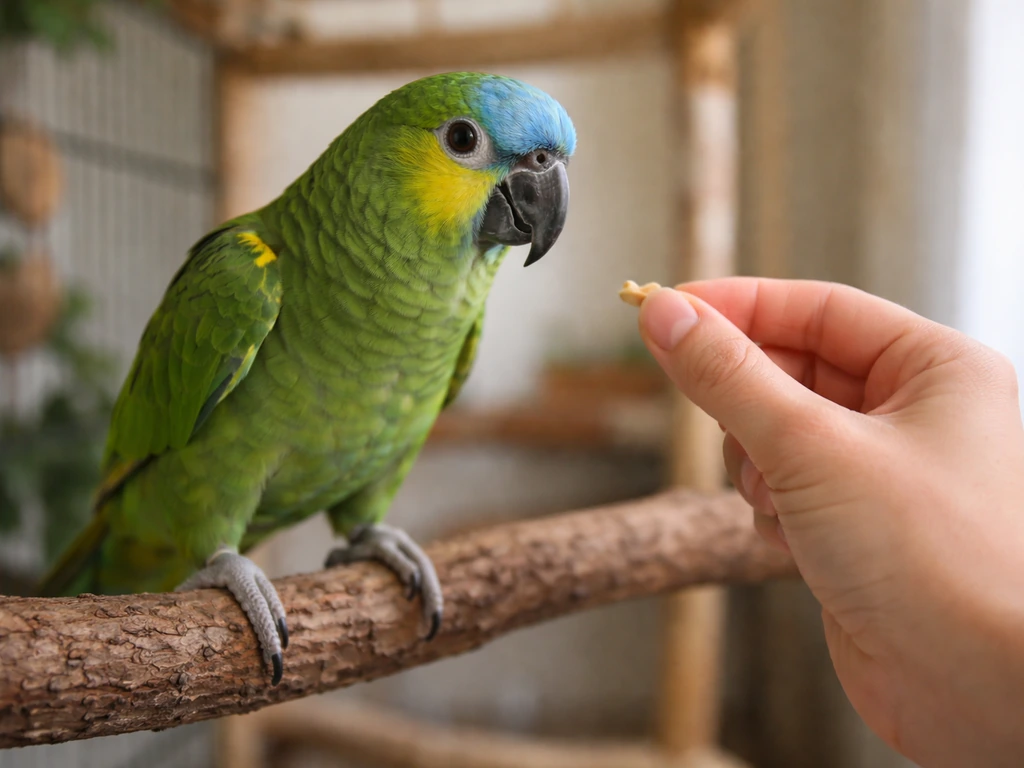
Parrots (including conures, amazons, African greys, and cockatoos) are smart enough to recognize your intentions, which cuts both ways. A tame parrot that trusts you will step up reliably even when stressed, especially if you use a calm voice and offer a preferred food. An untrusted or semi-wild parrot will evade you with impressive intelligence. For escaped parrots outdoors, their flock instinct is your best ally: place a familiar bird (or a recording) near the cage trap. Parrots are also vocal, so calling back in their direction and listening for their response helps you track location. Avoid net guns or large nets for parrots, since feather damage and wing injury are real risks.
Cockatiels
Cockatiels are generally easier to recover than larger parrots because they tire more quickly and are less likely to fly long distances when disoriented outdoors. A tame cockatiel that hears your voice or a familiar whistle will often call back and eventually land near you. Use a towel or your hand depending on how well the bird knows you. If the bird is on a high perch outdoors, wait it out until dusk when cockatiels naturally want to roost, then approach slowly with the cage open.
Budgies
Budgies are fast and small, which makes chasing them almost pointless. Indoors, the darkened-room approach works very well because budgies will gravitate toward the single light source (your open window). For an escaped budgie outdoors, a cage with familiar cage-mates is highly effective since budgies are strongly flock-oriented. Millet spray is almost universally irresistible as a lure. If the budgie is new to you or untamed, expect to use a soft net rather than your hand.
Finches
Finches (zebra finches, Gouldian finches, society finches) are rarely hand-tame in the way parrots are. They respond much better to flock cues and food than to human contact. A soft mist net or a cage trap baited with their seed mix and placed in a familiar location works better than any hand technique for most finches. Once caught, finches stress very quickly, so time in the hand should be absolute minimum: transfer to a secure container as fast as you can. Keep your grip relaxed but firm around the body, wings held against the sides.
Common backyard wild birds
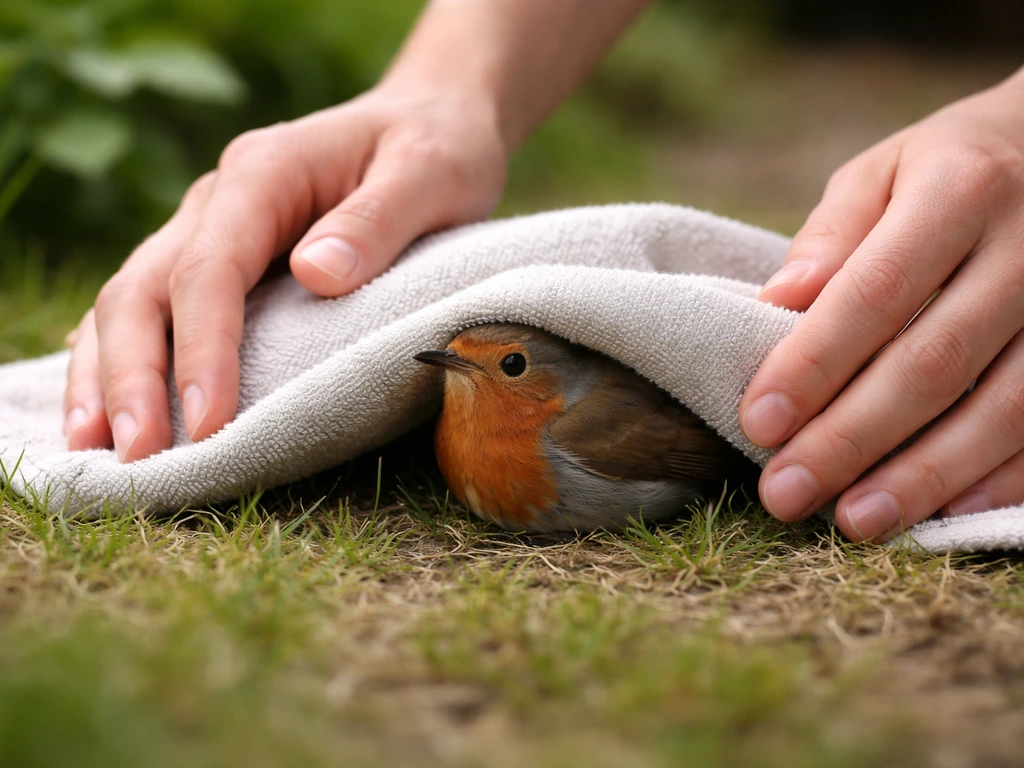
For injured or trapped sparrows, robins, starlings, jays, and similar backyard species, the towel approach is standard. Approach low and slow, cover the bird cleanly, and cup it without squeezing. If the bird is trapped inside a garage or shed, open all exits and let natural light guide it out. Do not attempt to catch healthy wild birds to keep as pets: beyond the legal issues under the MBTA, virtually no common backyard wild bird is suitable for captivity. If you genuinely want to bring wild birds closer to you in your yard, the right approach is habitat, feeders, and patience. Separately, if you want to understand the legal and practical reality of catching a wild bird to keep as a pet, that is a topic worth reading carefully before acting.
Safety and handling after you catch the bird
The moment you have the bird in hand, the priority shifts to reducing stress as fast as possible. Birds have high metabolic rates and can go into shock from prolonged handling or extreme fear. Here is what to do immediately after capture.
Secure containment
Transfer the bird into a clean, ventilated container right away. For small to medium birds, a cardboard box with air holes punched in the sides works fine for short-term transport. Line the bottom with a soft cloth or paper towel so the bird has grip and some cushioning. Do not use a wire cage for injured wild birds as they will injure themselves trying to escape. Close the lid securely. The American Bird Conservancy recommends keeping an injured bird in a dark, quiet place for about an hour while you arrange professional help, and that darkness genuinely does reduce panic.
Warmth, quiet, and minimal handling
Place the container in a warm, dark, quiet room. Away from TVs, children, other pets, and foot traffic. Do not keep opening the box to check on the bird. Every time you open it, you reset the stress clock. If the bird is cold (common with injured birds in cool weather), place the container half on a heating pad set to low, or place a small hot water bottle wrapped in a cloth next to (not under) the bird. The goal is ambient warmth, not direct heat.
Handling position
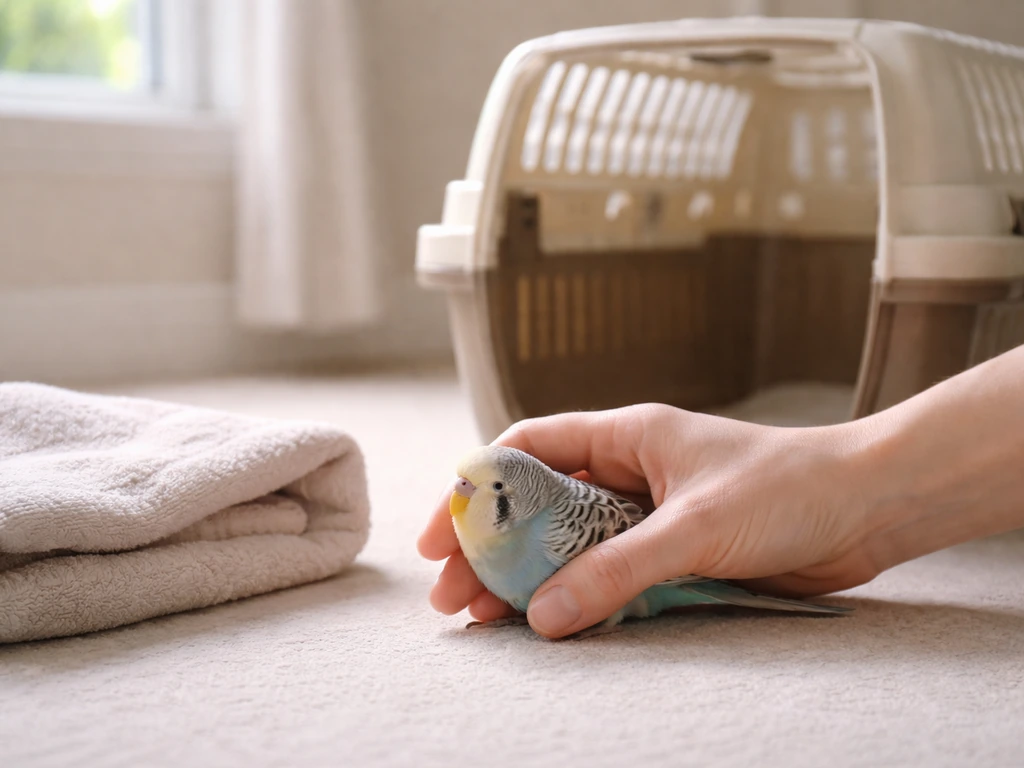
When you need to hold the bird, grip it around the body with the wings folded naturally against its sides. Your fingers should prevent wing flapping without compressing the chest. Birds breathe by expanding their chest, so pressure on the sternum is dangerous. For larger birds like parrots, one hand around the body and one supporting the feet is more comfortable for the bird and safer for you (beaks can do real damage). For tiny birds like finches, use two fingers gently wrapped around the body, keeping the session as short as possible.
Transport
Keep the container level during transport. Cover it with a light cloth to reduce light and visual stimulation. Avoid music or talking loudly in the car. If you are transporting a pet bird to a vet, a proper travel carrier is better than a box, but the principles are the same: dark, quiet, warm, and still.
Why the bird won't come close (and how to fix it)
This is the question most people have after their first failed attempt. The bird is right there, and then it is not. Here are the most common reasons and what to change.
| Problem | Likely cause | Fix |
|---|---|---|
| Bird flies away the moment you approach | You are moving too fast or making eye contact | Slow down, crouch lower, avoid direct eye contact, approach at an angle |
| Bird ignores the food lure | Wrong food, or bird is too stressed to eat | Try the bird's absolute favorite food; if it is too stressed, back off and give it 20 minutes |
| Bird keeps landing in the same high spot and won't come down | It feels safer at height | Wait until near dusk when roosting instinct overrides fear, then try again |
| Escaped pet won't respond to your voice | Disorientation, other sounds, or distance | Play a recording of its own calls or companion bird calls; recruit neighbors to help with sightings |
| Wild bird keeps escaping the room despite open exit | Too much competing light or visual confusion | Darken all other windows and light sources completely; leave only one exit point lit |
| Bird enters the cage trap but leaves before you can close it | You are approaching too quickly | Use a remote-trigger trap or a long string attached to the door; watch from inside the house |
One thing that consistently catches people off guard: noise. Even quiet talking, a TV in the next room, or a dog pacing nearby is enough to keep a stressed bird on high alert. Silence is underrated as a capture tool. If you have been trying for a while without success, step back entirely, remove all human presence, and let the bird settle for 30 minutes before your next attempt. The guide on catching a wild bird goes deeper into reading bird body language to know when to approach and when to wait.
After the catch: release, taming, and realistic timelines
Releasing a wild bird
If you caught a healthy wild bird that was trapped or temporarily disoriented, release it as close to where you found it as possible, at a time of day when it can find food and shelter (morning is ideal, not right before dark). Open the box or carrier and step back. Do not try to coax it out or handle it again. A bird that has been contained for under two hours in a quiet box is typically fine to release immediately. If a bird was injured and has been treated by a rehabilitator, follow their specific release instructions, since some species need a period of acclimation before full release.
Recovering a lost pet bird
Once you have your escaped pet back inside safe housing, resist the urge to immediately start handling it extensively. The bird has been through a stressful experience. Let it eat, drink, and settle for several hours before resuming normal interaction. Check for any injuries (cuts from bushes or fences, possible cat scratches, respiratory symptoms from cold exposure), and see a vet if anything looks off. For ongoing peace of mind, this article on recovering a lost bird covers how to set up better safeguards so it does not happen again.
Building trust with an untamed bird
If you have caught a bird that was not previously tame (whether a rescued pet with an unknown history or a bird you are legally permitted to work with), building trust takes more time than most people expect. Here are realistic timelines:
| Species | Time to basic trust (step-up or approach) | Time to reliably calm handling |
|---|---|---|
| Young budgie (under 8 weeks) | 3 to 7 days with daily sessions | 2 to 4 weeks |
| Adult budgie (untamed) | 2 to 6 weeks | 2 to 4 months |
| Cockatiel (young, hand-reared) | 1 to 5 days | 2 to 3 weeks |
| Cockatiel (adult, untamed) | 4 to 8 weeks | 3 to 6 months |
| Parrot (previously socialized) | 1 to 3 weeks | 1 to 3 months |
| Parrot (fear-based or neglect history) | 3 to 12 months | 1 to 2 years or more |
| Finch (any age) | Months to over a year (some never fully tame) | Rarely achievable; focus on low-stress coexistence |
The core principle for all of these is the same: short, positive sessions, never forcing contact, always letting the bird set the pace. End every session on a success, even a tiny one. A bird that steps one foot closer to your hand is progress. Reward it and stop there for the day. Consistency over weeks matters far more than any single long session.
If you are working with a bird you found outside rather than an escaped pet, make sure you have confirmed the legal situation for your species and location first. The guide on catching a bird outside also covers some of the permit and rehab referral steps for situations where you need to involve authorities before proceeding with any long-term care.
One more thing worth knowing: some birds, especially wild-caught adults of non-domesticated species, will never become tame in any practical sense, no matter how patient you are. That is not a failure on your part. It is just biology. For those birds, the kindest outcome is either professional rehabilitation and release, or in rare permitted cases, a very low-stress environment that minimizes human contact rather than forces it. If you stumbled onto this topic while thinking about keeping a wild bird, reading up carefully on the realities of catching a wild bird for a pet will give you a much clearer picture of what you are actually taking on.
FAQ
If the bird looks okay, how do I know it still might need help before I try to catch it?
Look for subtle injury signs like a leg held up, noticeable limping, inability to perch steadily, constant open-mouth breathing, or fluffed feathers that do not settle. If it is on the ground but alert and hopping normally, it may be a fledgling, so your best move is to observe from a distance and avoid chasing until you confirm a parent is not able to reach it.
What should I do if I accidentally miss or drop the bird during a capture attempt?
Stop immediately and do not try to “reset” the capture right away. Put your hands away, lower your body and stay still for a few minutes so the bird can calm. If the bird was wild and you can’t be sure it is uninjured, place it in a ventilated box and contact a rehabilitator for guidance rather than attempting another catch while it is stressed.
Is it safe to use a towel to catch a bird if it is thrashing or actively biting?
Use the towel only if you can cover in one smooth motion. If the bird is actively panicking, keep your movements slow, cup support around the body through the towel, and avoid squeezing the chest. If you cannot secure it without repeatedly getting pecked or injured, step back and wait, or call for help from a licensed rehab contact.
Can I transport a bird to a wildlife rehabilitator in a pet carrier or should I use a box?
For injured wild birds, a clean, ventilated box is often safer than a wire cage because wire can lead to new injuries during escape attempts. If you already have a vet-style travel carrier, ensure it is calm, covered to reduce stimulation, and not overcrowded, but if the bird is injured and wriggles, switch to a simpler box with air holes if possible.
How long can I keep a captured bird before releasing it or dropping it off?
For a temporarily disoriented healthy bird, the article’s approach is typically short containment, often under a couple of hours, then release near where found. For any injured bird, do not hold it for long. Arrange transfer to a rehabilitator promptly because prolonged stress and cooling can worsen outcomes.
What if the bird is in a hard-to-reach place, like a ceiling, chimney, or tall tree?
Avoid climbing or using tools that could injure the bird or damage the space. Darken the area if it is inside, and create a safe exit path with one open window when appropriate. For tall or enclosed spots, call your local wildlife agency or a rehabilitator for strategy, since improvised retrieval often increases risk to both people and the bird.
Should I offer food or water before I try to catch the bird?
For wild birds, you should not start feeding with the primary goal of capture, since that can attract more stress and animals. In the capture sequence for escaped pets outdoors, using familiar food in a nearby cage trap is effective. For an injured bird in a container, do not force feeding or watering, focus on warmth, darkness, and getting professional help.
How do I prevent my cat or dog from getting to the bird during setup?
Before you attempt capture or place a trap, secure pets in another room or outside the area. Even brief stalking or barking can keep the bird panicked and can also cause additional injuries. Keep yourself and pets out of sight during the darkening step, and only approach when you are ready to complete the method.
What if the bird is a common backyard species but I think it is a fledgling, should I still catch it?
If it is hopping and appears healthy, that is often normal fledgling behavior. Catching fledglings is usually the wrong intervention because the parents are typically nearby feeding them. If the bird is cold, bleeding, or obviously unable to move normally, that is when emergency guidance and transport to a rehabilitator become appropriate.
How can I tell whether I’m dealing with an escaped pet bird versus a wild bird?
Check for signs like leg bands, unusual plumage patterning, or behavior that seems “tame” such as approaching humans consistently or perching close without fear. Also note the setting, for example, a pet bird’s call or repeated response to you can be a clue. If you cannot confidently identify it, treat it as wild for safety and legal caution until a rehabilitator confirms.
What should I do after I capture a parrot that is screaming or struggling?
Keep handling time short and reduce stimulation immediately by covering the container lightly and placing it in a warm, quiet area. Use calm voice only if it helps, avoid games of chasing, and secure the body so wings can remain folded naturally without compressing the chest. If the bird is injured or overheating, do not delay contacting a rehabilitator or an avian-experienced vet.