If a bird just got loose, here is what matters most right now: slow down, reduce noise, and resist the urge to chase. Chasing a panicked bird almost always makes things worse. Whether it is your pet cockatiel who slipped out the front door or a stunned wild bird you found on the lawn, the core approach is the same: triage quickly, control the environment, and lure the bird to you rather than running it down. This guide walks you through every step in order.
How to Catch a Loose Bird Safely Fast, Humane Steps
Clara Hayes
18 Apr 2026
First: figure out what you are dealing with
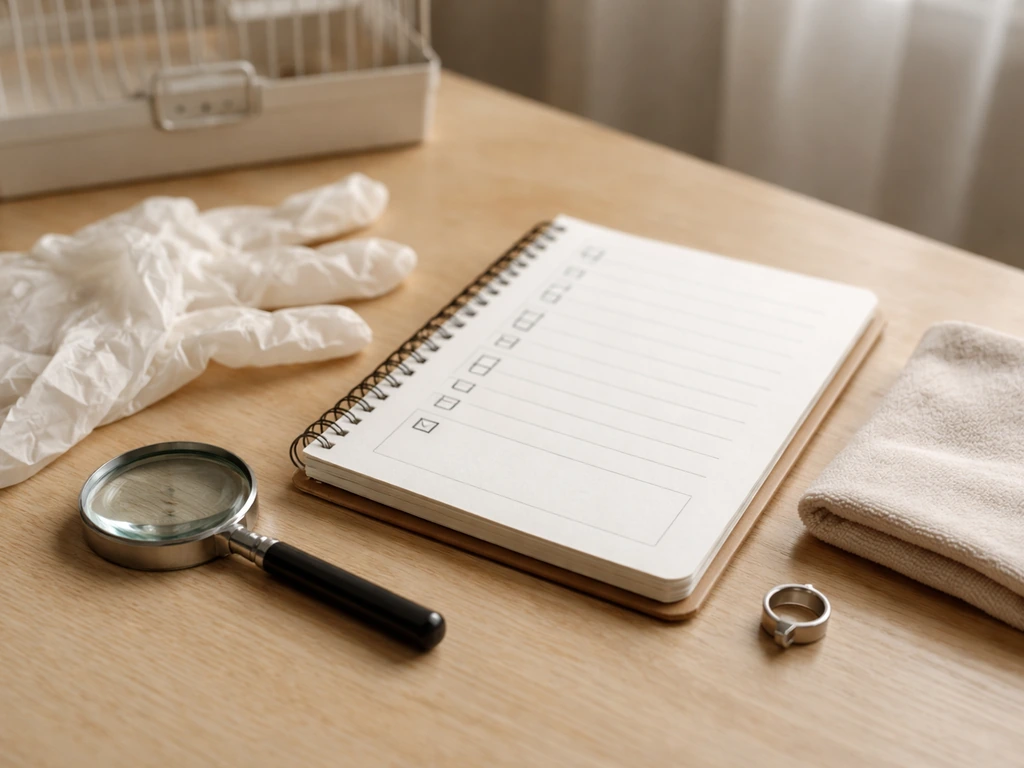
Before you do anything else, take about 30 seconds to assess the situation. Your answers to three questions will shape every decision that follows.
- Is this a pet bird or a wild bird? Pet birds (parrots, cockatiels, budgies, finches, canaries) are often banded, may have clipped wings, may call back to you, or will show curiosity rather than pure flight instinct. Wild birds will almost never voluntarily approach a person.
- Is the bird injured? Look for drooping wings, inability to bear weight on both legs, bleeding, labored breathing, or extreme lethargy. An injured bird changes your plan significantly.
- Is the bird in immediate danger? Inside a house, in a garage, near a road, or visible to outdoor cats are all urgent situations. A bird perched high in a yard tree on a calm day gives you more time to work carefully.
If the bird appears injured and is wild, your first call should be to a licensed wildlife rehabilitator rather than a vet clinic not trained in avian care. The Wisconsin DNR and similar state agencies maintain wildlife rehabilitation directories that can connect you with the right local expert within minutes. If you genuinely cannot tell whether a bird needs rescue, organizations like AWARE Wildlife Center advise leaving certain birds alone entirely: a bird that is mobile, alert, and whose wing does not drag the ground may simply be resting and does not need human intervention. When in doubt, watch quietly for five to ten minutes before approaching.
For a pet bird that escaped outside, time matters more because domestic birds have no survival skills and can disappear quickly once they get oriented to wind currents. The ASPCA recommends contacting your local animal shelter right away, both to report the bird and to get local guidance on safe retrieval. Do not skip this step even if you can still see the bird, because shelters sometimes have nets or humane traps you can borrow.
Stop the bird from going further before you do anything else
If the escape just happened and the bird is still inside your home, your single most valuable action is to close every door, window, and exit you can reach quietly. Move slowly, speak softly, and avoid sudden arm movements. Turn off ceiling fans immediately as these are a leading cause of pet bird injuries. Dim the lights in one room if possible, because birds naturally move toward light, and you can use this to steer a panicked bird away from danger zones like kitchens with open pots or rooms with large reflective windows.
If the bird is outside, the strategy shifts. You cannot close the exits, so instead you control the flight path by limiting distractions and keeping bystanders (including well-meaning helpers) back. One calm, familiar person should take point. Recruit others only to quietly block obvious escape routes like open gates. If children or unfamiliar adults run toward the bird shouting, it will be gone in seconds.
For a wild bird found grounded inside your home (often after flying in through an open door), the best approach is to open one exit and darken everything else. The bird will naturally navigate toward the brightest opening. Do not flap towels or try to herd it aggressively. Most wild birds will self-exit within a few minutes if you give them a clear, obvious route out and step back entirely.
Humane capture methods ranked by situation
There is no single best capture method. The right tool depends on whether the bird is tame, the size of the space, and how panicked the bird is. Here are the main approaches from least stressful to most.
Luring onto a perch or into a carrier (best for tame pets)
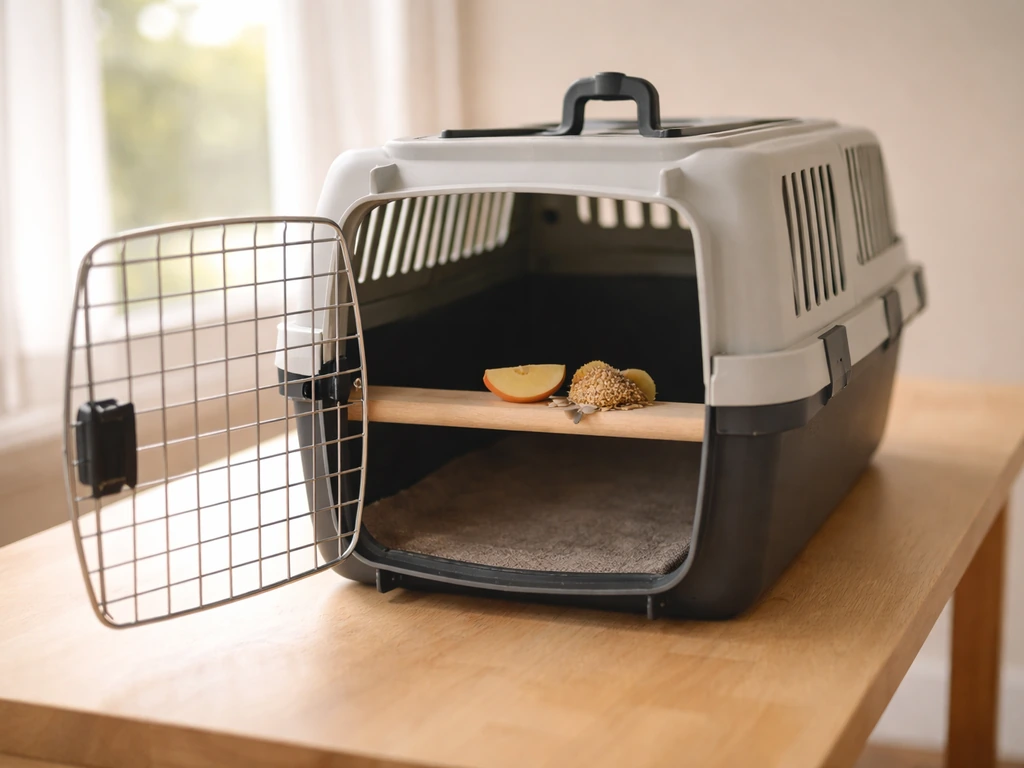
If your pet bird knows the step-up command, this is your first move. Approach slowly, offer your hand or a familiar perch at chest height, and give the step-up cue in a calm, normal voice. Do not reach over the bird's head, as that triggers a fear response in most species. Bring a favorite treat in your other hand as a reinforcer. For birds trained to target (touch a stick with their beak), a target stick can be a remarkably effective recall tool even at a distance of several feet.
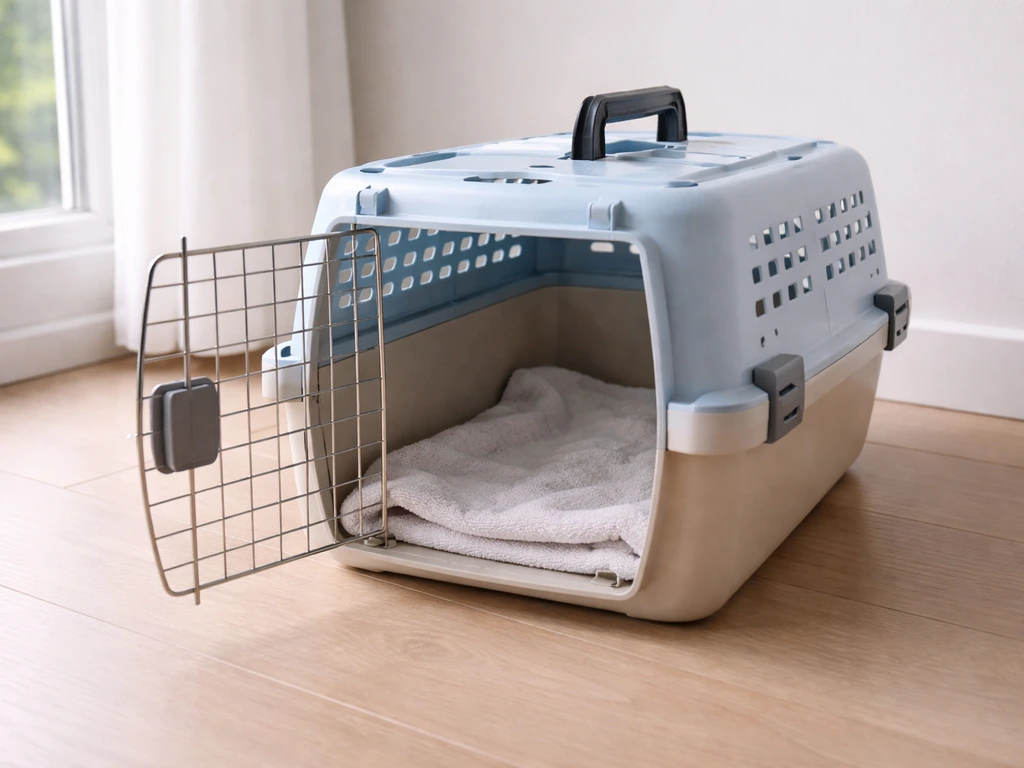
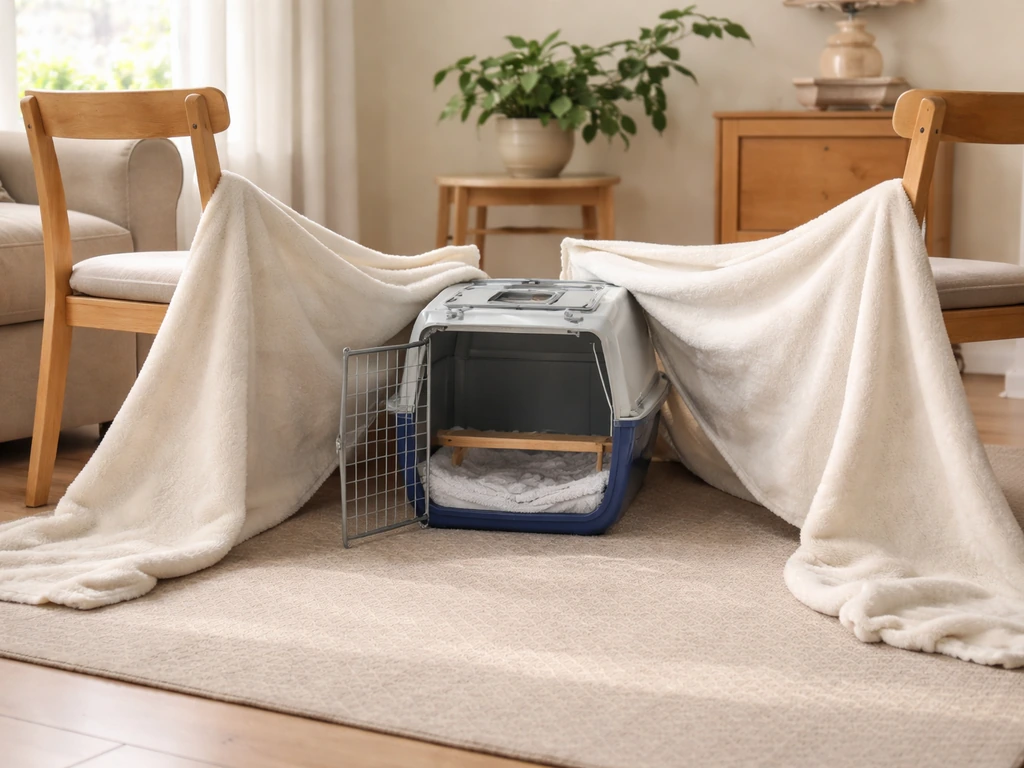
If the bird is too flighty for a direct step-up, place the open carrier or travel cage nearby with familiar food inside. Back away, go quiet, and wait. Birds that are hungry, tired, or simply comfortable with their carrier will often walk or fly in on their own within 10 to 30 minutes. Cover three sides of the carrier with a familiar-smelling towel or shirt to make it feel more like a safe refuge.
Using darkness and towels for less tame or semi-tame birds
Once a bird lands and is relatively still, a lightweight towel can be used for a quick, controlled capture. SpectrumCare emphasizes that training-style approaches like step-up into a carrier and brief, controlled towel handling can make emergencies easier by minimizing stress and fear. The goal is not to smother the bird but to block its vision briefly, which calms the flight response. Approach from the side or slightly behind, drop the towel gently over the bird, and immediately cup your hands around the body over the towel to prevent flapping. Hold firmly but not tightly: you should feel the bird's warmth and gentle movement but not be squeezing the chest. Transfer directly into a carrier without unnecessary delay.
Using a net for outdoor escapes or truly wild birds
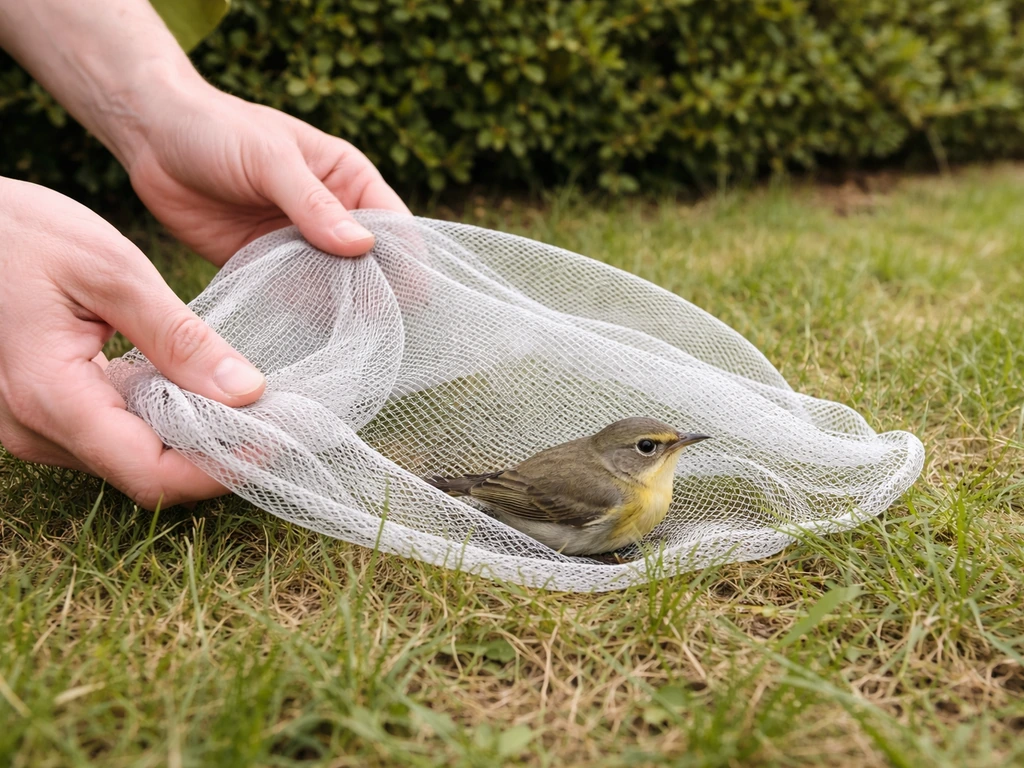
A soft-mesh butterfly or bird net (not a hard-rim fish net) is appropriate when a bird is on the ground and will not approach, or when you are dealing with an injured wild bird that needs to be contained for transport to a rehabilitator. Sweep from the side and slightly forward, not straight down, to avoid injury. Immediately after the net comes down, cover it with a towel to reduce visual stimulation and fold the net gently around the bird before transferring to a container. Catching a bird outside with a net takes practice, so if you have not done it before, move slowly and err on the side of gentleness.
Hands only for genuinely tame birds
If your bird is fully tame and comfortable being handled, a bare-hand capture is perfectly fine. Use both hands to cup around the bird's body from behind, with your thumb and forefinger lightly positioned on either side of the neck (not squeezing), and the rest of your fingers supporting the keel and wings. This is sometimes called the "parrot hold" and prevents wing-flapping injuries. Never grab by the tail feathers.
Attract the bird to you rather than chasing it
Luring is almost always more effective than pursuit, and it applies whether you are trying to recover a pet parrot from a backyard tree or coax an injured wild bird out from under a shrub. The key insight is that birds respond to sensory cues that feel safe and familiar. Use as many of these as the situation allows.
- Familiar food: For pet birds, use their single most-loved treat (millet spray for budgies and finches, sunflower seeds or almonds for parrots and cockatiels). Place it visibly near the carrier or on your outstretched palm. Rustle the bag loudly so they hear it.
- Familiar sounds: Play a recording of your bird's own voice (from a video on your phone), the sound of other birds in the household, or even the ambient sounds of your home. Many parrots will call back and orient toward the source.
- The home cage or travel carrier: The familiar cage is one of your most powerful tools. Place it in plain sight with the door open, food inside, and a favorite perch positioned at the opening. Birds instinctively seek a refuge they recognize.
- Light and shadow: Indoors, darken the room except for the area near the carrier. Outside, position yourself so the sun is at your back so the bird is not looking into glare when it looks at you.
- Patience over pressure: Once you have set up your lure, back away and give the bird space. Hovering close resets the bird's stress clock. Check from a distance every few minutes.
Controlling the flight path is a separate strategy that works alongside luring. If the bird is in one room, close doors to funnel it toward the room with the carrier. Outside, you can use open umbrellas, garden stakes with fabric, or even just standing family members positioned quietly at intervals to create a visual barrier that nudges the bird away from open sky and toward a tree near where the carrier is set up. This is not chasing: everyone stays still once positioned. Think of it as reshaping the bird's perceived safe zone rather than pursuing it.
Tactics that actually work by species
Different species have very different flight behavior, food motivations, and trust baselines. What works on a bonded African Grey will fail completely on a spooked finch. Here is a practical breakdown.
Parrots (including conures, Amazons, African Greys, macaws)
Parrots are intelligent and often bond strongly to one person. Use the primary bonded person for retrieval, not a stranger or even a secondary family member the bird tolerates but does not love. Speak in your normal voice, not a stressed or high-pitched one, because parrots read human emotion very accurately. Offer the step-up hand at sternum height.
If the bird is in a tree, do not climb after it: parrots will simply climb higher. Instead, set up the cage below and use food and voice to encourage descent. Most escaped parrots will come down on their own as they get hungry or as evening approaches and temperatures drop. Recovering a lost bird that has been out overnight is harder, so work hard during the first few hours of daylight.
Cockatiels
Cockatiels are notorious escape artists and can be surprisingly fast fliers once outside. They also tend to freeze when frightened, which is actually useful: a scared cockatiel will often sit motionless on a branch for long periods, giving you time to set up a lure. Use millet or seed on an open hand or in the cage. Play a recording of cockatiel contact calls on your phone.
If the bird is indoors, lower the lights and let it settle, then approach slowly from below. Cockatiels tame enough to step up will usually do so once their stress level drops, often after 15 to 30 minutes of quiet. Taming a cockatiel to reliably step up before an escape happens is the single best prevention investment you can make.
Budgies
Budgies are small, fast, and prone to exhaustion when panicked. If a budgie is loose inside, it will usually land within a few minutes because they tire quickly in unstructured flight. Once landed, approach very slowly and offer millet directly. Budgies that are tame will often step up readily once calm; untamed budgies are much harder and may require a soft net in a contained space. If you need help catching a small bird like a budgie that is loose in a large room, try reducing the room size by closing off sections with a gently held sheet rather than chasing.
Finches and canaries
Finches and canaries are rarely hand-tame, so direct step-up approaches usually will not work. Your best tool is their strong flock instinct: if you have other finches in the home, place a cage with companion birds near the loose bird. The loose bird will almost always approach and try to get close to its flock mates. Use this to lure it into a connected carrier or gently net it once it is close enough. Canaries respond well to the sound of their own song played back via a phone recording. Keep handling to an absolute minimum with these species since they are much more prone to stress-related shock than larger birds.
Common backyard wild birds
Wild birds found loose in a yard are usually either injured or temporarily stunned (often from window strikes). A stunned bird may sit still for 20 to 60 minutes and then fly off on its own if undisturbed. For genuinely injured wild birds, your goal is containment and handoff to a professional, not long-term care.
Do not attempt to feed or water an injured wild bird unless a wildlife rehabilitator specifically tells you to: this is advice consistently given by organizations including the American Bird Conservancy, Best Friends Animal Society, and the Wild Bird Fund. The risk of aspiration or inappropriate diet is real. Catching a wild bird should always be done with the end goal of getting it to a licensed rehabilitator as quickly as possible, not keeping it.
It is also worth knowing that keeping a wild bird as a pet is illegal in most jurisdictions in the U. S. under the Migratory Bird Treaty Act, so even if capture goes smoothly, the plan must be rehabilitation and release. Wildlife laws generally prohibit keeping wild birds, and state or federal protections can make it illegal to possess protected wildlife except for transporting an injured raptor for medical care [under the Migratory Bird Treaty Act](https://www.
rmrp. org/rehabilitation/when-to-take-action/).
For wild birds that need to be caught, approach low and slow from the side. Use a towel or lightweight box rather than a net when possible, since the bird is usually too stunned or injured to evade. Cover it quickly, scoop, and transfer into a ventilated cardboard box or carrier lined with a paper towel. Do not use terry cloth or loose fabric because birds can catch their nails and injure themselves struggling. If you are dealing specifically with a bird you found and wonder about keeping, please read the legal and ethical considerations carefully before making any decisions.
What to do the moment you have the bird secured
Getting the bird in hand or in the carrier is not the finish line. What happens in the next 30 minutes matters a lot for the bird's wellbeing and recovery.
Immediate calming steps
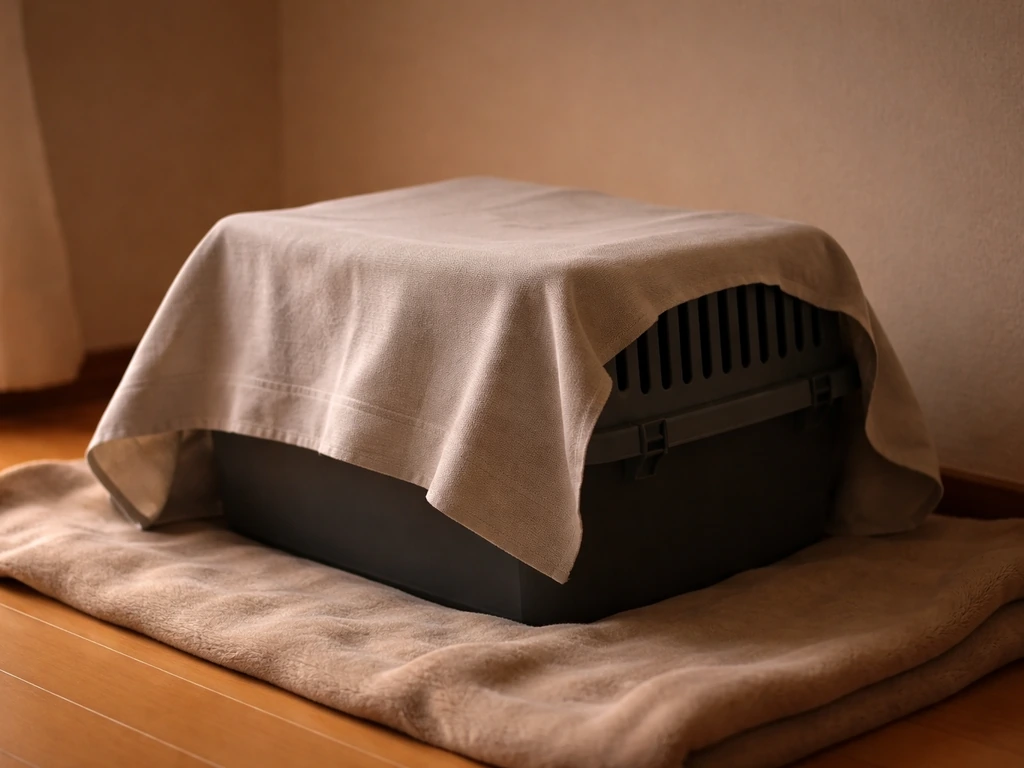
Once the bird is in a carrier or box, cover it immediately with a light cloth to darken the interior. Dark, quiet, and warm is the universal standard recommended by wildlife organizations including AWARE Wildlife Center and the Wisconsin Humane Society. Keep children and other pets out of the room. Aim for a temperature between 75 and 85 degrees Fahrenheit for most pet birds, or room temperature for most wild birds. Do not open the container repeatedly to check on the bird: every time you do, you reset its stress response. Set a timer and check once every 15 minutes at most.
Checking for injuries
Once the bird has had at least 15 to 20 minutes to settle, you can do a brief visual assessment. Look for asymmetry in wing position, any bleeding, discharge from the nostrils or eyes, or unusual posture. Gently extend each wing just slightly and watch for resistance or pain response. If you find anything concerning on a pet bird, call an avian vet immediately. For a wild bird with any signs of injury, call a licensed wildlife rehabilitator rather than a general vet clinic unless an avian specialist is available.
Transport to the vet or rehabilitator
Keep the carrier covered and the car quiet during transport. Avoid loud music, AC vents blowing directly on the carrier, and sudden braking. Do not leave a bird in a car on a warm day even briefly: temperatures in parked cars can become lethal within minutes. For an overview of the general capture and handling principles that apply across situations, the broader guide on how to catch a bird covers the foundational techniques in more detail if you want to build your skills before the next emergency.
When to call a professional right now
- Any wild bird with visible injury (bleeding, drooping wing, unable to stand) needs a licensed rehabilitator, not home care.
- A pet bird that has been outside for more than a few hours may have sustained exposure injuries, eaten something toxic, or been injured by a predator even without visible wounds: an avian vet check is warranted.
- A bird in respiratory distress (open-mouth breathing, tail bobbing with each breath) needs emergency avian care immediately.
- If you found the bird and cannot identify it, International Bird Rescue and similar organizations can help with species ID and appropriate next steps.
Making sure it does not happen again
Once the immediate crisis is over, it is worth spending a few minutes on prevention. Most pet bird escapes happen through open doors, open windows without secure screens, or during handling before the bird has learned a reliable recall or step-up. Environmental fixes are fast: add a second door or screen to any room where the bird is out of the cage, install bird-safe window screens, and establish a "bird is out" protocol for everyone in the household (meaning, everyone knows to close exterior doors before entering or exiting).
Training fixes take longer but are far more valuable. A bird with a solid recall behavior (flying to you on cue) or a reliable step-up is dramatically easier to recover even if it does escape. For wild bird encounters, the best prevention is knowing in advance how to respond: bookmark the wildlife rehabilitator contact for your county before you need it.
You might also want to know the specific legal picture if you ever encounter a bird you are tempted to keep, particularly around catching birds in different contexts and what the rules actually are. If you are wondering how to catch a bird in WCUC contexts, those legal and practical differences matter just as much as the capture technique catching birds in different contexts. Preparation before an escape is always easier than scrambling during one.
| Situation | Best capture method | Key lure | Professional help needed? |
|---|---|---|---|
| Tame pet bird loose indoors | Step-up or carrier lure | Favorite treat, familiar voice | No, unless injured |
| Tame pet bird loose outdoors | Carrier lure, then step-up | Home cage, food, own vocalizations | Contact shelter to report; vet check after recovery |
| Untamed pet bird loose indoors | Towel capture or net in contained space | Flock-mate sounds, food in carrier | Avian vet if any injury signs |
| Untamed pet bird loose outdoors | Soft net, then carrier | Home cage near last sighting, recordings | Yes: avian vet after recovery |
| Wild bird, stunned (window strike) | Watch and wait up to 1 hour; box if needed | None needed: minimize stimulation | Only if not flying within 1 hour |
| Wild bird, injured grounded | Towel or box scoop | Do not use food or water | Yes: wildlife rehabilitator immediately |
| Wild bird inside home (uninjured) | Open one exit, darken rest of home | Natural light from open door or window | No, once it exits |
The core of all of this comes down to one principle: slow is fast. Every minute you spend reducing panic and setting up a lure is worth more than ten minutes of chasing. Birds are perceptive and they respond to your energy as much as your actions. Stay calm, think one step ahead, and trust that a patient, quiet approach will get the bird back safely far more reliably than a frantic one.
FAQ
What should I do if I start chasing and the loose bird gets more panicked?
In most situations, you should not chase. Stop, reduce noise, and regain control of the environment first (doors, room distractions, bystanders). If the bird is indoors and you cannot find it quickly, move slowly and listen for rustling, then try the “close exits” approach rather than searching while moving fast.
Can I use a cage as a trap to catch a loose bird quickly?
Yes, but only in a contained way that you control. Bring the travel cage near the bird, keep it visible, and avoid cornering or blocking the bird’s only exit. If the bird starts flying erratically, back off and let it choose the carrier approach on its own.
Should I offer food or water if the bird looks stunned or injured?
Do not try to catch a wild bird and then feed or water it, unless a licensed wildlife rehabilitator has specifically instructed you to. For safety, focus on quiet containment for transport, and keep the bird dark and warm while you arrange handoff.
What if the bird appears injured, but I cannot tell whether it is wild or a pet?
If you have to handle a bird with suspected injury, minimize handling time and prevent overheating or chilling. Use a towel or lightweight container immediately for containment, and keep contact brief until you can transfer it to a wildlife rehabilitator or avian vet.
How do I keep the bird calm while I wait for a vet or shelter to advise me?
For most pet birds, aim to darken and quiet the immediate area rather than moving room to room. If you must reposition the carrier, do it slowly with the cage close by and avoid repeatedly uncovering the bird, since sudden checks reset stress.
Are treats always safe to use for luring, or are there situations when I should stop?
Millet and other treats are safest when the bird is already calm enough to accept them. If the bird is bolting, heavily panting, bleeding, or clearly struggling to breathe, skip luring-by-treat and switch to containment and immediate professional contact.
Is any net okay for catching a loose bird outside?
No. Use only the specific “soft mesh” style net intended for birds. A hard-rim fish net or rough or loose fabric can cause injuries when birds struggle, and if the bird is already very panicked, a net landing can escalate flight behavior.
What should I do if the bird refuses to step up or won’t approach the carrier?
If the bird will not step up, try the least stressful next option that matches behavior: carrier lure with three-sided cover indoors, or for small fast birds, reduce the room size rather than chasing. For species that do not step up easily, use species-appropriate lures like flock companions or familiar song.
How tight should I hold a bird when using a towel to catch it?
If you are using a towel capture, the key is to cover vision briefly and immediately secure the bird for transfer, then keep the bird contained and dark. Avoid pressing hard on the chest, and prevent fluttering by supporting the body as soon as the towel lands.
What are the most common mistakes people make after they finally get the bird into a carrier?
Transport should be stable and quiet. Avoid opening the container to “check,” avoid direct airflow from vents, and do not let the bird sit in a warm car. Plan your ride so the bird goes straight from capture to the appropriate professional handoff.
How can I catch a loose bird outside without making it harder to retrieve?
If the bird escapes outdoors and you cannot approach, do not run toward it or shout. Instead, keep one calm person in charge, limit bystanders, and set up the carrier and lure area quietly where the bird can decide to come closer.
What preparation actually helps the most before the next escape happens?
Before you ever need it, save the right contacts and the location plan for retrieval. Keep a carrier ready at home, and confirm whether you should contact a wildlife rehabilitator or an avian vet based on “wild vs pet” cues so you do not waste time deciding during the emergency.
Next Article
How to Catch a Small Bird Humanely and Safely Step by Step
Humane step-by-step ways to catch small birds safely, using traps or carriers, plus rescue, injury checks, and when to c