You can train a bird to scream less by identifying exactly what triggers the noise, stopping the accidental rewards you're probably giving it, and teaching a quieter replacement behavior using positive reinforcement. Wikipedia’s “Parrot training” page describes clicker training as a type of blank" rel="noopener noreferrer">positive reinforcement training that uses a bridging stimulus, the click, paired with rewards. If you are wondering how to hypnotize a bird, focus first on safe behavior training techniques and trigger management rather than trying to induce a trance. Most birds don't scream to be difficult. They scream because it works: someone appears, something happens, a need gets met. Once you understand the function behind the sound and redirect it, most birds show real improvement within two to four weeks of consistent work.
How to Train a Bird Not to Scream: Humane Steps
Why birds scream (and what each species is probably trying to tell you)
Birds are wired to vocalize. In the wild, a contact call that goes unanswered will escalate from a soft call to a full-blown panic scream until the flock responds. Your living room is not the wild, but your bird's brain is still running that same program. When you walk into another room, your parrot starts calling because that's what a flock bird does when it can't see its flock. If you yell back, come running, or even just appear, you've just told your bird that screaming is the right strategy. Over time, the screaming gets louder and longer before you respond, so the bird learns to scream louder and longer from the start.
That's the attention-seeking pattern, but it's not the only one. Birds also scream because of fear (a shadow, a new object, a visitor), boredom and under-stimulation, hormonal surges during breeding season, hunger or thirst, loneliness when cage time is excessive, territorial responses to mirrors or other birds, and pain or illness. Each of those requires a different response from you, so the first step is always to figure out which one you're actually dealing with.
| Scream type | What it usually sounds like or looks like | Most likely cause |
|---|---|---|
| Contact call | Repeated, rhythmic calling that stops when you appear | Attention, flock separation anxiety |
| Alarm call | Sharp, sudden burst, bird may freeze or bolt | Fear trigger (shadow, stranger, new object) |
| Hormonal scream | Loud, persistent, often with pacing or regurgitation | Mating urge, seasonal hormones |
| Boredom vocalization | Long, repetitive, often at the same time each day | Under-stimulation, lack of enrichment |
| Pain/illness call | New, unusual, or accompanied by other physical signs | Medical issue (needs vet check) |
| Territorial/mirror scream | Directed at a window, mirror, or another bird | Perceived rival or intruder |
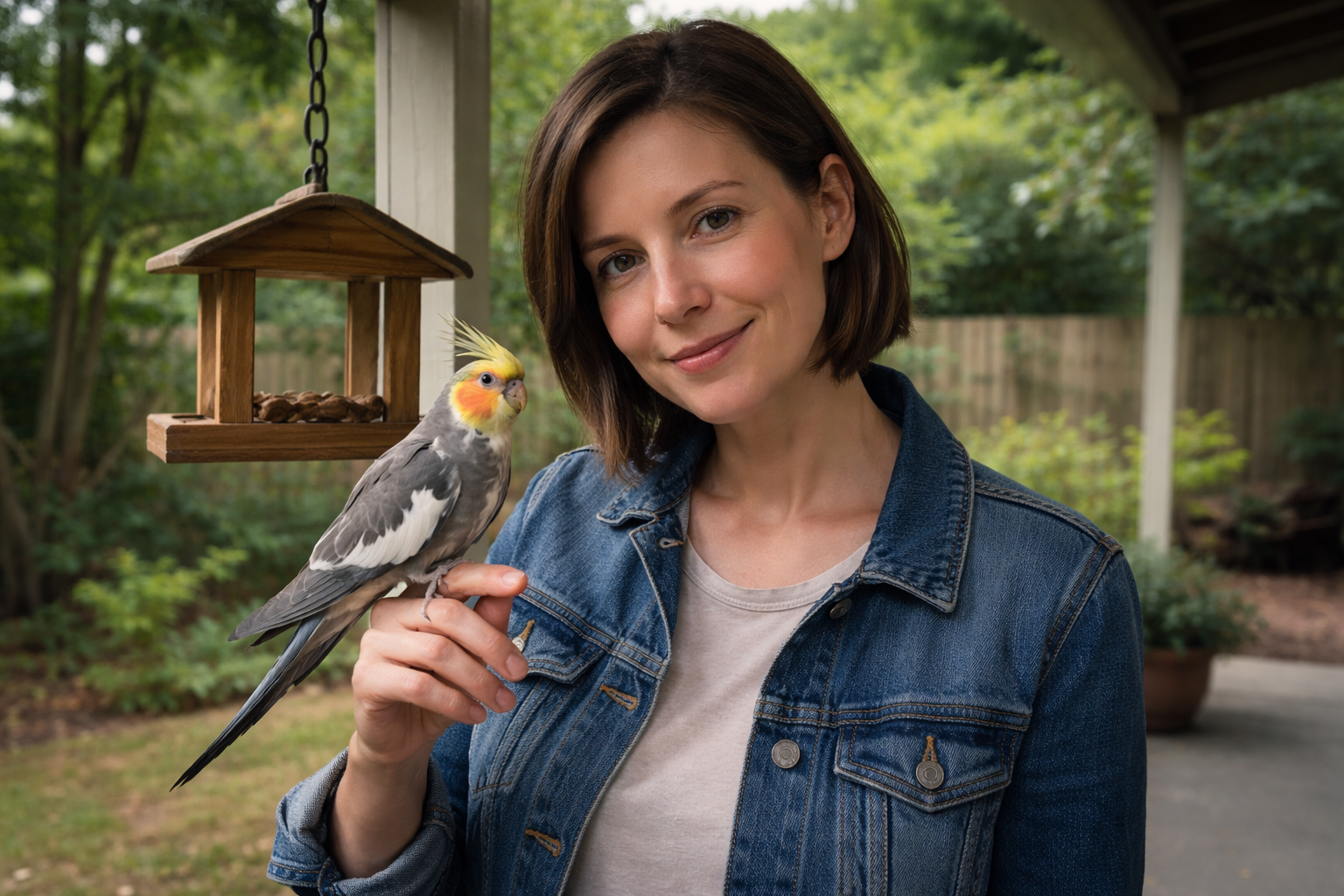
Cockatiels often produce a "scristle," a scream-whistle hybrid, when they're upset, scared, lonely, or excited. Budgies tend toward loud screeching as a contact call or stress response, calling for their flock (which includes you) when they feel unseen. Finches use sharp alarm calls when danger is perceived and contact calls to maintain pair or flock bonds. Knowing your species' typical vocabulary helps you distinguish normal communication from a genuine problem.
Quick safety check: rule out medical issues first
Before you change a single training routine, take five minutes for a visual health check. Behavioral modification has little to no chance of working if your bird is in pain or sick. If you’re thinking about sedating a bird at home, pause and focus on safe, vet-guided options, because many “calming” approaches can be risky without professional oversight. A bird that suddenly starts screaming more, screams differently than usual, or screams at unusual times needs a health assessment before anything else.
Look for these red flags right now:
- Open-mouth breathing or tail bobbing with every breath
- Fluffed feathers when the room is warm (suggests chills or fever)
- Sitting on the cage floor instead of a perch
- Straining as if trying to defecate or lay an egg with nothing produced
- Visibly swollen abdomen
- Wheezing, clicking, or raspy sounds
- Sudden feather loss outside a normal molt
- Soiling or matting of feathers around the vent
- Pale or bluish tissue around the beak or eyes
- Collapse, seizure, or inability to grip a perch
Any of those signs means an avian vet visit today, not next week. Egg binding, respiratory infections, mite infestations, and other conditions can all manifest as increased or unusual vocalization. If your bird's screaming is new and started suddenly, call your vet and describe what you're seeing before assuming it's behavioral. Once you've confirmed your bird is healthy, you can move confidently into the training steps below.
Identify the trigger before you try to fix anything
Trying to stop screaming without knowing what causes it is like trying to fix a leak without finding the pipe. Spend two to three days doing a simple observation log before you change anything. You want to capture three things for every screaming episode: what happened just before (blank" rel="noopener noreferrer">the antecedent), exactly what the bird did (the behavior), and what happened immediately after (the consequence, especially your reaction). Quieting a bird starts with pinpointing what the bird is trying to get, then reinforcing calm behavior while removing accidental rewards how to make a bird quiet. This is called ABC mapping and it almost always reveals a clear pattern within a day or two.
Keep a notepad near the cage or use a voice memo on your phone. Note the time, what was going on in the room, whether you or another person reacted, and how the screaming episode ended. After two or three days, look for patterns: Does it happen every time you leave the room? Only in the late afternoon? When the TV comes on? When a specific person walks by? The pattern is your roadmap.
Also check the reinforcement history. Ask yourself honestly: what do I actually do when my bird screams? If the answer is anything that involves going to the cage, making eye contact, talking, or even yelling "no," you have likely been reinforcing the screaming. The same goes for visitors, kids, or other household members. Everyone's response counts, and inconsistency is one of the most common reasons training stalls.
Build the calm alternatives: what to teach instead
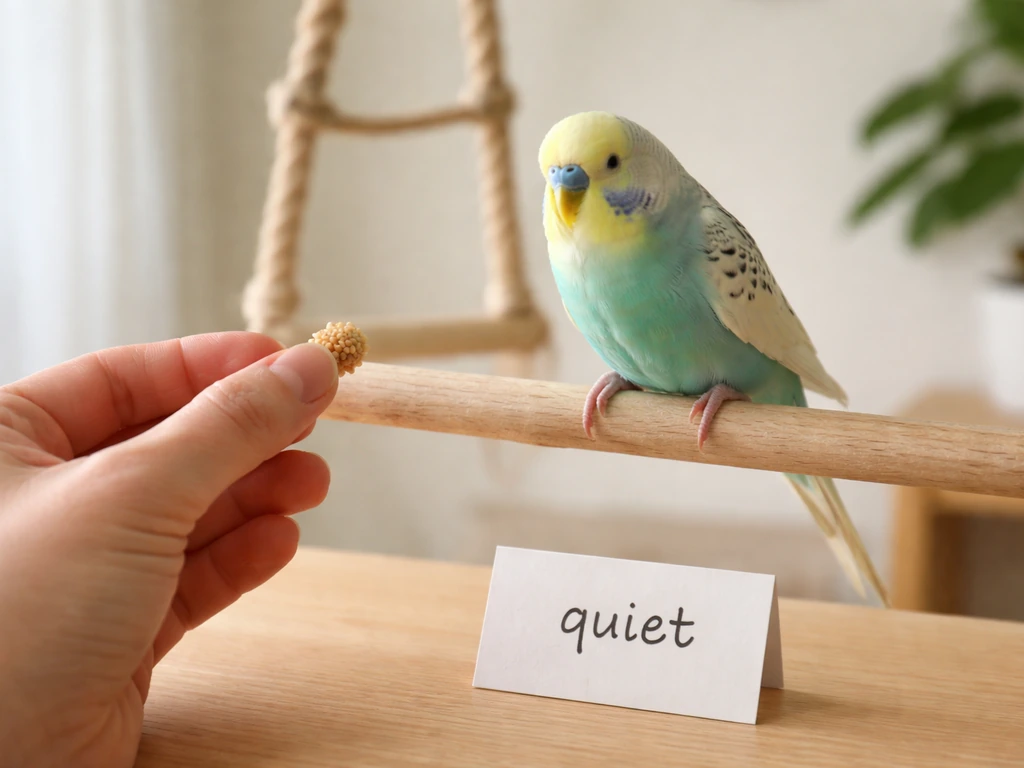
You can't just ignore screaming and call it training. You also have to teach your bird what to do instead, and then reward that alternative generously. The goal is to make quiet behavior more rewarding than screaming. This section covers the core techniques you'll use.
Teach a quiet or silence cue
Start by catching your bird in a naturally quiet moment. The instant it's silent, say a calm word ("quiet" or "good") and immediately offer a small treat, gentle scratch, or verbal praise. You're not waiting for perfect silence; a two-second pause between calls is enough at first. Gradually stretch the quiet time before you reward. Over days and weeks, you can add the cue word just before the bird would naturally go quiet, creating a verbal signal you can use later. Keep sessions to about 15 minutes since birds have short attention spans and you want to end on a success.
Target training and step-up as calming tools
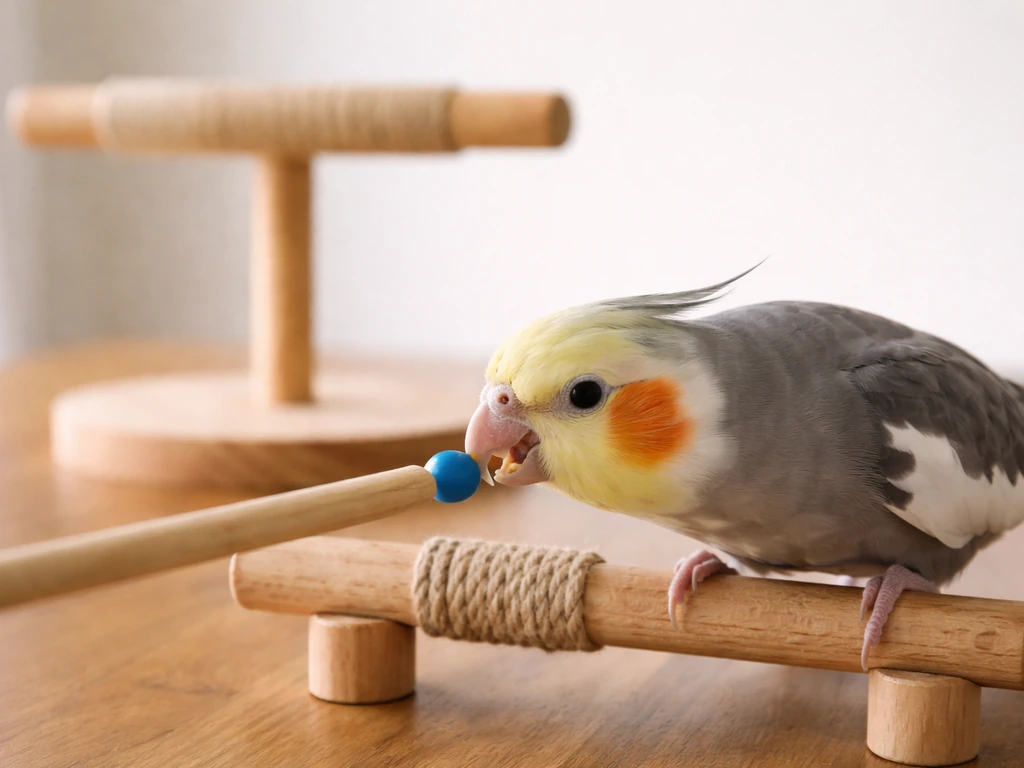
Target training (teaching your bird to touch a small stick or perch with its beak or foot) is beginner-friendly and gives your bird something to focus on instead of screaming. Hold a target stick near the bird, wait for it to lean toward or touch it, mark the moment with a click or a word like "yes," and reward immediately. Once the bird understands targeting, you can redirect it away from a screaming trigger by asking for a target touch instead. A step-up cue ("step up" onto your hand or a perch) works the same way: it gives the bird an alternative behavior to perform and shifts its attention.
Foraging as a boredom and attention substitute
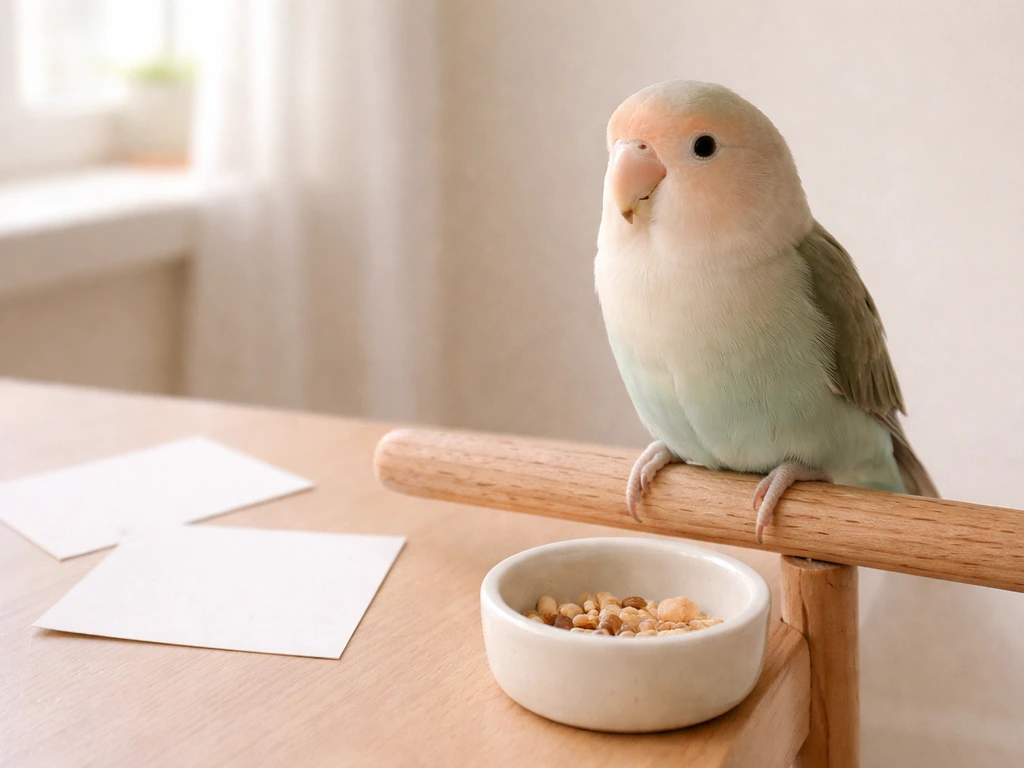
Many birds scream out of boredom, especially at predictable times of day. Foraging enrichment, hiding food inside toys, paper rolls, or puzzle feeders, gives your bird something mentally engaging to do during the windows when screaming tends to peak. Set up a new foraging challenge before the typical screaming period, not during it, so you're preventing the scream rather than reacting to it. Rotate toys and food locations regularly so novelty stays high.
What to do when screaming actually starts
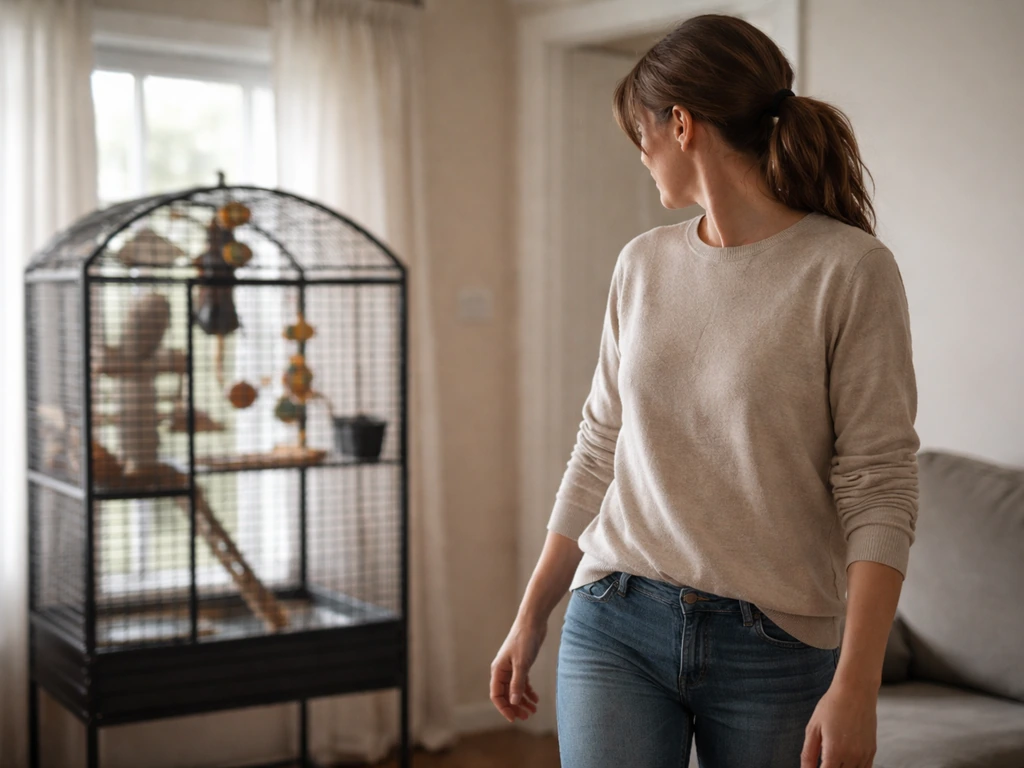
When screaming starts and you've confirmed it's attention-driven (not fear or pain), do not go to the cage and do not make eye contact. Turn away, leave the room calmly if you can, and wait. The moment the screaming stops, even briefly, walk back in, speak warmly, and reward. You're teaching the bird that silence is what brings you back, not noise. This feels counterintuitive at first, and the screaming will often get worse before it gets better (that's called an extinction burst, and it's completely normal). Stick with it.
Change the environment and daily routines
Training techniques work much better when the environment supports them. A stressed, overtired, or bored bird is fighting you from the start. These adjustments make the behavioral work dramatically more effective.
Sleep and lighting
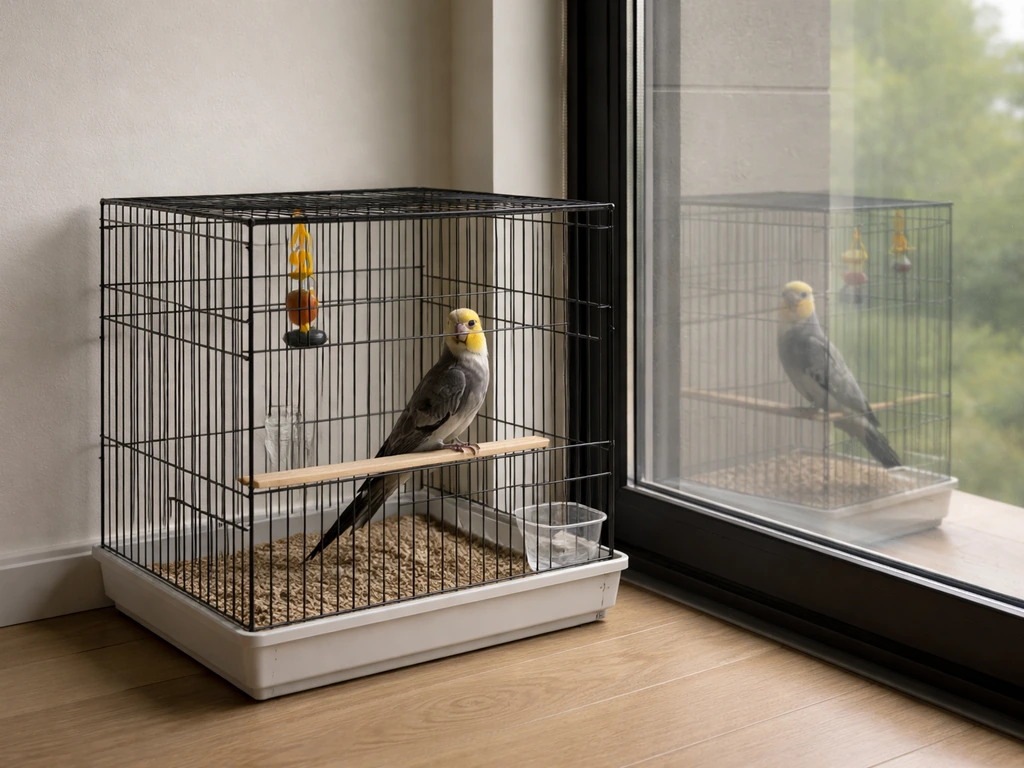
Most companion parrots and cockatiels need 10 to 12 hours of uninterrupted darkness each night. A bird that's sleep-deprived is irritable and more reactive, which means more screaming. Use a sleep cage in a dark, quiet room like a spare bedroom, laundry room, or even a closet if it's ventilated. Draping the cage in a blackout cover in the main living area works too, as long as the room actually stays dark and quiet through the night. A consistent wake time helps as much as a consistent bedtime. Hormonal birds in particular often improve noticeably when the light cycle is tightened up.
Mirrors and territorial triggers
Birds cannot distinguish their own reflections from rival birds. If your bird's cage is near a mirror or a reflective window, it may be screaming at a perceived territorial threat all day long. Move the cage, cover the reflective surface, or reposition it so the bird doesn't have a direct sightline to its reflection. The same principle applies to windows where wild birds are visible, which can trigger territorial or flock-contact screaming.
Household noise and routine
Sudden loud noises (TVs turning on, doors slamming, vacuum cleaners) frequently trigger alarm screaming. You can desensitize your bird gradually by introducing these sounds at low volume from a distance and pairing them with treats so the bird learns they're not threats. Predictable daily routines also reduce anxiety-driven screaming significantly. Feeding, out-of-cage time, and training sessions at the same time each day give your bird a sense of control and security.
Out-of-cage time and bonding
A bird that spends most of its time in a cage with little interaction will scream for attention because that's the only tool it has. Make sure your bird gets meaningful, structured out-of-cage time every day, even 20 to 30 minutes of direct interaction. Active handling, foraging games, and training sessions count more than just leaving the cage open. If your schedule means the bird is alone for long stretches, consider background noise (a radio or TV at low volume) or a companion bird, though introducing a second bird has its own complexities.
Species-specific playbooks
Parrots (African Greys, macaws, amazons, cockatoos, conures, and similar)
Larger parrots are the most likely species to develop reinforced screaming habits because they're highly social, highly intelligent, and very aware of cause and effect. The attention-seeking pattern is especially strong here. The core technique is extinction plus immediate reward for quiet: don't go to the cage while the bird screams, then appear and reward the moment it stops. Be rigorous about consistency because these birds will test the new pattern for days or even a week before they accept it. Contact calls at dawn and dusk are natural and normal for most parrot species. You don't need to eliminate those; you're targeting the prolonged, repetitive screaming that goes on throughout the day. Target training and foraging enrichment are particularly effective for high-intelligence species that need their minds occupied.
Cockatiels
Cockatiels are naturally contact-call oriented and will scream (often that scristle sound) when they can't see their bonded person. Teaching a consistent whistle or word that means "I'm here, you're fine" can replace the need for them to scream at full volume. Whistle back to them softly when they call, then reward silence when they settle. Hormonal screaming in cockatiels can be intense during breeding season, especially in females who lack a mate. Talk to your vet about lighting schedules if hormonal behavior is severe, as reducing daylight hours can calm it down significantly.
Budgies (budgerigars)
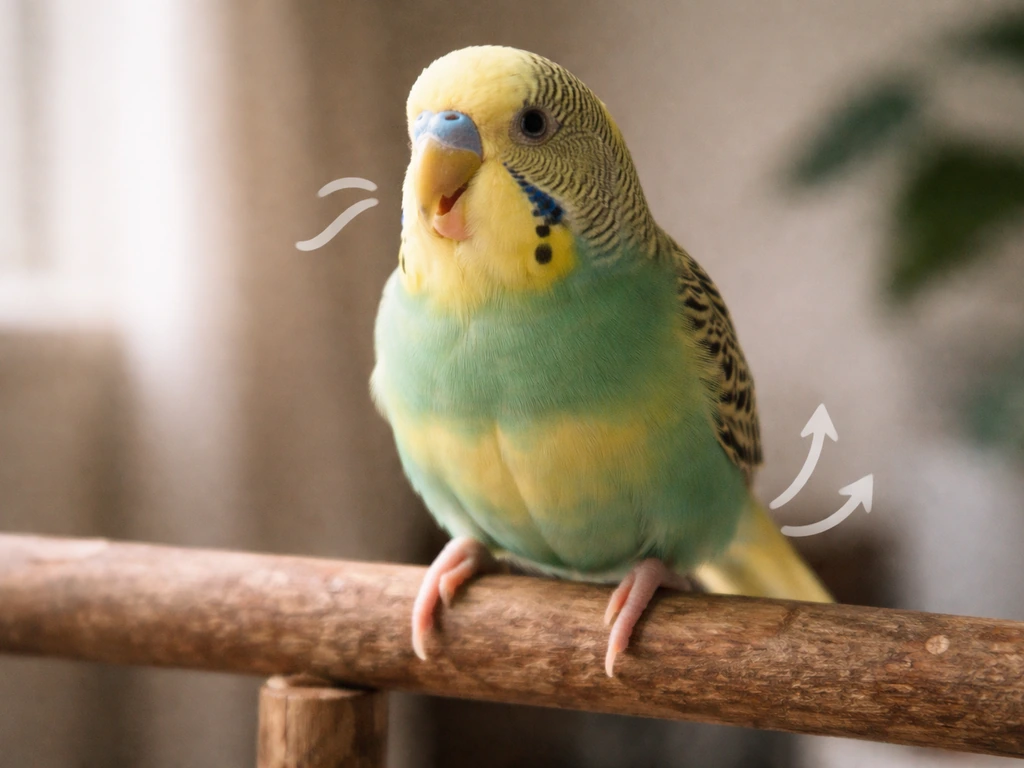
Budgies scream when they feel unsafe or unseen by their flock. Because they're small, people sometimes underestimate how much social interaction they need. Budgies do well in pairs, and a lonely solo budgie may scream chronically. If you have a single budgie, you are its flock, and daily interaction is non-negotiable. Environmental triggers like perceived predators (a cat walking by, a bird of prey outside the window) cause sharp alarm calls that will stop once the threat is removed. Don't punish the call; just remove or block the trigger.
Finches
Finches are not hands-on birds and traditional step-up or target training isn't realistic for most of them. Their vocalizations serve specific functions: alarm calls when danger is nearby, contact calls to maintain pair bonds, and stress vocalizations when handled or frightened. "Training" a finch to be quieter is mostly about removing stressors: keep them in pairs (finches are highly social and should almost never be kept alone), place cages away from high-traffic areas, avoid sudden loud noises near the cage, and don't attempt to handle them unless medically necessary. A stressed finch in a well-matched pair with a calm, predictable environment will vocalize at normal healthy levels without excessive screaming.
Wild yard birds
Wild birds in your yard can't be trained in the same sense as pet birds, and in most countries they're legally protected, which means you can't trap, handle, or condition them. If wild birds are making noise that bothers you, the approach is humane deterrence or management of what's attracting them. Remove or relocate feeders that are drawing birds to problem areas. Cover reflective surfaces on windows and walls that trigger territorial calling. Use visual deterrents like hanging tape or silhouettes to discourage birds from perching in specific spots. If a bird is attacking a window (seeing its reflection as a rival), break up the reflection with window film or screens. These methods need to be applied consistently and maintained over time to be effective. If you're dealing with nesting birds making noise, remember that active nests are protected in most jurisdictions, and the noise will naturally stop when young birds fledge, usually within a few weeks.
Troubleshooting, realistic timelines, and when to escalate
The screaming got worse when I started ignoring it
This is completely expected. It's called an extinction burst: when a previously rewarded behavior stops being rewarded, the bird initially does it harder and louder before giving up. It typically peaks within the first two to five days and then starts to drop off. The worst thing you can do during an extinction burst is give in, because that teaches the bird that screaming even louder is the correct strategy. Hold the line, keep rewarding quiet moments, and it will pass.
Everyone in the house is responding differently
Inconsistency is the number one reason this training fails. If one person ignores screaming and another responds to it, the bird will keep screaming because the strategy still works some of the time. Sit everyone in the household down and agree on the protocol. Post a simple reminder near the cage if needed. Everyone who interacts with the bird needs to follow the same rules.
The bird screams at specific visitors or new people
This is usually fear-based or territorial. Ask visitors to ignore the bird entirely on arrival, not make eye contact, and not approach the cage. Once the bird has settled, you can do a slow introduction with treats. Never force interaction when the bird is in alarm mode.
Realistic timelines
| Timeline | What to expect |
|---|---|
| Days 1–3 | Observe and log triggers; no training changes yet except ruling out medical causes |
| Days 4–7 | Begin rewarding quiet moments; extinction burst may peak; hold the protocol |
| Weeks 2–3 | Screaming frequency starts to decrease noticeably with consistent application |
| Weeks 3–6 | Quiet cue and alternative behaviors become reliable; screaming drops to baseline levels |
| Months 2–3 | New habits are consolidated; occasional relapses during stress or seasonal hormones are normal |
When screaming escalates or doesn't improve
If you've been consistent for three to four weeks, ruled out medical causes, and you're seeing no improvement, it's worth consulting an avian behaviorist or a vet with behavior training. Some birds have underlying anxiety, past trauma, or unresolved medical issues (including hormonal imbalances or chronic pain) that need professional support. Screaming that escalates suddenly, changes character, or comes with any of the physical red flags listed earlier in this article always warrants a vet call, not more training. There are also situations where a bird's needs genuinely aren't being met by its current environment, such as a highly social species housed alone with minimal daily interaction. In those cases, rehoming to a more suitable situation may be the most humane option.
If you're looking for related help, quieting a bird for sleep, managing nighttime noise, or helping an anxious bird settle down are all closely connected topics that build on the same foundational skills covered here. The principles overlap significantly: consistent routines, positive reinforcement, removing triggers, and meeting the bird's underlying needs are the threads that run through all of it.
What not to do
- Don't yell at your bird or say "no" loudly. To a flock bird, any vocalization from you is a response, which reinforces the screaming.
- Don't spray water or use punishment. It damages trust, causes fear-based vocalizations, and doesn't address the underlying cause.
- Don't cover the cage as a punishment. A cage cover should signal calm sleep time, not consequence.
- Don't try to sedate or medicate a bird for noise without veterinary guidance. There are no safe at-home sedation options for birds.
- Don't assume the problem is behavioral until you've genuinely ruled out health issues.
- Don't try to clip a bird's wings as a noise-reduction strategy. It doesn't reduce screaming and creates its own welfare concerns.
FAQ
How long should I wait before I see improvement when training a bird not to scream?
Expect early signs of change within about two to four weeks if the bird is healthy and the trigger pattern is clear. If there is no reduction after three to four weeks of consistent protocol, even with the same routine and reinforcement, it usually means you missed a trigger, responses are still accidentally rewarding, or there is a behavioral or medical driver that needs professional help.
What should I do if the bird screams the moment I enter the room, before I can start training?
Use the “return only to quiet” rule. Turn your body slightly away or pause at a distance, then move closer and speak warmly only when the bird is silent even briefly. Avoid eye contact and avoid talking over the screaming, because that can become the consequence the bird learns to chase.
Can I use a spray bottle, punishment, or ignoring long-term to stop screaming faster?
Punishment and startling methods often increase fear or arousal, which can make vocalizing louder or more frequent. Pure ignoring also backfires for many birds because screaming already works to get you to respond sometimes, so it can create inconsistent learning. The safer approach is humane trigger management plus teaching and rewarding an incompatible quiet behavior.
How do I know if my bird’s screaming is pain, fear, or attention-seeking?
Look for context and physical changes. Pain is more likely when screaming is sudden and accompanied by unusual posture, breathing effort, decreased appetite, fluffed sleep, or changes in droppings. Fear is more likely when it follows a specific startling event. Attention-seeking is more likely when the bird screams predictably during transitions (leaving, mealtimes, visitors) and quieting reliably leads to your return or reward.
My family doesn’t respond the same way, how strict do we need to be?
Very strict. Even one person occasionally responds (talks, looks, scolds, or comes to the cage) can keep the behavior strong because the bird only needs the strategy to work sometimes. Decide on a single household protocol for the entire training window, and include visitors and kids by giving them clear instructions: no eye contact, no approaching the cage, wait for quiet.
What if the bird screams more during training, then eventually quiets?
That is commonly an extinction burst, it can briefly get louder and more persistent when accidental rewards are removed. Don’t give in during the spike. Keep sessions short, reward the first seconds of silence, and maintain consistent turn-away and return timing. The peak typically occurs in the first few days and then drops.
How should I set up rewards so they don’t accidentally make screaming worthwhile?
Deliver rewards only when the bird is quiet or has performed the alternative behavior, not while it is screaming. Use small, high-value treats so you can reward quickly, and do not wait until the bird finishes for a long time. If rewards require you to approach the cage during screaming, practice rewarding silence from a distance first.
Do I need to teach a “quiet” cue, or can I just reinforce silence?
Reinforcing natural quiet works at first. Teaching a cue later can help you generalize the behavior, but start by building the quiet response without the cue. Once the bird reliably offers quiet, add a consistent word right before the bird is likely to settle, then reward immediately after silence begins.
What’s a good first replacement behavior if I can’t do target training?
Try a step-up or simple perch cue if your bird tolerates handling, or use foraging as an alternative. The key is that the replacement behavior occupies the same time window as the screaming and is rewarded right away. If targeting is safe for your bird, it is often the easiest redirect because it requires minimal handling.
Can boredom really cause screaming even if my bird has toys?
Yes. Many birds get bored because toys are available but not engaging. Rotate toy types and place food in hidden or puzzle formats, and schedule these challenges before the usual screaming window. Also vary the location and the challenge so the bird experiences novelty, not just repeated access.
How much darkness and schedule consistency do I need for nighttime and early-morning screaming?
Aim for uninterrupted darkness about 10 to 12 hours nightly, with a consistent wake time. If the bird wakes early and calls, it can be reacting to light cues or sleep debt rather than a training failure. Make sure any “darkness” cover actually blocks light and does not create heat or poor ventilation.
My cage is near a mirror or window, should I move it or cover it?
Often both help. Birds can treat reflections as rivals or flock members, which triggers ongoing contact or territorial calling. Move the cage away from direct sightlines when possible, and cover reflective surfaces with opaque barriers so the bird does not repeatedly rehearse the calling behavior.
Should I ignore the bird completely when it screams, or speak to it calmly?
During the screaming episode, avoid interaction that the bird can interpret as response. That means no eye contact, no approaching, and minimal talking. Once it pauses, you can resume calm speech and reward, so the consequence is clearly linked to silence rather than to noise.
When is it time to contact a vet or avian behaviorist instead of continuing training?
If screaming increases suddenly, changes character, or happens at unusual times, get a health check promptly. Any physical red flags, plus behaviors like open-mouth breathing, sudden appetite changes, or abnormal droppings, point to medical causes. If you have been consistent for three to four weeks with no improvement after excluding illness, consult an avian behavior professional for underlying anxiety or unresolved environmental mismatch.
Do I need to change the routine for dawn and dusk contact calls?
Usually no for normal contact calls, especially in parrots. The target is the prolonged, repetitive screaming that continues throughout the day. You can plan enrichment and quiet-reward steps around natural calling peaks, but avoid trying to eliminate biologically typical flock communication entirely.
Can I help a single budgie more without adopting another bird?
Often yes, but daily interaction is non-negotiable for many solo budgies. Provide consistent direct attention, structured out-of-cage time, and social-like engagement such as training and foraging games. If you consider a second bird, introduce it thoughtfully, because pairing can itself create stress if not managed correctly.
Why won’t step-up or targeting work for my finch, and how do I reduce its noise?
Many finches are not well-suited to handling-based cues, and their vocalizations usually communicate alarms or social bonding. Instead, reduce stressors: keep finches in pairs or appropriate social groups, avoid sudden loud noises, and place cages away from high-traffic areas. If handling is medically necessary, do it gently and minimize fright.
What should I do if wild birds are screaming near my home and I can’t train them like a pet?
Use humane management based on what attracts them. Remove or relocate feeders, break up window reflections with film or screens, and use visual deterrents to stop perching in specific spots. If nesting birds are involved, active nests are often protected, so focus on non-intrusive management and let the noise stop naturally after fledging.